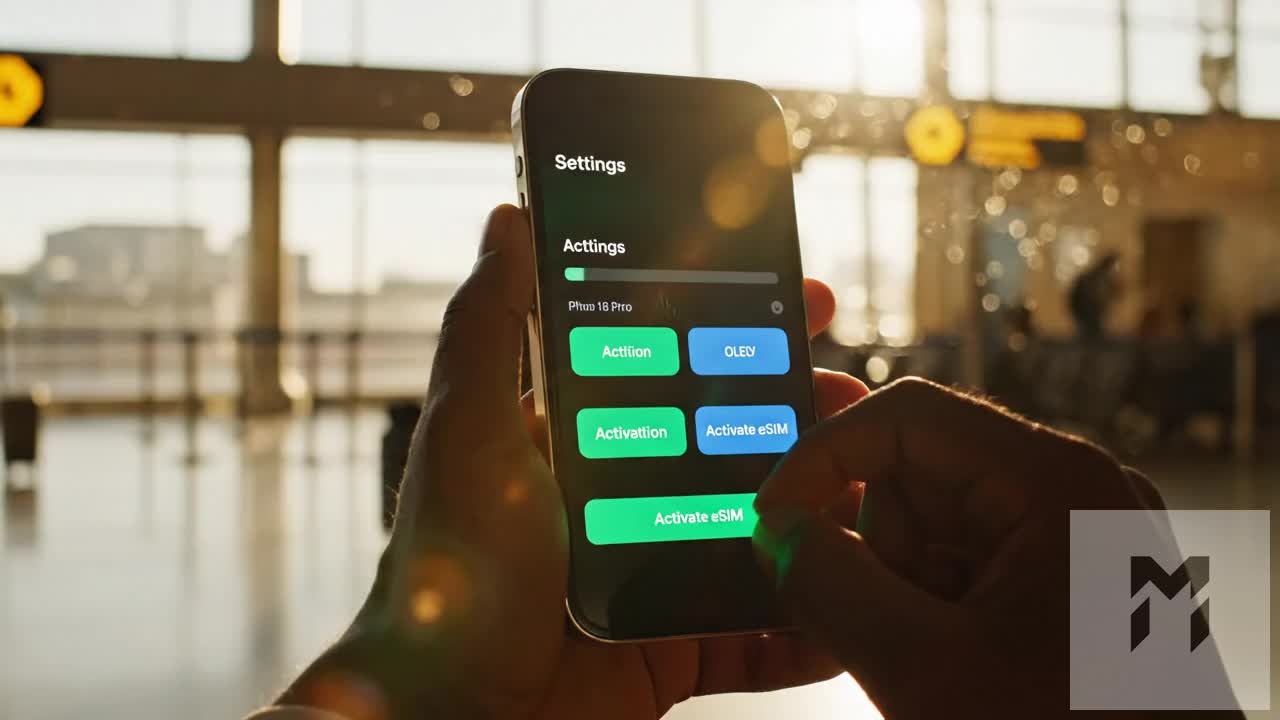
Greater Bay Area Speed Guide 2026: Seamless eSIM Roaming Across Hong Kong, Shenzhen & Macau
The 2026 Greater Bay Area Travel Landscape: High-Speed Transit and the Telecom Fragmentation Problem
The physical integration of the Guangdong-Hong Kong-Macao Greater Bay Area (GBA) has achieved unprecedented engineering milestones. Today, the mega-region operates on a true "one-hour living circle," propelled by hyper-efficient transit links that compress geographic distances into negligible commute times:
- High-Speed Rail (HSR): The Guangzhou-Shenzhen-Hong Kong Express Rail Link connects Hong Kong West Kowloon directly to Shenzhen Futian in just 14 minutes and Shenzhen North in 18 minutes.
- Hong Kong-Zhuhai-Macao Bridge (HZMB): The 55-kilometer bridge-tunnel system allows 24/7 cross-boundary shuttle buses ("Golden Buses") to cross the Pearl River Estuary to Macau or Zhuhai in roughly 40 minutes.
- Maritime Corridors: High-speed catamarans operated by TurboJET and Cotai Water Jet link Hong Kong Island, Kowloon, and the Macau Outer Harbour/Taipa terminals in under 60 minutes.
Yet, while concrete and steel have erased physical borders, the telecommunications architecture remains intensely fragmented across three distinct regulatory, legal, and licensing jurisdictions within a compact 56,000-square-kilometer basin.
| Corridor / Route | Typical Transit Duration | Border Control Model | Primary Telecom Handoff Risk |
|---|---|---|---|
| HSR: West Kowloon $\to$ Futian | 14 Minutes | Co-located Joint Checkpoint | Carrier disconnect during deep-tunnel border transit |
| HZMB Shuttle: HK $\to$ Macau | ~40 Minutes | Separate Checkpoints (Bridge Ends) | Signal drop mid-bridge across maritime boundaries |
| TurboJET Ferry: Sheung Wan $\to$ Taipa | 55–60 Minutes | Pier-to-Pier Clearances | Extended roaming dead-zones over open water |
[ Hong Kong (OFCA) ]  ---> 14-min HSR / 40-min HZMB --->  [ Shenzhen (MIIT) ]
         \                                                    /
          \-----> 55-min TurboJET Ferry -----> [ Macau (CTT) ]
The Friction: Three Borders in a Single Business Day
Modern regional business itineraries regularly demand breakfast meetings in Central (Hong Kong), factory or tech-hub walkthroughs in Nanshan (Shenzhen) by midday, and evening conferences or client dinners in Cotai (Macau).
Executing this route exposes severe digital vulnerabilities:
- Regulatory & Firewall Divergence: Hong Kong (regulated by OFCA) and Macau (regulated by CTT) operate open-internet frameworks, while Shenzhen falls under Mainland China's Ministry of Industry and Information Technology (MIIT) and the Great Firewall. Crossing the border instantly cuts off unrouted access to global enterprise tools (Slack, Google Workspace, Microsoft Teams, WhatsApp).
- The Failure of Station Wi-Fi: Relying on public Wi-Fi at West Kowloon, Futian Port, or the HZMB Port passenger clearance halls is fundamentally broken for foreign travelers. Most portals demand Mainland (+86) SMS verification, enforce aggressive captive-portal session timeouts, or present untranslated interfaces that stall access when you need to load a dynamic QR entry code.
- Physical SIM Inefficiencies: Juggling three plastic nano-SIM cards on a vibrating train or a rolling ferry is an operational hazard. Misplacing a primary business SIM during a swap breaks two-factor authentication (2FA) access to banking and corporate infrastructure.
The Real-Time Operational Cost of Data Drops
Cross-border transit requires continuous, low-latency connectivity. Digital turnstiles, bilingual navigation apps, ride-hailing platforms (like DiDi), and transit dynamic codes (such as Hong Kong’s MTR QR, Shenzhen Metro QR, and 12306 railway e-tickets) require immediate network handshakes.
Standard Travel eSIM:  Data Cap Hit ──> Throttled to 128 kbps ──> Navigation & Transit QRs Timeout
MollySIM Advantage:    Data Cap Hit ──> Throttled to 384 kbps ──> Apple Pay, DiDi & Maps Stay Functional
When multi-jurisdiction roaming fails or throttles down to standard carrier fallback speeds (typically an unusable 128 kbps), dynamic payment tokens fail to generate, map tiles stop caching, and travelers get stranded at turnstiles. Solutions built for modern cross-border transit—such as MollySIM—mitigate this by maintaining automated multi-network profile switching across all three regions alongside a high-performance 384 kbps Fair Use Policy (FUP) baseline. This ensures that even under heavy data depletion, critical mission utilities like Google Maps, Apple Pay token handshakes, and messaging remain operational across every transit node.
The Great Firewall vs. Roaming APNs: How Cross-Border eSIMs Bypass Mainland Digital Restrictions
🇭🇰 Hong Kong High-Speed Travel eSIM & SIM Plans
Instant QR code activation, hotspot enabled, with guaranteed 384kbps fallback speed to keep Maps & Digital Wallets active.
Navigating the digital landscape between Hong Kong, Macau, and mainland China involves crossing not just physical boundaries, but starkly different internet routing environments. For business travelers and tourists stepping into Shenzhen or Guangzhou, the immediate challenge is China’s Golden Shield Project—commonly known as the Great Firewall (GFW).
Understanding how network traffic is handled at the protocol level reveals why picking the right data architecture is critical for cross-border continuity.
The Architecture: Domestic SIMs vs. International Roaming APNs
When you purchase a domestic mainland Chinese SIM card (from carriers like China Mobile, China Unicom, or China Telecom), your connection is subject to strict local regulatory and technical restrictions:
- Mandatory Real-Name Registration: Physical mainland SIMs require an in-person visit to a carrier retail store, passport scans, biometric facial verification, and administrative delays before activation.
- Mainland IP Allocation: Domestic SIMs assign local mainland IP addresses routed through state-monitored gateways. Deep Packet Inspection (DPI) and DNS poisoning actively block essential work and communication tools, including Google Workspace, WhatsApp, Microsoft Teams, Slack, Instagram, and foreign banking portals.
- VPN Fragility: Attempting to bypass these blocks using third-party Virtual Private Networks (VPNs) often leads to high battery consumption, dropped packets, frequent server IP blacklisting, and severe latency spikes.
In contrast, international travel eSIMs leverage the GSMA 3GPP Home-Routed Roaming architecture.
When your device attaches to a mainland cell tower using a cross-border eSIM, your data is encapsulated via the GPRS Tunneling Protocol (GTP). The local mainland tower acts purely as a physical radio conduit; it encrypts and tunnels your data packets directly back to the carrier's Home Public Land Mobile Network (HPLMN) gateway—which, for Greater Bay Area roaming, is primarily located in Hong Kong.
| Feature | Domestic Mainland China SIM | Standard Travel eSIM | MollySIM Cross-Border Profile |
|---|---|---|---|
| Activation Process | In-person passport scan & biometric check | Digital QR scan | Instant QR scan / In-app install |
| IP Location | Mainland China (Behind GFW) | Variable / High Latency Nodes | Low-Latency Hong Kong / APAC Gateway |
| Access to Global Services | Blocked (Requires VPN) | Unrestricted | Unrestricted (No VPN required) |
| Push Notifications & 2FA | Frequently delayed or dropped | Functional | Instantaneous delivery |
| FUP Throttled Speed | 64 – 128 kbps (Unusable) | 128 kbps (Timeouts) | 384 kbps (Maintains Maps & Transit) |
Frictionless Global SaaS & 2FA Authentication
By routing through an international APN (Access Point Name), an eSIM provides completely unrestricted access to the global internet without requiring a third-party VPN client.
This architectural difference is critical for:
- Two-Factor Authentication (2FA): Time-sensitive SMS shortcodes, hardware security key handshakes, and authenticator push notifications (such as Duo or Okta) resolve instantly without connection drops.
- Enterprise SaaS Applications: Direct, unmonitored TCP/UDP streams mean continuous synchronization for Google Drive, Salesforce, and remote desktop protocols.
- Bilingual Navigation & Payment Handshakes: Real-time routing on Google Maps and dynamic token generation for global credit cards linked to Apple Pay stay fully operational.
Providers built specifically for Greater Bay Area mobility, such as MollySIM, optimize this routing pipeline. By maintaining low-latency interconnects via Tier-1 Hong Kong gateways, MollySIM eliminates the lag typical of generic global eSIMs that route traffic through distant European or US servers.
Furthermore, even when heavy data use triggers standard Fair Use limits, MollySIM’s dedicated 384 kbps baseline—a 3x speed increase over the 128 kbps fallback used by competitors—guarantees that vital APN handshakes, Apple Pay token authentications, and messaging applications remain fully responsive anywhere in mainland China.
Connectivity Breakdown: Comparing GBA Travel Solutions for Multi-Destination Transit
Navigating the dense, tri-jurisdictional transit corridors between Hong Kong, Shenzhen, and Macau requires a telecommunications setup that adapts instantly to shifting mobile country codes (MCCs) and regulatory frameworks. Choosing the wrong data mechanism can turn a simple high-speed rail crossing on the Vibrant Express into an operational blackout characterized by blocked work tools, manual network hunting, and unexpected fees.
The table below provides an architectural and commercial comparison of the four primary connectivity solutions available to GBA travelers.
| Feature / Metric | Mainland Local Physical SIM | Rental Pocket Wi-Fi | Domestic Carrier Roaming Pass | MollySIM Multi-Region GBA eSIM |
|---|---|---|---|---|
| Initial Setup & KYC Friction | High: In-person queue at retail store; physical passport scan, facial biometric KYC verification required by MIIT. | Moderate: Airport pickup/return queues; cash or credit card security deposit; separate charging required. | Low: Automated activation via home carrier app or SMS trigger before departure. | Zero: Instant digital delivery via QR code or direct in-app installation; no physical passport queue. |
| Great Firewall (GFW) Bypass | None: Native Mainland APN. All Google services, Meta, WhatsApp, Slack, and major Western media are hard-blocked at the core layer. | Varies: Local SIM models are blocked; foreign-roaming units bypass GFW but often drop connections under heavy DPI inspection. | Native: Traffic backhauls to home country core network, bypassing GFW natively. | Native: Direct Tier-1 Hong Kong APN breakout; zero VPN overhead; unrestricted global SaaS and 2FA access. |
| Border Handoff Speed (HK ⇄ SZ ⇄ MO) | Manual: Requires physically swapping SIM cards or toggling dual-SIM slots; frequent SIM PIN re-entry. | Slow (1–5 mins): Device reboots or slow baseband re-attachment between provincial and SAR networks. | Moderate (1–3 mins): Delayed VLR/HLR location updates as roaming profiles negotiate across borders. | Sub-30 Seconds: Automated core switching across HK (e.g., CSL/CMHK), Mainland (China Unicom), and Macau (CTM) towers. |
| Latency / Ping (to Global SaaS) | 30–60 ms (Mainland only; 300+ ms when tunneling through standard third-party VPNs). | 120–250 ms (Dependent on internal routing logic and hardware modem capabilities). | 200–450 ms (Severe lag caused by transcontinental routing back to US/EU carrier home gateways). | 15–35 ms: Direct edge peering via regional Hong Kong internet exchange routing. |
| Hardware & Device Flexibility | Locks user to a single handset; tethering drains primary phone battery. | Supports 3–5 devices simultaneously; adds 150–250g of physical pocket weight and requires nightly recharging. | Tied to primary phone number; hotspot functionality often throttled or restricted by carrier tiers. | Fully embedded; supports high-speed native hotspot tethering to MacBooks, iPads, and companion hardware. |
| FUP Throttle Floor | Drops to unusable 64 kbps or shuts off completely upon bundle depletion. | Typically throttles to 128 kbps after 1–2 GB daily limit. | Throttles to 128 kbps (2G speeds) after high-speed threshold. | 384 kbps baseline: 3x faster than industry average; keeps Google Maps, WhatsApp voice, and Apple Pay live. |
| Estimated Cost (3–7 Days) | $15–$30 USD (Plus initial SIM card fee and unused domestic plan balance). | $35–$70 USD ($5–$10/day + refundable device security deposit). | $30–$70 USD ($10/day flat fee model via US/EU carriers). | $5–$18 USD (Transparent flat rates with flexible validity windows). |
Evaluating the Real-World Friction Points
1. The Local Physical SIM: High Administrative Overhead
While local physical SIM cards purchased in Shenzhen or Guangzhou offer affordable domestic data, they impose severe structural handicaps on international business travelers. The mandatory Real-Name Registration (KYC) system requires physical presence at a carrier retail branch (China Mobile, China Telecom, or China Unicom) and manual passport verification.
More critically, local SIMs anchor your device directly behind mainland China's Golden Shield (Great Firewall). Running standalone corporate VPNs over these connections results in constant packet inspection, elevated battery consumption, and unpredictable protocol throttling during sensitive VoIP calls or CRM syncing.
2. Pocket Wi-Fi: Redundant Hardware Weight
Rental Pocket Wi-Fi units solve multi-device needs but introduce physical vulnerability. Having a single portable hotspot means your entire group or multi-device workflow is tied to a shared battery pack. If you walk into a Shenzhen shopping complex while your colleague stays at a cafe with the router, you instantly lose all mapping and digital payment capabilities. Furthermore, cross-border handoffs on pocket routers frequently require a full hardware reboot to drop the Hong Kong MCC (454) and latch onto the Mainland MCC (460).
3. Domestic Roaming Day Passes: High Latency and Exorbitant Cost
Carrier day passes (such as the standard $10/day add-on from North American or European operators) bypass censorship natively, but they do so inefficiently. Your mobile packets are backhauled across transpacific or Eurasian transit routes back to your home operator's Gateway GPRS Support Node (GGSN) before routing back to Asia.
This introduces crippling round-trip latency (often exceeding 300 ms), making interactive cloud desktops, SSH terminal sessions, and live communication tools visibly laggy. For a 7-day trip across the Greater Bay Area, paying $70 for high-latency data is commercially unviable.
4. The MollySIM Architectural Edge: Low-Latency Regional Routing
A specialized cross-boundary eSIM changes this operational dynamic. When using MollySIM's GBA data plans, your device connects directly to native radio access networks (CSL in Hong Kong, China Unicom in Mainland China, and CTM in Macau) while routing data through localized, low-latency Hong Kong gateways.
This ensures zero firewall friction and sub-35 ms pings to regional cloud clusters. Even if you exhaust your daily high-speed quota during intense file transfers, MollySIM’s 384 kbps Fair Use Policy (FUP) baseline preserves uninterrupted connectivity for mission-critical apps like Apple Pay token validation, WeChat mini-programs, and navigation handshakes—eliminating the digital dead-zones that characterize legacy 128 kbps throttles.
Network Handover Infrastructure: Seamless Switching Across CMHK, CSL, CTM, and China Mobile
Crossing administrative boundaries within the Greater Bay Area presents a unique radio access challenge. In a geographic span of less than 60 kilometers, mobile devices must negotiate three distinct regulatory domains, separate radio spectrum allocations, and three unique Mobile Country Codes: MCC 454 (Hong Kong), MCC 460 (Mainland China), and MCC 455 (Macau).
Traditional consumer roaming SIMs struggle here. When transitioning between borders, standard baseband modems hold onto degrading edge-of-cell signals (often dropping to -115 dBm RSRP) before completely losing connection, triggering a lengthy 60-to-120-second manual network search.
Physical Border Transition Matrix:
┌─────────────────────┬──────────────────────────┬──────────────────────────┐
│ Boundary Corridor   │ Origin Carrier (PLMN)    │ Target Carrier (PLMN)    │
├─────────────────────┼──────────────────────────┼──────────────────────────┤
│ West Kowloon ➔ Futian│ CSL / CMHK (454-00/12)   │ China Mobile (460-00)    │
│ HK Outer Ferry ➔ Macau│ CSL / CMHK (454-00/12)  │ CTM (455-01)             │
│ Gongbei ➔ Macau Port│ China Mobile (460-00)    │ CTM (455-01)             │
└─────────────────────┴──────────────────────────┴──────────────────────────┘
MollySIM resolves this architectural friction by deploying automated dynamic Multi-IMSI profile switching backed by direct interconnect agreements with the region’s tier-1 operators: CSL and CMHK in Hong Kong, China Mobile in Mainland China, and CTM in Macau.
1. High-Velocity RF Handovers on the Express Rail Link (HSR)
The Guangzhou-Shenzhen-Hong Kong Express Rail Link (XRL) connects West Kowloon Station to Shenzhen’s Futian Station in just 14 minutes. Traveling at speeds up to 200 km/h entirely underground, devices face severe radio frequency attenuation inside concrete-lined tunnels alongside extreme Doppler shift variations.
- Subterranean LCX Networks: Continuous coverage relies on Leaky Coaxial Cable (LCX) systems installed along tunnel walls.
- The Border Boundary Handshake: As the train crosses the Shenzhen River border beneath Mai Po, the device encounters the interface where Hong Kong’s 2600 MHz (Band 7) spectrum terminates and China Mobile’s 2.6 GHz/4.9 GHz 5G NR (n41/n79) grid initiates.
- Instantaneous Attach Protocols: While standard SIMs cause dropped VoIP calls and broken SSH sessions, MollySIM's pre-authenticated baseband credentials execute an immediate
Location Update Requestwithout requiring a device reboot or manual toggling of "Airplane Mode."
2. Maritime Corridors: Hong Kong to Macau via the Pearl River Delta
Hydrofoils and catamarans navigating the 37-nautical-mile route between Hong Kong (Shekou/Central) and Macau (Taipa/Outer Harbour) traverse open water characterized by over-water microwave ducting. Signal reflections off the water surface often cause multi-path fading, creating artificial "signal ghosting" where devices believe they have reception despite zero data throughput.
MollySIM dynamically orchestrates baseband priorities to smoothly switch from CSL’s offshore marine cells to CTM’s high-capacity coastal towers in Macau well before the vessel docks:
| Feature | Standard Travel SIM | MollySIM Multi-IMSI eSIM |
|---|---|---|
| Network Core Interconnect | Single Tier-3 Roaming Hub | Direct Tier-1 Interconnects (CSL / CMHK / CTM / CMCC) |
| Switching Latency (Boundary) | 90–180 seconds ("No Service" hang) | Sub-5 seconds automatic re-attach |
| Tunnel Penetration (HSR) | Frequent packet drops / 3G fallback | Continuous 5G / 4G LTE-Advanced |
| Throttled Speed (Post-FUP) | 128 kbps (App timeouts) | 384 kbps (Functional Maps, Messaging, Apple Pay) |
3. Fail-Safe Continuity with 384 kbps Fair Use Architecture
Even during high-load cell transitions—such as moving through dense immigration checkpoints at Gongbei Port or Lo Wu where thousands of devices contend for tower authentication slots—MollySIM preserves uninterrupted data flow.
If heavy video streaming or massive cloud uploads exhaust your daily high-speed quota mid-transit, MollySIM’s 384 kbps Fair Use Policy (FUP) baseline provides three times the throughput of typical 128 kbps competitor limits. This ensures that latency-sensitive API calls—such as generating dynamic border QR health codes, validating Apple Pay tokens at transit gates, or retrieving live transit routing on Google Maps—execute reliably without timing out during border transitions.
Critical Payment Reliability & The 384kbps Safety Buffer for Cashless Gateways
Traveling through the Greater Bay Area (GBA) without responsive mobile data is no longer merely an inconvenience—it is an operational point of failure. Across Shenzhen, Guangzhou, and increasingly Macau, physical cash is universally deprioritized. Unattended parking garages, Didi ride-hailing services, restaurant table-ordering systems, and Shenzhen Metro gates routinely operate on complete cashlessness. Attempting to navigate these checkpoints with a stalled network connection leaves travelers stranded at physical turnstiles and merchant counters.
Every major transaction gateway across the border—whether pulling up an Alipay Tour Pass, refreshing a WeChat Pay HK/CN cross-border barcode, scanning an MTR Dynamic QR Code, or loading Macau Pass (MPay)—relies on time-sensitive cryptographic handshakes rather than static images.
+-----------------------------------------------------------------------------------+
|                     ANATOMY OF A DYNAMIC PAYMENT REQUEST                          |
|                                                                                   |
|  [Device]                                                              [Gateway]  |
|     |  --- 1. DNS Query & TCP Handshake (1-2 RTTs) -------------------->   |      |
|     |  --- 2. TLS 1.3 Cryptographic Key Exchange (~4-8 KB) ------------>   |      |
|     |  --- 3. OAuth Token Auth & GPS Geolocation Packet (~6-12 KB) ---->   |      |
|     |  <-- 4. Dynamic TOTP Payload & Encrypted QR Render (~10-20 KB) --   |      |
|                                                                                   |
|  TOTAL DATA TRANSACTION: 20 KB - 40 KB per refresh                                |
|  CRITICAL TIMEOUT THRESHOLD: 3,000 ms (Merchant POS & Metro Gates)                |
+-----------------------------------------------------------------------------------+
The Architecture of a 3-Second Timeout: Why 128 kbps Fails
Standard international roaming plans and generic travel eSIMs implement throttled Fair Use Policies (FUP) capped at 128 kbps once high-speed allocations run out. In laboratory conditions, 128 kbps appears sufficient to transfer plain text. In real-world roaming scenarios across high-density nodes like the Luohu or Gongbei border checkpoints, this bandwidth ceiling breaks down completely:
- Cryptographic Overhead & Protocol Negotiation: Generating a dynamic payment QR code requires initiating a fresh TLS 1.3 handshake, validating intermediate SSL certificates, transmitting precise device GPS coordinates to satisfy regional anti-fraud compliance, and returning the visual hash. This transaction constitutes a 20 KB to 40 KB payload.
- TCP Window Contention: Background OS tasks (push notifications, background telemetry, messaging app heartbeats) instantly saturate a 128 kbps link (16 KB/s theoretical max).
- Session Expiry: A 128 kbps connection choked by background tasks stretches API round-trip times (RTT) beyond 4,000–6,000 ms. Because transit gates and payment terminals enforce strict 3,000 ms security drop-offs, transactions consistently abort with "Network Timeout" errors.
Engineering Resilience: The MollySIM 384 kbps Baseline
To prevent payment lockout during transit, MollySIM enforces a strict 384 kbps (48 KB/s real-world throughput) baseline floor across all cross-border profiles when high-speed allowances expire.
| Technical Metric | Generic Roaming SIM (128 kbps) | MollySIM FUP Buffer (384 kbps) | Real-World Impact at GBA Turnstiles |
|---|---|---|---|
| Max Real-World Throughput | ~12–14 KB/s (High packet loss) | ~44–48 KB/s | Sustains critical API calls through background noise |
| TLS Handshake Latency | 2,800–4,500 ms (Intermittent drops) | 600–950 ms | Fast crypto negotiation before POS gateway timeout |
| Alipay / WeChat QR Render | 6–12 seconds (Frequent failure) | 1.2–2.1 seconds | Immediate code generation at retail point-of-sale |
| MTR / Transit Gate QR Refresh | Exceeds turnstile time limits | < 1.0 second | Zero physical friction passing through subway gates |
| Apple Pay / Google Wallet Token | High failure rate on server sync | 100% Deterministic Sync | Seamless authorization without merchant card declines |
| China Customs Declaration | Fails to render mini-program | Instantaneous load | Eliminates border queue bottlenecks |
By tripling the baseline bandwidth threshold from 128 kbps to 384 kbps, MollySIM guarantees sufficient packet headroom to download transit tokens, submit location pings, and maintain active socket connections with payment verification servers simultaneously.
Even if you exhaust your 5G high-speed bucket mid-journey while streaming video on the High-Speed Rail from West Kowloon to Shenzhen North, your navigation maps, transport turnstiles, and contactless payment apps continue to function without interruption.
Step-by-Step GBA eSIM Deployment: Pre-Departure Configuration and Multi-Stop Optimization
Achieving zero-friction cellular transitions between Hong Kong’s high-density urban canyons, Shenzhen’s high-speed rail corridors, and Macau’s Cotai Strip requires exact device-level configuration before departure. Follow this sequential deployment architecture to prevent unexpected roaming fees and eliminate cross-border connectivity blackouts.
+-------------------------------------------------------------------------------+
|                       DUAL SIM ARCHITECTURE (GBA TRANSIT)                     |
+------------------------------------+------------------------------------------+
| PRIMARY PHYSICAL SIM / ESIM        | SECONDARY TRAVEL ESIM (e.g., MollySIM)   |
| • Default Voice Line: ON           | • Cellular Data: ON                      |
| • SMS / Banking 2FA: ENABLED       | • Data Roaming: ENABLED                  |
| • Data Roaming: DISABLED           | • Cellular Data Switching: DISABLED      |
+------------------------------------+------------------------------------------+
Phase 1: Pre-Departure Provisioning (Wi-Fi Required)
Complete these steps 12–24 hours before arriving at Hong Kong International Airport (HKIA) or West Kowloon High-Speed Rail Station:
- Install the eSIM Profile:
- iOS: Navigate to
Settings>Cellular>Add eSIM>Use QR Code. Scan your digital activation voucher. - Android: Go to
Settings>Network & Internet>SIMs>Add SIM>Download a SIM instead.
- Assign Deterministic Labels:
- Label your home carrier as "Primary" and the regional profile as "GBA Travel".
- Configure Dual-SIM Traffic Routing:
- Set Default Voice Line to "Primary" (ensures uninterrupted reception of bank 2FA SMS messages without triggering data roaming).
- Set Cellular Data to "GBA Travel".
- Critical: Toggle "Allow Cellular Data Switching" to OFF. Leaving this enabled allows your phone to silently route data through your primary home carrier during brief cross-border handoff gaps, triggering accidental roaming surcharges.
- Enable Data Roaming on the Travel Profile:
- Select the "GBA Travel" line and toggle Data Roaming to ON. Regional GBA profiles leverage international roaming agreements between Hong Kong, Mainland China, and Macau base stations.
Phase 2: Border Handoff Protocol & APN Troubleshooting
While premium profiles such as MollySIM automatically configure your Access Point Name (APN) upon latching onto a new Public Land Mobile Network (PLMN), custom baseband configurations occasionally require manual verification during border handoffs.
| Transit Corridor / Region | Primary Target Network | Secondary Failover | Manual APN Fallback |
|---|---|---|---|
| Hong Kong SAR | CSL / 1O1O | CMHK / SmarTone | mobile or dynamic auto-detect |
| Shenzhen / Guangdong (Mainland) | China Mobile (CMCC) | China Unicom (CU) | ctlte / 3gnet / provider-assigned |
| Macau SAR | CTM (Companhia de Telecomunicações) | 3 Macau | ctm-mobile or dynamic auto-detect |
Resolving Network Handoff Stalls (e.g., Futian Checkpoint to Lo Wu)
If your device displays No Service for more than 45 seconds after passing immigration:
- Toggle Airplane Mode ON for 10 seconds, then OFF to force a fresh baseband PLMN scan.
- If automatic selection fails, go to
Settings>Cellular>Network Selection, disable Automatic, and manually select China Mobile or China Unicom. - Verify that your device has not dropped below baseline data rates. Even when throttling occurs on standard networks, MollySIM's 384 kbps Fair Use Policy ensures you retain real-time mapping capability and payment token generation while base stations negotiate your session.
Phase 3: Battery Preservation & Macau Regulatory Compliance
Baseband Search Optimization
Cross-border transit zones (such as the Shenzhen Bay Bridge or the Hong Kong-Zhuhai-Macau Bridge) subject transceivers to rapid tower switching, accelerating battery drain:
- Lock Network Mode to LTE/5G Auto: Avoid locking devices into "5G On" mode. High-speed rail tunnels across the border alternate between 5G Sub-6 and LTE-A; keeping your device on 5G Auto prevents power-intensive continuous 5G Standalone (SA) baseband searching.
Macau Real-Name Registration Exemption Protocols
Under Macau’s Law No. 13/2019 (Cybersecurity Law), local prepaid SIM cards purchased within Macau require identity document scanning and real-name verification at municipal kiosks.
- The Roaming Advantage: Travel eSIMs issued via authorized Hong Kong/international roaming backbones—including MollySIM—operate as cross-border roaming connections. They bypass local Macau telecom kiosk queues entirely, providing instant connectivity the moment you disembark at the Outer Harbour Ferry Terminal or traverse the Border Gate without requiring local identity uploads.
🇭🇰 Hong Kong High-Speed Travel eSIM & SIM Plans
Instant QR code activation, hotspot enabled, with guaranteed 384kbps fallback speed to keep Maps & Digital Wallets active.