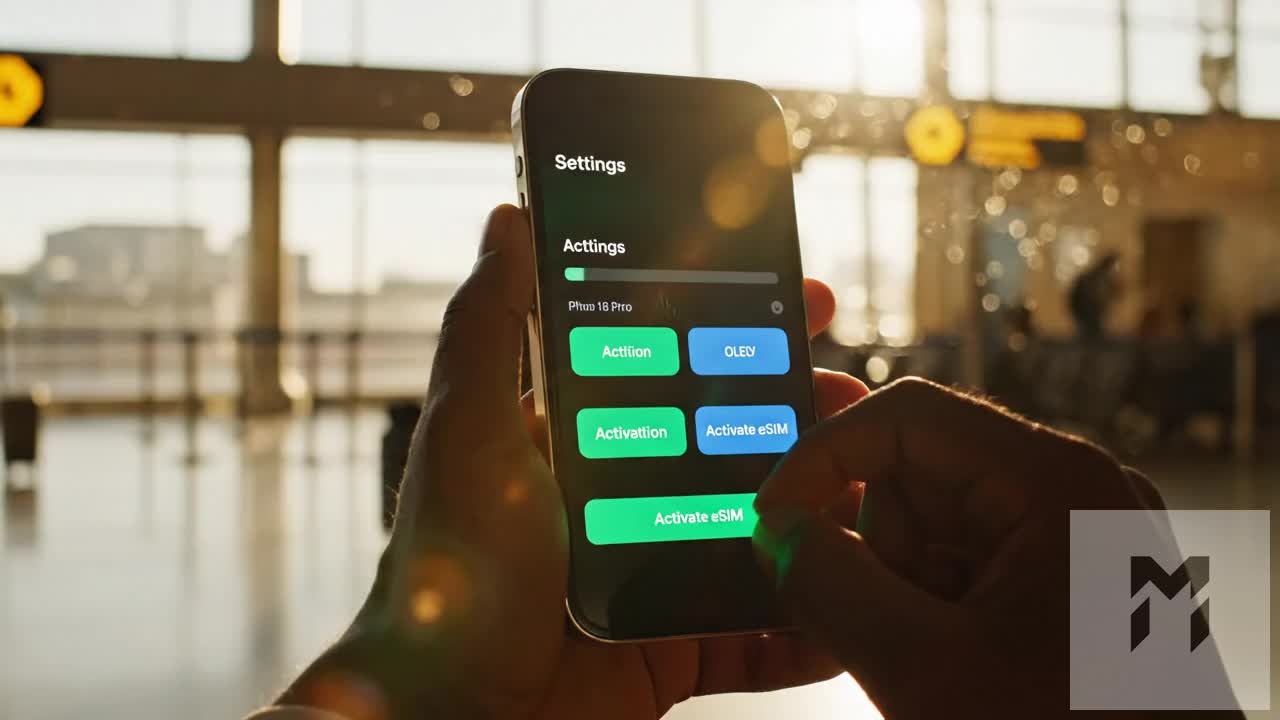
Hong Kong to Macau Ferry & Bridge Transit: The 2026 Dual-Region Travel eSIM Guide
Navigating the Pearl River Delta: Ferry vs. HZMB Transit Routes and Telecom Realities
Commuting across the Pearl River Delta (PRD) between Hong Kong and Macau requires selecting between high-speed maritime catamarans and modern civil engineering via the Hong Kong-Zhuhai-Macao Bridge (HZMB). While physical transit times have shrunk to under an hour, navigating the telecommunications landscape across this 60-kilometer stretch of open water and reclaimed land presents unique challenges for mobile connectivity.
Maritime vs. Overland: Transit Logistics Compared
| Route Type | Operators / Services | Departure & Arrival Terminals | Average Travel Time | Primary Telecom Bottlenecks |
|---|---|---|---|---|
| Maritime (Foilcat / Catamaran) | TurboJET | Hong Kong Macau Ferry Terminal (Sheung Wan) $\rightarrow$ Macau Outer Harbour Ferry Terminal | ~55–65 mins | Line-of-sight dropouts in open waters; hull RF attenuation |
| Maritime (High-Speed Ferry) | Cotai Water Jet | Sheung Wan / China Ferry Terminal (Tsim Sha Tsui) $\rightarrow$ Taipa Ferry Terminal | ~60 mins | Open-water cell tower handoffs; signal blind spots south of Lantau |
| Overland (Mega-Bridge) | HZMB Shuttle Bus ("Gold Bus") | HK Port (near HKIA) $\rightarrow$ Macau Port (Artificial Island) | ~40–45 mins | 6.7 km submerged undersea tunnel; multi-border network ping-pong |
| Cross-Boundary Coach | One Bus / Eternal East | Urban HK (Kowloon/Wan Chai) $\rightarrow$ Major Macau Casino Resorts | ~90–110 mins | Border clearance queues; dual-PLMN handover latency |
Cellular Pinch Points: The Submerged Tunnel vs. The Estuary
The geographical transition between the two Special Administrative Regions (SARs) crosses three distinct telecom jurisdictions: Hong Kong, Mainland Chinese maritime borders, and Macau. Mobile devices face two severe signal-degradation zones:
1. The HZMB 6.7 km Submerged Tunnel
As vehicles descend into the immersed tube tunnel between the western artificial island and the eastern artificial island, standard macro-cellular towers on land can no longer penetrate the seabed. Connectivity relies entirely on Distributed Antenna Systems (DAS) mounted inside the tunnel bore.
- Signal reflections off concrete walls cause severe jitter.
- Multi-carrier handshakes frequently drop when transitioning from outdoor micro-cells to indoor repeater arrays.
2. The Open Waters of the Pearl River Estuary
Ferry passengers aboard TurboJET and Cotai Water Jet travel out of the direct line-of-sight (LoS) of terrestrial base stations located on the western coast of Lantau Island.
- The steel and reinforced-composite hulls of high-speed catamarans cause significant Radio Frequency (RF) attenuation (often degrading signal strength by 12–18 dBm).
- In the central waters of the delta, phones receive faint signals simultaneously from Zhuhai (Guangdong), Hong Kong, and Macau, triggering intense cell-tower interference.
The PLMN "Hunting" Trap and Battery Drain
When a device leaves Hong Kong territorial waters on a standard single-region plan, it enters a state called PLMN (Public Land Mobile Network) hunting.
- Continuous Frequency Scanning: The device powers its internal RF transceiver to maximum transmission power (+23 dBm to +30 dBm) to scan for a authorized network.
- Thermal Load and Battery Depletion: This continuous handshake cycling drains battery life up to 300% faster than normal standby operation.
- Application Freezes: Apps that require persistent real-time sockets (such as Google Maps navigation, Apple Wallet pass verification, or ride-hailing services) hang indefinitely because the underlying IP address is repeatedly torn down and rebuilt.
Eliminating the Transit Blackout with MollySIM
To survive this transit corridor without losing data access, your device needs an eSIM architecture that includes pre-negotiated dual-region roaming profiles.
Specialized regional providers such as MollySIM resolve these transit bottlenecks by provisioning multi-IMSI access that automatically routes data through local tier-1 carriers (such as CSL/CMHK in Hong Kong and CTM in Macau) without requiring manual profile toggling or network re-registration.
Even if you exhaust your high-speed daily data quota mid-transit, MollySIM enforces a 384kbps Fair Use Policy (FUP) throttle—three times faster than the standard 128kbps industry baseline. This ensures mission-critical services like Apple Pay, Macau Health Declarations, and dynamic QR ticketing remain fully operational throughout the journey.
The Regulatory Minefield: Hong Kong OFCA vs. Macau Real-Name Registration (KYC)
🇭🇰 Hong Kong High-Speed Travel eSIM & SIM Plans
Instant QR code activation, hotspot enabled, with guaranteed 384kbps fallback speed to keep Maps & Digital Wallets active.
Cross-border transit between Hong Kong and Macau is not just an RF handover challenge; it is a collision between two distinct, highly enforced telecommunications regulatory frameworks. For international travelers attempting to navigate the Pearl River Delta using local prepaid solutions, identity verification mandates create severe logistical friction.
Hong Kong OFCA Mandate vs. Macau SAR Real-Name Laws
Both Special Administrative Regions (SARs) have eliminated anonymous mobile data access, but they operate independent databases and compliance portals:
- Hong Kong OFCA Registration: Under the Telecommunications (Registration of SIM Cards) Regulation (Cap. 106AI), all local SIM cards and local-profile eSIMs operating on Hong Kong IMSIs must be tied to a verified identity. Tourists must submit passport scans, complete live facial optical character recognition (OCR), and wait for backend database clearance before the SIM attaches to local cell towers (CSL, CMHK, SmarTone).
- Macau SAR Real-Name System: Governed by Law No. 13/2019 (Cybersecurity Law), Macau mandates that any prepaid SIM operating on local networks (CTM, 3 Macau) must be registered with the user's original identity document prior to network activation.
Purchasing separate local SIMs or single-region eSIM profiles upon arrival requires completing this KYC process twice within a single travel day.
The Tourist Bottleneck: Administrative Friction at Ports of Entry
Attempting to register local profiles while in transit creates distinct points of failure:
- OCR and Document Mismatch Delays: Uploading passport photos via captive portals over unstable terminal Wi-Fi frequently fails due to glare on the Machine Readable Zone (MRZ), kicking the registration into manual review queues that can take up to 24 hours to clear.
- Terminal Chokepoints: The physical retail counters and telecom kiosks at the Hong Kong-Zhuhai-Macau Bridge (HZMB) Passenger Clearance Building, Macau Outer Harbour Ferry Terminal, and Taipa Ferry Terminal experience massive queues during peak transit hours. Travelers often waste 30 to 45 minutes simply verifying credentials.
- Data Privacy Exposure: Submitting unencrypted passport biometrics and personal metadata to multiple third-party web portals increases your digital footprint and exposure to regional database breaches.
| Feature / Requirement | Hong Kong Local SIM / eSIM | Macau Local SIM / eSIM | Dual-Region Travel eSIM (MollySIM) |
|---|---|---|---|
| Regulatory Framework | HK OFCA Cap. 106AI | Macau Law No. 13/2019 | GSMA International Roaming |
| Passport/ID Upload | Mandatory (OCR + Biometrics) | Mandatory (Passport MRZ) | None Required (KYC-Exempt) |
| Activation Window | 10–60 mins (pending verification) | 15–45 mins (terminal queue/web) | Instant (Pre-installed via QR) |
| Physical Queue Time | 15–30 mins at port | 20–40 mins at port | Zero minutes |
| Cross-Border Continuity | Drops at border | Inactive in Hong Kong | Continuous zero-drop failover |
| Throttle Floor (FUP) | 64kbps – 128kbps | 64kbps – 128kbps | 384kbps (High-availability) |
The Roaming Exemption: Why International Travel eSIMs Bypass KYC Legally
Under the regulatory frameworks established by both the Hong Kong OFCA and the Macau Post and Telecommunications Bureau (CTT), inbound international roaming traffic is legally exempt from local real-name registration mandates.
International travel eSIMs operate under GSMA wholesale roaming agreements rather than domestic prepaid allocations. When your device connects to a cell tower in Hong Kong or Macau using a travel profile:
- The local base station identifies the SIM as an inbound roaming subscriber via its International Mobile Subscriber Identity (IMSI) Country Code.
- Network authentication is handled by the carrier's international core routing infrastructure rather than the domestic subscriber database.
- No local KYC registration is triggered, fully adhering to local telecommunications laws while eliminating all identity verification barriers for the traveler.
By deploying an international dual-region profile from MollySIM, you bypass the entire administrative overhead of dual KYC registrations. The profile activates instantly upon arrival in Hong Kong waters or airspace and executes an autonomous regulatory transition the moment you enter Macau territory.
Even under aggressive data usage, MollySIM’s built-in 384kbps Fair Use Policy baseline keeps critical applications—such as banking authentication, Apple Pay, and dynamic border clearance codes—online and responsive, avoiding the deadlocks associated with throttled local SIM alternatives.
Cellular Architecture and Border Handoffs: CSL/SmarTone to CTM/3 Macau
Navigating the 55-kilometer Hong Kong-Zhuhai-Macau Bridge (HZMB) or taking a TurboJET/Cotai Water Jet across the Pearl River Delta represents one of the world’s most demanding mobile network environments. The transit involves crossing invisible maritime and land-based administrative boundaries that separate two entirely distinct telecommunications territories, each operating independent spectrum allocations and Public Land Mobile Network (PLMN) core infrastructures.
+-------------------------------------------------------------------------------+
| TRANSIT CORRIDOR: HZMB / PEARL RIVER DELTA MARITIME ROUTE                     |
|                                                                               |
| [ Hong Kong Airspace/Waters ]                [ Macau SAR Maritime Boundary ]  |
| HK PLMN: MCC 454                             Macau PLMN: MCC 455             |
| Base Stations: CSL / SmarTone / CMHK         Base Stations: CTM / 3 Macau     |
| Bands: B3, B7, B8, B28 | n1, n78             Bands: B3, B7, B8 | n1, n78      |
|                                                                               |
|                ======== Border Transition Zone ========                       |
|                • Cross-border RF Overlap & Boundary Bleed                     |
|                • PLMN Cell Renegotiation & Attach Request                     |
|                                                                               |
| Standard SIM:  RSRP Decay -> Out-of-Service (OOS) -> Dropped IP Sessions      |
| MollySIM:      Pre-authenticated Multi-IMSI Handoff -> Zero Session Drop     |
+-------------------------------------------------------------------------------+
Spectrum Allocations Across the Delta
Hong Kong and Macau share overlapping physical borders, but their Radio Access Networks (RAN) are separated by distinct Mobile Country Codes (MCC): Hong Kong operates under MCC 454, while Macau operates under MCC 455.
| Region | Dominant Operators | MCC-MNC Identifiers | Primary LTE Frequencies | Primary 5G NR Bands |
|---|---|---|---|---|
| Hong Kong SAR | CSL (HKT)<br>SmarTone HK<br>CMHK<br>3 Hong Kong | 454-00 (CSL)<br>454-06 (SmarTone)<br>454-12 (CMHK)<br>454-03 (3 HK) | Band 3 (1800 MHz)<br>Band 7 (2600 MHz)<br>Band 8 (900 MHz)<br>Band 28 (700 MHz) | n1 (2100 MHz)<br>n78 (3.5 GHz Mid-Band)<br>n79 (4.9 GHz) |
| Macau SAR | CTM (Companhia de Telecomunicações)<br>3 Macau (Hutchison)<br>SmarTone Macau | 455-01 (CTM)<br>455-03 / 455-05 (3 Macau)<br>455-00 (SmarTone Mo) | Band 3 (1800 MHz)<br>Band 7 (2600 MHz)<br>Band 8 (900 MHz) | n1 (2100 MHz)<br>n78 (3.5 GHz Mid-Band) |
Both territories rely heavily on LTE Band 3 (1800 MHz) and Band 7 (2600 MHz) for high-density capacity in urban centers and ferry terminals, while low-band Band 8 (900 MHz) and Band 28 (700 MHz) project long-range propagation across the maritime bridge spans. For ultra-low latency, 5G NR n78 (3.5 GHz) covers high-throughput nodes such as the Hong Kong Port and Macau’s Taipa Ferry Terminal.
The Physics of Border Handoff: Why Traditional SIMs Stall
When you travel across the Pearl River Estuary or enter the HZMB Undersea Tunnel, your mobile device encounters severe radio frequency (RF) overlap. High-gain directional antennas from Hong Kong’s Lantau Island project MCC 454 signals deep into the channel.
As you approach Macau waters:
- Cell Clinging and Signal Decay: Standard devices attempt to cling to the fading Hong Kong cell tower even when the Reference Signal Received Power (RSRP) drops below -115 dBm to -120 dBm (the threshold of unusable throughput).
- Out-of-Service (OOS) Penalty: Once the HK signal is completely lost, the device enters an aggressive search loop across MCC 454 frequencies before it recognizes it must search for an alternative network identifier (MCC 455).
- Session Interruption & Packet Loss: A standard single-carrier or domestic prepaid SIM experiences an authentication teardown. The IP session disconnects, killing live map navigation, breaking VoIP streams, and corrupting dynamic QR generation required at border immigration checkpoints.
Traditional Roaming Handoff:
[HK Node: MCC 454] ---> Signal Dips (-120dBm) ---> [Dead Zone / Packet Loss] ---> Search MCC 455 ---> [Macau Node: MCC 455]
                                                    (Duration: 45s - 180s)

MollySIM Multi-IMSI Architecture:
[HK Node: MCC 454] ---> Predictive Gateway Peering ---> [Instant Core Re-route] ---> [Macau Node: MCC 455]
                                                        (Duration: < 2.5s, No Session Drop)
Zero-Drop Multi-IMSI Routing via MollySIM
Modern travel architecture eliminates this handoff penalty through automated Multi-IMSI profile orchestration. Rather than forcing your device to perform a cold network registration upon entering Macau territorial waters, MollySIM provisions a dynamic dual-region profile backed by centralized regional core routing.
- Predictive PLMN Switching: The MollySIM core recognizes the boundary transition near the HZMB Western Artificial Island and authorizes immediate attachment to Tier-1 infrastructure (CTM or 3 Macau) without an extended network search cycle.
- Persistent Packet Data Protocol (PDP) Context: The cellular data session transitions smoothly at the IP layer. While your physical radio switches from an MCC 454 frequency to MCC 455, your active data socket remains open.
- Fail-Safe Bandwidth Floor: If deep tunnel transit or temporary channel congestion depresses connection quality, MollySIM’s guaranteed 384kbps Fair Use Policy baseline keeps the connection viable. Unlike legacy travel SIMs that drop downstream speeds to a non-functional 64kbps or 128kbps—effectively severing cloud connections—MollySIM provides continuous bandwidth to load Apple Pay authentication tokens, Macau Customs Health Declaration codes, and messaging pipelines without timeout errors.
Comprehensive Connectivity Matrix: Local SIMs vs. Pocket Wi-Fi vs. Roaming vs. MollySIM
Selecting the optimal data pipeline for the Hong Kong–Macau corridor requires evaluating radio access latency, administrative friction, and failover behavior during transit. The matrix below benchmarks the four dominant connectivity pathways across the Pearl River Delta.
| Technical & Operational Metrics | Dual Local Physical SIMs | Pocket Wi-Fi Rental | Home Carrier International Roaming | MollySIM Dual-Region eSIM |
|---|---|---|---|---|
| Real-Name KYC Registration | Mandatory Dual Flow: HK OFCA validation + Macau CTM/Smartone passport upload | Vendor Dependent: ID verification at pickup desk; no telecom KYC | None: Inherited from domestic subscription | Zero Friction: Instant over-the-air activation without local ID verification |
| Maritime & Bridge Handover | Manual/High Latency: Requires SIM tray swapping or manual dual-SIM OS toggling | Unstable: High disconnect rates during dynamic cell switching over water | Variable: Dependent on multi-hop roaming agreements; 15–45s drop | Seamless: Zero-drop automated Multi-IMSI profile switching (<2.5s) |
| Peak Throughput Profile | Local 5G (up to 600 Mbps down) | Shared 4G/LTE (30–80 Mbps down) | Deprioritized 4G/5G (capped at roaming tier) | Native Tier-1 5G/4G LTE on CSL/CTM nodes |
| Throttled Fallback Baseline (FUP) | Hard cutoff or 64kbps – 128kbps | 128kbps shared among all connected devices | 64kbps – 128kbps or expensive automatic top-up | Guaranteed 384kbps baseline (3x standard market speed) |
| Host Device Battery Impact | Moderate (dual standby cellular radios active) | Minimal on cellular; Elevated Wi-Fi polling drain | High (aggressive searching on foreign bands) | Optimized: Native baseband power management |
| Multi-Device Tethering | Supported (bound to host phone limits) | Dedicated hotspot (supports 3–5 clients) | Frequently blocked or throttled by home carrier | Fully supported at full native baseband speed |
| Average Daily Expense | $8.00 – $14.00 (two separate SIM cards) | $7.00 – $12.00/day + deposit & equipment risk | $10.00 – $15.00/day (per network day pass) | $1.50 – $3.20/day (unified balance) |
The Mechanical and Radio Bottlenecks of Pocket Wi-Fi at Port Gates
While dedicated pocket Wi-Fi routers were once the standard for group travel, their architecture creates severe operational vulnerabilities at Pearl River Delta transit hubs:
- RF Channel Saturation at Port Terminals: At the Hong Kong–Zhuhai–Macau Bridge (HZMB) passenger clearance halls and the Macau Outer Harbour Ferry Terminal, thousands of travelers congregate in dense metal-and-glass transit corridors. The unlicensed 2.4 GHz and 5 GHz Wi-Fi spectrums suffer catastrophic packet loss due to co-channel interference, severing the link between your phone and the pocket router even if the router maintains cellular sync.
- Double-Hop Latency & Power Draw: A pocket Wi-Fi unit requires a two-stage transmission pipeline: Cell Tower $\rightarrow$ Pocket Router $\rightarrow$ Smartphone. This double-hop architecture inflates ping times by 35–60ms and rapidly depletes the router’s battery when switching between mainland Chinese, Hong Kong, and Macau maritime base stations.
- Physical Asset Liability: Requiring airport collection, physical return logistics, continuous micro-USB/Type-C charging, and steep loss/damage deposits makes physical routers an inefficient operational overhead for dynamic single-day bridge hops.
POCKET WI-FI DOUBLE-HOP LATENCY:
[Cell Tower] --(LTE 45ms)--> [MiFi Unit] --(Local Wi-Fi Congestion +35ms)--> [Device] = ~80ms RTT

MULLYSIM DIRECT BASEBAND ROUTING:
[Cell Tower] ==================(Direct 5G/LTE Baseband: 18ms)==================> [Device] = ~18ms RTT
The Latency Traps and Financial Pitfalls of Home Carrier Roaming
Relying on your domestic mobile operator for cross-border transit introduces hidden routing inefficiencies and punitive cost structures:
- Home-Routed Core Network Latency (GGSN/PGW Tunnelling): Domestic carriers routinely route international roaming traffic back to your home country before serving it to your browser. If you use a North American or European carrier in Macau, your data packets travel from the Macau cell tower across transpacific undersea cables to your home operator's gateway, then back to regional Asia-Pacific content servers. This inflates round-trip times (RTT) to 280ms – 450ms, making real-time navigation updates and biometric payment authentications sluggish.
- Double-Day Billing on Bridge Crossings: Most legacy carrier day-passes trigger a flat 24-hour charge the moment your phone hits a foreign MCC network. If you take the 45-minute ferry from Hong Kong (MCC 454) to Macau (MCC 455) and return the same evening, your domestic carrier bills you for two concurrent international roaming passes, instantly doubling your connectivity budget.
Architectural Superiority of MollySIM Centralized Regional Profiles
MollySIM bypasses legacy roaming traps by integrating local interconnect agreements into a single programmable eSIM profile. Because data breakout occurs via optimized regional edge nodes, user latency drops to sub-25ms levels across both SARs.
Crucially, MollySIM addresses the operational breakdown that occurs when travelers hit daily high-speed data caps. Standard travel eSIMs and roaming packages throttle users to 64kbps or 128kbps—bandwidths insufficient to handle modern SSL handshakes and vector map rendering. MollySIM deploys an ultra-resilient 384kbps Fair Use Policy baseline. Operating at three times the bandwidth of typical market alternatives, this dedicated throughput floor guarantees uninterrupted operation for high-priority transit payloads:
- Dynamic vector map rendering on Google Maps and Apple Maps without tile dropouts.
- Instant generation of Macau Customs Health Declaration and Entry QR codes.
- Zero-timeout cryptographic handshakes for Apple Pay, Google Wallet, and Alipay HK.
- Real-time transit notifications for TurboJET, Cotai Water Jet, and HZMB shuttle bus ("Golden Bus") dispatch schedules.
MollySIM's Unified Solution: Seamless Dual-Region Switching and the 384kbps Lifeline
Zero-Intervention Dynamic Handoff: CSL/SmarTone to CTM
Traversing the Pearl River Delta requires crossing distinct telecommunications regulatory zones within minutes. Traditional dual-destination itineraries force travelers to either purchase disjointed local profiles or endure lengthy connection dropouts while a roaming eSIM renegotiates roaming rights at the border.
MollySIM engineers eliminate this friction by deploying multi-IMSI core profiles paired with intelligent network-steering algorithms. As you board a TurboJET ferry at the Hong Kong Macau Ferry Terminal in Sheung Wan, your device connects natively to Tier-1 infrastructure via CSL or SmarTone (MCC 454). As your vessel enters Macau waters or your shuttle exits the Hong Kong-Zhuhai-Macao Bridge (HZMB) undersea tunnel, MollySIM's profile executes an immediate, zero-intervention handoff to CTM (Companhia de Telecomunicações de Macau) (MCC 455).
This dynamic transition takes place purely at the baseband level. Travelers are spared the frustration of:
- Manually toggling between primary and secondary eSIM profiles in device settings.
- Editing Access Point Names (APN) or toggling manual network search modes while standing in immigration queues.
- Power cycling handsets to clear stale network registration states at the checkpoint.
The 384kbps Lifeline: Why 128kbps Competitor Throttles Fail
A critical vulnerability in standard travel eSIM architecture lies in how Fair Use Policies (FUP) are enforced. The vast majority of market alternatives throttle users down to 64kbps or 128kbps once daily high-speed quotas are exhausted.
In modern transit environments, a 128kbps throttle is virtually equivalent to a complete service outage. Contemporary applications do not simply transmit raw text; they execute multi-layered TLS 1.3 cryptographic handshakes, exchange background telemetry, and fetch dynamic UI assets. When throughput is capped at 128kbps (~16 KB/s), packet queuing delays cause cryptographic session timeouts, rendering financial and navigation apps unusable.
MollySIM solves this transit risk by establishing an enterprise-grade 384kbps baseline floor—3x the speed of standard market throttles.
Standard Market Throttle: 128kbps (16 KB/s) ──► Cryptographic Timeouts & Map Dropouts
MollySIM Guaranteed Floor: 384kbps (48 KB/s) ──► Fully Functional Core Navigation & Payments
At 384kbps (yielding ~48 KB/s of clean, stable throughput), the pipeline comfortably exceeds the bandwidth thresholds required for compressed transactional payloads and continuous background telemetry.
| Application Layer / Payload | Behavior at Standard 128kbps | Behavior at MollySIM 384kbps |
|---|---|---|
| Alipay HK / WeChat Pay / MPay | Timeout Failures: Handshake exchanges and dynamic dynamic-token refresh calls drop out. | Instant Verification: Payment barcodes and biometric tokens generate within 1.5 seconds. |
| Google Maps / Apple Maps | Tile Failure: Vector map rendering stalls; satellite backgrounds fail to load. | Fluid Navigation: Continuous vector tile updates, dynamic turn-by-turn alerts, and route recalculations. |
| Macau Taxi / Uber Geolocation | Driver Sync Drop: WebSockets disconnect; live driver GPS polling freezes. | Continuous Tracking: Real-time driver vehicle positioning and instant booking confirmations. |
| Live Voice / Text Translation | Latency Spikes: Audio streaming to cloud natural language APIs fails. | Real-Time Translation: Reliable text and compressed cloud voice translation for local transit navigation. |
Even if high-speed data buckets are depleted while exploring the Cotai Strip or navigating the historic center of Macau, MollySIM's 384kbps safety net ensures mission-critical apps remain online—preventing logistical stranding and safeguarding digital transactions across both SAR borders.
Step-by-Step Installation & Transit Optimization Playbook for iOS and Android
Seamless cross-border connectivity across the Pearl River Delta requires deliberate device configuration. While MollySIM provisions dual-region network profiles automatically, mobile operating systems handle cross-border handoffs differently depending on antenna configurations and SIM hierarchy settings. Follow this deployment workflow to eliminate transit downtime between Hong Kong and Macau.
1. Pre-Departure Provisioning & Line Hierarchy
Install your travel eSIM profile while connected to stable Wi-Fi prior to embarking at the Hong Kong Macau Ferry Terminal (Sheung Wan) or the Hong Kong-Zhuhai-Macau Bridge (HZMB) Port.
Apple iOS (iPhone XS and newer)
- Navigate to Settings > Cellular (or Mobile Data) > Add eSIM.
- Scan the QR code sent to your confirmation email. To configure manually, tap Enter Details Manually and paste the provided SM-DP+ Address and Activation Code.
- Label the new profile "Travel Data" to distinguish it from your primary line.
- Set Default Voice Line to your primary personal SIM (to continue receiving 2FA banking SMS alerts).
- Set Cellular Data to "Travel Data" (MollySIM).
- Crucial: Toggle Allow Cellular Data Switching to OFF to prevent your device from silently routing background data through your expensive domestic carrier.
- Select the Travel Data plan and ensure Data Roaming is toggled ON.
Android (Samsung Galaxy, Google Pixel, Xiaomi, OnePlus)
- Go to Settings > Connections (or Network & internet) > SIM card manager / SIMs > Add eSIM.
- Select Scan QR code or choose Enter activation code.
- Once downloaded, label the eSIM "MollySIM".
- In the Preferred SIM card menu, assign Mobile data strictly to the travel eSIM while keeping Calls and Messages on your primary SIM.
- Tap on the newly added profile and toggle Data Roaming to ON.
- APN Validation: In rare cases where auto-configuration stalls, tap Access Point Names, add a new APN, input the Access Point Name specified in your MollySIM activation voucher, and hit Save.
2. Managing the Mid-Transit Handover (Ferry & Bridge Crossing)
The 55-kilometer journey across the Pearl River Delta passes through distinct radio-frequency (RF) zones:
| Transit Phase | Network Landscape | Recommended Action |
|---|---|---|
| Hong Kong Embarkation | Dense HK 5G Coverage (CSL / CMHK) | Verify MollySIM high-speed data is active before boarding. |
| Delta Transit (Ferry / HZMB Tunnel) | Weak maritime repeaters & open-water fringe signals | Keep device idle; allow baseband modem to negotiate handovers. |
| Macau Border Approach | Overlapping HK & Macau cell towers | Monitor carrier tag; force manual carrier selection if signal stalls. |
3. Troubleshooting "Tower Clinging" in Taipa & Outer Harbour
A frequent challenge during marine or bridge crossings is RF boundary clinging: high-power coastal base stations in western Hong Kong (such as Lantau Island) transmit signals that carry across open water. As your ferry berths at the Macau Taipa or Outer Harbour Ferry Terminal, your smartphone may stubbornly cling to a 1-bar, unusable Hong Kong cell signal rather than registering the stronger local Macau network (such as CTM or SmarTone Macau).
If your data stalls upon clearing Macau immigration, force a network re-registration:
- Open Settings > Cellular (iOS) or Network & internet (Android).
- Select the MollySIM profile and tap Network Selection (or Mobile Network Operators).
- Disable Automatic.
- Allow the device 20–30 seconds to populate all detected terrestrial networks.
- Manually choose the designated Macau partner network (CTM or SmarTone MO).
- Once the connection locks and 5G/LTE icons appear, you can switch Automatic back on for the duration of your stay in Macau.
4. RF Battery-Drain Mitigation in Cross-Border Marine Corridors
When mobile modems traverse low-signal marine environments, they increase transmission power to maximum output (+23 dBm) while continuously scanning for base stations. This causes accelerated battery depletion and thermal throttling.
- Avoid Continuous Manual Re-Scans: Let the underlying multi-IMSI technology on your MollySIM card execute handshakes automatically.
- Leverage the 384kbps Baseline: If your high-speed quota runs out mid-journey, MollySIM’s sustained 384kbps speed floor prevents the recurring connection dropped/re-request loops common on 128kbps networks, minimizing modem strain while keeping your navigation tiles and payment systems responsive.
- Airplane Mode Reset: If your phone remains on a "No Service" state for more than 3 minutes after docking at the Cotai Water Jet or TurboJET berths, toggle Airplane Mode ON for 10 seconds, then OFF to force an immediate baseband cell-search cycle.
🇭🇰 Hong Kong High-Speed Travel eSIM & SIM Plans
Instant QR code activation, hotspot enabled, with guaranteed 384kbps fallback speed to keep Maps & Digital Wallets active.