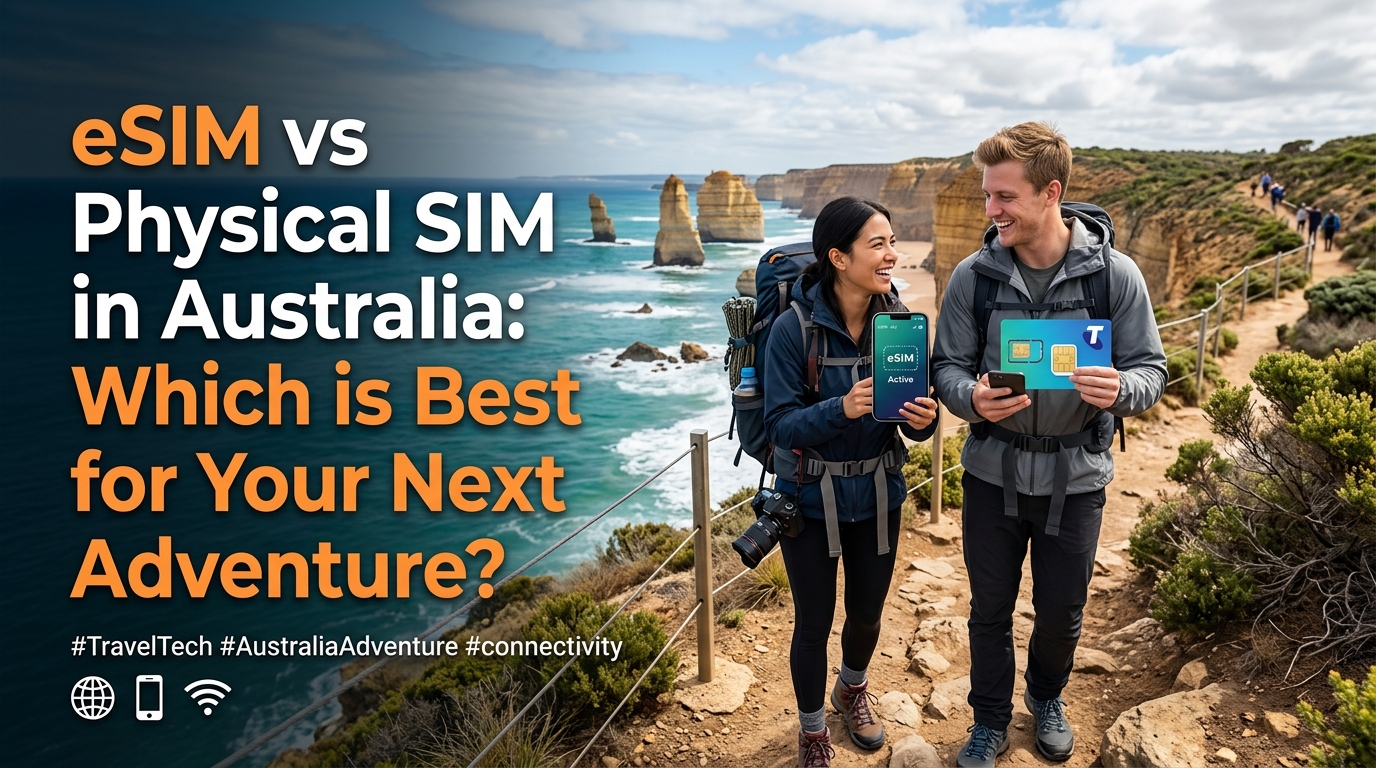
eSIM против физической SIM-карты в Австралии: что лучше для вашего следующего приключения?
Путешествие в Австралию — это захватывающий опыт, наполненный потрясающими пейзажами, яркими городами и уникальной дикой природой. Однако оставаться на связи во время вашего приключения крайне важно, будь то для навигации, обмена впечатлениями в социальных сетях или просто для общения с близкими. Одним из основных вопросов для путешественников является то, как управлять мобильной связью. В этой статье мы рассмотрим ключевые различия между eSIM и физическими SIM-картами в Австралии, чтобы помочь вам принять обоснованное решение о том, какой вариант лучше для вашего следующего приключения.
Понимание технологии SIM
Что такое физическая SIM-карта?
Физическая SIM-карта — это небольшая съемная карта, которая соединяет ваше мобильное устройство с сотовой сетью. Она содержит уникальный номер международной мобильной подписки (IMSI), который идентифицирует вашу подписку и позволяет вам получать доступ к мобильным услугам. Физические SIM-карты бывают разных размеров: стандартные, микро и нано, при этом нано является наиболее распространенным в современных смартфонах.
Что такое eSIM?
eSIM (встроенная SIM) — это цифровая SIM, которая встроена непосредственно в ваше устройство. В отличие от физических SIM-карт, eSIM не требует вставки физической карты. Вместо этого они могут быть активированы удаленно вашим мобильным оператором. Эта технология позволяет пользователям переключать оператора или тарифный план без необходимости замены физической карты, что делает ее более гибким вариантом для частых путешественников.
Ключевые различия между eSIM и физической SIM
🌐 Global Travel High-Speed Travel eSIM & SIM Plans
Instant QR code activation, hotspot enabled, with guaranteed 384kbps fallback speed to keep Maps & Digital Wallets active.
Чтобы помочь вам лучше понять различия между eSIM и физическими SIM-картами, мы разберем преимущества и недостатки каждого варианта.
Преимущества eSIM
- Удобство:
- Нет необходимости носить с собой несколько SIM-карт.
- Легко переключаться между операторами и тарифами через настройки устройства.
- Экономия пространства:
- eSIM не занимает физического пространства, что позволяет создавать более компактные дизайны устройств.
- Удаленная активация:
- Активируйте свою eSIM без посещения магазина, что идеально подходит для путешественников.
- Несколько профилей:
- Храните несколько профилей операторов на одном устройстве, позволяя переключаться между тарифами по мере необходимости.
Недостатки eSIM
- Совместимость устройств:
- Не все устройства поддерживают технологию eSIM. Проверьте характеристики вашего устройства перед выбором eSIM.
- Ограниченная доступность:
- Хотя eSIM становятся все более распространенными, не все операторы предлагают поддержку eSIM.
- Технические проблемы:
- Некоторые пользователи могут столкнуться с осложнениями во время процесса активации.
Преимущества физических SIM-карт
- Широкая совместимость:
- Совместимы практически со всеми мобильными устройствами, включая старые модели.
- Простота:
- Легко понять и использовать; просто вставьте SIM-карту, чтобы подключиться.
- Отсутствие проблем с активацией:
- Мгновенное подключение после вставки SIM-карты, без необходимости программной активации.
Недостатки физических SIM-карт
- Ограниченная гибкость:
- Переключение операторов требует физической замены SIM-карты.
- Риск потери или повреждения:
- Физические SIM-карты могут быть потеряны или повреждены, что может привести к проблемам с подключением.
- Требование пространства:
- Занимает физическое пространство в вашем устройстве, которое могло бы быть использовано для других компонентов.
Скорость активации: eSIM против физической SIM
Процесс активации eSIM
Активация eSIM обычно проста, но может варьироваться в зависимости от оператора. Вот пошаговое руководство по активации eSIM на вашем устройстве:
- Выберите оператора: Исследуйте и выберите оператора, который предлагает услуги eSIM в Австралии.
- Приобретите тарифный план eSIM: Посетите веб-сайт оператора или воспользуйтесь надежным провайдером, таким как MollySIM, чтобы приобрести вашу eSIM.
- Получите QR-код: После покупки вы получите QR-код по электронной почте или SMS.
- Откройте настройки: На вашем устройстве перейдите в Настройки > Сотовая связь > Добавить тарифный план.
- Сканируйте QR-код: Используйте камеру вашего устройства, чтобы отсканировать QR-код, предоставленный вашим оператором.
- Завершите активацию: Следуйте инструкциям на экране, чтобы завершить процесс активации.
Процесс активации физической SIM-карты
Активация физической SIM-карты обычно является более быстрым процессом, особенно для путешественников. Вот как это сделать:
- Приобретите физическую SIM: Купите физическую SIM-карту в магазине оператора, в автомате или онлайн.
- Вставьте SIM-карту: Найдите лоток для SIM-карты вашего устройства, используйте инструмент для извлечения SIM (или скрепку) и вставьте SIM-карту.
- Включите устройство: Включите ваше устройство, и оно должно автоматически подключиться к сети.
- Следуйте инструкциям по настройке: Если будет предложено, следуйте любым дополнительным инструкциям по настройке от вашего оператора.
Сетевое покрытие в Австралии
Австралия имеет обширный и разнообразный ландшафт, что может повлиять на покрытие мобильной сети. Три основных оператора — Telstra, Optus и Vodafone — предлагают различные зоны покрытия и тарифные планы. Ниже представлена сравнительная таблица, подчеркивающая покрытие и услуги, предоставляемые этими операторами.
| Оператор | Зона покрытия | Доступность 4G LTE | Поддержка eSIM | Тарифные планы (начиная) | Международный роуминг |
|---|---|---|---|---|---|
| Telstra | Обширное | 99,5% населения | Да | AUD 10 за 1ГБ | Да |
| Optus | Хорошее | 98,5% населения | Да | AUD 10 за 1ГБ | Да |
| Vodafone | Умеренное | 96% населения | Да | AUD 10 за 1ГБ | Да |
MollySIM: Конкурентное преимущество в решениях eSIM
Для международных путешественников MollySIM выделяется как премиум-провайдер eSIM, предлагающий конкурентоспособные цены и гибкость. Вот некоторые преимущества выбора MollySIM для вашего австралийского приключения:
- Доступные тарифные планы: Начиная всего с AUD 10 за 1ГБ, MollySIM предлагает экономичные варианты для путешественников.
- Скорость 384 кбит/с FUP: Наслаждайтесь скоростью передачи данных, которая в три раза быстрее типичных конкурентов, обеспечивая плавный опыт серфинга.
- Легкая активация: Быстрый и беззаботный процесс активации через простой скан QR-кода.
- Гибкие варианты: Выбирайте из различных пакетов данных, адаптированных под ваши потребности в путешествии.
Анализ затрат: eSIM против физической SIM
При рассмотрении ваших вариантов важно оценить затраты, связанные с каждым типом SIM. Ниже представлено разбивка потенциальных затрат для eSIM и физических SIM-карт в Австралии.
Затраты на eSIM
- Первоначальная покупка: Обычно колеблется от AUD 10 до AUD 50 в зависимости от тарифного плана.
- Пакеты данных: Пакеты данных варьируются в зависимости от оператора, при этом MollySIM предлагает конкурентоспособные тарифы, начиная с AUD 10 за 1ГБ.
- Плата за роуминг: Проверьте у вашего провайдера наличие дополнительных международных роуминговых сборов.
Затраты на физическую SIM
- Первоначальная покупка: Обычно колеблется от AUD 5 до AUD 30 за саму SIM-карту.
- Пакеты данных: Аналогично eSIM, с ценами, начинающимися от AUD 10 за 1ГБ.
- Плата за роуминг: Могут возникнуть дополнительные расходы, если вы планируете использовать SIM за пределами Австралии.
Заключение: что лучше для вашего приключения?
Выбор между eSIM и физической SIM-картой в конечном итоге зависит от ваших конкретных потребностей и предпочтений в путешествии. Если вы цените удобство, гибкость и возможность легко переключать операторов, eSIM, вероятно, будет лучшим вариантом для вас. С другой стороны, если вы предпочитаете простой, традиционный подход и используете старое устройство, физическая SIM может быть более подходящей.
Для тех, кто ищет беззаботный опыт во время путешествий по Австралии, MollySIM предлагает отличное решение eSIM, которое сочетает в себе доступность, скорость и гибкость. С простым процессом активации и конкурентоспособными тарифными планами вы можете сосредоточиться на наслаждении вашим приключением, не беспокоясь о подключении.
Заключительные мысли
Перед тем как отправиться в ваше австралийское путешествие, уделите время оценке ваших вариантов подключения. Независимо от того, выберете ли вы eSIM или физическую SIM, наличие связи улучшит ваш опыт путешествия, позволяя вам делиться своими приключениями и оставаться в курсе событий. Счастливых путешествий!
🌐 Global Travel High-Speed Travel eSIM & SIM Plans
Instant QR code activation, hotspot enabled, with guaranteed 384kbps fallback speed to keep Maps & Digital Wallets active.