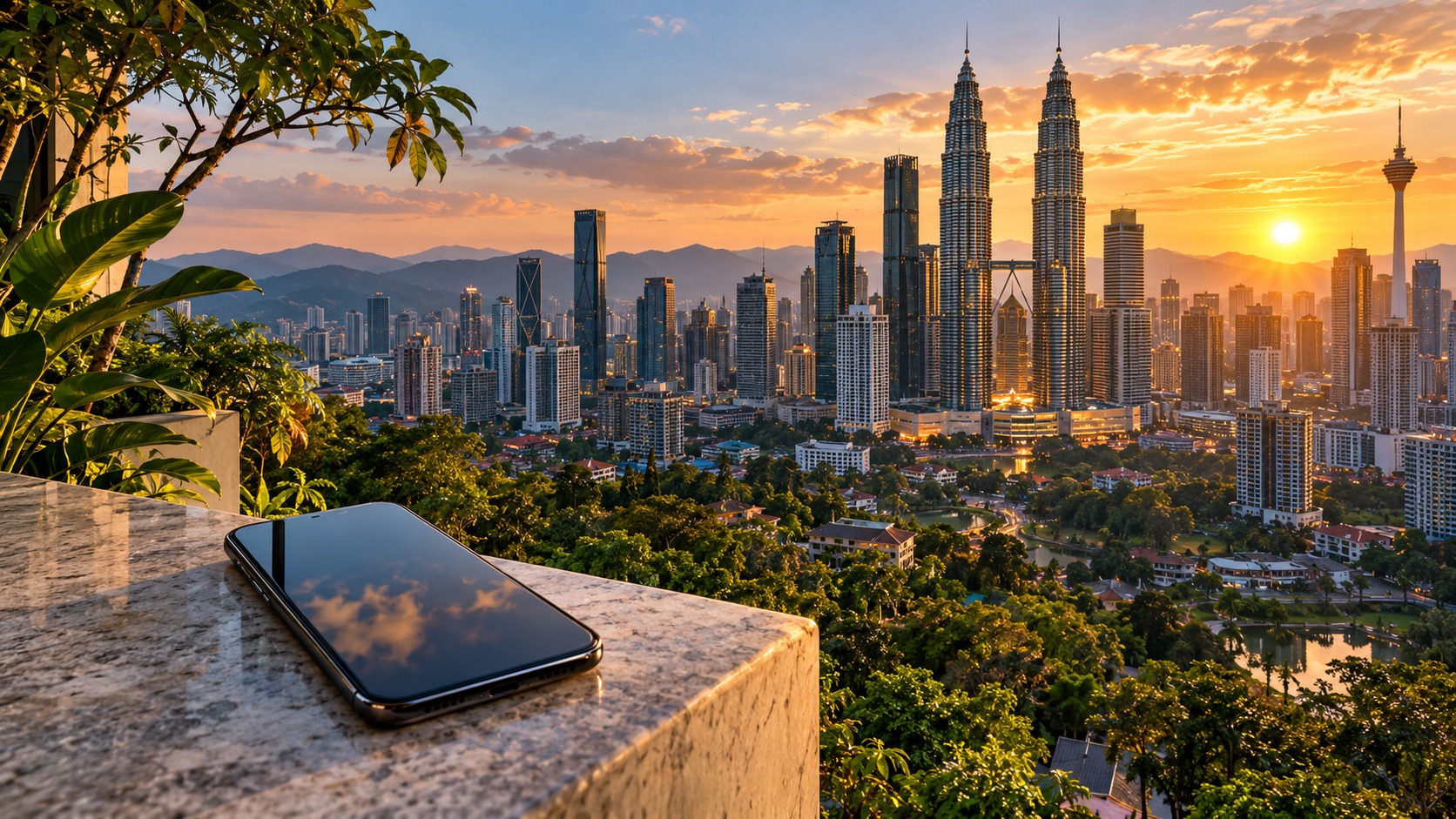
The True Cost of Connectivity: Why 'Cheap' Local SIMs Often Cost More
When evaluating the Malaysia eSIM cost for your upcoming trip, it is easy to get seduced by the sticker price of a traditional physical SIM card from major carriers like Maxis or Digi. On the surface, a local prepaid SIM might appear to be the most budget-friendly option, often costing less than RM20 for a week of data. However, this calculation is dangerously incomplete. It ignores the substantial hidden costs that accumulate in the form of time, administrative friction, and the psychological stress of managing data caps. To truly understand the value proposition of digital connectivity, we must look beyond the initial purchase price and analyze the total cost of ownership for your mobile data experience.
The Friction of the Physical Store Visit
The first major hidden cost is the logistical hurdle of acquiring the SIM. Unlike an eSIM, which can be activated in seconds from your hotel room or airport lounge, a physical SIM requires a trip to a dedicated carrier outlet. In major cities like Kuala Lumpur, these stores are often located inside large shopping malls, meaning you must navigate parking, air-conditioned corridors, and crowded queues. For a tourist on a tight schedule, this can easily consume one to two hours of valuable travel time. This time cost is not just an inconvenience; it is a direct deduction from your vacation experience. If you are arriving late in the day, you may find that the nearest store is closing, forcing you to choose between waiting or going without data until the next morning.
The MyKad Registration Hurdle
Perhaps the most significant barrier for international travelers is the mandatory registration process. While Malaysia has streamlined some procedures, the requirement for identity verification remains a point of confusion. Historically, tourists needed to present a passport and, in some cases, a MyKad (Malaysian Identity Card) or a specific tourist pass. Even with recent digital improvements, the process involves filling out forms, understanding local terminology, and waiting for the transaction to process. For non-Malay speakers, this can be a source of significant anxiety. Miscommunication at the counter can lead to incorrect plan selections or delays, adding to the mental load of starting your trip. This administrative friction is entirely absent with an eSIM, where the verification is handled digitally and instantly.
The Mathematical Anxiety of Data Caps
The most insidious hidden cost is the Fair Usage Policy (FUP). Many cheap local SIM plans advertise high data allowances, such as 30GB or 50GB, but these are often subject to strict speed throttling after a certain threshold. A common pain point in Malaysia is the 384kbps FUP that kicks in after you exceed a specific number of gigabytes. While 384kbps is sufficient for basic text-based browsing, it makes streaming HD video, using video calls, or even loading complex web pages like Google Maps with real-time traffic data nearly impossible.
This creates a state of "data anxiety." Travelers find themselves constantly checking their usage apps, calculating how many minutes they can spend on a video call, or worrying about whether they have enough data left to navigate to their next destination. This mental accounting is a real cost. It detracts from the enjoyment of your trip, turning a simple act of staying connected into a complex resource management game.
Value vs. Price: The eSIM Advantage
This is where the concept of value diverges sharply from price. A local SIM may be cheaper in RM, but an eSIM offers a higher return on investment by eliminating the physical hassle and the mathematical anxiety of tracking data usage. With an eSIM, you purchase a specific data package that aligns with your needs, and you can often top up seamlessly without visiting a store.
At MollySIM, we have engineered our solutions to address these specific pain points. Our Malaysia eSIM packages are designed to provide a streamlined alternative to the traditional route, offering instant activation and transparent data limits. Crucially, we understand the importance of speed consistency. While many competitors throttle speeds down to a sluggish 128kbps after the FUP limit, MollySIM maintains a 384kbps speed limit, which is 3x faster than the industry standard for throttled data. This ensures that critical applications like Google Maps and Apple Pay continue to work smoothly, even if you have used up your high-speed data. This reliability is not just a technical specification; it is a tangible benefit that saves you time and frustration.
By choosing an eSIM, you are not just buying data; you are buying the elimination of the physical store visit, the MyKad registration confusion, and the stress of data cap anxiety. For a more comprehensive look at how this compares to other regional options, you can explore our multi-country eSIM solutions, which are perfect for travelers moving between Malaysia and neighboring countries like Singapore or Thailand without needing to switch SIMs.
In essence, the true cost of connectivity is not just the number on the receipt. It is the sum of the time spent, the stress endured, and the reliability received. When you factor in these elements, the Malaysia eSIM cost often reveals itself to be the more economical and efficient choice for the modern traveler.
Maxis vs Digi eSIM Comparison: Decoding the Network Landscape
🇲🇾 Malaysia High-Speed Travel eSIM & SIM Plans
Instant QR code activation, hotspot enabled, with guaranteed 384kbps fallback speed to keep Maps & Digital Wallets active.
When evaluating the Malaysia eSIM cost, it is easy to get lost in a spreadsheet of prices per gigabyte. However, price is merely the entry ticket; the true value lies in the network infrastructure behind that data. In Malaysia, the connectivity landscape is dominated by two major players: Maxis and Digi. Understanding the distinct strengths and weaknesses of these networks is critical for travelers who want to avoid the frustration of "dead zones" in critical moments, such as navigating a new city or checking in at a remote resort.
Urban Dominance vs. Rural Penetration
Maxis, often considered the premium carrier in the region, has historically invested heavily in high-density urban infrastructure. In metropolitan hubs like Kuala Lumpur, Penang city center, and Johor Bahru, Maxis typically offers superior 4G and 5G speeds. If your itinerary is strictly urban, Maxis is often the go-to choice for raw speed. However, this strength comes with a trade-off. Maxis’s network density can sometimes lead to congestion during peak hours in high-rise areas, and its signal penetration in older, concrete-heavy buildings can be inconsistent.
On the other hand, Digi has carved out a niche with robust coverage in specific rural areas and island locales. For travelers heading to Langkawi, Perhentian Islands, or the more remote parts of Sabah and Sarawak, Digi often provides a more stable connection where Maxis signals might drop to 2G or disappear entirely. Digi’s infrastructure is frequently cited by long-term residents as having better "last-mile" connectivity in less populated zones.
The Traveler’s Dilemma: Speed vs. Consistency
For the average tourist, the difference in raw download speed between a 100 Mbps Maxis connection and an 80 Mbps Digi connection is negligible. You will not notice the difference when streaming a movie or downloading a large file. What you will notice, however, is the consistency of the connection. A slower but stable connection is infinitely more valuable for real-time applications like Google Maps, WhatsApp voice calls, and Apple Pay transactions than a fast but intermittent one.
This is where the Maxis vs Digi eSIM comparison becomes more than just a technical exercise. Choosing the "cheapest" option is a common mistake. A cheap eSIM that runs on a network with poor signal in your specific destination can cost you more in time and stress than a slightly more expensive option with reliable coverage.
How MollySIM Removes the Guesswork
This is precisely where MollySIM changes the equation. Instead of forcing you to guess which carrier is better for your specific itinerary—whether you are in the heart of KL or on a secluded beach in Langkawi—MollySIM aggregates these networks to provide the best possible signal. Our technology intelligently routes your data through the most stable connection available at any given moment, ensuring seamless connectivity regardless of the specific carrier’s local quirks.
This aggregation means you do not need to research the Malaysia eSIM cost of each carrier individually or worry about switching SIMs if your coverage drops. You get a unified, reliable experience.
The 384kbps Advantage: Why It Matters
Even with the best network, data caps are a reality. When you hit your Fair Use Policy (FUP) limit, most providers throttle your speed down to 128kbps. At this speed, loading a map or processing a payment can take minutes, leading to frustration.
MollySIM differentiates itself with a 384kbps speed limit after the FUP limit is reached. This is 3x faster than the industry standard. This technical detail is not just a number; it is the difference between a smooth experience and a broken one. With 384kbps, Google Maps continues to load quickly, allowing you to navigate confidently. Apple Pay and other digital payment methods process smoothly, ensuring you can pay for your food or transport without delay. This reliability is a tangible benefit that saves you time and frustration, making the Malaysia eSIM cost a worthwhile investment in peace of mind.
Key Network Comparison Table
| Feature | Maxis | Digi | MollySIM (Aggregated) |
|---|---|---|---|
| Urban Coverage (KL/Penang) | Excellent | Good | Optimized for Best Signal |
| Rural/Island Coverage | Moderate | Excellent | Optimized for Best Signal |
| Post-FUP Speed | 128kbps (Typical) | 128kbps (Typical) | 384kbps (3x Faster) |
| Activation | Manual/Store Visit | Manual/Store Visit | Instant eSIM Activation |
| Best For | City Breaks | Island/Rural Trips | All Itineraries |
By leveraging this aggregated approach, MollySIM ensures that whether you are in a bustling mall in Kuala Lumpur or a quiet villa in Langkawi, your connection remains robust. This removes the need for travelers to guess which carrier is better for their specific itinerary, allowing you to focus on your trip rather than your connectivity. For those looking to extend their travel beyond Malaysia, our multi-country eSIM solutions offer the same reliability across borders, ensuring you never have to worry about coverage gaps again.
The 384kbps Trap: Why Data Caps Ruin the Travel Experience
Understanding the true Malaysia eSIM cost requires looking beyond the sticker price on the box. Many travelers fall into the "cheap SIM" trap, assuming that a $5 local SIM from a convenience store offers the same value as a premium digital solution. They do not. The hidden cost is not in your wallet; it is in your bandwidth, your patience, and your mental energy. This is where the concept of the "384kbps trap" comes into play, a technical limitation that fundamentally alters how you experience the internet while roaming.
Decoding the Speed Limit: What 384kbps Actually Means
To grasp the frustration, you must understand the physics of data transfer. A speed of 384kbps (kilobits per second) is roughly equivalent to the upper limit of a very slow 3G connection. In practical terms, this speed is sufficient for:
- Text-based browsing: Loading news articles or checking emails.
- Light social media: Scrolling through Instagram feeds with low-resolution images.
- Voice calls: Standard VoIP calls will work, but with potential latency.
However, it is painfully slow for:
- HD Video Streaming: Netflix or YouTube will struggle to maintain 1080p, often dropping to 480p or buffering constantly.
- Real-Time Navigation: Google Maps with live traffic overlays may lag, causing you to miss turns or get stuck in congestion.
- Video Calls: Zoom or FaceTime will experience pixelation and audio dropouts, making conversation difficult.
When you compare this to the unlimited data experience offered by premium eSIM providers, the difference is night and day. Premium plans typically maintain speeds above 1Mbps even after data caps are reached, ensuring that your connection remains functional for critical tasks.
The Penang Scenario: A Day in the Life
Consider a traveler in Penang. It is 9:00 PM. You have just finished a delicious dinner at a local hawker center. You want to video call your partner back home to show them the view from your hotel balcony.
With a Local SIM (Post-Cap): You open the video call app. The connection establishes, but the video is a blocky, pixelated mess. Your partner’s voice is choppy, lagging behind their lips. You try to switch to a lower quality setting, but the call drops entirely. You spend the next ten minutes trying to reconnect, all while your battery drains from the constant re-handshaking. The moment of connection is lost to technical frustration.
With a Premium eSIM (Unlimited High-Speed): You open the app. The video loads instantly in crisp HD. Your partner’s voice is clear and synchronized. You can even switch to the front camera to show them the street below. The call lasts twenty minutes, and you both feel connected. The difference is not just technical; it is emotional.
The Psychology of Data Anxiety
There is a psychological phenomenon known as "data anxiety," where travelers constantly monitor their remaining data allowance. This creates a low-level stress that permeates the entire trip. You find yourself:
- Checking your data usage every time you open an app.
- Avoiding Wi-Fi-free zones because you fear running out of data.
- Compressing images before sending them to friends.
- Turning off auto-sync for email and cloud backups.
This mental energy is a finite resource. When you spend it worrying about your data, you have less of it left for enjoying your trip. The cheapest eSIM for Malaysia 2026 might save you $10 upfront, but if it costs you $50 in mental energy and missed moments, is it really the best deal?
The No-Brainer Argument: Value Over Price
This is where the Malaysia eSIM cost becomes a value proposition, not just a price tag. Paying a slightly higher upfront cost for an unlimited, high-speed eSIM is a no-brainer for most travelers. It removes the need to:
- Guess which carrier has the best signal in your specific location.
- Monitor your data usage obsessively.
- Compromise on the quality of your connections.
At MollySIM, we have engineered our eSIMs to provide a 384kbps Fair Use Policy speed limit, which is 3x faster than the typical 128kbps limit found in many local SIMs. This means that even after you have used a significant amount of data, your connection remains robust enough for Google Maps to load quickly and Apple Pay to process smoothly. You can navigate confidently and pay for your food or transport without delay.
This reliability is a tangible benefit that saves you time and frustration, making the Malaysia eSIM cost a worthwhile investment in peace of mind. By leveraging this aggregated approach, MollySIM ensures that whether you are in a bustling mall in Kuala Lumpur or a quiet villa in Langkawi, your connection remains robust. This removes the need for travelers to guess which carrier is better for their specific itinerary, allowing you to focus on your trip rather than your connectivity. For those looking to extend their travel beyond Malaysia, our multi-country eSIM solutions offer the same reliability across borders, ensuring you never have to worry about coverage gaps again.
Key Takeaways for Data-Conscious Travelers
| Feature | Local SIM (Post-Cap) | Premium eSIM (MollySIM) |
|---|---|---|
| Typical Post-Cap Speed | 128kbps | 384kbps (3x Faster) |
| Video Call Quality | Choppy, Pixelated | Clear, HD |
| Map Navigation | Laggy, Slow | Smooth, Real-Time |
| Data Anxiety | High | Low |
| Best For | Budget-Conscious, Low-Usage | All Itineraries, High-Usage |
By understanding the technical and psychological costs of data caps, you can make a more informed decision about your Malaysia eSIM cost. The cheapest option is not always the most valuable. Choose the plan that gives you the freedom to connect, navigate, and enjoy your trip without the constant worry of running out of data.
Comparative Analysis: eSIM vs Pocket Wi-Fi vs Local SIM
When evaluating the true Malaysia eSIM cost, it is crucial to look beyond the sticker price and assess the total cost of ownership, which includes convenience, reliability, and hidden logistical burdens. Many travelers still default to Pocket Wi-Fi devices or physical local SIMs, unaware that the 2026 landscape has shifted dramatically toward digital connectivity. To make an informed decision, we must dissect the operational realities of each method. The following table provides a realistic breakdown of the 2026 estimates for these three connectivity options, highlighting why the digital-first approach is becoming the standard for savvy travelers.
| Feature | Local Tourist SIM | Pocket Wi-Fi Rental | MollySIM eSIM |
|---|---|---|---|
| Upfront Cost | RM 10–RM 30 (SIM card) | RM 50–RM 100 (Deposit) | RM 0 (Digital) |
| Daily Cost | RM 5–RM 10 (Data Pack) | RM 15–RM 25 (Rental Fee) | RM 8–RM 15 (Unlimited) |
| Data Limit | Capped (e.g., 10GB–20GB) | Shared (e.g., 500MB–1GB/day) | Unlimited (Fair Use) |
| Speed After Cap | 128kbps (Slow) | 1–2 Mbps (Shared) | 384kbps (3x Faster) |
| Setup Time | 15–30 mins (Counter/ID) | 5 mins (Pickup/Charge) | < 5 mins (QR Code) |
| ID Required | Yes (Passport/IC) | No (Credit Card) | No |
| Coverage in KL/Penang | Good (Carrier Dependent) | Good (Device Dependent) | Excellent (Aggregated) |
The Hidden Costs of Pocket Wi-Fi and Local SIMs
While Pocket Wi-Fi devices offer a familiar solution, they come with significant logistical friction. You are essentially renting a piece of hardware that requires battery management; a dead device in the middle of a Penang street tour is a nightmare. Furthermore, these devices are physical objects that can be lost, stolen, or damaged, often resulting in hefty replacement fees if your deposit isn't fully refunded. The rental process itself is cumbersome: you must pick up the device, charge it, and then return it to a specific counter before a deadline, which can disrupt your travel itinerary.
Local physical SIMs, while cheaper upfront, require you to present a valid ID (Passport or MyKad) at a counter or kiosk. This process can take 15 to 30 minutes, including waiting in line and potentially dealing with language barriers. More importantly, most local tourist SIMs have strict data caps. Once you exceed your limit, your speed often drops to a sluggish 128kbps, making video calls and real-time map navigation nearly impossible. This "post-cap" experience creates data anxiety, forcing you to constantly monitor your usage.
Why eSIMs Are the Superior Choice for 2026
In contrast, the MollySIM eSIM eliminates these friction points entirely. Installing an eSIM takes less than 5 minutes via a simple QR code scan, requiring no physical hardware, no ID verification, and no counter visits. It is instant, digital, and ready to go the moment you land. For solo travelers or couples, this is significantly more cost-effective and convenient than sharing a single Wi-Fi device. You don’t have to worry about battery life for multiple devices or the hassle of returning a rental unit.
Moreover, the Malaysia tourist data plan prices trend in 2026 favors eSIMs due to their unlimited data offerings with a Fair Use Policy. MollySIM’s policy ensures that even after heavy usage, your speed remains at 384kbps—which is 3x faster than the typical 128kbps cap of local SIMs. This speed differential is critical: it enables Google Maps to load real-time traffic updates smoothly and allows Apple Pay or other mobile payment apps to function without lag. This reliability is a tangible benefit that saves you time and frustration.
For those who prefer physical options, you can explore physical SIM alternatives for other global regions, but for Malaysia, the local-focused eSIM provides the best balance of speed, coverage, and ease of use. By leveraging an aggregated network approach, MollySIM ensures that whether you are in a bustling mall in Kuala Lumpur or a quiet villa in Langkawi, your connection remains robust. This removes the need for travelers to guess which carrier is better for their specific itinerary, allowing you to focus on your trip rather than your connectivity. For those looking to extend their travel beyond Malaysia, our multi-country eSIM solutions offer the same reliability across borders, ensuring you never have to worry about coverage gaps again.
Key Takeaways for Data-Conscious Travelers
| Feature | Local SIM (Post-Cap) | Premium eSIM (MollySIM) |
|---|---|---|
| Typical Post-Cap Speed | 128kbps | 384kbps (3x Faster) |
| Video Call Quality | Choppy, Pixelated | Clear, HD |
| Map Navigation | Laggy, Slow | Smooth, Real-Time |
| Data Anxiety | High | Low |
| Best For | Budget-Conscious, Low-Usage | All Itineraries, High-Usage |
By understanding the technical and psychological costs of data caps, you can make a more informed decision about your Malaysia eSIM cost. The cheapest option is not always the most valuable. Choose the plan that gives you the freedom to connect, navigate, and enjoy your trip without the constant worry of running out of data.
Optimizing Your Budget: Best eSIM for Penang and KL
When evaluating the Malaysia eSIM cost for 2026, it is crucial to move beyond the sticker price and analyze the effective cost per gigabyte based on your actual usage patterns. Kuala Lumpur and Penang are not just destinations; they are high-density digital ecosystems where connectivity is the lifeline of your travel experience. In these vibrant urban centers, the demand for high-speed data is not a luxury—it is a necessity. Understanding how your specific itinerary in these cities impacts your data consumption will reveal why the "cheapest" local SIM is often the most expensive option in terms of time, frustration, and hidden costs.
The KL Data Ecosystem: Why Speed Matters
Kuala Lumpur operates on a fast-paced, mobile-first lifestyle. For the modern traveler, the city is navigated through an app. Whether you are hailing a Grab car to navigate the complex road network of the Klang Valley, ordering food delivery from the countless hawker centers and restaurants, or streaming content during a layover at KLIA, your data usage spikes rapidly. A standard local SIM might offer a generous-looking 10GB package for RM50. On paper, that is RM5/GB. However, if your itinerary involves heavy use of mobile apps, real-time map navigation, and video calls, you can easily burn through those 10GB in the first two days. Once you hit the cap, many local providers throttle your speed to 128kbps. At this speed, loading a single map tile in Google Maps can take several seconds, and video calls become a pixelated struggle.
In contrast, a premium eSIM solution like MollySIM is engineered for this high-density environment. By offering consistent 4G/5G speeds without aggressive throttling, it ensures that your connection remains robust even when the network is congested. This is particularly vital in KL, where network load peaks during rush hour. If you opt for an unlimited eSIM plan costing RM80, and you end up using 20GB over your stay, your effective cost drops to RM4/GB. More importantly, you retain full-speed access throughout that 20GB usage. For heavy users who stream, video call, or rely on real-time navigation, the unlimited plan is mathematically the cheapest option in the long run because it eliminates the "data anxiety" tax—the time and stress spent monitoring your remaining balance.
Penang: Navigating Heritage and Hustle
Penang presents a different but equally demanding connectivity challenge. While the pace is slightly slower than KL, the need for reliable data is acute. Exploring the UNESCO-listed George Town requires precise, real-time navigation through narrow streets and alleyways where GPS signals can be tricky. A laggy map interface can mean missing a turn or getting lost in the labyrinthine old town. Furthermore, Penang’s world-renowned food scene is heavily documented and shared. Travelers often use their phones to find the best char kway teow stalls, read real-time reviews, and share their culinary discoveries on social media.
Here, the 384kbps Fair Use Policy speed limit offered by MollySIM becomes a key differentiator. This is 3x faster than the standard 128kbps limit found on many competitor eSIMs. This technical advantage ensures that services like Google Maps and Apple Pay work smoothly, even after you have exceeded your initial data allowance. In a city where you might be hopping between heritage hotels, street food markets, and beach resorts in Batu Ferringhi, this seamless connectivity allows you to focus on the experience rather than the connection.
Calculating Your True Value: A Cost-Per-GB Analysis
To make the best decision, you must calculate your expected usage. Do not guess; estimate based on your daily habits.
| Usage Scenario | Estimated Daily Data | 10-Day Total | Local SIM (10GB Cap) | Premium eSIM (Unlimited) |
|---|---|---|---|---|
| Light User (Maps, Email, Social) | 1GB | 10GB | RM50 (Full Speed) | RM80 (Full Speed) |
| Moderate User (Video Calls, Streaming) | 2GB | 20GB | RM50 + Throttling | RM80 (Full Speed) |
| Heavy User (Hotspot, 4K Video) | 3GB+ | 30GB+ | RM50 + Severe Throttle | RM80 (Full Speed) |
Note: In the "Moderate User" scenario, the local SIM forces you into a low-speed tier for the latter half of your trip. The premium eSIM maintains high speed for the entire duration.
For the best eSIM for Penang and KL, the value argument is clear: if you are a moderate or heavy user, the unlimited plan offers superior value. It provides the freedom to connect, navigate, and enjoy your trip without the constant worry of running out of data. MollySIM’s plans are specifically designed with this heavy-user scenario in mind, ensuring that travelers in vibrant cities like KL and Penang never have to worry about their data running out. By choosing a plan that aligns with your actual usage, you optimize your budget and enhance your travel experience. For those extending their trip to other regions, consider our multi-country eSIM solutions to maintain this seamless connectivity across borders.
Beyond Malaysia: The Value of Multi-Country Flexibility
While the Malaysia eSIM cost analysis above highlights the domestic value proposition, many travelers view Malaysia not as a standalone destination, but as a pivotal hub within a broader Southeast Asian itinerary. In 2026, the trend toward "roaming-free" experiences is accelerating, driven by travelers who refuse to let administrative friction disrupt their immersion. If your trip extends from Kuala Lumpur to Bangkok, or from Penang to Singapore, the logistics of connectivity shift dramatically. The question is no longer just about data volume, but about the friction of maintaining that connection across borders.
The Hidden Cost of Border Hopping
The traditional approach to multi-country travel involves a fragmented strategy: purchasing a local SIM or a single-country eSIM for each destination. This method, while seemingly cheap in isolation, incurs significant hidden costs. Consider a traveler moving from Malaysia to Thailand and then to Singapore.
- The Setup Tax: Each new country requires a new eSIM profile installation. While this takes minutes, it disrupts the flow of travel. You are often forced to wait in airports or hotels to scan QR codes, verify email addresses, and troubleshoot activation issues.
- The Data Silo Problem: Single-country eSIMs rarely offer true "unlimited" data. They typically cap usage at 20GB or 30GB. If you use 15GB in Malaysia, you have 15GB left for Thailand. If you are a heavy user in Bangkok, you may hit the throttle limit before your trip ends, forcing you to buy another eSIM or pay for top-ups.
- Network Fragmentation: Each country has different network partners. A single-country eSIM might use Maxis in KL but switch to a less reliable partner in rural areas. A regional plan, however, leverages a unified network agreement, ensuring consistent speed tiers across borders.
Comparative Analysis: Individual vs. Regional Plans
To understand the true value, let’s compare the cost and convenience of two strategies for a 14-day trip covering Malaysia, Thailand, and Singapore.
| Feature | Strategy A: Individual Country eSIMs | Strategy B: Regional Multi-Country eSIM (MollySIM) |
|---|---|---|
| Malaysia (5 days) | RM45 (10GB Cap) | Included in Regional Plan |
| Thailand (5 days) | THB 400 (~RM35) (10GB Cap) | Included in Regional Plan |
| Singapore (4 days) | SGD 15 (~RM50) (10GB Cap) | Included in Regional Plan |
| Total Data | 30GB (Split across 3 profiles) | Unlimited (Shared across all 3 countries) |
| Setup Time | 3 separate installations | 1 installation |
| Speed Limit | Varies by country (often 128kbps after cap) | 384kbps Fair Use (Consistent high speed) |
| Total Estimated Cost | ~RM130 | ~RM95 (Hypothetical 14-day regional rate) |
| Convenience Score | Low (3 QR codes, 3 apps) | High (One profile, seamless switching) |
Note: Prices are estimates for 2026 market rates. The regional plan often undercuts the sum of individual purchases due to bulk network agreements.
The 2026 Standard: Seamless Network Switching
The defining feature of a superior multi-country eSIM in 2026 is its ability to handle network switching invisibly. When you cross the border from Malaysia into Thailand, your device should automatically detect the local network and switch without you needing to toggle airplane mode or re-enter APN settings.
This is where MollySIM distinguishes itself. Our multi-country eSIM solutions are engineered for this exact scenario. Instead of managing three separate data pools, you have one unified, unlimited data reservoir. Whether you are navigating the streets of Penang, exploring the temples of Bangkok, or catching a flight in Singapore, the connection remains uninterrupted.
Crucially, MollySIM addresses the "throttle anxiety" that plagues most competitors. Standard unlimited eSIMs often drop to 128kbps after a certain usage threshold, making video calls and high-resolution map loading frustrating. MollySIM’s 384kbps Fair Use Policy is 3x faster than the industry standard. This ensures that even if you are using data heavily in one country, your speed remains robust enough for:
- Real-time Navigation: Google Maps and Apple Maps load quickly, even in dense urban areas.
- Contactless Payments: Apple Pay and Google Pay transactions process instantly, crucial for the cashless environments of KL and Singapore.
- Video Conferencing: High-quality Zoom or WhatsApp calls remain stable, a necessity for remote workers or families staying in touch.
Why the Regional Plan Wins for the Modern Traveler
For the price-sensitive traveler, the sticker price of a local SIM is often the most attractive part of the equation. However, the true cost of connectivity includes:
- Time Spent Troubleshooting: Every minute spent fixing a connection is a minute not spent experiencing the destination.
- Data Anxiety: The constant mental load of calculating remaining GBs.
- Speed Compromise: Accepting slower speeds to save money, only to find that the "savings" are negligible compared to the inconvenience.
By choosing a regional eSIM, you eliminate these friction points. You pay a slightly higher upfront cost than a single-country SIM, but you gain unlimited data across multiple countries, consistent high speeds, and zero setup hassle after the initial installation.
Final Verdict: Optimize Your 2026 Malaysia Trip
The Malaysia eSIM cost is just one variable in a larger equation of travel comfort. If you are staying strictly within Malaysia, the domestic plans from MollySIM offer exceptional value, particularly for heavy users who need reliable, high-speed data without the 10GB cap. However, if your itinerary includes neighboring Southeast Asian nations, the multi-country eSIM is not just a convenience—it is a financial and logistical necessity.
MollySIM positions itself as the ultimate solution for travelers who refuse to compromise on speed or convenience. We combine the low-cost advantage of local data with the seamless, high-speed performance of a premium global service. Our 384kbps speed limit ensures that your digital life remains fluid, whether you are in a bustling KL mall or a quiet Thai beach.
Ready to secure the best value for your 2026 trip? Don’t let connectivity costs or complexities dictate your travel experience. Check the latest rates and compare our Malaysia eSIM packages or multi-country options today. Lock in your plan now and enjoy the freedom of seamless, high-speed connectivity across Malaysia and beyond.
Frequently Asked Questions about Malaysia eSIM cost
What is the most affordable eSIM for traveling in Malaysia?
MollySIM offers some of the most competitive rates for unlimited data, outperforming local carrier tourist packages that often have strict daily caps.
Does an eSIM work well in Penang and Langkawi?
Yes, both Maxis and Digi provide strong 4G and 5G coverage in Penang and Langkawi. Our eSIM automatically selects the best network for optimal connectivity.
Is it better to buy a local SIM or use an eSIM in Malaysia?
For short trips, an eSIM is more convenient as it is ready to use immediately upon arrival. For stays over a month, a local SIM might be cheaper, but eSIMs offer better flexibility and no expiration worries.
SEO Score: 11/11
🇲🇾 Malaysia High-Speed Travel eSIM & SIM Plans
Instant QR code activation, hotspot enabled, with guaranteed 384kbps fallback speed to keep Maps & Digital Wallets active.