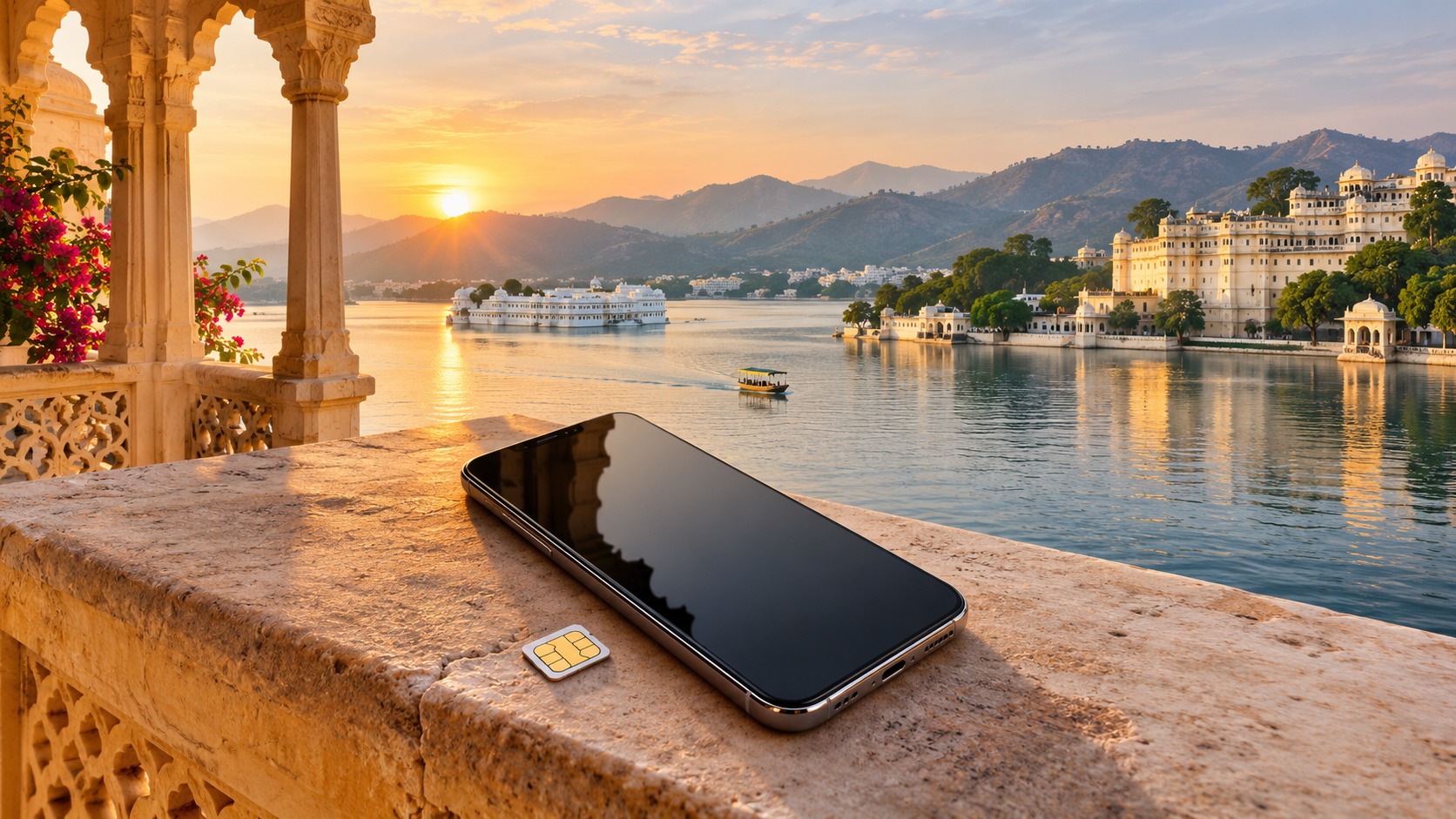
For a trip to India, the practical choice in the India eSIM vs local SIM comparison is often about when you want to do the setup and what your phone needs to do. A travel eSIM can be installed before departure and be ready for data when you arrive, if your phone supports eSIM and the plan is available to you. A local prepaid SIM can suit you if you want a local line and are prepared to purchase it in India and complete whatever identity or registration steps apply at that time.
The option label alone does not tell you the network or expected service along your route. Compare the plan’s network, allowance, validity, hotspot terms and whether you need an Indian number.
India eSIM vs local SIM: what changes at arrival?
The main difference is the setup sequence. A travel eSIM is delivered electronically as an activation QR code; MollySIM travel eSIMs are usually emailed within minutes of payment, and nothing ships. You can install it before the trip, then select it as your data line when you are ready to use it. If your phone supports dual SIM, your home line can remain enabled for calls and texts while data uses the travel eSIM. Check your phone settings and turn off roaming on the home line if you want to avoid roaming charges.
A local physical SIM is purchased after you arrive. That means you need to locate a seller, choose an available plan, and follow the seller’s instructions for activation. Identity or registration requirements may apply. The process and documents can depend on current rules and the seller, so check current India tourist SIM registration requirements through current official guidance and the seller’s instructions before you travel. Do not assume that a SIM will be usable the moment you pay for it.
Compare plan shape before comparing price
🇮🇳 India High-Speed Travel eSIM & SIM Plans
Instant QR code activation, hotspot enabled, with guaranteed 384kbps fallback speed to keep Maps & Digital Wallets active.
Compare upfront cost with allowance, validity, hotspot rules, network and whether a local number is included. The table shows the main trade-offs; exact terms depend on the plan.
| Option | Setup | Data and validity | Number and hotspot questions | Best fit |
|---|---|---|---|---|
| Data-only travel eSIM | Buy online and install from its QR code; check compatibility before travel | Compare the included allowance, validity window and any fair-use speed policy | Usually choose it for data; check whether the product includes voice or SMS and whether hotspot use is permitted | You want to arrange connectivity before departure and can use apps over data |
| Local prepaid SIM | Buy from a seller in India and follow current purchase and identity instructions | Compare the local plan’s allowance and validity directly; confirm when its validity begins | Ask whether it provides a local number and whether tethering is included or restricted | You need a local number or prefer a locally purchased plan and can complete its setup |
| Home-carrier roaming | Enable roaming on your existing line and follow your carrier’s plan settings | Check the roaming allowance, duration and charges in your home plan | You keep your home number; check hotspot terms and any roaming charge triggers | You value using your existing line and have checked its specific roaming terms |
For a travel eSIM, find the network used by that plan. For a local SIM, check its operator and coverage for your destinations. Compare Jio, Airtel and Vi by the plan’s network and your itinerary; service can vary between cities, highways and rural destinations.
Check compatibility and install before departure
Before buying, confirm that your exact phone model supports eSIM and can use another carrier. Check the manufacturer’s specifications or device settings, especially if you want to keep your home SIM active at the same time.
Install the eSIM on stable Wi-Fi and follow the plan’s activation instructions. Validity may begin at installation or first network connection, so follow the plan’s timing guidance. Save the QR code and setup details somewhere you can reach without mobile data.
Before you leave Wi-Fi, test the parts of the phone setup you can verify: confirm the travel line appears in cellular settings, choose the intended line for mobile data, and ensure your home line is not selected for data if you want to avoid roaming. This does not prove destination coverage, but it can catch an installation or line-selection mistake. Keep offline maps for your first destination in case service is delayed or weak.
Choose the data allowance around your habits
Estimate your use by activity rather than by vague labels such as “light user.” Navigation with maps and short route checks generally uses less data than streaming video or repeatedly uploading large photo and video files. Messaging text is usually a small part of a data budget; sending and receiving photos, video clips, voice notes or video calls uses more. Email can stay modest if you avoid large attachments, while app updates and cloud backups can consume a substantial share if allowed to run over mobile data.
Ride-hailing involves more than the map itself: the app needs to refresh your location, load trip details and exchange messages or calls with a driver. QR payments may need a working connection to open the payment app or complete a transaction. Keep enough data for these essential actions before spending the allowance on entertainment or background syncing. If you travel with other devices, include hotspot use in your estimate; a laptop can download updates or sync files without making the data use obvious on your phone.
| Activity pattern | Relative data demand | What to check |
|---|---|---|
| Route checks, text messaging and basic email | Lower | Keep background updates off mobile data and save offline maps |
| Ride-hailing, photo messages and regular browsing | Moderate | Check how often apps refresh and how much media you send |
| Video streaming, video calls, large uploads or laptop hotspot use | Higher | Choose an allowance with room for these activities, or use Wi-Fi for heavy transfers |
Actual use depends on app settings, media quality and how often you use each service. Monitor your phone’s data counter and turn off automatic updates, photo backup and video autoplay on mobile data if you need to conserve the allowance.
A MollySIM travel eSIM continues to provide data at 384 kbps after its high-speed allowance is used under its fair-use policy. That reduced speed can support maps, messaging, email and QR payments, but it is not a substitute for high-speed data when loading large files, streaming video or using data-heavy apps. Plan the high-speed allowance for demanding tasks, and treat the reduced-speed access as a basic connection for lighter needs after that allowance is spent.
Network choice: compare the plan with your route
Jio, Airtel and Vi are local operators a traveler may encounter when comparing Indian connectivity. For Jio vs Airtel coverage for travelers, or for a comparison including Vi, start with the network listed by the plan and the locations you will visit. City coverage does not tell you what to expect on a highway, at a rural destination or in a different region. If your itinerary includes multiple stops, look at each location rather than making a decision from the first city alone.
Read each plan’s network details and limits. A carrier name, broad coverage claim or another traveler’s experience in a different place cannot predict service on your route. Buildings, terrain and network conditions also affect coverage.
List your arrival city, overnight stops, intercity travel and rural destinations before buying. Check which network the plan uses and current coverage for those places. Keep maps and key travel details available offline in case one route segment has weak service.
When a local number matters
A data-only travel eSIM is often enough if you mainly use maps, messaging and app-based services. It may not meet your needs if a hotel, delivery service, local business or other contact expects you to have an Indian phone number. Confirm whether the exact travel plan includes a number and voice or SMS service. Do not infer those features from the word “SIM” or from the fact that a phone supports voice calling.
A local prepaid plan may make sense if a local number is a priority. Before buying, confirm what identity documents are accepted, whether registration must finish before service starts, how the seller handles registration, and what you need to do if the process cannot be completed. India tourist SIM registration requirements can change, so check current rules and seller instructions close to your trip. Carry documents that the current official instructions say are required; do not rely on a traveler’s account from a previous visit as a substitute for current guidance.
Many dual-SIM phones let you keep your home number active while using a travel eSIM for data. Set mobile data to the travel line and disable roaming on the home line if you want to avoid roaming charges. Check the default voice line setting before departure.
A practical selection checklist
Use these questions to settle the India eSIM or physical SIM for tourists decision before departure:
- Does your phone support the option? Confirm eSIM support for the exact model or verify that a physical SIM slot is available and usable.
- Do you need an Indian number? If yes, verify that the plan includes one and that you can satisfy current identity and registration steps.
- When do you need connectivity? If you want data ready at arrival, install and test the travel eSIM in advance. If you choose a local SIM, plan time for purchase and any required verification.
- How much data and for how long? Match the allowance and validity to your length of stay and activities. Check hotspot terms if you will share data with another device.
- Which network serves your stops? Compare the named network against your city, highway and rural destinations, and keep offline maps.
- What is your fallback? Know how you will access booking details and directions if activation or coverage is delayed.
Compare plan details in MollySIM’s India eSIM plans for travelers. If you need a US number for calls or SMS abroad, review T-Mobile SIM options: outside the US, all listed plans except the $15 plan rely on Wi-Fi Calling over Wi-Fi for US calls and texts. For more on choosing a line for data versus voice or SMS, see data-only vs voice and SMS plans.
Frequently Asked Questions
Is an eSIM or local SIM easier for tourists in India?
An eSIM can simplify setup when your phone supports it and the plan is available to you. You can install it before leaving and select it for data at arrival. A local SIM may require a purchase and identity verification steps, so check current requirements and the seller’s instructions before travel.
Which networks should travelers compare in India?
Compare the network named for the specific plan with the places on your itinerary. Jio, Airtel and Vi are major local operators, but service and coverage can vary by region. Check city, highway and rural stops rather than treating one operator name as a guarantee of coverage.
Can I keep my home number while using an India eSIM?
Many dual-SIM phones let you keep your home line enabled for calls or texts while assigning mobile data to the travel eSIM. Check your phone’s settings, and disable roaming on the home line if you want to avoid roaming charges. The home line’s call and text availability still depends on your own carrier plan and settings.
What should I do if I run out of high-speed data?
Check the plan’s terms before travel so you know whether data stops, slows or requires a top-up after the allowance. Under MollySIM’s travel eSIM fair-use policy, data continues at 384 kbps after the high-speed allowance is used. That can handle basic messaging, email, maps and QR payments; use Wi-Fi for heavier tasks such as streaming or large transfers.
Make the choice before you leave
Choose a travel eSIM if your phone is compatible and you want data arranged before departure. Choose a local prepaid SIM if you need a local number and can complete current purchase and registration steps. For either option, compare network, allowance, validity and hotspot terms, test before leaving Wi-Fi, and keep maps and travel details offline.
SEO Score: 10/11
🇮🇳 India High-Speed Travel eSIM & SIM Plans
Instant QR code activation, hotspot enabled, with guaranteed 384kbps fallback speed to keep Maps & Digital Wallets active.