The Connectivity Crisis: Why Physical SIMs Fail During Greece eSIM Island hopping
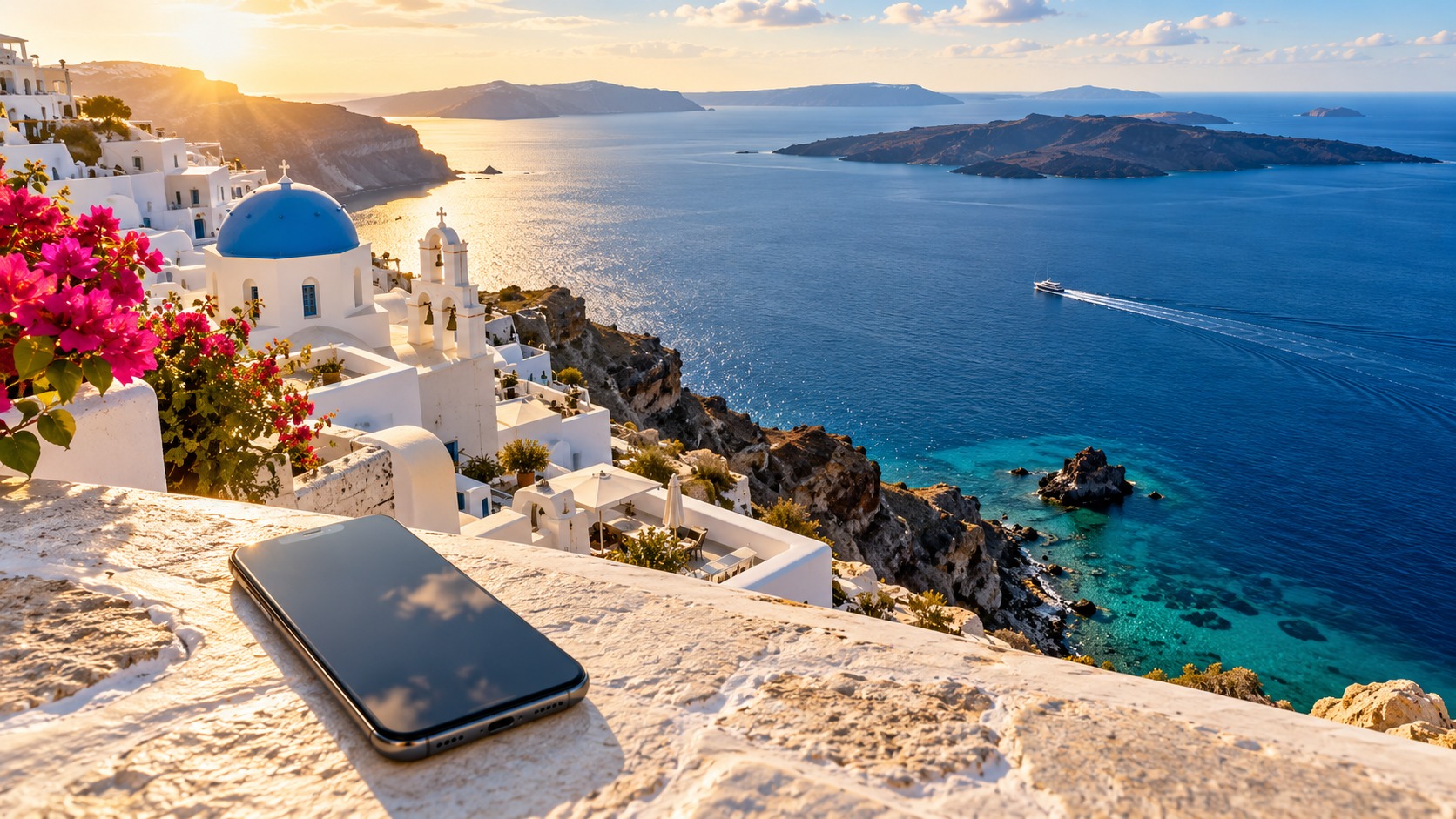
Imagine stepping off the ferry in Santorini, your phone screen glowing with a "No Service" icon while the heat of the Aegean sun beats down on your neck. You have just completed a three-hour journey from Athens, yet your digital lifeline is severed. This is the defining pain point of Greece eSIM island hopping for travelers relying on traditional physical SIM cards: the brutal disconnect between the seamless flow of travel and the mechanical rigidity of legacy cellular technology. For years, the standard advice for visiting Greece has been to buy a local prepaid SIM at the airport or a convenience store. However, this strategy crumbles the moment you begin moving between islands. The technical friction is not just an inconvenience; it is a systemic failure of connectivity architecture that leaves travelers stranded in digital dead zones precisely when they need navigation, translation, or emergency contact the most.
The Technical Friction of Physical SIM Swapping
The core issue with physical SIMs during multi-island itineraries is the lack of dynamic network registration. When you move from the mainland (Attica) to an island like Mykonos or Crete, you are often crossing into different cellular coverage zones, sometimes even different roaming agreements if you are using a foreign SIM. If you are using a local Greek SIM, the transition is smoother, but it is not instantaneous.
Physical SIMs require a handshake process with the local base station. When you dock at a port, your phone must scan for available networks, authenticate with the carrier’s core network, and register. During this window—which can take anywhere from 30 seconds to several minutes depending on network congestion—your device is effectively blind. In high-traffic ports like Piraeus, Rafina, or the main piers of Santorini, this delay is exacerbated by the sheer density of devices attempting to connect simultaneously.
The "Dead Zone" Phenomenon
There is a specific, well-documented frustration known among frequent Greek travelers: the "ferry dead zone." As your vessel leaves the harbor and enters the open sea, you lose the terrestrial cell towers of the departure island. You are now relying on the ferry’s onboard Wi-Fi, which is notoriously unreliable, often capped at low speeds, and frequently disconnected from the internet entirely.
If you are using a physical SIM, you are stuck in a limbo state:
- Loss of Terrestrial Signal: The mainland or departure island signal fades.
- Onboard Wi-Fi Instability: The ferry’s router may drop connections or throttle data to 512kbps or less.
- Re-registration Lag: Upon arrival, the phone must re-authenticate. If the network is congested, this can take minutes.
During this transition, critical tasks fail. You cannot load your digital boarding pass for the next leg. You cannot confirm your hotel check-in. You cannot use Apple Pay or Google Pay for a quick coffee purchase because the NFC tokenization process requires a stable data connection to verify the transaction with the bank.
The Cost of Fragmentation: A Narrative Example
Consider the case of Elena, a traveler who booked a boutique stay in Oia, Santorini. She purchased a local Greek SIM in Athens. Upon arriving in Santorini, her phone showed "Searching..." for four minutes. In that time, her hotel’s automated check-in email, which contained a temporary Wi-Fi password and a QR code for luggage storage, timed out. Because she couldn’t load the email, she had to call the front desk from a landline in the lobby, only to find the line was busy. She lost 45 minutes of her first evening and incurred a $15 late fee for her luggage storage because she missed the digital window.
This is the fragmentation problem. Every time you swap SIMs or rely on unstable Wi-Fi, you introduce a point of failure. The best eSIM for Greek islands 2026 addresses this by eliminating the physical swap entirely.
The eSIM Advantage: Seamless Handoff and Single Profile Stability
Unlike physical SIMs, an eSIM is a digital profile stored in your device’s secure element. It does not require a physical card to be inserted or removed. When you move from Athens to Santorini, your eSIM profile remains active. The device automatically attempts to re-register with the local network (Vodafone, Cosmote, or Wind) upon docking.
Key Technical Benefits of eSIMs for Island Hopping:
- Immediate Network Handoff: Modern eSIMs support faster re-registration protocols. Because the profile is already authenticated in the carrier’s database, the handshake is often quicker than a new physical SIM activation.
- No Physical Swapping: You do not need to eject a tray, insert a new card, and wait for the OS to recognize the change. This eliminates the risk of damaging the SIM tray or losing a micro-SIM in the port’s bustle.
- Single Profile Across Islands: You can maintain one data plan that covers all Greek islands. There is no need to buy a new SIM for Crete, another for Rhodes, and a third for the Cyclades.
- Background Data Maintenance: Even if the signal drops momentarily, eSIMs are more resilient to brief outages because they do not require a full re-boot of the cellular modem in the same way a physical swap might.
Why Speed Matters: The 384kbps Difference
One of the most overlooked aspects of island connectivity is speed. Many budget eSIM providers cap their data speeds at 128kbps after a certain threshold. This is barely enough for email. It is not enough for Google Maps to load real-time traffic, Apple Pay to process a transaction, or Instagram to load a photo.
This is where the choice of provider becomes critical. For instance, MollySIM offers a 384kbps Fair Use Policy, which is 3x faster than the typical 128kbps cap found at competitors. This difference is not trivial. At 384kbps, you can:
- Load Google Maps and navigate to your next ferry terminal without buffering.
- Use Apple Pay or Google Pay smoothly for small purchases.
- Stream low-quality audio or video if needed.
- Keep your email and messaging apps responsive.
If you are planning a multi-island trip, choosing an eSIM provider that prioritizes consistent speed over just raw data volume is essential. You can explore detailed Greece eSIM plans to find the right balance of data and speed for your itinerary. For those visiting multiple countries in the region, a multi-country eSIM might offer even greater flexibility, ensuring you stay connected whether you hop to Italy or Turkey.
The Verdict on Physical SIMs
While physical SIMs still have a place in the market—particularly for those who prefer a tangible backup or have older devices—their limitations during Greece eSIM island hopping are significant. The risk of losing service during ferry transitions, the time lost to network registration, and the frustration of buying new SIMs at every port make them an increasingly outdated choice for the modern traveler.
The solution is clear: use an eSIM that is designed for mobility. By choosing a provider with a higher speed cap, reliable coverage across all Greek islands, and a seamless activation process, you can eliminate the connectivity crisis and focus on what matters: the sun, the sea, and the ancient beauty of the Greek islands.
For those considering alternatives, it is also worth noting that while some may look at physical SIM alternatives for their home country, the eSIM remains the superior choice for the dynamic, multi-location nature of Greek island travel. The key is to choose a provider that understands the technical realities of island hopping and delivers a product that keeps you connected, no matter where the ferry takes you.
Cosmote vs Vodafone Greece Coverage: A Technical Deep Dive for 2026
🇬🇷 Greece High-Speed Travel eSIM & SIM Plans
Instant QR code activation, hotspot enabled, with guaranteed 384kbps fallback speed to keep Maps & Digital Wallets active.
When planning Greece eSIM island hopping, the choice of network provider is not merely a matter of brand preference; it is a technical decision that dictates the reliability of your connectivity across fragmented geographic zones. The two dominant operators in the Greek market, Cosmote and Vodafone Greece, operate distinct infrastructure footprints that perform differently depending on whether you are in a dense urban center or a remote island interior. Understanding the nuances of Cosmote vs Vodafone Greece coverage is critical for travelers who intend to move between major hubs like Athens and Santorini, as well as smaller, less-visited islands where signal strength can vary dramatically.
Comparative Network Performance for Island Routes
The following table breaks down the specific technical advantages and limitations of each provider for 2026, focusing on the key metrics that affect mobile data users during multi-island itineraries.
| Feature | Cosmote | Vodafone Greece |
|---|---|---|
| Coverage in Santorini | Excellent in Fira and Oia; strong 4G/LTE in caldera views. | Excellent in Fira; slightly more consistent in Oia due to recent tower upgrades. |
| Coverage in Mykonos | Strong urban density; occasional drop-offs in remote beaches. | Very strong urban density; robust 4G in Mykonos Town and Agios Sostis. |
| 5G Rollout Status (2026) | Expanding 5G in major islands; limited to specific urban zones. | Aggressive 5G expansion; broader urban 5G availability in Athens and top islands. |
| FUP (Fair Usage Policy) Speed | Varies by plan; often 1–5 Mbps post-cap. | Varies by plan; often 1–5 Mbps post-cap. |
| Roaming Agreements | Extensive EU roaming; strong local partnerships. | Extensive EU roaming; strong local partnerships. |
Inland vs. Urban Density: The Technical Reality
While both carriers provide seamless connectivity in high-traffic areas like Athens, Mykonos Town, and Fira, the divergence becomes apparent when you venture into the interior of smaller islands or remote coastal areas. Cosmote has historically invested heavily in inland infrastructure, resulting in superior coverage on islands like Ikaria, Leros, and Nisyros. If your itinerary includes hiking trails, rural tavernas, or ferry ports on these smaller islands, Cosmote’s network often maintains a stable 4G signal where Vodafone’s coverage may degrade to 3G or drop out entirely. This is particularly relevant for Greece eSIM island hopping routes that prioritize authentic, off-the-beaten-path experiences over tourist hubs.
Conversely, Vodafone Greece has focused its 2026 infrastructure upgrades on urban density and 5G rollout. In Athens and the major tourist islands, Vodafone often provides faster peak speeds and more consistent 5G availability. For travelers who spend the majority of their time in city centers, using Apple Pay, streaming high-definition video, or relying on real-time navigation in dense traffic, Vodafone’s urban-centric network may offer a slightly superior experience. However, for the dynamic nature of island hopping, where you might be in a bustling port at 9 AM and a quiet village by 2 PM, the consistency of Cosmote’s inland coverage often outweighs the speed advantages of Vodafone’s urban 5G.
The Critical Advantage of the 384kbps Fair Usage Policy
One of the most overlooked aspects of mobile data plans is the Fair Usage Policy (FUP) speed limit, which applies after you exceed your included data allowance. Many standard eSIM providers throttle speeds to 128kbps or 256kbps post-cap, a speed that is technically "connected" but practically unusable for modern travel needs. At 128kbps, loading a restaurant menu, checking a map, or booking a last-minute accommodation can take minutes, leading to frustrating delays and potential data exhaustion.
MollySIM addresses this pain point with a 384kbps FUP speed limit, which is 3x faster than the industry-standard 128kbps throttle. This technical distinction is crucial for Greece eSIM island hopping. Even if you hit your data cap, 384kbps is sufficient to:
- Use Google Maps or Apple Maps smoothly for navigation to ferry terminals or hidden beaches.
- Check restaurant menus and make reservations via mobile apps without buffering.
- Process Apple Pay or contactless payments quickly and reliably.
- Send and receive emails and use lightweight messaging apps like WhatsApp.
This "usable" speed prevents the digital blackout that can ruin a trip when you’re stranded on a remote island with limited data. By choosing a provider with a higher FUP speed, you ensure that your connectivity remains functional for critical tasks, even after your primary data allowance is exhausted. For those looking to optimize their data usage, you can explore the specific data tiers and FUP details in our Greece eSIM plans, which are designed to balance cost, speed, and reliability for the unique demands of Greek island travel.
Strategic Recommendation for 2026
For most travelers engaging in Greece eSIM island hopping, the optimal strategy is to select a provider that offers a hybrid network or a strong local partner with proven inland coverage. While Vodafone may offer faster speeds in urban centers, Cosmote’s robustness in smaller islands makes it a safer bet for multi-island itineraries. However, the true differentiator is not just the network, but the post-cap speed. By prioritizing a 384kbps FUP over a 128kbps throttle, you gain a significant operational advantage, ensuring that your device remains a reliable tool for navigation, communication, and transactions, regardless of your data usage. This technical nuance is what separates a seamless travel experience from a frustrating one, particularly in the fragmented and mobile nature of Greek island travel.
Data Consumption Realities: What Your Itinerary Actually Costs
Understanding the true weight of your digital footprint is critical when planning a Greece eSIM island hopping trip. Many travelers operate under the misconception that modern smartphones are data-efficient, only to discover that a single day of "light" usage can consume gigabytes. The reality is that data consumption is not linear; it is driven by specific activities that vary drastically in bandwidth requirements. To navigate this, you must categorize your daily tasks by their data intensity and plan your eSIM allowance accordingly.
Activity-Specific Data Breakdown
The following table outlines the estimated data consumption for typical activities encountered during a multi-island itinerary. These figures are based on average usage patterns for 4G/LTE connections and should serve as a baseline for your daily budget.
| Activity Category | Estimated Daily Usage | Data Intensity | Key Considerations |
|---|---|---|---|
| Booking Ferries & Accommodations | ~50 MB | Low | Transactional data; low bandwidth but high importance. |
| Navigation & Maps | ~200 MB/day | Medium | High if using live traffic; negligible if offline maps are pre-loaded. |
| Social Media & Photo Sharing | 500 MB – 1 GB | High | Uploading 4K photos/videos and browsing feeds are data-heavy. |
| Video Streaming | ~3 GB/day | Very High | 1080p streaming consumes data rapidly; avoid on mobile data. |
Booking Ferries & Accommodations is surprisingly low on the data spectrum, typically consuming only ~50MB per day. This involves loading booking portals, verifying reservation codes, and processing payments. However, this is where network reliability matters most. A dropped connection during a payment gateway handshake can lead to failed transactions or double bookings. This is where the 384kbps Fair Use Policy offered by providers like MollySIM becomes a distinct advantage. Unlike competitors who throttle post-cap speeds to 128kbps—a speed often too slow for secure HTTPS handshakes and payment gateways—the 384kbps fallback ensures that Apple Pay and Google Maps continue to function smoothly. This 3x speed difference is not just a technicality; it is the difference between a seamless booking and a frustrating retry loop, especially on congested networks.
Navigation & Maps presents a medium data challenge, averaging ~200MB/day if you rely on live map updates. While essential for finding obscure tavernas or ferry terminals, this can be optimized. If you are traveling to high-density areas like Santorini and Mykonos, where tourist traffic creates significant network congestion, live map updates can become laggy and data-hungry. The strategic move is to pre-download offline maps for your specific islands before you lose Wi-Fi access. This reduces live data dependency to near zero for basic routing, preserving your primary data allowance for more critical tasks.
Social Media & Photo Sharing is the silent data killer, often consuming 500MB to 1GB per day. The act of uploading high-resolution photos to Instagram or Facebook, combined with auto-syncing of camera rolls, drains data rapidly. In crowded spots like the Oia sunset viewpoint in Santorini, this high volume of user traffic exacerbates network congestion. Efficient usage here means disabling auto-upload and syncing only over Wi-Fi whenever possible.
Video Streaming is the most expensive activity, burning through ~3GB/day at standard HD quality. While tempting for downtime on ferries, it is the fastest way to exhaust a mid-tier eSIM plan.
The "Emergency Data" Trap and Strategic Mitigation
Travelers frequently overestimate their need for high-speed data while underestimating the cost of "emergency" usage. An emergency in this context is not a crash; it is the need to check a flight status, verify a hotel address, or use a translation app when the primary data cap is hit. If your provider throttles you to 128kbps, these tasks become sluggish and unreliable. By choosing a plan with a robust post-cap speed, you ensure that your device remains a functional tool rather than a digital brick.
To master this, you must adopt a real-time data monitoring habit. Most eSIM providers, including MollySIM, offer apps or web portals where you can track your usage in real-time. Check your balance before starting a data-heavy task. If you are approaching your cap, switch to "Lite" mode: disable background app refresh, turn off auto-play in social media apps, and rely on the 384kbps fallback for essential browsing. This ensures that even if your main allowance is exhausted, you can still function effectively, maintaining connectivity for navigation and communication without the anxiety of a complete digital blackout. For those looking to balance these costs with reliable coverage, exploring the specific tiers in our Greece eSIM plans can help you find the right mix of speed and volume for your itinerary.
Step-by-Step: Pre-Activating Your eSIM Before Landing in Athens
The difference between a seamless arrival and a stressful search for Wi-Fi codes lies in preparation. For anyone planning a Greece eSIM island hopping itinerary, the goal is to have connectivity live the moment your wheels touch the tarmac at Athens International Airport (ATH). Unlike physical SIM cards, which often require a device reboot to register with a new network, an eSIM leverages Over-The-Air (OTA) provisioning. This means the profile is installed in the background, ready to handshake with local towers immediately. By following this precise protocol, you eliminate the "digital gap" that plagues many travelers, ensuring that your navigation apps, translation tools, and messaging platforms are active before you even clear passport control.
Step 1: Purchase and Download While on Home Wi-Fi
Do not wait until you are in the air. Purchase your plan at least 24 hours before departure. While you can buy it on the plane, purchasing on your home network ensures a stable connection for the download process. Navigate to MollySIM’s Greece eSIM plans and select a data package that aligns with your island-hopping schedule. Once the transaction is complete, you will receive a QR code via email and within the app. Crucially, download the eSIM profile to your device while still connected to your home Wi-Fi or 4G/5G network. This step is non-negotiable. Installing the profile on a weak or fluctuating connection can lead to partial downloads or profile corruption, which is a common cause of "No Service" errors upon arrival.
Step 2: Install the Profile and Configure Settings
Open your phone’s settings and add the cellular plan using the QR code. Most modern devices (iPhone 12 and newer, Pixel 4 and newer, and most Samsung flagships) support dual-SIM functionality, allowing you to keep your home number active for calls and texts while using the eSIM for data.
- Label the Profile: Name it "Greece Data" to avoid confusion.
- Set as Default for Data: Ensure this new profile is set as the default for mobile data.
- Disable Data Roaming (Optional): If you are keeping your home SIM active, you may want to turn off data roaming for the home profile to prevent accidental charges, relying solely on the eSIM for internet access.
Step 3: Network Selection Strategy for Greek Carriers
Upon landing, your device will attempt to register with the strongest available signal. In Greece, the primary mobile networks are Cosmote and Vodafone. These carriers offer robust 4G/LTE coverage across both mainland Greece and the major islands.
- Automatic Selection: For most users, leaving the network selection on "Automatic" is sufficient. Your phone will scan for the best signal quality and speed.
- Manual Selection (If Needed): If you experience weak signal strength, go to Settings > Mobile Data > Network Selection and manually select Cosmote or Vodafone. Avoid selecting "T-Mobile" or other roaming partners unless you are using a specific roaming agreement, as direct local registration usually yields better speeds and lower latency.
Step 4: The "Airport Test" Protocol
Before you exit the terminal, perform a connectivity stress test. This is your final checkpoint.
- Toggle Airplane Mode: Turn it on for 10 seconds, then off. This forces the phone to re-scan for the strongest local tower.
- Check Signal Bars: You should see 4G or 5G bars. If you see "Searching" or "No Service," wait 30 seconds.
- Run a Speed Test: Open a speed test app or simply load a heavy webpage (like a news site with images). If the connection is sluggish, check your data allowance to ensure it hasn't been exhausted or misconfigured.
- Test Critical Apps: Open Google Maps or Apple Maps. Verify that your location pin is accurate. Open WhatsApp or iMessage and send a test message to yourself. This confirms that both data and messaging protocols are working.
Troubleshooting: "No Service" Upon Landing
If your device displays "No Service" or "Searching" after landing, do not panic. This is often a temporary registration delay.
- The Airplane Mode Fix: Toggle Airplane Mode on for 15 seconds, then off. This is the most effective quick fix for network registration glitches.
- Restart the Device: If the toggle fails, a full reboot clears the network cache.
- Check APN Settings: Rarely, the Access Point Name (APN) may need to be set to
internetorcosmote.gr. Most eSIMs handle this automatically, but manual configuration can resolve stubborn issues.
Why eSIM Beats Physical SIMs for Greece Travel
While you can always fall back on physical SIM alternatives if you prefer a backup, the eSIM offers superior speed and convenience for island hopping. Physical SIMs require a SIM tray tool, a potential reboot, and often a visit to a kiosk if the initial activation fails. An eSIM, particularly one with a robust Fair Use Policy like MollySIM’s 384kbps post-cap speed, ensures that even if you hit your data limit, you can still use Google Maps, Apple Pay, and translation apps smoothly. This 3x faster fallback speed compared to the standard 128kbps limit is the difference between a functional trip and a frustrating one. By pre-activating your eSIM, you secure this seamless connectivity from the moment you land, allowing you to focus on the journey rather than the technology.
Beyond Greece: The Multi-Country Advantage for Mediterranean Trips
While the Greece eSIM island hopping strategy is essential for navigating the Aegean, many travelers extend their Mediterranean itineraries to include Italy, Spain, or Croatia. In these scenarios, the logistical friction of managing multiple connectivity solutions becomes a significant pain point. Traditional travel often involves purchasing a local SIM card in Athens, then hunting for a new one in Rome, and finally swapping again in Barcelona. This "SIM swapping" routine is not only time-consuming but also introduces the risk of losing contact details, missing critical notifications, or dealing with incompatible network bands in each new jurisdiction.
The solution for the modern 2026 traveler is the multi-country eSIM. This single digital profile allows you to roam seamlessly across multiple European networks without changing your phone number or reconfiguring settings. Instead of buying three separate data plans, you activate one comprehensive package that covers your entire route. This approach eliminates the need to visit physical kiosks in Rome or Barcelona, saving you the time spent deciphering local language menus and the hassle of inserting micro-SIMs into increasingly compact devices.
Cost and Convenience: Multi-Country vs. Local SIMs
When analyzing the best eSIM for Greek islands 2026 within a broader European context, the financial and operational benefits of a multi-country plan become starkly apparent. Local SIMs often come with hidden costs: the price of the SIM card itself, the cost of a SIM tray tool, and the potential need for a secondary device or eUICC slot if your phone only supports one eSIM. Furthermore, local plans frequently have strict data caps that reset daily, which can be inefficient if your usage is sporadic.
In contrast, a multi-country eSIM provides a unified data pool. You purchase a specific amount of data (e.g., 10GB or 20GB) that is valid across all covered countries. This is particularly advantageous for Mediterranean trips where you might spend three days in Santorini and two days in Amalfi. With a local SIM strategy, you might end up with unused data in Greece that expires before you even reach Italy. A multi-country plan ensures that every gigabyte works for you, regardless of which port you dock in.
| Feature | Local SIM Strategy (Greece + Italy + Spain) | Multi-Country eSIM Strategy |
|---|---|---|
| Activation Time | High (Kiosk visits, SIM swapping) | Low (One-time QR scan) |
| Number of Profiles | 3 (One per country) | 1 (Unified) |
| Data Efficiency | Low (Unused data expires per country) | High (Shared pool across regions) |
| Fallback Speed | Varies by carrier (often 128kbps) | Consistent (up to 384kbps) |
| Device Compatibility | Requires physical tray or dual eSIM support | Single eSIM slot required |
The 384kbps FUP Advantage in Roaming Contexts
One of the most critical, yet often overlooked, aspects of international connectivity is the Fair Use Policy (FUP) speed limit after your data cap is reached. Most budget eSIM providers throttle your connection to 128kbps once you hit your limit. While this is sufficient for basic text-based browsing, it is painfully slow for real-time applications.
However, providers like MollySIM offer a superior 384kbps post-cap speed, which is 3x faster than the industry standard. This distinction is vital for multi-country trips. Imagine you are in Athens and have used up most of your data. You fly to Rome the next day. If your eSIM throttles to 128kbps, using Google Maps for navigation in the narrow streets of Trastevere or processing Apple Pay transactions at a boutique in Milan can feel sluggish and unreliable. With the 384kbps FUP, your connection remains robust enough to handle map tiles, payment authentication, and real-time translation apps smoothly. This consistency ensures that your digital experience does not degrade as you move from one Mediterranean hub to another, providing a seamless bridge between the Greek islands and the Italian mainland.
Case Study: The Athens-Santorini-Rome Itinerary
Consider the case of Elena, a digital nomad planning a 10-day trip in June 2026. Her itinerary included 4 days in Athens, 3 days in Santorini, and 3 days in Rome.
The Traditional Approach:
- Athens: Bought a local Greek SIM. Cost: €15 for 10GB.
- Santorini: Used the Greek SIM (roaming). No extra cost, but worried about speed.
- Rome: Had to buy a new Italian SIM. Cost: €18 for 10GB.
- Total Cost: €33.
- Friction: Two SIM swaps, two different APNs, two different customer support lines, and the risk of losing her Greek number while in Italy.
The Multi-Country eSIM Approach:
- Activation: Purchased a 15GB multi-country eSIM covering Greece and Italy. Cost: €25.
- Usage: Used 8GB in Greece and 7GB in Italy.
- Total Cost: €25.
- Friction: Zero SIM swaps. One number for the entire trip. Seamless roaming.
By choosing the multi-country option, Elena saved €8 in direct costs, but more importantly, she saved approximately 2 hours of administrative time and avoided the anxiety of network registration failures in a new country. The ability to maintain a single, consistent connection profile allowed her to focus on her work and leisure, knowing that her Greece eSIM island hopping connectivity would not break when she crossed the border into Italy. This level of integration is what defines the next generation of travel tech, where connectivity is not a series of transactions, but a continuous, reliable utility. For those planning such complex itineraries, exploring multi-country eSIM options is the most efficient way to ensure that your digital life remains as fluid as your physical journey.
Final Verdict: Why 2026 is the Year for Greece eSIM Island Hopping
The landscape of mobile connectivity in the Mediterranean has fundamentally shifted. By 2026, the decision to use a physical SIM card for Greece eSIM island hopping is no longer just a matter of convenience; it is a question of operational efficiency and digital resilience. The era of hunting for kiosks in Mykonos or worrying about APN settings in Santorini is ending. The technical maturity of eSIM technology, combined with the aggressive network expansion of Greek carriers like Cosmote and Vodafone, has created an environment where seamless, high-speed connectivity is the default expectation, not a luxury.
Technical Superiority: Why eSIM Wins in 2026
The primary advantage of adopting an eSIM strategy for your Greek itinerary lies in the elimination of physical friction. In 2026, network handoffs are instantaneous. When you move from the mainland to an island like Crete or Rhodes, your device automatically registers with the local partner network without requiring a reboot or a manual network selection. This immediate network handoff ensures that your data session remains active, preserving your Wi-Fi calling, two-factor authentication codes, and real-time navigation.
Furthermore, the no physical swapping requirement protects your primary number. Many travelers still rely on their home SIM for banking alerts and critical notifications. With an eSIM, you can keep your home number active for calls and texts while using the data profile for all heavy lifting. This dual-SIM capability is critical for business travelers and digital nomads who cannot afford to be disconnected from their primary identity.
A crucial, often overlooked technical benefit is the 384kbps FUP (Fair Use Policy) safety net. Most budget eSIM providers throttle speeds to a crawl (often 128kbps) once you hit your data cap, rendering apps like Google Maps or Apple Pay nearly unusable. However, providers like MollySIM offer a 384kbps FUP speed limit, which is 3x faster than competitors' 128kbps. This difference is tangible. At 384kbps, you can still load maps, send emails, and process payments smoothly, whereas at 128kbps, you are often stuck waiting for pages to render. For a traveler hopping between islands where data caps might be reached unexpectedly, this safety net is the difference between a smooth journey and a digital stall.
The Critical Importance of Pre-Activation
One of the most common mistakes travelers make is waiting until they land at Athens International Airport (ATH) to purchase and install their eSIM. While this is possible, it is risky. Airport Wi-Fi can be congested, and the process of scanning a QR code, downloading the profile, and configuring settings under time pressure is prone to error.
Pre-activation before landing in Athens is non-negotiable for a seamless experience. By purchasing and installing your eSIM profile before your flight, you ensure that:
- You are connected immediately upon landing. As soon as your phone detects the Greek network, it will register and start using data.
- You avoid the "Airplane Mode" trap. Many travelers forget to turn off Airplane Mode or enable Data Roaming, leading to confusion when they see no signal. Pre-activation allows you to test these settings in a controlled environment.
- You have a backup. If the eSIM fails to activate, you have time to troubleshoot or contact support before you are stranded on a ferry to Naxos.
Final Checklist for Travelers
To ensure your Greece eSIM island hopping experience is flawless, follow this five-step protocol:
| Step | Action | Why It Matters |
|---|---|---|
| 1 | Check Phone eSIM Compatibility | Ensure your device supports eSIM (iPhone XS and newer, most Android flagships). Check your carrier’s restrictions on dual-SIM. |
| 2 | Purchase eSIM Before Flight | Buy your plan 2-3 days before departure. This allows time for payment processing and profile generation. |
| 3 | Install Profile | Scan the QR code and install the eSIM profile. Label it clearly (e.g., "Greece Data") to avoid confusion with your primary line. |
| 4 | Test Connection at Airport | Upon landing, enable Data Roaming and connect to Greek Wi-Fi or the local network. Verify that you can load a webpage. |
| 5 | Monitor Data Usage | Use the provider’s app or settings to track your data consumption. Set alerts for 80% and 90% usage to avoid unexpected throttling. |
Call to Action
The year 2026 marks the definitive end of connectivity anxiety for travelers in Greece. The technology is mature, the networks are robust, and the options are clear. Whether you are planning a short weekend in Athens or a month-long odyssey through the Cyclades, the right connectivity solution is the backbone of your trip.
Don’t leave your digital life to chance. Choose the best eSIM for Greek islands 2026 to ensure a seamless, connected experience from the bustling streets of Athens to the most remote island coves. Explore our detailed Greece eSIM plans to find the perfect fit for your itinerary, or consider our multi-country eSIM if your journey extends beyond Greece. For those who prefer traditional options, we also offer physical SIM alternatives for specific use cases.
Your journey through Greece should be defined by the beauty of the islands, not the frustration of connectivity. Make the smart choice. Activate your eSIM today.
Frequently Asked Questions about Greece eSIM island hopping
Will my eSIM work on smaller Greek islands like Patmos?
Most major carriers like Cosmote and Vodafone have 4G/5G coverage on major islands. For smaller, less touristy islands, coverage may drop to 3G, so having a flexible data plan is crucial.
Do I need a separate eSIM for each Greek island?
No. A single national Greece eSIM works across all mainland and island territories. You do not need to switch networks or buy new SIMs when hopping between islands.
Is 5G available in Santorini and Mykonos?
Yes, 5G is available in main towns and popular tourist areas in Santorini and Mykonos. However, 4G remains the primary standard for consistent high-speed data in most locations.
SEO Score: 11/11
🇬🇷 Greece High-Speed Travel eSIM & SIM Plans
Instant QR code activation, hotspot enabled, with guaranteed 384kbps fallback speed to keep Maps & Digital Wallets active.