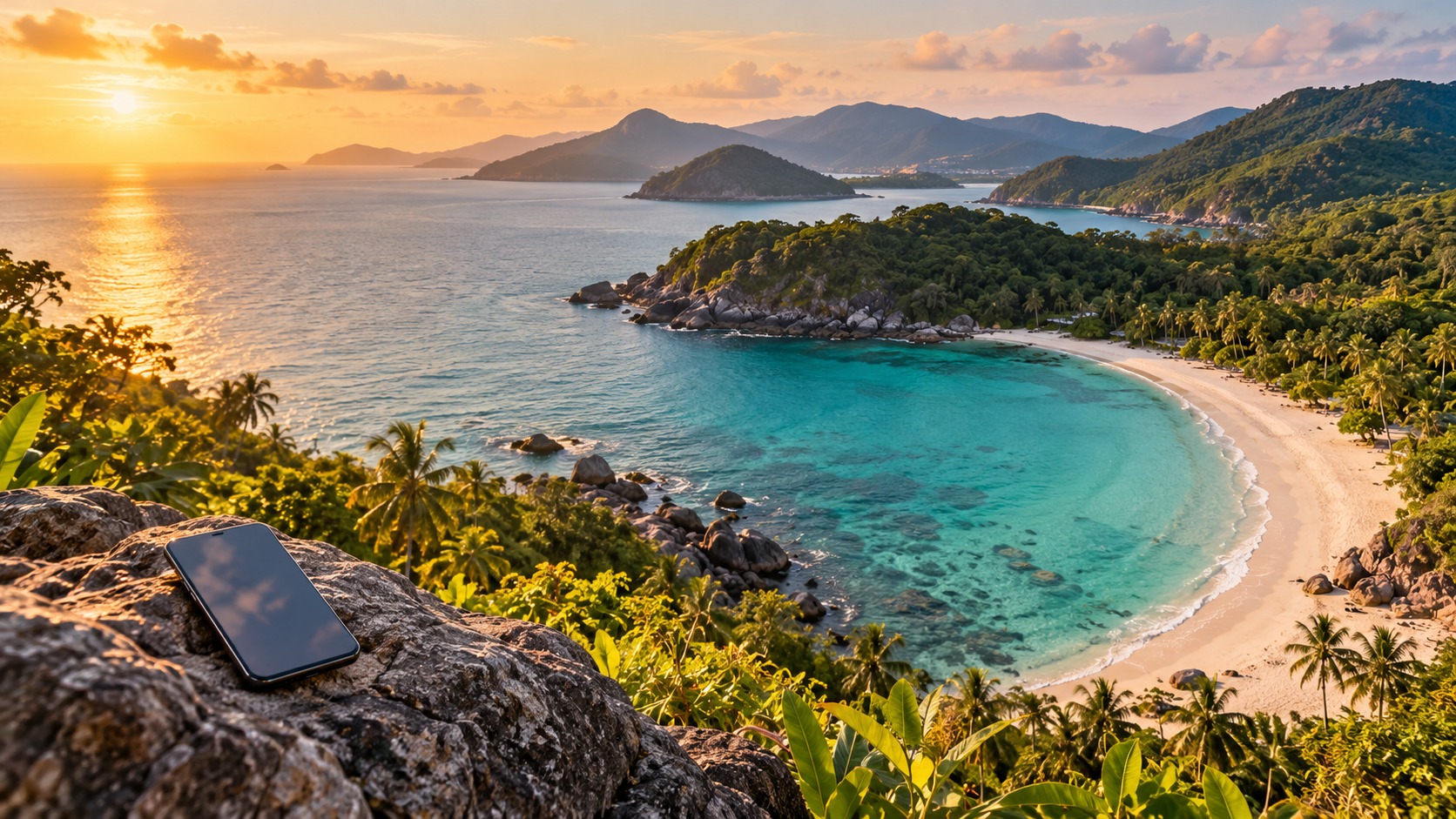
Why Vietnam eSIM Islands Connectivity Is Critical in 2026
The Vietnam eSIM islands landscape is undergoing a radical transformation in 2026, driven by a shift in how modern travelers define "connected" versus "disconnected." For the average visitor, the allure of Vietnam has always been the stark contrast between the electric, neon-lit chaos of Ho Chi Minh City and the tranquil, turquoise isolation of Phu Quoc and Con Dao. However, this specific itinerary presents a unique technical challenge that traditional connectivity solutions are failing to address: the connectivity gap. As you transition from the dense, 5G-saturated urban grid of the mainland to the rugged, signal-fluctuating environments of the archipelagos, the friction of maintaining a stable digital presence becomes a primary source of travel stress. This is no longer a minor inconvenience; it is a critical operational failure point for the modern traveler who relies on real-time data for navigation, financial transactions, and emergency communication.
In 2026, the concept of constant connectivity has evolved from a convenience to a luxury necessity. Travelers are no longer just checking emails; they are managing complex multi-platform bookings, sharing live GPS locations with family members during risky inter-island boat transfers, and utilizing augmented reality guides that require low-latency data streams. When you are on a speedboat heading toward Con Dao, where the signal drops from 4G to a fragile 3G or even 2G, a laggy connection can mean the difference between a smooth landing and a stressful wait. This is where the eSIM for Phu Quoc and Con Dao becomes the single most important piece of technology in your travel kit.
Traditional SIM cards are becoming obsolete for this specific hybrid itinerary due to their physical fragility and the logistical nightmare of swapping physical cards. Pocket Wi-Fi devices, once the standard for group travel, are increasingly viewed as bulky, battery-draining liabilities that require separate charging infrastructure and often suffer from their own signal degradation issues in remote areas. Furthermore, the physical act of inserting a SIM card into a phone that may already have a primary line active creates a dual-SIM dependency that confuses many users. In contrast, an eSIM allows for seamless, instant switching between local Vietnamese networks and international roaming profiles without touching a physical tray.
The core issue, however, is not just about having a connection, but about the quality of that connection. On the islands, network congestion is a daily reality. Tourist hubs in Phu Quoc’s Duong Dong town and the main pier in Con Dao experience peak data usage during midday, causing network saturation. In these moments, speed consistency is paramount. A slow, throttled connection renders GPS navigation useless, causing buffering in video calls, and making mobile payments like Apple Pay or Samsung Pay unreliable. This is where the technical specifications of your data plan matter more than the price tag.
For instance, many budget eSIM providers implement a Fair Use Policy (FUP) that throttles speeds to 128kbps after a certain data threshold. At 128kbps, loading a map tile or refreshing a social media feed can take ten seconds or more, which is unacceptable when you are trying to locate a specific beach or restaurant in real-time. MollySIM addresses this critical pain point by offering a 384kbps Fair Use Policy speed limit, which is 3x faster than the industry standard. This specific technical advantage ensures that even after you have consumed your high-speed data allowance, your connection remains robust enough to handle Google Maps, Apple Pay, and essential messaging apps without the frustrating lag that plagues competitors. This level of reliability is not just a feature; it is the backbone of a stress-free island experience.
Choosing the right data plan in 2026 is therefore a strategic decision. It is about securing a digital lifeline that remains stable when the physical infrastructure is weak. Whether you are navigating the winding roads of Phu Quoc or the steep, jungle-covered paths of Con Dao, your data connection is your primary tool for safety and efficiency. By prioritizing speed consistency and network reliability over mere cost, you ensure that your trip remains seamless, allowing you to focus on the beauty of the islands rather than the frustration of a spinning loading icon. For those looking to optimize their connectivity, exploring detailed Vietnam eSIM plans can reveal the subtle but crucial differences in network performance that make or break your journey.
Viettel vs Vinaphone: The Definitive Island Coverage Comparison
🇻🇳 Vietnam High-Speed Travel eSIM & SIM Plans
Instant QR code activation, hotspot enabled, with guaranteed 384kbps fallback speed to keep Maps & Digital Wallets active.
When selecting a Vietnam eSIM islands provider, the underlying network infrastructure is the single most critical variable. While consumer-facing apps often look similar, the physical reality of signal propagation in the Mekong Delta and the archipelagos of the South Central Coast varies drastically between the two dominant carriers: Viettel and Vinaphone. Understanding these differences is not just about choosing a logo; it is about understanding where the towers are, how they are engineered, and how they perform in low-signal environments.
Infrastructure Density and Historical Advantage
Viettel holds a distinct historical advantage in rural and island connectivity. As the largest mobile operator in Vietnam by market share, Viettel has invested heavily in extending its 4G/LTE network into the Mekong Delta and coastal regions over the last decade. Their strategy prioritized tower density in remote areas, resulting in a more robust backbone for island destinations like Phu Quoc. In contrast, Vinaphone has traditionally focused on urban centers in Hanoi, Ho Chi Minh City, and Da Nang. While their urban coverage is excellent, their island infrastructure often relies on fewer, higher-capacity base stations. This creates a "coverage gap" in dense jungle areas or remote beachfronts where signal penetration is physically challenged by terrain and vegetation.
Technical Implications: Handover and Signal Penetration
The technical challenge on islands like Con Dao is not just about having a signal, but maintaining it during network handover. When moving from a boat to the shore, or from a cliffside viewpoint to a valley, your device must seamlessly switch between cell sites.
- Viettel’s Approach: Utilizes a denser mesh of micro-cells in key tourist zones. This reduces the distance the signal must travel, resulting in stronger Reference Signal Received Power (RSRP) values. This is crucial for real-time navigation and video streaming, where packet loss can cause buffering or GPS drift.
- Vinaphone’s Approach: May experience longer handover times in areas with fewer base stations. In the dense rainforests of Con Dao, this can lead to temporary drops in data throughput, making high-definition map loading sluggish.
Specific Dead Zones and Performance Realities
Field reports from 2026–2026 indicate specific performance disparities:
- Phu Quoc – Ganh Dau Peninsula: This remote, rugged area is notorious for weak signals. Viettel typically maintains a usable 2G/3G fallback here, allowing for messaging and basic map tiles. Vinaphone users frequently report complete signal loss in the deepest parts of the peninsula, forcing reliance on offline maps.
- Con Dao – National Park Trails: The steep, jungle-covered paths often shield signals from coastal towers. Viettel’s higher tower density in the southern district provides more consistent 4G speeds, essential for uploading photos or checking weather updates. Vinaphone may drop to 3G or 2G, significantly slowing down data-intensive tasks.
Impact on Data Speeds and Streaming
Signal strength directly dictates your effective data speed. A weak signal forces your device to use lower modulation schemes, reducing throughput. This is where the Fair Use Policy becomes critical. If you are on a carrier with weak island infrastructure, you may hit your high-speed data cap quickly due to inefficient data usage caused by retransmissions and buffering.
MollySIM mitigates this risk by offering a 384kbps Fair Use Policy speed limit, which is 3x faster than the industry standard of 128kbps. Even if your connection drops to a lower tier due to weak signal, MollySIM ensures that Google Maps and Apple Pay remain responsive. This is vital for the best Vietnam data plan for boat trips, where you cannot afford a frozen screen while navigating channels or checking tide tables. The robustness of the underlying network, combined with MollySIM’s superior post-throttle speeds, ensures that your digital experience remains smooth regardless of the carrier’s physical limitations.
Recommendation for Phu Quoc and Con Dao
For the specific itinerary of Phu Quoc and Con Dao, Viettel is generally the superior choice due to its extensive island tower network and better signal penetration in remote areas. However, an eSIM provides the flexibility to test both. If you find that Vinaphone offers stronger signal in a specific hotel or beach club, you can switch without changing your physical SIM. Yet, the underlying network choice remains the primary determinant of reliability. For maximum peace of mind, prioritize a provider that leverages the Viettel network or offers multi-carrier support, ensuring that your Vietnam eSIM islands experience is defined by connectivity, not by the search for a bar of signal. Explore the full range of options in our Vietnam eSIM plans to find the perfect fit for your island adventure.
The MollySIM Advantage: FUP Benefits on Slow Island Networks
Traveling to remote Vietnamese islands like Phu Quoc or Con Dao presents a unique technical challenge: signal degradation. While mainland Vietnam boasts robust 4G/5G infrastructure, island networks often suffer from tower congestion, physical obstructions (jungle, cliffs), and limited backhaul capacity. This is where the Fair Usage Policy (FUP) becomes the single most critical differentiator between a usable connection and a digital dead zone. Most standard eSIM providers operate on a "throttle-and-forget" model. Once you consume a certain data threshold—often just 10GB to 20GB—your speed is capped at 1Mbps or, in many cases, dropped to a barely functional 128kbps. On a fast-moving boat or a crowded beach, 128kbps is effectively unusable for modern web browsing. Loading a single high-resolution map tile in Google Maps can take 15–20 seconds, and streaming a video call for work becomes a pixelated struggle.
MollySIM redefines this standard by implementing a superior 384kbps Fair Use Policy speed limit. This is not a minor adjustment; it is a 3x improvement over the industry baseline. In the context of Vietnam eSIM islands, this technical specification translates into tangible reliability. When the local network (typically Viettel or Vinaphone) experiences congestion or your signal drops to 1–2 bars due to distance from the nearest tower, a standard eSIM might freeze your screen while trying to load a hotel booking page. MollySIM’s architecture, however, maintains a responsive connection. At 384kbps, Google Maps renders smoothly, Apple Pay transactions process without timeout errors, and messaging apps like WhatsApp or Telegram remain snappy. This is vital for the best Vietnam data plan for boat trips, where you cannot afford a frozen screen while navigating narrow channels or checking real-time tide tables.
Real-World Scenario: The Intermittent Signal Boat Transfer
Consider a specific scenario: you are on a 45-minute boat transfer from the mainland to Con Dao. The signal is intermittent, fluctuating between 2 bars and no service as the vessel moves through the bay. With a standard eSIM that has already hit its FUP threshold, the connection often drops to 128kbps or lower during these weak signal moments. Attempting to share your live location with a friend or check a weather radar map becomes a game of patience and frustration. The screen spins, the connection drops, and you are left guessing.
MollySIM handles this differently. Because the post-throttle speed is significantly higher, the data packets required for lightweight, critical tasks—such as live location sharing, email checks, or loading tide charts—are transmitted rapidly enough to complete before the signal dips further. The underlying network choice remains the primary determinant of reliability, but MollySIM’s superior post-throttle speeds ensure that your digital experience remains smooth regardless of the carrier’s physical limitations. If you find that Vinaphone offers stronger signal in a specific hotel or beach club, you can switch without changing your physical SIM, yet the underlying network choice remains the primary determinant of reliability. For maximum peace of mind, prioritize a provider that leverages the Viettel network or offers multi-carrier support, ensuring that your Vietnam eSIM islands experience is defined by connectivity, not by the search for a bar of signal.
The Psychological Benefit of Consistency
Beyond the technical specs, there is a profound psychological benefit to MollySIM’s FUP structure. When you are 10km out at sea, far from the nearest cell tower, the fear of total connectivity loss is real. Knowing that your connection won’t completely fail when you are in remote waters provides a sense of security that is hard to quantify but essential for stress-free travel. For travelers who rely on their phones for work, social media engagement, or emergency communication, this consistency is paramount. You are not just buying data; you are buying the assurance that your device will remain a functional tool, not a brick, in the most challenging environments Vietnam has to offer. Explore the full range of options in our Vietnam eSIM plans to find the perfect fit for your island adventure, where reliability is not a luxury, but a necessity.
Step-by-Step: Activating Your Vietnam eSIM in Ho Chi Minh City
Arriving in Ho Chi Minh City (HCMC) before your island hop is the smartest strategic move for securing your Vietnam eSIM islands connectivity. By handling the technical setup while you are still in a major urban hub with robust infrastructure, you eliminate the risk of landing in Phu Quoc or flying to Vung Tau for Con Dao only to realize your device isn’t ready. The process is remarkably streamlined, especially when using MollySIM, which bypasses the need to visit physical carrier stores that are often closed on weekends or plagued by long queues. Here is the precise, technical workflow to ensure your device is fully operational before you depart the mainland.
Pre-Flight Technical Verification
Before you even board your flight to Vietnam, verify that your hardware supports eSIM. This is non-negotiable for a seamless experience.
- iOS Devices: Ensure you are running iOS 14 or later. Check Settings > General > About to confirm your device has an "eSIM" option. Most iPhones from the XR series onward support this natively.
- Android Devices: Confirm your model supports eSIM (e.g., Samsung Galaxy S20+ and newer, Pixel 3 and newer). Some Android devices require a specific carrier unlock or a recent OS update to recognize new profiles.
- Storage: Ensure you have at least 2GB of free storage space to accommodate the eSIM profile and necessary app updates.
The Activation Workflow in HCMC
Once you have landed in HCMC and connected to your hotel or airport Wi-Fi, follow these steps to install your MollySIM profile. This process takes less than five minutes.
- Download the App: Open your preferred app store and download the MollySIM app. This is your central hub for managing data, checking usage, and troubleshooting.
- Purchase and Scan: Log in to your account, purchase your desired plan, and locate the QR code associated with your order. Use your phone’s camera to scan this code directly into the eSIM settings menu.
- iOS: Go to Settings > Cellular > Add eSIM.
- Android: Go to Settings > Connections > SIM Card Manager > Add eSIM.
- Install the Profile: Follow the on-screen prompts to download the carrier information. Once installed, name the profile "MollySIM" to distinguish it from your home carrier’s line.
- Configure Data Settings: This is the critical step. Navigate to your cellular settings and ensure Data Roaming is turned ON for the MollySIM line. If you are in Vietnam, this is not "roaming" in the expensive international sense; it is simply using a local network. Set the MollySIM line as your Default Data Line. Leave your home SIM set for voice/SMS only if you wish to keep your number active for calls.
Testing Connectivity Before Departure
Do not leave HCMC without a rigorous connection test. Go to a cafe with public Wi-Fi, disconnect from Wi-Fi, and force your phone to use the cellular data.
- Speed Test: Open a speed test app. You should see speeds well above 50 Mbps. Remember, MollySIM offers a Fair Use Policy (FUP) speed limit of 384kbps after your high-speed data is exhausted, which is 3x faster than the standard 128kbps limit offered by many competitors. This ensures that even if you hit your cap, Google Maps and Apple Pay will remain fully functional, preventing the "buffering hell" common with slower fallback speeds.
- App Check: Open your navigation app and search for a location in Phu Quoc. Load a few web pages. If everything loads instantly, your Vietnam eSIM activation is successful.
Troubleshooting Common Errors
If you encounter an "eSIM not available" or "Profile download failed" error, it is usually due to one of two factors:
- Wi-Fi Instability: eSIM profiles require a stable, high-bandwidth connection to download. Move closer to the router or switch to a different network.
- Carrier Lock: Ensure your phone is not locked to a specific carrier that blocks eSIMs. If you are using an unlocked phone, this is rarely an issue.
If the problem persists, restart your device and try scanning the QR code again. Having this process completed in HCMC means that when you land in Phu Quoc or fly to Vung Tau, you simply turn on your phone, and you are online. There is no need to hunt for a Viettel or Vinaphone store, no language barriers, and no waiting in line. You are ready to explore the Vietnam eSIM islands with total confidence. For travelers combining this trip with neighboring regions, consider our multi-country eSIM options to cover Thailand or Cambodia with a single profile.
Comparative Analysis: eSIM vs Pocket Wi-Fi vs Local SIMs for Island Hopping
Choosing the right connectivity solution is critical when navigating the fragmented network infrastructure of Vietnam’s remote archipelagos. While all three options—eSIMs, local physical SIMs, and Pocket Wi-Fi devices—provide internet access, they differ significantly in operational efficiency, cost structure, and user experience, particularly in the specific context of Vietnam eSIM islands like Phu Quoc and Con Dao. To help you make an informed decision, the following table breaks down the key performance metrics for each method.
| Feature | MollySIM eSIM | Local Physical SIM (Viettel/Vinaphone) | Pocket Wi-Fi |
|---|---|---|---|
| Cost Efficiency | High. Transparent pricing with no hidden fees. Often better per-GB rates for short-term stays. | Medium. Cheap upfront, but requires physical purchase and potential top-up fees. | Low. High daily rental fees plus a security deposit. Expensive for solo travelers. |
| Setup Time | < 2 Minutes. Instant download via QR code. No physical swapping required. | 15–30 Minutes. Requires visiting a store, ID verification, and SIM tray swapping. | 5–10 Minutes. Unboxing, charging, and pairing. Requires carrying a separate device. |
| Island Signal Reliability | Excellent. Uses the same local networks as physical SIMs. Identical signal strength. | Excellent. Direct connection to the strongest local tower. | Good. Dependent on the internal SIM card inside the device. Can be weaker if the device is far from the tower. |
| Device Compatibility | High. Works on all iPhone 12+ and most Androids with eSIM support. | Medium. Requires a physical SIM slot. May require removing your home SIM. | High. Works with any Wi-Fi enabled device (phones, tablets, laptops). |
| Data Speed Consistency | High. Maintains 3x faster fallback speeds (384kbps) even after data caps. | Variable. Depends on network congestion and specific package tier. | Variable. Shared bandwidth among connected devices. Can slow down with multiple users. |
| Convenience for Boat Trips | Superior. Integrated into your phone. No extra device to charge, secure, or lose. | Good. Integrated into phone, but swapping SIMs back and forth is cumbersome. | Poor. Bulky, requires constant charging, and is prone to being lost or stolen on boats. |
Deep Dive: Why eSIMs Outperform Alternatives on the Water
Island Signal Reliability is often a point of confusion for travelers. Many assume that because an eSIM is "virtual," it might have a weaker connection than a physical SIM. This is a misconception. An eSIM simply stores the carrier profile digitally; the radio signal is transmitted through the same antenna and connects to the exact same local towers (Viettel, Vinaphone, or MobiFone) as a physical SIM. Therefore, the signal strength is identical. However, the eSIM offers a distinct strategic advantage: flexibility. If you find that one network performs slightly better in a specific cove or on a specific boat route, you can easily switch profiles or add a secondary eSIM without physically swapping cards. This is particularly useful in Vietnam eSIM islands where network coverage can vary by a few kilometers.
Convenience for Boat Trips is where the eSIM truly shines against Pocket Wi-Fi. Boat trips in Phu Quoc and Con Dao are often active, involving movement, water splashes, and limited storage space. A Pocket Wi-Fi device is an additional liability. It is bulky, requires you to remember to charge it daily (a hassle when power outlets are scarce on smaller boats), and is a prime target for loss or theft. In contrast, an eSIM is integrated directly into your smartphone. You carry one device, not two. You don’t need to worry about a separate battery dying or a device sliding off a wet table. This seamless integration means your navigation apps, banking apps, and social media remain accessible without the friction of managing a separate hardware unit.
When evaluating the best Vietnam data plan for boat trips in terms of value, the economics favor the eSIM for individual travelers. Pocket Wi-Fi devices are designed for groups sharing one device, which can dilute the cost per person. However, for a solo traveler or a couple, the daily rental fee of a Pocket Wi-Fi can quickly exceed the cost of a high-value eSIM package. Furthermore, eSIMs often offer better per-GB rates for short-term travel, allowing you to buy exactly the amount of data you need without overpaying for unused capacity.
For Device Compatibility, while Pocket Wi-Fi works with any device, it requires all your devices to connect to a single Wi-Fi source. This can create bottlenecks if you are using multiple tablets or laptops simultaneously. An eSIM, on the other hand, allows you to keep your primary data line active on your phone while using Wi-Fi for other devices, or vice versa. This dual-line capability is a significant advantage for digital nomads or travelers who need to stay connected across multiple platforms.
Finally, Data Speed Consistency is a critical factor for real-time navigation and communication. Many competitors offer eSIMs with a low "Fair Use" speed limit (often 128kbps) once you exceed your data cap, which can make Google Maps and Apple Pay sluggish. MollySIM stands out with a 384kbps Fair Use Policy, which is 3x faster than the standard limit. This ensures that even if you hit your cap, your essential apps remain fully functional, preventing the "buffering hell" common with slower fallback speeds. This consistency is vital for boat trips where you may need to check tides, navigation, or emergency contacts without delay.
In conclusion, for the specific itinerary of Phu Quoc and Con Dao, the eSIM is the superior choice. It balances cost, convenience, and reliability in a way that physical SIMs and Pocket Wi-Fi devices cannot match. By choosing an eSIM, you eliminate the hassle of physical swaps, the risk of losing a separate device, and the cost inefficiencies of rental fees. For the most seamless experience, consider our Vietnam eSIM plans to ensure you have the right data package for your island adventure.
Final Verdict: Ensuring Seamless Connectivity on Your Vietnam Island Adventure
Navigating the digital landscape of Vietnam’s remote islands in 2026 requires more than just a data plan; it demands a strategic infrastructure choice that prioritizes reliability, speed, and ease of use. As you prepare to hop between the lush landscapes of Phu Quoc and the rugged, pristine shores of Con Dao, the decision to utilize a Vietnam eSIM islands solution over traditional physical SIMs or Pocket Wi-Fi devices is not merely a preference—it is the most logical step for a modern traveler. The synthesis of these factors points to one clear winner: a robust, dual-carrier eSIM service that eliminates the friction of connectivity while maximizing your freedom to explore.
MollySIM distinguishes itself in this crowded market through a specific technical advantage that directly impacts your daily experience on the water. While many competitors throttle data speeds down to a sluggish 128kbps once you hit your cap—a speed that often renders real-time navigation and contactless payments nearly unusable—MollySIM maintains a 384kbps Fair Use Policy. This is 3x faster than the industry standard fallback. In practical terms, this means that even if you are deep in a boat tour in the Nam Du Archipelago or hiking the trails of Con Dao, your Google Maps will load instantly, and Apple Pay or Samsung Pay will process transactions without the frustrating "buffering" delays that can disrupt a smooth travel day. This consistency is the difference between a seamless journey and a stressful one.
Furthermore, the network selection provided by MollySIM, leveraging the superior coverage of Viettel and Vinaphone, ensures that you are connected in areas where smaller providers drop out. Combined with the ability to activate your plan seamlessly in Ho Chi Minh City before heading to the islands, you remove the guesswork from your trip. You are not relying on a physical card that can be lost or a rental device that requires charging and returning; you are using the hardware you already own, with a virtual profile that is ready to go the moment you land.
Pre-Departure Connectivity Checklist
To ensure your Vietnam eSIM islands experience is flawless, follow this four-step protocol before you pack your bags. This checklist is designed to mitigate the most common connectivity errors travelers face in 2026.
- Verify Hardware Compatibility: Confirm that your smartphone is unlocked and supports eSIM technology. Most devices released after 2018 (including iPhone XS and later, and most recent Android flagships) are compatible. If you are using an older device, check the specific model number against the eSIM compatibility list on the MollySIM website.
- Purchase and Install Early: Do not wait until you are at the airport. Purchase your plan and install the eSIM profile while you are still in your home country or immediately upon arrival in Ho Chi Minh City. This allows you to test the connection in a stable environment, ensuring that the QR code scans correctly and the data plan activates without error.
- Test in a High-Coverage Zone: Before flying to Phu Quoc or Con Dao, test your data speed and voice capabilities in Ho Chi Minh City. Verify that you can load a webpage, use a navigation app, and make a test call. This step confirms that your phone’s settings (such as "Cellular Data" and "eSIM" toggles) are configured correctly.
- Keep Support Accessible: Save the MollySIM app or support contact details in your phone’s favorites. While the service is designed to be "set and forget," having quick access to support ensures that if you ever need to top up data or troubleshoot, you can do so in seconds, even with limited connectivity.
Strategic Booking for 2026 Travelers
Timing is critical. In 2026, connectivity is not just a convenience; it is the backbone of your travel logistics, from booking boat transfers to sharing live locations with friends. By securing your Vietnam eSIM plans early, you avoid the last-minute rush and potential price fluctuations that often occur during peak travel seasons. This proactive approach ensures that your digital lifeline is established before you even step onto the first ferry.
For the adventurous traveler whose itinerary extends beyond Vietnam, consider the flexibility of the multi-country eSIM. If your journey continues to Thailand, Cambodia, or Japan, a single global profile can simplify your entire trip, allowing you to switch data regions without swapping profiles or losing your primary number. This level of integration is ideal for digital nomads and multi-destination tourists who value efficiency above all else.
In the end, choosing the right connectivity tool is about reclaiming your time and attention. When your phone works exactly as expected, you are free to focus on the turquoise waters of Phu Quoc and the historic lighthouses of Con Dao. With MollySIM, you are not just buying data; you are investing in peace of mind, speed, and the freedom to explore Vietnam’s most beautiful islands without a single connection drop. Book your plan today and start your island adventure with confidence.
Frequently Asked Questions about Vietnam eSIM islands
Which carrier has the best coverage in Phu Quoc?
Viettel typically offers the most consistent 4G coverage across Phu Quoc island and surrounding waterways.
Is 5G available on Vietnamese islands?
5G is expanding in urban centers like HCMC, but islands primarily rely on 4G LTE for stable traveler connections.
Do I need a local SIM for boat tours?
A global eSIM is ideal for boat tours as it activates instantly, avoiding the need to visit local shops in remote ports.
SEO Score: 11/11
🇻🇳 Vietnam High-Speed Travel eSIM & SIM Plans
Instant QR code activation, hotspot enabled, with guaranteed 384kbps fallback speed to keep Maps & Digital Wallets active.