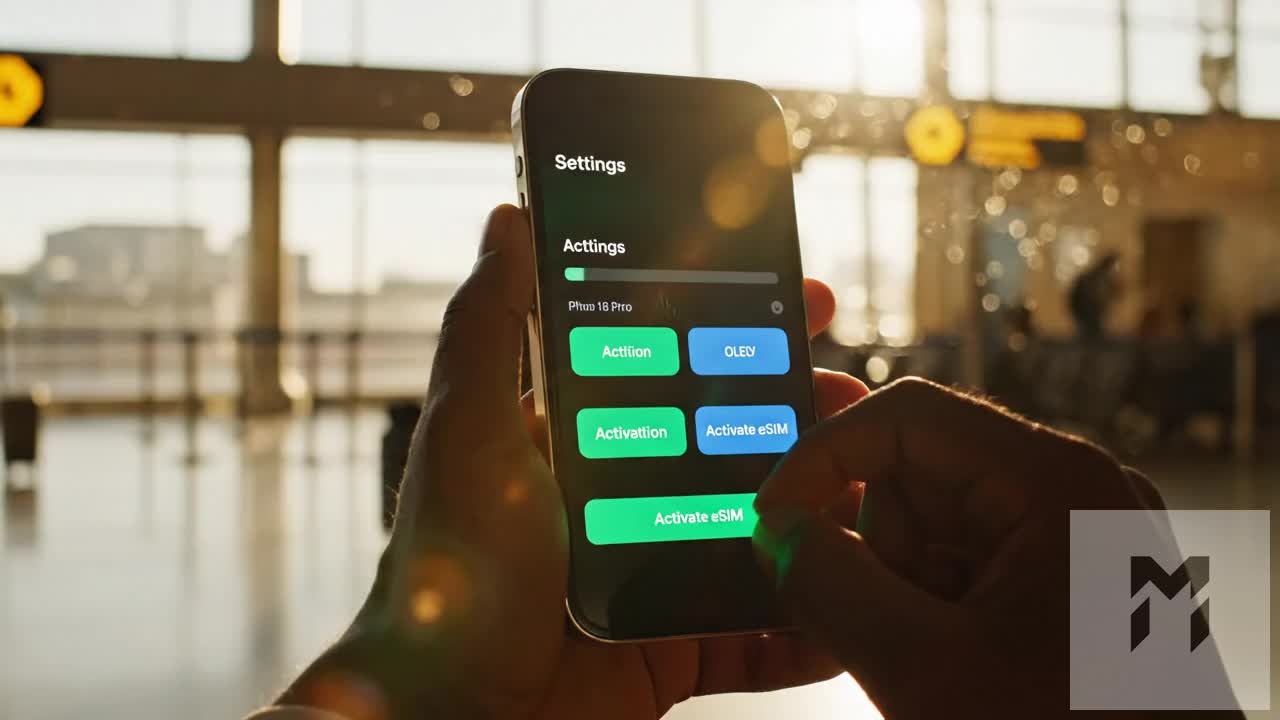
From Yellowstone to Yosemite: The Essential eSIM Guide for USA National Parks Road Trips
Navigating the Digital Frontier: Why Reliable Connectivity is Non-Negotiable in USA National Parks
The United States boasts an unparalleled collection of natural wonders, from the geothermal marvels of Yellowstone and the towering granite cliffs of Yosemite to the breathtaking canyons of Zion and the vast, ancient landscapes of the Grand Canyon. These iconic national parks represent the pinnacle of American wilderness, drawing millions of adventurers annually seeking solace, inspiration, and unforgettable experiences. Road-tripping through these majestic landscapes is a quintessential American journey, promising vistas that defy description and encounters with wildlife in their natural habitats.
However, beneath this veneer of pristine wilderness lies a critical challenge that can quickly transform an idyllic escape into a stressful ordeal: the notorious 'connectivity black holes'. While the parks are designed to immerse visitors in nature, their very remoteness, vastness, and rugged topography often render traditional mobile service unreliable, if not entirely nonexistent. This isn't just an inconvenience; it's a fundamental obstacle to safety, efficient logistics, and even the full enjoyment of the travel experience.
The Indispensable Role of Mobile Data in the Wild
Reliable mobile data in these remote settings is not a luxury; it's a non-negotiable necessity. Its importance spans several critical domains:
Safety and Emergency Preparedness
In areas where help can be hours away, the ability to make an emergency call is paramount. Whether it's a medical emergency, a vehicle breakdown in a remote section of road, or getting lost on a trail, a working phone can be a literal lifesaver. Furthermore, GPS navigation is crucial. While paper maps are essential backups, real-time GPS updates, traffic alerts (even in parks, road closures happen), and precise location tracking are invaluable for staying on course, especially when venturing off main roads or navigating complex park layouts. Imagine trying to find a remote trailhead or your campsite in the dark with no signal to load your map – a common frustration for unprepared travelers.
Practical Logistics and Seamless Exploration
Beyond emergencies, consistent connectivity underpins the smooth operation of your road trip. National parks are dynamic environments. Park alerts regarding trail closures, wildlife activity, or sudden weather changes (flash floods in canyons, snow in high elevations) are often disseminated digitally. Accessing real-time weather updates is vital for planning hikes, especially in areas prone to rapid shifts. Furthermore, many parks now require timed entry permits, advance reservations for popular trails (like Half Dome in Yosemite), or last-minute lodging bookings within or near park boundaries. Without reliable data, securing these essential elements can become a frustrating, time-consuming, and often impossible task, leading to missed opportunities or unexpected detours. Even simple tasks like checking park operating hours or finding the nearest gas station become monumental challenges without connectivity.
Enriching the Travel Experience
While disconnecting is part of the appeal, modern travel also benefits immensely from digital tools. The ability to research points of interest on the fly, identify flora and fauna using apps, or delve deeper into the history of a landmark can significantly enrich your understanding and appreciation of the surroundings. And, of course, for many, sharing photos and videos of breathtaking landscapes with loved ones or on social media is a cherished part of the travel experience. Without data, these moments remain trapped on your device until you return to civilization, diminishing the immediacy and joy of sharing.
The Frustration of Traditional Connectivity Methods
Travelers relying on traditional SIM cards or their home carrier's roaming often encounter a litany of frustrations in national parks:
- Dropped calls and patchy service: Conversations cut short, emergency calls failing to connect.
- Failed map downloads: Getting stuck without directions because offline maps weren't downloaded or real-time updates are impossible.
- Inability to access critical information: Standing at a trailhead sign, unable to check if the trail is open or if a permit is required.
- Slow loading times: Even when a weak signal exists, pages crawl, and apps time out, making them practically useless. This is particularly problematic for essential services like using Google Maps or Apple Pay which require a consistent, albeit not necessarily lightning-fast, connection. Competitors often throttle speeds to a mere 128kbps after a certain data threshold, rendering these services frustratingly slow or unusable.
This is precisely where an advanced solution like an eSIM steps in, transforming a potentially stressful journey into a seamless adventure. Specifically, a robust eSIM provider like MollySIM (https://mollysim.com) offers a lifeline in these digital deserts. With a Fair Use Policy speed limit of 384kbps – three times faster than many competitors' 128kbps – MollySIM ensures that even when data usage is high, essential applications like Google Maps, Apple Maps, and even mobile payment systems remain smoothly functional. This superior speed and reliability are not just about convenience; they are about maintaining safety, managing logistics, and truly enjoying the unparalleled beauty of America's national parks without the constant anxiety of being disconnected. The digital frontier within these parks demands a modern, reliable solution, and eSIMs are poised to deliver just that.
MollySIM: Your Multi-Carrier Gateway to Uninterrupted National Park Adventures
🇺🇸 United States High-Speed Travel eSIM & SIM Plans
Instant QR code activation, hotspot enabled, with guaranteed 384kbps fallback speed to keep Maps & Digital Wallets active.
Navigating the vast, often remote landscapes of America's national parks demands a connectivity solution that transcends the limitations of traditional mobile services. This is precisely where MollySIM (https://mollysim.com) emerges as a game-changer, offering a robust and intelligent approach to staying connected, even in the most challenging environments. At its core, MollySIM leverages the power of eSIM technology, a fundamental shift from the physical SIM cards we've long relied upon.
Understanding the eSIM Advantage: Digital Freedom for Road Trips
An eSIM, or embedded SIM, is a digital SIM profile that is built directly into your device's hardware. Unlike a traditional physical SIM card, there's no need to insert or swap tiny plastic chips. This digital nature offers profound advantages, particularly for multi-state road trips across the USA. Imagine traversing from the geysers of Yellowstone to the granite cliffs of Yosemite; with a traditional setup, you might encounter areas where your primary carrier has no service, forcing you to seek out local SIM cards or endure frustrating dead zones. An eSIM eliminates this hassle entirely. You can store multiple eSIM profiles on a single device and switch between them digitally, often in a matter of seconds, without ever opening your phone's SIM tray. This unparalleled convenience means no more fumbling with small cards, no risk of losing your primary SIM, and immediate access to different network options as your journey unfolds.
MollySIM's Multi-Carrier Network Aggregation: Beyond Single-Carrier Limitations
The true genius of MollySIM lies in its sophisticated approach to network aggregation. While most mobile providers lock you into a single carrier's network – be it Verizon, AT&T, or T-Mobile – MollySIM operates differently. It intelligently leverages the robust infrastructure of all major US carriers. This means that instead of being confined to the coverage map of just one provider, MollySIM's technology dynamically scans and connects to the strongest available signal from any of these leading networks at any given location.
Consider the inherent challenge of national parks: vast expanses where cellular towers are sparse, and coverage can be incredibly patchy. A single carrier might have excellent service in one valley but a complete dead zone just a few miles away. MollySIM's system actively monitors network performance and, through its advanced algorithms, can prioritize or seamlessly switch your connection to the carrier offering the best signal strength and data speed at that precise moment. This dynamic switching capability is crucial for mitigating the notorious "patchy coverage" issue prevalent in remote areas. It’s like having an invisible hand constantly optimizing your connection, ensuring you're always on the most reliable network, whether you're deep within the Grand Canyon or navigating the scenic routes of Zion.
Uninterrupted Performance: Speed and Reliability Where It Matters
Beyond simply finding a signal, MollySIM prioritizes the quality of that connection. While many competitors throttle speeds to a mere 128kbps after a certain data threshold, rendering essential applications practically useless, MollySIM maintains a Fair Use Policy speed limit of 384kbps. This is three times faster than the industry standard for throttled speeds and makes a monumental difference.
This superior speed ensures that critical applications remain smoothly functional, even when data usage is high. Imagine needing to quickly check Google Maps or Apple Maps for directions to the next trailhead, confirm a campsite reservation, or even make a quick purchase using Apple Pay at a park store. At 128kbps, these tasks would be agonizingly slow or fail outright. With MollySIM's 384kbps, these essential services perform reliably, providing not just convenience but also crucial support for safety and logistics throughout your journey. This commitment to higher baseline speeds means you can rely on your digital tools when you need them most, transforming potential frustrations into seamless interactions.
Effortless Management and Flexible Data Plans
MollySIM is designed for the modern traveler, emphasizing ease of use from activation to ongoing management. Activating your eSIM is a straightforward digital process, typically involving scanning a QR code, eliminating the need for physical stores or waiting for shipments. Once activated, managing your data plan is intuitive through a user-friendly app or online portal.
This digital platform offers unparalleled flexibility of data plans, a significant advantage for long road trips with varying data needs. Travelers can choose bundles specifically tailored for different durations and data consumption levels, ensuring they only pay for what they need. Whether you require a small data package for occasional navigation and communication or a larger bundle for streaming and hotspot use, MollySIM allows you to customize your plan. This prevents overpaying for unused services and provides the freedom to top up or adjust your plan on the fly, adapting to the unpredictable nature of national park adventures. With MollySIM, you gain not just connectivity, but intelligent, adaptable, and reliable digital access designed to enhance every mile of your USA national park road trip.
Strategic Connectivity: Maximizing MollySIM for Safety, Navigation, and Park Logistics
Navigating the vast, often remote landscapes of USA National Parks demands more than just a sense of adventure; it requires a robust and reliable communication lifeline. MollySIM transforms your smartphone into an indispensable tool, offering strategic connectivity that is crucial for safety, efficient navigation, and seamless park logistics, even in areas where traditional service might falter.
Enhancing Safety in Remote Environments
The unpredictable nature of national parks, from sudden weather changes to wildlife encounters, underscores the critical need for constant connectivity. MollySIM's consistent data speeds provide a vital safety net:
- Reliable GPS for Remote Trail Navigation: While pre-downloaded offline maps (like those from Gaia GPS or AllTrails) are essential, a live data connection allows for real-time updates on trail conditions, unexpected detours, or emergency closures. Imagine navigating a complex trail system in Zion or Yellowstone; a sudden rockslide or flash flood warning can be immediately accessed, allowing you to adjust your route and avoid danger.
- Immediate Emergency Communication: In the event of an accident, getting lost, or a close encounter with wildlife, a stable connection is paramount. MollySIM facilitates quick contact with park rangers, emergency services, or travel companions. Every second counts in an emergency, and the ability to send a precise location or make a call without delay can be life-saving.
- Wildlife and Hazard Alerts: Many parks issue real-time alerts regarding aggressive wildlife, bear sightings, or hazardous conditions. A reliable data connection ensures you receive these critical updates directly to your device, empowering you to make informed decisions and maintain a safe distance.
Streamlining Park Logistics and Planning
Beyond emergencies, MollySIM's robust connectivity significantly simplifies the day-to-day logistics of a national park road trip, turning potential headaches into smooth operations:
- Real-time Park Alerts: Stay informed about crucial operational changes. This includes checking for unexpected road closures due to snow, rockslides, or construction, current fire bans, and updated trail conditions before you even leave your campsite.
- Securing Last-Minute Permits: For highly sought-after experiences like hiking Angels Landing in Zion National Park or securing a lottery permit for Half Dome in Yosemite, real-time internet access is often required. MollySIM ensures you have the connectivity needed to participate in these time-sensitive processes.
- Checking Shuttle Schedules and Availability: In busy parks like Grand Canyon or Zion, shuttle systems are the primary mode of transport. A live connection allows you to check real-time shuttle schedules, track their locations, and verify capacity, saving you valuable time and reducing frustration.
- Confirming Campground Availability: Spontaneous changes in travel plans are common on road trips. With MollySIM, you can quickly check last-minute campground availability, make reservations, or find alternative lodging options on the go, avoiding the stress of arriving at a full site.
Intelligent Data Conservation Strategies
Even with MollySIM's generous data plans, strategic data management is key, especially in areas with intermittent signal or when trying to extend your plan's longevity.
- Pre-Download Extensive Offline Maps: Before entering areas with known poor reception, download large sections of offline maps from Google Maps, Gaia GPS, or AllTrails. This ensures basic navigation even without a signal.
- Utilize Wi-Fi Calling: Whenever available at visitor centers, lodges, or designated park hotspots, switch to Wi-Fi calling for voice calls and messaging to conserve cellular data.
- Limit High-Bandwidth Activities: Avoid streaming high-definition video, large file downloads, or extensive social media browsing when relying on cellular data. Save these activities for Wi-Fi zones.
- Optimize App Settings: Configure apps to restrict background data usage, turn off automatic media downloads (especially for messaging apps), and disable auto-play for videos.
- Turn Off Automatic Updates: Prevent your phone from downloading large app or system updates over cellular data. Schedule these for when you have a stable Wi-Fi connection.
The 384kbps FUP Advantage: Your Essential Safety Net
One of MollySIM's most significant advantages for national park travelers is its Fair Usage Policy (FUP) with a sustained speed of 384kbps after your high-speed data allowance is exhausted. This is a critical differentiator, as many competitors throttle speeds down to a barely functional 128kbps.
- Sustained Essential Functionality: While 384kbps is not for streaming high-definition video, it is perfectly adequate for a range of essential functions:
- Sending/Receiving Text Messages: Crucial for emergency SMS, coordinating with travel partners, or receiving park alerts.
- Basic Web Browsing: Accessing critical information like park websites for updated conditions, checking weather forecasts, or performing basic email checks.
- Crucially, Maintaining GPS Functionality: Unlike slower throttled speeds, 384kbps allows Google Maps and Apple Maps to continue working smoothly for navigation, ensuring you can still find your way even after exhausting your primary data. This also extends to other location-based services like Apple Pay.
- A Robust Safety Net: This 3x faster FUP speed (compared to the industry standard 128kbps) acts as a robust safety net for extended trips or unexpected emergencies. It ensures you're never completely cut off from vital communication or information, providing peace of mind as you explore the most remote corners of the USA's national parks. With MollySIM (https://mollysim.com), you retain a functional level of connectivity that truly matters when you need it most.
eSIM vs. The Alternatives: Why MollySIM is the Ultimate Road Trip Companion
Navigating the vast and often remote landscapes of USA National Parks requires more than just a good map; reliable connectivity is paramount for safety, navigation, and sharing your unforgettable journey. While several options exist for staying connected, not all are created equal, especially when venturing off the beaten path. Let's dissect the alternatives and highlight why an eSIM, particularly MollySIM, stands out as the superior choice for your national park road trip.
| Feature | MollySIM eSIM | Physical Local SIM | International Roaming | Portable Wi-Fi Hotspot | Park Wi-Fi |
|---|---|---|---|---|---|
| Coverage & Reliability | Excellent (Multi-carrier leverage: Verizon, AT&T, T-Mobile) | Good (Single network, potential dead zones) | Variable (Depends on home carrier's agreements) | Good (Single network, device dependent) | Very Limited (Visitor centers, specific lodges) |
| Ease of Setup & Management | Instant digital activation, app-managed | Physical swap, registration often required | Automatic (but costly), no setup | Device rental/purchase, charging, setup | No setup, but very limited access |
| Cost-Effectiveness | Transparent, competitive plans | Can be cheap for locals, but tourist plans vary | Extremely expensive (roaming fees) | Rental fees, daily charges, extra device cost | Free (but highly unreliable) |
| Emergency Preparedness | Consistent access for calls/SMS/GPS | Potential dead zones in remote areas | High cost deters usage, potential dead zones | Device battery dependency, single network | Non-existent in emergencies outside hotspots |
| Device Portability | Built-in to smartphone, no extra device | Fits in phone | Built-in to phone | Extra device to carry & charge | N/A (relies on park infrastructure) |
| Data Flexibility | Various plans (daily, weekly, monthly), FUP backup | Fixed bundles, often limited options | Pay-as-you-go or expensive add-ons | Fixed daily/GB limits, overage fees | Extremely limited, often throttled |
| Security | Direct, secure connection | Direct, secure connection | Direct, secure connection | Direct, secure connection | Public Wi-Fi risks (unsecured networks) |
| GPS & Navigation | Reliable, even with 384kbps FUP | Reliable within coverage | Reliable within coverage | Reliable within coverage | Only within Wi-Fi range |
| Multi-State Travel | Seamless, no changes needed | Requires new SIM for different regions/carriers | Seamless but costly | Seamless but device dependent | Not feasible for road trips |
| Real-time Updates | Yes (Park alerts, weather, trail conditions) | Yes (within coverage) | Yes (within coverage, but costly) | Yes (within coverage) | Only at specific locations |
| Sharing Experiences | Easy photo/video uploads | Easy photo/video uploads (within coverage) | Cost-prohibitive for media | Easy photo/video uploads (device dependent) | Slow, unreliable for media uploads |
The Pitfalls of Traditional Connectivity Options
When planning a road trip through the USA's national parks, the unique challenges of remote areas quickly expose the limitations of conventional connectivity solutions.
Physical Local SIM Cards
Opting for a physical local SIM card upon arrival in the USA presents several logistical hurdles. First, you need to locate a store, navigate different carrier plans, and often complete a registration process, eating into valuable travel time. More critically for national park exploration, these SIMs typically rely on a single network provider. While a specific carrier might offer good coverage in one park, it could have significant dead zones in another, or even within different sections of the same vast park. For multi-state road trips, this becomes even more complex, potentially requiring you to purchase multiple SIMs from different carriers to ensure optimal coverage across diverse geographical regions.
International Roaming
Relying on international roaming from your home carrier is perhaps the most convenient but also the most financially perilous option. The costs associated with roaming data, calls, and SMS can be exorbitant, leading to unexpected "bill shock" upon your return. This high expense often deters travelers from using their data freely for essential tasks like checking weather updates, downloading offline maps, or sharing critical location information, thereby undermining the very purpose of having connectivity. Furthermore, roaming agreements don't guarantee superior coverage; you're still subject to the limitations of the local networks your home carrier partners with, which may not be the strongest in remote park areas.
Portable Wi-Fi Hotspots (Pocket Wi-Fi)
Portable Wi-Fi hotspots, or pocket Wi-Fi devices, offer a seemingly attractive solution by providing a personal Wi-Fi bubble. However, they introduce their own set of inconveniences. This is an extra device you must carry, charge daily (often requiring a power bank), and manage. The battery life becomes another critical concern, especially during long days of exploration away from charging points. Like physical SIMs, these devices typically operate on a single network, meaning their coverage can be inconsistent across the varied terrains of national parks. The rental fees or upfront purchase costs, combined with data plan expenses, can quickly add up, making them less cost-effective than a dedicated eSIM solution.
Park-Provided Wi-Fi
Finally, relying solely on park-provided Wi-Fi is a strategy fraught with unreliability. While some visitor centers, lodges, or specific administrative buildings might offer Wi-Fi, it's typically extremely limited in availability, often slow due to congestion, and rarely extends beyond these specific, confined locations. You certainly won't find Wi-Fi deep on a hiking trail, at most campgrounds, or along scenic drives. This makes it utterly impractical for real-time navigation, emergency communication, or spontaneous sharing of your experiences. Public Wi-Fi networks also carry inherent security risks, making them unsuitable for sensitive transactions or personal data. For a multi-day, multi-park road trip, park Wi-Fi is simply not a viable primary connectivity solution.
MollySIM: The Seamless Solution for National Park Adventures
MollySIM (https://mollysim.com) elegantly addresses these pain points by offering a streamlined, reliable, and cost-effective solution tailored for the demands of a USA national parks road trip. With instant digital activation and app-managed plans, you bypass the hassle of physical SIM swaps and store visits. Crucially, MollySIM leverages multiple top-tier US networks (Verizon, AT&T, T-Mobile), dynamically connecting you to the strongest available signal. This multi-carrier approach significantly enhances coverage and reliability, especially in the challenging, varied topography of national parks where a single carrier might struggle.
Beyond its robust primary coverage, MollySIM's commitment to uninterrupted connectivity is exemplified by its Fair Usage Policy (FUP). Even after exhausting your high-speed data, you retain a sustained speed of 384kbps. This is a critical differentiator, being 3x faster than the industry standard 128kbps offered by many competitors. This sustained speed ensures that essential functions like Google Maps and Apple Maps continue to work smoothly for navigation, you can send and receive critical text messages, check basic weather updates, and even use services like Apple Pay – providing an invaluable safety net and peace of mind throughout your journey. With MollySIM, you're not just connected; you're functionally connected, ensuring your national park road trip is as safe and enjoyable as possible.
Seamless Setup & Smart Usage: Activating Your MollySIM for Your National Park Journey
Transitioning to an eSIM for your national park adventure should be as effortless as the journey itself. MollySIM (https://mollysim.com) is designed for intuitive setup, ensuring you spend less time configuring your phone and more time marveling at geysers and granite cliffs. This guide provides a comprehensive, step-by-step walkthrough to get your MollySIM up and running, along with crucial tips for optimizing your device settings to maximize your data and connectivity in even the most remote corners of the USA's natural wonders.
Pre-Trip Essentials: Ensuring Compatibility & Preparation
Before you even think about purchasing a plan, a quick check ensures a smooth activation process:
- eSIM Compatibility: Verify that your smartphone supports eSIM technology. Most modern flagship devices from the past few years (e.g., iPhone XS/XR and newer, Google Pixel 3 and newer, Samsung Galaxy S20 and newer) are eSIM-compatible. Both iOS and Android devices are widely supported, but always confirm your specific model.
- Device Unlocked: Your phone must be unlocked by your home carrier. Carrier-locked phones will not allow you to install or use an eSIM from another provider. Contact your current carrier if you're unsure about your device's unlock status.
- MollySIM App or Web Portal: Download the official MollySIM app from your device's app store (Apple App Store or Google Play Store) or bookmark the MollySIM web portal. This will be your hub for purchasing, managing, and topping up your eSIM plan.
- Stable Wi-Fi Connection: You'll need a stable internet connection (preferably Wi-Fi) to download and activate your eSIM profile. Do this before you depart for areas with limited connectivity.
Step-by-Step Activation Guide
Once your preparations are complete, activating your MollySIM is a straightforward process:
Step 1: Purchase Your MollySIM Plan
Navigate to the MollySIM app or website (https://mollysim.com). Browse the available USA data plans, selecting one that best fits your estimated data usage for your national park road trip. Consider the duration of your trip and your typical online habits. Complete the purchase securely within the platform. You'll receive a confirmation email containing your eSIM activation details, typically a QR code or manual activation code.
Step 2: Install Your eSIM Profile
This is where you add the MollySIM profile to your device.
- Using the MollySIM App (Recommended): The easiest method is often directly through the MollySIM app. After purchasing, the app will guide you to install the eSIM with a few taps. It automates much of the process.
- QR Code Method:
- Ensure you have a stable Wi-Fi connection.
- On your iPhone: Go to Settings > Cellular (or Mobile Data) > Add eSIM. Choose "Use QR Code."
- On your Android: Go to Settings > Network & internet > SIMs > Add more > Download a SIM instead? (wording may vary slightly by manufacturer).
- Scan the QR code provided by MollySIM with your phone's camera. Follow the on-screen prompts to add the cellular plan.
- Manual Activation: If you can't scan the QR code (e.g., activating from the same device displaying the code), you'll need to manually enter the SM-DP+ Address and Activation Code provided by MollySIM. This option is usually found within the "Add eSIM" or "Download a SIM" menu on your device.
Step 3: Activate and Configure Your eSIM
After installation, the eSIM profile is on your device, but you need to enable it for data.
- Enable Data Roaming: Crucially, for your MollySIM to connect to US networks, you must enable Data Roaming for the MollySIM profile. Don't worry, with a MollySIM USA plan, this won't incur extra charges; it's how the eSIM connects to local partner networks (Verizon, AT&T, T-Mobile).
- Set as Primary Data Line: In your phone's cellular settings, designate your MollySIM as the primary line for cellular data. You can usually label it something descriptive like "MollySIM USA" to avoid confusion with your home SIM. You can still keep your home SIM active for calls/texts, but ensure data is routed through MollySIM.
Optimizing Your Device for Data Conservation
Even with generous data plans, national park adventures can be unpredictable. Conserving data is key:
- Disable Background App Refresh: Go to your phone's settings and turn off background refresh for apps you don't need constantly updating. This prevents apps from consuming data when not actively in use.
- Enable Data Saver Mode: Most smartphones have a "Data Saver" or "Low Data Mode" option in cellular settings. This restricts background data usage and can reduce data consumption by certain apps.
- Disable Automatic Media Downloads: In messaging apps (WhatsApp, Telegram, etc.), configure settings to prevent automatic downloading of photos and videos over cellular data. Only download media manually when you have a strong signal or Wi-Fi.
- Utilize Offline Maps: Download offline maps for your national park routes in Google Maps or Apple Maps before you lose signal. While MollySIM's 384kbps Fair Usage Policy speed ensures navigation continues to work smoothly even after high-speed data is exhausted (a critical advantage, being 3x faster than the industry standard 128kbps), having offline maps provides an extra layer of redundancy.
Strategic Planning: Leveraging Coverage Maps
While MollySIM leverages multiple top-tier US networks for superior coverage, even the best networks have limitations in vast, remote national parks. Before your trip, cross-reference your specific park itineraries with MollySIM's detailed coverage maps (available on their website). This allows you to set realistic expectations for connectivity in certain areas and plan accordingly, perhaps by downloading more offline content or communicating with loved ones before entering known dead zones.
Support & Peace of Mind
Should you encounter any issues during activation or your journey, MollySIM offers dedicated customer support resources. Access their FAQ section, chat support, or contact their team directly through the app or website. Knowing that assistance is readily available adds another layer of security to your trip.
With your MollySIM seamlessly activated and your device optimized, you're free to fully immerse yourself in the breathtaking landscapes of Yellowstone, Yosemite, and beyond. The peace of mind that comes from reliable connectivity – knowing you can navigate with Google Maps, check essential information, or even use Apple Pay, thanks to MollySIM's robust network and its industry-leading 384kbps sustained speed – allows you to focus on creating unforgettable memories, not on searching for a signal.
🇺🇸 United States High-Speed Travel eSIM & SIM Plans
Instant QR code activation, hotspot enabled, with guaranteed 384kbps fallback speed to keep Maps & Digital Wallets active.