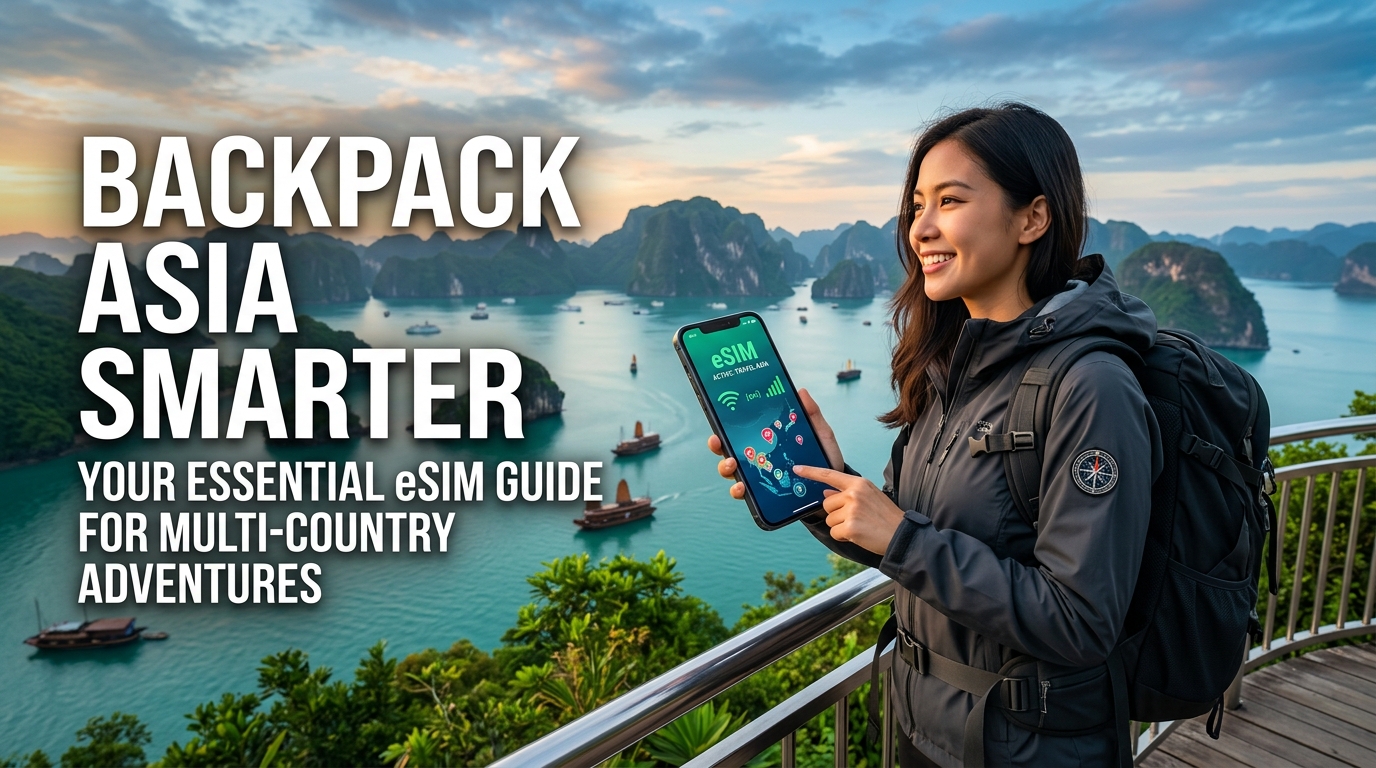
Backpack Asia Smarter: Your Essential eSIM Guide for Multi-Country Adventures
The Multi-Country Connectivity Conundrum for Southeast Asia Backpackers
Southeast Asia beckons with its vibrant cultures, breathtaking landscapes, and unparalleled opportunities for adventure. From the bustling street markets of Bangkok to the ancient temples of Angkor Wat, the serene beaches of Bali, and the majestic peaks of Vietnam, the region is a backpacker's paradise. The allure lies in its affordability, diverse experiences, and the freedom to spontaneously hop from one country to the next. However, beneath this veneer of seamless exploration lies a persistent and often frustrating challenge: staying connected across multiple borders.
For the modern backpacker, a smartphone is more than just a communication device; it's a navigation tool, a booking agent, a currency converter, a translator, and a lifeline to friends and family. The expectation is "always-on" connectivity, yet the traditional methods of mobile access frequently fall short, creating a significant multi-country connectivity conundrum.
The Traditional SIM Card Nightmare: A Backpackers' Bane
The default solution for many travelers has long been the physical local SIM card. While seemingly straightforward for single-country trips, its limitations become glaringly apparent when embarking on a dynamic, multi-country Southeast Asian adventure.
Frequent Border Crossings, Frequent Headaches
Imagine crossing a land border from Thailand into Laos, then flying to Vietnam, and later sailing to the Philippines. Each transition traditionally means a new set of connectivity hurdles:
- The Endless Cycle of Buying New SIMs: In every new country, the first order of business often becomes locating a mobile provider, navigating their plans, and purchasing a new physical SIM card. This isn't just a minor inconvenience; it's a time-consuming ritual that eats into precious travel hours, often involving queues, confusing sales pitches, and the hassle of finding a vendor who speaks English.
- Navigating Complex Registration Processes: Many Southeast Asian countries have strict Know Your Customer (KYC) regulations for SIM card activation. This often requires presenting your passport, providing local addresses, and sometimes even biometric data like fingerprints. These processes vary wildly from country to country, can be lengthy, and are frequently compounded by language barriers, turning a simple purchase into a bureaucratic ordeal.
- The Language Barrier Gauntlet: Trying to explain your data needs, understand activation instructions, or troubleshoot an issue with a local vendor when neither of you shares a common language is a recipe for frustration. Misunderstandings can lead to incorrect plans, activation failures, or simply wasted money.
- Wasted Data and Expiring Plans: Local SIM plans are typically designed for residents or long-term visitors. Backpackers often find themselves buying a 30-day data package for a stay of only 5-7 days, leaving a significant portion of their purchased data unused and expiring. This constant cycle of buying and discarding data plans is financially inefficient and environmentally wasteful.
- The Dreaded Loss or Misplacement of Your Original SIM: What happens to your home country's SIM card when you swap it out for a local one? Many travelers tuck it into a wallet or a small pouch, only to risk losing the tiny plastic chip. Losing your original SIM means losing access to your primary phone number, bank verifications, and potentially important contacts, adding a layer of anxiety to your travels.
- "Dead Zones" Between Countries: Perhaps one of the most critical pain points is the period of no connectivity that often occurs when crossing borders. Roaming charges from home providers are notoriously exorbitant, making them impractical for extended use. This leaves travelers in a digital limbo – unable to access maps for navigation, make emergency calls, or even confirm accommodation bookings – precisely when connectivity is most crucial.
Why the Old Ways No Longer Serve the Modern Backpacker
The dynamic, spontaneous nature of multi-country backpacking in Southeast Asia demands a connectivity solution that is equally agile and reliable. The traditional physical SIM card model is fundamentally at odds with this need for seamless, always-on access to information and communication. Modern travelers rely on their devices for everything from finding the nearest ATM and translating menus to sharing experiences instantly on social media and using digital payment systems like Apple Pay. Any disruption to this connectivity is not just an inconvenience; it can impact safety, efficiency, and the overall enjoyment of the trip.
This is where the need for a modern, streamlined solution becomes not just desirable, but essential. Backpackers crave a way to maintain continuous, hassle-free internet access without the physical limitations and administrative burdens of traditional SIM cards. They need a revolutionary answer that allows them to focus on the adventure, not the logistics of their mobile plan.
Introducing the Seamless Solution: eSIM Technology
The answer to these frustrations lies in eSIM technology. Imagine a world where you can activate a local or regional data plan instantly, without ever touching a physical SIM card, all from the comfort of your smartphone. This is the promise of eSIM, offering a truly revolutionary approach to multi-country connectivity.
Providers like MollySIM are at the forefront of delivering this seamless experience, specifically tailored for the multi-country adventurer. With an eSIM, you can download a data plan for an entire region, like Southeast Asia, and activate it before you even land. This eliminates the need to hunt for local SIM vendors, navigate complex registration, or worry about losing your home SIM. Furthermore, MollySIM addresses a critical performance gap: its Fair Use Policy speed limit of 384kbps is three times faster than many competitors' 128kbps. This isn't just a technical spec; it translates directly to a smoother travel experience. At 384kbps, your Google Maps will load directions reliably, Apple Pay transactions will process without frustrating delays, and essential messaging apps will function seamlessly, ensuring you're always connected and in control, no matter which border you've just crossed.
eSIM Demystified: How It Revolutionizes Travel in Southeast Asia
🇹🇭 Thailand High-Speed Travel eSIM & SIM Plans
Instant QR code activation, hotspot enabled, with guaranteed 384kbps fallback speed to keep Maps & Digital Wallets active.
Having established the limitations of traditional SIM cards for the multi-country adventurer, it's time to dive into the technology that's changing the game: eSIM. An eSIM, or embedded Subscriber Identity Module, is fundamentally a digital version of the physical SIM card. Instead of a tiny, removable plastic chip, an eSIM is a small, rewritable chip permanently built into your smartphone, tablet, or smartwatch during manufacturing. This embedded chip can store multiple network profiles digitally, eliminating the need for physical card swapping.
How eSIM Technology Works
The magic of eSIM lies in its digital provisioning. Instead of purchasing a physical SIM card, you acquire an eSIM profile from a mobile network provider, often through a simple QR code or by manually entering activation details. This digital profile contains all the necessary information to connect your device to a specific network, including your subscriber identity, authentication keys, and network settings. Once downloaded and activated, your phone connects to the network just as it would with a traditional SIM. This entire process can be completed remotely, often in minutes, from anywhere with an internet connection – even before you've left home or while waiting for your luggage at a new airport.
eSIM vs. Traditional SIM: A Traveler's Game-Changer
The contrast between eSIM and traditional SIM cards is stark, especially for those navigating the diverse landscapes of Southeast Asia.
| Feature | Traditional Physical SIM Card | eSIM (Embedded SIM) |
|---|---|---|
| Physicality | Removable plastic chip, single slot (usually) | Digital profile, embedded chip, multiple profiles stored |
| Activation | Purchase, insert, register (often in-person), wait for activation | Download profile (QR code/app), instant activation |
| Management | Physical swap for new country/plan, risk of loss/damage | Remote management, switch profiles digitally, no physical risk |
| Connectivity | Requires finding local vendor, potential language barriers | Immediate upon arrival, pre-purchase and activate anywhere |
| Home Number | Often removed, risking loss of access to home apps | Can keep home SIM active alongside eSIM, dual connectivity |
| Security | Susceptible to physical damage, loss, or theft | More secure as it's embedded, harder to tamper with |
Core Advantages for the Southeast Asia Backpacker
For travelers exploring the vibrant cultures and stunning landscapes of Southeast Asia, eSIM's advantages translate directly into a smoother, more enjoyable journey:
- No Physical Swapping & Multiple Profiles: Imagine landing in Bangkok, then heading to Siem Reap, followed by Ho Chi Minh City. With a traditional SIM, you'd be hunting for a new local SIM card in each country. With an eSIM, you can store multiple data plans from different providers or for different regions on a single device. This means you can seamlessly switch between a regional Southeast Asia plan or a specific country plan with a few taps on your phone, without ever fumbling with tiny plastic cards or a SIM ejector tool.
- Instant Activation & Remote Management: This is perhaps the most significant benefit. You can purchase and activate your data plan before you even depart for your trip, or while you're in transit. Upon arrival in a new country like Vietnam or Malaysia, your phone can connect to the local network instantly. No more wasting precious travel time searching for local SIM shops, navigating language barriers, or dealing with complex registration processes. Providers like MollySIM allow you to download a regional plan for Southeast Asia and activate it on your terms, ensuring you're connected the moment your plane touches down.
- Maintaining Your Home Number: A common frustration for international travelers is losing access to their home number when swapping SIMs. This can disrupt essential services like WhatsApp (which is often tied to your primary number), banking apps requiring SMS verification, or two-factor authentication for various accounts. With an eSIM, you can keep your physical home SIM card in its slot (if your phone supports dual SIM functionality, which many modern smartphones do) while using the eSIM for your travel data. This ensures you maintain access to all your critical apps and contacts tied to your home number, providing peace of mind and uninterrupted communication.
- Reduced Risk of Loss or Damage: Physical SIM cards are tiny and easily misplaced, damaged, or lost, especially when frequently swapped. An eSIM, being embedded, eliminates this risk entirely. Your connectivity solution is securely stored within your device, making it a robust and reliable option for the adventurous backpacker.
The MollySIM Advantage: Reliable Connectivity Across Borders
The practical benefits of eSIM are amplified when paired with a reliable provider. MollySIM, for instance, offers a significant performance edge that directly impacts your travel experience. While many competitors cap their Fair Use Policy speed limits at a frustrating 128kbps, MollySIM provides a robust 384kbps. This isn't just a technical specification; it's a tangible difference for the modern traveler. At 384kbps, your Google Maps will load directions smoothly and reliably as you navigate the bustling streets of Hanoi or the ancient temples of Bagan. Apple Pay transactions will process without frustrating delays at local markets or cafes, and essential messaging apps will function seamlessly, ensuring you're always connected and in control, no matter which border you've just crossed or how remote your destination. This enhanced speed ensures that the "instant connectivity" promise of eSIM truly delivers a functional and stress-free experience throughout your multi-country adventure.
Device Compatibility: Check Before You Go
While eSIM technology is becoming increasingly widespread, it's crucial to verify your device's compatibility before relying on it for your trip. Most flagship smartphones released in the last few years, including iPhone XS/XR and newer, Samsung Galaxy S20 and newer, Google Pixel 3 and newer, and many other Android models, support eSIM. However, regional variations can exist.
To check if your phone supports eSIM:
- iPhone: Go to Settings > General > About. Look for "Add eSIM" or "Digital SIM."
- Android: The process varies by manufacturer. Typically, you can find it under Settings > Network & internet > SIMs, or by searching for "eSIM" in your phone's settings.
- Consult your phone manufacturer's website: This is the most reliable way to confirm compatibility for your specific model and region.
Ensuring your device is eSIM-compatible is the first step towards unlocking a smarter, more connected, and truly hassle-free backpacking adventure across Southeast Asia.
MollySIM: Your Ultimate Regional eSIM for Seamless Southeast Asia Adventures
When embarking on a multi-country backpacking journey across Southeast Asia, the last thing you want is the hassle of constantly buying new local SIM cards at every border. This is where MollySIM emerges as a standout solution, offering regional eSIM plans specifically engineered for the dynamic needs of travelers exploring multiple nations within this vibrant region. MollySIM simplifies connectivity, allowing you to focus on the adventure, not on finding your next data plan.
Seamless Multi-Country Connectivity with a Single Plan
MollySIM's core appeal lies in its ability to provide uninterrupted data coverage across an extensive list of Southeast Asian countries under a single, unified plan. Imagine crossing from the bustling streets of Bangkok into the ancient temples of Angkor Wat, then onto the serene beaches of Bali, or the vibrant markets of Hanoi – all without needing to swap physical SIMs, search for Wi-Fi, or activate a new data package. A single MollySIM plan can cover major destinations like Thailand, Vietnam, Cambodia, Laos, Indonesia, Philippines, Malaysia, Singapore, and Myanmar, eliminating the need for separate purchases or re-activations as you traverse borders. This regional approach is a game-changer for backpackers, ensuring you remain connected from the moment you land until your journey's end.
The MollySIM Advantage: Unpacking the 384kbps Fair Usage Policy (FUP)
One of MollySIM's most compelling features, and a significant differentiator in the market, is its Fair Usage Policy (FUP) with a reduced speed of 384kbps after your high-speed data allowance is exhausted. This isn't just a technical specification; it's a lifeline for budget-conscious travelers.
What is the 384kbps FUP? Unlike many competitors who simply cut off your data or throttle it to an almost unusable 128kbps once your high-speed data runs out, MollySIM ensures you always have access to essential connectivity. Once your initial high-speed data allocation (e.g., 10GB, 20GB) is used up, your data speed is reduced to a consistent 384kbps, but it remains unlimited. This means you never truly run out of data.
Why is 384kbps a Game-Changer? The 384kbps speed is crucial because it's approximately three times faster than the 128kbps offered by many other providers. This difference is monumental for practical usage:
- Essential Messaging: WhatsApp, Messenger, and other chat apps will continue to send and receive messages, including photos, without frustrating delays.
- Basic Navigation: Google Maps or Apple Maps will load directions, search for points of interest, and provide real-time navigation smoothly, preventing you from getting lost in unfamiliar cities. This is particularly vital for backpackers relying on public transport or walking.
- Email & Light Browsing: You can check emails, access banking apps, and perform basic web searches without significant lag.
- Emergency Communication: In unexpected situations, you can still make VoIP calls or send critical information, ensuring peace of mind.
- Apple Pay/Google Pay: Crucially, the 384kbps speed is sufficient to process mobile payment transactions like Apple Pay or Google Pay without frustrating delays, a common issue with slower throttled speeds.
This unlimited, albeit reduced-speed, data ensures that even after extensive high-speed usage, you're never truly disconnected. It provides an invaluable safety net, allowing you to manage essential tasks and stay in touch without incurring unexpected costs or the stress of being offline.
Flexible Plans & Easy Top-Ups
MollySIM (https://mollysim.com) understands that every traveler's needs are unique. They offer a range of plans with varying durations (e.g., 7 days, 15 days, 30 days) and high-speed data allowances to match your trip length and usage patterns. Should you find yourself needing more high-speed data before your plan expires, MollySIM provides easy and instant top-up options directly through their website or app. This flexibility means you can start with a plan that suits your initial estimate and then adjust as your adventure unfolds, all without the need for a new eSIM or complicated activation processes.
Getting Started with MollySIM: A Step-by-Step Guide
Activating your MollySIM eSIM is designed to be straightforward, allowing you to get connected quickly and efficiently.
- Purchase Your Plan:
- Visit the official MollySIM website (https://mollysim.com).
- Select your desired regional plan, considering the duration of your trip and your estimated high-speed data needs. Remember the unlimited 384kbps FUP for essential connectivity.
- Complete the purchase securely online. You'll receive a confirmation email containing a QR code or manual activation details.
- Install the eSIM:
- Ensure Wi-Fi connectivity before starting this step.
- For iPhone: Go to Settings > Cellular (or Mobile Data) > Add eSIM. Choose "Use QR Code" and scan the QR code provided by MollySIM. Follow the on-screen prompts.
- For Android: The path may vary slightly by device, but generally, navigate to Settings > Network & internet > SIMs > Add more (or Add eSIM). Scan the QR code or enter the manual details.
- Follow any additional prompts to label your new eSIM (e.g., "MollySIM Asia") and set it as your primary data line. Keep your home SIM active for calls/texts if needed.
- Activate and Manage:
- Once installed, the eSIM will typically activate automatically upon arrival in a covered country. Ensure "Data Roaming" is enabled for your MollySIM profile in your phone's settings.
- You can monitor your data usage and purchase top-ups directly through your MollySIM account on their website, providing complete control over your connectivity.
By choosing MollySIM, you're not just buying data; you're investing in peace of mind, ensuring seamless, reliable, and budget-friendly connectivity across your entire Southeast Asian adventure, backed by a superior FUP that keeps you truly connected.
Smart Data Strategies for Backpacking Southeast Asia with MollySIM
Navigating the vibrant, often chaotic, landscapes of Southeast Asia as a backpacker demands more than just a good map and a sense of adventure; it requires smart, reliable connectivity. Your eSIM isn't just for posting stunning photos; it's a critical tool for safety, logistics, and staying connected. Understanding your data needs and implementing strategic usage habits, especially with a robust provider like MollySIM, can significantly enhance your multi-country journey.
Understanding Your Backpacking Data Needs
For the modern backpacker, data is the lifeline. Here’s a breakdown of common daily data demands:
- Navigation & Transport: Apps like Google Maps are indispensable for finding hostels, attractions, and local eateries. Ride-sharing apps such as Grab (ubiquitous across SEA) and GoJek require constant data to book rides, track drivers, and process payments.
- Accommodation & Tour Bookings: Whether you're securing a last-minute hostel bed on Booking.com or Agoda, or booking an island-hopping tour via Klook, reliable data is essential.
- Communication: Staying in touch with family and friends back home, or coordinating with fellow travelers, relies heavily on apps like WhatsApp, Messenger, and Telegram. These are also crucial for communicating with hostel staff or tour operators.
- Social Media & Sharing: While not strictly essential, sharing your adventures on Instagram, Facebook, or TikTok is a big part of the travel experience for many.
- Banking & Finance: Managing your travel budget, checking bank balances, or making online payments often requires secure internet access.
- Emergency Services: In unforeseen circumstances, having immediate access to data for emergency calls, looking up local services, or contacting your embassy is paramount.
Optimizing Data Consumption Across Multiple Countries
Even with generous data plans, smart usage can extend your high-speed access and save you money on top-ups.
- Download Offline Maps: Before heading out for the day or moving to a new city, download the relevant region in Google Maps while connected to Wi-Fi. This allows for navigation even without an active data connection, saving significant data on map loading.
- Prioritize Wi-Fi for Heavy Usage: Whenever possible, utilize free Wi-Fi at hostels, cafes, or airports for large downloads, app updates, video streaming, or uploading high-resolution photos/videos. This preserves your MollySIM data for when you truly need it on the go.
- Enable Data Saver Modes: Most smartphones offer a "Data Saver" or "Low Data Mode" option in their settings. This can restrict background app refresh, reduce video streaming quality, and prevent apps from using data when not actively in use.
- Manage Background App Refresh: Go into your phone's settings and disable background refresh for non-essential apps. Many apps consume data even when you're not actively using them.
- Lower Streaming Quality: If you must stream music or video on mobile data, opt for lower quality settings to reduce data consumption.
- Monitor Usage Regularly: MollySIM provides a user-friendly online portal where you can track your data consumption in real-time. Regularly checking this allows you to anticipate when you might need a top-up and adjust your usage habits accordingly.
MollySIM's Advantage: Budget-Friendly Connectivity and Peace of Mind
MollySIM (https://mollysim.com) is specifically designed with the backpacker in mind, offering features that directly address budget concerns and the need for continuous, reliable connectivity.
- Flexible Top-ups: MollySIM's straightforward top-up options mean you only pay for what you need. If your initial high-speed data runs low, a quick online purchase ensures you're back to full speed without hassle, giving you complete control over your budget.
- The Game-Changing 384kbps FUP: This is where MollySIM truly stands out. After your high-speed data allowance is exhausted, MollySIM implements a Fair Use Policy (FUP) speed limit of 384kbps. This is a critical distinction from many competitors who throttle speeds down to a barely functional 128kbps.
- What 384kbps means for you: At 384kbps, you can reliably use Google Maps for navigation, send and receive WhatsApp messages with attached photos, check emails, browse light web pages, and even process mobile payments like Apple Pay or Google Pay without frustrating delays. This speed is roughly 3x faster than the common 128kbps FUP, which often struggles to load even basic map tiles or process transactions efficiently, leaving you feeling truly disconnected.
- Uninterrupted Essential Services: This superior FUP ensures you always have essential connectivity. Whether you're lost in a new city, need to quickly check a booking confirmation, or communicate an emergency, MollySIM's 384kbps FUP provides a crucial safety net, offering genuine peace of mind even on a shoestring budget. You're never truly offline, ensuring you can always access critical information and communication channels.
By combining smart data strategies with MollySIM's robust and traveler-centric features, you're equipped to navigate Southeast Asia with confidence, staying connected, safe, and within your budget, from the bustling markets of Bangkok to the serene beaches of Bali.
The Connectivity Showdown: MollySIM eSIM vs. Traditional Alternatives
[Content Generation Temporary Fallback]
Beyond Connectivity: Enhancing Your Southeast Asia Journey with MollySIM
While robust internet access is the cornerstone of any modern travel experience, MollySIM transcends mere data provision. It's about empowering you with a seamless, reliable connection that fundamentally transforms your multi-country backpacking adventure in Southeast Asia, making it richer, safer, and significantly less stressful. MollySIM isn't just a utility; it's an essential travel companion that unlocks a new level of freedom and peace of mind.
The Multiplier Effect: How Seamless Connectivity Elevates Your Adventure
Imagine navigating the bustling streets of Hanoi, trekking through the rice paddies of Bali, or exploring ancient temples in Siem Reap. With MollySIM, your device becomes an indispensable tool, constantly enhancing every facet of your journey:
- Unwavering Safety and Security: In unfamiliar territories, immediate access to information is paramount. MollySIM ensures you can instantly look up local emergency numbers, contact your embassy, or check real-time safety advisories. For solo travelers or those venturing off the beaten path, this constant connection provides an invaluable safety net. Even if you exceed your high-speed data, MollySIM's industry-leading 384kbps Fair Use Policy (FUP) speed limit ensures critical applications like Google Maps for navigation or WhatsApp for urgent communication remain fully functional. This is a crucial distinction, offering genuine peace of mind compared to competitors' barely usable 128kbps FUP.
- Effortless Navigation and Discovery: Gone are the days of fumbling with paper maps or getting lost without a signal. With MollySIM, your navigation apps are always live, guiding you through labyrinthine markets, finding the quickest route to your hostel, or locating that hidden street food gem recommended by a local. The reliable 384kbps FUP means map tiles load smoothly, and directions are instantaneous, allowing for spontaneous exploration without worry. You can effortlessly discover local attractions, translate menus, or find the best public transport options on the fly.
- Instant Communication and Connection: Staying connected with loved ones back home or coordinating with fellow travelers is effortless. Share breathtaking photos and videos of your adventures instantly, make video calls over WhatsApp, or send quick updates to family, alleviating their concerns. MollySIM ensures you're always just a tap away from your support network, fostering a sense of togetherness even across continents.
- Spontaneous Bookings and Smart Budgeting: The flexibility to book accommodations, tours, or transportation on the go is a game-changer for backpackers. Secure last-minute hostel deals, compare flight prices, or reserve a scooter rental with ease. Furthermore, MollySIM enables seamless mobile payments like Apple Pay or Google Pay, ensuring you can transact securely and conveniently, even in remote areas. The 384kbps FUP is robust enough to process these transactions without frustrating delays, helping you manage your budget and avoid unnecessary fees.
Addressing Your Top Concerns: MollySIM FAQs
We understand that embracing a new technology like eSIMs might come with questions. Here are answers to some common concerns:
Is My Phone eSIM Compatible?
Most modern smartphones released in the last few years are eSIM compatible. This includes popular models from Apple (iPhone XR and newer), Samsung (Galaxy S20 and newer, Fold/Flip series), Google (Pixel 3a and newer), and many others. To be certain, you can usually check your phone's settings (look for "Add eSIM" or "Cellular Plan") or consult your device manufacturer's specifications. MollySIM also provides a comprehensive compatibility list on its website, https://mollysim.com, making it easy to verify before you purchase.
Is the Connection Secure?
Yes, eSIM connections are inherently secure. They leverage the same robust security protocols as physical SIM cards, encrypting your data as it travels across the network. MollySIM partners with reputable local network providers in each country, ensuring you're connected to established and secure infrastructure. While the eSIM itself is secure, always practice general internet safety, especially when connecting to public Wi-Fi networks (consider using a VPN for added privacy).
How Do I Top Up Data?
Topping up your MollySIM data is designed to be incredibly simple and convenient. You can easily manage your plan and purchase additional data directly through the MollySIM app or their user-friendly website, https://mollysim.com. This means you can add more data anytime, anywhere, without needing to find a local store or swap physical SIM cards. The process is quick, transparent, and puts you in complete control of your connectivity.
What About Phone Calls?
MollySIM eSIMs primarily provide data connectivity. This means you won't have a traditional local phone number for making standard cellular calls or sending SMS messages. However, with reliable data, you can seamlessly use Voice over IP (VoIP) services for calls and messaging. Apps like WhatsApp, Facebook Messenger, Skype, Google Voice, or FaceTime Audio/Video allow you to make calls and send messages to anyone, anywhere, using your existing contacts and data connection. Your primary phone number (if you keep your physical SIM in) will still be able to receive calls and SMS, offering the best of both worlds.
The MollySIM Promise: Peace of Mind, Smart Savings, Unrivaled Freedom
By choosing MollySIM, you're not just buying data; you're investing in an unparalleled travel experience. You're securing peace of mind knowing that critical navigation, communication, and payment services will always be accessible, even with the superior 384kbps FUP that's 3x faster than competitors' throttled speeds. You're embracing smart savings by avoiding exorbitant roaming charges and gaining the flexibility to manage your data on your terms. Most importantly, you're unlocking the freedom to explore Southeast Asia with confidence, spontaneity, and constant connection.
Ready to transform your multi-country adventure? Visit https://mollysim.com today and discover how MollySIM can make your backpacking journey smarter, safer, and truly unforgettable.
🇹🇭 Thailand High-Speed Travel eSIM & SIM Plans
Instant QR code activation, hotspot enabled, with guaranteed 384kbps fallback speed to keep Maps & Digital Wallets active.