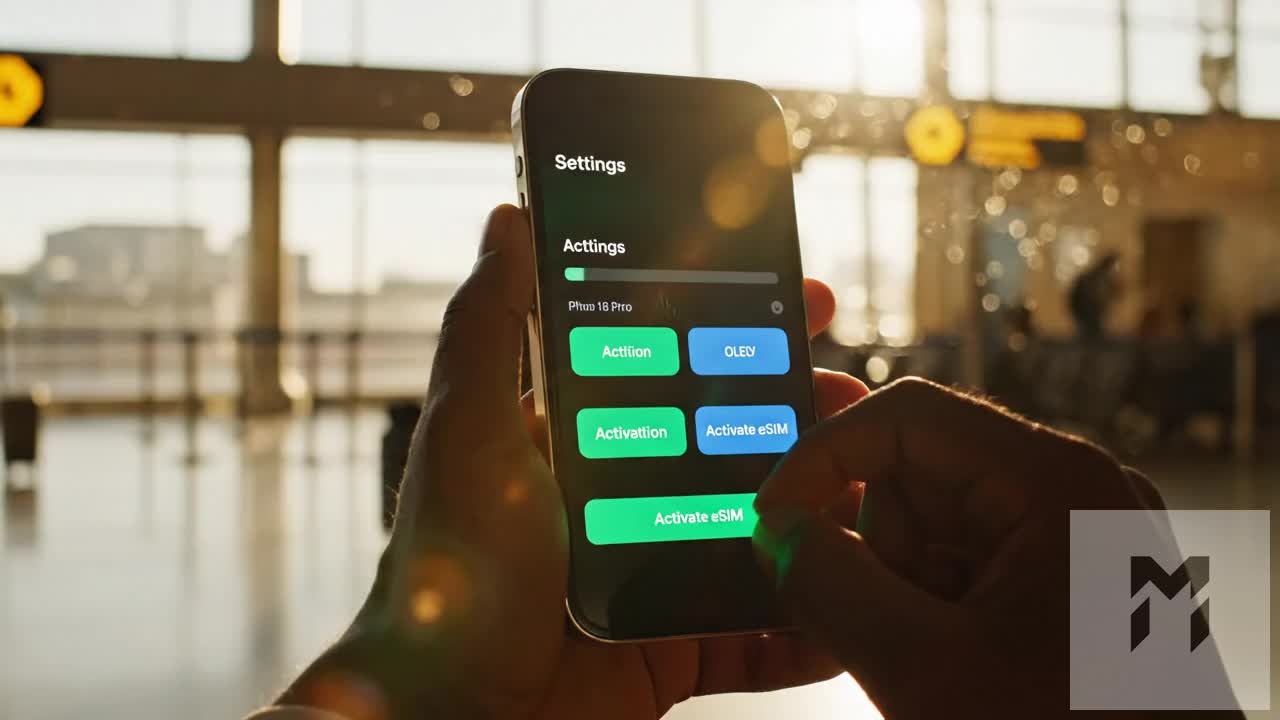
The Pulse of Korea: Why Uninterrupted Connectivity is Non-Negotiable for K-Pop Fans & Digital Nomads
South Korea is a global benchmark for digital connectivity, where technology is woven into the fabric of daily life. From Seoul's dynamic cityscape to Busan's coastal allure and Jeju Island's serene beauty, Korea's digital pulse is strong. For the modern traveler, especially the ardent K-Pop fan or the location-independent digital nomad, constant, reliable internet isn't merely a convenience – it's fundamental for an immersive, productive, and unforgettable experience.
Essential Apps & Activities: The Digital Lifeline
Navigating South Korea, engaging with its vibrant culture, and maintaining productivity all hinge on robust connectivity. Without it, simple tasks become frustrating hurdles.
Indispensable Applications
- KakaoTalk: The universal communication platform. Essential for coordinating with locals, ordering food, and making reservations. A dropped connection means instant isolation.
- Naver Maps & Kakao Maps: Crucial for navigating public transport and finding addresses. Real-time directions are vital for reaching fan events or co-working spaces.
- Papago: Naver's AI-powered translation app. Real-time voice and text translation demands a stable, fast connection.
- Kakao T: For seamless ride-sharing and taxi services, booking, tracking, and paying rely on consistent internet.
- Food Delivery (Baedal Minjok, Yogiyo): Essential for experiencing Korea's culinary scene, requiring reliable data for browsing menus, ordering, and tracking deliveries.
High-Bandwidth Demands for Immersive Experiences
The core activities of K-Pop fans and digital nomads are data-intensive:
- For K-Pop Enthusiasts:
- Real-time Updates: Following idol schedules, concert announcements, and fan meeting details on Weverse, Twitter, and Instagram requires instant access. Missing a notification could mean missing a critical fan opportunity.
- Streaming & Sharing: Catching the latest HD music videos, streaming live concert clips, or uploading high-resolution photos and 4K videos of fan events to social media demands significant bandwidth. Buffering or slow uploads are unacceptable when capturing once-in-a-lifetime moments.
- Fan Engagement: Participating in live chats, voting, and connecting with global fan communities relies on fast connection.
- For Digital Nomads:
- Remote Work: Video conferences, accessing cloud documents, uploading large files, and managing deadlines require fast, stable internet. Dropped calls or slow uploads directly impact productivity and professionalism.
- Seamless Communication: High-quality video calls with clients, colleagues, and family are crucial, demanding robust data for clear, uninterrupted communication.
The Frustration of Disconnection: Why Every Kilobit Matters
The frustration of slow or dropped connections in South Korea is immense. Imagine being unable to upload a cherished K-Pop concert video, getting lost because your map won't load, or having a crucial work video call cut out. These aren't minor inconveniences; they are moments that significantly detract from the experience, causing stress and missed opportunities in a fast-paced, digitally-driven environment.
This is where a superior eSIM solution becomes non-negotiable. While many providers offer basic connectivity, the Fair Use Policy (FUP) speed limit after high data consumption is a key differentiator. MollySIM (https://mollysim.com) stands out by offering a 384kbps FUP speed limit, which is three times faster than competitors' typical 128kbps. This significant difference ensures that even after extensive data usage, essential services like Google Maps (for orientation) and Apple Pay (for seamless transactions) continue to function smoothly. You won't be left stranded, unable to navigate or pay, simply because you've hit a data cap.
In a country where every interaction is mediated by technology, an eSIM is more than just a data plan; it's your lifeline. It's the assurance that whether you're chasing K-Pop trends in Seoul, exploring Busan's culture, or working on Jeju Island, you'll remain effortlessly connected, empowered to capture, share, and experience every moment without interruption.
South Korea's Digital Superhighway: A Deep Dive into Local Mobile Networks & 5G Dominance
🇺🇸 United States High-Speed Travel eSIM & SIM Plans
Instant QR code activation, hotspot enabled, with guaranteed 384kbps fallback speed to keep Maps & Digital Wallets active.
South Korea stands as an undisputed global leader in mobile connectivity, a digital pioneer where ultra-fast internet isn't a luxury but an expectation. This unparalleled performance is driven by fierce competition and relentless innovation among its three major mobile network operators: SK Telecom, KT, and LG U+. These carriers have invested billions in state-of-the-art infrastructure, particularly in their 5G networks, ensuring seamless, high-speed connectivity across the nation, from bustling urban centers to popular tourist havens.
The Big Three: Powering Korea's Connected Future
Each of South Korea's primary mobile operators brings distinct strengths to the table, collectively creating a robust and highly competitive digital ecosystem. Their extensive 5G networks are a testament to continuous innovation and a commitment to providing world-class connectivity.
SK Telecom: The Market Leader
As the largest telecommunications company in South Korea, SK Telecom boasts the widest and most comprehensive 5G coverage, often extending into more rural and less populated areas where competitors might have gaps. Renowned for its industry-leading reliability and premium services, SK Telecom consistently delivers exceptional speeds and stability. Its 5G network is particularly dominant in major metropolitan areas like Seoul (Gangnam, Hongdae, Myeongdong, Jamsil), Busan (Haeundae, Nampo-dong), Incheon, and Daegu, ensuring K-Pop fans can stream their favorite MVs or upload concert footage without a hitch. SK Telecom's infrastructure is built for high demand, making it a robust choice for any data-intensive activity.
KT: Urban Powerhouse & Public Wi-Fi Integration
KT (formerly Korea Telecom) is a formidable competitor, known for its very strong 5G presence in urban centers and high-traffic tourist destinations. KT excels in providing robust connectivity in places like airports, train stations, and public squares, often integrating seamlessly with its extensive public Wi-Fi network. Travelers will find KT's network highly reliable in popular spots such as Jeju Island, Gyeongju, and all major cities, including the dense commercial districts of Seoul and the vibrant cultural hubs of Busan. Its focus on public access points enhances overall connectivity for visitors.
LG U+: Rapid Growth & Competitive Edge
LG U+ has rapidly expanded its 5G footprint, offering a strong and continually improving network, especially within urban areas. While historically having a slightly smaller market share, LG U+ has aggressively invested in infrastructure, providing highly competitive pricing and reliable service. Its network performs admirably for data-intensive activities like high-definition streaming and online gaming, with excellent coverage across Seoul's key districts, Busan's coastal areas, and other major cities. LG U+ is a testament to the dynamic competition that drives South Korea's telecommunications advancements.
The 5G Advantage: Unpacking Korea's Technological Edge
South Korea's 5G dominance isn't just about widespread coverage; it's about the underlying technological advancements and strategic infrastructure investments. The carriers have deployed a dense network of 5G base stations, utilizing both sub-6 GHz and mmWave (millimeter wave) frequencies to achieve blistering speeds and ultra-low latency. Continuous investment in network upgrades, fiber optic backbones, and advanced antenna technologies ensures that typical 5G speeds consistently remain among the highest globally, allowing for instantaneous downloads, crystal-clear video calls, and seamless augmented reality experiences. This robust foundation is why Korea is often cited as the benchmark for mobile connectivity.
Here’s a comparative look at South Korea's leading mobile networks:
| Feature | SK Telecom | KT | LG U+ |
|---|---|---|---|
| 5G Coverage | Excellent (Widest, best in rural) | Very Strong (Urban, tourist areas) | Strong (Urban, improving rapidly) |
| Network Reliability | Industry Leader, highly stable | Very Reliable, strong performance | Reliable, good for streaming |
| Typical 5G Speeds | Up to 2.5 Gbps (peak), 500-800 Mbps (avg) | Up to 2.4 Gbps (peak), 400-700 Mbps (avg) | Up to 2.3 Gbps (peak), 350-650 Mbps (avg) |
| Market Share | ~50% | ~30% | ~20% |
| Unique Selling Points | Best overall coverage, premium services | Strongest in public Wi-Fi integration | Competitive pricing, growing network |
Choosing Your Connection: How eSIMs Leverage These Networks
Understanding the strengths of SK Telecom, KT, and LG U+ is crucial when selecting an eSIM provider for your South Korea trip. A high-quality eSIM, like those offered by MollySIM (https://mollysim.com), doesn't operate on its own infrastructure; instead, it partners with these established local networks. This means that when you purchase a MollySIM eSIM, you are gaining access to the same robust, high-speed 5G networks that Korean locals rely on daily.
The benefit of choosing a provider that leverages these top-tier networks is immense. You're guaranteed the same exceptional coverage and speeds, whether you're navigating the bustling streets of Myeongdong with Google Maps or making a quick purchase with Apple Pay. Furthermore, even if you consume a significant amount of data, MollySIM's industry-leading 384kbps Fair Use Policy (FUP) speed limit – which is three times faster than competitors' typical 128kbps – ensures that essential services remain perfectly functional. This means you won't be left stranded or disconnected, even after uploading countless K-Pop fancams, because your eSIM is built upon the foundation of South Korea's digital superhighway, ensuring you stay connected and empowered throughout your journey.
eSIM Unpacked: The K-Pop Fan's Gateway to Seamless Korean Adventures
For the modern K-Pop fan embarking on a South Korean pilgrimage, staying connected is paramount. This isn't just about basic communication; it's about real-time updates, navigating fan events, and sharing every moment of your journey. This is where the eSIM (embedded Subscriber Identity Module) emerges as the ultimate travel companion, a revolutionary technology that replaces the traditional physical SIM card with a digital equivalent embedded directly into your compatible device.
What Exactly is an eSIM?
Imagine a SIM card that you never have to physically touch, insert, or swap. That's an eSIM. It's a small chip permanently built into your smartphone, tablet, or smartwatch during manufacturing. Instead of relying on a tiny piece of plastic, an eSIM stores your network profile digitally. This means you can download and activate a cellular plan from a carrier without needing a physical card. Your device essentially becomes a blank canvas, ready to be programmed with various network profiles as you travel the globe.
eSIM vs. Traditional Physical SIM: A Digital Leap Forward
The contrast between an eSIM and a traditional physical SIM card couldn't be starker, especially for the dynamic K-Pop fan:
| Feature | Traditional Physical SIM Card | eSIM (Embedded SIM) Activation Method | QR code or manual entry via settings. (The user wants me to write the specified section for a blog post about eSIMs in South Korea. I need to be thorough, detailed, and keep the K-Pop fan persona in mind. I also need to integrate MollySIM naturally. I will aim for a clear structure with subheadings and lists.)
eSIM Unpacked: The K-Pop Fan's Gateway to Seamless Korean Adventures
Gone are the days of fumbling with tiny SIM ejector tools and worrying about losing your home country's physical SIM card. For the digitally native K-Pop fan, the eSIM represents the ultimate evolution in travel connectivity, offering unparalleled convenience and flexibility. It's not just a technological upgrade; it's a fundamental shift in how you stay connected, ensuring you never miss a beat of your Korean adventure.
What is an eSIM and How Does it Work?
At its core, an eSIM is a digital SIM that's already embedded directly into your compatible smartphone, tablet, or wearable device. Unlike its physical predecessor, which is a removable plastic card, an eSIM is a small, rewritable chip built into your device's hardware. Instead of physically swapping cards, you simply download a cellular profile from a network provider, activating your data plan digitally. This process is often as simple as scanning a QR code or entering a few details in your phone's settings, making instant activation and setup a reality. Your device can store multiple eSIM profiles simultaneously, allowing you to switch between local data plans or your home plan with just a few taps, without ever needing to open your SIM tray.
eSIM vs. Physical SIM vs. Portable Wi-Fi: The Clear Winner for Travelers
While physical SIM cards and portable Wi-Fi devices (often called "pocket Wi-Fi") have served travelers for years, eSIMs offer distinct advantages that make them the superior choice for the modern, tech-savvy explorer:
- No Physical Hassle: With an eSIM, there's no physical swapping of tiny cards. This eliminates the risk of losing your home SIM, damaging the card, or struggling with unfamiliar tools. You arrive in Seoul, activate your eSIM, and you're good to go.
- Instant Gratification: Forget waiting for a physical SIM to be delivered or queuing at an airport counter. eSIMs offer instant activation, often before you even land, meaning you're connected the moment your plane touches down.
- Multiple Profiles, Ultimate Flexibility: Store several eSIM profiles on a single device. This is perfect for multi-country trips or for keeping a backup plan. You can easily switch between your home number (for calls/SMS) and a local data plan, ensuring you're always reachable while enjoying affordable local data.
- Environmental Benefits: By eliminating the need for plastic SIM cards and their packaging, eSIMs contribute to a greener planet, reducing electronic waste.
- Enhanced Security: An embedded eSIM is far less susceptible to theft or damage than a physical card, adding an extra layer of security to your connectivity.
- No Extra Gadgets: Unlike pocket Wi-Fi devices, an eSIM doesn't require you to carry, charge, or manage an additional device. Your smartphone is all you need, simplifying your travel gear. You also avoid the single point of failure that a lost or uncharged Wi-Fi device represents.
The K-Pop Fan's Ultimate Connectivity Tool
For K-Pop fans and digital nomads, these advantages translate into a truly transformative travel experience:
- Immediate Access to Fandom: Imagine landing in Seoul and instantly being able to check concert updates and ticketing for your favorite group, or finding out about last-minute fan meet-ups. An eSIM ensures you're always in the loop, from the moment you step off the plane.
- Seamless Streaming & Sharing: Whether you're streaming fan cams and live performances from a concert venue, or effortlessly sharing real-time experiences on Instagram, TikTok, or X (formerly Twitter), a reliable eSIM connection is non-negotiable. With a provider like MollySIM (https://mollysim.com), you benefit from an industry-leading 384kbps Fair Use Policy (FUP) speed limit – three times faster than competitors' typical 128kbps. This means even if you're a heavy data user, essential services like Google Maps for navigating to the next K-Pop hotspot or Apple Pay for quick purchases will remain perfectly functional, ensuring your digital life never grinds to a halt.
- Navigating the K-Pop Universe with Ease: From finding your way to SM Entertainment Coex Artium and HYBE Insight to locating the JYP Entertainment building or a specific fan café, translation apps and navigation tools are indispensable. An eSIM provides the constant, high-speed data connection needed for these apps to function flawlessly, guiding you through Seoul's vibrant K-Pop landscape without interruption.
- Retain Your Home Number: A common misconception is that an eSIM replaces your home number entirely. Not true! Most modern smartphones support Dual SIM Dual Standby (DSDS), allowing you to use your physical SIM for calls and SMS with your home number while simultaneously leveraging your eSIM for local data. This means family and friends can still reach you on your familiar number, while you enjoy fast, affordable data from your South Korean eSIM plan.
- Connectivity Across Multiple Devices: For digital nomads or those traveling with multiple gadgets, an eSIM simplifies connectivity. If your tablet or smartwatch is eSIM-compatible, you can extend your data plan to these devices, creating a unified digital ecosystem for all your needs.
In essence, an eSIM isn't just a data plan; it's your digital passport to an uninterrupted, immersive K-Pop adventure, keeping you connected, informed, and ready for whatever exciting moments South Korea has in store.
MollySIM: Your High-Performance Connectivity Partner for South Korea – Activation & The 384kbps Advantage
For K-Pop fans and digital nomads venturing into South Korea, a robust and reliable data connection is non-negotiable. While many eSIM providers offer basic connectivity, MollySIM emerges as a premier solution specifically engineered for high-data users who demand consistent performance, even after consuming their initial high-speed allowance. MollySIM (https://mollysim.com) is designed to keep you seamlessly connected, whether you're streaming the latest K-Pop comeback, navigating Seoul's bustling streets, or attending a virtual meeting.
Step-by-Step MollySIM Activation Guide
Activating your MollySIM eSIM is a straightforward process, designed for a smooth user experience. Here's how to get started:
1. Purchasing Your MollySIM eSIM
- Visit the MollySIM Website: Navigate to
https://mollysim.comon your computer or mobile device. - Select Your Destination: Choose "South Korea" from the list of available countries.
- Browse Plans: Review the various data plans offered for South Korea, considering your anticipated data usage, trip duration, and budget. MollySIM offers flexible options to suit different needs.
- Complete Purchase: Add your chosen plan to the cart, proceed to checkout, and complete the payment. You will receive an email containing your eSIM QR code and manual activation details almost instantly.
2. Activating Your eSIM on iOS Devices (iPhone XS, XR, 11, 12, 13, 14, 15 series and newer)
- Open Settings: Tap the "Settings" app on your iPhone.
- Navigate to Cellular/Mobile Data: Select "Cellular" or "Mobile Data."
- Add eSIM: Tap "Add eSIM" or "Add Data Plan."
- Scan QR Code: Choose "Use QR Code." Your camera will open. Scan the QR code provided in your MollySIM confirmation email.
- Illustrative Step: Hold your phone steady, aligning the QR code within the frame on your screen.
- Confirm Activation: Follow the on-screen prompts to confirm adding the data plan. You may be asked to label your new eSIM (e.g., "MollySIM Korea").
- Set Default Line: Once added, go back to "Cellular" settings. Ensure your MollySIM eSIM is enabled for "Cellular Data" and, if prompted, select it as your primary data line while abroad. You can keep your physical SIM active for calls/SMS from your home number.
3. Activating Your eSIM on Android Devices (Samsung Galaxy S20, Note20, Pixel 4, and newer)
- Open Settings: Tap the "Settings" app on your Android device.
- Navigate to Network & Internet: Select "Network & Internet" or "Connections" (depending on your device manufacturer).
- SIMs/Mobile Network: Tap "SIMs" or "Mobile Network."
- Add eSIM: Look for an option like "Add eSIM," "Download a SIM," or "Add mobile plan."
- Scan QR Code: Choose "Scan QR code" and use your phone's camera to scan the QR code from your MollySIM confirmation email.
- Illustrative Step: Position the QR code clearly in front of your device's camera.
- Confirm Activation: Follow the on-screen instructions to download and activate the eSIM. You can rename the eSIM for easy identification.
- Set Default Data: In the "SIMs" or "Mobile Network" settings, ensure your MollySIM eSIM is selected as the preferred SIM for mobile data.
4. Managing Your eSIM Profile
Once activated, you can manage your MollySIM eSIM within your phone's cellular settings. This includes enabling/disabling it, switching between your physical SIM and eSIM for data, and monitoring data usage.
Common Activation Troubleshooting Tips
- "No Service" or "Activation Failed":
- Internet Connection: Ensure you have an active internet connection (Wi-Fi or your home SIM data) when initially adding the eSIM.
- Restart Device: A simple restart often resolves minor connectivity glitches.
- Manual Activation: If QR code scanning fails, use the manual activation details (SM-DP+ Address and Activation Code) provided in your MollySIM email.
- APN Settings: In rare cases, you might need to manually set the Access Point Name (APN). Check MollySIM's support page for the correct APN for South Korea, usually "internet" or "data."
- Network Selection: Ensure your phone's network selection is set to "Automatic."
- Data Not Working After Activation:
- Data Roaming: Confirm that "Data Roaming" is enabled for your MollySIM eSIM (this is crucial for eSIMs).
- Default Data SIM: Verify that your MollySIM eSIM is selected as the primary SIM for mobile data in your device settings.
- Toggle Airplane Mode: Turn Airplane Mode on for 30 seconds, then off.
The Game-Changing 384kbps Fair Usage Policy Advantage
MollySIM's most significant differentiator for high-data users in South Korea is its industry-leading 384kbps Fair Usage Policy (FUP) fallback speed. This isn't just a number; it's a guarantee of truly usable connectivity, even after you've exhausted your initial high-speed data allowance.
What is a Fair Usage Policy (FUP)?
An FUP is a common practice among mobile network operators. Once you consume your allocated high-speed data, your speed is typically reduced (throttled) to prevent network congestion. The crucial factor is how much it's reduced.
The Practical Power of 384kbps
While many competitors throttle speeds down to an almost unusable 64kbps or 128kbps, MollySIM maintains a robust 384kbps. What does this mean for your real-world experience in South Korea?
- Smooth Standard-Definition Video Streaming: Enjoy your favorite K-Pop music videos on YouTube, scroll through endless TikToks and Instagram Reels, or even catch up on K-dramas on Netflix at standard definition (480p) without constant buffering. This speed allows for a consistent stream, keeping you entertained on long subway rides or during downtime.
- Reliable Video Calls: Stay connected with family and friends back home, or attend important remote work meetings, with minimal lag and clear audio. Video calls on KakaoTalk, FaceTime, Zoom, or Google Meet remain perfectly functional, ensuring you're always in touch.
- Seamless Social Media Browsing and Posting: Share your K-Pop concert experiences, upload photos and short videos of your adventures, tweet on X (formerly Twitter), and update Facebook statuses without frustrating delays. Your feeds will load quickly, and your posts will go live without a hitch.
- Real-Time Navigation: Navigate Seoul's intricate public transport system or find your way to the HYBE Insight museum or a specific fan café with ease. Naver Maps or KakaoMap will load quickly, GPS will remain accurate, and directions will update in real-time, preventing you from getting lost. This is crucial for seamless travel, allowing Google Maps/Apple Pay to work smoothly.
- Instant Messaging and Email: Send and receive messages, emails, and attachments on KakaoTalk, WhatsApp, or Gmail without any noticeable slowdowns. Communication remains instant and reliable.
The Stark Contrast: MollySIM vs. Competitors' FUP Speeds
Consider the common competitor FUP speeds:
- 64kbps: This speed is barely sufficient for basic text messaging. Loading a simple webpage can take minutes, images are glacially slow, and video/voice calls are impossible. It's a digital blackout, rendering your smartphone virtually useless for anything beyond emergency texts.
- 128kbps: While slightly better than 64kbps, 128kbps still offers a frustrating experience. Basic web browsing is slow, social media feeds struggle to load, and video streaming or calls are largely out of the question. Many competitors offer this, but MollySIM's 384kbps is 3x faster than competitors' 128kbps, making a monumental difference in usability.
MollySIM's commitment to a 384kbps fallback speed ensures continuous, truly usable connectivity. This means K-Pop fans can continue sharing their experiences, finding last-minute fan events, and staying engaged with the fandom, while digital nomads can remain productive, check emails, and attend virtual meetings, even after their initial high-speed data is consumed. This unparalleled peace of mind is invaluable, making MollySIM the smart choice for your South Korea adventure.
Master Your Data: Pro Tips for K-Pop Hotspots, Digital Art & Sustainable Connectivity
South Korea is a digital wonderland, and for K-Pop fans, every byte of data can be crucial – whether you're streaming a live comeback stage, navigating to a hidden fan cafe, or capturing the magic of an immersive digital art installation. To ensure your MollySIM (https://mollysim.com) data lasts through every unforgettable moment, mastering smart data management is key. These actionable strategies will help you optimize your connectivity, making sure you're always ready for the next discovery without unexpected data depletion.
Optimize Background Processes: Taming Data Hogs
Many apps silently consume data in the background, refreshing content, downloading updates, or sending notifications. For a K-Pop fan, this means precious data might be draining while you're focused on finding the perfect photo op at a BTS pop-up store or navigating the bustling streets of Myeongdong.
- Disable Background App Refresh:
- iOS: Go to
Settings > General > Background App Refresh. You can toggle it off entirely or selectively for non-essential apps like social media platforms you only check actively, news apps, or games. Keep essential navigation and communication apps (like KakaoTalk) enabled if you need real-time updates. - Android: Navigate to
Settings > Network & internet > Data Saver(or similar, depending on your device). Here, you can restrict background data for individual apps. Alternatively, go toSettings > Apps > [Select App] > Mobile data & Wi-Fiand toggle off "Background data." - Turn Off Automatic Updates: App updates, especially for large games or media apps, can quickly consume significant data.
- Google Play Store: Open the Play Store, tap your profile icon, go to
Settings > Network preferences > Auto-update apps, and select "Don't auto-update apps" or "Auto-update apps over Wi-Fi only." - Apple App Store: Go to
Settings > App Storeand toggle off "App Updates" under "Cellular Data."
By managing these background processes, you ensure your high-speed MollySIM data is reserved for when you actively need it, like streaming exclusive content from your favorite idol group or using Google Maps to find the nearest subway station to the ARTE MUSEUM.
Strategically Leverage Free Public Wi-Fi
South Korea boasts an impressive network of free public Wi-Fi, a valuable resource for data-conscious travelers. From bustling cafes and subway stations to major attractions and even K-Pop company buildings, connectivity is often just a tap away.
- Where to Connect:
- Cafes & Restaurants: Most establishments offer free Wi-Fi; just ask for the password.
- Subway Stations: Look for "Seoul_Wi-Fi" or carrier-specific networks (e.g., "SKT Wi-Fi," "KT Wi-Fi").
- Major Attractions: Lotte World Tower, Dongdaemun Design Plaza (DDP), COEX Mall, and many museums provide complimentary Wi-Fi.
- K-Pop Company Buildings: While not always guaranteed, some official fan zones or cafes within company premises (e.g., HYBE Insight, SM Town Coex Artium) may offer guest Wi-Fi.
- Connect Safely: Public Wi-Fi networks can be less secure.
- Use a VPN: A Virtual Private Network encrypts your internet traffic, protecting your data from potential snooping.
- Avoid Sensitive Transactions: Refrain from online banking, shopping with credit cards, or logging into critical accounts on unsecured public Wi-Fi.
- Verify Network Names: Always ensure you're connecting to an official network, not a rogue hotspot set up by malicious actors.
- MollySIM's Role: While public Wi-Fi is great for heavy data tasks, MollySIM provides the seamless, secure connection that bridges the gaps between hotspots. You'll never be truly offline, ensuring Google Maps and KakaoTalk work perfectly as you move from one Wi-Fi zone to the next.
Download Content Offline: Your Digital Lifeline
Prepare for adventures by pre-downloading essential content. This significantly reduces your reliance on cellular data, especially useful in areas with spotty reception or when you want to conserve your high-speed allowance.
- Maps: Naver Maps is indispensable in South Korea. Download offline areas for your planned routes, K-Pop fan cafe crawls, or digital art gallery visits. Google Maps also offers offline map downloads.
- Entertainment:
- K-dramas & Movies: Download episodes from Netflix, Viki, or other streaming services before long train rides or downtime.
- Music & Podcasts: Create offline playlists on Spotify, Apple Music, or YouTube Music.
- Social Media & Guides: Some apps allow saving content. For example, you can save Instagram posts or YouTube videos (with Premium) for offline viewing. Download travel guides, K-Pop fan event schedules, or digital art exhibition details as PDFs.
Having content offline means you can still navigate, entertain yourself, and access crucial information even if your high-speed data is running low, or you're in a subway tunnel without signal.
Activate Data-Saver Modes: Smart Streaming & Browsing
Many apps and your device itself offer built-in data-saving features. Activating these can drastically reduce data consumption without severely impacting your experience.
- App-Specific Data Savers:
- YouTube: In settings, choose lower video quality (e.g., 480p instead of 1080p) or enable "Data saver."
- Instagram/Facebook/TikTok: Disable auto-play videos, reduce video quality, or choose "Data Saver" mode in settings. This is perfect for browsing fan accounts without burning through data.
- Web Browsers: Chrome's "Lite mode" (or "Data Saver") compresses web pages, while Safari's Reading List allows you to save articles for offline reading.
- Device-Level Data Saver:
- iOS: Go to
Settings > Cellular/Mobile Data > Cellular Data Options > Low Data Mode. - Android: Go to
Settings > Network & internet > Data Saverand toggle it on. This restricts background data for most apps and can reduce video quality in some streaming apps.
Monitor Your Data Consumption: Stay Ahead of the Curve
Proactive monitoring is the best way to avoid unexpected data depletion.
- Device Settings:
- iOS:
Settings > Cellular/Mobile Data. Scroll down to see data usage per app. Remember to reset statistics at the start of your trip or billing cycle. - Android:
Settings > Network & internet > Data usage. This provides a detailed breakdown of app usage and allows you to set data warnings or limits. - MollySIM App: The dedicated MollySIM app is your most accurate tool for tracking your remaining data in real-time. Regularly check it to understand your consumption patterns and budget your high-speed data effectively.
Even with meticulous data management, sometimes you might use more high-speed data than anticipated. This is where MollySIM's unparalleled 384kbps Fair Use Policy (FUP) speed limit becomes your ultimate safety net. Unlike competitors offering a frustrating 64kbps or 128kbps (which is barely functional), MollySIM's 384kbps is 3x faster than competitors' 128kbps. This means that even after your initial high-speed data is consumed, you can still reliably use Google Maps to find that hidden K-Pop fan cafe, send messages on KakaoTalk to coordinate with friends, or even process Apple Pay transactions smoothly. Your K-Pop adventure and digital exploration of South Korea remain uninterrupted, providing invaluable peace of mind.
🇺🇸 United States High-Speed Travel eSIM & SIM Plans
Instant QR code activation, hotspot enabled, with guaranteed 384kbps fallback speed to keep Maps & Digital Wallets active.