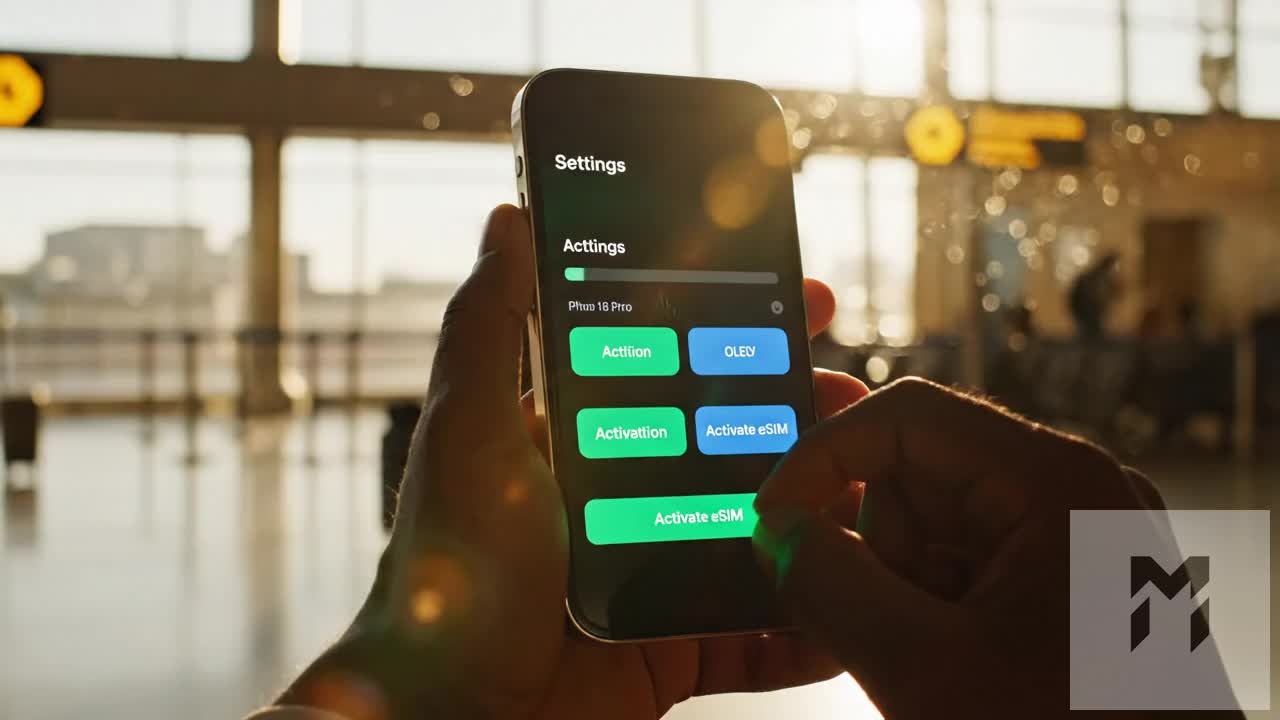
Singapore to Batam & Bintan Ferry Guide 2026: Seamless Cross-Border Island eSIM Connectivity
Singapore to Batam & Bintan Ferry Logistics: 2026 Terminals, Routes, and Crossing Realities
Escaping the Singapore metropolis for the Riau Archipelago takes less time than a trans-island MRT commute. Situated just 20 to 45 kilometers south across the Singapore Strait, the Indonesian islands of Batam and Bintan serve as prime destinations for weekend getaways, golf retreats, and luxury wellness escapes. However, navigating the maritime network requires understanding the distinct departure hubs, arrival terminals, and operator ecosystems.
Departure Gateways: HarbourFront Centre vs. Tanah Merah
Singapore operates two primary international ferry terminals. Choosing the wrong terminal can add an hour to your transit time:
- HarbourFront Centre (HFC): Integrated directly into the HarbourFront MRT station (NE1/CC29) and VivoCity mall in southern Singapore. This is the primary transit gateway for central Batam (Batam Centre, Harbour Bay, and Sekupang).
- Tanah Merah Ferry Terminal (TMFT): Positioned on the eastern coast near Changi Airport. TMFT is the dedicated launchpad for luxury resort destinations: Nongsa Pura in northeast Batam, Bandar Bentan Telani (Bintan Resorts/Lagoi), and Tanjung Pinang (Bintan's provincial capital).
The 2026 Master Route Matrix
High-speed catamarans and monohull ferries operate dozens of daily round-trips. Sailing durations vary between 45 and 70 minutes depending on sea conditions and engine specs.
| Departure Terminal | Destination Port | Island | Primary Operators | Sailing Duration | Primary Traveler Profile |
|---|---|---|---|---|---|
| HarbourFront (HFC) | Batam Centre | Batam | BatamFast, Majestic, Sindo | ~60 mins | Shopping, business, culinary trips |
| HarbourFront (HFC) | Harbour Bay | Batam | Horizon Fast Ferry | ~50 mins | Direct downtown access, nightlife |
| HarbourFront (HFC) | Sekupang | Batam | BatamFast, Sindo | ~50 mins | Local transit, budget resorts |
| Tanah Merah (TMFT) | Nongsa Pura | Batam | BatamFast | ~45 mins | Golf resorts, Montigo, Tering Bay |
| Tanah Merah (TMFT) | Bandar Bentan Telani (BBT) | Bintan | Bintan Resort Ferries (BRF) | ~60 mins | Luxury Lagoi resorts (Club Med, The Sanchaya) |
| Tanah Merah (TMFT) | Tanjung Pinang | Bintan | Sindo, Majestic | ~90 mins | Heritage tourism, local commerce |
| Tanah Merah (TMFT) | Batam Centre | Batam | BatamFast, Majestic | ~45 mins | Changi Airport transfers |
Check-in Protocols, Baggage, and Border Clearance
Crossing an international maritime border involves distinct procedural gates:
- Check-In Deadlines: Counter check-in and luggage drop close strictly 45 minutes before departure at HarbourFront and 40 minutes before departure at Tanah Merah. Online ticket holders must still exchange digital receipts for physical boarding passes at terminal operator kiosks.
- Luggage Allowances: Standard ticket tiers include 20 kg of complimentary checked baggage and up to 7 kg of cabin carry-on. Excess baggage incurs fees ranging from SGD 1 to SGD 2 per kilogram. Bicycles, golf bags, and surfboards require odd-size baggage declaration and separate handling fees (typically SGD 10–15 per item).
- Immigration & Customs: Singapore automated clearance gates (Automated Clearance System / SmartBorders) are accessible to Singapore Citizens, PRs, and registered foreign travelers. Upon arrival in Indonesia, travelers must clear the Indonesian Directorate General of Immigration checkpoints (presenting an e-VOA or passport for visa-exempt ASEAN nationals) and scan the mandatory Indonesian Electronic Customs Declaration (ECD) QR code.
Digital Preparedness for the Maritime Border
The 45-to-70-minute transit crossing creates a digital blind spot in the middle of the Singapore Strait. Signal handover between Singaporean telecom towers (Singtel, StarHub) and Indonesian base stations (Telkomsel, Indosat) occurs mid-voyage.
Having instant, reliable mobile data upon docking is essential: you will need to pull up your digital hotel booking, load the Indonesian Customs ECD QR code, and hail a Grab or Gojek directly from the terminal arrival hall.
Travelers using cross-border regional eSIMs like MollySIM maintain an edge during island hops. If high-speed data allotments are depleted while streaming onboard, MollySIM's Fair Use Policy (FUP) maintains a throttled baseline of 384 kbps—three times higher than the industry standard 128 kbps. This ensures navigation apps like Google Maps, messaging on WhatsApp, and digital wallet payment gateways (Apple Pay, Google Wallet) continue operating without dropouts the moment your ferry touches the berth.
The Singapore Strait Signal Gap: Why Maritime Connectivity Drops Between Borders
🌐 Global Travel High-Speed Travel eSIM & SIM Plans
Instant QR code activation, hotspot enabled, with guaranteed 384kbps fallback speed to keep Maps & Digital Wallets active.
Navigating the 15 to 35-kilometer maritime corridor between Singapore’s ferry terminals (HarbourFront, Tanah Merah) and the Riau Islands (Batam Centre, Nongsapura, Bandar Bentan Telani) exposes mobile devices to an unavoidable technical challenge: the international maritime cellular handover.
While the strait appears narrow on navigation charts, the open-water transit creates a distinct zone of radio frequency (RF) degradation that triggers carrier connection loops, severe latency spikes, and accelerated battery consumption.
The Physics of Offshore Cellular Attenuation
Singapore’s terrestrial coastal base stations (eNB/gNB macro-cells situated around Sentosa, Marina South, and St. John’s Island) are engineered primarily for land-based azimuth coverage. Sector antennas utilize electrical downtilt to focus RF energy on populated shores rather than maritime shipping lanes.
- The 10–15 km Horizon Limit: As the ferry crosses beyond 10 to 15 kilometers from the Singapore coast, terrestrial 4G LTE/5G signal strength (RSRP) drops below usable thresholds (falling past -115 dBm).
- Multipath Interference: Open water surfaces act as reflective planes, causing phase cancellation (multipath fading) and expanding the radio path's Fresnel zone, which destroys signal-to-noise ratios (SINR).
- Cross-Border Latency Spikes: Before your device completely drops the Singaporean network, it attempts to cling to low-band frequencies (like Band 8 / 900 MHz or Band 28 / 700 MHz). This results in packet loss soaring past 40% and ping times exceeding 1,200 ms, rendering simple web queries unresponsive.
The Anatomy of the "Carrier Hunting Loop"
When a phone loses registration with Singapore’s Mobile Country Code (MCC 525) in mid-strait, its baseband modem enters an aggressive scanning sequence called Public Land Mobile Network (PLMN) selection.
- Continuous Spectrum Polling: The modem continually scans all supported frequency bands (B1, B3, B7, B8, B28) for valid broadcast control channels (BCCH).
- Power Amplification: To reach distant coastal towers, the device elevates its User Equipment (UE) transmit power to its ceiling—typically +23 dBm (200 mW).
- Thermal Throttling & Battery Drain: Running the RF transceiver at maximum output while processing continuous network reject messages drains battery reserves up to 300% faster than standard idle standby, often causing smartphones to heat up noticeably inside pocket transit bags.
Single-Network vs. Multi-Country Roaming Profiles
Travelers relying on standard, single-country SIM cards often face long reconnection delays upon arrival. The phone must completely give up on the home network, register the border transition, request an international roaming attach, and complete subscriber authentication with an Indonesian core network (MCC 510).
| Connection Metric | Single-Country Local SIM / Standard Roaming | Multi-Country eSIM (e.g., MollySIM) |
|---|---|---|
| Mid-Strait Modem State | Aggressive, continuous PLMN carrier hunting | Managed scanning intervals with pre-loaded profiles |
| Border Handshake Time | 3 to 8 minutes post-berthing | < 30 seconds upon entering territorial waters |
| Primary Partner Networks | Locked to a single local roaming agreement | Auto-negotiation: Telkomsel / Indosat Ooredoo |
| FUP Baseline Speed | Throttled to 64–128 kbps (unusable for maps) | 384 kbps (Sustains Google Maps, WhatsApp, Apple Pay) |
| Authentication Bottleneck | Remote home-routing latency to origin carrier | Regional breakout nodes reducing round-trip time (RTT) |
Seamless Handshake Upon Docking
To avoid arrival bottlenecks at Batam and Bintan terminals, your device must secure a local IP address the moment the vessel maneuvers into the slipway. Advanced cross-border solutions like MollySIM utilize multi-country network profiles optimized for the Singapore-Riau corridor.
Instead of remaining stranded in a carrier hunting loop, the eSIM seamlessly transitions authentication from Singapore’s infrastructure directly into Indonesia’s tier-one carriers (Telkomsel and Indosat Ooredoo Hutchison).
Even if intensive cross-strait data consumption exhausts your high-speed quota mid-voyage, MollySIM’s 384 kbps Fair Use Policy (FUP) baseline keeps critical data pathways open. This enables uninterrupted generation of Indonesian Electronic Customs Declaration (ECD) QR codes, instant retrieval of ferry boarding confirmations, and immediate ride-hailing requests through Grab or Gojek without hunting for unstable terminal Wi-Fi.
The Indonesian IMEI & ECD Registration Trap: Why Local Physical SIMs Fail Short-Term Tourists
For weekend vacationers heading to Batam or Bintan, purchasing a cheap physical prepaid SIM card at the terminal or a roadside counter appears straightforward on the surface. In reality, it is one of the most common logistical traps for foreign visitors arriving in the Riau Islands.
Under Indonesian Ministry of Communication and Information Technology (Kominfo) regulations enforced through the Central Equipment Identity Register (CEIR), all foreign-purchased mobile handsets are systematically barred from accessing domestic Indonesian cellular networks unless their International Mobile Equipment Identity (IMEI) number is officially registered with Direktorat Jenderal Bea dan Cukai (Indonesian Customs).
Foreign Device + Local Physical SIM
  └──> CEIR Database Check
         └──> Unregistered IMEI
                └──> Immediate Signal Drop / "No Service" (Blacklisted)
The Bea Cukai Terminal Bottleneck
If you attempt to use a local Indonesian physical SIM card (such as a local Telkomsel or Indosat prepaid starter pack) in an unregistered foreign phone, your cellular connection will be severed within minutes. To make a local SIM work legally, tourists must undergo a convoluted customs clearance process:
- Pre-Arrival ECD Portal Filing: Fill out device details, passport credentials, and dual IMEI numbers in the Electronic Customs Declaration (ECD) portal prior to arrival.
- Terminal Customs Queue: Join the secondary inspection queue at Batam Centre, Harbour Bay, or Bandar Bentan Telani (BBT) ferry terminals.
- Hardware Verification & Taxation: Present physical purchase receipts for the device. Handsets valued over USD $500 are subject to steep import duties and value-added taxes (which can exceed 40% of the remaining device value for non-tax-ID holders), unless processed at specific tourist counters for a temporary 90-day tourist IMEI registration.
This bureaucratic friction can consume 45 to 90 minutes directly out of a short 48-hour island itinerary.
Comparison: Local Physical SIM vs. Cross-Border Travel eSIM
| Feature / Requirement | Local Physical SIM (Indonesian Kiosk) | Cross-Border Travel eSIM (MollySIM) |
|---|---|---|
| IMEI Customs Registration | Mandatory (CEIR/Bea Cukai database check) | Bypassed completely via GSMA roaming protocols |
| Terminal Waiting Time | 30–60 minutes in customs & verification lines | Zero (Instant handshake upon vessel docking) |
| Import Tax Exposure | Risk of device valuation assessment > USD $500 | None (Treated as an international transit device) |
| Physical Swapping Risk | High (Risk of losing original Singapore telco SIM) | Zero (Embedded profile stays digital) |
| FUP Degradation Floor | Often drops to 64–128 kbps or completely cut off | 384 kbps baseline (3x faster than industry average) |
How Roaming eSIMs Circumvent CEIR Blocking
Travel-grade eSIM solutions bypass the Indonesian CEIR IMEI block entirely by leveraging standard GSMA international roaming protocols.
When your phone connects to local towers via MollySIM, your handset authenticates as a visiting roaming subscriber rather than a domestic subscriber. Because the device is routing traffic through cross-border clearinghouse partnerships with tier-one carriers like Telkomsel and Indosat Ooredoo Hutchison, Kominfo’s domestic CEIR database does not flag your device.
This enables instant, legal, and unrestricted LTE/5G access the second your ferry enters territorial waters. Furthermore, with MollySIM's 384 kbps Fair Use Policy (FUP) safety floor—tripling the standard 128 kbps throttle imposed by legacy travel passes—essential applications like Google Maps navigation, Gojek ride tracking, and Apple Pay retain full functionality without any customs paperwork.
Cross-Border Connectivity Comparison: Roaming vs. Local SIM vs. Multi-Country eSIM
Choosing the right mobile data strategy for a quick weekend getaway or a business trip between Singapore, Batam, and Bintan comes down to three factors: operational friction, routing latency, and cost per gigabyte.
When crossing the Singapore Strait, your device transitions from Singapore’s high-density small-cell infrastructure to the macro-tower coverage of the Riau Archipelago. How your connectivity provider handles that handoff dictates whether you experience seamless navigation upon arrival or an infuriating data blackout at the terminal.
The table below provides an empirical breakdown of the four primary connectivity methods used by ferry commuters along the Singapore–Riau Islands corridor.
Comprehensive Cross-Border Data Matrix
| Evaluation Criteria | Singapore Telco Roaming (Singtel, StarHub, M1) | Indonesian Local Physical SIM (Terminal Vendors) | Rental Pocket Wi-Fi (Changi / HarbourFront Pickup) | MollySIM Southeast Asia Multi-Country eSIM |
|---|---|---|---|---|
| Average DL / UL Speeds | 25–60 Mbps DL / 10–20 Mbps UL | 15–45 Mbps DL / 5–15 Mbps UL | 15–30 Mbps DL / 5–10 Mbps UL | 45–95 Mbps DL / 20–35 Mbps UL (Direct Tier-1 Local Peering) |
| Latency across Strait | 80–140 ms (Traffic often looped back to SG core) | 40–70 ms (Domestic local breakout) | 90–160 ms (Multi-hop Wi-Fi translation) | 35–55 ms (Low-latency regional edge routing) |
| IMEI Registration Needed? | No (Roaming handshake) | Yes (Strict CEIR/Kominfo declaration at port) | No (Device hardware pre-registered) | No (Whitelisted international GSMA roaming profile) |
| Setup Complexity | Low (SMS activation or app toggle) | High (Passport scans, physical queue, APN entry) | Medium (Device pickup, return drop-box, charging) | Zero-Touch (Single QR scan or 1-click in-app install) |
| Average Cost per Day | S$5.00 – S$12.00 / day | S$15.00 – S$25.00 upfront (Tourist markup) | S$8.00 – S$14.00 / day (+ security deposit) | ~S$1.20 – S$2.80 / day (Flexible multi-day packages) |
| Hotspot / Tethering | Supported (Depletes daily high-speed quota quickly) | Supported | Supported (Drains unit battery in 4–6 hrs) | Fully Supported (No tethering throttles) |
| Nongsa & Lagoi Coverage | Fair to Good (Dependent on partner carrier) | Excellent (If using native Telkomsel profile) | Spotty (Restricted to single carrier SIM inside unit) | Superior (Dynamic switching across Telkomsel & Indosat) |
| Post-FUP Throttle Floor | 64 kbps – 128 kbps (Unusable for modern apps) | Hard cut-off or 64 kbps | 128 kbps | 384 kbps baseline (Maintains active GPS & payments) |
Technical Performance Breakdown: Latency and Remote Coverage
1. Routing Hops and Latency Penalties
Traditional Singapore telco roaming daily passes (such as Singtel ReadyRoam or StarHub DataTravel) frequently route domestic Indonesian packets back through an upstream gateway in Singapore before serving the requested host. This introduces a noticeable latency overhead (often exceeding 120 ms).
In contrast, MollySIM optimizes regional routing nodes. By coupling low-latency breakout points with local Tier-1 partner networks (Telkomsel and Indosat Ooredoo Hutchison), transit latencies drop to a crisp 35–55 ms—critical for time-sensitive requests like grabbing an instant Gojek or Grab ride outside Batam Centre Point or Bandar Bentan Telani.
2. The Remote Island Edge: Nongsa vs. Lagoi
Coverage across Batam and Bintan is not uniform:
- Nongsa (Batam): Coastal terrain and luxury resorts (e.g., Montigo Resorts) sit on fringe propagation zones where Singapore cell towers still bleed across the water. Single-carrier physical SIMs often get confused by the cross-border interference, causing "No Service" ping-pong. Multi-country eSIM profiles manage signal thresholds intelligently without dropping packet sessions.
- Lagoi & Sebung Bay (Bintan): Bintan Resorts are spread across large distances buffered by dense greenery. Telkomsel holds the dominant macro-tower footprint in this zone. A dedicated multi-country eSIM automatically binds to these high-power B1/B3/B8 bands, avoiding the 3G fallbacks common with budget Pocket Wi-Fi units.
3. Post-FUP Reliability: The 384 kbps Advantage
When standard daily roaming quotas run dry, most telcos degrade your throughput to a punitive 64–128 kbps—a speed that completely breaks modern SSL handshakes, rendering navigation apps and digital wallets useless.
MollySIM implements an industry-leading 384 kbps Fair Use Policy (FUP) safety floor. This 3x speed elevation ensures that even if you exhaust your primary high-speed bucket while streaming video at the beach club, essential navigation via Google Maps, ride hailing, and Apple/Google Pay terminal handshakes remain completely uninterrupted.
Seamless Island Hopping: How MollySIM Multi-Country eSIM Automates the Switch
The 45-to-60-minute ferry journey across the Singapore Strait presents a unique telecommunications hurdle. As your vessel leaves the coverage footprint of Singapore’s southern coast and approaches the Riau Archipelago, cellular devices are caught in an aggressive radio propagation crossfire. Budget single-country SIMs and standard roaming profiles frequently stall, locking onto distant, unusable domestic towers while refusing to authenticate across the border.
The MollySIM Southeast Asia Regional eSIM is architected specifically to eliminate this cross-border friction through automated network provisioning and proactive core network handshakes.
1. Instantaneous Multi-Carrier Handshakes (Singtel/StarHub to Telkomsel/Indosat)
Traditional travel SIM cards rely on rigid, single-operator roaming agreements that force your phone to stay tethered to degrading signals until connection is completely lost. MollySIM utilizes an intelligent multi-IMSI profile that automates network switching at the packet level:
- In Singapore Waters: Your device binds directly to Tier-1 infrastructure (Singtel or StarHub), guaranteeing ultra-low latency routing through HarbourFront, Tanah Merah, and the southern maritime corridor.
- Mid-Strait Transition: As Singapore signal levels drop below viable operational thresholds (-110 dBm RSRP), the eSIM automatically initiates handover protocol without requiring a device reboot.
- On Indonesian Arrival: The profile establishes an instantaneous data session with Indonesia’s premier infrastructure—Telkomsel (for superior macro coverage across Bintan and Nongsa) or Indosat Ooredoo Hutchison (for dense urban throughput around Batam Centre and Nagoya).
2. Zero-Configuration Auto-APN Architecture
One of the primary failure points when crossing into Indonesia is the manual configuration of Access Point Names (APN) and profile re-authentication.
MollySIM operates on a True Zero-Configuration Auto-APN engine. The moment your catamaran clears customs waters and docks at Batam Centre, Sekupang, Nongsapura, or Bandar Bentan Telani (BBT), the eSIM auto-pushes validated APN payloads directly to your device’s baseband firmware. You step off the gangway with active data before you even reach the immigration counters—eliminating the need to hunt for terminal Wi-Fi or toggle airplane mode repeatedly.
3. The 384 kbps FUP Floor: Mission-Critical App Performance
Unforeseen data overages shouldn't strand you at a ferry terminal. While the majority of market alternatives throttle speeds down to an unusable 64 kbps or 128 kbps once daily high-speed allowances are reached, MollySIM implements a guaranteed 384 kbps Fair Use Policy (FUP) baseline.
This 3x speed advantage maintains the bandwidth thresholds required for critical travel applications to operate without packet-drop timeouts:
| Travel Application | Standard 128 kbps Fallback | MollySIM 384 kbps Fallback Floor |
|---|---|---|
| Grab / Gojek Driver Dispatch | Connection timeouts; map assets fail to render | Immediate booking dispatch & live GPS driver tracking |
| WhatsApp Voice Calls (VoIP) | Severe jitter, packet loss, and dropped calls | Stable, clear voice transmission |
| Google Maps Live Routing | Static routing only; vector tiles stall | Real-time dynamic rerouting & turn-by-turn navigation |
| Batam Fast / Bintan Resort Ferries QR Passes | SSL handshake failures loading wallet tokens | Instant retrieval and validation of digital boarding passes |
| Apple Pay / Google Wallet Verification | Gateway timeouts during merchant verification | Seamless dynamic cryptogram exchange at payment terminals |
By coupling automated Tier-1 carrier switching with an active data safety floor, MollySIM turns the complex international crossing between Singapore, Batam, and Bintan into a completely friction-free connectivity experience.
Step-by-Step Setup Guide & Pro Travel Hacks for Batam and Bintan Travelers
Setting up your cross-border cellular connection before your ferry pulls away from Singapore guarantees instant data access the moment your vessel enters Indonesian territorial waters. Follow this deployment sequence and on-the-ground operational playbook.
Pre-Departure eSIM Installation Sequence (At Tanah Merah or HarbourFront)
Perform your digital setup while waiting in the departure lounge at HarbourFront Centre (HFC) or Tanah Merah Ferry Terminal (TMFT) using terminal Wi-Fi or your local Singapore network:
- Verify Device EID Compatibility:
Open your device dialer and enter *#06#. If an EID (Embedded Identity Document) barcode appears alongside your IMEI numbers, your hardware natively supports eSIM profiles.
- Scan & Install the eSIM Profile:
- iOS: Navigate to
Settings>Cellular>Add eSIM>Use QR Code. Scan the activation code provided in your MollySIM confirmation email. - Android (Samsung/Pixel): Navigate to
Settings>Connections>SIM Manager>Add Mobile Plan>Scan QR Code.
- Configure Cellular Plan Labels:
Rename the newly installed profile to "Batam-Bintan MollySIM" and keep your domestic line labeled as "Primary".
- Tune Network Routing & Roaming Toggles:
- Default Voice Line: Set to Primary (allows you to receive incoming banking 2FA SMS alerts).
- Cellular Data Line: Switch to Batam-Bintan MollySIM.
- Data Roaming: Toggle ON specifically for the MollySIM profile. Keep Data Roaming OFF on your Singapore primary SIM to prevent accidental post-paid roaming surcharges from Singtel, StarHub, or M1.
2026 Pro Travel Hacks: Terminal-to-Resort Transit Mastery
| Challenge | Ferry Route Context | Actionable 2026 Workaround |
|---|---|---|
| Mid-Strait Battery Drain | Singapore Strait crossing (45–70 min) | Ferry hulls create a Faraday-cage effect. Toggle Airplane Mode during open water to stop transceivers hunting between SG and ID cell towers at maximum transmission power. |
| Ride-Hailing Restrictions | Batam Centre & Harbour Bay Ferry Terminals | Local port taxi cooperatives restrict direct Grab/Gojek arrivals inside pickup bays. Walk via the second-floor pedestrian bridge to Mega Mall Batam Centre to book your ride safely. |
| Cashless QRIS Transactions | Local warungs, cafes, and seafood kelongs | Indonesia’s national QR code (QRIS) now supports direct payment via Singapore banking apps (DBS PayLah!, OCBC) and GrabPay. Keep low-latency mobile data active to generate merchant dynamic tokens. |
| Lagoi & Trikora Dead Zones | Northern & Eastern Bintan resort corridors | Download offline vector tiles for Bintan on Google Maps before leaving Bandar Bentan Telani (BBT) terminal. |
Because MollySIM preserves an unthrottled 384 kbps safety floor under its Fair Use Policy, your dynamic QRIS code generations, Grab driver location polling, and real-time Google Maps vector updates will continue processing smoothly even if you reach daily high-speed consumption limits while touring Nagoya Hill or lounging at Treasure Bay Bintan.
🌐 Global Travel High-Speed Travel eSIM & SIM Plans
Instant QR code activation, hotspot enabled, with guaranteed 384kbps fallback speed to keep Maps & Digital Wallets active.