The Remote Archipelago Challenge: Connectivity Realities in Siargao and Palawan
The Philippines’ premier eco-adventure corridors—the tear-drop surf haven of Siargao and the sprawling limestone frontier of Palawan—represent the pinnacle of Southeast Asian island travel. Yet, traversing these paradises introduces an uncompromising technical hurdle: extreme geographic fragmentation.
Behind the postcard-perfect imagery of powdery sandbars and turquoise lagoons lies an unforgiving network environment. Towering karst cliffs, dense tropical canopies, and vast stretches of open ocean create severe cellular dead zones that catch unprepared digital nomads and adventurers off guard.
[Cellular Tower] ---> [Dense Jungle / Coastal Range] - - - (Degraded Signal) - - - [Remote Banca / Outer Reef]
                     \--> [Towering Limestone Karst]  x x x (Complete Shadow Zone)
The Topography of Network Blackouts
Signal propagation in the Philippine archipelago faces unique physical roadblocks:
- Siargao Island (Surigao del Norte): While tourism hubs like General Luna and Cloud 9 benefit from upgraded 4G/5G base transceiver stations, signal strength drops precipitously as you venture north toward the rugged breaks of Pacifico, the mangrove mazes of Del Carmen, or the enclosed waters of Sugba Lagoon. Offshore excursions to Guyam, Daku, and Naked Island push your devices to the absolute edge of coastal tower reach.
- Palawan (The Last Ecological Frontier): Spanning over 450 kilometers from Puerto Princesa up to Coron, Palawan's terrain is a cellular minefield. The six-hour overland van ride to Port Barton traverses remote mountain passes with zero reception. In El Nido, the sheer, vertical marble and limestone walls of the Bacuit Archipelago act as natural signal shields, cutting off connectivity the moment your motorized banca navigates behind an islet. Farther north, crossing the open waters of the Linapacan Strait toward Coron leaves vessels completely detached from terrestrial cell grids.
Why Mission-Critical Data Matters in the Islands
In the Philippine provinces, continuous connectivity is not a luxury for scrolling social feeds—it is a functional requirement for logistical survival and safety:
| Use Case | Operational Impact in Siargao & Palawan |
|---|---|
| Digital Payments (GCash) | Local island economies have largely bypassed traditional credit card POS terminals in favor of QR-based GCash transactions. From paying tricycle drivers in General Luna to settling bills at remote beach shacks in Nacpan, losing mobile data means losing your primary payment method. |
| Maritime Transfers & Safety | Coast Guard clearances for bancas often change hourly based on localized squalls and Pacific swells. Direct messaging via WhatsApp or local platforms is necessary to coordinate island departures and emergency pick-ups. |
| Aviation & Schedule Shifts | Island airports like Sayak Airport (IAO) in Siargao, El Nido Airport (ENI), and Francisco B. Reyes Airport (USU) in Coron are notorious for weather-induced flight delays and sudden gate reassignments. |
| Navigation & Caching | Navigating winding coastal dirt roads on a rented scooter requires continuous GPS access and real-time Google Maps tile loading when venturing off marked trails. |
The Low-Speed Throttling Trap
When navigating between island sectors, traditional international roaming profiles and cheap travel SIMs frequently degrade, triggering aggressive Fair Use Policies (FUP) that throttle speeds down to an unusable 128kbps. At 128kbps, secure banking handshakes time out, maps fail to render, and travel apps crash entirely.
To maintain baseline functionality across remote sectors, modern travelers utilize specialized connectivity solutions like MollySIM. By engineering its network routes with a 384kbps Fair Use Policy baseline—three times the industry standard—MollySIM ensures that even if you exhaust your high-speed allowance while stranded on a sandbar in the Bacuit Archipelago, essential background processes like Google Maps location caching, GCash wallet authorization, and VoIP messaging remain fully operational.
Network Landscape Breakdown: Smart vs. Globe Coverage Across Remote Islands
🌐 Global Travel High-Speed Travel eSIM & SIM Plans
Instant QR code activation, hotspot enabled, with guaranteed 384kbps fallback speed to keep Maps & Digital Wallets active.
To navigate the Philippine archipelago without connectivity blackouts, you must understand the duopoly governing local telecommunications: Smart Communications (the wireless subsidiary of PLDT) and Globe Telecom. In urban centers like Manila and Cebu, performance differences are negligible. However, across the fragmented geography of Siargao (Surigao del Norte) and Palawan (El Nido, Coron, and San Vicente), carrier infrastructure diverges sharply based on localized cell tower placement, microwave backhaul links, and subsea fiber landfalls.
Smart Communications: The Siargao & Northern Mindanao Benchmark
Smart Communications maintains a decisive performance edge throughout the island of Siargao. Backed by PLDT’s domestic subsea fiber network landing in Surigao City, Smart has deployed extensive LTE Band 28 (700 MHz) and Band 3 (1800 MHz) spectrum across the island.
- Surfing Reserves (General Luna & Catangnan): Smart delivers consistent 4G/5G carrier aggregation around Cloud 9 and Tuason Point, maintaining low-latency throughput even during peak evening tourism hours.
- Remote Northern Siargao: As you scooter north past Dapa toward Pacifico, Burgos, and the Magpupungko Rock Pools, Globe’s signal drops off rapidly into 2G edge status or complete disconnection. Smart retains stable 4G data links along the Siargao Circumferential Road due to higher tower density and solar-backed remote macro sites.
Globe Telecom: Palawan’s Historical Stronghold
In Palawan, the carrier landscape flips. Globe Telecom invested heavily in the early tourism corridors of northern Palawan, establishing deep infrastructure ties in El Nido and the Calamian Islands.
- El Nido Proper & Corong-Corong: Globe operates dense micro-cell arrays throughout El Nido town center, Buena Suerte, and along the limestone bluffs of Corong-Corong. Smart frequently struggles with line-of-sight signal propagation against El Nido's sheer karst topography, whereas Globe’s localized repeaters keep data links active.
- Coron & The Calamianes: Within Coron town proper and climbing toward Mount Tapyas, Globe provides reliable 4G/5G connections. However, once your boat enters the limestone channels of the Bacuit Archipelago or passes Linapacan, both networks encounter dead zones caused by island shadows.
Comparative Architecture: Local Options vs. Next-Gen Travel eSIMs
Relying exclusively on a single local physical SIM or a pocket Wi-Fi device binds your hardware to one provider's blind spots. Digital travelers moving between Siargao (Smart territory) and Palawan (Globe territory) face repeated hardware swaps, complex government SIM registration portals, or total signal dropouts during boat crossings.
| Connectivity Method | Primary Network Backbone | Setup Friction & KYC | Island Hopping Resiliency | Throttled Baseline Speed (FUP) | Avg. Cost / Est. Value |
|---|---|---|---|---|---|
| Smart Local Prepaid SIM | Smart / PLDT Only | High (Mandatory passport scan, hotel voucher upload, facial validation) | Poor in El Nido & Bacuit Bay; Excellent in Siargao | 0 – 128kbps (Stops Google Maps rendering) | ~$15–20 / 30 Days |
| Globe Local Prepaid SIM | Globe Telecom Only | High (Mandatory identity registration via local web portal) | Excellent in El Nido town; Poor in Northern Siargao | 0 – 128kbps (Frequent session timeouts) | ~$15–20 / 30 Days |
| Airport Tourist SIMs | Smart or Globe (Locked) | Extreme (Long terminal queues at MNL/CEB; inflated tourist rates) | Single-network locked; Highly vulnerable to local blind spots | Hard cutoff or 64kbps | ~$30–45 / High markup |
| Pocket Wi-Fi Rentals | Single Carrier (Varies) | High (Battery management, deposit fees, physical pickup/drop-off) | Bulky; Single-point-of-failure for multiple connected devices | 128kbps after daily cap | ~$7–10 / Day |
| MollySIM Remote eSIM | Dynamic Multi-Carrier (Smart + Globe Auto-Switching) | Zero Friction (Instant QR activation, no KYC passport upload required) | Maximum (Switches dynamically to the strongest local tower across islands) | 384kbps (3x faster than industry standard; preserves Maps & VoIP) | Flexible tiers / Optimized per GB |
The Dynamic Switching Advantage
The primary technical failure of traditional single-network connectivity in the Philippines is the inability to roam across domestic radio networks. When you board an outrigger boat (banca) from El Nido to Linapacan, or transit from General Luna to the Sohoton Cove lagoons in Bucas Grande, tower handshakes fail as your single carrier fades.
Using a multi-IMSI travel eSIM architecture like MollySIM bypasses single-carrier limits. By maintaining core routing agreements with both Smart and Globe, your device dynamically attaches to whichever carrier broadcasts the strongest signal along remote coastlines. Furthermore, MollySIM's 384kbps Fair Use Policy baseline prevents the application-layer crashes typical of traditional 128kbps throttles—ensuring that even if your high-speed bucket is depleted mid-transit, messaging payloads, GPS waypoints, and Apple Pay authentication handshakes process seamlessly.
The Tourist Registration Quagmire: Why Physical SIMs Stall Your Itinerary at NAIA & MCIA
For international travelers landing at Ninoy Aquino International Airport (NAIA) in Manila or Mactan-Cebu International Airport (MCIA), the friction begins long before reaching the island-bound propeller planes. Under the Philippine SIM Registration Act (Republic Act No. 11934), obtaining a functional local prepaid physical SIM card has transformed from a trivial airport transaction into a grueling bureaucratic process.
The 4-Step KYC gauntlet at Arrival Terminals
Unlike many Southeast Asian hubs where picking up a SIM takes seconds, Philippine law mandates exhaustive Know-Your-Customer (KYC) documentation for all non-resident foreign nationals. Airport telco booths (Smart and Globe) cannot hand you an active card until your profile is fully verified through their web portals:
- High-Resolution Passport Scans: You must submit a clear image of your passport identification page.
- Proof of Onward Travel: A confirmed outbound flight ticket showing your departure date from the Philippines.
- Verified Proof of Accommodation: Hotel reservation vouchers, resort bookings, or an affidavit of host address with local contact numbers.
- Live Facial Biometrics: A real-time liveness test/selfie captured within the carrier's browser portal to match your passport photo.
Systemic Failures: Congested Wi-Fi & Tourist Price Gouging
The technical bottleneck occurs during the verification upload. Arriving passengers are forced onto saturated, open airport Wi-Fi networks to access carrier verification portals. File upload errors, session timeouts, and rejected document crops frequently trap travelers at terminal kiosks for 45 to 60 minutes after clearing customs.
| Friction Point | Airport Physical SIM (NAIA / MCIA) | MollySIM Travel eSIM |
|---|---|---|
| Identity Verification (KYC) | Strict RA 11934 compliance (Passport, hotel, flight scans) | Zero KYC / No passport upload needed |
| Time to Connection | 45–60 minutes in terminal queues | Instant connection upon landing |
| Pricing Transparency | Inflated "Tourist Packs" (PHP 1,500–2,500 / $25–$45) | Direct transparent tiers from ~$1.50/GB |
| Validity Lifecycle | Hard-capped at 30 days for foreign tourists | Flexible duration matching your exact trip |
| Fallback Speed (FUP) | Throttled to a non-functional 128kbps | 384kbps baseline (Maps, VoIP & Apple Pay active) |
Furthermore, airport vendors leverage this captive audience by exclusively selling marked-up "Tourist Packs." Packages that carry a domestic face value of PHP 300 to 500 are routinely packaged at kiosks for PHP 1,500 to 2,500 ($25 to $45 USD). To make matters worse, tourist SIMs registered under foreign passports automatically deactivate after 30 days unless an approved visa extension is physically uploaded to the telco portal.
The Frictionless Alternative: Instant eSIM Provisioning
Bypassing RA 11934 entirely is possible through international roaming interconnects. Because MollySIM routes data over global transit agreements, it requires zero KYC uploads, no passport scans, and no biometric validation.
You scan a single QR code before boarding your flight. When your wheels touch the tarmac in Manila or Cebu, your handset immediately completes a radio handshake with the local tower infrastructure. You can order a Grab ride, authenticate mobile banking transactions, and message your domestic transfer pilot before deplaning—backed by a resilient 384kbps FUP speed floor that prevents service drops even during peak network congestion.
Multi-Carrier Auto-Switching: Conquering Dead Zones from Pacifico to the Bacuit Archipelago
Navigating connectivity across an archipelago of 7,641 islands reveals a brutal telecommunications reality: there is no single dominant cellular network in the Philippines. The country’s two major mobile network operators (MNOs)—Smart Communications (PLDT) and Globe Telecom—operate in a patchwork infrastructure duopoly.
A physical SIM card locks your device to a single carrier’s radio access network (RAN). If you insert a Globe physical SIM, your phone is entirely blind to an adjacent Smart cellular tower, even if that Smart tower is broadcasting full-strength 4G LTE/5G just 200 meters away.
The Single-Carrier Dead Zone Reality
This fragmented coverage creates catastrophic connectivity dropouts during remote island-hopping itineraries:
- Coron & The Calamianes: Smart holds line-of-sight microwave relays across Coron Town and Kayangan Lake’s docking bay, while Globe signals degrade to unusable edge bands once your motorized bangka boat passes Twin Lagoon.
- The Linapacan Strait: In the remote crossing between El Nido and Coron, terrestrial cell sites are miles apart on isolated karst islands. Physical SIMs drop to "No Service" for 6 to 8 hours.
- Siargao's North-South Divide: While Globe provides dense microcell coverage in the café-heavy tourism strip of General Luna, traveling north toward the barreling surf breaks of Pacifico, Burgos, or the mangrove mazes of Sugba Lagoon and Doot Beach flips the coverage map entirely in favor of Smart's 700MHz (Band 28) low-band transceivers.
How MollySIM Executes Dynamic Core-Network Switching
Instead of binding your handset to a domestic subscriber registry, MollySIM utilizes an international multi-IMSI (International Mobile Subscriber Identity) roaming profile. Your smartphone treats local Philippine infrastructure as partner host networks.
When you transition between island waypoints, your handset’s baseband modem continuously evaluates two critical radio metrics:
- RSRP (Reference Signal Received Power): The physical signal strength from nearby towers.
- RSRQ (Reference Signal Received Quality): The signal-to-noise ratio indicating data throughput capacity.
| Destination / Transit Corridor | Dominant Local RAN | Single-Carrier Tourist SIM Result | MollySIM Dynamic eSIM Profile |
|---|---|---|---|
| Siargao (General Luna / Cloud 9) | Globe Telecom | Smart SIMs drop to intermittent 3G | Auto-attaches to Globe LTE/5G |
| Siargao (Pacifico & Alegria North) | Smart (PLDT) | Globe drops to "No Service" | Seamless failover to Smart Band 28 |
| Bacuit Bay (El Nido Island Hopping) | Patchwork (Tower dependent) | Constant manual toggling / battery drain | Dynamic tower negotiation |
| Kayangan Lake / Barracuda Lake (Coron) | Smart (Mountain relay) | Globe users stranded without data | Instant attachment to Smart cell |
| Linapacan Expedition Route | Edge of cell / low coverage | Total disconnection | Maintains 384kbps FUP floor on edge signal |
The moment your boat rounds the limestone cliffs of Miniloc Island in El Nido and the Globe transceiver drops below acceptable signal thresholds (-115 dBm RSRP), the profile dynamically negotiates a location update with the nearest Smart base station.
You avoid the tedious routine of carrying dual physical SIMs, ejector pins, or restarting your phone across regional borders. Even in fringe signal areas along transit channels, MollySIM’s built-in 384kbps Fair Use Policy (FUP) floor keeps low-bandwidth packets moving—guaranteeing that offline GPS vector mapping, Apple Pay tokens, and critical two-factor authentication (2FA) codes process without timeout errors.
The 384kbps Essential Speed Floor: Your Digital Safety Net for GCash, Grab, and Navigation
Most international travelers only look at the headline high-speed data allowance when purchasing an eSIM, overlooking the catastrophic impact of post-quota throttling. In the Philippine archipelago, exhausting your high-speed bucket on a standard tourist SIM or low-tier eSIM usually triggers an immediate hard-cut or drops bandwidth to an abysmal 64kbps to 128kbps.
At 64kbps, modern mobile operating systems experience severe packet loss and SSL/TLS handshake timeouts. Mobile apps fail to authenticate security tokens, leaving you stranded at a beachside dock or an unfamiliar tricycle stand.
To eliminate this vulnerability, MollySIM implements an always-on 384kbps Fair Use Policy (FUP) speed floor across all unlimited and capped packages. Running at roughly 48 kilobytes per second, this bandwidth baseline is precisely calibrated above the threshold required for essential digital logistics in the Philippines.
Bandwidth Benchmarks: 128kbps Industry Standard vs. MollySIM 384kbps Floor
| Travel App / Protocol | Average Transaction Payload | Standard 128kbps eSIM Behavior | MollySIM 384kbps FUP Experience |
|---|---|---|---|
| GCash / QR Ph Payment | 12 KB – 25 KB (Auth + API Token) | Connection timed out / Gateway 504 | Instant QR generation & settlement (<2.1s) |
| Google Maps Vector Routing | 35 KB – 80 KB (Per map tile update) | Blank grey tiles / Frozen route | Smooth waypoint caching & turn-by-turn alerts |
| Grab Ride Booking | 18 KB – 40 KB (Driver location polling) | App hangs on "Finding your driver" | Reliable driver dispatch & live location telemetry |
| WhatsApp / iMessage | 2 KB – 8 KB (Encrypted text payload) | Delayed message delivery / Stuck on clock | Real-time delivery & receipt confirmation |
| Apple Pay / Tokenized Cards | 4 KB – 10 KB (Cryptographic exchange) | NFC terminal read timeout | Sub-second authorization response |
Real-World Field Performance Across the Islands
1. Frictionless Merchant Payments via QR Ph and GCash
The Philippines has rapidly transitioned into a mobile-first cashless economy. From local sari-sari stores in Pacifico to boat captains in Port Barton, merchants rely on QR Ph interoperable payment codes linked to GCash or Maya.
A standard GCash dynamic QR transaction requires a TLS 1.3 cryptographic handshake followed by an API call to verify the wallet balance and broadcast the transaction ID. At 384kbps, this micro-payload executes in under 2 seconds. You avoid the awkward situation of standing at a ferry terminal gate unable to render a payment verification screen due to an expired high-speed bundle.
2. Vector Tile Mapping and Offline Route Recalculation
Modern navigation platforms (Google Maps, Apple Maps, and Organic Maps) utilize lightweight vector tiles rather than heavy raster imagery. Vector updates download as raw mathematical coordinate packets ranging from 30KB to 70KB.
MollySIM’s 384kbps connection provides ample throughput to stream live traffic data, download route recalculations if you take a wrong turn on a motorbike in Siargao's coconut corridor, and locate nearby fuel stops along the 280-kilometer highway between Puerto Princesa and El Nido.
3. Ride-Hailing Coordination Upon Mainland Return
When transitioning from remote island expeditions back to urban transit hubs like Mactan-Cebu International Airport (CEB) or Manila (NAIA), the immediate priority is booking a secure Grab or JoyRide vehicle. Ride-hailing interfaces continuously exchange background geohash data to pinpoint both your location and nearby driver coordinates.
While a 128kbps throttled SIM will freeze during peak airport congestion, 384kbps sustains steady background polling—securing your airport transfer without hunting for insecure public terminal Wi-Fi networks.
Step-by-Step Installation and Island-Ready eSIM Setup Guide for 2026
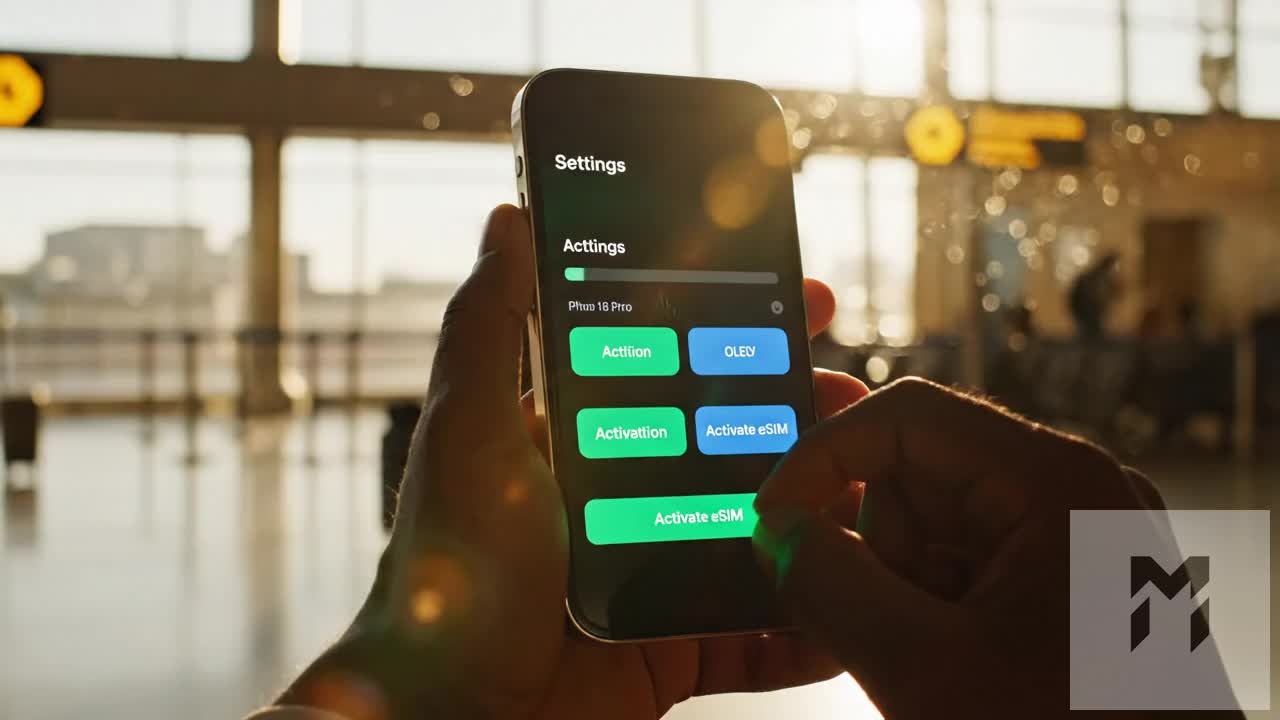
To guarantee uninterrupted cellular service the moment your flight lands in Manila (NAIA), Cebu (CEB), or Francisco B. Reyes Airport (USU) in Coron, complete the installation protocol prior to departure while connected to a stable home or airport Wi-Fi network.
1. Pre-Departure Installation via QR Code
Do not wait until landing at a provincial island airstrip with spotty terminal Wi-Fi to configure your profile.
+-------------------------------------------------------------------------+
|                         PRE-DEPARTURE CHECKLIST                         |
|  [✓] Screenshot QR code to a secondary device or printout               |
|  [✓] Install profile 12–24 hours prior to departure over stable Wi-Fi   |
|  [✓] Set Cellular Data to Primary SIM until wheels down in PH          |
+-------------------------------------------------------------------------+
On iOS (iPhone 11 through iPhone 16 Pro / Pro Max):
- Navigate to Settings > Cellular (or Mobile Data).
- Tap Add eSIM > Use QR Code.
- Scan the digital voucher QR code provided by your provider (such as MollySIM).
- When prompted to label your cellular plans, rename the new plan to "Philippines - MollySIM" to avoid confusion with your primary domestic line.
- Set your Default Voice Line to your home carrier (turn off data roaming on this line to prevent domestic carrier roaming penalties).
- Set Cellular Data to your primary SIM for now; you will switch this upon touchdown in the Philippines.
On Android (Google Pixel, Samsung Galaxy S20–S25, and Modern Flagships):
- Navigate to Settings > Connections (or Network & Internet) > SIM Manager.
- Tap Add Mobile Plan or Add eSIM > Scan QR Code.
- Align the scanner with your confirmation voucher.
- Once authenticated, label the carrier profile "MollySIM PH".
- Leave the eSIM toggled OFF or inactive until boarding your final connection.
2. Touchdown Activation & Network Handshake
Once your landing gear hits the tarmac at your Philippine port of entry, execute this quick activation sequence:
| Configuration Step | Required Action | Technical Purpose |
|---|---|---|
| Cellular Data Line | Switch to Philippines - MollySIM | Routes all mobile data traffic through your local routing profile. |
| Data Roaming | Toggle ON | Essential for international roaming travel profiles to route via local partner towers (Globe / Smart). |
| Cellular Data Switching | Toggle OFF | Prevents your device from silently falling back to expensive primary carrier data. |
| APN Configuration | Set to globaldata or internet (Auto) | Most modern profiles configure automatically; verify in Settings > Cellular Networks > APN if data fails to initialize. |
3. Power Optimization: Managing Battery Drain on Banca Boats
Long transit routes aboard traditional wooden banca outriggers—such as the 3-to-4-hour open-ocean crossing between Coron and El Nido, or transit across Siargao’s dynamic breaks—present a unique hardware challenge: rapid battery depletion caused by tower hunting.
[Open Water] <--- Weak Signal Line ---> [Distant Shoreline Base Station]
                       |
                       +--> Phone Baseband Modem at Max Power (23 dBm / 200mW)
                       +--> Extreme Thermal Load & Rapid Battery Drain
When traveling across open water channels beyond 8–12 nautical miles from shore:
- The Physics of Signal Hunting: Your phone’s baseband modem boosts output to its maximum transmission limit (typically +23 dBm) attempting to maintain a handshake with distant coastal cells. This generates excessive heat and can drain 30% to 50% of your battery within two hours.
- The Banca Mitigation Protocol: Enable Low Data Mode (iOS) or Data Saver (Android) during coastal transit. If the signal drops below 1 bar of 3G, manually engage Airplane Mode until you approach within 3 kilometers of your destination island or port.
- Keep Power Reserve for Navigation: Never let your device fully deplete on open water; you will need the connection the moment you dock to confirm homestay bookings or locate local scooter rentals.
4. Pro-Tips for Remote Philippine Island Connectivity in 2026
- Maintain a High-Floor FUP Safety Net: If you exhaust your high-speed daily quota while documenting the remote lagoons of Port Barton or Sugba Lagoon, standard travel SIMs drop throughput to an unworkable 128kbps. Utilizing MollySIM's 384kbps baseline floor guarantees that critical vector routing on Google Maps, instant GCash merchant checkouts, and basic ride coordination remain operational without buying emergency top-ups.
- Download Local Offline Maps in Advance: Pre-cache offline vector packages for both Siargao Island (Surigao del Norte) and Northern Palawan (Coron to Puerto Princesa) via Google Maps or Organic Maps while connected to accommodation Wi-Fi.
- Keep Physical SIM Pin Tools in Your Dry Bag: If you ever need to swap physical backup SIM cards in remote spots like Balabac or San Vicente, keep an ejector tool taped behind your phone case inside a certified IP68 waterproof pouch.
🌐 Global Travel High-Speed Travel eSIM & SIM Plans
Instant QR code activation, hotspot enabled, with guaranteed 384kbps fallback speed to keep Maps & Digital Wallets active.