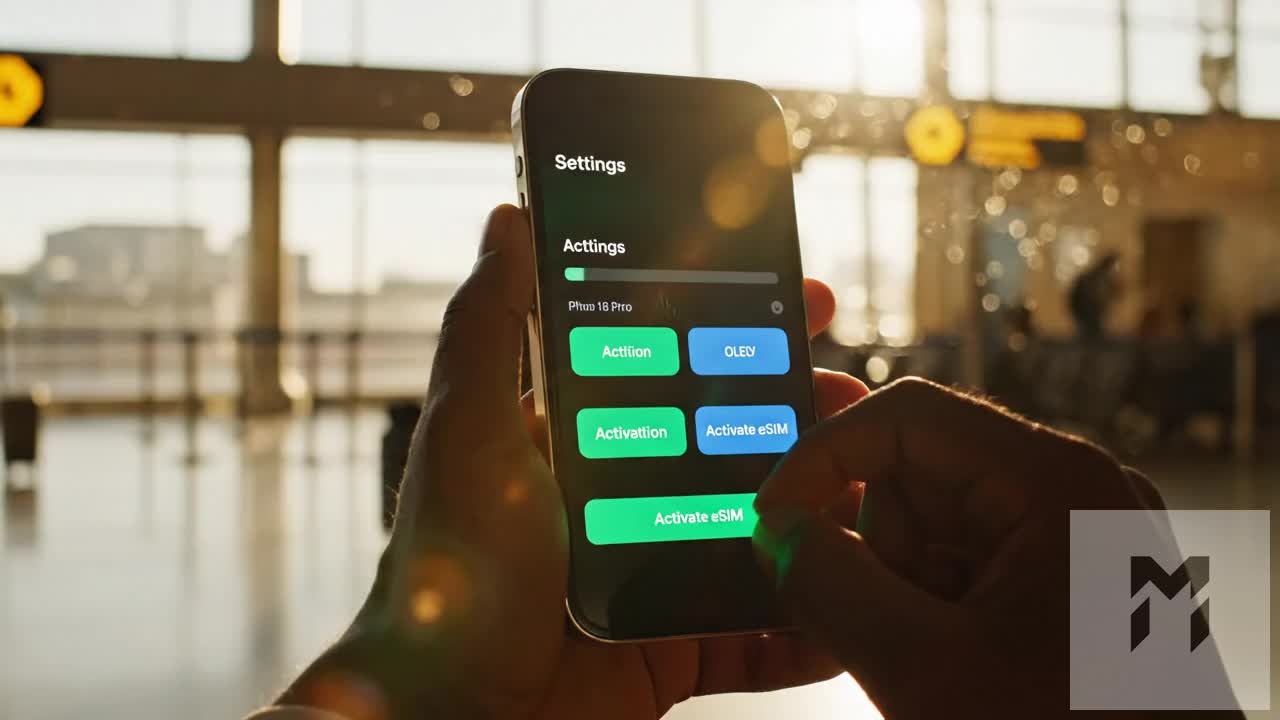
Seamless Nordic Adventures: Your 2026 Regional eSIM Guide for Scandinavia & Iceland
The Nordic Connectivity Conundrum: Why a Regional eSIM is Essential for Multi-Country Travel
The allure of the Nordic region is undeniable, drawing millions each year to its breathtaking landscapes and vibrant cultures. Imagine cruising through Norway's majestic fjords, witnessing the ethereal dance of the Northern Lights in Finnish Lapland, exploring the cutting-edge design of Copenhagen, delving into Stockholm's rich history, or hiking across Iceland's otherworldly volcanic terrains. These are journeys of a lifetime, often encompassing multiple countries within a single, unforgettable itinerary – a true testament to the region's diverse yet interconnected charm.
However, the very nature of these multi-country adventures presents a significant hurdle for the modern traveler: consistent and reliable connectivity. Navigating between Denmark, Norway, Sweden, Finland, and Iceland, travelers frequently find themselves grappling with a frustrating paradox – surrounded by stunning beauty, yet disconnected from essential digital tools. The expectation of seamless digital access, crucial for navigation, communication, and sharing experiences, often clashes with the realities of traditional international connectivity.
The Pitfalls of Traditional Connectivity Methods
For years, travelers have relied on a handful of conventional methods, each fraught with its own set of inconveniences and hidden costs that can quickly detract from the magic of a Nordic adventure:
Exorbitant Roaming Charges
The most common trap for the unsuspecting traveler is traditional international roaming. While convenient in its initial simplicity – your phone just works – the costs associated with using your home provider's data, calls, and texts abroad can quickly skyrocket into hundreds, if not thousands, of dollars. A quick check of emails, a few minutes on social media, streaming a short video, or relying on GPS navigation can lead to devastating bill shock upon returning home, turning a dream vacation into a financial nightmare. These charges are often opaque, making it difficult to track usage and expenditure in real-time, leaving travelers vulnerable to unexpected expenses.
The Hassle of Multiple Local Physical SIM Cards
Another approach involves purchasing a local physical SIM card in each country visited. While seemingly cost-effective on the surface, this method introduces a cascade of logistical challenges. Picture yourself landing in Copenhagen, immediately needing to locate a mobile store, navigate potential language barriers, complete registration paperwork, and then physically swap out your home SIM card. Repeat this process upon arrival in Oslo, then Stockholm, and again in Helsinki or Reykjavik. This not only consumes valuable travel time but also means managing multiple phone numbers, potentially losing unused data from previous cards, and the constant fear of misplacing your tiny home SIM. It's a fragmented, inconvenient, and ultimately inefficient solution for seamless border crossings, especially when your itinerary involves frequent country changes.
The Unreliability and Insecurity of Public Wi-Fi
Public Wi-Fi hotspots, found in cafes, hotels, and airports, offer a temporary reprieve but are far from a comprehensive solution. Their coverage is often patchy, speeds can be inconsistent, and reliance on them means constant hunting for a signal, limiting your freedom to explore off the beaten path. Imagine trying to navigate a remote Icelandic road or check ferry times for the Norwegian fjords without a reliable connection. More critically, public Wi-Fi networks are notoriously insecure, making personal data vulnerable to cyber threats – a significant concern when accessing banking apps, travel documents, or sensitive personal information. They simply cannot provide the consistent, secure, and always-on connection required for modern travel.
The Urgent Need for a Seamless Solution
In an era where digital tools are integral to every aspect of travel – from real-time navigation and instant translation to booking accommodations, managing payments, and sharing experiences with loved ones – the need for a single, seamless, and cost-effective connectivity solution for multi-country Nordic adventures has never been more pressing. Modern travelers demand uninterrupted access, predictable costs, and absolute convenience, without compromising on security or speed.
This is precisely where a regional eSIM emerges as the ultimate answer. It eliminates the complexities and anxieties of traditional methods, promising unparalleled simplicity, significant cost savings, and uninterrupted service from the moment you touch down in Scandinavia or Iceland until your departure. Imagine activating your data plan before you even leave home, landing with instant connectivity, and effortlessly crossing borders without a single thought about roaming fees or physical SIM swaps.
For instance, with a provider like MollySIM (https://mollysim.com), you're not just getting convenience; you're getting robust performance tailored for the modern traveler. Unlike many competitors that cap Fair Use Policy (FUP) speeds at a sluggish 128kbps once a certain data threshold is reached, MollySIM offers a generous 384kbps FUP speed limit. This crucial difference is three times faster, ensuring that essential applications like Google Maps function smoothly for navigation, Apple Pay works seamlessly for transactions, and you can stay connected with loved ones without frustrating delays, even when managing data usage. A regional eSIM isn't just about avoiding problems; it's about enhancing your entire Nordic adventure with reliable, high-quality connectivity that truly keeps pace with your journey. This sets the stage for understanding why a regional eSIM is not merely an alternative, but an essential upgrade for any traveler embarking on a multi-country journey through the captivating Nordic landscapes.
Navigating the Nordic Network Landscape: Carriers, Coverage, and Cross-Border Realities
🇺🇸 United States High-Speed Travel eSIM & SIM Plans
Instant QR code activation, hotspot enabled, with guaranteed 384kbps fallback speed to keep Maps & Digital Wallets active.
Understanding the intricate web of mobile networks across Scandinavia and Iceland is paramount for any traveler aiming for truly seamless connectivity. While these nations are renowned for their technological advancement, the vast, often sparsely populated landscapes present unique challenges and opportunities for mobile network operators. A regional eSIM fundamentally changes how travelers interact with this infrastructure, offering a unified solution to what would otherwise be a complex, multi-network juggling act.
The Nordic Network Backbone: Key Operators and Strengths
Each Nordic country boasts a robust, competitive mobile network environment, with primary operators constantly investing in 4G LTE and 5G infrastructure. However, their reach and specific strengths can vary significantly:
- Denmark: The market is dominated by TDC, Telenor, Telia, and 3 (Hi3G). TDC generally offers the widest coverage and strong 5G presence, especially in rural areas, while Telenor and Telia provide excellent urban performance and a good balance across the country.
- Norway: Telenor and Telia are the two major players. Telenor is frequently cited for its superior overall coverage, particularly in more challenging, mountainous terrain and along the extensive coastline, making it a preferred choice for explorers venturing beyond major cities. Telia offers strong competition, especially in urban centers and along main transport routes.
- Sweden: Similar to Norway, Telia and Telenor are prominent, alongside Tele2 and 3 (Hi3G). Telia and Telenor consistently deliver excellent coverage and speeds across the country, with Tele2 offering competitive services and growing 5G footprint.
- Finland: Elisa, Telia, and DNA are the main operators. Elisa is often recognized for having the most extensive network, particularly crucial in Finland's vast forested and lake-filled regions. Telia and DNA provide strong urban coverage and competitive data plans.
- Iceland: Despite its smaller population, Iceland has three primary operators: Siminn, Vodafone Iceland, and Nova. Siminn is widely regarded as having the broadest coverage, especially vital for travelers exploring the Ring Road and more remote settlements. Vodafone offers strong urban coverage and competitive 5G, while Nova caters to a more budget-conscious market, primarily in populated areas.
Coverage Nuances: Urban Excellence vs. Remote Challenges
While Nordic urban centers and major transportation corridors boast some of the world's fastest and most reliable 4G and rapidly expanding 5G networks, the narrative shifts dramatically in remote regions. Travelers venturing into areas like the dramatic Norwegian fjords, the expansive wilderness of Swedish Lapland, the intricate Finnish Lakeland, or the stark beauty of the Icelandic Highlands will inevitably encounter progressively challenging coverage. Here, signal strength can diminish, speeds may drop to 3G or even 2G, and dead zones are not uncommon. This is where the resilience of your connectivity solution becomes critical. Even when primary high-speed data might be exhausted or signal fluctuates, an eSIM like MollySIM (https://mollysim.com) with its generous 384kbps Fair Use Policy (FUP) speed limit—three times faster than many competitors' 128kbps—ensures that essential applications like Google Maps for navigation or Apple Pay for transactions remain functional, preventing frustrating delays even in less connected areas.
The Technical Hurdle of Cross-Border Handovers
One of the most significant advantages of a regional eSIM over traditional physical SIM cards becomes apparent when crossing international borders within the Nordic region. A "network handover" is the process by which a mobile device seamlessly transfers its connection from one cell tower to another, or from one network to a partner network. For traditional SIM cards, crossing a national border often triggers a complex sequence: the device must de-register from the home network's roaming partners in the departing country and then register with a new set of roaming partners in the arriving country. This process can frequently lead to:
- Dropped connections: Calls or data sessions may be interrupted mid-transition.
- Temporary loss of service: It can take several minutes for the phone to acquire a signal and register with the new network, leaving travelers disconnected at a crucial moment.
- Unexpected roaming charges: If the device latches onto a non-preferred network or fails to correctly identify the new country's designated roaming partners, exorbitant "out-of-bundle" roaming fees can accrue rapidly.
A regional eSIM, by design, abstracts this complexity. It comes pre-configured with partnerships across multiple networks in the covered countries, allowing for a much smoother, often imperceptible transition between national networks. This eliminates the need for physical SIM swaps, manual network selection, or anxiety over unexpected charges, providing true "set it and forget it" connectivity across your Nordic adventure.
Here's a comparative overview of the primary carriers and their coverage nuances across the Nordic region:
| Country | Primary Carriers | General Strengths | Estimated 4G/5G Penetration (Urban) | Estimated 4G/5G Penetration (Rural) |
|---|---|---|---|---|
| Denmark | TDC, Telenor, Telia, 3 | TDC: Widest coverage, strong 5G. Telenor/Telia: Strong urban, good balance. 3: Competitive pricing, urban focus. |
The Seamless Solution: Unpacking the Value of a Single Regional eSIM Plan
Embarking on a multi-country Nordic adventure, spanning the vibrant cities of Denmark, the majestic fjords of Norway, the serene landscapes of Sweden, the thousands of lakes in Finland, and the geothermal wonders of Iceland, presents a unique connectivity challenge. Traditionally, travelers faced a dilemma: endure exorbitant daily roaming charges, painstakingly acquire a new local SIM card in each country, or lug around a portable Wi-Fi device. However, the advent of a single regional eSIM plan fundamentally transforms this experience, offering an unparalleled value proposition rooted in simplicity, significant cost savings, and seamless cross-border continuity.
Unparalleled Simplicity and Convenience
The most immediate and tangible benefit of a regional eSIM is its sheer simplicity. Imagine arriving in Copenhagen, activating one plan, and having reliable data connectivity for your entire journey through five distinct countries. There's no physical SIM card swapping, eliminating the risk of losing tiny plastic chips or fumbling with ejector tools. This also means no dealing with foreign languages at local shops to purchase and register a SIM, a common source of frustration and wasted time for international travelers. Your entire data plan is managed digitally, from purchase to activation and top-ups, all through an intuitive app or web portal. This digital-first approach means you can set up your connectivity before you even depart, stepping off the plane fully connected and ready to navigate, communicate, and share your experiences from the moment you land.
Significant Cost Savings and Financial Prudence
Opting for a regional eSIM is a financially astute decision that can lead to significant cost savings. Traditional roaming charges, often levied on a daily basis, can quickly accumulate into a substantial expense, turning a budget-friendly trip into an unexpectedly costly one. Similarly, the cumulative expense of buying multiple local SIM cards – each with its own activation fee, minimum top-up, and potentially unused data at the end of each country segment – can far exceed the cost of a single, comprehensive regional plan. A regional eSIM provides predictable budgeting, allowing you to understand your total data cost upfront, free from hidden fees or unexpected charges. This transparency empowers travelers to allocate their funds more effectively towards experiences rather than connectivity woes.
True Cross-Border Continuity: The Nordic Advantage
Perhaps the most compelling advantage of a regional eSIM, especially for a multi-country itinerary like a Nordic tour, is its unparalleled cross-border continuity. Unlike traditional options, a regional eSIM is specifically engineered for seamless network handovers as you transition between Denmark, Sweden, Norway, Finland, and Iceland. This means your device automatically connects to the strongest available partner network in each country without any manual intervention or service interruption. Picture driving from Malmö, Sweden, across the Øresund Bridge into Copenhagen, Denmark, with your navigation app, music streaming, and messaging apps remaining continuously active. There's no need to manually switch networks, reboot your phone, or wait for a new connection to establish.
This uninterrupted connectivity is crucial for modern travel, where essential services like Google Maps for navigation, Apple Pay or other mobile payment systems, and ride-sharing apps rely on a constant data stream. Even under a Fair Use Policy (FUP), the speed provided by a quality regional eSIM can make all the difference. For instance, MollySIM offers a 384kbps Fair Use Policy speed limit, which is 3x faster than many competitors' 128kbps. This higher speed ensures that even if you hit your FUP threshold, critical applications like Google Maps continue to function smoothly for directions, and mobile payment systems remain responsive, preventing frustrating delays or disruptions in your travel plans.
Enhanced Security and Control
A regional eSIM also offers enhanced security and control over your mobile connectivity. By utilizing an eSIM for data, you can keep your primary physical SIM card active in your phone. This allows you to continue receiving important calls and SMS messages on your home number without incurring international roaming charges for data. It effectively creates a dual-SIM setup, segregating your travel data from your personal communication, adding a layer of privacy and convenience. Furthermore, the digital nature of an eSIM eliminates the physical vulnerability of losing or damaging a traditional SIM card.
Environmental Responsibility
Beyond the immediate travel benefits, adopting an eSIM contributes to environmental responsibility. Each physical SIM card is a small piece of plastic, often discarded after a trip. By choosing a digital eSIM, you directly contribute to reduced plastic waste, aligning your travel choices with more sustainable practices.
Beyond the Basics: Why Regional eSIM Outperforms Alternatives
When juxtaposed against traditional connectivity options, the regional eSIM's superiority becomes even clearer:
- Traditional Roaming: While convenient, it is notoriously expensive, often leading to bill shock. Data speeds can also be throttled, and coverage might be inconsistent across borders.
- Purchasing Multiple Local SIMs: This option involves significant time and effort in each new country – locating a store, navigating language barriers, registration processes, and managing multiple phone numbers. It also often results in wasted data as you leave a country with unused allowances.
- Portable Wi-Fi Devices: These devices add another gadget to carry, charge, and potentially rent. They have limited battery life, a restricted Wi-Fi range, and can pose security risks if not properly secured, especially on public networks.
In contrast, a regional eSIM delivers superior convenience, efficiency, and peace of mind, allowing you to focus entirely on the breathtaking Nordic landscapes and cultural experiences, rather than worrying about your internet connection.
MollySIM: Your Uninterrupted Gateway to Nordic Exploration (with 384kbps FUP Advantage)
For travelers seeking truly seamless connectivity across the diverse and often challenging Nordic landscapes, MollySIM (https://mollysim.com) emerges as a premier regional eSIM provider. Designed specifically with the unique demands of multi-country Nordic itineraries in mind, MollySIM offers a robust, reliable, and intelligently managed connectivity solution that ensures you're always connected, from the bustling streets of Copenhagen to the remote fjords of Norway and the volcanic plains of Iceland.
Unrivaled Network Coverage: Partnering with Nordic Leaders
MollySIM's commitment to consistent, high-quality connectivity stems from its strategic partnerships with the primary local operators across the Nordic region. This extensive network ensures that travelers benefit from the strongest available signals, even in areas where other providers might falter. Specifically, MollySIM leverages the robust infrastructures of:
- Denmark: Telenor, Telia
- Finland: Elisa, Telia
- Iceland: Siminn, Vodafone Iceland
- Norway: Telenor, Telia
- Sweden: Telenor, Telia
By intelligently switching between these leading networks, MollySIM guarantees optimal performance, whether you're navigating urban centers, exploring vast natural parks, or cruising between countries. This eliminates the common pain points of patchy coverage or slow speeds often associated with traditional roaming or less comprehensive eSIM solutions.
MollySIM Regional eSIM Plans: Tailored for Nordic Journeys
MollySIM understands that every Nordic adventure is unique. To cater to varying travel durations and data consumption needs, they offer a range of regional eSIM plans with flexible data allowances and validity periods. These plans are specifically designed to cover Denmark, Finland, Iceland, Norway, and Sweden, providing a single, unified connectivity solution. Travelers can choose from options ranging from smaller data packages for short trips to generous allowances for extended explorations, ensuring there's a perfect fit for every itinerary. Each plan is crafted to provide excellent value, allowing travelers to focus on their experiences rather than their data usage.
The MollySIM 384kbps FUP Advantage: Staying Connected, Always
One of MollySIM's most significant differentiators and a true game-changer for Nordic travelers is its Fair Usage Policy (FUP) with a sustained speed of 384kbps after the high-speed data allowance has been utilized. This isn't just a minor detail; it's a critical safety net and a testament to MollySIM's commitment to uninterrupted connectivity.
To put 384kbps into perspective:
- Essential Messaging: You can continue to send and receive messages on apps like WhatsApp, iMessage, and Messenger without noticeable delay.
- Email Access: Checking and sending emails, even with small attachments, remains perfectly functional.
- Basic Web Browsing: Accessing news sites, checking weather forecasts, and looking up information on Wikipedia or travel blogs is entirely feasible.
- Navigation: Crucially, Google Maps and Apple Maps continue to load maps, provide directions, and update your location smoothly. This is invaluable when navigating unfamiliar cities or remote areas.
- Ride-Sharing & Payments: Apps like Uber or local taxi services will work, allowing you to book transportation. Furthermore, mobile payment solutions like Apple Pay will function without issue, ensuring you're never stranded without essential services.
- Emergency Communication: In any unforeseen circumstance, the ability to maintain basic communication is paramount. 384kbps ensures you can reach out for help or access critical information.
This 384kbps speed is a substantial advantage, being 3x faster than the 128kbps offered by many competitors. While 128kbps often struggles with anything beyond text-only messaging, MollySIM's 384kbps ensures a far more practical and usable "reduced speed" experience. This is especially vital when crossing international borders within the Nordic region. Imagine driving from Sweden into Norway, having used up your high-speed data, but still needing Google Maps for navigation or WhatsApp to coordinate with travel companions. MollySIM's FUP ensures you are never completely cut off from these essential tools, providing unparalleled peace of mind.
Effortless Management: Activation and Beyond
MollySIM prioritizes user experience from the moment of purchase. Activation and installation are designed to be straightforward, typically completed within minutes by scanning a QR code. Travelers can easily manage their MollySIM regional eSIM plans through the intuitive MollySIM app or website. This platform allows users to monitor data usage, top up their plans if needed, and access customer support, all from the convenience of their smartphone. This streamlined approach reinforces MollySIM's commitment to reliable service, ensuring that managing your connectivity is as effortless as your Nordic adventure itself.
Optimizing Your Nordic eSIM Experience: Practical Tips for Data Usage and Remote Connectivity
To truly maximize your "Seamless Nordic Adventures" with a regional eSIM like MollySIM, strategic data management and an understanding of remote connectivity are key. While MollySIM offers robust coverage and a generous Fair Use Policy (FUP), proactive steps can significantly enhance your experience and ensure you remain connected when it matters most.
Smart Data Management: Make Your Gigabytes Last
Efficiently managing your data ensures you stay connected throughout your journey, preserving your high-speed allowance for critical moments.
- Leverage Wi-Fi Aggressively: Make it a habit to connect to free Wi-Fi networks whenever available. This includes hotels, hostels, cafes, restaurants, airports, and even some public transport hubs. Using Wi-Fi for heavy data tasks like large downloads, software updates, and extensive video streaming significantly reduces reliance on your cellular data plan, saving your high-speed data for when you're actively exploring.
- Download Offline Maps and Content: Before venturing into areas with potentially limited or no cellular connectivity, prepare your device with offline resources.
- Navigation: Apps such as Google Maps and HERE WeGo allow you to download entire regions or countries for offline use. This is absolutely invaluable when driving through remote Norwegian fjords, traversing the vast Icelandic Highlands, or exploring wilderness areas in Sweden and Finland where cellular signal can be intermittent or non-existent.
- Entertainment: Download music, podcasts, movies, and TV shows from your streaming services (e.g., Spotify, Netflix, Disney+) to enjoy offline. This is perfect for long train rides, ferry crossings, or evenings in remote cabins without relying on a data connection.
- Limit Background App Refresh: Many applications consume data in the background even when you're not actively using them. Go into your device settings (e.g., iOS: Settings > General > Background App Refresh; Android: Settings > Network & Internet > Data Saver or App data usage) and disable background refresh for non-essential apps, or restrict it to Wi-Fi only.
- Adjust Streaming Quality: When streaming video on cellular data, lower the quality setting from high definition (HD) to standard definition (SD). This drastically reduces data consumption without significantly impacting the viewing experience on a smaller mobile screen.
- Disable Auto-Downloads and Updates: Configure your smartphone and apps to prevent automatic downloads of updates, media, or backups over cellular data. Set these functions to only occur when connected to a Wi-Fi network.
Realistic Expectations for Remote Nordic Coverage
While Nordic countries boast some of the best mobile infrastructure globally, truly remote and geographically challenging areas will always present connectivity limitations.
- Geographical Obstacles: Deep fjords, towering mountains, and vast forests in Norway, Sweden, and Finland can block signals or simply lack the necessary cell tower infrastructure.
- Arctic Circle Regions: Expect patchy or non-existent service in the most northern parts of Norway, Sweden, and Finland, particularly outside of towns and along less-traveled routes.
- Icelandic Highlands: The vast, unpopulated volcanic deserts of the Icelandic Highlands are notorious for their lack of mobile signal.
- Planning is Paramount: Always assume limited or no service in these extreme locations. Download all necessary maps, travel information, emergency contacts, and entertainment beforehand. Inform others of your itinerary, especially if undertaking multi-day hikes or remote excursions, and consider carrying a satellite communication device for true wilderness adventures.
MollySIM's 384kbps FUP: Your Lifeline in a Pinch
MollySIM's Fair Use Policy, which reduces your speed to 384kbps after your high-speed data allowance is exhausted, is a critical differentiator. This speed is 3x faster than the 128kbps offered by many competitors, ensuring you're never completely cut off from essential services.
- Emergency Navigation: If your high-speed data runs out unexpectedly, 384kbps is perfectly adequate for Google Maps or Apple Maps to continue providing turn-by-turn directions. This is a lifesaver when navigating unfamiliar roads, especially during border crossings within the Nordic region or unexpected detours.
- Critical Updates: Check real-time flight statuses, ferry schedules, train delays, or bus updates. A 384kbps connection is sufficient for loading text-heavy websites and app notifications, keeping you informed about your travel plans.
- Urgent Communication: Send and receive text-based messages via WhatsApp, iMessage, or email to coordinate with travel companions or send urgent updates to family. While not ideal for video calls, it reliably supports essential text communication.
- Essential Transactions: Services like Apple Pay or Google Pay often require a minimal internet connection for transaction verification. MollySIM's 384kbps FUP can reliably support these crucial payment methods, preventing awkward situations at checkout.
Monitoring Your Data Usage
Staying informed about your data consumption allows you to anticipate when your FUP might activate and plan accordingly.
- MollySIM App/Website: The easiest and most accurate way to track your usage is through the intuitive MollySIM app or website. This platform provides real-time updates on your remaining data, plan validity, and allows for easy top-ups if needed.
- Device Settings: Your smartphone also offers built-in data usage monitoring tools.
- iOS: Navigate to Settings > Cellular (or Mobile Data) and scroll down to "Cellular Data Usage."
- Android: Go to Settings > Network & Internet > Mobile network > App data usage. Many Android devices also allow you to set data warnings or hard limits.
Troubleshooting Common Connectivity Issues
While MollySIM aims for seamless connectivity, occasional issues can arise. Here are basic troubleshooting steps:
- Restart Your Device: The classic first step often resolves temporary network glitches.
- Toggle Airplane Mode: Turning Airplane Mode on for a few seconds and then off can reset your cellular connection, forcing your phone to re-establish a link with the network.
- Manually Select Network: If your phone struggles to connect automatically, try manually selecting a network operator in your phone's settings (e.g., iOS: Settings > Cellular > Network Selection > Automatic OFF; Android: Settings > Network & Internet > Mobile network > Advanced > Choose network).
- Check APN Settings: While eSIMs typically configure Access Point Name (APN) settings automatically, if advised by customer support, you might need to verify or reset these settings (usually found under Mobile Network settings). Avoid changing these unless specifically instructed.
- Contact MollySIM Support: If issues persist, reach out to MollySIM customer support via their app, website chat, or email. Be ready to provide your account details and a clear description of the problem for efficient assistance.
Pre-Trip Preparation for a Smooth Start
A little preparation before you depart can prevent headaches upon arrival.
- Device Compatibility: Ensure your smartphone is eSIM compatible. Most modern flagship phones from Apple (iPhone XR and newer), Samsung (Galaxy S20 and newer), Google (Pixel 3 and newer), and other manufacturers support eSIM technology. Double-check your device's specifications before purchasing an eSIM.
- Activate Before Departure: Activate your MollySIM regional eSIM while still at home, connected to a stable Wi-Fi network. This allows you to resolve any activation issues or potential hiccups in a familiar environment, avoiding stress upon arrival in a new country.
- Review Plan Details: Thoroughly understand your chosen MollySIM plan's data allowance, validity period, and any specific terms to avoid surprises or unexpected charges.
By diligently following these practical tips, you can ensure your MollySIM regional eSIM provides reliable, optimized connectivity, making your Nordic adventure truly seamless and worry-free.
Beyond Connectivity: Embracing the Future of Nordic Travel with eSIM Technology
As we conclude this comprehensive guide, it's clear that a regional eSIM for your 2026 Nordic adventure transcends mere internet access; it represents a fundamental shift in how modern travelers interact with the world. The era of fumbling with physical SIM cards, navigating confusing local plans, or dreading exorbitant roaming charges is rapidly fading. In its place, eSIM technology ushers in an unprecedented level of seamlessness, cost-effectiveness, and profound peace of mind, fundamentally reshaping the travel experience across Denmark, Norway, Sweden, Finland, and Iceland.
The Transformative Power of Regional eSIMs
The benefits of adopting a regional eSIM for your multi-country Nordic journey are multifaceted and deeply impactful. Imagine landing in Copenhagen, seamlessly connecting to a high-speed network without any manual intervention, and immediately being able to navigate, communicate, and share your experiences. This isn't just about convenience; it's about unlocking a more fluid, stress-free, and immersive exploration.
- Uninterrupted Exploration: A regional eSIM eliminates the need to switch SIM cards at each border crossing. Your device automatically connects to the best available network across all included Nordic countries, ensuring continuous access to maps, translation apps, booking platforms, and emergency services. This continuity is invaluable when navigating unfamiliar cities or remote landscapes, allowing you to focus on the beauty around you rather than connectivity logistics.
- Unparalleled Cost-Effectiveness: Compared to traditional international roaming plans or purchasing multiple local SIMs, a regional eSIM offers predictable, often significantly lower costs. You pay for a single data package that works across an entire region, avoiding unexpected fees and allowing for better budget management. This transparency is a welcome relief for any traveler.
- Enhanced Security and Convenience: With an eSIM, there's no physical card to lose or damage. Your profile is securely stored digitally, reducing the risk of theft or data compromise. Furthermore, the ability to manage your plan directly from an app, topping up data or extending validity with a few taps, adds an unparalleled layer of convenience, putting control directly in your hands.
MollySIM: Elevating Your Nordic Experience
When considering your regional eSIM provider, MollySIM (https://mollysim.com) stands out as a prime example of advanced connectivity solutions tailored for the modern traveler. MollySIM's commitment to superior service is evident in its robust network coverage across the Nordic region and its user-centric features. A key differentiator is MollySIM's Fair Use Policy speed limit of 384kbps, which is three times faster than many competitors' 128kbps limits. This seemingly technical detail has a profound practical impact on your daily travel activities:
- Smooth Navigation: A 384kbps connection ensures that essential services like Google Maps and Apple Maps load quickly and track your location accurately, preventing frustrating delays when you're trying to find your way through Stockholm's old town or a remote Icelandic fjord. Real-time directions become truly real-time.
- Seamless Payments: Contactless payment systems like Apple Pay and Google Pay rely on a stable internet connection for authorization. MollySIM's faster speeds ensure these transactions process smoothly and reliably, allowing you to pay for your purchases, public transport, or museum tickets without a hitch, enhancing your overall convenience and security.
- Essential Communication: While not designed for heavy streaming, 384kbps is more than sufficient for messaging apps (WhatsApp, Messenger), checking emails, and light browsing, keeping you connected with loved ones and essential information throughout your journey without frustrating lag.
Choosing a provider like MollySIM means investing in a truly optimized experience, where your connectivity actively supports, rather than hinders, your exploration.
The Global Trajectory of eSIM in Travel
The adoption of eSIM technology is not merely a regional trend; it's a global revolution in the travel industry. Major device manufacturers are increasingly integrating eSIM-only designs, signaling a future where physical SIM cards become obsolete. This global shift empowers travelers with unprecedented flexibility:
- Instant Connectivity Worldwide: As eSIM adoption grows, travelers will be able to purchase and activate data plans for virtually any country or region instantly, often before even boarding their flight, making last-minute travel plans far more feasible.
- Multi-Profile Management: Modern smartphones can store multiple eSIM profiles, allowing users to switch between personal, business, and travel plans with ease, optimizing costs and convenience wherever they are in the world.
- Sustainable Travel: Reducing the production and disposal of plastic SIM cards contributes to a more environmentally conscious approach to travel, aligning with broader global sustainability goals.
This broader trend underscores that embracing eSIM for your Nordic trip isn't just about convenience for this specific journey; it's about aligning with the future of connected travel worldwide.
Your Gateway to Uninterrupted Nordic Exploration
In conclusion, your 2026 Nordic adventure across the breathtaking landscapes and vibrant cities of Denmark, Norway, Sweden, Finland, and Iceland deserves nothing less than uninterrupted connectivity. By confidently embracing cutting-edge eSIM technology, particularly with a robust provider like MollySIM, you transform potential connectivity headaches into a truly seamless, enriched, and memorable journey. From navigating the bustling streets of Oslo to exploring the geothermal wonders of Iceland, an eSIM ensures you remain connected, informed, and empowered to make the most of every moment. Say goodbye to connectivity worries and hello to the future of Nordic exploration.
🇺🇸 United States High-Speed Travel eSIM & SIM Plans
Instant QR code activation, hotspot enabled, with guaranteed 384kbps fallback speed to keep Maps & Digital Wallets active.