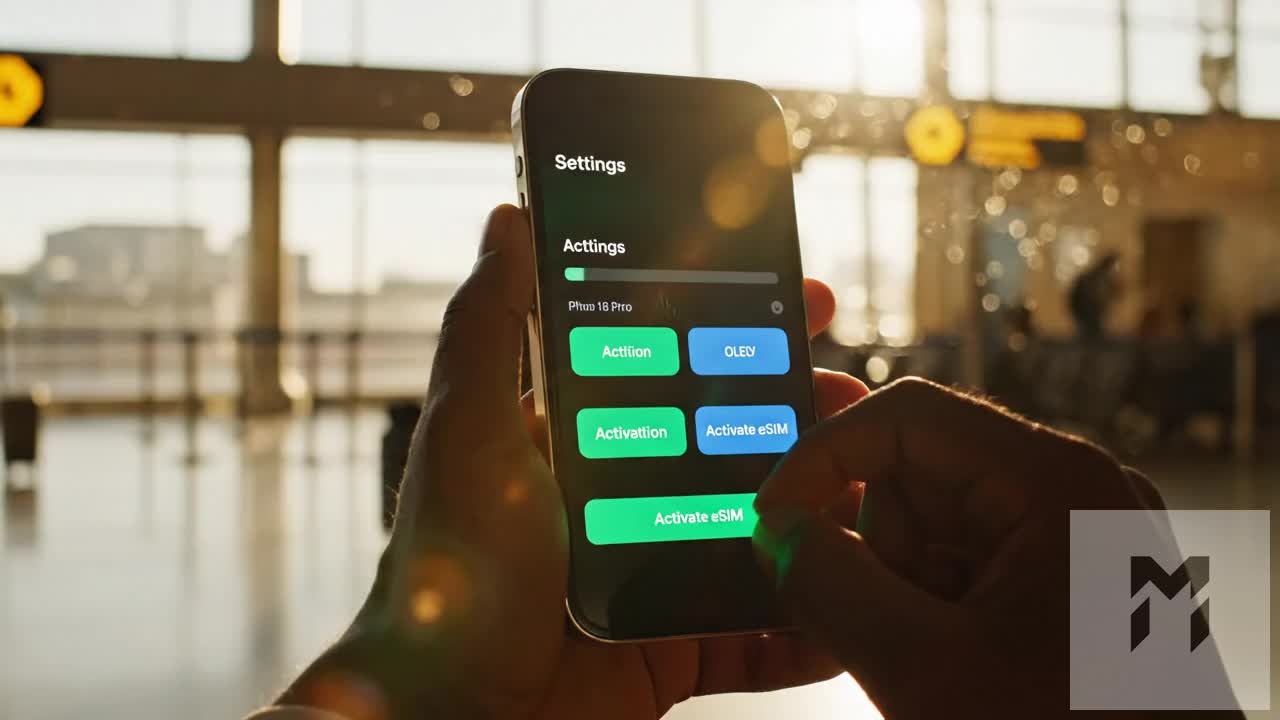
Beyond the Beach: The Ultimate 2026 Latin America Digital Nomad eSIM Guide for Seamless Remote Work
Navigating Latin America's Digital Frontier: The Remote Worker's Connectivity Challenge
Latin America beckons digital nomads with an irresistible blend of vibrant cultures, breathtaking natural landscapes, and a significantly lower cost of living compared to North America or Europe. Imagine starting your day with a fresh cup of Colombian coffee overlooking Medellín's sprawling cityscape, or wrapping up a project from a beachfront co-working space in Tulum, Mexico. The region offers unparalleled opportunities for personal enrichment and professional growth, making it a top contender for those seeking to escape the conventional office grind. From the ancient ruins of Peru to the bustling markets of Ecuador, and the pristine beaches of Costa Rica, the allure is undeniable.
However, beneath this idyllic surface lies a critical, often underestimated, hurdle for the professional remote worker: reliable and consistent internet connectivity. While the dream of working from a hammock is appealing, the reality of maintaining a demanding career requires a robust digital infrastructure that traditional methods frequently fail to provide. This isn't just about casual browsing; it's about the backbone of your livelihood.
The Professional's Connectivity Pain Points
For digital nomads, connectivity isn't a luxury; it's a non-negotiable operational requirement. The demands of modern remote work place immense pressure on internet stability and speed:
- High-Stakes Video Conferencing: Tools like Zoom, Google Meet, and Microsoft Teams are the virtual boardrooms of today. Dropped calls, pixelated video, and audio lag aren't just annoying; they undermine professionalism, disrupt critical meetings, and can damage client relationships. A stable, low-latency connection is paramount for clear communication and seamless collaboration, especially when dealing with international time zones and high-pressure deadlines.
- Demanding File Transfers: Many remote roles involve the constant movement of large data. Graphic designers upload and download multi-gigabyte design files. Software developers push and pull extensive code repositories. Video editors transfer raw footage and finished projects. Even cloud-based productivity suites require consistent bandwidth for syncing large documents and presentations. Slow or intermittent connections can turn a quick task into an hours-long ordeal, directly impacting productivity and project timelines.
- Critical VPN Access: For many corporate roles, Virtual Private Network (VPN) access is essential for security, compliance, and accessing internal resources. A stable VPN connection requires consistent bandwidth and low packet loss. Fluctuating internet quality can lead to frequent disconnections, making it impossible to access secure servers, internal databases, or even company-mandated software. This isn't merely an inconvenience; it's a security risk and a barrier to performing core job functions.
Why Traditional Connectivity Falls Short in Latin America
The variability of internet infrastructure across Latin America means that relying on conventional connectivity solutions often leads to frustration and lost productivity:
- Local SIM Cards: A Logistical Maze: While purchasing a local SIM in each country seems straightforward, it quickly becomes a logistical headache for the multi-country nomad. Each new border crossing means finding a vendor, navigating language barriers, understanding diverse data plans, and dealing with activation processes. Furthermore, the quality and coverage of local providers can vary dramatically, leaving you stranded in a connectivity dead zone just when you need it most.
- Public Wi-Fi: Unreliable and Insecure: Relying on hotel, café, or airport Wi-Fi is a gamble. Speeds are often throttled, connections are frequently unstable, and, most critically, public networks pose significant security risks. Transmitting sensitive corporate data or accessing banking information over an unsecured network is a recipe for disaster, making it unsuitable for professional remote work.
- Infrastructure Variability: Latin America is a continent of contrasts. While major metropolitan hubs like Mexico City, Buenos Aires, or Santiago often boast decent fiber optic networks, venture just outside these urban centers, and connectivity can plummet. Even within cities, the quality can differ block by block. This unpredictable landscape makes it incredibly difficult for a digital nomad to plan their work effectively, leading to unexpected downtime and missed deadlines.
This patchwork of unreliable options highlights a fundamental need for a more robust, flexible, and secure connectivity solution. The modern digital nomad, constantly on the move across diverse Latin American countries, requires a single, seamless answer to these challenges. This is precisely where eSIM technology emerges as the game-changer. Imagine a solution that eliminates the need for physical SIM swaps, provides consistent coverage across multiple nations, and offers predictable performance. Even in scenarios where primary data might be throttled due to fair use policies, a baseline speed is crucial. For instance, MollySIM's generous 384kbps Fair Use Policy speed limit stands out, being three times faster than many competitors' 128kbps. This seemingly small difference is significant, ensuring essential applications like Google Maps for navigation or Apple Pay for transactions continue to function smoothly, preventing you from being truly disconnected. eSIM technology is designed to overcome these hurdles, providing the consistent, multi-country connectivity essential for seamless remote work in Latin America's dynamic digital frontier.
eSIM: Revolutionizing Remote Work Connectivity for Latin American Explorers
🇺🇸 United States High-Speed Travel eSIM & SIM Plans
Instant QR code activation, hotspot enabled, with guaranteed 384kbps fallback speed to keep Maps & Digital Wallets active.
The challenges of inconsistent and fragmented connectivity across Latin America, as previously discussed, underscore a critical need for a modern, agile solution. This is precisely where eSIM technology steps in, fundamentally transforming how digital nomads access and manage their internet connection, especially when traversing multiple countries. An eSIM, or embedded Subscriber Identity Module, is a small chip permanently built into your smartphone, tablet, or smartwatch during manufacturing. Unlike its traditional physical counterpart, an eSIM is not a removable card; instead, it's a programmable module that can store multiple network profiles digitally. This means your device can switch between different mobile carriers and data plans without ever needing a physical SIM card swap.
eSIM vs. Traditional SIM: A Fundamental Shift
The distinction between an eSIM and a physical SIM card is pivotal to understanding its revolutionary impact. A traditional SIM card is a tangible, plastic chip that you physically insert and remove from your device. Each card is tied to a specific carrier and plan, meaning that to change providers or use a local plan in a new country, you must physically acquire a new card, swap it out, and often register it with local identification. This process is not only time-consuming but also prone to logistical hurdles, especially in foreign countries where language barriers and unfamiliar registration procedures can cause significant delays.
In contrast, an eSIM eliminates this entire physical process. It's a digital credential downloaded directly to your device. Think of it as a software update for your connectivity. This inherent digital nature allows for unparalleled flexibility and convenience, making it an indispensable tool for the modern digital nomad navigating the diverse landscapes of Latin America, from the bustling cities of Colombia to the remote beaches of Costa Rica.
Unlocking Seamless Connectivity for Latin American Nomads
For digital nomads, the advantages of eSIM technology are not merely incremental; they represent a paradigm shift in managing multi-country connectivity.
No More SIM Swaps: The End of a Logistical Nightmare
One of the most significant benefits is the complete elimination of physical SIM card swapping. Imagine landing in a new country, say Peru, after working remotely from Ecuador. With traditional SIMs, you'd need to find a local vendor, purchase a new SIM, potentially wait for activation, and then store your old SIM safely. With an eSIM, this entire process vanishes. Your data plan for Peru can be activated with a few taps on your phone, often before you even clear customs. This saves invaluable time and removes a major source of travel stress, allowing you to hit the ground running with immediate connectivity for work and navigation.
Multi-Profile Power: Your Global Connectivity Hub
An eSIM-enabled device can store multiple carrier profiles simultaneously. While only one can be active at a time, you can seamlessly switch between them as needed. This is incredibly powerful for Latin American explorers. You could have a primary regional plan covering the Andean nations (Colombia, Ecuador, Peru, Bolivia) and a separate, pre-purchased local plan ready for when you venture into Central America (Guatemala, Nicaragua, Costa Rica) or the Southern Cone (Chile, Argentina). This multi-profile capability transforms your device into a versatile connectivity hub, ensuring you always have a backup or an optimized plan for your current location without carrying a pouch full of tiny plastic cards.
Instant Activation, Border to Border
The ability to activate a data plan instantly upon arrival is a game-changer for productivity. Instead of searching for Wi-Fi or a SIM vendor, you can activate your pre-purchased eSIM plan the moment you cross a border. This means immediate access to essential work tools, communication apps, and mapping services. For instance, if you're driving from Panama into Costa Rica, your eSIM can be ready to connect you to a local network as soon as you enter the new country's coverage area, ensuring uninterrupted work transitions and immediate access to critical information like directions or local service providers.
Digital Management: Control in Your Pocket
Managing your connectivity becomes a streamlined, digital process, often through a dedicated app or your phone's settings. You can monitor data usage, top up plans, or switch between profiles with ease. This level of control and transparency is crucial for budget-conscious nomads and those who need to ensure continuous uptime. Furthermore, the digital nature often means enhanced security, as there's no physical card to lose or have stolen.
Reliable Baseline Speeds: Staying Connected Even When Throttled
Even with the best plans, fair use policies can sometimes lead to data throttling after a certain threshold. However, the quality of this throttled speed varies significantly between providers. For a digital nomad, a usable baseline speed is paramount for essential functions. This is where providers like MollySIM (https://mollysim.com) stand out. Their generous 384kbps Fair Use Policy speed limit is three times faster than many competitors' 128kbps. This seemingly small difference is profoundly significant: at 384kbps, essential applications like Google Maps for navigation, Apple Pay for transactions, and even basic messaging apps continue to function smoothly, preventing you from being truly disconnected and ensuring you can always find your way or make a payment, even if your high-speed data has been temporarily reduced. This consistent, multi-country connectivity is precisely what eSIM technology offers, making it the ultimate solution for seamless remote work in Latin America's dynamic digital frontier.
MollySIM: Your Ultimate Multi-Country Connectivity Hub for Latin America
For digital nomads in Latin America, MollySIM (https://mollysim.com) offers an indispensable solution for seamless, multi-country connectivity. Its advanced eSIM technology provides comprehensive regional plans, eliminating the need for multiple local SIMs or exorbitant roaming charges across diverse nations.
Regional Plans for Borderless Work
MollySIM simplifies cross-border travel with tailored regional plans, ensuring uninterrupted connectivity:
- South America Regional Plan: Covers major countries like Brazil, Argentina, Colombia, Peru, Ecuador, and Chile. Ideal for extensive exploration and work.
- Central America Regional Plan: Designed for nations such as Mexico, Costa Rica, Panama, and Guatemala. Provides consistent connectivity for regional project work.
Intelligent Network Selection for Optimal Performance
A cornerstone of MollySIM's reliability is its intelligent network selection. Upon entering any country within your regional plan, your eSIM automatically connects to the best available local network. This optimized process prioritizes optimal signal strength, coverage, and speed, leveraging top carriers like Claro, Movistar, Tigo, Personal, Entel, or Vivo. This automatic, hands-free optimization guarantees a consistently robust connection without manual intervention.
High-Speed Data: Powering Productivity
MollySIM's high-speed data is crucial for sustained digital nomad productivity, offering tangible work advantages:
- Seamless Productivity: Conduct lag-free video calls (Zoom, Google Meet), efficiently upload/download large files, and maintain stable VPN performance for secure corporate access.
The 384kbps FUP Fallback: Your Critical Safety Net
Even with generous high-speed allowances, data exhaustion can occur. MollySIM's 384kbps Fair Usage Policy (FUP) fallback is a critical safety net, unlike competitors who throttle to unusable speeds (e.g., 128kbps) or cut service. When high-speed data is fully utilized, MollySIM intelligently transitions your connection to a highly functional 384kbps. This deliberate slowdown maintains essential connectivity for critical tasks, preventing complete disconnection—a major productivity killer. This speed is profoundly significant:
- Essential Communications: Send urgent emails, communicate via WhatsApp/Slack.
- Critical Web & Payments: Light web browsing, access banking apps securely, smooth Apple Pay transactions.
- Reliable Navigation: Utilize Google Maps for directions and local amenities.
This 384kbps speed is three times faster than many competitors' 128kbps, making a tangible difference in usability and ensuring you can always perform critical operations, communicate, and navigate, offering unparalleled peace of mind.
Mastering Your Data: Smart Strategies for Seamless Remote Work on the Go
Navigating Latin America as a digital nomad requires more than just a reliable eSIM; it demands a strategic approach to data management. Optimizing your data usage ensures uninterrupted productivity, extends your high-speed allowance, and keeps costs predictable. Here’s how to master your mobile data with an eSIM like MollySIM, ensuring seamless remote work wherever you are.
Strategic Wi-Fi Integration & Offline Preparation
While your eSIM provides unparalleled freedom, smart integration with local Wi-Fi and offline preparation can drastically reduce your cellular data consumption.
- Leveraging Local Wi-Fi Networks: Prioritize secure and stable Wi-Fi connections at your accommodation, co-working spaces, or reputable cafes for data-intensive tasks. This includes uploading large files, downloading software updates, streaming high-definition content, and engaging in prolonged video conferences. Always use a Virtual Private Network (VPN), even on seemingly trusted Wi-Fi networks, to encrypt your data and protect sensitive work information.
- Pre-emptive Offline Downloads: Before venturing out for the day or embarking on inter-city travel, proactively download essential content. Utilize Google Maps' offline area feature to save maps of your destination. Download movies or series on streaming platforms (Netflix, Amazon Prime Video) and music playlists (Spotify, Apple Music) for offline entertainment. For work, ensure critical documents are synced for offline access in your cloud storage. When streaming on cellular data, always adjust video and audio quality settings to standard definition (SD) to conserve bandwidth.
Optimizing Your Remote Work Toolkit
Your essential remote work applications can be significant data consumers. Fine-tuning their settings is crucial for efficiency.
- Conquering Video Conferencing Bandwidth: Video calls are notorious data hogs.
- Disable Video When Not Speaking: A simple yet highly effective strategy. Turn off your camera when you're listening or not actively presenting to save considerable bandwidth.
- Utilize Low-Bandwidth Modes: Most popular platforms like Zoom, Google Meet, and Microsoft Teams offer settings to prioritize audio quality over video or even a dedicated "low data mode." Explore these options within your app settings before joining a call.
- Mute Notifications: Prevent incoming notifications from consuming data and distracting you during important calls.
- Smart Cloud Storage Synchronization:
- Selective Sync: Configure services like Google Drive, Dropbox, or OneDrive to only synchronize essential folders or files to your device. Avoid automatic syncing of large, non-critical data.
- "Make Available Offline": For documents you absolutely need access to, proactively mark them as "available offline" on your mobile device or laptop. This ensures access even without an active internet connection, preventing repeated data usage for downloads.
- Efficient VPN Configuration: While indispensable for security, VPNs add a slight data overhead.
- Choose Efficient Protocols: Some VPN protocols (e.g., WireGuard) are designed to be more data-efficient than others. Consult your VPN provider's settings to select the most optimal protocol for mobile use.
- Split Tunneling: If your VPN service supports split tunneling, utilize it. This feature allows you to route only specific work applications through the VPN tunnel, while other non-sensitive apps use your direct internet connection, reducing overall data consumption.
Device-Level Data & Battery Conservation
Your smartphone or laptop's settings can significantly impact data usage and battery life, especially when relying on an eSIM.
- Taming Background Data Consumption:
- Disable Background App Refresh: On both iOS and Android, turn off background app refresh for non-essential applications. This prevents apps from consuming data and battery by updating content when you're not actively using them.
- Restrict App Permissions: Periodically review app permissions. Does that social media app truly need location access or permission to use background data? Limiting these can save data.
- Activating Data Saver Modes: Most modern smartphones include a built-in Data Saver (Android) or Low Data Mode (iOS). Enable this feature to automatically restrict background data, pause automatic downloads, and reduce streaming quality across various applications, providing an immediate data-saving benefit.
- Streamlining Notifications: Every push notification consumes a small amount of data. Disable notifications for non-critical apps to conserve data and minimize distractions, allowing you to focus on your work.
Proactive Data Usage Monitoring
Staying informed about your data consumption is key to avoiding unexpected depletion and ensuring continuous connectivity.
- Utilizing eSIM Provider Apps: Your MollySIM (https://mollysim.com) account dashboard or dedicated app (if available) is your primary tool for monitoring real-time data consumption. Make it a habit to check your usage regularly, especially after heavy work sessions or when crossing borders into a new country. Set up usage alerts if the provider's app offers this functionality.
- Native Device Settings: Both iOS (Settings > Cellular/Mobile Data) and Android (Settings > Network & internet > Data usage) provide detailed breakdowns of app-specific data consumption. Use these insights to identify data-hungry applications and adjust their settings or usage patterns accordingly.
The Indispensable Backup: MollySIM's FUP Advantage
Even with the most meticulous planning, unexpected data depletion can occur. A robust backup plan is not just about having a secondary eSIM; it's about ensuring fundamental connectivity when your primary high-speed allowance is exhausted.
This is where MollySIM's 384kbps Fair Usage Policy (FUP) fallback truly distinguishes itself. Unlike many competitors who throttle to an almost unusable 128kbps or cut service entirely, MollySIM provides a genuinely functional safety net. This 384kbps speed is three times faster than the industry standard low-tier throttling, making a profound difference in usability and offering unparalleled peace of mind. It ensures that even after exhausting your high-speed data, you can still perform critical operations:
- Smooth Google Maps Navigation: Essential for finding your next co-working space, local eatery, or navigating public transport in a new city.
- Reliable Apple Pay Transactions: Crucial for everyday purchases, ensuring you're never left without a payment method.
- Urgent Communications: Sending important emails, communicating via WhatsApp or Slack, and accessing essential banking apps securely.
This continuous, usable connectivity means you're never truly stranded or disconnected from essential tasks, providing an invaluable layer of security for any digital nomad in Latin America.
eSIM vs. The Alternatives: Why MollySIM Dominates for Digital Nomads
For digital nomads navigating the diverse landscapes of Latin America, connectivity is not a luxury but a fundamental utility. The choice of internet access can profoundly impact productivity, budget, and peace of mind. While various options exist, a detailed comparison reveals why a dedicated regional eSIM solution like MollySIM (https://mollysim.com) stands out as the superior choice for remote workers.
Here’s a comprehensive breakdown of MollySIM's advantages against traditional alternatives:
| Feature | MollySIM Regional eSIM | Local Physical SIM | International Roaming Plan | Portable Wi-Fi Device |
|---|---|---|---|---|
| Setup & Activation Process | Instant digital activation, no physical interaction required. | Requires purchase in-country, often with ID/address verification, language barriers. | Automatic activation, but often requires contacting home provider for plan setup. | Device purchase/rental, setup, and charging required. |
| Cost (per GB/overall value) | Highly competitive regional data packages, transparent pricing, no hidden fees. | Variable, can be cheap locally but requires new purchases per country. | Extremely expensive per GB, often with hidden charges. | High upfront cost or rental fees, plus data plans; battery life limits usage. |
| Convenience for Multi-Country Travel | Single plan covers multiple countries seamlessly, automatic network switching. | Requires buying a new SIM in each country, managing multiple numbers. | Stays active, but costs escalate rapidly across borders. | Device works across borders, but still an extra item to manage and charge. |
| Network Reliability & Speed | Access to the best available local networks (4G/5G where available) for optimal speed. | Varies by local provider; quality can be inconsistent. | Often throttled or prioritized lower than local traffic; speeds can be slow. | Relies on a single network provider; speed can be inconsistent or limited. |
| Data Management & Monitoring | Easy monitoring via app, real-time usage tracking, simple top-ups. | Manual tracking, often requires understanding local provider's system. | Complex billing, difficult to track real-time usage without provider tools. | Device interface for monitoring; separate app for data plan management. |
| Border-Crossing Experience (seamlessness) | Completely seamless; connectivity persists without interruption. | Requires finding a new vendor, purchase, and activation in each new country. | Automatic, but often comes with "bill shock" due to high costs. | Relatively seamless, but device must be charged and carried. |
| Fallback Connectivity | 384kbps FUP (3x faster than typical 128kbps), enabling essential apps. | Hard cut-off or extremely slow (128kbps) after data exhaustion. | Hard cut-off or extremely slow (128kbps) after data exhaustion. | Device stops working when data is exhausted or battery dies. |
| Security | Private, secure connection; avoids risks of public Wi-Fi networks. | Generally secure, but depends on local network integrity. | Secure connection via home network. | Secure, private connection, but device itself could be a vector if compromised. |
| Device Dependency | Integrated into your existing smartphone/device. | Integrated into your existing smartphone/device. | Integrated into your existing smartphone/device. | Requires carrying, charging, and managing an additional physical device. |
Detailed Analysis: Why MollySIM is the Digital Nomad's Champion
1. Unmatched Setup & Activation Simplicity: MollySIM eliminates the common frustrations associated with traditional connectivity. There's no need to hunt for a local SIM card vendor, navigate language barriers, or present your passport for registration. Activation is entirely digital and instantaneous, often done before you even land, ensuring you're connected the moment you arrive. This saves invaluable time and reduces stress, allowing you to focus on your work and exploration.
2. Cost-Effectiveness and Transparent Value: While local SIMs can appear cheap initially, the cumulative cost and hassle of purchasing a new one in every country quickly add up. International roaming plans, conversely, are notoriously expensive, leading to "bill shock" for even moderate data usage. MollySIM offers highly competitive regional data packages with transparent pricing, providing exceptional value per GB across multiple countries. This predictable expenditure is crucial for budget-conscious digital nomads.
3. Seamless Multi-Country Travel: This is where MollySIM truly shines for the itinerant digital nomad. A single MollySIM plan covers multiple countries across Latin America, automatically switching to the best local network as you cross borders. This means no more swapping physical SIM cards, managing multiple phone numbers, or dealing with the administrative burden of new local plans. For someone moving between, say, Colombia, Peru, and Argentina, this seamless transition is a game-changer for maintaining productivity.
4. Superior Network Reliability and Speed: MollySIM leverages partnerships with leading local carriers to ensure you always connect to the strongest available 4G or 5G network. This commitment to high-speed data is vital for remote work, supporting video calls, large file transfers, and cloud-based applications without frustrating lag. Unlike international roaming, which can often be throttled, MollySIM prioritizes robust, consistent performance.
5. Effortless Data Management: Managing data usage across multiple countries can be a headache with physical SIMs or complex roaming plans. MollySIM simplifies this with an intuitive app that provides real-time usage tracking and easy top-up options. This transparency empowers digital nomads to monitor their consumption and avoid unexpected data depletion.
6. Uninterrupted Border-Crossing Experience: The transition between countries is often a point of anxiety for digital nomads regarding connectivity. With MollySIM, this concern vanishes. Your internet connection remains active and stable as you cross borders, allowing you to continue navigating, communicating, or working without a hitch. This eliminates the frantic search for Wi-Fi or a SIM vendor immediately upon arrival.
7. The Indispensable 384kbps FUP Fallback: Perhaps MollySIM's most critical differentiator is its 384kbps Fair Usage Policy (FUP) fallback. When your high-speed data allowance is exhausted, MollySIM doesn't cut you off or throttle you to an unusable 128kbps like many competitors. This 384kbps speed is three times faster than the industry standard low-tier throttling, making a profound difference. It ensures that even after exhausting your high-speed data, you can still perform critical operations: smooth Google Maps navigation, reliable Apple Pay transactions, and urgent communications via WhatsApp or Slack. This continuous, usable connectivity provides an invaluable layer of security and peace of mind.
8. Enhanced Security: Relying on public Wi-Fi networks in cafes or airports, a common fallback for travelers, poses significant security risks. MollySIM provides a private, secure connection, safeguarding your sensitive work data and personal information from potential cyber threats, a crucial consideration for any professional digital nomad.
9. Zero Device Dependency: Unlike portable Wi-Fi devices that require an additional gadget to carry, charge, and manage, MollySIM integrates directly into your existing eSIM-compatible smartphone or device. This streamlines your tech setup, reduces clutter, and eliminates the worry of another battery running out, making for a lighter and more efficient travel experience.
Beyond 2026: Future-Proofing Your Digital Nomad Journey with eSIM Technology
As we've navigated through the complexities of staying connected across Latin America, one truth has become abundantly clear: the traditional SIM card model is ill-equipped for the dynamic demands of the modern digital nomad. Looking beyond 2026, the trajectory of mobile technology points unequivocally towards eSIMs as the foundational pillar for seamless global connectivity, offering an unparalleled blend of flexibility, security, and control.
For digital nomads venturing into the vibrant, diverse, and sometimes infrastructurally varied landscapes of Latin America, eSIM technology isn't merely a convenience; it's a strategic imperative. It directly addresses the region's unique connectivity challenges – from navigating diverse carrier landscapes and avoiding exorbitant roaming fees to ensuring immediate activation upon arrival in a new country. The agility to switch plans, top up data, or even change providers with a few taps on your device screen liberates you from the physical constraints and logistical headaches that once plagued international travel. This inherent flexibility means you're always in control of your connectivity, adapting effortlessly to new locations and changing data needs without ever missing a beat.
Within this evolving ecosystem, MollySIM emerges as a standout solution, meticulously crafted for the needs of the discerning digital nomad. Its comprehensive regional plans simplify what was once a daunting task: securing reliable, high-speed internet across multiple Latin American nations. Crucially, MollySIM’s commitment to uninterrupted productivity is epitomized by its 384kbps Fair Usage Policy (FUP) fallback. This isn't just a technical specification; it's a lifeline. While many competitors throttle to a near-unusable 128kbps, MollySIM's 3x faster FUP speed ensures that even after exhausting your primary data, essential functions remain operational. Imagine confidently using Google Maps for navigation through bustling city streets, executing Apple Pay transactions without a hitch, or maintaining urgent communications on WhatsApp or Slack – all without the anxiety of a dead connection. This continuous, usable connectivity is an unparalleled layer of security and peace of mind, allowing you to focus on your work and experiences, not your signal strength.
The shift to eSIMs is more than a fleeting trend; it represents the future standard for international mobile connectivity. As device manufacturers increasingly integrate eSIM-only designs and network infrastructure continues to evolve, embracing this technology now future-proofs your digital nomad setup. It offers unparalleled flexibility, control, and adaptability, ensuring your connectivity solution remains relevant and robust regardless of where your journey takes you in the coming years. The digital nomad lifestyle itself is evolving, with greater emphasis on sustainability, efficiency, and deep cultural immersion. eSIMs align perfectly with these values, reducing physical waste and streamlining the travel experience, allowing you to travel lighter and smarter.
Ultimately, the adoption of eSIM technology, and specifically a tailored solution like MollySIM, translates into a profoundly enhanced remote work experience. It means less time troubleshooting connectivity issues and more time dedicated to productive work, exploring new cultures, and building unforgettable memories. It's about eliminating the underlying stress of unreliable internet, transforming your Latin American adventure from a potential logistical nightmare into a truly seamless and empowering journey.
Don't let connectivity concerns dictate your remote work adventure in Latin America. Make the smart switch today and embrace the freedom, security, and unparalleled productivity that MollySIM offers. Explore MollySIM's diverse regional plans at https://mollysim.com and take the definitive step towards a truly seamless and future-proof digital nomad experience. Your ultimate Latin American adventure, unburdened by connectivity worries, awaits.
🇺🇸 United States High-Speed Travel eSIM & SIM Plans
Instant QR code activation, hotspot enabled, with guaranteed 384kbps fallback speed to keep Maps & Digital Wallets active.