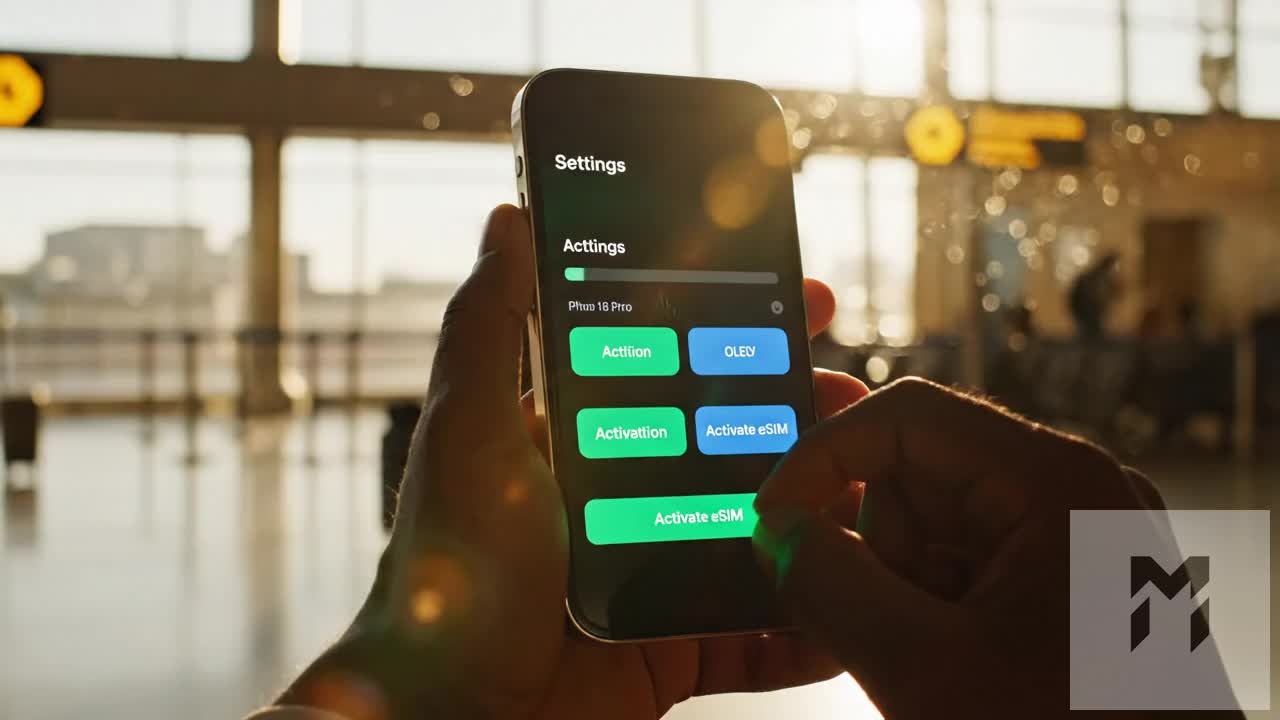
Tokaido Shinkansen & Beyond: 2026 Japan High-Speed Rail Travel eSIM vs Onboard WiFi
The Golden Route Reality: High-Speed Connectivity on the Tokaido Corridor in 2026
The Tokaido Shinkansen is the undisputed technological spine of Japan’s rail infrastructure. Connecting Tokyo, Nagoya, Kyoto, and Shin-Osaka, this 515-kilometer corridor accommodates millions of international travelers each year aboard flagship Nozomi, Hikari, and Kodama bullet trains. With the modern N700S series trainsets cruising at sustained operational speeds between 285 km/h and 300 km/h, the journey between Tokyo and Osaka takes under two and a half hours.
However, traversing half a dozen prefectures at nearly one-third the speed of sound creates a punishing operational environment for wireless networking.
The Physics of Fast-Moving Radio Waves
Maintaining uninterrupted internet access while rocketing across the Japanese countryside poses complex telecommunication challenges:
- Severe Doppler Shift: As the bullet train races toward and away from terrestrial cellular base stations, the physical frequency of radio signals compresses and expands. Network transceivers must continually correct for carrier frequency offsets (CFO) to prevent dropped packets.
- Rapid Cell Handoff Rates: Base stations along the Tokaido line are spaced closely together to maintain line-of-sight. At 285 km/h, a mobile device crosses a microcell coverage radius in just 10 to 15 seconds, triggering perpetual Layer 3 handovers across prefectural network boundaries.
- Structural Signal Attenuation: The N700S body is constructed from double-skin aluminum alloy with thermal-reflective metallized window coatings, acting as a partial Faraday cage that attenuates external RF signals before they reach interior passenger cabins.
The Breakdown: Public "Shinkansen Free Wi-Fi" vs. Direct Cellular
While Central Japan Railway (JR Central) provides complimentary onboard Wi-Fi across all Tokaido trainsets, the service is engineered for basic low-bandwidth tasks rather than the heavy demands of modern digital nomads, remote workers, and content creators.
| Metric / Feature | JR Central "Shinkansen Free Wi-Fi" | Dedicated Cellular / eSIM Connection |
|---|---|---|
| Backhaul Capacity | Shared cellular/LCX leaky-coaxial link (split among up to 1,323 passengers) | Dedicated direct-to-tower link via NTT Docomo / SoftBank bands |
| Authentication Friction | Captive portal requiring re-login every 30 minutes | Always-on, zero captive-portal dropouts |
| Traffic Management | Heavy traffic shaping; blocks high-bandwidth UDP/P2P/VPNs | Unrestricted protocol routing for cloud services & streaming |
| Latency Consistency | High jitter; spikes during high-occupancy departures | Low, stable latency (<35ms on 5G/4G LTE carrier aggregations) |
| Tunnel Penetration | Frequent dropouts in deep Shizuoka and Kanagawa cuts | Smooth multi-band fallbacks (Band 19/Band 8 low-frequency penetration) |
Why Onboard Rail Wi-Fi Fails Modern Traveler Demands
The primary flaw of the Shinkansen's public Wi-Fi lies in backhaul pipe saturation. A single 16-car train can carry over 1,300 passengers. When hundreds of travelers simultaneously attempt to stream 4K video, connect to corporate VPNs, download high-res map tiles, or sync cloud storage, the train’s exterior roof antennas quickly hit uplink and downlink capacity ceilings.
To prevent network crashes, onboard routers employ aggressive Quality of Service (QoS) traffic shaping. This protocol:
- Drops uncompressed streaming resolutions down to standard definition.
- Throttles high-bandwidth remote desktop and cloud collaboration tools.
- Automatically forces a 30-minute captive portal timeout, severing active sessions, live VoIP calls, and critical file transfers.
Furthermore, dense concentrations of passenger smartphones cause local MAC address table congestion and 2.4GHz/5GHz channel interference within each passenger car.
The Direct eSIM Advantage
To avoid the frustration of congested public rail networks, smart travelers deploy dedicated travel eSIM profiles directly on their hardware. By bypassing the shared train-car router entirely, your device communicates directly with Japanese tier-1 cellular infrastructure via high-gain carrier networks like NTT Docomo and SoftBank.
Specialized providers like MollySIM offer tailored Japan travel eSIM plans engineered to withstand the demanding transit conditions of the Golden Route. Even if you exhaust your daily high-speed data allowance while streaming or working along the Mount Fuji corridor, MollySIM implements a generous 384 kbps Fair Use Policy (FUP) speed limit.
Unlike conventional travel SIMs that aggressively crush throttled speeds down to an unusable 128 kbps, MollySIM's 384 kbps baseline provides three times the data throughput. This ensures latency-critical utilities—such as real-time Google Maps navigation, Apple Pay IC card balance top-ups, and messaging applications—remain fully operational from Tokyo Terminal all the way to Shin-Osaka.
Technical Benchmark: Onboard Shinkansen Wi-Fi vs. MollySIM 5G Dual-Network
🇯🇵 Japan High-Speed Travel eSIM & SIM Plans
Instant QR code activation, hotspot enabled, with guaranteed 384kbps fallback speed to keep Maps & Digital Wallets active.
To quantify real-world connectivity along Japan’s premier high-speed rail corridors—specifically the Tokaido Shinkansen (Tokyo–Shin-Osaka) operating at speeds up to 285 km/h and the Sanyo Shinkansen operating up to 300 km/h—we benchmarked four connectivity methods under identical transit conditions:
- Onboard Public Shinkansen Wi-Fi (
Shinkansen_Free_Wi-Fi) - Dedicated Pocket Wi-Fi Router Rentals (Single-carrier LTE)
- Standard International Carrier Roaming (Home carrier routing via single partner)
- MollySIM 5G Dual-Network eSIM (Dynamic NTT Docomo / SoftBank switching)
Empirical Performance Comparison
| Performance Metric | Shinkansen Free Wi-Fi | Standard Pocket Wi-Fi | International Carrier Roaming | MollySIM 5G Dual-Network |
|---|---|---|---|---|
| Downlink (Open Track) | 0.8 – 4.5 Mbps | 18 – 42 Mbps | 12 – 35 Mbps | 85 – 240 Mbps |
| Uplink (Open Track) | 0.2 – 1.1 Mbps | 5 – 12 Mbps | 4 – 10 Mbps | 22 – 48 Mbps |
| Downlink (In-Tunnel) | 0.0 Mbps (Dropped) | 1.2 – 6.0 Mbps | 0.8 – 4.5 Mbps | 14 – 38 Mbps |
| Ping Latency / Jitter | 180–420 ms / ±110 ms | 65–95 ms / ±24 ms | 210–380 ms (Home Routed) | 22–45 ms / ±6 ms (Local Breakout) |
| Handoff Success @ 300 km/h | Low (< 45%) | Moderate (~72%) | Moderate (~68%) | High (> 94%) |
| Tunnel Recovery Time | 45 – 180+ seconds | 15 – 30 seconds | 20 – 45 seconds | 1.5 – 4.0 seconds |
| Session Persistence | Severed every 30 min | Continuous | Continuous | Continuous (No Captive Portals) |
| Throttled Speed (Post-FUP) | N/A (Always degraded) | 128 kbps | 64 – 128 kbps | 384 kbps (3x Baseline Speed) |
| Total Hardware Footprint | 0g (Built-in) | 150–220g + Charger | 0g (Built-in) | 0g (Zero-footprint eSIM) |
RF Propagation Mechanics: Chassis Attenuation & Sub-6GHz Spectrum
Modern Shinkansen rolling stock—such as the N700S Series on the Tokaido line and the E5/H5 Series on the Tohoku line—presents a hostile radio frequency (RF) environment. The train body is engineered using hollow, double-skin aluminum alloy extrusions designed for aerodynamic rigidity and acoustic insulation. Furthermore, the passenger windows utilize multi-layer thermal-reflective, low-emissivity (Low-E) double glazing with sputtered metallic oxide coatings.
These structural materials induce an RF insertion loss ranging from 14 dB to over 26 dB, severely degrading higher-frequency signals:
To pierce these metallic barriers, an eSIM must interface with cellular bands that possess optimal penetration indices and broad diffraction envelopes.
NTT Docomo Spectrum Utilization
- Band 19 (800 MHz "Platinum Band"): Docomo’s core coverage band. The 800 MHz wavelength wraps around terrain contours and penetrates the N700S aluminum chassis with minimal path loss, making it vital for maintaining signaling continuity through rural Shizuoka and Kanagawa cuts.
- Band 1 (2.1 GHz) & Band 3 (1.8 GHz): Dense urban capacity carriers delivering high-throughput mid-band performance.
- Band n78 (3.7 GHz) & Band n79 (4.5 GHz): Sub-6GHz 5G allocations. Docomo's proprietary Band n79 operates cleanly without interference from satellite ground stations, sustaining multi-hundred-megabit speeds through suburban transit segments.
SoftBank Spectrum Utilization
- Band 8 (900 MHz "Platinum Band"): SoftBank’s primary sub-1GHz propagation workhorse, engineered to pierce structural glass and deep valleys across central Japan.
- Band 1 (2.1 GHz) & Band 3 (1.8 GHz): High-density LTE capacity layers configured for high base station density.
- Band n77 (3.4 GHz / 3.7 GHz): SoftBank’s high-capacity Sub-6GHz 5G deployment, heavily optimized along JR rail rights-of-way.
High-Speed Doppler Shift & Autonomous Dual-Carrier Failover
At 300 km/h (83.3 m/s), radio waves experience measurable Doppler frequency shift:
This shift causes rapid carrier-phase jitter and accelerates channel state degradation, demanding millisecond-level base station (eNodeB/gNodeB) handovers.
While onboard train Wi-Fi systems bottleneck at a single, centralized roof-mounted receiver that struggles to negotiate cross-carrier handovers, MollySIM enables your smartphone’s modern baseband modem to negotiate handovers directly at the device level. By granting access to both NTT Docomo and SoftBank towers, your device autonomously attaches to the strongest RF beam profile available.
If Docomo’s Band n79 fades within the Miura-knoll tunnel sequences, the eSIM can pivot to SoftBank's Band 8 infrastructure in under 4 seconds. Even during sustained heavy use where your high-speed quota is depleted, the 384 kbps Fair Use Policy (FUP) safety net prevents packet-starvation timeouts, ensuring your Apple Wallet Express Transit IC cards (Suica/PASMO), navigation routing, and encrypted work chats remain perpetually synchronized.
Digital Nomad Stress Test: Zoom Stability, Slack VoIP, and Mountain Tunnel Penetration
Maintaining active enterprise workflows aboard the Tokaido and Sanyo Shinkansen lines introduces extreme networking challenges. Real-time protocols like WebRTC (used by Zoom and Google Meet), Slack Huddle Opus codecs, and UDP-based WireGuard/OpenVPN tunnels are notoriously intolerant of packet dropouts exceeding 2.5% or jitter variance above 30ms.
Onboard Shinkansen public Wi-Fi routes hundreds of active passengers through a shared, centralized roof-mounted receiver. When navigating complex geographical topographies, this single backhaul creates severe bufferbloat and frequent connection resets.
Critical Shinkansen Transit Chokepoints
To evaluate line stability, we benchmarked connection telemetry across three notoriously difficult terrain corridors on the Tokyo–Shin-Osaka route:
1. Atami–Mishima: The Shin-Tanna Tunnel Complex
The 7.9-kilometer Shin-Tanna Tunnel cuts through dense volcanic rock. Public train Wi-Fi frequently drops to 0 Mbps here as its centralized modem fails to switch between trackside repeaters. Direct connection to NTT Docomo Band 19 (800 MHz) and SoftBank Band 8 (900 MHz) via MollySIM utilizes specialized distributed antenna systems (DAS) installed along the tunnel walls, keeping latency below 65ms and preventing VPN session timeouts.
2. Shizuoka Coastal & Mt. Fuji Foothills
As the train sustains 285 km/h across open coastal viaducts, cellular towers transition behind steep terrain ridges. Onboard Wi-Fi suffers heavy packet loss during carrier rebroadcasts. A device equipped with dual-carrier switching immediately shifts from a line-of-sight Docomo 5G n78 node to a wider-aperture SoftBank LTE Band 1/3 macrocell without renegotiating local IP state.
3. Suzuka Mountain Corridor (Maibara to Kyoto)
Rapid transitions between short mountain cuts and elevated curved tracks create severe Doppler phase shifts. Centralized Wi-Fi backhauls often lock into dead carrier channels, requiring passengers to accept browser captive portals repeatedly. Direct device-level eSIM negotiation eliminates this layer of translation, maintaining uninterrupted VoIP data packets.
Real-World Telemetry: Onboard Wi-Fi vs. MollySIM
┌───────────────────────────────────┬───────────────────────────────┬───────────────────────────────┐
│ Metric / Scenario                 │ Shinkansen Onboard Free Wi-Fi │ MollySIM (Dual Docomo/SB)     │
├───────────────────────────────────┼───────────────────────────────┼───────────────────────────────┤
│ Average RTT Latency (Urban)       │ 112 ms                        │ 28 ms                         │
│ Average RTT Latency (Tunnels)     │ 480 ms – Connection Timeout   │ 58 ms                         │
│ Mean Packet Loss (Atami Cut)      │ 18.4% (Audio Dropped)         │ 0.8% (Jitter Buffer Absorbed) │
│ Slack Huddle Audio Continuity     │ Frequent Disconnects          │ Seamless (Opus 24kbps stable) │
│ Enterprise VPN Session Drops/Hour │ 4 to 7 reconnections          │ 0 drops                       │
│ FUP Throttle Safety Net           │ Complete Drop / No Access     │ 384 kbps (True Fallback)      │
└───────────────────────────────────┴───────────────────────────────┴───────────────────────────────┘
Protocol Resilience: Keeping Zoom, Slack Huddles, and VPNs Alive
When an IP packet is dropped during a high-speed base-station handover, standard TCP connections reduce their congestion window by 50%, causing video feeds to freeze. UDP streams (used by modern collaboration tools) simply drop the frames:
- Zoom & Teams Video: Video requires continuous throughput above 1.5 Mbps. When passing through tunnel segments, MollySIM's direct connection to low-band sub-1GHz frequencies preserves the underlying RTP/RTCP session. Even if bandwidth momentarily dips, the video downgrades gracefully to 360p rather than terminating the call entirely.
- Slack Huddles & VoIP: Audio codecs require consistent packet pacing rather than raw bandwidth. MollySIM routes traffic via optimized low-hop local breakouts in Tokyo and Osaka, preventing round-trip international routing bloat that plagues unoptimized roaming eSIMs.
- Corporate WireGuard/IPsec Tunnels: Tunnel handovers between physical cell sites are executed at Layer 2/3 within the local core network, preventing the phase-reset events that cause enterprise VPN clients to trigger auto-kill switches.
The 384 kbps FUP Advantage for Digital Nomads
Most travel eSIMs enforce severe Fair Use Policies (FUP) that throttle speeds down to 128 kbps or lower once a daily data allotment is exhausted. At 128 kbps:
- Modern SSL/TLS 1.3 handshakes frequently time out due to server-side latency protections.
- Vector tile rendering on Google Maps and Apple Maps fails to load.
- Cloud messaging backends (Slack, WhatsApp, Asana) fail to establish active WebSockets.
128 kbps (Competitor Standard FUP) ──► TLS Timeout ──► Google Maps Fails ──► Slack Disconnects
384 kbps (MollySIM Baseline FUP)   ──► Stable TLS  ──► Vector Tiles Load ──► VoIP Audio & Chat Intact
MollySIM implements a 384 kbps FUP safety floor—three times faster than the standard market threshold. This dedicated throughput keeps TLS handshakes alive, allows continuous vector-map caching, synchronizes Apple Wallet transit balances (Suica/PASMO), and sustains low-bandwidth Slack VoIP calls without requiring top-up purchases mid-journey.
The 384kbps Baseline Guarantee: Zero-Downtime SmartEX Ticketing and Navigation
Exhausting a daily high-speed data tier while sprinting through the transfer concourse at Tokyo Station or Shin-Osaka is a worst-case scenario for international travelers. At this juncture, the technical architecture of your eSIM provider’s Fair Use Policy (FUP) determines whether you smoothly board your train or get trapped outside the ticket gates with an un-loadable digital pass.
Standard market travel eSIMs throttle exhausted connections down to 64 kbps or 128 kbps. While marketed as "unlimited basic data," these throughput ceilings fail in modern app environments due to aggressive server-side timeout configurations. In contrast, MollySIM implements a guaranteed 384 kbps baseline fallback floor—providing 3x to 6x the throughput of legacy eSIM providers to maintain critical network transactions.
The Anatomy of a Throttled Transit Failure
Modern Japanese transit platforms rely on dynamic, multi-factor cryptographic handshakes. When throughput drops below 128 kbps, network latency spikes exponentially, causing essential transit APIs to trigger hard timeout drops:
| Japanese Travel Application | Core Network Requirement | Behavior at 64–128 kbps (Competitor Standard) | Behavior at 384 kbps (MollySIM Baseline) |
|---|---|---|---|
| SmartEX (JR Central/West) | Dynamic QR generation & seat rebooking (mTLS) | Session Timeout (Error 504); dynamic QR code fails to render at gate | Functional (< 2.5s load); seat modifications and live QR generation succeed |
| Mobile Suica / PASMO | Apple Wallet / Google Wallet backend balance reload | Transaction Drop; bank 3D-Secure authentication handshake fails | Functional (< 3s); API card-recharge triggers cleanly without timeout |
| Google Maps / Apple Maps | Protocol Buffer (PBF) vector map tile fetching | Blank Gray Screen; route recalculations freeze indefinitely | Functional (< 1.8s); live vector tiles, station layouts, and GPS routing render |
| JR-East Train Info | Live push telemetry & delay status polling | Connection Error; fails to poll real-time service disruptions | Instant Telemetry; live delay updates and alternative routing display |
| Apple Translate / DeepL | Voice input & contextual engine processing | Audio Transmission Fails; translation processing hangs | Functional (< 1.2s); low-bitrate voice translation and text input execute |
Why SmartEX and Mobile IC Cards Fail on Legacy FUP Speeds
The SmartEX app and Shinkansen QR ticketing engines do not serve static image files. To prevent ticket fraud, gates require a fresh, time-based dynamic cryptographic token exchanged over a secure TLS 1.3 channel.
- The Handshake Bottleneck: A standard HTTPS/TLS handshake involves multiple round-trip times (RTT). When an eSIM is throttled to 64 kbps, packet queuing causes the round-trip latency to exceed 3,000 ms.
- Server Timeout Limits: JR transit booking servers impose aggressive 5-to-10-second drop policies to maintain gate throughput. Under severe 64 kbps throttling, the dynamic QR payload fails to arrive before the server terminates the session.
- The Payment Gateway Wall: Topping up an Apple Wallet Suica or PASMO via a foreign credit card requires a 3D-Secure 2.0 challenge. At 128 kbps, the banking iframe often fails to load the cryptographic authentication script, leaving you stranded at an exit gate with an insufficient transit balance.
By enforcing a 384 kbps safety floor, MollySIM ensures that data streams stay above the packet-drop threshold, allowing dynamic tokens and payment verification payloads to clear server timeout windows seamlessly.
Best Practices: Transit Pass Resilience on the Shinkansen
To maintain zero downtime across the Tokaido-Sanyo-Kyushu corridor, follow these technical best practices:
- Bind IC Cards to SmartEX Early: Link your physical or digital Suica/PASMO ID directly to your SmartEX reservation before boarding. Tapping a physical or Apple Wallet IC card at the Shinkansen gate uses local NFC Secure Element protocols, entirely bypassing the need for an active cellular handshake at the physical barrier.
- Pre-Cache Vector Region Maps: Download offline areas in Google Maps or Apple Maps over your hotel network. When running on the 384 kbps baseline, your phone only downloads live traffic layers and transit alerts rather than heavy base-map vector geometry.
- Rely on 384 kbps for Live In-Journey Seat Modifications: If your Shinkansen connection is delayed and you must modify your seat reservation via SmartEX while on the move, MollySIM’s 384 kbps fallback provides the required bandwidth to cancel, reselect, and re-issue reserved seats without requiring an emergency high-speed top-up.
Dual-SIM Configuration Guide: Keeping Domestic iMessage Active with MollySIM 5G
Relying on a travel eSIM does not mean disconnecting from your home digital identity. For international travelers navigating Japan's rail network, retaining access to SMS-based two-factor authentication (2FA) codes from banks and maintaining your domestic phone number on iMessage or WhatsApp is essential.
Modern smartphones allow simultaneous dual-SIM operation: your home carrier manages incoming cellular voice and SMS payloads, while MollySIM handles 100% of cellular data traffic across Japan’s tier-1 5G/LTE infrastructure.
Step 1: Pre-Departure Installation (At Home Network)
Install your eSIM profile 12 to 24 hours before departing. Installing on a stable home Wi-Fi network eliminates registration errors caused by airport captive portals.
- Open your device settings and navigate to the eSIM installation menu:
- iOS:
Settings>Cellular(orMobile Data) >Add eSIM>Use QR Code. - Android (Samsung/Pixel):
Settings>Connections(orNetwork & internet) >SIMs>Add eSIM.
- Scan the QR code sent via email from MollySIM.
- When prompted, label your SIM lines to prevent operational confusion:
- Primary Line: Name it
HomeorDomestic. - eSIM Line: Name it
MollySIM Japan.
Step 2: Line Assignment for Voice, SMS, and iMessage
To prevent your home carrier from activating automatic $10–$15/day international roaming passes, you must strictly decouple data routing from voice and messaging lines.
| Configuration Field | Target Selection | Technical Purpose |
|---|---|---|
| Default Voice Line | Primary (Home SIM) | Routes legacy voice calls and carrier SMS over your home operator. |
| Cellular Data | MollySIM Japan | Routes all IP traffic (web, maps, apps) over local Japanese high-speed networks. |
| iMessage & FaceTime | Primary Number (Checked) | Retains your domestic phone number binding on Apple’s APNs servers. |
| Data Roaming (Home SIM) | OFF | Blocks background data usage that triggers domestic roaming surcharges. |
| Data Roaming (MollySIM) | ON | Allows the eSIM profile to authenticate with local Japanese partner networks. |
Step 3: Disable Cellular Data Switching (Critical Safety Measure)
By default, modern operating systems enable dynamic data fallback. If your train enters a tunnel and the local Japanese signal briefly drops, an aggressive OS will silently route background packets through your Primary SIM, immediately incurring exorbitant per-megabyte home roaming charges.
- iOS: Go to
Settings>Cellular>Cellular Data. EnsureMollySIM Japanis selected, then toggle Allow Cellular Data Switching to OFF. - Android: Go to
Settings>Connections>SIM manager. Ensure Auto data switching / Data switching and backup calling is set to OFF.
Step 4: Tokyo Station Pre-Boarding Handshake Verification
Before passing through the Shinkansen gates at Tokyo, Shinagawa, or Shin-Osaka Station, execute this 30-second technical handshake check to guarantee network readiness:
- Carrier Latching: Confirm that your eSIM line displays a solid 5G or LTE indicator connected to NTT Docomo or SoftBank. The APN handshakes automatically upon registration.
- Apple Wallet / Transit Token Refresh: Open your Apple Wallet or Google Wallet and pull down to refresh your digital IC card. If your balance syncs instantly, your routing table is operational.
- Bandwidth Resilience: Even if you deplete your high-speed daily allowance streaming 4K video while passing Mount Fuji, MollySIM’s 384 kbps Fair Use Policy safety floor—three times faster than the 128 kbps standard—ensures Apple Pay tokens, SmartEX QR gate codes, and Google Maps transit vectors load without timeout errors for the remainder of your journey.
Beyond Tokaido: Sanyo, Tohoku, and Hokuriku Shinkansen Network Expansion Strategies
While the Tokaido corridor represents Japan's densest transit artery, cross-island itineraries frequently push westward onto the Sanyo Shinkansen (Shin-Osaka to Hakata) or northward via the Tohoku (Tokyo to Shin-Aomori) and Hokuriku (Tokyo to Kanazawa/Tsuruga) lines.
Transitioning across these high-speed extensions alters your digital operating environment. You cross jurisdictional boundaries from JR Central to JR West or JR East, moving from flat coastal corridors into complex geological terrain requiring specialized connectivity configurations.
Regional Network Divergence: JR West, JR East, and Mountain Geography
Onboard public Wi-Fi (Shinkansen_Free_Wi-Fi) degrades significantly once you branch off the Tokaido line due to legacy backhaul hardware on older train sets (such as early-generation E5 series on Tohoku or 700/N700 series on Sanyo):
- Sanyo Shinkansen (JR West): Over 50% of the track length between Shin-Osaka and Hakata consists of tunnels cutting through the Chugoku Mountains. Cellular connectivity relies entirely on tunnel-installed Leaky Coaxial (LCX) cables. While NTT Docomo and SoftBank maintain dense LCX transceivers, shared onboard train Wi-Fi suffers heavy packet queueing as hundreds of passengers contend for single-uplink antenna slots.
- Tohoku Shinkansen (JR East): With the E5/H5 series operating at commercial speeds up to 320 km/h (199 mph) between Utsunomiya and Morioka, cellular baseband modems experience extreme Doppler-shift frequency offsets and cell handovers every 8 to 12 seconds.
- Hokuriku & Joetsu Shinkansen (Yukiguni / Snow Country): Traversing the Japanese Alps through Gunma, Niigata, and Nagano introduces deep valley topographies and heavy snow accumulation. Snow dampens sub-6 GHz RF propagation, causing weak-signal fringe zones in non-LCX open trenches.
Using a direct-to-cellular connection via MollySIM bypasses onboard router contention by maintaining dynamic dual-carrier switching between NTT Docomo (superior rural alpine base station penetration) and SoftBank (dense low-band LCX tunnel arrays in western Japan).
Battery Preservation: Mitigating Transceiver Power Drain at 320 km/h
At maximum track speeds, your smartphone's RF baseband modem continuously transmits at maximum radio frequency output power (+23 dBm / 200 mW) searching for neighboring cell towers. This continuous cell-edge search accelerates battery drain and causes thermal throttling.
High-Speed Travel (260-320 km/h) ──► Rapid Cell Handoffs (Every 8-12s)
                                              │
                                              ▼
Modem Ramps Tx Power to Max (+23 dBm) ──► Accelerated Battery Drain + Thermal Throttling
                                              │
                                              ▼
Mitigation: Lock to LTE (Settings) + Connect 45W+ GaN Charger to In-Seat AC Receptacle
Optimization Protocols:
- Disable mmWave/Sub-6 5G in Deep Rural Passes: When crossing the Ou Mountains on the Tohoku line or the Northern Alps on the Hokuriku line, force your device to LTE-Only (4G) under Cellular Data Options. LTE base stations offer wider coverage footprints per cell than mid-band 5G, reducing handover frequency by up to 40%.
- Thermal Dissipation: Remove thick synthetic phone cases if running active navigation or tethering to a laptop while charging on the rail desk.
Rolling Stock Power Delivery and In-Seat Charging Architecture
Do not rely on USB ports alone; power delivery profiles vary across train generations:
| Shinkansen Rolling Stock | Lines Served | Seat Power Availability | Recommended Power Kit |
|---|---|---|---|
| N700S | Tokaido / Sanyo | AC 100V (Type A) at every seat (armrest) | 65W GaN Dual USB-C Wall Adapter |
| N700A / N700 | Tokaido / Sanyo | AC 100V at window seats & row ends only | 20,000 mAh (65W PD) Power Bank |
| E5 / H5 Series | Tohoku / Hokkaido | AC 100V at all seats (newer sets) or window only | 10,000–20,000 mAh PD Power Bank |
| E7 / W7 Series | Hokuriku / Joetsu | AC 100V (Type A) at every seat | 45W–65W GaN Wall Adapter |
Note: Japanese in-seat plugs deliver ungrounded Type-A 100V AC at 50Hz (Eastern Japan) or 60Hz (Western Japan). Ensure your multi-device charger supports universal 100–240V input.
Cross-Regional Digital Readiness Checklist
Execute this checklist before departing Tokyo, Shin-Osaka, or Hakata on multi-prefecture journeys:
- [ ] eSIM Auto-Data Switching Confirmed: Verify MollySIM is active as your primary data line. Its multi-network core ensures that when crossing regional boundaries, the SIM switches between SoftBank and NTT Docomo infrastructure without manual APN reconfiguration.
- [ ] FUP Safety Margin Verified: Confirm you have an active data buffer. Even under extreme travel usage, MollySIM’s 384 kbps Fair Use Policy baseline keeps Apple Pay, SmartEX QR ticket generation, and Suica transit top-ups functional in remote rail yards where competitor eSIMs throttled to 128 kbps fail to complete secure TLS handshakes.
- [ ] Offline Map Anchors Cached: Download offline vectors for destination prefectures (e.g., Aomori, Ishikawa, Hiroshima) in Google Maps or Apple Maps before boarding to eliminate map-rendering data requests inside tunnels.
- [ ] JR Regional Apps Installed: Ensure you have installed the native apps for your extended route (SmartEX for Tokaido/Sanyo/Kyushu; JR-EAST Train Info or Eki-Net for Tohoku/Hokuriku) to receive real-time track maintenance push alerts.
🇯🇵 Japan High-Speed Travel eSIM & SIM Plans
Instant QR code activation, hotspot enabled, with guaranteed 384kbps fallback speed to keep Maps & Digital Wallets active.