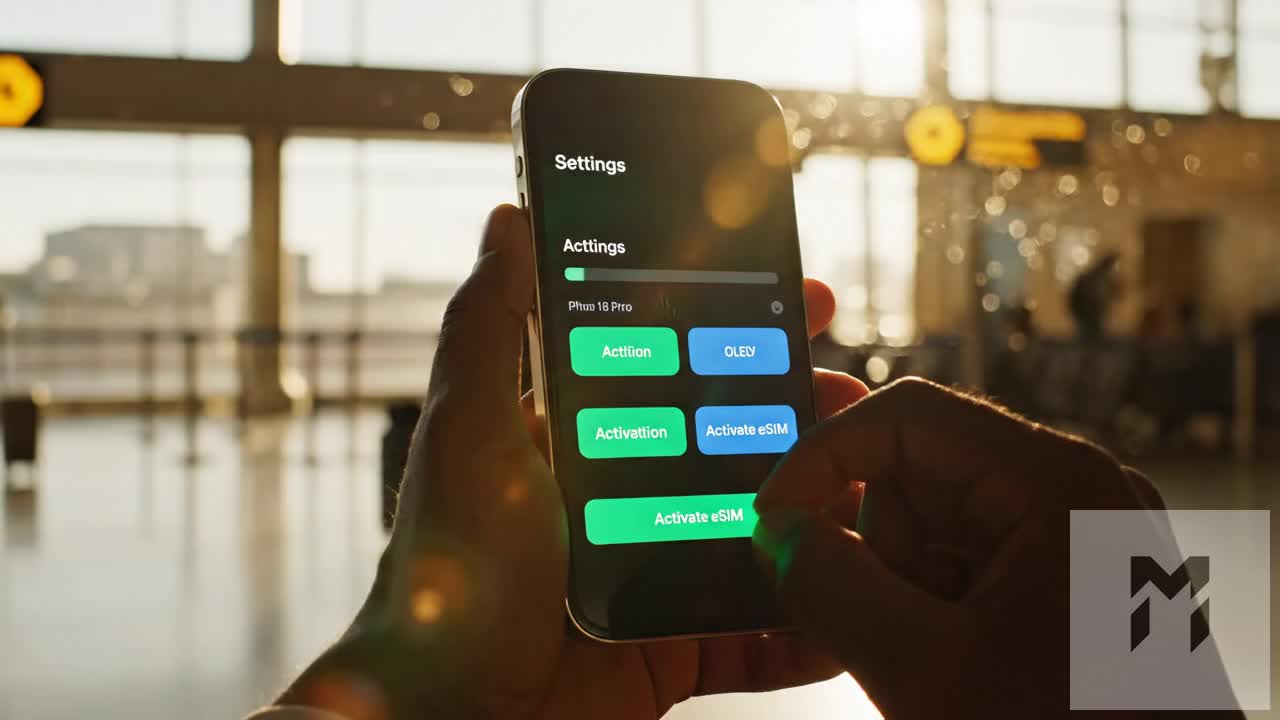
Tuscany by Car: Ultimate 2026 Travel eSIM Guide for Florence, Siena, and the Chianti Wine Route
The Tuscan Road Trip Landscape: Route Realities from Florence to Val d'Orcia
Cruising through central Italy behind the wheel of an Alfa Romeo or a Fiat 500 is a bucket-list dream. The route stretching from the Renaissance core of Florence down through the rolling vineyards of the SR222 Chiantigiana (Chianti Wine Route), across the medieval skyline of San Gimignano, and into the cypress-lined hills of Siena and Montepulciano is visually unmatched.
However, translating that romanticized cinematic vision into a smooth driving experience requires navigating some of Europe’s most unforgiving road logistics.
The ZTL Minefield and Dynamic Road Hazards
Tuscan driving demands acute, real-time awareness. The biggest financial hazard for foreign drivers is the *ZTL (Zona a Traffico Limitato)*—restricted traffic zones enforced by automated optical character recognition (OCR) cameras at the perimeter of almost every historical center, including Florence, Siena, San Gimignano, and Montepulciano.
Entering an active ZTL without a pre-registered resident or hotel permit yields automated fines typically starting between €100 and €330 per violation, plus car rental administrative processing fees. Because ZTL entry points, daily enforcement windows, and temporary access rules change dynamically, relying solely on stale road signs or outdated memory is a recipe for costly penalties.
┌────────────────────────────────────────────────────────────────────────┐
│                        TUSCAN DRIVING REALITY CHECK                    │
├──────────────────────┬─────────────────────────────────────────────────┤
│ Hazard               │ Real-World Impact                               │
├──────────────────────┼─────────────────────────────────────────────────┤
│ ZTL Access Zones     │ €100–€330 fines per camera pass; automated traps │
│ Chianti Farm Traffic │ Grape/olive harvest tractors causing dead stops │
│ Local Events         │ Unannounced Mille Miglia routes & cycle races   │
│ Strade Bianche       │ Narrow gravel roads with sudden seasonal washouts│
└──────────────────────┴─────────────────────────────────────────────────┘
Beyond municipal access restrictions, rural Tuscany presents constant, fast-evolving routing challenges:
- Vintage Rallies and Cycling Caravans: Historical vehicle events like the Mille Miglia or local amateur gran fondo cycling races regularly shut down key stretches of regional highways without multi-week advance notice on international travel boards.
- Harvest Machinery on Blind Curves: The winding SR222 and single-lane farm tracks (strade bianche) frequently bottleneck behind slow-moving agricultural machinery during the autumn harvest season.
- Sudden Landslip and Infrastructure Detours: Heavy rains across the clay hills of the Crete Senesi frequently prompt localized road closures, routing drivers down unpaved, unmarked service roads.
Why Offline Navigation Fails in Rural Tuscany
Many travelers attempt to navigate the Tuscan countryside using pre-downloaded offline map sectors in Google Maps or Apple Maps. While offline caching saves base geographic vector files, it creates critical points of failure on the road:
- Zero Real-Time Rerouting: Offline maps cannot warn you of an accident blocking a hairpin turn between Greve in Chianti and Castellina, leading to multi-hour delays with no alternate route calculations.
- Missing Live ZTL Alerts: Live cloud data feeds are required by apps like Waze and Google Maps to issue immediate audio-visual warnings as you approach a live ZTL boundary camera.
- Ghost Road Closures: Offline systems do not display temporary dynamic roadworks, seasonal farm access barriers, or emergency one-way conversions in walled hill towns.
Connectivity Begins at the Terminal: FLR and PSA
Your navigational lifeline must be active the second you clear customs and pick up your rental vehicle. Exiting Florence Peretola Airport (FLR) immediately merges drivers into the complex multi-lane tangles of the Viale Alessandro Guidoni, where a single missed turn leads straight into a northern Florence ZTL trap. Similarly, arriving via Pisa International Airport (PSA) requires navigating complex merges onto the Firenze-Pisa-Livorno (SGC-FI-PI-LI) expressway.
To avoid navigating these high-stress corridors blind, setting up an international data profile before landing is essential. Premium digital providers like MollySIM allow travelers to install and authenticate their Italian eSIM profile prior to departure.
Crucially, MollySIM implements a generous 384kbps Fair Use Policy (FUP) throttled baseline—triple the 128kbps speed ceiling enforced by standard tourist eSIM competitors. Even if you exhaust your high-speed regional data allocation while streaming high-resolution satellite imagery across the Val d'Orcia, critical driving utilities—including real-time Google Maps vector updates, live Waze alerts, and contactless Apple Pay / Google Pay transactions at automated toll booths—continue to function seamlessly without leaving you stranded.
Network Coverage Breakdown: TIM vs. Vodafone Italia vs. WindTre in Rural Vineyards
🇪🇺 Europe 33 Countries High-Speed Travel eSIM & SIM Plans
Instant QR code activation, hotspot enabled, with guaranteed 384kbps fallback speed to keep Maps & Digital Wallets active.
Tuscany’s rolling geography presents a formidable challenge to wireless radio frequency (RF) engineering. The sweeping visual aesthetics of Chianti Classico (along the Strada Regionale 222) and the clay ridges of the Crete Senesi are defined by deep agricultural swales, dense oak forests, and sharp limestone escarpments. These geological formations create severe signal diffraction and multipath interference, rendering mid- and high-band frequencies (such as Band 3 at 1800 MHz, Band 7 at 2600 MHz, and 5G mid-band n78 at 3.5 GHz) practically ineffective once you descend into secondary vineyard valleys.
Understanding how Italy’s primary Mobile Network Operators (MNOs) deploy their low-band spectrum is critical to maintaining uncompromised navigation across rural provinces.
+------------------+------------------------+-------------------------+------------------------------------+
| Operator         | Primary Rural Bands    | Tuscan Coverage Focus   | Structural Penetration Rating      |
+------------------+------------------------+-------------------------+------------------------------------+
| TIM              | B20 (800MHz),          | Extensive Val d'Orcia,  | High (Legacy macro-tower footprint |
|                  | B28 (700MHz), B3       | Chianti valleys, A1/A11 | across municipal towers)           |
+------------------+------------------------+-------------------------+------------------------------------+
| Vodafone Italia  | B20 (800MHz),          | Dense urban hubs,       | Very High (Strong Sub-1GHz         |
|                  | B1 (2100MHz), n78      | Superstrada corridors   | power distribution)                |
+------------------+------------------------+-------------------------+------------------------------------+
| WindTre          | B20 (800MHz),          | Agrarian flatlands,     | Moderate-to-High (Massive cell     |
|                  | B28 (700MHz), B38      | Coastal Maremma, SP rts | density via modernized sites)      |
+------------------+------------------------+-------------------------+------------------------------------+
Low-Band Spectrum and the "Shadow Valley" Effect
When driving between Greve in Chianti, Radda, and Castellina, base stations are positioned along elevated ridge lines. To maintain an active data stream inside hollows and hollow-way country lanes (strade bianche), your device relies almost exclusively on sub-1GHz frequencies:
- Band 20 (800 MHz): The legacy backbone of Italian rural LTE. Its long wavelength bends effectively over crests and through vineyard canopies.
- Band 28 (700 MHz): Repurposed from digital terrestrial television, this band provides exceptional long-range propagation and drives 5G Standalone/Non-Standalone reach across expansive agrarian estates.
While TIM holds an extensive historical portfolio of macro-cell towers across deep Tuscan valleys, Vodafone Italia often delivers superior data throughput along major transport trunks like the Raccordo Autostradale Siena-Firenze. WindTre, bolstered by its dense network consolidation, excels in coastal plains and open agricultural expanses but exhibits localized coverage voids in steep, isolated gorges.
The Ancient Masonry Challenge: Volterra, San Gimignano, and Pienza
Navigating historical borghi (fortified hilltop villages) introduces another RF obstacle: architectural attenuation. Medieval citadels such as Volterra, Montepulciano, and Pienza are constructed from dense sandstone, tufa, and centuries-old limestone blocks measuring up to two meters thick.
[Cell Tower on Ridge]
       |
       | ~~~ Sub-1GHz RF (B20 / B28) ~~~> [2m Medieval Limestone Wall]
       |                                             |
       v (High-Band n78/B7 Deflected)                 v (-25dBm to -35dBm Attenuation)
 [Deep Valley Shadow]                          [Indoor / Alleyway Dead Zone]
High-frequency signals reflect off these exterior walls rather than penetrating them, causing an immediate signal drop of -25 dBm to -35 dBm the moment you drive under an ancient stone gateway (porta). Single-network physical tourist SIMs tied to a single carrier will frequently drop to "No Service" inside these historical quarters, precisely when you need offline/online navigation to locate municipal parking areas outside pedestrian-only ZTL perimeters.
The Dynamic Multi-Carrier Solution
Securing a physical SIM card from a single local carrier locks your modem to one RF routing infrastructure. If that specific operator suffers a transmission shadow behind an escarpment or within a medieval bastion, your navigation system stalls.
Utilizing an aggregate travel solution like MollySIM resolves this single-point-of-failure risk. Multi-network profiles dynamically switch handshakes between TIM, Vodafone, and WindTre depending on which carrier delivers the highest Reference Signal Received Power (RSRP) at your exact GPS coordinates. If a TIM transmission drops behind a ridge along the Strada Provinciale 146, the eSIM shifts your routing path to Vodafone or WindTre without dropping your active socket connection.
Even if intensive daily mapping, live dashcam telemetry, and media syncing exhaust your high-speed quota mid-trip, MollySIM’s 384kbps FUP baseline maintains uninterrupted background functionality—delivering continuous Google Maps turn-by-turn guidance, Waze hazard recalculations, and rapid Apple Pay authorization at remote automated fuel stations where lower 128kbps speed caps typically trigger gateway timeouts.
Connectivity Showdown: Travel eSIM vs. Traditional Physical SIM vs. Pocket Wi-Fi
Navigating rural Tuscany and historic city centers requires evaluating connectivity solutions based on hardware footprint, network failover, and deployment friction. Below is an architectural breakdown of how modern aggregate eSIMs compare to legacy physical options for a 7-to-14-day Tuscan road trip.
Technical & Cost Comparison
| Metric / Feature | MollySIM Travel eSIM | Physical Local SIM (TIM / Vodafone) | Rental Pocket Wi-Fi |
|---|---|---|---|
| Setup Time | < 2 minutes (Instant QR scan / Direct install) | 30–60 mins (Kiosk queue + manual ID validation) | 15–30 mins (Airport counter pickup & return queue) |
| Hardware Overhead | Zero (Embedded chip inside existing device) | Physical tray ejection + swapping original SIM | Separate terminal (150–200g) + charger + power bank |
| Average Cost (7–14 Days) | $12 – $28 (Tiered data bundles) | €30 – €45 (Tourist markup + activation fees) | €70 – €120 (Daily rental rate + insurance + deposit) |
| ZTL Live Alerts Reliability | High (Dynamic multi-carrier fallback) | Moderate to Low (Locked to one carrier's local mast) | Moderate (Wi-Fi tethering introduces latency) |
| Multi-Network Roaming | Yes (TIM, Vodafone, and WindTre) | No (Single local network lock-in) | Varies (Usually locked to a single virtual operator) |
| Rural Failover Speed (FUP) | 384kbps (Sustains live vector maps & VoIP) | Hard cut-off or 32–64kbps (Timeout on map tiles) | Hard throttle (Often 128kbps or complete service cutoff) |
Airport Bureaucracy vs. Zero-Touch Activation
Under Italian anti-terrorism telecommunications laws (Legge Pisanu), purchasing a physical prepaid SIM at gateways like Florence Peretola (FLR), Pisa (PSA), or Rome Fiumicino (FCO) mandates in-person passport scanning, identity verification, and manual registration in the carrier’s national database. During peak travel seasons, kiosk queues at airport arrivals frequently exceed 45 minutes. Furthermore, physical tourist SIMs often face an activation lag of 1 to 4 hours while the carrier provisions the IMSI profile, leaving you disconnected precisely when configuring your initial rental car navigation route.
A digital eSIM profile from MollySIM bypasses this friction entirely. You can provision the profile via QR code or direct digital installation before departure. Upon touchdown on the runway, your device connects to local Italian cell towers immediately, ensuring live routing before you exit the terminal parking garage.
Thermal Throttling and Hardware Overhead of Pocket Wi-Fi
While pocket Wi-Fi units allow group tethering, they introduce significant operational friction during a Tuscan road trip:
- Thermal Vulnerability Under Tuscan Sun: Summer interior temperatures in vehicles parked along the Chianti hills easily surpass 45°C (113°F). Pocket Wi-Fi units containing separate lithium-ion batteries frequently experience thermal shutdown or aggressive processor throttling when left on dashboards, abruptly killing navigational feeds.
- Battery and Weight Management: Renting a pocket Wi-Fi adds another device requiring daily overnight charging, alongside an auxiliary power bank to keep it running through 10 hours of active driving and sightseeing.
- Return Logistics Risk: Forgetting to return the pocket Wi-Fi at your departure airport terminal results in hefty forfeiture fees (often €150–€250) charged to your credit card.
Network Agility & Data Throttling Realities for Road Trips
A standard single-network physical SIM (such as TIM Tourist) leaves your vehicle vulnerable to localized blind spots. If a ridge outside Montalcino blocks your carrier's specific cell tower, your GPS client will fail to update live road closures or newly declared municipal ZTL zones.
Because MollySIM leverages multi-carrier roaming across TIM, Vodafone, and WindTre, your smartphone continuously negotiates with the strongest available tower. Furthermore, if you exhaust your high-speed allowance mid-route, MollySIM’s 384kbps baseline Fair Use Policy (FUP) remains 3x faster than the 128kbps industry standard. This bandwidth margin keeps dynamic vector-based routing engines (Apple Maps, Google Maps, Waze) responsive and guarantees that contactless Apple Pay / Google Wallet transactions complete smoothly at unstaffed Tuscan rural fuel pumps.
Step-by-Step Guide: Configuring Your eSIM for Italian Driving & Digital ZTL Defense
Entering a Tuscan Zona a Traffico Limitato (ZTL) without a registered municipal permit triggers automated optical character recognition (OCR) cameras, resulting in fines ranging from €100 to over €330 per infraction plus rental agency processing fees. To ensure your navigation engine continuously downloads dynamic geo-fenced ZTL boundaries, real-time traffic hazards, and cloud-synced parking meters, follow this exact OS-level provisioning walkthrough.
Phase 1: Pre-Departure Installation (24 Hours Before Takeoff)
Install your digital profile over a stable Wi-Fi connection prior to boarding. This eliminates dependency on airport networks upon arrival at Rome Fiumicino (FCO), Florence Peretola (FLR), or Pisa (PSA).
Apple iOS Configuration
- Navigate to Settings > Cellular (or Mobile Data) > Add eSIM.
- Select Use QR Code and scan the digital token sent via your MollySIM confirmation email.
- When prompted to label your plans, set your domestic carrier as Primary and the new eSIM profile as Tuscany / Travel Data.
- Configure default line behavior:
- Default Voice Line: Set to Primary (preserves your home number for critical bank Two-Factor Authentication (2FA) SMS).
- iMessage & FaceTime: Retain on Primary.
- Cellular Data: Temporarily leave set to Primary until wheels down in Italy. Ensure Allow Cellular Data Switching is toggled OFF to avoid unexpected international domestic carrier roaming fees.
Google Android Configuration (Samsung Galaxy / Google Pixel)
- Go to Settings > Connections (or Network & Internet) > SIM Manager > Add eSIM.
- Scan the provided QR code and confirm the download.
- Rename the SIM alias to MollySIM Italy.
- Set Preferred SIM for Calls/Texts to your home physical SIM, while leaving Mobile Data assigned to your domestic carrier until touchdown.
Phase 2: Touchdown Activation & Data Roaming
Once your flight enters Italian airspace or docks at the gate:
| Step | iOS Action | Android Action |
|---|---|---|
| 1. Primary Line Safeguard | Keep Primary line Data Roaming: OFF | Keep Home SIM Data Roaming: OFF |
| 2. Route Cellular Data | Set Cellular Data to MollySIM | Set Mobile Data to MollySIM Italy |
| 3. Enable eSIM Roaming | Tap MollySIM Profile ➔ Toggle Data Roaming: ON | Tap MollySIM Profile ➔ Toggle Roaming: ON |
| 4. APN Verification | Populates automatically as globaldata | Set Access Point Name to globaldata if prompted |
Tech Note: Because MollySIM negotiates localized roaming agreements across TIM, Vodafone, and WindTre, toggling Data Roaming ON on the eSIM profile is mandatory to allow multi-network handshake protocols across regional cell towers.
Phase 3: Hardening Navigation Apps Against ZTL camera Traps
Modern mobile operating systems aggressively suspend background apps to preserve battery life. If your GPS navigation engine gets frozen in the background while switching to an audio streaming or camera app, real-time ZTL alerts will fail to trigger.
┌────────────────────────────────────────────────────────┐
│  CRITICAL OS SETTING: PREVENT APP BACKGROUND FREEZES   │
├────────────────────────────────────────────────────────┤
│ iOS: Settings ➔ Waze/Google Maps ➔ Background App Refresh: ON│
│ Android: Settings ➔ Apps ➔ Waze ➔ Battery ➔ "Unrestricted" │
└────────────────────────────────────────────────────────┘
1. Disable Aggressive OS Battery Throttling
- iOS: Go to Settings > General > Background App Refresh and ensure it is toggled ON for Waze, Google Maps, and EasyPark. Under Settings > Privacy & Security > Location Services, set location access to Always or While Using the App (with Precise Location: ON).
- Android: Open Settings > Apps > Waze (and Google Maps) > Battery, then switch the profile from Optimized to Unrestricted. This prevents Android's aggressive memory cleaner from killing dynamic routing telemetry mid-drive.
2. Configure Dynamic ZTL Avoidance in Waze
- Open Waze > Settings > Navigation.
- Under Routing options, ensure Avoid toll roads is configured according to preference, and verify Avoid ZTL/Permit zones is toggled ON.
- Under Passes & Tolls, add municipal exemptions only if your hotelier in Florence or Siena has formally pre-registered your rental vehicle’s license plate with the local Polizia Municipale.
3. Continuous Bandwidth Fail-Safe
If your data usage spikes from streaming high-definition media during long drives, MollySIM’s built-in 384kbps baseline Fair Use Policy (FUP) guarantees that vector map rendering, live routing calculations in Waze, and server confirmations on the EasyPark payment engine continue operating uninterrupted—eliminating the risk of offline data cutoffs that cause sudden ZTL gate violations.
Cracking the Agriturismo Wi-Fi Dilemma & Leveraging 384kbps Continuous Fallback Data
The 14th-Century Masonry Trap: Why Rural Tuscan Wi-Fi Collapses
Tuscany’s most enchanting accommodations—fortified agriturismi, converted Benedictine abbeys, and centuries-old wine estates scattered across the Crete Senesi and Chianti hills—present an unexpected technological hurdle: severe physical radio-frequency (RF) attenuation.
Built with load-bearing limestone, tufa, and fieldstone walls that often exceed 80 centimeters (31 inches) in thickness, these structures act as natural Faraday cages. A centralized Wi-Fi router installed in a main reception villa rarely delivers usable signal to converted stone outbuildings or terraced guest suites. Compounding the structural barrier, rural broadband in off-grid Tuscan communes still frequently relies on legacy asymmetric ADSL or oversubscribed Fixed Wireless Access (FWA) links. When multiple guests return from day trips to stream media or upload photos, local networks suffer severe packet loss and DNS latency timeouts.
Relying on estate Wi-Fi to download dynamic driving routes, verify digital reservations, or check real-time traffic updates before departing onto unlit gravel strade bianche introduces unnecessary travel friction.
The 384kbps Safety Net: Why Competitor 128kbps Throttles Leave You Stranded
A critical vulnerability with standard international travel eSIMs lies in their post-quota Fair Use Policy (FUP). The vast majority of tourist eSIM providers throttle high-speed data down to 64kbps or 128kbps once your primary gigabyte allowance is exhausted.
At 128kbps, modern encrypted mobile applications fail to maintain basic functionality. Secure Socket Layer (SSL/TLS) cryptographic handshakes for banking apps, digital parking meters, and live navigation servers consistently time out, effectively rendering your smartphone offline.
In contrast, MollySIM engineers its travel data profiles with a continuous 384kbps baseline FUP. Providing triple the bandwidth of legacy travel eSIM throttles, 384kbps sits directly above the critical operational threshold required for continuous background telemetry and cloud data requests.
| Mobile Operation / Travel App | 128kbps Competitor Throttle | MollySIM 384kbps Baseline | Practical Road Impact |
|---|---|---|---|
| Google Maps / Apple Maps | Fails vector tile refresh; drops live re-routing | Smooth vector rendering & live dynamic rerouting | Zero navigation blackouts during unexpected Tuscan road closures. |
| Waze Live Traffic & Hazards | Fails to pull server pings; alerts drop | Continuous live hazard & speed trap updates | Maintains active alerts for mobile speed traps (Autovelox) and accident reroutes. |
| EasyPark / Apple Pay | SSL timeout; fails payment confirmation | Instant TLS handshake & payment processing | Eliminates expired meter fines while parked in municipal white/blue bays. |
| WhatsApp Voice & Messaging | Frequent audio dropouts; media stalls | Crystal-clear Opus codec voice calls & text | Enables real-time coordination with wine estate hosts or roadside assistance (ACI). |
| Google Translate Live Engine | Network error on dynamic phrase processing | Uninterrupted live server translation queries | Facilitates seamless communication at rural mechanics or remote farm gates. |
Field-Proven Reliability on Remote Backroads
Because navigation applications utilize pre-cached vector tiles, live turn-by-turn guidance requires only modest data throughput—typically between 15kbps and 35kbps—to stream real-time incident reports, coordinate changes, and calculate alternative routes. The bottleneck occurs during dynamic server re-authorizations, which 128kbps connections fail to sustain.
With MollySIM's continuous 384kbps fallback, even if you deplete your high-speed quota while photographing the vineyards of Pienza or the switchbacks of the Monticchiello cypress route, your core telemetry remains active. You avoid getting stranded at unmapped intersections, retain the capacity to communicate via VoIP messaging, and process parking or gate access payments without hunting for local top-up vouchers.
Essential Tuscan Tech Toolkit: Apps, Winery Bookings, and Connected Road Trip Hacks
Navigating historic hill towns, paying for municipal parking, and securing last-minute cellar tastings across the Chianti Classico corridor requires a fine-tuned software stack. To transform potentially stressful driving scenarios into a frictionless itinerary, equip your smartphone with these essential road-trip utilities before setting rubber to the asphalt.
1. Smart Parking & Toll Wayfinding
Finding legal parking outside medieval city gates requires navigation through local municipal payment ecosystems:
- EasyPark: The gold standard across Italy for paid street parking (strisce blu / blue lines). It eliminates the hunt for coin-operated meters or expired dashboard tickets. You can start, extend, or stop your session remotely while lingering over an espresso in San Gimignano.
- MooneyGo / Telepass Pay: Excellent for mapping regional toll costs along the Autostrada del Sole (A1) and locating public EV charging stations if you are driving a hybrid or electric rental.
- Waze (Community Alerts): Essential for real-time mobile speed trap (Autovelox) warnings and narrow road hazard alerts along unpaved white gravel roads (strade bianche).
| Application | Primary Use Case | Connectivity Requirement |
|---|---|---|
| EasyPark | Blue-zone municipal parking | Instant GPS positioning & payment gateway handshake |
| Waze | Live speed trap & hazard crowd-sourcing | Continuous low-bandwidth telemetry stream (20–40kbps) |
| Where ARE U (112) | Official Italian emergency dispatch | Instant automated GPS coordinate packet transmission |
| Satispay / Apple Pay | Direct farm stand & cantina payments | Sub-second biometric token verification & SSL sync |
2. Spontaneous Winery Bookings & Agriturismo Commerce
While historic estates like Castello di Ama or Antinori nel Chianti Classico require advance reservations during peak season, boutique family-run vineyards (aziende agricole) often accommodate same-day private tastings if you can contact them directly.
- WhatsApp Business & Winedering: Many independent winemakers across Panzano, Radda, and Castellina do not staff full-time reception desks. Real-time messaging via WhatsApp is the standard Italian protocol to confirm cellar access, check barrel-room availability, and receive localized gate codes.
- Contactless Payments at Remote Farm Stands: High-elevation pecorino cheese producers in Pienza and olive oil presses along the Val d'Orcia frequently run POS terminals that sync over mobile data. Having access to responsive data via MollySIM ensures Apple Pay and Google Wallet security tokens resolve instantly without hanging at rustic cash registers.
3. Critical Power & Road Safety Protocols
- Install the "112 Where ARE U" App: Italy’s official Single Emergency Number app automatically transmits your exact latitude and longitude to the regional Tuscan emergency operations center (NUE 112) the moment you place a distress call. This is vital if you suffer a breakdown or tire puncture on isolated secondary roads like the SP438.
- Thermal Management on Sunlit Dashboards: Tuscan summer temperatures frequently exceed 35°C (95°F). Continuous GPS routing coupled with direct sun exposure through your rental car’s windshield can trigger sudden smartphone thermal throttling or shutdown. Mount your phone on an active cooling magnetic vent mount rather than a windshield suction bracket to keep your navigation hardware running at optimal operating temperatures.
- The Zero-Offline Safety Net: Losing high-speed data midway through the Chianti hills shouldn't jeopardize your trip logistics. Because MollySIM enforces a generous 384kbps safety net rather than throttling you down to an unusable 128kbps, your parking apps, VoIP channels, and emergency telemetry remain fully functional throughout your entire Tuscan itinerary.
🇪🇺 Europe 33 Countries High-Speed Travel eSIM & SIM Plans
Instant QR code activation, hotspot enabled, with guaranteed 384kbps fallback speed to keep Maps & Digital Wallets active.