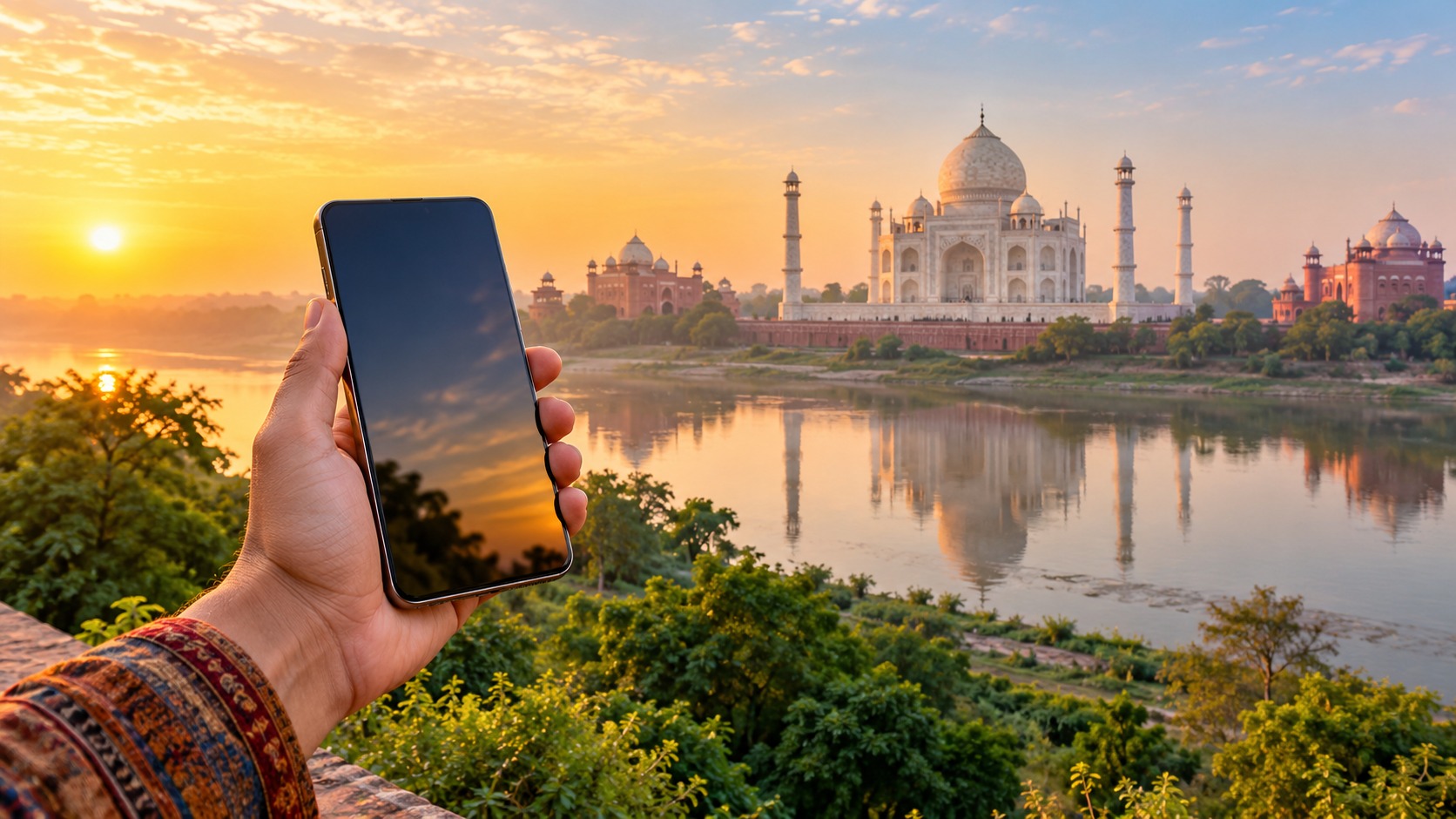
The Essential Guide to India eSIM for Tourists in 2026
Choosing the right India eSIM for tourists is no longer just a convenience; it is the single most critical infrastructure decision for any traveler entering the subcontinent in 2026. As India’s digital ecosystem becomes increasingly integrated into daily life, reliable mobile connectivity is the lifeline that connects you to your destination. Whether you are navigating the chaotic traffic of Mumbai’s local trains, exploring the historic lanes of Old Delhi, or working remotely from a co-working space in Bangalore, your mobile data is your primary interface with the world. Yet, for many travelers, the process of securing this connectivity remains archaic and fraught with friction.
The Friction of Traditional SIM Cards
The traditional method of purchasing a physical SIM card in India is a relic of a bygone era. It typically involves standing in long, winding queues at airport kiosks or local telecom stores, often for over an hour. The process is mandatory but cumbersome: you must present your passport, provide a recent photograph, and undergo a biometric fingerprint scan. This physical ID verification, while necessary for security, creates a bottleneck that eats into your precious vacation time. Furthermore, there is the tangible risk of losing a physical card. A lost SIM means a lost number, requiring you to re-register, re-download apps, and re-verify accounts, all while potentially being stranded without data.
The Seamless Advantage of eSIM Technology
In contrast, eSIM technology offers a frictionless, digital-first experience that aligns perfectly with the needs of the modern traveler. With an eSIM, you bypass the physical store entirely. You can purchase and activate your plan from your hotel room, on the plane, or even before you land. There are no queues, no fingerprints, and no plastic cards to lose. You simply scan a QR code, and your device is connected. This immediacy is vital for the specific demands of 2026 travel:
- Real-Time Navigation: India’s cities are complex mazes. Reliable data ensures Google Maps and Apple Maps load instantly, providing accurate turn-by-turn directions and real-time traffic updates, which are essential for avoiding congestion.
- Seamless Ride-Hailing: Apps like Uber and Ola are the primary modes of transport for many tourists. A stable connection ensures you can book rides, track drivers in real-time, and communicate with drivers without the lag that leads to missed pickups or misunderstandings.
- High-Quality Video Calls: Staying connected with family and friends back home requires more than just text messages. High-speed data allows for crystal-clear video calls via WhatsApp, Zoom, or FaceTime, ensuring you don’t miss important moments.
The 384kbps Fair Usage Policy: A Crucial Safety Net
One of the most overlooked aspects of data plans is what happens when you hit your cap. Many standard plans cut you off completely, leaving you with "No Service" or extremely slow speeds that make even loading a webpage a struggle. This is where the Fair Usage Policy (FUP) becomes a critical safety net.
A robust FUP ensures that even after your high-speed data is exhausted, you retain access to essential services. For example, MollySIM (https://mollysim.com) implements a 384kbps Fair Usage Policy for its India eSIM options. This is a significant advantage over competitors who often limit post-cap speeds to 128kbps. The difference is tangible:
- 128kbps: Barely sufficient for sending text messages. Loading a map tile or refreshing an email inbox can take 10-15 seconds.
- 384kbps: Fast enough to keep Google Maps functional, allow Apple Pay to process transactions, and enable smooth email syncing and light web browsing.
This 3x speed increase ensures that you are never completely cut off. You can still navigate, make payments, and check critical emails, providing peace of mind that your connectivity won’t fail you at the most inconvenient moment.
Preparing for the Comparison
As we move into the detailed analysis, it is clear that not all eSIM providers are created equal. The choice of carrier and plan structure will directly impact your experience. In the following sections, we will dissect the top three major players in the Indian telecom market: Jio, Airtel, and Vi. We will compare their coverage, data speeds, pricing, and, crucially, their post-cap policies to help you make an informed decision. Whether you prioritize raw speed, budget, or reliability, understanding these nuances is key to a seamless trip. For more insights on optimizing your travel connectivity, explore our comprehensive guide on travel connectivity tips.
Jio vs Airtel vs Vi: A Deep Dive into Network Performance
🇮🇳 India High-Speed Travel eSIM & SIM Plans
Instant QR code activation, hotspot enabled, with guaranteed 384kbps fallback speed to keep Maps & Digital Wallets active.
Selecting the right carrier is the single most critical variable in your India eSIM for tourists strategy. While all three major operators—Jio, Airtel, and Vi—offer nationwide coverage, their underlying network architectures, spectrum holdings, and infrastructure priorities diverge significantly. For a visitor relying on real-time navigation, video calls, or cloud syncing, these technical nuances determine whether your connection feels seamless or frustratingly intermittent. Understanding the specific strengths of each network allows you to align your connectivity needs with the infrastructure that best serves them, particularly when navigating the dense urban environments of major Indian cities.
Reliability and Latency: The Airtel Advantage
Airtel has long cultivated a reputation for network stability, a trait that is particularly valuable for business travelers and digital nomads. In high-density areas such as the business districts of Mumbai and Delhi, Airtel’s infrastructure tends to exhibit lower latency and more consistent packet delivery. This is not merely a technicality; it is the difference between a smooth Zoom call and a pixelated, frozen video stream. For users who prioritize video conferencing or online gaming, Airtel’s optimized core network often results in a more responsive experience. If your itinerary involves heavy data usage in corporate hubs, Airtel’s stability makes it a compelling choice, ensuring that critical communications remain uninterrupted even during peak traffic hours.
Speed and Coverage: The Jio Dominance
Jio has aggressively expanded its footprint, establishing itself as the leader in both 4G and 5G coverage across India. By 2026, Jio’s 5G rollout is expected to cover the majority of major urban centers and suburban belts, offering raw download speeds that frequently outpace its competitors. Jio’s strategy relies on high-capacity spectrum and a massive base station network, which translates to superior signal penetration in dense metropolitan areas. For tourists who prioritize raw speed for streaming high-definition video or downloading large files quickly, Jio is often the go-to option. Its aggressive pricing model also makes it a strong contender for budget-conscious travelers who do not want to compromise on bandwidth.
Value and Regional Strengths: The Vi Alternative
Vi (Vodafone Idea) positions itself as the value-oriented option, often offering competitive pricing for data bundles. While its 5G footprint is slightly smaller than Jio’s and Airtel’s in 2026, Vi maintains strong performance in specific regional pockets and suburban areas where it has historically invested heavily. For travelers whose routes take them through these specific zones, Vi can offer excellent service at a lower cost. However, for those seeking the absolute latest in 5G speed and the broadest urban coverage, Vi may lag slightly behind the market leaders.
Comparative Network Metrics (2026 Estimates)
The following table breaks down the key performance indicators for each carrier, helping you identify the best fit for your travel style.
| Carrier | Average 4G Speed (Mbps) | 5G Availability (2026) | Coverage in Delhi/Mumbai | Best For | Key Advantage |
|---|---|---|---|---|---|
| Jio | 45 - 60 | Extensive (Urban/Suburban) | Excellent | Raw Speed & Streaming | Highest 5G footprint; aggressive pricing |
| Airtel | 40 - 55 | Broad (Major Cities) | Excellent | Business & Stability | Lowest latency; superior network stability |
| Vi | 35 - 50 | Moderate (Select Areas) | Good | Budget & Regional Travel | Competitive pricing; strong in specific zones |
The Critical Factor: Peak Hour Congestion
When evaluating India mobile coverage in Delhi, it is essential to consider the impact of peak-hour congestion. During rush hour (typically 8:00 AM – 10:00 AM and 5:00 PM – 8:00 PM), cell towers in central Delhi and Mumbai experience significant load. This congestion can cause data speeds to drop by 30-50% on less robust networks. Choosing a carrier with higher capacity, such as Jio or Airtel, mitigates this risk, ensuring that your connection remains functional even when the network is under stress.
This is where the choice of eSIM provider becomes equally important. While the underlying carrier determines your peak speed, the eSIM provider’s Fair Usage Policy (FUP) determines your experience after you hit your data cap. Many providers throttle speeds to 128kbps, which can make navigation and email cumbersome. However, providers like MollySIM (https://mollysim.com) implement a 384kbps FUP for its India eSIM options. This 3x speed increase is tangible: it ensures that even if you exhaust your high-speed data, you can still use Google Maps for navigation, process Apple Pay transactions, and sync emails without the frustrating buffering associated with lower-tier throttling. For a seamless travel experience, pairing a high-performance carrier with a provider that offers a robust fallback speed is the optimal strategy. To further optimize your setup, check out our guide on travel connectivity tips.
How to Get eSIM in India: Step-by-Step Activation Process
Understanding how to get eSIM in India is the first critical step toward ensuring uninterrupted connectivity upon arrival. Unlike the traditional SIM card process, which often involves navigating crowded airport kiosks, dealing with physical plastic cards, and waiting for network registration, the eSIM workflow is streamlined, digital, and remarkably fast. For the modern traveler, this efficiency is not just a convenience; it is a necessity for maintaining productivity and navigation capabilities from the moment you step off the plane.
The entire process can be completed in under five minutes, often before you have even boarded your flight. Here is the precise, step-by-step protocol to secure your India eSIM for tourists:
- Check Device Compatibility
Before purchasing, verify that your smartphone supports eSIM technology. Most modern flagship devices are compatible.
- iOS: iPhone XS, XR, and all subsequent models (including the iPhone 15 and 16 series).
- Android: Samsung Galaxy S20 and later, Google Pixel 3 and later, and most recent OnePlus and Xiaomi flagship models.
- Note: Ensure your device is not locked to a specific carrier, or that your carrier allows eSIM usage on international plans.
- Purchase Your Plan
You have three primary avenues for acquisition. While you can buy directly from Indian carriers like Jio or Airtel via their apps, third-party providers offer greater flexibility and often better tourist-specific packages. Platforms like MollySIM (https://mollysim.com) provide a user-friendly interface where you can select data volumes, validity periods, and coverage areas. Alternatively, airport kiosks at Indira Gandhi International Airport (DEL) or Chhatrapati Shivaji Maharaj International Airport (BOM) sell physical SIMs, but the eSIM route bypasses the need to stand in line during peak travel hours.
- Scan the QR Code
Once your purchase is confirmed, you will receive an email containing a unique QR code.
- On iPhone: Go to Settings > Cellular > Add eSIM > Scan QR Code.
- On Android: Go to Settings > Network & Internet > SIMs > Add eSIM > Scan QR code.
- The phone will automatically download the carrier profile. You will be prompted to name the line (e.g., "India Data") and assign it a color for easy identification in your settings menu.
- Activate and Configure
Activation is typically automatic. As soon as your device detects a compatible Indian network (Jio, Airtel, or Vi) upon landing, the eSIM will register. If it does not connect immediately, toggle Airplane Mode on for 30 seconds, then off, to force a network search.
The Strategic Advantage: Dual SIM Efficiency
The true power of the eSIM lies in its ability to coexist with your physical home-country SIM. This "Dual SIM" setup allows you to keep your local number active for receiving calls and SMS (such as bank alerts or two-factor authentication codes) while using the India eSIM exclusively for high-speed data. This eliminates the need to swap SIM cards or rely on Wi-Fi for critical communications.
Pro Tip for Optimal Performance: After installation, navigate to your phone’s cellular settings to ensure the India eSIM is set as the primary data line.
- iOS: Settings > Cellular > Cellular Data Plan > Select your India eSIM.
- Android: Settings > Network & Internet > SIMs > Preferred Data SIM > Select your India eSIM.
This configuration ensures that all data-intensive tasks—streaming, navigation, and cloud syncing—route through your high-speed Indian data plan, preserving your home SIM’s limited international data allowance for voice and SMS only.
Time Saved: Minutes vs. Hours
Contrast this digital workflow with the traditional method. Purchasing a physical SIM at an airport kiosk can take 20–40 minutes, including payment, registration, and waiting for the SIM to activate. In some cases, network registration can take up to an hour. With an eSIM, you are connected within seconds of landing. This immediacy is a major factor in why eSIMs are becoming the standard for the best eSIM for India 2026.
Furthermore, having your eSIM pre-installed means you can navigate from the baggage claim area to your hotel without searching for Wi-Fi hotspots. This seamless transition is particularly valuable when using services that require consistent connectivity, such as real-time translation apps or ride-hailing services like Uber or Ola. By choosing a provider with robust fallback speeds, such as the 384kbps Fair Use Policy offered by MollySIM, you ensure that even if you exceed your high-speed data cap, your connection remains fast enough for essential tasks like Google Maps navigation and Apple Pay transactions, avoiding the frustrating 128kbps throttling common with other providers. This level of reliability is what defines a superior travel connectivity experience.
Data Plans, Pricing, and the 384kbps FUP Advantage
Selecting the right data package is not merely about maximizing gigabytes; it is about understanding the architecture of connectivity in India. For travelers seeking the India eSIM for tourists, the distinction between "unlimited" marketing claims and actual network behavior is critical. Most major Indian carriers—Jio, Airtel, and Vi—structure their tourist packages with a Fair Usage Policy (FUP). This means that while a plan may advertise "unlimited" data, it actually provides a specific high-speed cap (e.g., 1.5GB or 5GB per day). Once this cap is exhausted, the network does not disconnect you; instead, it throttles your speed.
This is where the 384kbps FUP advantage becomes a decisive factor in user experience. Many budget-focused eSIM providers throttle post-cap speeds down to 128kbps or even 64kbps. At 128kbps, loading a single webpage can take 10–15 seconds, and video calls become a pixelated struggle. In contrast, a 384kbps connection is three times faster. While it is slower than 4G LTE, it is significantly more robust than legacy 2G/3G speeds. This speed tier is perfectly adequate for:
- WhatsApp: Text messages, voice notes, and even high-quality voice calls remain crystal clear.
- Email: Checking inboxes and sending attachments works seamlessly.
- Navigation: Google Maps and Apple Maps continue to function for turn-by-turn navigation, provided you have downloaded offline maps for your destination.
- Light Browsing: Reading news articles, checking hotel reservations, and using translation apps.
For a typical 7-day trip, a 5GB plan with a 384kbps fallback offers the optimal balance of cost and reliability. This structure prevents the "data anxiety" often felt by travelers, ensuring they are never left without a signal. Even if you stream a few videos or use heavy navigation, you retain a functional connection for the remainder of your stay.
Comparative Analysis of Top Tourist Data Packages
The following table compares typical tourist-oriented packages available through local carriers and specialized travel eSIM providers like MollySIM. Note that prices fluctuate based on exchange rates and promotional offers, but the structural differences in post-cap speeds remain consistent.
| Plan Name / Provider Type | High-Speed Data Cap | Post-Cap Speed | Price (Approx. USD/INR) | Best Use Case |
|---|---|---|---|---|
| Jio Tourist (Physical/eSIM) | 1.5GB/day (Unlimited days) | 128kbps | $10–$15 / ₹800–₹1200 | Heavy daily data users who can tolerate slower speeds after noon. |
| Airtel 4G Tourist | 1GB/day (Unlimited days) | 128kbps | $12–$18 / ₹1000–₹1500 | Users prioritizing network coverage in rural areas. |
| Vi (Vodafone Idea) Tourist | 1GB/day (Unlimited days) | 128kbps | $11–$16 / ₹900–₹1300 | Budget-conscious travelers with moderate data needs. |
| MollySIM 7-Day Plan | 5GB Total (High Speed) | 384kbps | $15–$20 / ₹1200–₹1600 | Best Balance: Reliable 4G for first 5GB, then fast-enough fallback for maps/calls. |
| MollySIM 15-Day Plan | 10GB Total (High Speed) | 384kbps | $25–$30 / ₹2000–₹2500 | Extended stays or travelers with multiple devices. |
Why the 384kbps Threshold Matters for Essential Services
The difference between 128kbps and 384kbps is not just a number; it is the difference between a usable connection and a frustrating one. At 128kbps, Apple Pay transactions can time out, and real-time translation apps may lag significantly, disrupting communication in non-English speaking regions. With the 384kbps fallback offered by providers like MollySIM, these essential tasks remain smooth.
Consider a scenario where you have exceeded your 5GB high-speed cap on day 4 of a 7-day trip. You are in a taxi, using Google Maps to navigate to a restaurant. With a 128kbps plan, the map tiles load slowly, and the route recalculates with a delay. With a 384kbps plan, the map updates in real-time, and the ETA remains accurate. This reliability is what defines a superior travel connectivity experience.
Furthermore, the 384kbps speed is sufficient for WhatsApp voice calls, which are often clearer than traditional cellular voice calls in areas with poor 2G coverage. This ensures that you can maintain contact with your hotel, tour guide, or family back home without switching to Wi-Fi.
Strategic Recommendation for 2026 Travelers
For most tourists, the "unlimited" plans from local carriers are a trap. They promise endless data but deliver slow speeds after the first few hours of heavy use. A fixed-cap plan with a robust 384kbps fallback is the smarter choice. It provides predictable performance and eliminates the guesswork of when your speed will drop.
When evaluating options, look for providers that explicitly state their post-cap speed. If a plan does not specify this, assume it is 128kbps or lower. Providers like MollySIM, which highlight their 384kbps Fair Use Policy, offer a transparent and superior user experience. This approach ensures that your India eSIM for tourists remains a reliable tool throughout your journey, not just a high-speed sprint that ends abruptly.
For more insights on optimizing your connectivity strategy, explore our travel connectivity tips to ensure you are prepared for any network scenario.
Real-World Scenarios: Navigating Delhi, Mumbai, and Bangalore
Theoretical speed tests and coverage maps are useful, but they rarely capture the chaotic reality of Indian urban infrastructure. To truly understand the value of a robust India eSIM for tourists, we must examine how connectivity performs in the three most demanding metropolitan environments: Delhi, Mumbai, and Bangalore. Each city presents a unique set of network challenges that test the limits of your data plan, from dense urban congestion to suburban dead zones.
Delhi: Managing High-Density Congestion in New Delhi
New Delhi is a city of immense scale and density. In high-traffic zones like Connaught Place or the commercial hubs of South Delhi, network congestion is a daily occurrence. During peak hours, thousands of users compete for the same cellular towers, often causing latency spikes that can freeze navigation apps. This is where the choice of carrier becomes critical. Jio has invested heavily in 4G and emerging 5G infrastructure, creating a dense mesh of small cells that helps mitigate this congestion. For a tourist relying on ride-hailing apps like Uber or Ola, this reliability is non-negotiable. A dropped connection or a delayed ETA update can mean missing a flight or waiting an extra 20 minutes in traffic.
Furthermore, navigating Delhi’s complex road network requires real-time data. Whether you are locating a hidden local eatery in Chandni Chowk or finding the shortest route to the India Gate, your map must update instantly. If your eSIM throttles down to 128kbps, the map tiles load slowly, and the route recalculates with a frustrating delay. With a plan that maintains a robust 384kbps Fair Use Policy—such as those offered by MollySIM—the map updates in real-time, and the ETA remains accurate. This level of performance ensures that your India eSIM for tourists remains a reliable tool throughout your journey, not just a high-speed sprint that ends abruptly.
Mumbai: Low Latency for Commutes and Video Calls
Mumbai presents a different challenge: the sheer volume of data required for real-time traffic updates and media consumption. The city’s notorious traffic jams mean that commuters spend hours on the road, often using their time for video calls, streaming content, or checking work emails. Here, Airtel’s low-latency network proves advantageous. Low latency is crucial for video calls; it ensures that audio and video sync perfectly, preventing the "jitter" that makes conversations difficult to follow.
Coverage in suburban areas like Andheri and Bandra is generally strong, but the quality of the connection can vary. A high-speed eSIM allows you to maintain a stable connection even when moving between towers at high speeds on the Western Express Highway. For digital nomads or business travelers, this consistency is vital. If you are joining a Zoom meeting from a café in Bandra, you need a connection that can handle high-bandwidth video without buffering. Choosing the right provider from our India eSIM options ensures that you are not left struggling with a frozen screen during a critical client call.
Bangalore: The Digital Nomad’s Playground
Bangalore, the Silicon Valley of India, is a tech-savvy city with high demand for fast, reliable data. The competition between Vi and Jio is fierce here, often resulting in competitive pricing for high-speed data. For the average tourist, this means better value for money. However, for digital nomads, the focus shifts to stability and speed. Bangalore’s infrastructure is among the best in India, with widespread 4G coverage and growing 5G availability.
If you are working remotely, your eSIM is your lifeline. You need a connection that can handle large file uploads, video conferencing, and cloud-based applications without interruption. A plan with a generous data cap and a fast fallback speed is essential. MollySIM’s approach, which guarantees a 384kbps speed even after the data cap is reached, provides a safety net that many competitors lack. This ensures that even if you exceed your high-speed allowance, you can still browse the web, check emails, and use navigation apps smoothly.
The Importance of a Backup Plan
No single carrier is perfect. Network outages, maintenance windows, or unexpected congestion can disrupt your connectivity. This is where the flexibility of eSIMs shines. Unlike physical SIM cards, eSIMs allow you to store multiple profiles on a single device. This means you can have a primary carrier for speed and a backup carrier for coverage. If your primary carrier experiences an outage, you can switch to your backup profile in seconds, without needing to visit a store or wait for a new SIM to arrive.
This dual-profile strategy is particularly useful in cities like Delhi and Mumbai, where network conditions can change rapidly. By having a backup, you ensure that your India eSIM for tourists remains a reliable tool throughout your journey. It provides peace of mind, knowing that you are never completely disconnected, no matter what challenges the network presents.
In conclusion, the right choice of eSIM can make or break a travel experience in these major cities. By understanding the specific network dynamics of Delhi, Mumbai, and Bangalore, and choosing a provider that offers robust speeds, transparent policies, and flexibility, you can navigate India’s vibrant urban landscapes with confidence and ease.
Final Verdict: Choosing the Best eSIM for India 2026
Selecting the best eSIM for India 2026 is not a one-size-fits-all decision. The ideal choice depends entirely on your itinerary, data consumption habits, and tolerance for network variability. By aligning your provider choice with your specific traveler profile, you can maximize value while minimizing the risk of connectivity loss. Below is a targeted recommendation framework designed to help you make an informed decision before you pack your bags.
The Short-Term Tourist (3-7 Days)
For travelers visiting iconic hubs like Delhi, Mumbai, or Bangalore for less than a week, the priority is immediate activation and reliable coverage rather than massive data pools. In this scenario, we recommend a 2-5GB plan from Jio or Airtel. Both carriers offer extensive 4G/5G coverage in urban centers, ensuring you can handle navigation, social media, and email without friction.
However, the true differentiator for short trips is the safety net. If you choose a provider like MollySIM, you benefit from a 384kbps Fair Use Policy (FUP) speed limit. This is a critical advantage over competitors who often throttle speeds down to 128kbps after the data cap is reached. At 384kbps, your connection remains fast enough for Google Maps to load maps smoothly and for Apple Pay or other mobile banking apps to function reliably. This ensures that even if you accidentally exceed your high-speed allowance on day four, you are not left struggling to load a webpage in a crowded market. For those seeking the most streamlined experience, check out the India eSIM options to find a plan that matches your specific dates.
The Digital Nomad (1-4 Weeks)
Digital nomads require more than just connectivity; they need stability. Video conferencing, cloud synchronization, and large file transfers demand low latency and consistent throughput. For this profile, a higher-cap plan (10GB+) from Airtel is often the superior choice. Airtel’s network infrastructure in major tech hubs like Bangalore and Hyderabad is renowned for its low jitter and stable packet delivery, which is essential for clear Zoom or Teams calls.
Alternatively, if cost-effectiveness is your primary driver, Jio offers aggressive pricing for high-volume data. However, nomads should monitor their usage closely. The ability to switch between profiles is a lifesaver here. If you find that one network is congested during your work hours, you can instantly toggle to your backup eSIM profile. This flexibility is a significant upgrade over physical SIMs, where switching networks requires a store visit or a new SIM card. For deeper insights into managing your data usage on the go, explore our travel connectivity tips to optimize your workflow.
The Budget Traveler
For those looking to stretch every rupee, Vi (Vodafone Idea) can be a compelling option if available in your specific region, often offering competitive entry-level rates. However, Jio’s entry-level plans remain the gold standard for value. They provide a robust balance of speed and price, making them ideal for travelers who primarily use data for navigation and basic communication.
Key Takeaways and Final Steps
As we look at the landscape of the best eSIM for India 2026, three points stand out:
- Convenience Wins: eSIMs eliminate the need for physical SIM trays, allowing for instant activation and the ability to store multiple profiles.
- The 384kbps Advantage: Providers like MollySIM offer a post-cap speed that is 3x faster than the industry standard 128kbps, ensuring your essential apps remain usable.
- Device Compatibility is Key: Before purchasing, verify that your device supports eSIM technology and has the necessary carrier bands for India (typically Band 3, 5, 8, and 40).
Do not wait until you land at the airport to secure your connectivity. The stress of searching for a SIM card kiosk or waiting for a delivery can eat into your precious vacation time. By securing your India eSIM for tourists before departure, you ensure a seamless, connected journey from the moment you step off the plane. Whether you are navigating the chaotic streets of Old Delhi or the sleek corridors of Bangalore’s IT parks, your digital lifeline will be ready, reliable, and fast. Take control of your connectivity today and focus on what truly matters: the experience of India.
Frequently Asked Questions about India eSIM for tourists
Is an eSIM better than a physical SIM in India?
Yes, eSIMs are faster to activate and avoid the need to visit a store, making them ideal for short trips or business travel.
Which Indian carrier has the best 4G coverage?
Jio and Airtel both have extensive 4G networks, but Jio often leads in data speeds and coverage in rural and semi-urban areas.
Do I need a special plan for international roaming in India?
No, a local eSIM plan provides better rates and data allowances compared to international roaming, especially for heavy data users.
SEO Score: 11/11
🇮🇳 India High-Speed Travel eSIM & SIM Plans
Instant QR code activation, hotspot enabled, with guaranteed 384kbps fallback speed to keep Maps & Digital Wallets active.