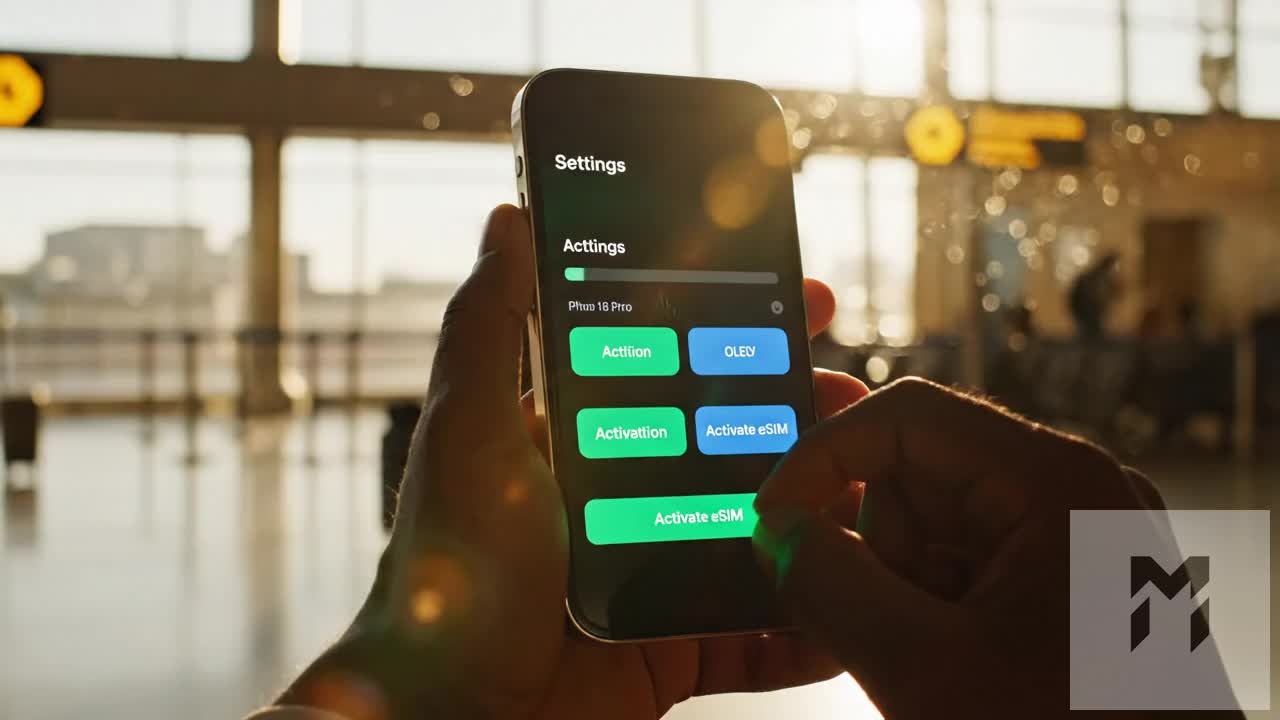
Conquer the Arctic: Your Essential 2026 Greenland Travel eSIM Guide for Unforgettable Adventures
The Arctic's Digital Frontier: Why Connectivity in Greenland is Different
Greenland, the world's largest island, is a destination unlike any other. It's a realm of breathtaking contrasts: colossal ice caps stretching beyond the horizon, dramatic fjords carved by ancient glaciers, and a vibrant, yet sparse, tapestry of Inuit culture. Travelers are drawn to its raw, untamed beauty – the ethereal dance of the Northern Lights, the silent majesty of towering icebergs, and the profound sense of isolation that only true wilderness can offer. However, this very remoteness, coupled with its extreme environment, presents a unique set of challenges when it comes to staying connected.
The Harsh Realities of Arctic Infrastructure
Establishing and maintaining robust cellular infrastructure in Greenland is an engineering marvel in itself, fraught with inherent difficulties that would cripple networks in more temperate zones. The island's geography and climate conspire against conventional development:
- Permafrost: Much of Greenland's non-glaciated land is underlain by permafrost, ground that remains frozen for at least two consecutive years. This makes laying fiber optic cables, erecting stable cell tower foundations, and maintaining equipment incredibly challenging and expensive. Thawing and refreezing cycles can shift structures and damage buried lines.
- Extreme Weather Conditions: Blizzards, gale-force winds, sub-zero temperatures, and heavy snowfall are common, especially outside the brief summer. These conditions not only make construction and maintenance hazardous but also put immense strain on electronic equipment, requiring specialized, hardened infrastructure designed to withstand the Arctic's relentless assault.
- Vast Distances and Sparse Population: Greenland's population of roughly 56,000 is scattered across a handful of small towns and even smaller settlements, primarily along the ice-free coast. Connecting these isolated communities across hundreds of kilometers of uninhabited wilderness is a logistical nightmare, requiring extensive satellite links or costly undersea cables, often with limited bandwidth.
- Mountainous Terrain: The rugged, mountainous coastline, punctuated by deep fjords, creates significant line-of-sight issues for cellular signals. What might be a simple tower placement elsewhere becomes a complex topographical puzzle, often necessitating multiple repeater stations or strategically placed, high-cost satellite dishes.
Why Traditional Connectivity Falls Short
Given these formidable obstacles, it's no surprise that traditional connectivity solutions often fall short or are prohibitively expensive in Greenland. Relying solely on your home country's international roaming can quickly lead to exorbitant bills, with data speeds often throttled and coverage limited to major towns. Purchasing a local physical SIM card upon arrival might seem like an option, but availability can be restricted to larger towns, requiring specific registration processes, and still offering coverage that pales in comparison to what you might expect elsewhere. For truly off-grid communication, satellite phones offer a lifeline but are bulky, costly to rent or buy, and primarily designed for voice calls or very slow data, not the seamless digital experience modern travelers expect.
eSIM: An Essential Tool, Not Just a Convenience
This challenging environment sets the stage for why a specialized, flexible solution like an eSIM is not merely a convenience, but an essential tool for safety, navigation, and sharing the unforgettable experiences Greenland offers. Imagine being amidst the vastness of the Greenlandic wilderness, perhaps on a dog sledding expedition or a boat tour through an iceberg-filled fjord. Reliable connectivity, even if basic, becomes critical for:
- Safety and Emergency: Accessing emergency services, checking weather updates, or simply letting loved ones know you're safe. GPS functionality for navigation, even offline maps, relies on initial data downloads and updates.
- Navigation and Logistics: While exploring towns like Nuuk or Ilulissat, having access to Google Maps or Apple Maps for directions, finding local services, or confirming ferry schedules is invaluable. The ability to use Apple Pay or other digital payment methods smoothly can also streamline transactions in remote areas.
- Sharing Unforgettable Moments: Capturing the vibrant hues of the Northern Lights, the colossal scale of a calving glacier, or the serene beauty of a remote settlement is only half the experience. Instantly sharing these moments with friends and family, uploading photos and videos, transforms a personal journey into a shared adventure.
The psychological aspect of being 'off-grid' is a double-edged sword. While many travelers seek a digital detox, the modern reality often demands a baseline of reliable connectivity for practical reasons. It's about striking a balance: embracing the solitude while retaining the peace of mind that comes with knowing you can reach out if needed.
This is where a provider like MollySIM truly shines. Unlike many competitors that offer a mere 128kbps Fair Use Policy (FUP) speed limit after high-speed data is consumed, MollySIM provides a generous 384kbps FUP speed. This seemingly small difference is monumental in Greenland. A speed that is three times faster ensures that essential applications like Google Maps load smoothly for critical navigation, Apple Pay transactions process without frustrating delays, and even basic messaging apps remain functional, allowing you to stay connected without feeling completely cut off, even when your primary data allowance is depleted. In the Arctic's digital frontier, such a robust and reliable eSIM solution isn't just an option; it's a necessity for a truly unforgettable and secure adventure.
Navigating Greenland's Network: Understanding Tusass and Local Limitations
🌐 Global Travel High-Speed Travel eSIM & SIM Plans
Instant QR code activation, hotspot enabled, with guaranteed 384kbps fallback speed to keep Maps & Digital Wallets active.
Greenland's telecommunications landscape is dominated by a single, crucial player: Tusass. Formerly TELE-POST, Tusass is the national provider, responsible for connecting the vast, sparsely populated island to itself and the rest of the world. Its mandate extends beyond simple mobile service, encompassing internet, television, and postal services, making it an indispensable pillar of Greenlandic society and infrastructure. For locals, Tusass is the lifeline, but for international travelers, understanding its infrastructure and limitations is key to managing connectivity expectations.
Infrastructure and Historical Development Challenges
Building and maintaining a modern telecommunications network in the Arctic is an engineering marvel fraught with unique challenges. Greenland's rugged, mountainous terrain, vast ice sheet, and extreme weather conditions make traditional infrastructure deployment incredibly difficult and expensive. Tusass has historically relied on a combination of submarine fiber optic cables connecting major coastal towns (primarily along the west coast from Nuuk northwards), microwave radio links, and satellite communication for the most remote settlements. The development has been incremental, often dictated by the immense logistical hurdles of laying cables across deep fjords or erecting towers on remote, icy peaks. This patchwork approach, while effective for local residents in established areas, inherently limits its reach.
Coverage Realities: Urban vs. Wilderness
While Tusass provides robust 4G/LTE service in Greenland's largest towns – such as Nuuk, Ilulissat, Sisimiut, Qaqortoq, and Kangerlussuaq – the moment you venture beyond these urban centers, coverage rapidly diminishes or disappears entirely. Typical Tusass coverage maps vividly illustrate this dichotomy: bright green swathes hugging the coastlines where towns are situated, quickly fading into vast white or light grey areas inland, across the ice sheet, and in many of the country's thousands of fjords.
These 'dead zones' are not merely inconvenient; they pose significant safety implications for adventurers. Deep fjords, often flanked by towering cliffs, block signals effectively. Near glaciers, the sheer mass of ice and the remoteness of the locations mean no infrastructure exists. On remote hiking trails, dog sledding expeditions, or multi-day boat trips exploring the intricate coastline, reliable mobile service is often non-existent. This means that for emergencies, navigation, or simply staying in touch, travelers cannot solely rely on a local network, highlighting the need for alternative communication methods or a robust eSIM solution that can leverage any available signal, however fleeting.
Limitations for Short-Term Travelers with Local SIM Cards
For international visitors on short-term trips, relying solely on a physical Tusass SIM card presents several practical hurdles:
- Activation Complexities: Purchasing and activating a local SIM can involve paperwork, ID verification, and sometimes a wait, eating into precious travel time. This can be particularly frustrating after a long journey.
- Language Barriers: While English is spoken in tourist-centric areas, navigating the process in smaller towns or with less experienced staff can be challenging if Danish or Greenlandic is the primary language.
- Limited Availability: Tusass stores or authorized resellers are primarily found in the larger towns. If your itinerary starts in a remote area or involves immediate departure from an airport like Kangerlussuaq without a stop in a major city, acquiring a SIM can be difficult.
- Data Package Flexibility: Local data packages, while suitable for residents, may not offer the flexibility or short-term validity periods ideal for tourists. They might require top-ups that are inconvenient to manage on the go, or offer less competitive rates for international visitors compared to specialized travel eSIMs.
While Tusass is undeniably vital for the local population, connecting communities and facilitating daily life, its inherent geographical constraints make it less ideal for the extensive exploration that many tourists seek. The vast, untamed wilderness of Greenland, which is its primary draw, is precisely where its network reach is most limited.
This is where the strategic choice of an international eSIM, like those offered by MollySIM, becomes invaluable. While no eSIM can conjure a signal where none exists, a high-quality eSIM ensures that when a signal is available, you can connect instantly without the hassle of local SIM acquisition. Furthermore, in areas where connectivity might be intermittent or primary data allowances are depleted, MollySIM's generous 384kbps Fair Use Policy (FUP) speed stands out. This speed, which is three times faster than many competitors' 128kbps FUP, is critical. It means that even on reduced speed, essential applications like Google Maps can still load directions, Apple Pay transactions can process without frustrating delays, and basic messaging apps remain functional. This robust FUP provides a crucial layer of continuous, albeit slower, connectivity, offering peace of mind and practical utility in an environment where every bit of reliable connection counts. It transforms the potential frustration of a 'dead zone' into a manageable slowdown, allowing you to stay connected without feeling completely cut off, even when your primary data allowance is depleted.
MollySIM: Your Arctic Connectivity Solution for 2026 Greenland Adventures
Navigating the vast, often remote landscapes of Greenland demands a connectivity solution that is not only reliable but also incredibly flexible and user-friendly. This is precisely where MollySIM (https://mollysim.com) steps in, leveraging the power of eSIM technology to transform your Arctic adventure.
Understanding eSIM Technology: The Foundation of Modern Travel Connectivity
At its core, an eSIM (embedded Subscriber Identity Module) is a digital SIM card that's built directly into your compatible smartphone or device. Unlike traditional physical SIM cards, there's no need for physical swapping, tiny trays, or the risk of losing a crucial component. This fundamental difference offers a cascade of advantages for the modern traveler:
- Effortless Activation: Activate your data plan with a simple QR code scan or manual input, often before you even depart for Greenland.
- Multiple Profiles: Store several eSIM profiles on a single device, allowing you to switch between local plans, international plans, or even a home plan with ease, without ever touching a physical card.
- Enhanced Security: eSIMs are less susceptible to physical theft or damage, and the digital nature adds a layer of security against unauthorized access.
- Convenience: No more hunting for local SIM card vendors upon arrival, dealing with language barriers, or worrying about incompatible SIM sizes.
MollySIM: Tailored Connectivity for Greenland's Unique Landscape
MollySIM specifically addresses the unique connectivity challenges of Greenland by acting as a robust, reliable bridge between your device and the available local network infrastructure. While Greenland's network, primarily operated by Tusass, has its geographical limitations, MollySIM ensures that when a signal is present, you connect seamlessly.
MollySIM boasts robust global coverage, underpinned by strategic regional partnerships. In Greenland, this means MollySIM leverages the existing local networks, providing you with the best possible connectivity where available. This approach eliminates the guesswork and hassle for travelers, offering a consistent, international experience without the need to engage directly with local providers for a temporary solution. It's about providing a hassle-free, pre-configured data solution that works from the moment you land, allowing you to focus on the breathtaking scenery rather than connectivity woes.
Unlocking Essential Functions with MollySIM in the Arctic
The utility of a reliable eSIM like MollySIM extends far beyond casual browsing, becoming a critical tool for safety and convenience in an environment like Greenland:
- GPS Navigation: While offline maps are essential for remote areas, MollySIM provides the initial data needed to download comprehensive map sets for apps like Google Maps or Apple Maps. Furthermore, when a signal is available, it allows for real-time traffic updates (though less relevant in Greenland), point-of-interest searches, and precise location sharing.
- Emergency Communication: In an unexpected situation, the ability to make an internet call (VoIP via WhatsApp, FaceTime Audio) or send a critical message can be life-saving. MollySIM ensures you have this capability whenever a network signal is within reach.
- Sharing Real-Time Updates: Keep loved ones informed of your adventures and well-being with photos, videos, and messages, fostering peace of mind for both you and those back home.
- Accessing Vital Travel Information: Check weather forecasts, ferry schedules, tour updates, or local attraction opening hours on the go, ensuring your itinerary remains flexible and informed.
The Game-Changing MollySIM 384kbps Fair Use Policy (FUP)
Perhaps one of MollySIM's most significant advantages for Greenland travelers is its generous 384kbps Fair Use Policy (FUP) for unlimited data. In an environment where high-speed data can be intermittent, scarce, or quickly exhausted, this FUP is a true game-changer.
Here's why MollySIM's 384kbps FUP stands out:
- Triple the Speed: At 384kbps, MollySIM offers a speed that is three times faster than many competitors' standard 128kbps FUP. This difference is not merely theoretical; it translates into practical, usable connectivity.
- Essential Application Functionality:
- Google Maps & Apple Pay: Crucially, 384kbps is sufficient for Google Maps to load directions and routes, even if slightly slower, and for Apple Pay transactions to process without frustrating delays at local shops or tour operators.
- Messaging & Email: Send and receive WhatsApp text messages, iMessages, and emails reliably. Attachments might take a moment longer, but essential communication remains fluid.
- Light Web Browsing: Check critical information like weather updates, flight statuses, or local news without feeling completely cut off.
- Basic App Updates: Allow essential apps to perform background updates or fetch small pieces of data.
This robust FUP provides a crucial layer of continuous, albeit slower, connectivity. It means that even when your primary high-speed data allowance is depleted, or you find yourself in an area with limited bandwidth, you are never completely cut off from essential communication. For safety and peace of mind in Greenland's remote expanses or during unexpected network outages, the ability to send a "check-in" message, confirm a booking, or look up a critical piece of information via the 384kbps FUP is invaluable. It transforms a potential 'dead zone' into a manageable slowdown, ensuring you remain connected to the outside world when it matters most.
Choosing Your Connectivity: MollySIM vs. The Alternatives (Comparative Table)
Navigating Greenland's unique digital landscape requires a thoughtful approach to connectivity. While the allure of pristine wilderness is undeniable, staying connected for safety, navigation, and sharing your experiences is paramount. Below, we provide a detailed comparison of MollySIM against other common connectivity options, helping you make an informed decision for your Arctic adventure.
| Feature/Option | MollySIM MollySIM The
The decision of how to stay connected in Greenland is a crucial one, impacting everything from safety and navigation to convenience and budget. While the remote Arctic landscape presents unique challenges, several options exist, each with distinct advantages and drawbacks. Here, we delve into a comparative analysis, highlighting why MollySIM stands out as an optimal choice for most travelers.
Understanding Your Connectivity Needs in Greenland
Greenland's infrastructure is concentrated around its coastal towns and settlements. Once you venture into the vast wilderness, fjords, or ice caps, traditional cellular coverage becomes sparse or non-existent. This reality shapes the effectiveness and reliability of each connectivity solution.
| Feature/Option | MollySIM | | Ease of Setup/Activation | Digital activation via QR code or link; immediate use. No physical SIM card required.
Mastering Your MollySIM in Greenland: Pre-Trip Setup and On-Location Data Management
Preparing for an Arctic expedition requires meticulous planning, and your digital connectivity is no exception. With MollySIM, securing reliable data for your Greenland adventure is straightforward, provided you follow a few essential steps before departure and manage your usage wisely on location.
Pre-Trip Setup: Ensuring Seamless Connectivity Before You Depart
A smooth start to your Greenland journey begins with a properly configured eSIM. Here’s how to set up your MollySIM for success:
1. Device Compatibility Check
Before anything else, confirm your smartphone supports eSIM technology. Most modern flagship devices from Apple (iPhone XS and newer), Samsung (Galaxy S20 and newer, Note 20, Fold, Flip series), Google (Pixel 3 and newer), and other manufacturers are eSIM-compatible. To verify, navigate to your phone's settings:
- iOS: Settings > General > About. Look for "Add eSIM" or "Digital SIM."
- Android: Settings > Network & Internet (or Connections) > SIMs (or Mobile Network). Look for an option to "Add eSIM" or "Download a SIM."
If your device isn't compatible, consider borrowing or purchasing a compatible phone, as a physical SIM card might not be a viable option for Greenland's challenging environment.
2. Purchasing the Right MollySIM Plan for Greenland
Visit https://mollysim.com and browse their Greenland-specific eSIM plans. Consider your trip duration and anticipated data needs. Are you a light user who primarily needs navigation and messaging, or do you require more data for photo uploads and occasional streaming? MollySIM offers various data packages designed to cater to different travel styles. Opt for a plan with sufficient high-speed data, but also remember the immense value of MollySIM's generous 384kbps Fair Use Policy (FUP) speed limit, which ensures essential connectivity even after your high-speed allowance is exhausted.
3. The Activation Process: QR Code and Manual Entry
Once you've purchased your MollySIM plan, you'll receive an email with your eSIM details, typically including a QR code and manual activation instructions.
- QR Code Activation (Recommended): On your eSIM-compatible device, go to Settings > Mobile Data (or Network & Internet) > Add eSIM (or Add Data Plan). Select "Use QR Code" and scan the provided QR code. Follow the on-screen prompts to complete the installation.
- Manual Entry: If QR code scanning isn't possible, choose the "Enter Details Manually" option. You'll need to input the SM-DP+ Address, Activation Code, and Confirmation Code provided in your MollySIM email.
4. Crucial Pre-Departure Connectivity Test
Do NOT wait until you land in Greenland to test your eSIM. While still in your home country (or a location with internet access), install your MollySIM eSIM. Once installed, ensure it’s enabled in your phone's settings, but keep your primary SIM active for calls/texts. Briefly switch your mobile data to the MollySIM profile and attempt to browse a website or send a message. This confirms the eSIM is correctly installed and ready to connect to a network upon arrival in Greenland. If you encounter issues, MollySIM's customer support can assist you before you're in a remote Arctic location.
On-Location Data Management: Optimizing Your Connectivity in Greenland
Greenland's vast, rugged landscapes mean high-speed data can be intermittent or expensive outside major towns. Effective data management is key to making your MollySIM last and ensuring you stay connected when it matters most.
1. Strategic Data Optimization Techniques
- Download Maps Offline: Before venturing out, download regional maps for Greenland using apps like Google Maps or Maps.me. This allows for reliable navigation without consuming live data, crucial for remote hikes or boat trips.
- Pre-Load Entertainment: Download movies, TV shows, podcasts, and e-books onto your device before you leave Wi-Fi zones. This provides entertainment during travel or downtime without relying on cellular data.
- Leverage Available Wi-Fi: In towns, hotels, guesthouses, and some cafes, Wi-Fi is often available. Use these opportunities to download large files, upload photos, or make video calls, conserving your MollySIM data for when you're truly mobile.
- Manage Background Data: Go into your phone's app settings and restrict background data usage for non-essential apps. Disable automatic app updates and cloud syncing when on cellular data. This prevents apps from consuming data without your direct interaction.
2. Monitoring Your MollySIM Data Usage
MollySIM provides tools to help you track your data consumption. Typically, you can monitor your remaining data allowance through the MollySIM app or by logging into your account on their website. Regularly check your usage to avoid unexpected depletion of your high-speed data. Your phone's settings also offer a breakdown of data usage by app, helping you identify and curb data-hungry applications.
3. The Lifeline of 384kbps FUP: Essential Communication When It Counts
One of MollySIM's standout benefits for a destination like Greenland is its generous 384kbps Fair Use Policy (FUP) speed limit. Unlike competitors who often throttle to a barely functional 128kbps, MollySIM's 384kbps speed is 3x faster, making a significant difference in usability. When your high-speed data is exhausted or unavailable, this FUP speed becomes an invaluable lifeline:
- Text-Based Messaging: Send and receive text messages via WhatsApp, iMessage, or other messaging apps effortlessly. This is perfect for checking in with loved ones or coordinating with your tour group.
- Critical Weather Updates: Access text-based weather forecasts and essential travel alerts, crucial for planning activities in Greenland's unpredictable climate.
- Light Email Access: Receive and send important, text-heavy emails without significant delays.
- Basic Safety Check-ins: Inform your contacts of your safety and location, even from remote areas where only low-speed data is available.
- Functional Navigation & Payments: Crucially, MollySIM's 384kbps speed is sufficient for Google Maps to load basic routes and points of interest, allowing you to navigate even without high-speed data. It also supports essential services like Apple Pay for quick transactions in towns, ensuring you're never completely cut off from vital functions.
In an emergency, this low-speed data can be critical. While not suitable for high-bandwidth tasks, it can facilitate text-based communication with emergency services if you have their contact information, or allow you to send a distress signal via a low-bandwidth messaging app to a pre-arranged emergency contact. This ensures that even when off the beaten path, you retain a fundamental layer of connectivity for safety and peace of mind.
Conquering the Arctic: Essential Tips for a Connected & Safe 2026 Greenland Adventure
Embarking on a journey to Greenland in 2026 is an expedition into one of the world's last true wildernesses. While the allure of its pristine landscapes and unique culture is undeniable, smart preparation, particularly regarding connectivity, is paramount. Integrating a reliable eSIM like MollySIM into your travel toolkit transforms a potentially isolated adventure into a safely connected and deeply immersive experience, allowing you to embrace the Arctic's remoteness while always remaining within reach.
Enhanced Safety in Remote Arctic Areas
Greenland's vast, sparsely populated terrain means that consistent communication isn't just a convenience; it's a critical safety net. In areas where traditional cellular signals might be weak or non-existent, the ability to maintain even low-bandwidth connectivity can be life-saving. With MollySIM, even if your high-speed data allowance is exhausted, its 384kbps Fair Use Policy (FUP) speed provides a crucial lifeline. This speed, which is three times faster than many competitors' 128kbps FUP, is sufficient for:
- Emergency Communication: Sending text-based messages via WhatsApp, iMessage, or SMS to pre-arranged emergency contacts or local tour operators. In a genuine emergency, this can facilitate sending a distress signal or coordinating assistance.
- Safety Check-ins: Regularly informing loved ones or your expedition leader of your status and location, especially during multi-day treks or boat excursions into remote fjords.
- Accessing Critical Information: Receiving text-based alerts regarding sudden weather changes, potential hazards, or updated travel advisories from local authorities or your tour provider.
This fundamental layer of connectivity ensures that even when you're off the beaten path, exploring glaciers or isolated settlements, you're never truly cut off from vital support or information.
Navigation, Exploration, and Real-time Arctic Intelligence
Greenland's environment is dynamic and unpredictable. Weather conditions can shift rapidly, ice conditions can alter fjord accessibility, and the elusive Northern Lights require precise timing and location. MollySIM significantly enhances your ability to navigate and adapt:
- Reliable Navigation: The 384kbps FUP speed is robust enough for Google Maps to load basic routes, points of interest, and even offline maps effectively. This allows you to navigate towns, find local amenities, or confirm your location during excursions without relying solely on paper maps or guide instructions.
- Real-time Updates: Access crucial weather forecasts, ice charts, and local advisories directly on your device. This is invaluable for planning daily activities, adjusting itineraries, and making informed decisions about safety and accessibility.
- Northern Lights Forecasting: Utilize specialized apps that predict aurora activity, allowing you to position yourself optimally for a chance to witness this spectacular natural phenomenon. MollySIM's consistent data ensures you receive these time-sensitive updates.
- Fjord Accessibility: In a landscape dominated by water and ice, knowing which fjords are accessible by boat or kayak on any given day is vital. Connectivity allows you to check with local operators or online resources for the latest conditions.
Cultural Immersion and Sharing Your Arctic Story
Connectivity extends beyond safety and logistics, enriching your cultural experience and allowing you to share your incredible journey:
- Deepen Your Understanding: Research local Inuit customs, historical sites, and the unique flora and fauna you encounter. A quick search can transform a simple observation into a profound learning experience.
- Bridge Language Barriers: Utilize translation apps to communicate more effectively with local residents, fostering genuine connections and enhancing your understanding of Greenlandic culture.
- Share Your Adventures: While high-bandwidth uploads might be limited in some areas, MollySIM's consistent connection allows you to share text updates, low-resolution photos, and short video clips with friends and family, bringing them along on your Arctic adventure. This is particularly easy with services like Apple Pay, which also functions smoothly on the 384kbps speed, making transactions in towns quick and convenient.
General Greenland Travel Tips for a Seamless Adventure
Beyond connectivity, a successful Greenland adventure requires meticulous planning and a flexible mindset:
- Pack for Extreme Weather: Greenland's climate is unforgiving. Layered clothing, waterproof and windproof outer shells, insulated boots, hats, and gloves are non-negotiable. Be prepared for temperatures ranging from mild summer days to biting Arctic chills.
- Respect Local Culture and Environment: Greenlanders are proud of their heritage and pristine environment. Always ask permission before photographing people, respect local traditions, and practice Leave No Trace principles to preserve the fragile Arctic ecosystem.
- Be Prepared for Delays: Weather conditions can cause significant delays or cancellations for flights, boat trips, and other excursions. Build flexibility into your itinerary and embrace the unexpected; it's part of the Arctic experience.
- Travel Insurance is Essential: Comprehensive travel insurance covering medical emergencies, evacuations, and trip cancellations/interruptions is crucial for any Greenland trip.
- Hydration and Sun Protection: Even in cold climates, staying hydrated is important. The Arctic sun, especially reflecting off ice and snow, can be intense, so pack sunglasses and high-SPF sunscreen.
By integrating MollySIM's reliable connectivity with these essential travel tips, you're not just visiting Greenland; you're truly conquering the Arctic. You're equipped to navigate its challenges, immerse yourself in its wonders, and share its magic, all while staying safely within reach. This smart, prepared, and connected approach ensures your 2026 Greenland adventure will be nothing short of unforgettable.
🌐 Global Travel High-Speed Travel eSIM & SIM Plans
Instant QR code activation, hotspot enabled, with guaranteed 384kbps fallback speed to keep Maps & Digital Wallets active.