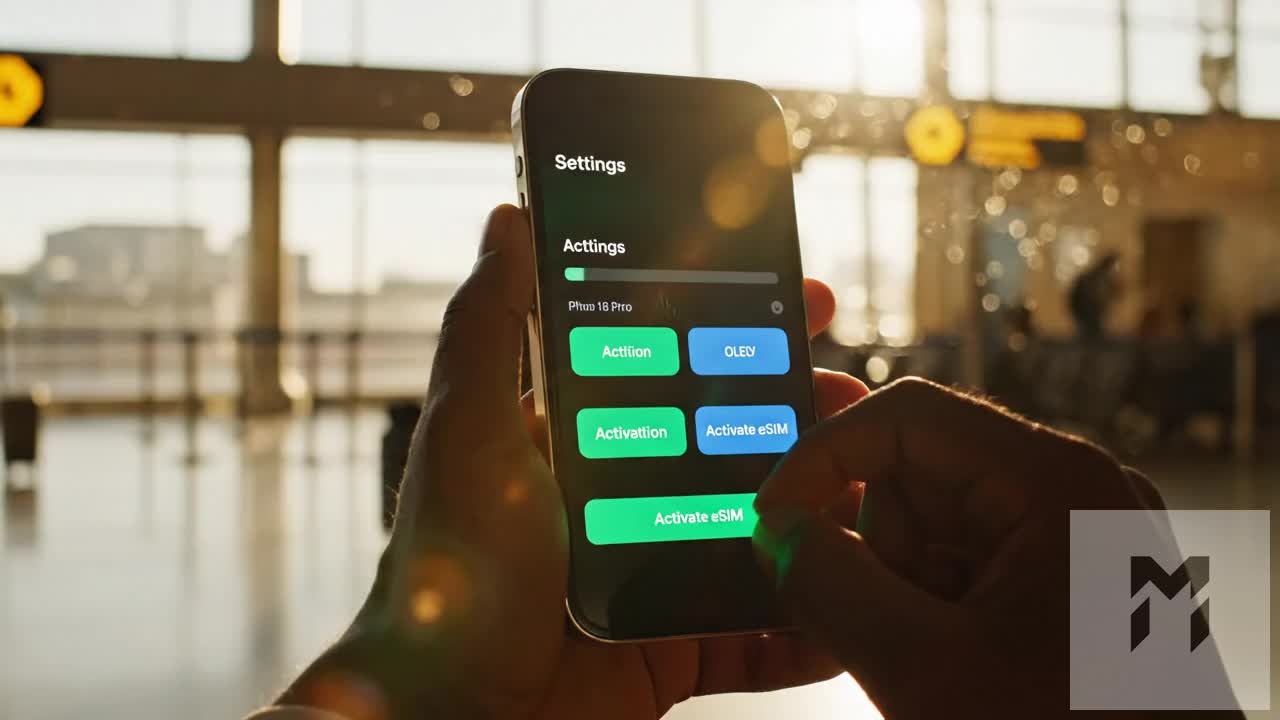
The Savvy Backpacker's eSIM Strategy: Master Multi-Country Connectivity on a Budget
The Backpacking Connectivity Conundrum: Why eSIMs are a Game-Changer
The modern backpacker thrives on spontaneity, exploration, and staying connected – whether it's for navigation, sharing experiences, or emergency contact. Yet, for years, maintaining reliable and affordable connectivity across multiple international borders has been a persistent, often frustrating, challenge. Imagine landing in a new country, jet-lagged and eager to explore, only to face a labyrinthine process just to get online. This "backpacking connectivity conundrum" has traditionally presented three major hurdles that drain time, money, and peace of mind.
The Traditional Connectivity Traps for Multi-Country Backpackers
- The Local SIM Card Merry-Go-Round: The default solution for budget travelers has long been purchasing a local physical SIM card upon arrival. While seemingly cost-effective initially, this approach quickly devolves into a logistical nightmare across multiple countries:
- Language Barriers & Bureaucracy: Navigating foreign telecom stores, deciphering complex data plans in an unfamiliar language, and often enduring lengthy registration processes (sometimes requiring local addresses, specific IDs, or even biometric data) eats into precious travel time and can be a source of significant stress.
- Physical Hassle & Risk: Each new country means removing the old SIM, carefully storing it (and inevitably misplacing it), and inserting a new one. This constant swapping risks damaging delicate phone components or losing tiny, essential cards.
- Wasted Data & Money: Data plans are often purchased for a full month, but if you're only in a country for a week, a significant portion of your data allowance goes unused and unrefunded. This effectively means you're throwing money away with every short-term stop.
- The Perilous Price of International Roaming: For those who prioritize convenience over the local SIM hassle, enabling international roaming with their home provider seems like an easy fix. However, this convenience comes at an exorbitant price. Data roaming charges can quickly skyrocket, turning a casual map check, a quick social media update, or a video call with family into a budget-busting expense. Many travelers return home to "bill shock," realizing that staying connected cost more than their accommodation or even their flights.
- The Unreliable Embrace of Public Wi-Fi: Relying solely on free public Wi-Fi hotspots in cafes, hostels, or airports is a gamble. Speeds are often glacial, connections frequently drop, and, critically, public networks are notorious security risks, leaving your personal data vulnerable to interception. Furthermore, crucial moments – like needing directions on a remote street, booking an urgent train ticket, or contacting emergency services – often occur precisely when reliable Wi-Fi is nowhere to be found, leaving you stranded and frustrated.
Enter the eSIM: A Digital Revolution for Travelers
This is where the eSIM (embedded Subscriber Identity Module) emerges not just as an alternative, but as a fundamental game-changer for multi-country backpackers. In simple terms, an eSIM is a digital SIM card that's built directly into your smartphone or compatible device during manufacturing. Instead of a physical chip you insert, your phone can download and store multiple "eSIM profiles" – essentially digital versions of different network plans – without any physical interaction.
Unlocking Unprecedented Advantages with eSIMs
The shift from physical to digital connectivity brings a host of benefits that directly address the traditional pain points, enabling a truly flexible and budget-conscious travel experience:
- Instant Activation & Seamless Convenience: No more hunting for local stores, navigating language barriers, or fumbling with tiny trays. You can purchase an eSIM plan online before you even leave home, or while waiting for your luggage, and activate it instantly with a QR code or a few taps in your phone's settings.
- No Physical Swapping, No Lost SIMs: Since the eSIM is embedded, there's nothing to physically swap. Your device can store multiple eSIM profiles simultaneously, eliminating the risk of damaging components or losing precious physical SIM cards.
- Multiple Profiles, One Device: This is a cornerstone advantage for multi-country travel. You can have your home plan, an eSIM for an entire region like Europe, another for Southeast Asia, and even a specific country plan, all stored on the same device. This transforms your phone into a global connectivity hub.
- Effortless Switching Between Plans: Toggling between different data plans is as simple as selecting an option in your phone's settings. This allows for unparalleled flexibility, letting you activate the most cost-effective plan for your current location or switch to a backup if needed, all without interruption.
- Cost-Effectiveness & Budget Control: eSIMs empower travelers to choose from a vast marketplace of regional or global data plans, often at significantly lower rates than traditional roaming. You pay only for what you need, when you need it, eliminating wasted data and the dreaded bill shock.
MollySIM: Elevating the Backpacking eSIM Experience
For the savvy backpacker, the choice of eSIM provider is crucial. MollySIM (https://mollysim.com) is specifically designed to enhance this multi-country connectivity strategy, directly addressing common frustrations with data speed and reliability, particularly under Fair Use Policies.
A critical differentiator for MollySIM is its 384kbps Fair Use Policy speed limit. This might seem like a technical detail, but it's a monumental advantage for real-world usage. Many competitors throttle speeds to a mere 128kbps after a certain data threshold, rendering essential apps almost unusable. At 128kbps, even basic tasks like loading detailed maps on Google Maps, processing an Apple Pay transaction, or quickly checking public transport schedules can become painfully slow or fail entirely, turning convenience into frustration. MollySIM's 3x faster 384kbps speed ensures that even when operating under fair use, you can still reliably navigate with Google Maps, make contactless payments, check public transport schedules, and stay in touch without frustrating delays. This higher baseline speed transforms the "budget connectivity" experience from merely functional to genuinely practical and efficient, keeping you connected when it matters most.
By leveraging an eSIM strategy, particularly with a robust provider like MollySIM, backpackers can transition from a reactive, country-by-country approach to a proactive, holistic global connectivity plan. This shift ensures you're always connected, always in control of your budget, and always ready for the next adventure, without the traditional connectivity headaches that once plagued international travel.
MollySIM's Multi-Country Mastery: Unlocking Flexible Global Connectivity
🌐 Global Travel High-Speed Travel eSIM & SIM Plans
Instant QR code activation, hotspot enabled, with guaranteed 384kbps fallback speed to keep Maps & Digital Wallets active.
For the modern backpacker navigating a dynamic itinerary, the traditional approach to mobile data — buying a new local SIM card in every country — is a relic of the past. It's inefficient, time-consuming, and often leads to frustrating periods of disconnection. MollySIM (https://mollysim.com) fundamentally redefines this experience, offering a suite of flexible regional and global eSIM plans specifically engineered for travelers whose journeys span multiple borders and whose durations in each location might be fluid.
Seamless Border Crossings: One Plan, Many Countries
MollySIM's core innovation lies in its ability to provide multi-country coverage under a single eSIM plan. Instead of purchasing individual SIMs for Thailand, then Vietnam, then Cambodia, a backpacker can activate one MollySIM regional plan (e.g., "Asia Pacific" or "Europe") and enjoy continuous, high-speed data across all included countries. This eliminates the need for constant SIM purchases, physical swaps, or the tedious process of researching local providers and their often-confusing data packages.
The mechanics are elegantly simple: once activated, your MollySIM eSIM automatically connects to the best available local network as you cross borders. There's no manual intervention required, no re-configuration, and absolutely no roaming charges. This unparalleled flexibility is a game-changer for spontaneous travel, allowing backpackers to extend their stay in a captivating city or pivot to a new destination without worrying about their connectivity expiring or incurring exorbitant costs. Compared to the aggregate expense and hassle of buying multiple local SIMs, or the prohibitive rates of traditional international roaming, MollySIM offers a dramatically more cost-effective and convenient solution.
The Game-Changer: MollySIM's Transparent Fair Usage Policy (FUP) and 384kbps Fallback
While high-speed data is crucial, what truly sets MollySIM apart for budget-conscious backpackers and digital nomads is its transparent and highly practical Fair Usage Policy (FUP), particularly the sustained 384kbps fallback speed. Many providers, after a certain data threshold, either cut off connectivity entirely or throttle speeds to an agonizingly slow 128kbps. This lower speed often renders essential applications like Google Maps, Apple Pay, or even basic messaging apps frustratingly slow or completely unusable.
MollySIM, however, ensures that even after your high-speed data allowance is exhausted, you remain continuously connected at a reliable 384kbps. This isn't just a technical detail; it's a monumental advantage for real-world usage. At 384kbps, which is 3x faster than many competitors' 128kbps limit, you can still:
- Navigate confidently with Google Maps: Load directions, search for points of interest, and track your location without frustrating delays.
- Stay in touch via WhatsApp and other messaging apps: Send and receive texts, images, and even make voice calls reliably.
- Check essential emails: Keep up with booking confirmations, flight changes, or communication with family and friends.
- Process contactless payments: Use Apple Pay or Google Pay without fear of transaction failures due to slow data.
- Make light social media updates: Share quick stories or check feeds without excessive buffering.
- Access public transport schedules and booking apps: Plan your next move efficiently.
This sustained connectivity at a usable speed means you are never truly disconnected, even on a tight budget. It provides an invaluable safety net, preventing the stress of being stranded without navigation or communication in an unfamiliar place. Unlike providers that might cut you off completely, forcing you to purchase expensive add-ons, or those that charge exorbitant rates for overages, MollySIM's FUP prevents complete disconnection and eliminates unexpected costs. This transparency and reliability offer profound peace of mind, allowing backpackers to stretch their data plan further and maintain essential connectivity throughout their entire journey, ensuring they're always prepared for the next adventure.
Strategic Data Management & Cost Optimization: Your eSIM Budget Toolkit
After understanding the robust fallback of MollySIM's 384kbps Fair Use Policy, the next crucial step for any savvy backpacker is to master proactive data management. This isn't just about saving money; it's about ensuring reliable connectivity when you need it most, without the stress of unexpected bills or sudden disconnections. Your MollySIM is a powerful tool, and with these strategies, you'll wield it like a pro.
Choosing the Right MollySIM Plan for Your Journey
Selecting the ideal eSIM plan is the cornerstone of budget-friendly connectivity. It requires a realistic assessment of your travel style, trip duration, and how many countries you'll visit.
- Estimate Your Data Needs:
- Light User (1-3 GB/month): Primarily messaging (WhatsApp), essential navigation (Google Maps), checking emails, and light browsing. You'll rely heavily on Wi-Fi.
- Moderate User (5-10 GB/month): Adds moderate social media use, occasional video streaming (at lower quality), more frequent web browsing, and some voice calls.
- Heavy User / Digital Nomad (15+ GB/month): Frequent video calls, extensive streaming, uploading photos/videos, using tethering for laptops, and consistent online work.
- Trip Length & Number of Countries: For shorter trips across a few countries, a regional MollySIM plan with a moderate data allowance might be perfect. For extended backpacking adventures spanning many regions, a larger global plan offers better per-GB value and eliminates the hassle of switching.
- Top-Up vs. Larger Plans:
- Smaller, Frequent Top-ups: This strategy offers maximum flexibility and budget control. If your usage is unpredictable, or you want to avoid paying for data you don't use, starting small and topping up as needed is ideal. MollySIM's seamless top-up process makes this highly convenient.
- Larger, Longer-Duration Plans: If you have a clear idea of your data needs and a longer trip ahead, a larger plan often provides a better cost-per-gigabyte. It reduces the frequency of needing to manage your plan, offering peace of mind for an extended period. Remember, even if you run out, MollySIM's 384kbps FUP keeps you connected for essentials.
Masterful Data Conservation Techniques
Even with a generous plan, smart data usage is key to stretching your budget further.
- Leverage Wi-Fi Religiously: Make it a habit to connect to secure Wi-Fi networks whenever available – hostels, cafes, libraries, airports. Download large files, update apps, and stream high-quality content only when on Wi-Fi.
- Disable Background App Refresh: This is a major data drain. Go into your phone's settings (iOS: Settings > General > Background App Refresh; Android: Settings > Network & internet > Data Saver or Apps & notifications > App data usage) and turn off refresh for non-essential apps.
- Optimize Video Streaming Quality: Before watching videos on YouTube, Netflix, or social media, manually set the quality to standard definition (SD) or lower. High-definition (HD) video consumes significantly more data.
- Download Offline Maps & Content: Before you head out, download entire regions or cities on Google Maps or Maps.me. Similarly, download music, podcasts, audiobooks, and even Netflix shows for offline playback. This is invaluable for navigation and entertainment without consuming mobile data.
- Restrict App Data Usage: Many apps allow you to limit their data consumption within their own settings or through your phone's system settings. For example, disable auto-play videos on social media feeds.
Seamless Monitoring & On-the-Go Top-ups
One of MollySIM's greatest advantages for backpackers is the ease of managing your data.
- Real-time Usage Tracking: The MollySIM app (or web portal) provides a clear, real-time overview of your remaining data. This transparency empowers you to make informed decisions about your usage and budget, preventing surprises.
- Effortless Top-ups: When your data starts running low, topping up is incredibly simple. A few taps in the MollySIM app, a quick secure payment, and your data allowance is instantly replenished. This eliminates the need to hunt for local SIM card vendors, navigate foreign languages, or deal with physical card swaps. The convenience of topping up from anywhere, at any time, ensures uninterrupted service and peace of mind, especially when you're relying on that 384kbps FUP for critical tasks before a full top-up.
Comparative Connectivity Options for Backpackers
To truly appreciate the value MollySIM brings, let's compare it against other common international connectivity solutions:
| Feature / Option | Local Physical SIMs (per country) | International Roaming (Home Provider) | Pocket Wi-Fi Device | MollySIM Global/Regional eSIM |
|---|---|---|---|---|
| Cost (Relative) | Low (per country), but adds up | Very High | Medium-High (rental + data) | Low-Medium (flexible plans) |
| Convenience | Low (constant swapping, setup) | High (no setup) | Medium (extra device, charging) | Very High (instant, no swap) |
| Multi-Country Support | None (new SIM per country) | Yes (but expensive) | Yes (if plan covers) | Excellent (seamless switching) |
| Data Flexibility | Good (local plans vary) | Poor (limited data, high cost) | Good (plan dependent) | Excellent (top-ups, regional/global) |
| Speed | Local 4G/5G | Varies (often throttled) | Varies (device/plan) | Local 4G/5G (then 384kbps FUP) |
| FUP/Fallback | None (new SIM when data runs out) | Often hard cut-off or extreme overage fees | Varies | 384kbps sustained connectivity |
| Physical Item | Yes (card) | No | Yes (device) | No (digital profile) |
| Ideal For | Single-country, long stay | Emergency, short trips | Groups, heavy users (if budget allows) | Budget-conscious, multi-country, flexible itinerary backpackers/digital nomads |
This comparison clearly illustrates why MollySIM stands out as the superior choice for backpackers prioritizing flexibility, cost-effectiveness, and seamless multi-country connectivity. Its digital nature, flexible plans, and robust fallback speed make it an indispensable tool in your travel arsenal.
Beyond Basic Data: Voice, SMS & Digital Nomad Connectivity Hacks
While abundant data is the cornerstone of any savvy backpacker's eSIM strategy, modern travel demands far more than just internet access. The true power of an eSIM like MollySIM lies in its ability to transform your smartphone into a comprehensive communication and productivity hub, eliminating traditional connectivity headaches and empowering digital nomads to work seamlessly from anywhere.
Voice & SMS Alternatives: Ditching Traditional Plans
The days of expensive international roaming for voice calls and SMS are long gone, thanks to the robust data connectivity provided by eSIMs. By leveraging MollySIM's reliable internet connection, you can utilize a suite of Voice over IP (VoIP) applications to communicate globally, often for free or at a fraction of the cost of traditional carriers.
- WhatsApp Calling: The undisputed king of international communication, WhatsApp allows free voice and video calls to other users worldwide. Its ubiquity means most of your contacts likely already use it, making it incredibly convenient for staying in touch with family and friends. Group calling features are also invaluable for coordinating with travel companions.
- Google Voice: For those needing a persistent U.S. phone number, Google Voice offers free calls and texts to U.S. and Canadian numbers. This is particularly useful for receiving verification codes, making reservations, or communicating with U.S.-based services without needing a physical SIM.
- Skype: While often associated with video conferencing, Skype remains a powerful tool for international calls. You can purchase credit to make low-cost calls to landlines and mobile numbers in virtually any country, making it ideal for professional calls or reaching contacts who aren't on VoIP apps.
- Viber & Telegram: Popular in various regions globally, these apps offer free app-to-app calls, secure messaging, and often advanced features like large group chats and file sharing. Telegram, in particular, is favored by many digital nomads for its robust channel and group functionalities.
Setting Up for Seamless Communication: To make the most of these services with your MollySIM, ensure you:
- Download and set up your preferred VoIP apps before you leave home, ideally while connected to Wi-Fi.
- Inform your key contacts which app you'll be using for communication abroad.
- Consider adding a small credit balance to services like Skype or Google Voice if you anticipate needing to call non-app users.
- Remember that even if your high-speed MollySIM data quota is depleted and you're relying on the 384kbps Fair Use Policy (FUP) speed, these apps can often still handle basic messaging and even low-bandwidth voice calls, ensuring you're never completely cut off.
Essential Apps & Services: Your Digital Travel Companion
Beyond communication, continuous data connectivity via an eSIM is the lifeline for virtually every modern travel essential. MollySIM ensures you have the digital tools at your fingertips to navigate, book, bank, and share your journey effortlessly.
- Reliable Navigation: Getting lost is a rite of passage for some, but for the savvy backpacker, Google Maps is indispensable. Real-time directions, public transport schedules, and points of interest are all powered by a live data connection. Even offline map apps like Maps.me benefit from occasional data syncs for updates. Crucially, MollySIM's 384kbps FUP speed is specifically designed to handle Google Maps smoothly, allowing you to load routes, search for locations, and navigate without frustrating delays, a significant advantage over competitors' slower fallback speeds.
- Seamless Booking & Transport: From last-minute hostel bookings on Booking.com or Hostelworld to finding a cozy Airbnb, constant data is key. Ride-sharing apps like Uber or Grab (prevalent in Southeast Asia) are essential for safe and convenient transport, requiring an active connection for booking and tracking.
- Secure Mobile Banking & Payments: Managing finances on the road is critical. Your banking apps allow you to check balances, transfer funds, and freeze cards in emergencies. Contactless payment systems like Apple Pay and Google Pay often require an active data connection for transaction verification. With MollySIM, even on FUP speed, these vital financial services remain accessible and functional, providing peace of mind.
- Staying Connected & Sharing: Of course, sharing your adventures on social media (Instagram, Facebook, TikTok) and staying current with news and emails are integral parts of the travel experience, all seamlessly enabled by your eSIM's data.
Digital Nomad Specifics: Uninterrupted Productivity
For digital nomads, reliable, sustained connectivity isn't a luxury; it's the foundation of their livelihood. MollySIM offers a critical safety net that ensures productivity even in challenging connectivity scenarios.
The most significant benefit for working travelers is MollySIM's 384kbps Fair Use Policy (FUP) speed limit. Unlike competitors who often throttle to a barely usable 128kbps, MollySIM provides a 3x faster fallback speed. This isn't just a number; it translates directly into practical usability:
- Essential Work Tasks: At 384kbps, you can reliably send and receive emails (even with small attachments), participate in text-based messaging on platforms like Slack or Teams, perform light web browsing for research, and keep cloud documents synchronized. While not ideal for video calls or large file transfers, it's perfectly adequate for maintaining critical communication and basic workflow.
- Always-On Backup: Imagine your hostel Wi-Fi suddenly drops, or you're on a long bus journey between towns. With MollySIM, you're never truly offline. This sustained connectivity acts as an invaluable backup, allowing you to respond to urgent client messages, check project statuses, or find your next accommodation without panic. It ensures you can always access essential information and communicate when it matters most.
Strategies for Higher-Speed Tasks: While MollySIM's FUP speed is excellent for essential tasks, higher-bandwidth activities like video conferencing, large file uploads, or software updates will still require faster speeds. Digital nomads should adopt a hybrid approach:
- Strategic Wi-Fi Hunting: Prioritize co-working spaces, cafes with strong reviews, and accommodations known for reliable internet for your most demanding tasks.
- Scheduled Downloads/Uploads: Plan to download large files or upload completed work during periods of high-speed MollySIM data or when connected to robust Wi-Fi.
- MollySIM as a Tethering Tool: When your MollySIM has high-speed data available, it can serve as a personal hotspot for your laptop, providing immediate, secure internet access wherever you are.
By combining MollySIM's reliable and uniquely fast FUP speed with strategic Wi-Fi usage, digital nomads can maintain a high level of productivity and peace of mind, knowing they always have a robust connection for their critical work.
Activating, Troubleshooting, and Maximizing Your eSIM Experience
Embarking on a multi-country adventure with an eSIM like MollySIM is designed for seamless connectivity, but understanding the practicalities of activation, troubleshooting, and optimization is key to a truly stress-free experience. This section provides the essential guidance every savvy backpacker needs.
Activating Your MollySIM eSIM: A Step-by-Step Guide
Before you even think about scanning, ensure your device is fully charged and connected to a stable Wi-Fi network. This prevents interruptions during the crucial activation process.
QR Code Activation (Recommended)
This is the fastest and most common method:
- Access Settings: On your smartphone, navigate to Settings > Cellular (or Mobile Data).
- Add eSIM: Look for an option like "Add eSIM", "Add Data Plan", or "Add Mobile Plan".
- Scan QR Code: When prompted, select "Use QR Code" and scan the QR code provided by MollySIM in your purchase confirmation email or account dashboard. Ensure good lighting and hold your phone steady.
- Follow Prompts: Your device will guide you through adding the cellular plan. You may be asked to label the eSIM (e.g., "MollySIM Travel") and set it as your primary line for data while traveling.
- Enable Data Roaming: Crucially, once the eSIM is installed, go into its settings and enable Data Roaming. MollySIM operates across multiple networks, so roaming is essential for connectivity.
Manual Entry Activation
If QR code scanning isn't possible, you can manually enter the details:
- Access Settings: Follow steps 1 and 2 from the QR Code method.
- Enter Details Manually: Select "Enter Details Manually" (or similar).
- Input Information: You'll need to enter the SM-DP+ Address and Activation Code provided by MollySIM. Double-check for typos.
- Complete Setup: Follow any remaining on-screen prompts, label your eSIM, and remember to enable Data Roaming.
Device Compatibility: Your First Checkpoint
Before purchasing any eSIM, verifying your device's compatibility is paramount. Not all phones support eSIM technology, especially older models or specific regional variants.
- How to Check: Consult your phone manufacturer's official website or use MollySIM's compatibility checker on their website (https://mollysim.com).
- Common Compatible Models:
- Apple iPhone: iPhone XS, XR, 11, 12, 13, 14, 15 series (and newer, excluding some models sold in mainland China).
- Samsung Galaxy: S20, S21, S22, S23, S24 series; Note 20 series; Fold and Flip series.
- Google Pixel: Pixel 3, 4, 5, 6, 7, 8 series (and newer).
- Many newer models from Huawei, Xiaomi, Oppo, and others also support eSIM. Always confirm your specific model.
Troubleshooting Common eSIM Issues
Even with careful setup, occasional hiccups can occur. Here’s how to diagnose and resolve common problems:
"No Service" or No Signal
- Check eSIM Status: Go to Settings > Cellular/Mobile Data and ensure your MollySIM profile is enabled.
- Data Roaming: Confirm Data Roaming is switched ON for your MollySIM eSIM. This is a frequent oversight.
- Restart Device: A simple restart often resolves transient network issues.
- Toggle Airplane Mode: Turn on Airplane Mode for 30 seconds, then turn it off. This forces your phone to re-search for networks.
- APN Settings: While MollySIM usually configures APN settings automatically, occasionally manual input is needed. Check MollySIM's support documentation for the correct APN (Access Point Name) and enter it under your eSIM's settings.
- Manual Network Selection: In your eSIM's settings, try manually selecting a network operator instead of relying on automatic selection.
Slow Speeds or Intermittent Connectivity
- Understand FUP Speed: Remember MollySIM's unique 384kbps Fair Use Policy (FUP) speed limit after your high-speed data is exhausted. This speed is specifically designed to be 3x faster than competitors' 128kbps, ensuring essential services like Google Maps navigation, messaging apps, and Apple Pay continue to work smoothly. If you're experiencing this consistent speed, it's likely the FUP, not a connection issue.
- Check Data Cap: Verify if you've consumed your high-speed data allowance. You can usually do this via your MollySIM account.
- Signal Strength: Poor signal in remote areas or dense buildings will naturally lead to slower speeds. Try moving to an open area.
- Network Congestion: In crowded places, networks can become congested, temporarily slowing speeds for everyone.
Activation Errors
- Stable Wi-Fi: Re-attempt activation on a known strong and stable Wi-Fi connection.
- QR Code Quality: Ensure the QR code is clear, not blurry, and well-lit when scanning.
- Manual Entry Accuracy: If using manual entry, meticulously double-check every character of the SM-DP+ Address and Activation Code.
Security and Privacy: Staying Safe on the Go
One of the often-overlooked benefits of using a dedicated eSIM like MollySIM is enhanced security.
- eSIM Data: Your cellular data connection through MollySIM is inherently more secure than most public Wi-Fi networks. Data transmitted over cellular networks is encrypted by the carrier, offering a robust layer of protection for your personal information.
- Public Wi-Fi Risks: Public Wi-Fi hotspots (e.g., in cafes, airports, hostels) are notoriously insecure. They can be vulnerable to 'man-in-the-middle' attacks, where malicious actors intercept your data. Avoid conducting sensitive transactions (online banking, logging into personal accounts) on public Wi-Fi without a Virtual Private Network (VPN).
- Best Practice: Whenever possible, use your MollySIM cellular data for sensitive tasks. If public Wi-Fi is your only option, always activate a reputable VPN first.
Battery Life Management with eSIMs
While eSIMs themselves are energy-efficient, heavy reliance on data for navigation, streaming, or tethering can impact battery life.
- eSIM vs. Wi-Fi Search: Interestingly, constantly searching for and connecting to unstable Wi-Fi networks can sometimes drain more battery than maintaining a stable cellular connection with your MollySIM.
- Tips for Conservation:
- Optimize Settings: Reduce screen brightness, disable background app refresh for non-essential apps, and restrict location services to 'While Using' for most applications.
- Download Offline Maps: Before heading out, download offline maps for your destination using Google Maps or Apple Maps. This significantly reduces data usage and battery drain during navigation.
- Power Saving Mode: Utilize your device's built-in power-saving modes when battery is low.
- Portable Power Bank: A high-capacity power bank is an indispensable tool for any backpacker, ensuring your device stays charged throughout long days of exploration.
Leveraging MollySIM Customer Support
Sometimes, despite your best efforts, you might encounter an issue that requires expert assistance. MollySIM's customer support is there to help.
- When to Contact: Reach out if you experience persistent 'no service' after trying all troubleshooting steps, repeated activation failures, billing discrepancies, or need clarification on your data plan.
- How to Contact: Visit the MollySIM website (https://mollysim.com) for their support options, which typically include live chat, email support, or a dedicated help center.
- Information to Provide: To expedite resolution, have your MollySIM order number, device model, operating system version, and a detailed description of the issue (including any error messages) ready. The more information you provide, the faster their team can assist you in getting back online.
🌐 Global Travel High-Speed Travel eSIM & SIM Plans
Instant QR code activation, hotspot enabled, with guaranteed 384kbps fallback speed to keep Maps & Digital Wallets active.