Driving an EV Across Europe in 2026: Why Your Tesla Supercharger & Ionity Apps Require Seamless Travel eSIM Data
The 2026 European EV Landscape: High-Powered Charging Meets the Connectivity Bottleneck
Cross-border transit through the European Union has reached a historic inflection point. Driven by the full enforcement of the EU’s Alternative Fuels Infrastructure Regulation (AFIR), the trans-European transport network (TEN-T) now features 350kW to 400kW high-power charging (HPC) hubs every 60 kilometers along core transit corridors. From the multi-lane Autobahns of Germany to the Autoroutes of France and the mountain corridors of Switzerland and Northern Italy, fast charging is no longer scarce.
Yet, the primary friction point for international drivers in 2026 has shifted from hardware availability to data latency and connectivity reliability.
+---------------------------------------------------------------------------------------+
|                       THE 2026 CONNECTED EV ECOSYSTEM                                |
+---------------------------------------------------------------------------------------+
|  Real-Time Stall Occupancy  <--->  Dynamic Elevation Routing  <--->  Pre-conditioning |
|  (Ionity / Tesla V4 Hubs)          (Alps / Apennines Passes)         (Thermal Battery)|
+---------------------------------------------------------------------------------------+
                                           |
                    Requires Continuous Multi-Band 5G Data
                                           |
+---------------------------------------------------------------------------------------+
|  THE RENTAL GAP: Onboard telematics deactivated by Sixt/Hertz/Europcar fleet profiles  |
|  DRIVER'S SMARTPHONE: Sole engine for ABRP, Plugsurfing, and App Authentications      |
+---------------------------------------------------------------------------------------+
The Rental EV Telematics Fallacy
When picking up a long-range EV—such as a Tesla Model Y, Polestar 4, or BMW iX—at major hubs like Frankfurt Airport (FRA), Milan Malpensa (MXP), or Paris Charles de Gaulle (CDG), drivers routinely assume the vehicle's native navigation system will manage cross-border trip logistics autonomously.
In practice, fleet management realities disrupt this expectation:
- Stripped Premium Connectivity: To slash fleet telecommunications overhead across millions of units, rental operators (including Sixt, Hertz, and Europcar) systematically deactivate onboard cellular subscriptions or downgrade them to bare-minimum operational telemetry.
- Deactivated Native Apps: Features like native Spotify, live satellite maps, YouTube in-cabin streaming, and real-time Tesla Supercharger queue forecasting are frequently locked behind disabled OEM driver profiles.
- CarPlay/Android Auto Shift: Navigation is offloaded entirely to the driver’s personal device via Apple CarPlay or Android Auto, making route survival completely dependent on the traveler's mobile data stream.
Dynamic Route Compute: Elevation, Wind, and Stall Contention
Modern EV routing is computationally intensive and demands high-bandwidth, low-latency telemetry. Third-party operational platforms such as A Better Routeplanner (ABRP), Plugsurfing, and ChargePoint continuously ingest high-frequency data matrices to protect drivers from stranding:
| Route Parameter | Operational Data Dependency | Failure Risk on Data Loss |
|---|---|---|
| Real-Time Stall Velocity | Live status of 8–24 bay HPC plazas (Ionity, Tesla V4, Fastned, Enel X Way). | Arriving at a fully occupied hub or encountering out-of-order pedestals. |
| Micro-Climate Telemetry | Dynamic Alpine headwind models, heavy precipitation drag, and ambient temperature swings. | 15–30% premature State-of-Charge (SoC) depletion on mountain corridors. |
| Elevation Gradients | Complex topology processing across passes like the St. Gotthard, Brenner, or Mont Blanc. | Critical calculation errors in regenerative braking recovery vs. uphill draw. |
| Thermal Pre-Conditioning | Background trigger pings sending battery heating/cooling commands to hit 250kW+ charge curves. | Charging speeds capped at sub-50kW, turning a 20-minute stop into an 80-minute delay. |
The Offline App Crisis at the Pedestal
Even when using direct OEM network hardware, relying on public roaming creates severe points of failure. In multi-level subterranean parkades in Zurich or rural charging plazas in the Tuscany hills, fragmented roaming handshakes between foreign carriers often drop your signal precisely when opening an app to release a CCS2 connector plug or authorize an RFID session fallback.
To prevent critical lockouts during payment verification or map rendering, travelers rely on robust cross-border travel data. While legacy roaming solutions abruptly cut data or throttle access to an unusable 128kbps when limits are reached, premium solutions like MollySIM utilize a baseline 384kbps Fair Use Policy (FUP) speed limit. This speed is three times faster than standard competitors, ensuring essential operational services—such as live Google Maps routing, Apple Pay tokenization, and dynamic charger authorization—continue operating without stranding the vehicle.
Anatomy of an EV Charging Failure: Authentication Timeouts and Remote Highway Dead Zones
🇪🇺 Europe 33 Countries High-Speed Travel eSIM & SIM Plans
Instant QR code activation, hotspot enabled, with guaranteed 384kbps fallback speed to keep Maps & Digital Wallets active.
Initiating an ad-hoc or app-based DC fast-charging session at high-power charging (HPC) hubs like Ionity, Fastned, Enel X Way, or open-access Tesla Superchargers is not a simple local transaction. It is an intricate, time-sensitive cryptographic handshake involving your smartphone, the vehicle, the physical Charge Point Operator (CPO) pedestal, and multiple remote backends.
When your data connection degrades—even for a few seconds—this complex digital chain collapses, leaving you stranded with an immobilized vehicle or an unresponsive charging pedestal.
The 5-Stage Digital Handshake
To understand why standard mobile roaming fails at highway charging plazas, examine what happens over cellular data during a typical activation:
- URI Resolution and Dynamic Tokenization: Scanning a pedestal’s QR code loads an encrypted, single-use URL. Your browser must pull JavaScript assets, authenticate your device profile, and fetch live tariff rates from the CPO’s server.
- Payment Gateway & 3D Secure (3DS2) Challenge: Entering card details or tapping Apple Pay/Google Pay triggers an encrypted 3DS banking verification loop. This requires real-time, low-latency bidirectional communication between your device, your domestic bank's verification server, and the European payment gateway (such as Stripe or Adyen).
- OCPP Cloud Routing: Upon payment capture, the CPO backend dispatches an
Authorize.reqandRemoteStartTransaction.reqcommand using Open Charge Point Protocol (OCPP 1.6J or 2.0.1) over secure WebSockets (wss://) to the localized charger hardware. - Physical Connector Interlock: The pedestal receives the cloud packet, engages the physical locking solenoid on the CCS2 inlet to lock the cable to the car, and performs a sub-second high-voltage DC isolation test.
- Session Heartbeat: Live telemetry (State of Charge, instantaneous kW delivery, voltage, temperature) streams back to your smartphone app via WebSocket pings every 2 to 5 seconds.
Latency Jitter, Packet Loss, and Cable Lockouts
The major point of vulnerability in this sequence is strict server-side timeout limits. European payment gateways and CPO cloud platforms enforce hard 30- to 60-second timeouts on 3DS verification and OCPP transaction requests.
When your device operates on a sub-par legacy roaming SIM, data packets are routed through high-latency home-country anchors (hairpin routing). If packet loss spikes due to weak rural cell coverage, the banking app fails to return the 3DS token before the CPO's web portal drops the session.
+---------------------------+-----------------------------------+---------------------------------------------+
| Stage of Handshake        | Network Requirement               | Result of Packet Loss / High Latency        |
+---------------------------+-----------------------------------+---------------------------------------------+
| 1. Dynamic QR Landing     | Low-latency HTTPS fetch           | Gateway 504 Timeout; blank CSS/white screen |
| 2. 3D Secure (3DS) 2FA    | Continuous bidirectional data     | "Payment Authorization Failed" error        |
| 3. OCPP RemoteStart       | Stable WebSocket payload delivery | Charger aborts; solenoid fails to engage    |
| 4. Session Termination    | Instantaneous app push trigger    | CCS2 connector locked to vehicle chassis    |
+---------------------------+-----------------------------------+---------------------------------------------+
Worse, if the timeout occurs after the hardware lock executes but before the charging handshake completes, the pedestal enters an unrecoverable fault state. The CCS2 cable remains mechanically latched to your vehicle's charge port, requiring an emergency manual pull-cord release or a 45-minute call to remote CPO support to issue an administrative UnlockConnector.req.
Micro-Geographic Connectivity Blackspots Across European Corridors
These digital communication failures concentrate heavily along critical cross-border transit routes across Central and Southern Europe:
- Alpine Transit Valleys (Brenner, Gotthard, Tauern): Steep mountain topography creates acute RF shadows. HPC hubs situated just off highway exits often sit in micro-depressions shielded from primary cell towers. As your phone bounces erratically between valley-floor 3G/4G repeaters, packet latency frequently exceeds 800ms—guaranteeing 3DS timeout errors.
- Border Handshake Corridors (e.g., France–Germany A4/A8, Germany–Austria A93): Base stations along international borders often trigger aggressive carrier hunting. If your phone drops its cellular connection while negotiating a foreign network switch during payment authentication, the authorization token corrupts instantly.
- Rural High-Speed Corridors (Massif Central, Extremadura, Brandenburg): Isolated rest stops often feature modern 300kW+ charging hubs powered by dedicated medium-voltage grid ties, but commercial 5G/4G coverage in the surrounding area can be marginal.
Eliminating Authentication Deadlocks with Resilient Data
Preventing authorization failures requires an internet connection that bypasses legacy single-carrier roaming traps. Solutions engineered for cross-border transit, such as MollySIM, leverage local multi-network switching to attach instantly to the strongest available national carrier (such as Telekom in Germany, Orange in France, or Swisscom in Switzerland) without hairpinning data back through distant domestic gateways.
Furthermore, when unexpected data caps hit on long journeys, MollySIM's built-in 384kbps Fair Use Policy (FUP) baseline—three times faster than the conventional 128kbps throttling imposed by traditional roaming packages—provides the sustained bandwidth and low packet-drop rate needed to execute 3DS authentication payloads, process Apple Pay transactions, and maintain live OCPP WebSocket communication with zero stall.
The Non-EU Roaming Trap: Border Switching from Germany and France into Switzerland and Italy
European cross-border driving feels frictionless under the Schengen Area's borderless infrastructure, but for electric vehicle drivers relying on live data telemetry, national boundaries represent severe digital chokepoints. While the European Union’s Roam Like at Home regulation mandates domestic pricing across the 27 EU member states, Switzerland remains an expensive regulatory island.
Crossing from the German Autobahn (A5/A81) or French Autoroutes (A35/A36) into the Swiss Confederation instantly strips your standard domestic EU carrier profile of its safety net. Domestic EU telcos routinely charge exorbitant non-EU data rates—often exceeding €5 to €12 per megabyte—or immediately disable data access altogether unless an expensive standalone roaming pass is provisioned.
The Alpine Handover Blackout: The 15-Minute "No-Man's Land"
Even if your base subscription technically covers Switzerland, cross-border EV drivers routinely hit a 5 to 15-minute cellular "no-man's land." When your vehicle crosses from Saint-Louis (France) or Weil am Rhein (Germany) into Basel (Switzerland), your smartphone does not switch radio access networks instantaneously.
Standard consumer eSIMs and foreign physical SIMs cling tenaciously to weakening border towers (such as Orange France or Deutsche Telekom) until the signal-to-noise ratio hits absolute zero. Once connection drops entirely, the device initiates a slow sequence of network discovery, HLR/HSS authorization requests, and international roaming gateway registration on Swisscom or Sunrise.
| Border Corridor | Typical Network Shift | Failure Mode / Risk Without Multi-Network Switching | EV Navigation Impact |
|---|---|---|---|
| Germany → Switzerland (A5 Basel / A81 Schaffhausen) | Telekom/Vodafone DE ➔ Swisscom/Sunrise | Sudden non-EU data cut or multi-minute carrier search sequence. | Stalls dynamic rerouting; hides sudden queuing at Ionity Pratteln. |
| France → Switzerland (A40/A41 Geneva Basin) | Orange/SFR FR ➔ Salt/Sunrise CH | Aggressive base station ping-pong across Lake Geneva border terrain. | Corrupts ABRP OBD-II live state-of-charge (SoC) packet streams. |
| Switzerland → Italy (A2 Gotthard ➔ A9 Como) | Swisscom ➔ TIM/Vodafone IT | Secondary handover re-negotiation upon re-entering EU regulatory zone. | Misses Autostrada high-speed charging exits near Grandate/Lainate. |
During this cellular blind spot, mission-critical EV systems fail in real time:
- A Better Routeplanner (ABRP) & Live OBD-II Drops: The background telemetry link feeding your vehicle's live State-of-Charge (SoC), ambient temperature adjustments, and wind resistance metrics freezes, reverting your route engine to static, non-reactive estimates.
- Tesla Supercharger & Ionity Congestion Blindness: Real-time stall availability queries fail. If an 8-stall hub like Ionity Bellinzona Nord fills up while you are descending the Gotthard Pass, your navigation system continues directing you to a fully occupied site.
- Dynamic Rerouting Failures at High Velocity: At 120 km/h on the Swiss A2 towards the Gotthard Tunnel, losing connectivity for 10 minutes means traveling 20 kilometers completely blind to sudden charging corridor closures, lane blockages, or occupied DC fast chargers.
Mitigating Alpine Routing Blackouts
Overcoming these high-speed geographic transitions requires a data profile engineered for instant, cross-border carrier negotiation. Travel-optimized data solutions like MollySIM completely eradicate this alpine roaming trap by treating the EU, the UK, and Switzerland as a single unified operational zone.
Instead of waiting for a domestic carrier to release a dead French or German cell tower, MollySIM leverages localized core network integration with immediate multi-network fallback across Swisscom and Sunrise.
Furthermore, even under extreme conditions where data throttling thresholds are crossed on extended trans-European road trips, MollySIM maintains an industry-leading 384kbps Fair Use Policy (FUP) baseline. Unlike legacy travel SIMs that clamp throughput to an unusable 128kbps—which instantly breaks dynamic navigation map vector tiles and causes Apple Pay API handshakes to time out—a sustained 384kbps pipe guarantees uninterrupted map rendering, continuous live SoC polling, and zero-latency authorization at high-power DC charging terminals.
Comparative Connectivity Matrix: Evaluating Data Solutions for European EV Road Trips
Navigating high-power charging (HPC) corridors across Western and Central Europe demands more than basic data access; it requires continuous cellular synchronization capable of managing low-latency API calls, cryptographic payment handshakes, and persistent vehicle-to-cloud telemetry. When driving across international borders at 130 km/h, connectivity architectures perform with drastically different reliability profiles.
The matrix below evaluates the five primary data solutions available to cross-border EV drivers in Europe, assessing their real-world performance under strict EV-specific operational parameters:
| Connectivity Solution | Cross-Border Latency & Handoff Speed | Multi-Carrier Redundancy (FR, DE, IT, CH) | 3D Secure Banking & App Token Reliability | Alpine & Rural Corridor Coverage | Throttled FUP Baseline Speed | EV App & Live Telemetry Suitability |
|---|---|---|---|---|---|---|
| Home Carrier Roaming (AT&T / Verizon Day Pass) | Poor (350–600ms; routes traffic back through North American PGWs) | Moderate (Limited by single bilateral steering agreements) | High (Native home IP prevents banking fraud flags) | Moderate (Frequent network dropouts in cross-border valleys) | Severe (64kbps–128kbps; dynamic map rendering fails entirely) | Unreliable (High latency causes charging station session timeouts) |
| Rental Car Built-In Wi-Fi | Moderate (120–200ms within home country; fails on borders) | Low (Tied to a single OEM telematics SIM contract) | Moderate (Shared IP blocks frequently trigger anti-fraud captchas) | Poor (Factory antennas lack multi-band Alpine optimization) | Hard Cap (Complete cutoff after contractual MB limit) | Poor (Cannot authenticate charging apps outside the vehicle cabin) |
| Portable Pocket Wi-Fi | Moderate to Poor (80–180ms; high local jitter over Wi-Fi bridge) | Low to Moderate (Manual network selection usually required) | Moderate (Frequent captive portal session drops) | Low to Moderate (Prone to battery thermal throttling on dashboards) | Severe (Typically 128kbps; drops TLS sessions during auth) | Inconvenient (Requires separate charging; drops connection during walks to chargers) |
| Standard Tourist eSIM (Single-Network / Regional) | Variable (80–150ms; inconsistent local breakout) | Very Low (Locked to one domestic partner per country, e.g., O2 in DE) | Moderate to High (Depends on upstream proxy integrity) | Poor (Zero fallback when primary carrier loses rural signal) | Severe (Standard 128kbps; vector tiles freeze, Apple Pay fails) | Risky (Single dead-zone stranding at remote Ionity/EnBW hubs) |
| MollySIM Pan-European Multi-Network eSIM | Ultra-Low (15–45ms; direct localized European Core Breakouts) | Comprehensive (Instant auto-switching: Orange/SFR, Telekom/Vodafone, Swisscom/Sunrise) | Exceptional (Stable European IPs prevent payment challenge loops) | Maximum (Auto-negotiates strongest tier-1 tower across all borders) | Industry-Leading 384kbps (3x faster than standard; maps & payments stay live) | Engineered for EV Routing (Continuous socket stability for SoC polling & HPC auth) |
Technical Performance Breakdown: Why Architecture Dictates Uptime
1. The FUP Speed Floor: 384kbps vs. 128kbps/64kbps
When high-speed data buckets deplete during cross-continental navigation, standard travel SIMs and domestic roaming passes clamp speeds to 128kbps or 64kbps. In an EV context, this results in catastrophic application failure:
- Vector Map Stalls: Google Maps and ABRP vector tiles require an initial burst bandwidth of at least 250kbps to render alternate routes smoothly. At 128kbps, map engines drop into indefinite caching loops.
- Cryptographic Handshake Timeouts: Both Apple Pay and 3D Secure 2.0 biometric challenges utilize strict TCP session expiration windows (typically 5 to 10 seconds). A 64kbps connection consistently drops these security packets, stranding drivers at payment terminals.
- The MollySIM Baseline Advantage: By maintaining a 384kbps Fair Use Policy (FUP) baseline—three times the industry average—MollySIM ensures that API-heavy charging applications (Ionity, Fastned, Tesla), live stall occupancy websockets, and payment authentication gateways remain fully operational without service degradation.
FUP Bandwidth Comparison for Critical EV Operations:
═══════════════════════════════════════════════════════════════════════
64 kbps   [██] -> TLS Timeouts / 3D Secure Gateway Rejection
128 kbps  [████] -> Map Vector Freezes / Stall Status Dropped
384 kbps  [████████████] -> Smooth Navigation, Instant Auth & Live SoC
═══════════════════════════════════════════════════════════════════════
2. Cross-Border Signaling Latency and Packet Routing
Legacy roaming configurations force cellular data to "home-route"—transmitting packets from a charging station in Bavaria all the way back to a domestic packet data network gateway (PGW) in the United States or Asia before returning to European AWS nodes hosting the charging network's backend.
This introduces round-trip times (RTT) exceeding 400 milliseconds. When an Ionity charger attempts to verify an OCPP (Open Charge Point Protocol) remote start command over high latency, the transaction frequently times out, resulting in a false "Communication Error" on the charger screen.
Utilizing an eSIM infrastructure configured with localized European core breakouts maintains latency below 45 milliseconds, matching native domestic performance across all EU transit corridors.
The 384kbps FUP Safety Floor: Why MollySIM Prevents Stranded EV Drivers
When road-tripping through rural corridors like the Massif Central in France or the Scandinavian inland routes, exhausting your primary high-speed data tier is an operational hazard. For standard tourists, a Fair Usage Policy (FUP) throttle merely delays an Instagram upload. For an EV driver attempting to initialize a 300kW DC fast charger at midnight, it dictates whether you continue your journey or end up stranded with a depleted traction battery.
Generic travel eSIMs often advertise "unlimited data," but conceal an aggressive throttle down to 64kbps or 128kbps once the daily high-speed cap is breached. In modern cloud architecture, these speeds represent a near-total network failure.
The Network Bottleneck: Why EV Charging Authorization Fails Under 128kbps
Initiating a session via an app is not a lightweight HTTP request; it is a synchronized chain of secure, encrypted micro-transactions:
- Cryptographic Handshakes: EV apps use TLS 1.3 with heavy cipher suites. Establishing mutual authentication with AWS or Google Cloud backends requires multiple round-trip time (RTT) packet exchanges.
- Dynamic WebSockets: Apps like Ionity and Tesla maintain persistent bidirectional WebSocket connections to stream real-time charger telemetry (voltage, delivered kWh, temperature curves, and live stall availability).
- 3-D Secure (3DS) & Tokenized Payments: Verifying a session via Apple Pay, Google Wallet, or bank 3DS protocols transmits cryptographic payloads, dynamic fraud-detection scripts, and biometric tokens.
- Vector Map Rendering: Dynamic routing engines (such as Google Maps or A Better Routeplanner) stream vector tiles, live traffic metadata, and elevation profiles.
At 64kbps (8 KB/s) or 128kbps (16 KB/s), packet queuing occurs immediately. The moment a banking verification iframe loads concurrently with background telemetry, the TCP window starves. The payment gateway’s strict 10- to 15-second timeout threshold trips before the authorization token finishes transmitting, throwing a fatal "Session Expired / Network Error" at the terminal.
┌────────────────────────────────────────────────────────────────────────────────────────┐
│                        BANDWIDTH DEMANDS OF MISSION-CRITICAL EV APPS                   │
├──────────────────────────────────┬─────────────────┬──────────────────┬────────────────┤
│ Task / Application Protocol      │ Minimum Needed  │ 64-128kbps Floor │ MollySIM       │
│                                  │ Throughput      │ (Standard eSIMs) │ (384kbps FUP)  │
├──────────────────────────────────┼─────────────────┼──────────────────┼────────────────┤
│ Tesla / Ionity API Start Command │ 150 - 200 kbps  │ ❌ Timeout Drop  │ ✅ Instant     │
│ 3D Secure / Apple Pay Token Auth │ 200 - 250 kbps  │ ❌ Gateway Abort │ ✅ Verified    │
│ Google Maps Live Vector GPS      │ 120 - 180 kbps  │ ❌ Map Blanks    │ ✅ Smooth      │
│ Plugsurfing / Shell Recharge OTP │ 80 - 120 kbps   │ ⚠️ High Latency  │ ✅ Immediate   │
│ WhatsApp Emergency Text / Audio  │ 40 - 100 kbps   │ ⚠️ Text Only     │ ✅ Audio Clear │
└──────────────────────────────────┴─────────────────┴──────────────────┴────────────────┘
The MollySIM Digital Safety Net: Continuous 384kbps Throughput
To prevent mission-critical system failures, MollySIM implements a hard 384kbps Fair Usage Policy safety floor—three times the throughput offered by legacy roaming eSIMs.
At a sustained 48 KB/s (384kbps), your connection maintains sufficient headroom to execute concurrent background tasks:
- Zero-Drop TLS Handshakes: JSON Web Tokens (JWT) and public key exchanges resolve in sub-second intervals, allowing payment gateways to clear without timing out.
- Uninterrupted Navigation: Map applications can pull vector tiles and real-time rerouting data around congested transit nodes without buffering into low-resolution grid outlines.
- Direct Emergency Dispatch: Critical communications channels—such as WhatsApp text support, breakdown recovery dispatch, and voice-over-IP fallback—stay fully functional.
Rather than treating data throttling as a punitive measure, the 384kbps standard acts as an essential fail-safe, ensuring your digital wallet, route planner, and charge authorization apps remain continuously operational across every European border.
Step-by-Step Setup Blueprint: Preparing Your Smartphone and EV Rental for Seamless Travel
Transitioning from an airport arrival terminal at Paris Charles de Gaulle (CDG), Frankfurt (FRA), Zurich (ZRH), or Milan Malpensa (MXP) straight into an EV rental requires a coordinated software setup before you hit the motorway. Follow this exact technical checklist to ensure your digital navigation and charging stack run without interruption across borders.
┌────────────────────────────────────────────────────────────────────────┐
│               EUROPEAN EV TRIP DUAL-SIM ARCHITECTURE                   │
├───────────────────────────────────┬────────────────────────────────────┤
│ PRIMARY DATA LINE (MollySIM eSIM) │ SECONDARY / HOME LINE (Physical)   │
├───────────────────────────────────┼────────────────────────────────────┤
│ • Mobile Data: ENABLED            │ • Mobile Data: DISABLED            │
│ • Data Roaming: ON                │ • Data Roaming: OFF                │
│ • APN: Automatic / Set per manual │ • SMS / Calls: ACTIVE (For 2FA)    │
│ • Low Data Mode: OFF              │ • Wi-Fi Calling: PREFERRED         │
│ • Handles: Ionity, Tesla, ABRP    │ • Handles: Bank OTP / Verification │
└───────────────────────────────────┴────────────────────────────────────┘
Phase 1: Pre-Departure App Provisioning & Payment Linking
European charging networks strictly mandate Strong Customer Authentication (SCA) under PSD2 regulations. If you attempt to link a non-European credit card to a charging application while on a public charging lot with spotty Wi-Fi, bank 3D Secure handshakes will frequently fail.
- Download the Core Charging Stack:
- Tesla App: Required to access Magic Dock and open-to-non-Tesla Superchargers across France, Germany, Norway, the UK, and beyond.
- Ionity: High-power 350kW corridor charging across European trunk highways.
- EnBW mobility+: The most comprehensive charging coverage across Germany, Austria, and Switzerland (DACH region).
- Shell Recharge / Electroverse: Broad aggregate roaming apps for urban AC charging and secondary DC networks.
- Authorize Payment Profiles at Home:
- Add a zero-foreign-transaction-fee credit card (Visa or Mastercard preferred over Amex, which faces lower merchant acceptance at smaller CPOs) to all apps before departure.
- Trigger the 3DS verification step while still connected to your domestic carrier to verify identity via SMS or banking app prompts.
Phase 2: Dual-SIM Architecture & MollySIM Configuration
To avoid exorbitant domestic carrier roaming fees while maintaining the ability to receive critical bank SMS one-time passwords (OTPs), configure your phone’s dual-SIM engine as follows:
- Install and Assign MollySIM:
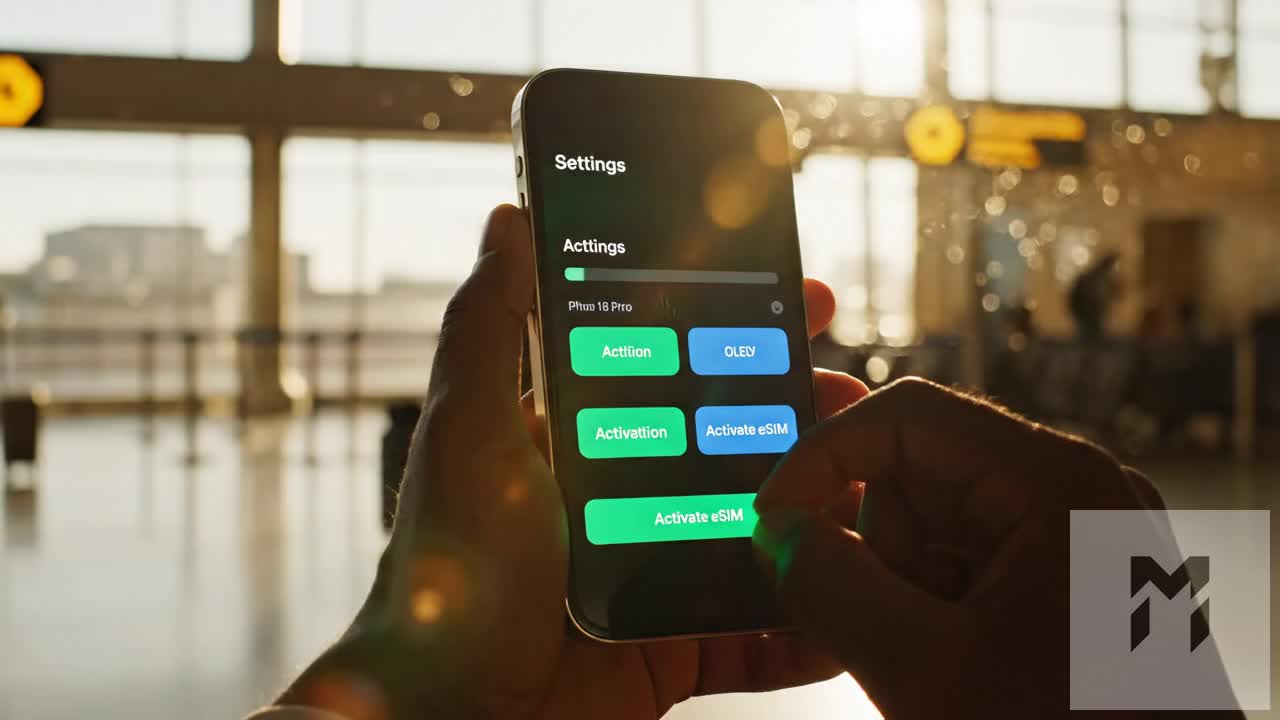
- Scan your MollySIM QR code before boarding or upon landing.
- Set the MollySIM profile as your Default Cellular Data line.
- Set your domestic physical SIM or secondary eSIM as your Default Voice/SMS line.
- Configure Cellular Data Settings:
- Enable Data Roaming exclusively on the MollySIM profile.
- Toggle Low Data Mode to OFF to allow vector map tiles and real-time charger availability to refresh continuously.
- Turn Data Switching (or "Allow Cellular Data Switching") OFF to prevent your device from silently defaulting to expensive home-carrier data when crossing borders.
- Verify APN Profiles:
- In most European networks, MollySIM provisions APN settings automatically. If your device prompts for manual input, enter the specific APN provided in your MollySIM setup dashboard to maintain direct low-latency routing without unnecessary packet proxying.
Phase 3: Telemetry, Route Planning, and OBD-II Integration
For precision energy consumption modeling, apps like A Better Routeplanner (ABRP) need uninterrupted data streams from both the cloud and the vehicle.
- Enable Background App Refresh: Navigate to your operating system settings and ensure ABRP, Google Maps, and Apple Maps have unrestricted background execution rights.
- Pair Bluetooth Low Energy (BLE) Dongles: If using an OBD-II scanner (e.g., vLinker MC+ or OBDLink CX) to stream live State of Charge (SoC) and battery temperature metrics into ABRP, verify that the dongle connects over BLE rather than classic Bluetooth. This prevents interference with your EV’s native Apple CarPlay or Android Auto wireless connection.
- Leverage the 384kbps Data Floor: If your primary high-speed data tier runs out mid-transit, MollySIM’s 384kbps fair use floor maintains enough continuous throughput to stream live OBD-II telemetry and calculate dynamic routing shifts without dropping connection to ABRP servers.
Phase 4: Secondary Redundancy (Offline Vector Maps)
Cellular coverage across main European transit arteries is robust, but deep alpine valleys, high-altitude passes, and underground parking structures present transient coverage gaps.
- Cache Regional Map Packs: Download offline maps for your entire transit route inside Google Maps or Apple Maps prior to leaving the rental hub.
- Download Station Geo-Coordinates: In the Tesla and Ionity apps, favorite or bookmark the planned stops along your immediate route so their coordinates remain accessible in cache memory even without active carrier handshakes.
Phase 5: Troubleshooting Alpine & Mountain Border Transitions
When driving through high-altitude corridors—such as the Gotthard Pass (Switzerland), Brenner Pass (Austria/Italy), or Mont Blanc Tunnel (France/Italy)—smartphones can occasionally get caught in a "ping-pong" state between distant cellular towers across borders, resulting in dropped data.
Using manual network selection clears transient tower lockups instantly, allowing your payment and charging applications to authenticate sessions even in complex alpine topography.
🇪🇺 Europe 33 Countries High-Speed Travel eSIM & SIM Plans
Instant QR code activation, hotspot enabled, with guaranteed 384kbps fallback speed to keep Maps & Digital Wallets active.