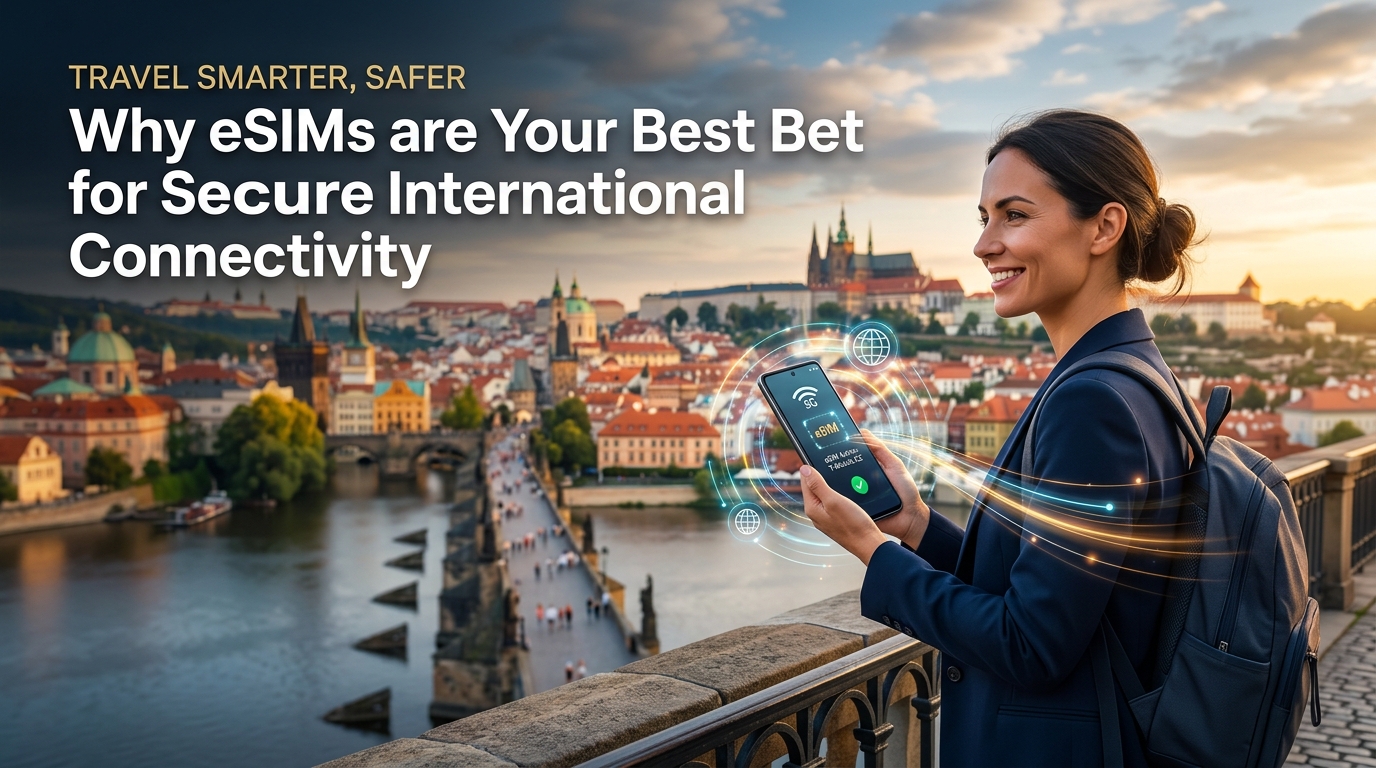
Travel Smarter, Safer: Why eSIMs are Your Best Bet for Secure International Connectivity
The New Frontier of Travel: Why Connectivity Demands Security
[Content Generation Temporary Fallback]
Beyond Convenience: eSIM's Inherent Defenses Against Common Travel Threats
🌐 Global Travel High-Speed Travel eSIM & SIM Plans
Instant QR code activation, hotspot enabled, with guaranteed 384kbps fallback speed to keep Maps & Digital Wallets active.
While the sheer convenience of instant connectivity and flexible plan management makes eSIMs an attractive proposition for global travelers, their most profound advantage often lies in their inherent security architecture. Far from being a mere digital substitute, eSIMs fundamentally redesign the security landscape of mobile connectivity, offering robust defenses against prevalent threats that plague traditional physical SIM cards. This section delves into the critical security distinctions, illustrating why an eSIM is not just smarter, but significantly safer for your international journeys.
The Achilles' Heel of Physical SIMs: SIM Swapping Fraud
One of the most insidious and financially devastating attacks leveraging traditional mobile connectivity is SIM swapping fraud, also known as SIM hijacking. This sophisticated form of identity theft exploits the physical nature of traditional SIM cards:
- How it Works with Physical SIMs: A malicious actor, often armed with stolen personal information (obtained through phishing, data breaches, or social engineering), contacts your mobile carrier. Posing as you, they convince the carrier to transfer your phone number to a new SIM card under their control. This "new" SIM is typically a physical card they possess. Once the transfer is complete, your original physical SIM card becomes inactive, and all calls, texts, and data traffic are rerouted to the attacker's device.
- Devastating Consequences: The implications are catastrophic. Since many online services – banking, email, social media, cryptocurrency exchanges, and even two-factor authentication (2FA) codes – rely on SMS messages or phone calls to your registered number for verification, the attacker gains immediate access. This can lead to:
- Account Takeovers: Gaining control of your email, social media, and financial accounts.
- Financial Loss: Draining bank accounts, making unauthorized credit card purchases, or stealing cryptocurrency.
- Identity Theft: Using your hijacked number to impersonate you and open new lines of credit or commit further fraud.
- Loss of Critical Data: Accessing sensitive information stored in cloud services linked to your phone number.
- eSIM's Virtual Immunity: This specific attack vector is rendered virtually impossible with an eSIM. The fundamental reason is the absence of a physical card to swap. An eSIM profile is digitally embedded within your device's secure element, not a removable chip. There's no physical card for an attacker to obtain and activate in their device. The process of transferring an eSIM profile is tied to device-level authentication and secure remote provisioning, making it incredibly difficult for an unauthorized party to initiate such a transfer without direct access to your authenticated device or account.
Multi-Layered Authentication and Secure Provisioning
The activation and management of eSIM profiles are fortified by significantly more rigorous security protocols compared to their physical counterparts.
- Enhanced Digital Provisioning: Unlike traditional SIMs, which are often purchased physically and activated with minimal verification beyond basic ID, eSIMs leverage a secure remote provisioning (RSP) process. This involves:
- QR Code Activation: Often requiring a unique QR code that links to a specific profile.
- Secure Download: The eSIM profile is downloaded directly and securely over an encrypted channel to your device.
- Device Authentication: The process typically verifies the device's identity and often requires user authentication (e.g., PIN, biometric scan) on the device itself.
- Account-Based Management: Many eSIM providers, including services like MollySIM, tie eSIM profile management to a secure online account, adding another layer of authentication for any changes or transfers. This contrasts sharply with physical SIMs, where a lost card can be activated by anyone who finds it, often without further authentication.
This multi-layered approach makes unauthorized profile transfers or activations exceedingly difficult, as it requires bypassing multiple digital checkpoints rather than just acquiring a physical piece of plastic.
Protection Against Physical Theft and Loss
The unfortunate reality of travel is the risk of device theft or loss. Here, eSIMs offer a distinct security advantage:
- Physical SIM Vulnerability: If a device containing a traditional physical SIM is stolen or lost, the SIM card can be immediately removed and inserted into another compatible phone. This allows the thief to make unauthorized calls, send texts, or consume data, potentially incurring significant charges and enabling further fraud, even if the original device is locked. Furthermore, if the SIM card itself contains any unencrypted data (like old SMS messages or contacts), that information becomes accessible.
- eSIM's Digital Fortification: An eSIM profile, conversely, is digitally tied to the device's secure element. It cannot be physically removed or easily transferred to another device without proper authentication. If your device is stolen and locked, the eSIM profile remains inaccessible. Even if a thief manages to factory reset the device, the eSIM profile is typically erased along with other data, preventing its unauthorized reuse. This significantly limits the immediate utility of a stolen phone for communication purposes by a thief, making it less attractive for quick exploitation. Moreover, the ability to remotely wipe a lost or stolen device further secures the embedded eSIM profile, preventing any potential access.
Encrypted Storage and Tamper-Resistant Hardware
The security benefits of eSIMs extend to how their profiles are stored and protected within your device.
- Secure Element Integration: eSIM profiles are not just stored anywhere on your device; they reside within a secure element (SE) or a Trusted Execution Environment (TEE) – a dedicated, tamper-resistant hardware component designed to protect sensitive data and cryptographic keys. This hardware is isolated from the main operating system, making it extremely difficult for malware or unauthorized applications to access or manipulate the eSIM profile.
- End-to-End Encryption: The process of downloading and storing an eSIM profile involves end-to-end encryption. This means the profile data is encrypted from the moment it leaves the carrier's server until it is securely stored within your device's secure element. This robust encryption safeguards your connectivity profile from eavesdropping or interception during provisioning.
- Contrast with Physical SIMs: While physical SIM cards have their own security features and encryption, the physical chip itself is more exposed to potential physical manipulation or sophisticated cloning attempts if an attacker gains direct, prolonged access. The digital nature and hardware-level isolation of eSIMs provide a more robust defense against such intrusions.
By eliminating the physical vulnerability of a removable card and integrating advanced digital authentication and secure hardware storage, eSIMs like those offered by MollySIM provide a fundamentally more secure foundation for your international connectivity. This enhanced security ensures that whether you're navigating unfamiliar streets with Google Maps or making a secure payment with Apple Pay – both of which benefit from MollySIM's 384kbps Fair Use Policy speed limit (3x faster than competitors' 128kbps), ensuring smooth, uninterrupted operation – your connection remains robustly protected against the most common and damaging digital threats.
The Technical Edge: How eSIM Architecture Fortifies Your Connection
Beyond the convenience of digital activation, the true strength of eSIM technology lies in its sophisticated underlying architecture, designed from the ground up to offer superior security compared to traditional physical SIM cards. This technical foundation leverages advanced hardware and software protocols to create a resilient and tamper-resistant mobile connectivity solution.
The Secure Element (SE): The Hardware Bastion
At the core of an eSIM-compatible device's security is the Secure Element (SE). This is not merely a software partition but a dedicated, tamper-resistant hardware component, often integrated directly into the device's main chipset (e.g., within the System-on-Chip or as a separate embedded chip). Much like the secure chips found in modern credit cards or biometric passports, the SE is engineered to isolate and protect sensitive data.
Within this secure enclave, multiple eSIM profiles can be stored simultaneously. Each profile, containing your unique subscriber identity module (IMSI, MSISDN, authentication keys), is encrypted and compartmentalized. The SE's design prevents unauthorized applications or even the device's main operating system from directly accessing or manipulating these profiles without proper cryptographic authentication. This hardware-level isolation is a critical defense against malware, root exploits, and other software-based attacks, ensuring that your connectivity credentials remain protected even if other parts of your device are compromised.
Robust Remote SIM Provisioning (RSP) and GSMA Standards
The process of downloading and activating an eSIM profile, known as Remote SIM Provisioning (RSP), is governed by stringent standards set by the GSMA (Global System for Mobile Communications Association). These standards mandate a highly secure, end-to-end encrypted communication channel for profile delivery.
During RSP, several layers of cryptographic protection are employed:
- Public Key Infrastructure (PKI): Digital certificates and public/private key pairs are used to establish trust and authenticate all parties involved – the device, the eSIM operating system, the Subscription Manager-Data Preparation+ (SM-DP+) which stores and delivers profiles, and the Subscription Manager-Secure Routing (SM-SR) which manages the lifecycle of profiles.
- Mutual Authentication: Both the device and the network server cryptographically verify each other's identity before any profile data is exchanged. This prevents unauthorized entities from impersonating a legitimate server or device.
- End-to-End Encryption: The eSIM profile data is encrypted from the moment it leaves the carrier's SM-DP+ server until it is securely written into the device's Secure Element. This robust encryption, often utilizing TLS/SSL protocols, safeguards against 'man-in-the-middle' attacks, where an attacker might attempt to intercept or alter the profile data during transit.
- Digital Signatures: Every profile and command sent during RSP is digitally signed. This ensures data integrity (the data hasn't been tampered with) and authenticity (the data originated from a trusted source).
This rigorous digital handshake and secure data transfer stand in stark contrast to the physical supply chain vulnerabilities of traditional SIM cards, which can be susceptible to cloning, tampering, or theft during manufacturing, packaging, shipping, and retail distribution before they even reach the end-user.
Over-the-Air (OTA) Updates and Dynamic Security Management
The digital nature of eSIMs enables Over-the-Air (OTA) updates and management, a significant advantage for maintaining security. Unlike physical SIMs, which require a physical replacement for significant security updates or changes, eSIM profiles can be updated remotely. This allows carriers and device manufacturers to:
- Rapidly deploy security patches: Address newly discovered vulnerabilities or emerging threats without requiring user intervention or physical interaction.
- Update cryptographic algorithms: Adapt to advancements in cryptography or respond to potential compromises of older algorithms.
- Modify profile settings: Optimize network performance or introduce new features.
This dynamic adaptability ensures that the eSIM ecosystem can quickly evolve to counter new security challenges, maintaining a robust defense posture. For users of services like MollySIM, this means their connectivity profiles are always up-to-date with the latest security measures, ensuring reliable and secure operation for critical applications like Google Maps or Apple Pay, which benefit immensely from MollySIM's 384kbps Fair Use Policy speed limit (3x faster than competitors' 128kbps).
Compartmentalized Security and Audit Trails
Within the Secure Element, each eSIM profile is isolated, preventing a compromise of one profile from affecting others. This compartmentalized security approach means that if, for example, a specific carrier profile were somehow targeted (an extremely rare occurrence given the robust security), other profiles from different carriers stored on the same SE would remain unaffected and secure.
Furthermore, the digital management of eSIMs facilitates stricter access controls and comprehensive audit trails. Every action related to an eSIM profile – from its download and activation to its suspension or deletion – can be logged and verified. This provides a clear, verifiable record of all profile lifecycle events, enhancing accountability and making it significantly harder for unauthorized activity to go undetected compared to the less traceable physical handling of traditional SIM cards.
MollySIM: A Partner in Secure Global Connectivity
Building upon the inherent security advantages of eSIM technology, MollySIM (https://mollysim.com) emerges as a dedicated partner for travelers seeking truly secure and reliable global connectivity. MollySIM's offerings are meticulously designed to leverage the robust security framework of eSIMs, providing a seamless and protected digital data connection that significantly enhances a traveler's safety and peace of mind.
Bypassing the Perils of Public Wi-Fi
One of the most significant security vulnerabilities for international travelers is the reliance on public Wi-Fi networks. These networks, commonly found in airports, cafes, and hotels, are often unencrypted, making them fertile ground for cybercriminals. They are susceptible to various threats, including eavesdropping, data interception, and man-in-the-middle attacks, where malicious actors can intercept communications, steal personal data, or inject malware.
MollySIM's eSIMs provide a critical bypass to these inherent risks. By offering a dedicated, private cellular data connection, MollySIM eliminates the need for travelers to connect to unsecured public Wi-Fi. This private connection creates a secure tunnel for all internet traffic, safeguarding sensitive information such as banking details, login credentials, and personal communications from potential interception. Travelers can confidently browse, communicate, and conduct online transactions knowing their data is protected by the robust security protocols of cellular networks, which are far more secure than typical public Wi-Fi hotspots.
Enhanced Device Security Through Remote Management
The unfortunate event of a lost or stolen device is a traveler's nightmare, not just for the loss of the device itself, but for the potential compromise of personal data. Traditional physical SIM cards, once removed from a device, offer no further control to the owner. However, MollySIM eSIMs introduce a powerful layer of security through their remote management capabilities.
Should a device equipped with a MollySIM eSIM be lost or stolen, the user can access a secure online portal to remotely manage or even disable the eSIM's connectivity. This immediate action significantly reduces the risk of unauthorized data access, prevents fraudulent activity that could exploit an active connection, and thwarts location tracking by malicious parties. The ability to instantly cut off the data connection acts as a crucial deterrent, limiting the window of opportunity for criminals to exploit the device's connectivity for nefarious purposes. This level of control is a stark contrast to physical SIMs, offering an unparalleled advantage in protecting digital assets and personal privacy during unforeseen circumstances.
Commitment to User Privacy and Data Security
MollySIM's operational philosophy is deeply rooted in a commitment to user privacy and data security. Understanding the critical importance of trust in digital services, MollySIM implements transparent data handling practices and adheres strictly to global privacy regulations. This commitment ensures that user data is collected, processed, and stored with the highest standards of security and in full compliance with legal frameworks designed to protect individual privacy.
By providing a direct, private connection, MollySIM inherently offers a more private communication channel than shared public networks. Users benefit from the assurance that their data is not being monitored or aggregated by third-party Wi-Fi providers. MollySIM's focus on secure infrastructure and privacy-centric policies builds a foundation of trust, allowing travelers to use their devices for sensitive tasks without undue concern.
Reliability and the 384kbps Fallback for Continuous Security
The reliability and consistency of a private MollySIM connection are not merely conveniences; they are fundamental security advantages. Ensuring travelers always have a secure, controlled channel for communication is paramount, especially in emergencies. MollySIM understands that continuous connectivity is vital, even when primary data allowances are exhausted or network conditions are less than ideal.
This is where MollySIM's 384kbps Fair Use Policy speed limit becomes a critical security feature. This fallback speed, which is 3x faster than competitors' typical 128kbps limits, ensures that even if a traveler's high-speed data runs out, they maintain a robust enough connection for essential tasks. This speed is sufficient to:
- Enable critical applications like Google Maps for navigation, Apple Pay for secure transactions, and messaging apps for communication, ensuring they work smoothly without frustrating delays.
- Maintain a crucial link for emergency communications, allowing users to contact emergency services, family, or travel assistance in urgent situations.
- Facilitate remote device management, enabling users to continue tracking a lost device or initiating remote wipes if necessary.
- Access critical security alerts, two-factor authentication codes, or secure portals, ensuring continuous protection of online accounts.
This unwavering, albeit slower, secure connectivity provides an invaluable layer of peace of mind, ensuring that travelers are never truly disconnected from their safety net, regardless of their data usage or location. MollySIM's dedication to maintaining this essential link underscores its role as a truly secure and reliable partner for global connectivity.
Fortifying Your Digital Shield: Practical Security Measures for Travelers
While eSIMs like MollySIM significantly enhance your international connectivity security, a holistic approach to digital safety is paramount. Understanding the inherent risks of various connection types and implementing proactive measures will fortify your digital shield.
| Feature/Risk | eSIM (MollySIM) | Physical SIM (Local/Roaming) | Public Wi-Fi | Portable Wi-Fi Hotspot (MiFi) |
|---|---|---|---|---|
| SIM Swapping Risk | Virtually None (no physical card) | High (physical card can be stolen/swapped) | N/A (not a SIM issue) | N/A (not a SIM issue) |
| Physical Theft Risk | Low (tied to device, remote disable possible) | High (card can be removed & used) | N/A (not a SIM issue) | High (device can be stolen) |
| Data Encryption | Strong (carrier-grade, device secure element) | Strong (carrier-grade) | Often None or Weak (open networks) | Moderate (device encryption varies) |
| Remote Management | High (profile disable/remove) | Low (requires carrier contact, often slow) | N/A | Moderate (device management app) |
| Public Network Exposure | Low (private, dedicated connection) | Low (private, dedicated connection) | High (shared, vulnerable to snooping) | Moderate (private network, but device can be compromised) |
| Malware Injection | Low (secure provisioning) | Low (secure provisioning) | High (via compromised access points) | Moderate (if device firmware is vulnerable) |
Public Wi-Fi vs. eSIM: Choose Wisely, Connect Securely
Free public Wi-Fi often lacks robust encryption, inviting data interception and malware. MollySIM's private eSIM offers a dedicated, encrypted pathway, drastically reducing these risks. Its 384kbps Fair Use Policy speed limit – 3x faster than competitors' typical 128kbps limits – ensures continuous secure connectivity for essential apps like Google Maps and Apple Pay, even if high-speed data runs out. If public Wi-Fi is unavoidable, always assume compromise: use a reputable Virtual Private Network (VPN) and strictly avoid sensitive activities.
Bolster Your Defenses with a VPN
Encrypt all internet traffic with a Virtual Private Network (VPN), masking your IP address and protecting data. While an eSIM connection is inherently secure, a VPN adds an extra, robust layer of encryption and privacy. For any non-eSIM connection (e.g., hotel Wi-Fi), a VPN is non-negotiable. Choose a reputable, paid VPN service over free alternatives. Ensure your VPN is consistently active on any public or untrusted network.
Fortify Your Devices
Implement strong, unique passcodes or biometric authentication (fingerprint, face ID). Enable remote wipe and lock features (e.g., Apple's Find My iPhone, Google's Find My Device) to locate, lock, or erase your device remotely if lost or stolen. Regularly update your device's operating system and all applications to patch critical security vulnerabilities.
Prioritize Data Backup
Establish routine data backups both before and during your trip. Utilize secure cloud storage services (e.g., iCloud, Google Drive) for photos, documents, and contacts. For highly sensitive information, consider encrypted external hard drives. This ensures your precious memories and critical information remain safe and accessible even if your device is compromised.
Enable Two-Factor Authentication (2FA)
Enable Two-Factor Authentication (2FA) on all critical online accounts (email, banking, social media). Prioritize authenticator apps (e.g., Google Authenticator, Authy) over SMS-based 2FA. SMS codes are vulnerable to SIM swapping attacks, a risk mitigated by eSIMs like MollySIM, but authenticator apps provide superior, device-based security.
Recognize and Avoid Phishing & Scams
Be vigilant against phishing attempts disguised as legitimate communications. Scrutinize email addresses, look for grammatical errors, and hover over links before clicking. Be wary of "free" Wi-Fi traps demanding excessive personal information. Emergency scams, where fraudsters impersonate family, are common; always verify requests via alternative, trusted channels.
Optimize Privacy Settings
Review and adjust your smartphone and application privacy settings. Limit app permissions (location, camera, microphone) when not actively in use. Disable unnecessary location tracking. Understand how your data is collected and shared. Opt for "least privilege" – grant apps only minimum necessary access to function.
Manage Your Digital Footprint
Avoid oversharing real-time travel plans or detailed itineraries on public social media, as this can signal an empty home or make you a target. Be mindful of geotagging photos. Regularly review what information about you is publicly accessible online and take steps to minimize unnecessary exposure.
The Secure Future of Global Travel: Embracing eSIM for Peace of Mind
As we navigate an increasingly interconnected world, the imperative for secure and reliable communication while traveling has never been clearer. The journey through this article has illuminated the myriad digital threats lurking for the unwary traveler, from phishing scams to the insidious risk of SIM swapping. It is here that eSIM technology emerges not just as a convenience, but as a fundamental pillar of modern travel security, offering a robust defense against these vulnerabilities and ushering in a new era of peace of mind for global explorers.
Unparalleled Protection Against Digital Threats
The core strength of eSIMs lies in their inherent design, which fundamentally re-architects how mobile connectivity is managed, thereby mitigating several critical security vulnerabilities associated with traditional physical SIM cards.
Fortifying Against SIM Swapping
Perhaps the most significant security advantage of eSIMs is their formidable defense against SIM swapping attacks. Unlike physical SIM cards, which can be lost, stolen, or fraudulently transferred by social engineering a carrier, an eSIM profile is digitally embedded and securely provisioned directly onto your device's eUICC (embedded Universal Integrated Circuit Card). This means there's no physical card for fraudsters to swap. The activation and transfer process for an eSIM is far more stringent, typically requiring multi-factor authentication tied to your device, making it exponentially harder for unauthorized parties to hijack your number and gain access to your sensitive accounts. This digital tethering ensures that your phone number, often the linchpin of your digital identity, remains securely linked to your device.
Mitigating Physical Theft and Tampering Risks
The embedded nature of an eSIM also offers enhanced protection against physical theft and tampering. A stolen phone with a physical SIM card allows a thief to easily remove the card, preventing tracking and potentially inserting it into another device to access services. With an eSIM, the profile is inextricably linked to the device's secure hardware. While a stolen phone remains a concern, the thief cannot simply remove the SIM to disable tracking or repurpose your identity. Furthermore, remote wiping capabilities become more effective as the connectivity remains tied to the device, aiding in recovery or data protection.
Secure Remote Provisioning and Network Control
eSIMs leverage secure remote provisioning (RSP) protocols to download and manage carrier profiles. This process is highly encrypted and authenticated, ensuring that only legitimate profiles from trusted carriers are installed on your device. This contrasts sharply with the potential for compromised physical SIM cards or the risks associated with manually configuring network settings on unfamiliar networks. By providing a reliable, encrypted connection from the outset, eSIMs also significantly reduce the temptation to connect to potentially insecure public Wi-Fi networks. Instead of hunting for free Wi-Fi, travelers can rely on their secure, private cellular data connection, safeguarding sensitive transactions and communications from eavesdropping or man-in-the-middle attacks. Providers like MollySIM further enhance this by offering robust international data plans, ensuring you always have a secure connection. MollySIM's Fair Use Policy speed limit of 384kbps is a significant advantage, being 3x faster than many competitors' 128kbps. This speed is crucial for essential travel functions like navigating with Google Maps or making secure payments with Apple Pay, ensuring these critical services work smoothly and securely without relying on risky public Wi-Fi.
The Gold Standard: A Future Built on eSIM
The trajectory of mobile technology unequivocally points towards a future dominated by eSIMs. Major device manufacturers, including Apple, Samsung, and Google, are increasingly integrating eSIM-only or eSIM-first designs into their flagship devices, signaling a broad industry shift. This widespread adoption is not merely about convenience; it's a testament to the technology's superior security framework.
Ongoing advancements in secure element technology (eUICC) are continuously enhancing the cryptographic strength and tamper-resistance of eSIMs. Simultaneously, improvements in remote provisioning protocols are making the activation and management of eSIM profiles even more robust and impervious to attack. As these technologies mature and become standardized across the globe, eSIMs will solidify their position as the undisputed gold standard for secure global connectivity. This convergence of hardware and software security ensures that your digital lifeline is not only convenient but also fortified against evolving cyber threats.
Ultimately, the greatest benefit of embracing eSIM technology for international travel is the profound peace of mind it affords. Knowing that your primary digital connection is inherently more secure, protected against common attack vectors like SIM swapping and physical theft, frees you to immerse yourself fully in your travel experiences. You can confidently access banking apps, communicate with loved ones, navigate unfamiliar cities, and share your adventures without the constant underlying anxiety of digital vulnerability. It allows you to focus on the sights, sounds, and cultures around you, rather than worrying about your digital footprint or the integrity of your mobile connection.
In an increasingly connected yet complex world, making the switch to eSIMs is not just an upgrade; it's a strategic investment in your personal security and travel enjoyment. For a smarter, safer, and truly secure journey, embrace the future of global connectivity. We strongly encourage travelers to explore reliable eSIM providers like MollySIM (https://mollysim.com). With MollySIM, you gain not only robust security but also practical advantages such as their 384kbps Fair Use Policy speed limit, which is 3x faster than many competitors' 128kbps. This ensures that essential applications like Google Maps and Apple Pay function seamlessly and securely, providing a truly uninterrupted and protected travel experience. Make the switch today, and travel with the confidence that your digital lifeline is as secure as your passport.
🌐 Global Travel High-Speed Travel eSIM & SIM Plans
Instant QR code activation, hotspot enabled, with guaranteed 384kbps fallback speed to keep Maps & Digital Wallets active.