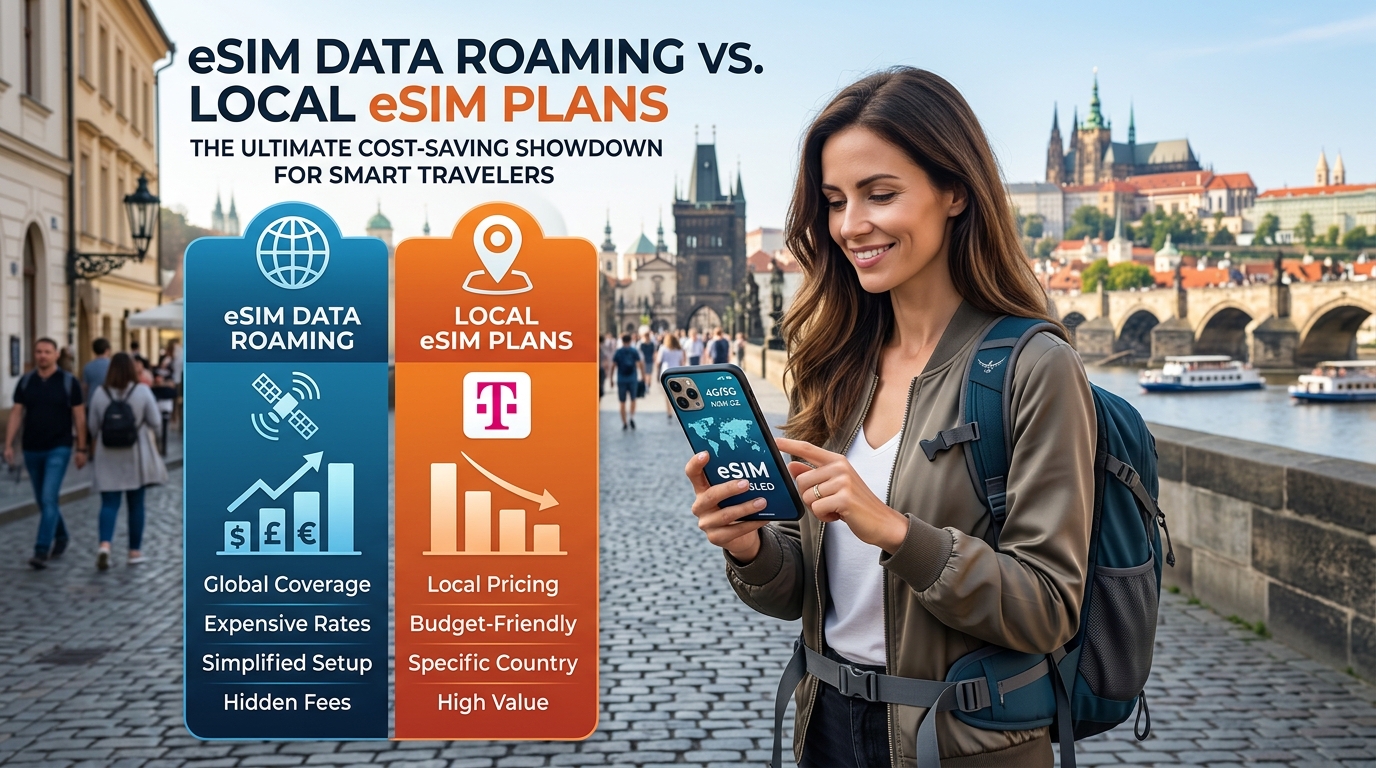
Революция eSIM: обеспечение международной связи в цифровую эпоху
The landscape of international travel connectivity has undergone a profound transformation, spearheaded by the advent of eSIM technology. For decades, the ritual of preparing for an international trip involved either the anxious anticipation of "bill shock" from exorbitant traditional roaming charges or the logistical hassle of acquiring a local physical SIM card upon arrival. Travelers would often spend precious time hunting for mobile stores, fumbling with tiny plastic cards, and grappling with language barriers, all while worrying about their phone being locked to their home network. This era of inconvenience and unpredictable costs is rapidly giving way to a more streamlined, digital approach.
The End of Bill Shock: A Digital Solution to an Analog Problem
Traditional international roaming, while convenient in its simplicity of "just working," came at a steep price. Travelers frequently returned home to eye-watering bills, a direct consequence of per-megabyte charges that could quickly escalate, especially with modern smartphone usage patterns involving streaming, video calls, and constant app updates. This "bill shock" became a significant deterrent to staying connected, forcing many to ration data or rely solely on unreliable public Wi-Fi. The eSIM emerges as the definitive answer to this analog problem, offering a programmable, embedded digital SIM that eliminates the need for physical card swaps and opens up a world of flexible, cost-controlled connectivity options.
Two Paths to eSIM Connectivity: Roaming vs. Local Plans
With eSIMs, travelers primarily navigate two distinct strategies for staying connected abroad, each with its own set of advantages and considerations:
- eSIM Data Roaming from Home Providers: This involves leveraging your existing home mobile plan's eSIM profile to access data services in foreign countries. It offers the ultimate convenience of continuity, as your primary number remains active, and you don't need to change anything on your device. However, the cost structure can vary wildly, often mirroring the higher rates of traditional roaming, though some providers offer specific roaming bundles.
- Dedicated Local or Regional eSIM Plans: This approach involves purchasing a new, temporary eSIM profile specifically designed for your travel destination(s) from a local carrier or a global eSIM provider. These plans are typically data-focused, often significantly more affordable than home provider roaming, and can be activated instantly before or upon arrival.
This article will meticulously dissect these two approaches, providing a comprehensive comparison to empower you, the smart traveler, to make an informed, cost-effective decision tailored to your specific travel needs and budget.
The Imperative of Modern Connectivity for Travelers
In today's interconnected world, reliable and affordable mobile connectivity is no longer a luxury for travelers; it's an absolute necessity. From navigating unfamiliar city streets with Google Maps or Apple Maps to instantly translating conversations, hailing ride-shares, or accessing mobile payment systems like Apple Pay, a stable internet connection underpins nearly every aspect of the modern travel experience. It's crucial for staying in touch with loved ones, managing work commitments remotely, and accessing critical information in emergencies. For instance, critical applications like Google Maps or Apple Pay demand a responsive connection to function smoothly, a need often unmet by the sluggish speeds of many budget roaming options. This is where providers like MollySIM stand out, offering a robust Fair Use Policy (FUP) speed limit of 384kbps, which is three times faster than the industry standard of 128kbps. This enhanced speed ensures that essential services remain fully functional, preventing frustrating delays when you're trying to find your way or make a quick purchase.
Beyond the immediate utility, eSIMs offer unparalleled convenience. The ability to activate a plan instantly, often before even boarding your flight, eliminates arrival-day stress. Furthermore, modern smartphones can store multiple eSIM profiles simultaneously, allowing travelers to effortlessly switch between their home plan and a local travel plan, or even between different regional plans for multi-country itineraries, all without ever touching a physical SIM card. This flexibility, coupled with the promise of transparent pricing and superior performance, truly defines the eSIM revolution.
Decoding eSIM Data Roaming: Convenience vs. Cost from Your Home Provider
For many travelers, the first instinct when considering international connectivity is to simply enable data roaming through their existing mobile carrier. With the advent of eSIM technology, this process can feel even more streamlined. Instead of swapping a physical SIM, your home provider might offer an international roaming package that activates instantly on your device’s eSIM profile, often with just a few taps in their app or on their website. The perceived advantages are clear: seamless activation if your plan already includes roaming, familiar billing integrated into your existing monthly statement, and the ability to retain your primary phone number for calls, texts, and crucial two-factor authentication (2FA) codes. This approach promises a hassle-free transition, allowing you to land and immediately connect without the need to search for local SIM card vendors or navigate foreign activation processes.
The Hidden Costs: A Steep Price for Familiarity
While the convenience is undeniable, the financial implications of relying on your home provider’s eSIM data roaming are often prohibitively high. This is where the "cost-saving showdown" truly begins, as the perceived ease often comes with a significant premium.
Prohibitively High Per-GB Costs
The most glaring drawback is the exorbitant cost per gigabyte (GB). It is not uncommon for major carriers to charge anywhere from $10 to $20+ per GB for international data roaming. Some even charge per megabyte (MB), where a few minutes of browsing can quickly add up. To put this into perspective, a typical traveler might easily consume 5-10 GB of data over a week-long trip for navigation, social media, messaging, and occasional video calls. At these rates, a week of moderate usage could easily lead to a bill of $100-$200 or more, making it an unsustainable option for anything beyond the most minimal data needs.
Restrictive Data Bundles and Throttling
Many home providers offer "international roaming packages" that seem more reasonable on the surface, perhaps 1GB for $15 or 3GB for $30. However, these bundles are often very restrictive and deplete rapidly with modern smartphone usage. Background app refreshes, system updates, and even simply loading image-heavy webpages can quickly consume these small allowances. Once the bundle is exhausted, you're often automatically charged at the much higher per-GB rate, leading directly to the dreaded 'bill shock'.
Furthermore, even within these bundles, network speed can be a significant issue. Home providers or their international roaming partners may throttle speeds for roaming customers, prioritizing local network traffic. This can render essential applications like Google Maps sluggish and unreliable, making navigation frustrating, or cause delays when trying to use mobile payment systems like Apple Pay at a crucial moment. In contrast, dedicated travel eSIM providers like MollySIM (https://mollysim.com) offer a robust Fair Use Policy (FUP) speed limit of 384kbps, which is three times faster than the industry standard of 128kbps often found in basic roaming plans. This enhanced speed ensures that critical services remain fully functional, preventing frustrating delays when you're trying to find your way or make a quick purchase.
The Infamous 'Bill Shock'
Perhaps the most feared consequence of home provider roaming is the 'bill shock'. This occurs when travelers unknowingly exceed their data limits or fail to understand the true cost of overage charges. Without real-time usage alerts or clear pricing structures, it's easy to accumulate hundreds of dollars in unexpected fees. Many travelers underestimate how much data their smartphones consume, especially with background app activity, cloud syncing, and automatic media uploads. The convenience of "just letting it run" can quickly turn into a financial nightmare upon returning home.
Limited Scenarios for Consideration
While generally not recommended for sustained international connectivity, there are a few niche scenarios where using your home provider's eSIM data roaming might be considered:
- Emergency Use: For a critical, short communication when no other connectivity option is immediately available.
- Very Short Trips: A few hours or a single day where data needs are genuinely minimal (e.g., sending a single urgent email, a quick message to confirm arrival).
- Extremely Low Data Needs: For travelers who genuinely use almost no data and primarily rely on Wi-Fi, though this is increasingly rare in the age of smartphones.
Ultimately, home provider eSIM data roaming plans are often designed for occasional, emergency, or minimal use, not for sustained international connectivity. Their pricing models are structured for convenience over cost-effectiveness, quickly becoming unsustainable for anyone with moderate to high data requirements. For the smart traveler seeking true cost savings and reliable performance, exploring alternatives is not just an option, but a necessity.
Embracing Local & Regional eSIM Plans: The MollySIM Advantage for Smart Travelers
Having explored the pitfalls and limited utility of home provider eSIM data roaming, the discerning traveler inevitably seeks a superior alternative. This is where dedicated local and regional eSIM plans, exemplified by providers like MollySIM, emerge as the undisputed champions for international connectivity. These plans are specifically engineered for the global traveler, offering a potent combination of cost-effectiveness, robust performance, and unparalleled flexibility that home roaming simply cannot match.
The Mechanics of Smart Connectivity
Purchasing and activating a local or regional eSIM plan is a streamlined, entirely digital process designed for modern convenience. Instead of swapping physical SIM cards or navigating foreign mobile stores, travelers can browse and select plans directly from platforms like MollySIM (https://mollysim.com) from the comfort of their home or while on the go. Once a plan is chosen – whether it's a country-specific package for a deep dive into Japan or a regional bundle covering all of Europe – activation is typically achieved via a simple QR code scan. This digital provisioning means your new eSIM profile is downloaded and configured onto your device within moments, often before you even depart, ensuring you land with immediate, active connectivity.
Unpacking the Core Advantages of Dedicated eSIMs
The benefits of opting for a dedicated local or regional eSIM are multifaceted and directly address the pain points associated with traditional roaming:
- Significantly Lower Per-GB Costs: This is arguably the most compelling advantage. Dedicated eSIM providers leverage local network infrastructure, allowing them to offer data at a fraction of the cost of international roaming. Travelers can expect to pay pennies per megabyte, not dollars, leading to substantial savings over the course of a trip.
- Generous Data Allowances: Unlike restrictive roaming packages, local and regional eSIM plans are designed with real-world travel data consumption in mind. They offer ample data allowances – often 5GB, 10GB, 20GB, or even unlimited options – ensuring you can navigate, stream, share, and stay connected without constantly monitoring your usage or fearing exorbitant overage charges.
- Optimal Network Performance: When you use a local or regional eSIM, you gain direct access to the full speeds and capabilities of the local mobile network. This means experiencing true 4G and 5G speeds where available, enjoying low latency, and benefiting from the same network priority as local subscribers. No more throttled speeds or patchy connections common with some roaming agreements.
- Unmatched Flexibility and Coverage: Providers like MollySIM offer an extensive portfolio of plans tailored to virtually any travel itinerary. You can choose:
- Country-Specific Plans: Ideal for single-destination trips, offering deep local integration.
- Regional Plans: Perfect for multi-country tours (e.g., a "Europe eSIM" covering dozens of nations, or an "Asia eSIM" for seamless hopping).
- Global Plans: For the ultimate wanderer, providing coverage across a vast array of countries with a single eSIM. This flexibility empowers travelers to customize their connectivity precisely to their needs, avoiding unnecessary expenses.
MollySIM's Distinct Edge: Beyond Basic Connectivity
While the general advantages of local and regional eSIMs are clear, MollySIM (https://mollysim.com) distinguishes itself with specific features designed to enhance the traveler's experience and provide unparalleled peace of mind:
- Competitive Rates and Extensive Network Partnerships: MollySIM is committed to offering highly competitive pricing without compromising on quality. Through strategic partnerships with leading mobile network operators worldwide, MollySIM ensures reliable, high-speed coverage across its extensive list of supported destinations, guaranteeing you stay connected where it matters most.
- The Game-Changing 384kbps Fair Usage Policy (FUP): This is MollySIM's unique selling proposition and a critical differentiator. Many eSIM providers either cut off data entirely or charge exorbitant rates once your high-speed allowance is depleted. MollySIM, however, implements a generous Fair Usage Policy: after your high-speed data is consumed, your connection speed is capped at a highly usable 384kbps. This is a significant advantage, being three times faster than the 128kbps speed offered by many competitors.
- What 384kbps Means for You: This speed isn't just a trickle; it's robust enough to support essential online activities without interruption. You can continue to use Google Maps for navigation, make Apple Pay transactions, send and receive WhatsApp messages, check emails, and perform light web browsing smoothly. This FUP completely eliminates the anxiety of unexpected overage charges or being suddenly disconnected. It guarantees continuous basic internet access for critical tasks, providing immense peace of mind and true cost control throughout your journey.
Seamless Activation: Your Journey Starts Here
The activation process for a MollySIM eSIM is designed for ultimate user-friendliness. After purchasing your desired plan, you'll receive a QR code via email. Simply scan this code with your smartphone's camera, follow a few on-screen prompts, and your eSIM profile will be installed. This can be done conveniently before you even leave home, allowing you to land in your destination with immediate, active data. Alternatively, you can activate upon arrival, leveraging airport Wi-Fi for the initial setup. This simplicity ensures that getting connected is the least of your worries, letting you focus on enjoying your travels.
The Ultimate Cost-Saving Showdown: A Head-to-Head Comparison
When planning international travel, the choice between relying on your home provider's eSIM data roaming and opting for a dedicated travel eSIM plan can significantly impact your budget and peace of mind. What often appears as a convenient option from your home carrier can quickly become a financial drain, laden with hidden costs and restrictive policies. In contrast, dedicated travel eSIMs, exemplified by services like MollySIM, are purpose-built to offer transparent, cost-effective, and reliable connectivity. Let's dive into a direct comparison to expose the true cost-saving champion.
Here’s a comprehensive breakdown of how these two approaches stack up:
| Feature | Home Provider eSIM Roaming | Dedicated Travel eSIM (e.g., MollySIM) |
|---|---|---|
| Cost Per GB | Typically $10 - $15+ per GB, often bundled into expensive daily passes or pay-as-you-go rates. | Often $1 - $5 per GB, depending on region and plan size. Significantly lower and more predictable. |
| Hidden Fees & Surcharges | Frequent activation fees for daily passes, unexpected overage charges, international taxes, and surcharges. | Generally transparent, upfront pricing. No hidden fees or surprise charges. |
| Data Overage Policy | Often results in complete data cut-off, exorbitant pay-per-MB charges, or automatic purchase of expensive top-ups without warning. | Fair Use Policy (FUP) with reduced speed after high-speed data is consumed, ensuring continuous basic access. |
| Speed After Data Cap | Usually 0kbps (cut-off) or extremely slow (e.g., 128kbps), rendering essential services unusable. | MollySIM offers 384kbps – 3x faster than many competitors (128kbps), enabling Google Maps, Apple Pay, WhatsApp, email, and light browsing. |
| Activation Process | Often "automatic" upon arrival, but requires enabling roaming, potentially leading to accidental usage and charges. | Simple QR code scan, activated before travel or upon arrival via Wi-Fi. User-controlled and hassle-free. |
| Coverage & Network Quality | Relies on specific roaming partners, which can vary in quality and availability across different regions. | Aggregates multiple local networks for optimal coverage and reliability in the destination country. |
| Flexibility & Plan Options | Limited to daily/weekly passes, often with fixed, small data allowances that may not suit diverse travel needs. | Wide range of plans: country-specific, regional, global; varying data amounts (1GB to 20GB+); flexible durations. |
| Transparency | Can be complex with fine print, leading to dreaded "bill shock" upon returning home. | Clear, upfront pricing and data policies. What you see is what you get, fostering trust. |
| Value Proposition | Perceived convenience at a premium cost, high risk of overspending and service interruption. | True cost savings, absolute peace of mind, consistent connectivity, and superior control over your spending. |
Unpacking the Financial Implications
The most glaring difference lies in the cost per gigabyte. Home providers often market "convenient" daily roaming passes, which, when broken down, can cost anywhere from $10 to $15 or more for a mere 1GB of data. This quickly escalates. For instance, a traveler using 5GB of data over a week could easily spend $50 to $75+ with their home provider. In stark contrast, a dedicated travel eSIM plan from a provider like MollySIM could offer 5GB for a fraction of that cost, often in the $10-$20 range, depending on the destination and plan. This immediate and substantial saving is the primary driver for smart travelers.
Beyond the per-GB cost, hidden fees and restrictive data policies are where home roaming truly falters. Many home carriers will either cut off your data entirely once your allowance is consumed or automatically charge exorbitant rates for additional data, leading to unexpected "bill shock." This creates immense anxiety for travelers who rely on their phones for navigation, communication, and emergencies.
The MollySIM Advantage: Uninterrupted Connectivity and Peace of Mind
This is precisely where the MollySIM Fair Use Policy (FUP) becomes a game-changer. Unlike home providers that leave you stranded, MollySIM ensures you're never completely disconnected. After your high-speed data is consumed, your connection speed is capped at a highly usable 384kbps. This isn't just a token speed; it's three times faster than the 128kbps offered by many competitors and robust enough to support critical online activities. Imagine being able to continue using Google Maps for navigation, making Apple Pay transactions, sending and receiving WhatsApp messages, checking emails, and performing light web browsing smoothly, even after exhausting your primary data. This FUP completely eliminates the anxiety of unexpected overage charges or being suddenly disconnected, guaranteeing continuous basic internet access for critical tasks.
While the "convenience" of home roaming might seem appealing – no new SIM, no activation steps – this perceived ease often comes at a steep, hidden price. Travelers unknowingly sacrifice transparency, control, and significant cost savings for a fleeting sense of familiarity. Dedicated travel eSIMs, on the other hand, offer superior performance, transparent value, and the ultimate peace of mind, ensuring you stay connected without breaking the bank.
Real-World Travel Scenarios: When to Choose Which eSIM Strategy
Understanding the nuances between home roaming and dedicated travel eSIMs becomes crystal clear when examining specific travel scenarios. The "best" option isn't universal; it depends entirely on your trip's duration, data demands, number of countries visited, and connectivity priorities. Let's dissect common travel situations to reveal the optimal eSIM strategy for each, consistently highlighting where dedicated travel eSIMs, particularly those offered by MollySIM, provide superior value and peace of mind.
The Short Business Trip (1-3 days, single country)
- Scenario: You're flying from New York to London for a crucial 2-day conference. Your data needs are moderate – checking emails, using ride-sharing apps, occasional video calls, and navigating to meetings. Reliability and uninterrupted connectivity are paramount.
- Home Roaming Analysis: For such a short duration, the perceived convenience of home roaming might seem appealing. You land, and your phone just works. However, even for minimal data, the per-MB or daily pass costs from your home provider can quickly escalate. A single hour-long video call or a large presentation download could lead to unexpected charges far exceeding the cost of a dedicated plan. Furthermore, home roaming speeds can sometimes be throttled, impacting professional productivity.
- Dedicated Travel eSIM Analysis: A small, country-specific eSIM plan offers a far more cost-effective and reliable solution. For instance, MollySIM offers competitive data packages tailored for short stays, ensuring you get high-speed data at a fraction of the cost of home roaming. The upfront cost is transparent, eliminating bill shock. More importantly, you're guaranteed local network speeds, which are often superior to roaming agreements.
- Winner: Dedicated Travel eSIM. Even for short trips, the cost savings and guaranteed performance of a dedicated eSIM like those from MollySIM outweigh the minimal convenience of home roaming. For professionals, reliable, high-speed internet is non-negotiable, and a dedicated eSIM delivers this without the hidden costs.
The European Backpacking Adventure (2-4 weeks, multiple countries)
- Scenario: You're embarking on a month-long journey across France, Italy, Germany, and Spain, relying on your phone for navigation, booking hostels, sharing photos, and staying in touch with family. You need consistent connectivity as you cross borders.
- Home Roaming Analysis: This is where home roaming becomes prohibitively expensive. Most home providers offer multi-country roaming packages that are either extremely costly per day or have limited data allowances that quickly deplete. Managing individual country add-ons would be a logistical and financial nightmare. The idea of buying a new local SIM in each country is equally cumbersome and time-consuming.
- Dedicated Travel eSIM Analysis: This scenario is the absolute sweet spot for regional eSIM plans. MollySIM's Europe plan, for example, covers over 30 countries with a single, generous data package. You activate it once, and your connectivity seamlessly transitions as you move from Paris to Rome, then to Berlin, and finally to Barcelona. There's no need to swap SIMs, manage multiple accounts, or worry about exorbitant charges. The cost-effectiveness is unparalleled compared to any home roaming option. Should your primary data run low, MollySIM's 384kbps Fair Use Policy (FUP) ensures you remain connected for essential tasks. Imagine continuing to use Google Maps for navigation between cities, sending WhatsApp messages to coordinate with travel buddies, or checking train schedules, even after exhausting your high-speed data. This 3x faster speed than many competitors' 128kbps FUP is a true lifesaver for continuous travel.
- Winner: Dedicated Regional Travel eSIM (e.g., MollySIM's Europe plan). For multi-country travel, the convenience, seamless transition, and significant cost savings of a regional eSIM are unmatched.
The Month-Long Digital Nomad Stay (single country, high data needs)
- Scenario: You've decided to spend a month working remotely from Bali, requiring stable, high-speed internet for daily video conferences, large file uploads, cloud synchronization, and streaming during downtime. Your data consumption will be substantial.
- Home Roaming Analysis: Home roaming is a non-starter here. The sheer volume of data required for remote work would lead to astronomical bills, potentially costing thousands of dollars. Speeds would likely be insufficient for consistent professional use.
- Dedicated Travel eSIM Analysis: A dedicated local eSIM plan with a large data allowance is the only viable option. For digital nomads, continuous connectivity is paramount. This is where MollySIM's robust 384kbps FUP truly distinguishes itself. While you'd likely opt for a large data package initially, the peace of mind knowing that your connection won't completely cut off after your high-speed data is exhausted is invaluable. You can still send urgent emails, participate in text-based team chats, perform light web research, and even use Apple Pay transactions without interruption. This ensures that even if you hit your data cap, your work isn't completely derailed, preventing costly downtime and stress. This functional FUP speed is a critical feature for anyone relying on their connection for their livelihood.
- Winner: Dedicated Local eSIM (e.g., MollySIM) with a generous data plan and a robust Fair Use Policy. The combination of high-speed data and guaranteed continuous basic connectivity is essential for sustained remote work.
The Family Vacation (moderate to high data needs, multiple devices)
- Scenario: A family of four is vacationing in Japan for two weeks. Everyone needs data for navigation, social media, streaming kids' shows, gaming, and staying in touch. Managing individual connectivity for each family member is a concern.
- Home Roaming Analysis: Providing individual home roaming plans for each family member would be financially ruinous. Four separate daily passes or data add-ons would quickly deplete the vacation budget. The complexity of managing four different roaming accounts is also a headache.
- Dedicated Travel eSIM Analysis: The most economical and convenient solution is to purchase a single, generous local eSIM plan (e.g., from MollySIM) and activate it on one primary device (e.g., a parent's phone). This device can then be used as a mobile hotspot (tethering) to share the data with other family members' phones, tablets, and even laptops. This centralizes data management and significantly reduces costs compared to individual plans. A large MollySIM data package can easily accommodate the family's needs for streaming, gaming, and social media. Should the shared data allowance run low, MollySIM's 384kbps FUP ensures that essential communication (like WhatsApp messages to find a lost family member) and basic navigation remain functional for everyone connected to the hotspot, preventing complete disconnection and anxiety.
- Winner: Dedicated Local/Regional Travel eSIM (e.g., MollySIM) with tethering capability. A single, large data plan shared among the family is the most cost-effective, convenient, and stress-free approach, especially with the safety net of MollySIM's FUP.
Making the Smart Choice: Empowering Your Travels with MollySIM
After meticulously dissecting the intricacies of eSIM data roaming versus dedicated local/regional eSIM plans, the verdict is clear for the vast majority of smart international travelers: dedicated travel eSIMs offer an unparalleled combination of cost-effectiveness, convenience, and reliability. While traditional roaming remains a costly last resort and generic global eSIMs can sometimes lack the robust local network access or competitive pricing, a well-chosen local or regional eSIM plan emerges as the undisputed champion for staying connected abroad without the dreaded bill shock.
Tailoring Connectivity to Your Unique Journey
The "ultimate cost-saving showdown" isn't just about finding the cheapest option; it's about finding the smartest option that perfectly aligns with your specific travel profile. To make an informed decision and truly empower your travels, consider these critical factors:
- Trip Duration: For short trips (a few days to a week), a smaller data package might suffice. Longer adventures (weeks to months) demand more generous plans or the flexibility to top up seamlessly.
- Number of Destinations: Are you exploring a single country, hopping across a continent, or embarking on a multi-region odyssey? Single-country, regional, or even global eSIMs (where appropriate) cater to different itineraries, ensuring you're covered every step of the way.
- Anticipated Data Usage: Be honest about your habits. Are you a light user checking emails and maps, a moderate user browsing social media and streaming music, or a heavy user with video calls, extensive streaming, and work commitments? Understanding your usage prevents overspending or running out of data prematurely.
- Travel Group Size: Solo travelers have simpler needs. Families or groups benefit immensely from a single, large data plan on one primary device, leveraging mobile hotspot (tethering) to share connectivity with multiple devices and drastically cut costs, as demonstrated in our family travel scenario.
The MollySIM Advantage: Transparent, Affordable, and Reliable Connectivity
This is where MollySIM truly shines as the ideal partner for your international adventures. MollySIM's core value proposition is built on providing transparent, affordable, and reliable international connectivity that empowers travelers to explore without boundaries or financial anxiety.
- Competitive Rates & Extensive Coverage: MollySIM leverages extensive partnerships with leading local networks worldwide, ensuring you get strong, consistent signal and high-speed data wherever your travels take you. Their plans are designed with competitive pricing, offering significant savings compared to traditional roaming charges or even many other eSIM providers, without compromising on network quality.
- Simplicity and Control: Forget physical SIM cards, confusing activation processes, or hidden fees. MollySIM plans are easy to purchase, activate, and manage directly from your device, giving you complete control over your data usage and spending. This streamlined experience means more time enjoying your trip and less time troubleshooting connectivity.
- Peace of Mind with the 384kbps FUP: A standout feature that sets MollySIM apart is its generous 384kbps Fair Use Policy (FUP) speed limit after your high-speed data allowance is consumed. This isn't just a minor detail; it's a critical safety net that significantly enhances your travel experience. While many competitors throttle speeds down to a barely functional 128kbps (which struggles even with basic messaging), MollySIM's 384kbps ensures that essential services remain perfectly usable. Imagine needing to find your way in an unfamiliar city – with MollySIM, Google Maps will continue to load smoothly and provide real-time navigation. Need to make a quick payment? Apple Pay transactions will process without a hitch. And most importantly, critical communication like WhatsApp messages to family or emergency contacts will send and receive reliably. This superior FUP, which is 3x faster than the industry standard 128kbps, prevents complete disconnection, offering invaluable peace of mind when you need it most.
Your Next Step: Explore MollySIM
Don't let connectivity concerns overshadow your next international trip. By understanding your data needs and choosing a provider committed to value and reliability, you can unlock a world of seamless travel. We encourage you to visit MollySIM (https://mollysim.com) today to explore their comprehensive range of plans. Whether you need a single-country plan for a focused trip, a regional package for an epic multi-country tour, or a generous data allowance to share with your family, MollySIM has a solution tailored for you.
Experience the future of travel connectivity. Stay connected, stay informed, and stay within budget with MollySIM. Your next adventure awaits, powered by smart, worry-free data.