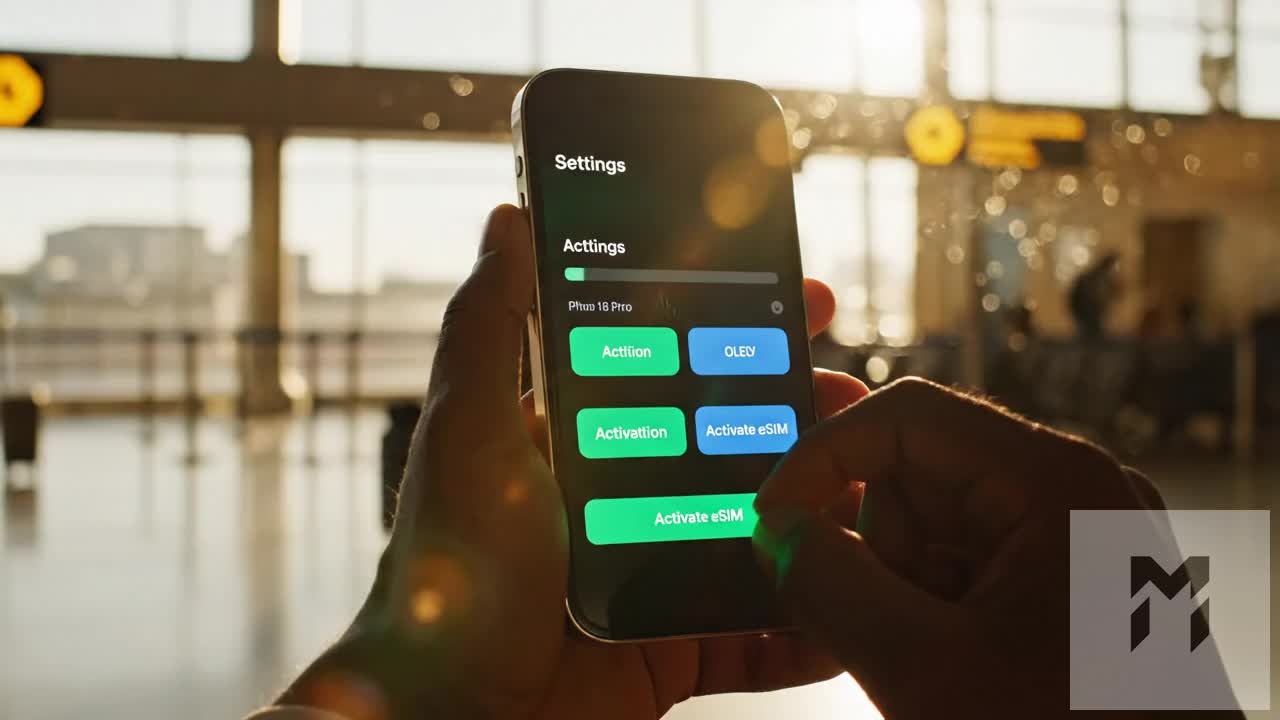
Your Semester Abroad, Connected: The Essential eSIM Guide for International Students
Your Semester Abroad: Why Connectivity Isn't Just a Luxury, It's a Necessity
Embarking on a semester abroad is an exhilarating adventure, a transformative chapter filled with new cultures, academic challenges, and profound personal growth. Yet, beneath the excitement lies a fundamental, often underestimated, requirement: uninterrupted connectivity. For international students, this isn't merely about posting travel photos or occasional check-ins; it's the very backbone of their academic success, personal well-being, and seamless integration into a new country. Unlike a short-term tourist, whose connectivity needs might be satisfied by sporadic Wi-Fi or a basic roaming package, a student's reliance on a stable, affordable, and reliable internet connection is profound and continuous. Your time abroad is a marathon, not a sprint, and your digital needs reflect this long-term commitment.
The Student Connectivity Imperative: Beyond Tourism
Academic Lifeline
From the moment you step onto campus, your academic journey is intrinsically linked to the internet. Reliable access is non-negotiable for:
- Conducting extensive research for papers and projects, often requiring access to university databases, international journals, and online libraries.
- Attending online lectures or tutorials, especially prevalent in today's hybrid learning environments.
- Submitting assignments through learning management systems (LMS) like Canvas or Moodle, where deadlines are strict.
- Collaborating with classmates on group projects via video calls, shared documents, and communication platforms.
- Checking university announcements, deadlines, and grades in real-time.
A dropped connection or sluggish internet can directly impact your ability to meet deadlines, participate in classes, and ultimately succeed academically.
Bridging Distances: Family & Friends
The emotional anchor of staying connected with loved ones back home cannot be overstated. Regular video calls, instant messages, and sharing updates are crucial for mental well-being, combating homesickness, and maintaining vital relationships across continents. Reliable internet ensures these connections remain strong, offering comfort and support when you need it most.
Navigating Daily Life with Ease
Beyond academics and family, robust connectivity underpins virtually every aspect of daily life abroad:
- Navigation: Finding your way around a new city, locating your university, or discovering local attractions. Services like Google Maps or Apple Maps are indispensable for getting around unfamiliar territory.
- Banking & Finance: Managing your money, checking balances, making payments, and setting up local bank accounts often require secure internet access for banking apps.
- Public Transport: Accessing real-time schedules, buying tickets, or planning routes via local transport apps.
- Social Planning: Coordinating meetups with new friends, joining student clubs, or discovering local events and activities.
- Emergency Situations: Having immediate access to information or communication in an unforeseen event, such as contacting emergency services or looking up critical information.
For these critical daily functions, a stable connection is paramount. Imagine trying to find your way home late at night or make an urgent payment only to be thwarted by a sluggish connection. This is where the enhanced speed of a provider like MollySIM truly shines. With its 384kbps Fair Use Policy speed limit, which is 3x faster than many competitors' 128kbps, essential apps like Google Maps and Apple Pay work smoothly and responsively, preventing frustrating delays when you need them most.
The Indispensable Local Number
While data is crucial, the need for a stable, local phone number often goes unaddressed by generic travel SIMs. For international students, a local number (even if virtual) is not a mere convenience; it's a gateway to integration and essential for practical necessities:
- University Registration: Many institutions require a local contact number for official records.
- Opening a Bank Account: A local number is almost universally mandatory for financial services.
- Job Applications & Internships: Employers expect a local point of contact for interviews and communication.
- Making Local Friends: Exchanging numbers for social plans and building your new community.
- Setting up Utilities/Services: Landlords, internet providers, and other service providers will require a local number.
Without one, you risk isolation and significant practical hurdles that can hinder your experience.
Traditional Hurdles: A Student's Nightmare
Historically, students faced a dilemma. Relying on expensive international roaming plans quickly depletes budgets, while acquiring a local physical SIM card upon arrival can be a bureaucratic headache. This often involves navigating foreign languages, complex registration processes, and finding a physical store, all while jet-lagged and trying to settle into a new environment. These traditional methods are not only inconvenient but often fail to provide the long-term stability and flexibility that a semester-long stay demands.
eSIM: The Modern Solution for Student Life
This is precisely where eSIM technology emerges as a game-changer for international students. An eSIM offers a modern, elegant, and highly practical solution designed to circumvent these traditional challenges. It eliminates the need for physical SIM cards, allowing you to activate a local or regional data plan digitally, often before you even leave home. This promises unparalleled convenience, cost-effectiveness, and immediate connectivity from the moment you land, ensuring you're connected, not stranded.
This guide is designed to empower you with the knowledge to make informed connectivity choices, ensuring your semester abroad is as smooth and successful as possible. We'll delve into how eSIM technology, particularly solutions like MollySIM (https://mollysim.com), is uniquely positioned to cater to the diverse and demanding needs of international students, providing reliable, high-speed connectivity that supports every aspect of your long-term stay.
eSIM vs. Traditional SIM: Which Reigns Supreme for Your Study Abroad?
🌐 Global Travel High-Speed Travel eSIM & SIM Plans
Instant QR code activation, hotspot enabled, with guaranteed 384kbps fallback speed to keep Maps & Digital Wallets active.
Choosing the right connectivity solution is paramount for a successful semester abroad. While traditional physical SIM cards have been the default for decades, eSIM technology has rapidly emerged as a superior alternative, particularly for the unique demands of international students. Let's dissect the pros and cons of each, weighing them against the practicalities of an extended study abroad experience.
The Unmatched Advantages of eSIM for Students
For international students, eSIMs offer a suite of benefits that directly address common pain points:
- Pre-Departure Activation & Immediate Connectivity: One of the most significant advantages is the ability to purchase and activate an eSIM plan before you even leave your home country. Imagine landing in a new city, stepping off the plane, and having instant access to maps, ride-sharing apps, and communication with family – no frantic search for a store, no language barriers, just seamless connectivity from minute one. This eliminates the stress of being stranded without data in an unfamiliar environment.
- No Physical Swapping, No Loss: eSIMs are embedded directly into your device, eliminating the need to physically swap tiny cards. This means no fumbling with ejector tools, no risk of losing your home SIM card, and no compatibility issues with different SIM tray sizes.
- Multiple Profiles & Dual Connectivity: Most modern smartphones support multiple eSIM profiles, allowing you to store several data plans simultaneously. This is invaluable for students who might want to keep their home country's eSIM active for banking alerts or family calls (if their device supports dual SIM functionality, e.g., one physical SIM + one eSIM, or two eSIMs) while using a separate eSIM for their study abroad data needs. This flexibility ensures you're always reachable on important numbers without incurring exorbitant roaming charges.
- Digital Convenience & Flexibility: Managing your connectivity becomes entirely digital. You can browse, compare, purchase, and activate new plans or top-ups directly from your phone, often through an app or website. This empowers you to switch providers or plans with ease, adapting to your data usage patterns or travel within your host region without any physical constraints.
- Enhanced Security: An eSIM profile is digitally tied to your device, making it significantly harder for someone to remove and use your number or data if your phone is lost or stolen, compared to a physical SIM card that can be easily popped out.
- Facilitating a 'Local Number' Experience: While eSIMs primarily offer data, they seamlessly integrate with modern communication. You can easily use VoIP (Voice over Internet Protocol) apps like WhatsApp, Google Voice, or Skype for calls and texts, effectively giving you a "local" communication method over your data connection. For those requiring a traditional local number for specific services, many eSIM-compatible phones also support a physical SIM slot, allowing for a dual-SIM setup: a local physical SIM for calls/SMS and an eSIM for high-speed data.
The Case for Traditional Physical SIM Cards
Traditional SIM cards do have a few merits, though their relevance for the typical study abroad student is often limited:
- Potentially Cheaper Long-Term Plans (with caveats): For students planning to stay for multiple years (e.g., a full degree program) and willing to navigate complex local bureaucracy, language barriers, and potentially long-term contracts, a local physical SIM might eventually offer slightly lower per-gigabyte costs than some short-term eSIM plans.
- Dedicated Local Number: A traditional local SIM card inherently comes with a dedicated local phone number, which can be useful for certain local registrations or services that don't readily accept VoIP numbers.
The Significant Drawbacks of Traditional SIMs for Students
The perceived advantages of traditional SIMs quickly diminish when faced with the realities of a semester or academic year abroad:
- Arrival Hassle & Time Sink: The most immediate hurdle is the need to find a local mobile store upon arrival. This often means navigating public transport, deciphering foreign signage, and spending valuable time during your initial, jet-lagged days that could be better spent settling in or exploring.
- Language Barriers & Bureaucracy: Activating a local SIM often involves interacting with customer service in a foreign language, understanding complex plan details, and filling out paperwork. Many countries require local ID, proof of address, or even a local bank account for activation, which can be a significant challenge for new arrivals.
- Contract Lock-ins & Lack of Flexibility: To access the cheapest rates, traditional SIMs often come with contract commitments (e.g., 12 or 24 months) that are unsuitable for a semester-long stay. Breaking these contracts can incur penalties. Pay-as-you-go options exist but are often less cost-effective.
- Inability to Activate Before Arrival: By their very nature, physical SIM cards cannot be activated until you physically have the card and are in the country, leaving you disconnected during crucial travel and arrival periods.
The Verdict: eSIM Reigns Supreme for Study Abroad
For the vast majority of international students on a semester or academic year abroad, eSIM technology is the unequivocally superior choice. The unparalleled convenience of pre-departure activation, digital management, and flexibility far outweighs the marginal, often theoretical, long-term cost savings of a traditional SIM, especially when factoring in the time, stress, and bureaucratic hurdles involved.
Providers like MollySIM (https://mollysim.com) are specifically designed to meet these student needs, offering competitive pricing and plans tailored for durations ideal for study abroad. Crucially, MollySIM's Fair Use Policy speed limit of 384kbps sets it apart, being three times faster than many competitors' 128kbps limits. This seemingly small difference is monumental in practice, ensuring essential apps like Google Maps for navigation, Apple Pay for transactions, and messaging apps work smoothly and reliably, preventing frustrating slowdowns when you need connectivity most.
Choosing an eSIM means choosing peace of mind, immediate connection, and the flexibility to focus on your studies and cultural immersion, not your mobile plan.
Seamless Setup: Activating Your eSIM Before You Even Land
The true power of eSIM for international students lies in its ability to provide instant connectivity the moment you arrive, eliminating the scramble for a local SIM. Achieving this peace of mind begins before you even leave home.
Pre-Departure: Your Step-by-Step Connection Guide
- Confirm Device Compatibility: First, ensure your smartphone supports eSIM. Most modern devices released in the last few years, including iPhone XS/XR and newer, Google Pixel 3 and newer, and many Samsung Galaxy S20 series and newer models, are eSIM compatible. Check
Settings > General > About(iPhone) orSettings > Network & Internet > SIMs(Android) for "Add eSIM" or similar options.
- Select Your MollySIM Plan: Visit MollySIM (https://mollysim.com) to choose a plan tailored for your study abroad destination and duration. Consider data allowance and validity period. Crucially, MollySIM offers a 384kbps Fair Use Policy speed limit, which is three times faster than many competitors' 128kbps limits. This enhanced speed is vital, ensuring essential apps like Google Maps for navigation, Apple Pay for transactions, and messaging apps work smoothly and reliably, preventing frustrating slowdowns when you need connectivity most.
- Purchase & Activate Your eSIM:
- Purchase Online: Select your desired plan on MollySIM.com and complete the secure online purchase. You'll immediately receive an email containing your eSIM activation details, typically including a QR code and manual activation codes.
- Activate Before Departure: While connected to a stable Wi-Fi network, go to your phone's
Settings > Mobile Data(orCellular) >Add eSIM. Scan the provided QR code or enter the manual details. Follow the prompts to label your new eSIM (e.g., "Study Abroad"). Important Note: The eSIM profile activates on your device before departure, but it will only connect to the local network once you arrive in your destination country and enable it. MollySIM's clear, step-by-step instructions simplify this process, making it accessible even for first-time eSIM users.
The Unbeatable Advantage of Landing Connected
Activating your eSIM pre-departure means you land with immediate, functional data, offering immense practical benefits and unparalleled peace of mind:
- Instant Navigation: Use Google Maps or other mapping apps immediately to find your way to your accommodation, university campus, or a pre-booked transfer.
- Crucial Communication: Effortlessly contact family to confirm your safe arrival or reach out to university officials if needed, without searching for Wi-Fi.
- Seamless Transport: Book ride-share services (like Uber or Lyft) or check public transport schedules instantly upon exiting the airport.
- Avoid Airport Wi-Fi Hassles: Bypass often unreliable, slow, or potentially insecure public airport Wi-Fi networks entirely.
On-Arrival: Connecting, Managing & Troubleshooting
Once you land in your host country, connecting to the local network is typically automatic.
- Enable Your eSIM: In your phone's
Settings > Mobile Data(orCellular), ensure your new eSIM profile is turned ON and selected as your primary data source. MollySIM's plans are designed for seamless local network access, often requiring no manual data roaming adjustments. - Manage Multiple Profiles: Your device allows you to manage multiple eSIM profiles. You can easily switch between your home SIM (if you keep it active for calls/texts) and your study abroad eSIM for data, or even use both simultaneously.
- Troubleshooting Tips:
- "No Service" or Connectivity Issues: Double-check that your eSIM profile is active and selected for data. A quick restart of your phone often resolves minor glitches.
- Slower Speeds Than Expected: Verify the correct eSIM is selected for data usage. Remember MollySIM's 384kbps speed limit is optimized for reliable essential app usage and smooth operation, not heavy streaming, which ensures consistent service for critical tasks.
- Activation Errors: If you encounter issues during the initial activation, carefully review MollySIM's clear instructions or contact their responsive customer support for expert assistance.
MollySIM's user-friendly interface, clear activation guidance, and dedicated support ensure you can hit the ground running, fully connected and ready to immerse yourself in your study abroad experience from day one without mobile plan worries.
Beyond the Tourist Bubble: Smart Data Management for Your Entire Semester
While the initial thrill of activating your eSIM and connecting to your new local network is exhilarating, a semester abroad demands a more strategic approach to data management than a short vacation. You'll be relying on your connection for everything from academic research and navigating new cities to staying in touch with family and friends. Effective data conservation and budgeting are paramount to ensure you remain connected without unexpected costs or frustrating disconnections.
Masterful Data Conservation Strategies
To make your data last the entire semester, cultivate smart habits from day one:
- Leverage University Wi-Fi: Your campus network is your best friend for heavy data tasks. Always connect to the university Wi-Fi for downloading lectures, submitting assignments, streaming high-definition video, or making extensive video calls. Most universities offer robust and secure Wi-Fi across their facilities.
- Download Content Offline: Before you leave a reliable Wi-Fi zone (like your dorm or a café), download as much content as possible. This includes:
- Maps: Utilize Google Maps or Apple Maps' offline features to download entire city or regional maps. This allows for navigation without consuming cellular data.
- Lectures & Course Materials: Download PDFs, videos, and presentations directly to your device.
- Entertainment: Download movies, TV shows (Netflix, Amazon Prime Video), and music (Spotify, Apple Music) for offline enjoyment during commutes or downtime.
- Adjust Streaming Quality: If you must stream on cellular data, always opt for lower quality settings for video and audio. Many streaming apps offer data-saving modes that significantly reduce consumption.
- Monitor Background App Refresh: Many apps consume data in the background even when not actively in use. Go into your phone's settings (
Settings > General > Background App Refreshon iOS;Settings > Network & Internet > Mobile network > App data usageon Android) and disable background data for non-essential applications like social media, news apps, or games. - Utilize Data Saver Modes: Both iOS and Android offer system-wide data saver modes that restrict background data usage and optimize network traffic. Additionally, many individual apps (e.g., Chrome, Facebook, YouTube) have their own built-in data-saving features.
- Disable Wi-Fi Assist/Smart Network Switch: These features automatically switch to cellular data when your Wi-Fi signal is weak. While convenient, they can lead to unexpected data usage. Turn them off to maintain full control over when your phone uses cellular data.
Monitoring and Budgeting Your Semester's Data
Staying on top of your data usage is crucial for long-term connectivity.
- Track Via Phone Settings: Your smartphone provides detailed insights into your data consumption.
- iOS: Navigate to
Settings > Cellular(orMobile Data) to see total usage and breakdown by app. Remember to scroll down and tap "Reset Statistics" at the start of each month or billing cycle to get an accurate picture. - Android: Go to
Settings > Network & Internet > Mobile network > App data usageto view your usage and set data warnings or limits. - Set a Realistic Budget: Based on your initial monitoring, establish a realistic monthly data budget. Consider your academic needs (research, communication with professors) and social habits. A semester is a marathon, not a sprint, so consistent, moderate usage is better than sporadic heavy consumption followed by disconnection.
- MollySIM's Flexibility and Peace of Mind: MollySIM (https://mollysim.com) is designed with the unique needs of international students in mind, offering unparalleled flexibility and a crucial safety net. Our plans allow you to scale your data usage up or down as your academic and social needs evolve throughout the semester.
Crucially, MollySIM stands apart with its 384kbps Fair Usage Policy (FUP) for unlimited data. This means that even after you've used up your high-speed data allowance, you are never truly disconnected. Instead, your speed is adjusted to a reliable 384kbps.
What 384kbps Means for a Student: Never Truly Disconnected
Understanding 384kbps is key to appreciating MollySIM's value:
| Task / Application | Performance at 384kbps
Making the Right Choice: A Comparative Look at Connectivity Options
Navigating the world of international connectivity can feel overwhelming, but understanding your options is the first step to making an informed decision for your semester abroad. Each choice comes with its own set of advantages and disadvantages, impacting everything from your budget to your daily convenience. Below, we present a comprehensive comparison to help you weigh your options.
| Feature / Option | MollySIM eSIM (Recommended) | Local Physical SIM | International Roaming (Home Carrier) | Pocket Wi-Fi Device | Relying Solely on Public Wi-Fi |
|---|---|---|---|---|---|
| Cost (Long-Term) | Excellent (Flexible, FUP) | Good (If long-stay, local setup) | Extremely Poor (Very Expensive) | Moderate (Rental fees, device cost) | Free (But unreliable) |
| Convenience | Excellent (Pre-arrival setup) | Poor (On-arrival hassle) | Excellent (No setup) | Moderate (Extra device, charging) | Poor (Limited availability) |
| Reliability | High (Local networks) | High (Local networks) | High (Home network agreements) | High (Local networks) | Low (Variable signal, security) |
| Local Number Access | Via VoIP/Dual SIM | Yes (Dedicated) | No (Home number) | No | No |
| Setup Difficulty | Easy (Digital) | High (Bureaucracy, language) | None | Moderate (Pickup/return) | None (But constant searching) |
| Long-Term Suitability | Excellent (Flexible plans) | Good (If permanent) | Very Poor (Unsustainable cost) | Poor (Rental costs add up) | Very Poor (Impractical) |
| Data Flexibility | High (Top-ups, FUP) | Variable (Contract-based) | Low (Expensive bundles) | Low (Fixed plans) | N/A |
Deeper Dive into Your Connectivity Choices
Understanding the nuances behind each option is crucial for students planning an extended stay abroad.
MollySIM eSIM: The Student-Centric Solution
MollySIM (https://mollysim.com) emerges as the most balanced and student-centric solution, specifically designed for the dynamic needs of international students. Its cost-effectiveness is a major draw, with flexible plans that allow you to scale your data usage up or down as your academic and social needs evolve throughout the semester. The ultimate peace of mind comes from MollySIM's 384kbps Fair Usage Policy (FUP) for unlimited data. This means you are never truly disconnected, even after exhausting your high-speed allowance. At 384kbps, you can still reliably use essential apps like Google Maps for navigation, Apple Pay for transactions, WhatsApp for messaging, and even basic email – a speed that is often 3x faster than competitors' 128kbps FUP, which can barely load a webpage.
Real-world scenario: Imagine landing in a new country, tired and disoriented. With MollySIM, your connectivity is already active. You can immediately call your family, navigate to your accommodation, and access essential information without the stress of finding a local SIM card store, dealing with language barriers, or worrying about immediate data limits. This pre-arrival setup and constant connectivity, even at reduced speeds, are invaluable for a smooth transition.
Local Physical SIM: The Traditional Route
Opting for a local physical SIM card provides a dedicated local number, which can be essential for certain situations like opening a bank account, setting up utilities, or for an internship that requires local contact. However, the convenience factor is significantly lower. You'll face the hassle of finding a store upon arrival, navigating potential language barriers, and dealing with local bureaucracy (e.g., passport registration, proof of address) – all while jet-lagged. While potentially cost-effective for very long-term stays, the initial setup can be a significant hurdle.
Real-world scenario: A student needing a local number for an internship might eventually benefit from a local SIM. However, the first few days or even weeks could be spent without reliable data while trying to complete the necessary paperwork and find a suitable plan, potentially missing out on crucial initial communications or navigation.
International Roaming (Home Carrier): Emergency Only
While incredibly convenient as it requires no setup, relying on international roaming from your home carrier for an entire semester is a financial non-starter. The costs are extremely prohibitive, with per-MB rates that quickly add up to hundreds or even thousands of dollars for even moderate usage. It's suitable only for brief emergency use immediately upon arrival, not for sustained academic or personal connectivity.
Real-world scenario: Using your home carrier's roaming to send a quick "I've landed safely" text is fine. Attempting to stream a lecture, participate in video calls, or even regularly browse social media will result in a bill shock that can derail your entire budget for the semester.
Pocket Wi-Fi Device: An Extra Burden
A pocket Wi-Fi device offers the benefit of sharing internet with multiple devices, but it introduces several inconveniences and hidden costs. You'll have an extra device to carry, keep charged, and potentially worry about losing or damaging. Rental fees can add up significantly over a semester, often making it more expensive than a dedicated eSIM plan. Furthermore, it's a single point of failure – if the device runs out of battery or breaks, you're completely disconnected.
Real-world scenario: While seemingly useful for group study, a student relying on a pocket Wi-Fi for personal use will constantly be managing battery life, carrying an additional gadget, and paying ongoing rental or data plan fees that might exceed the cost of a personal eSIM, without the benefit of direct phone connectivity.
Relying Solely on Public Wi-Fi: Risky and Unreliable
The allure of "free" Wi-Fi in cafes, libraries, and dorms is strong, but relying solely on it for all your connectivity needs is impractical, unreliable, and risky. Public Wi-Fi is often slow, has limited availability (leaving you disconnected during commutes or emergencies), and poses significant security risks for your personal data, banking, and academic work. You'll spend valuable time constantly searching for a connection, and the inconsistency can severely impact your ability to complete assignments or communicate effectively.
Real-world scenario: Trying to submit a critical research paper from a coffee shop with an unstable public Wi-Fi connection, or attempting a video call with family over an unsecured network, highlights the frustrations and dangers of this approach. It's simply not a viable long-term solution for an international student.
In conclusion, while various options exist, MollySIM's blend of pre-arrival convenience, cost-effectiveness, and the unparalleled peace of mind offered by its 384kbps FUP (which keeps you connected for essentials even after high-speed data is used) positions it as the optimal choice for international students seeking reliable and flexible connectivity throughout their semester abroad.
MollySIM: Your Academic Journey's Connectivity Partner
Throughout this guide, we've dissected the myriad connectivity challenges international students face and evaluated various solutions. It's clear that for a truly seamless, secure, and stress-free semester abroad, a dedicated eSIM solution stands head and shoulders above the rest. This is precisely where MollySIM emerges as not just a provider, but a genuine connectivity partner for your academic journey.
Unpacking MollySIM's Student-Centric Advantages
MollySIM has meticulously crafted its offerings with the unique needs of international students in mind, addressing the critical pain points identified earlier in this article.
- Effortless Pre-Departure Activation: Imagine landing in a new country, stepping off the plane, and instantly being connected. No frantic search for local SIM cards, no language barriers at a mobile store, and no immediate pressure to find Wi-Fi. MollySIM makes this a reality through its pre-departure activation. You can select and activate your eSIM plan from the comfort of your home, even before your flight takes off. This eliminates a significant source of initial travel anxiety, allowing you to focus on settling in, navigating your new surroundings, and connecting with your university and family immediately upon arrival.
- Global Coverage, Local Relevance: MollySIM boasts extensive coverage across popular study abroad destinations worldwide, ensuring you're connected whether you're studying in bustling European capitals, serene Asian campuses, or vibrant North American cities. Their commitment to competitive and transparent pricing means you get excellent value without hidden fees or unexpected charges. Plans are designed with student budgets in mind, offering flexible data packages that can be tailored to your specific needs – from light browsing and messaging to more data-intensive research and video calls with family.
The Unrivaled 384kbps Fair Usage Policy: Your Student Safety Net
But what truly sets MollySIM apart, providing an unparalleled layer of security and peace of mind, is its unique 384kbps Fair Usage Policy (FUP) for unlimited data. Unlike many competitors who throttle speeds down to a barely functional 128kbps after high-speed data is exhausted, MollySIM maintains a robust 384kbps. This isn't just a number; it's a game-changer for international students.
Consider this: at 128kbps, even basic functions like loading a map or processing a mobile payment can become frustratingly slow, if they work at all. MollySIM's 384kbps speed, however, is three times faster, ensuring that even after you've used up your high-speed allowance, you remain functionally connected for all essential tasks. This means you can reliably use Google Maps or Apple Pay to navigate unfamiliar streets or make purchases, send and receive critical messages via WhatsApp or iMessage, check important emails from your university, and even conduct light web browsing without significant delays. It's a true 'student safety net', guaranteeing that you're never truly disconnected, whether it's for an emergency, coordinating with classmates, or simply reassuring your family back home. This continuous, usable connectivity is invaluable. It removes the stress of constantly monitoring data usage and the fear of being stranded without essential communication, allowing you to immerse yourself fully in your studies and cultural experiences.
Focus on What Matters: Your Academic & Cultural Immersion
MollySIM understands that your semester abroad is about growth, learning, and exploration, not about battling connectivity woes. By providing a seamless user experience and reliable customer support, MollySIM empowers you to focus on what truly matters: your academic pursuits, making new friends, and experiencing a new culture. Their dedication to student needs means that any questions or issues you might encounter are addressed promptly, ensuring your connectivity remains a background convenience, not a foreground concern.
Don't let connectivity be an afterthought in your study abroad preparations. Secure the peace of mind and reliable connection you deserve. Visit MollySIM (https://mollysim.com) today to explore plans tailored for your specific study abroad destination. Take the crucial step to ensure your academic journey is connected, safe, and truly unforgettable, right from the moment you land.
🌐 Global Travel High-Speed Travel eSIM & SIM Plans
Instant QR code activation, hotspot enabled, with guaranteed 384kbps fallback speed to keep Maps & Digital Wallets active.