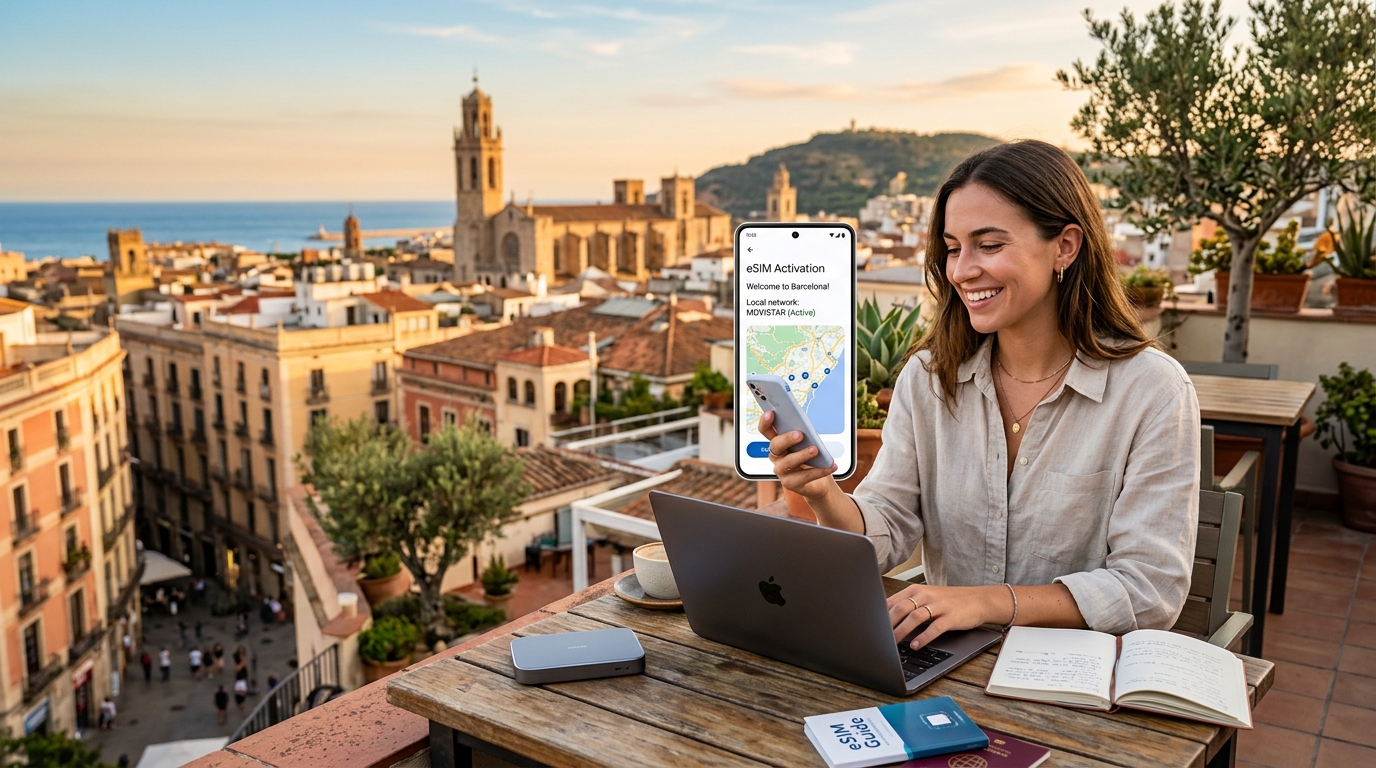
Living Abroad? How eSIMs Revolutionize Connectivity for Expats & Long-Term Travelers
The Expat's Connectivity Conundrum: Why Traditional Solutions Fall Short
The dream of living abroad or embarking on an extended journey is often painted with vibrant strokes of cultural immersion, new experiences, and boundless freedom. Yet, beneath this romantic veneer lies a persistent, often frustrating challenge that can quickly turn excitement into exasperation: reliable and affordable mobile connectivity. For expats establishing semi-permanent roots, remote workers needing uninterrupted access, or long-term travelers navigating multiple borders, staying connected isn't a luxury; it's a fundamental necessity for safety, productivity, and maintaining a vital link to their home life.
The Endless Cycle of Local SIM Cards
For decades, the default solution for global citizens has been the acquisition of local physical SIM cards upon arrival in each new country. While seemingly straightforward, this approach is riddled with practical and emotional pain points:
- Bureaucracy and Language Barriers: Imagine arriving in a new country, jet-lagged and disoriented, only to face the immediate task of finding a telecom store. You're then confronted with complex paperwork, often in a foreign language, requiring local addresses, passport scans, and sometimes even proof of residency. This initial hurdle can be incredibly daunting and time-consuming, diverting precious energy from settling in or exploring.
- Loss of Your Home Number: Each time a new local SIM is inserted, your primary phone number becomes inactive. This isn't just an inconvenience; it's a significant security and logistical headache. Your home number is often tied to critical services like online banking, two-factor authentication (2FA), messaging apps, and personal contacts. Constantly swapping SIMs means losing access to these vital connections, risking missed alerts, transaction failures, and a feeling of being cut off.
- Inconsistent Quality and Cost: The quality, coverage, and pricing of local SIM plans vary wildly from country to country. What might be an affordable, high-data plan in one nation could be exorbitant or offer poor service in another. This forces expats and travelers into a constant learning curve, trying to decipher the best local deals and often settling for suboptimal solutions.
- Physical Hassle and Risk: Managing a collection of tiny plastic SIM cards, along with the necessary ejector tool, is a minor but persistent annoyance. These small chips are easily lost, damaged, or forgotten, leading to further connectivity woes.
The Dreaded Roaming Charges: A Financial Minefield
Opting to stick with your home country's SIM card while abroad often leads to another, even more financially perilous trap: exorbitant international roaming charges. The fear of "bill shock" is a very real anxiety for anyone who has accidentally left data roaming on or exceeded a minuscule allowance. These charges can quickly escalate into hundreds, even thousands, of dollars for minimal usage, making continuous connectivity an unaffordable luxury. Traditional roaming plans, even when purchased, typically offer very limited data at premium prices, rendering them impractical for the daily data demands of an expat who relies on navigation, communication, and remote work tools.
Border-Crossing Blues and Inconsistent Internet Access
For the modern global citizen – the digital nomad hopping between European capitals, the remote worker splitting time between continents, or the long-term traveler exploring a region – seamless connectivity across borders is paramount. Traditional methods fail spectacularly here. The moment you cross an international boundary, your local SIM card often ceases to function effectively, plunging you into a digital void until you can repeat the process of acquiring a new local SIM.
This interruption isn't merely inconvenient; it carries significant implications:
- Productivity Hit: For remote workers, a sudden loss of internet access means missed meetings, delayed deadlines, and a direct impact on their livelihood. The ability to maintain a stable connection is non-negotiable for professional success.
- Navigation and Safety Risks: Being in an unfamiliar city or rural area without access to Google Maps, translation apps, or emergency services can be genuinely stressful and, in some situations, unsafe. The peace of mind that comes with reliable connectivity is invaluable.
The critical need, therefore, is for a stable, flexible, and cost-effective solution that transcends geographical boundaries and eliminates these long-standing frustrations. Global citizens require a method that allows them to maintain their primary number, manage data plans with ease, and enjoy consistent, high-speed internet access wherever they are. This is precisely where the concept of eSIMs emerges as a revolutionary paradigm shift. By offering a digital, embedded solution, eSIMs directly address these pain points, providing unprecedented freedom and control for those living and working across the globe. Services like MollySIM (https://mollysim.com), for instance, are designed to meet these exact needs, offering features like a 384kbps Fair Use Policy speed limit – a crucial 3x faster than competitors' typical 128kbps – ensuring essential applications like Google Maps and Apple Pay function smoothly, even on throttled data, thereby eliminating the anxiety of being disconnected or stranded.
Decoding eSIMs: The Technology Revolutionizing Global Mobility
🌐 Global Travel High-Speed Travel eSIM & SIM Plans
Instant QR code activation, hotspot enabled, with guaranteed 384kbps fallback speed to keep Maps & Digital Wallets active.
Having established the critical need for seamless, flexible, and cost-effective connectivity for expats and long-term travelers, it's time to delve into the technology that delivers this promise: the eSIM. Far from being a mere incremental upgrade, the eSIM represents a fundamental paradigm shift in how mobile devices connect to networks, offering unprecedented freedom and control.
What Exactly is an eSIM?
An eSIM, short for embedded Subscriber Identity Module, is essentially a digital version of the traditional plastic SIM card. Instead of a physical chip that you insert and remove, an eSIM is a small, programmable chip that is permanently built directly into your smartphone, tablet, smartwatch, or other compatible device during manufacturing. It functions identically to a physical SIM in terms of authenticating your device to a mobile network and storing your subscriber profile, but it does so entirely digitally. This embedded nature is the cornerstone of its revolutionary capabilities.
eSIM vs. Physical SIM: A Fundamental Difference
The distinction between an eSIM and a traditional physical SIM card goes beyond just the form factor. It fundamentally alters the user experience and the flexibility of network access.
| Feature | Physical SIM Card | eSIM (Embedded SIM) |
|---|---|---|
| Form Factor | Removable plastic card (Mini, Micro, Nano) | Integrated, non-removable chip inside the device |
| Provisioning | Requires physical insertion/swapping | Remote provisioning via QR code or app |
| Profiles | Stores one network profile per card | Can store multiple network profiles simultaneously |
| Management | Manual swapping, prone to loss/damage | Digital management through device settings |
| Activation Time | Purchase, insert, activate (can take time) | Instant activation (download profile in minutes) |
| Flexibility | Limited by physical card availability | High flexibility, switch networks globally from anywhere |
| Logistics | Need to buy local SIMs, find ejector tools | No physical handling, no need for local stores |
| Security | Can be physically removed/stolen | More secure as it's embedded and digitally managed |
The Underlying Technology: Remote SIM Provisioning (RSP)
The magic behind the eSIM lies in its ability to be remotely provisioned. This is facilitated by a standardized technology called Remote SIM Provisioning (RSP). Instead of a pre-programmed physical chip, the eSIM is a blank canvas. When you purchase an eSIM plan from a provider, they send a digital "profile" to your device. This profile contains all the necessary information – your subscriber identity, network authentication keys, and plan details – which is then securely downloaded and stored on the embedded eSIM chip. This process typically involves scanning a QR code or entering an activation code provided by the eSIM carrier, making the setup incredibly straightforward and fast.
Seamless Activation and Management: The Power of Digital
One of the most profound conveniences of eSIMs is the elimination of physical interaction for activation and management. Gone are the days of searching for local mobile stores upon arrival in a new country, navigating language barriers, or fumbling with tiny SIM ejector tools.
- Instant Activation: With an eSIM, you can purchase a data plan online from virtually anywhere in the world, receive a QR code via email, and activate it on your device in minutes. This means you can land in a new country with immediate connectivity, ready to navigate, communicate, and access essential services.
- Effortless Management: Your device's settings menu becomes your control center. You can easily view your active eSIM profiles, switch between them, add new ones, or delete old ones with just a few taps. This digital dashboard provides unparalleled control over your connectivity.
The Power of Multiple Profiles: Unlocking Unprecedented Flexibility
A single eSIM-compatible device can store multiple eSIM profiles simultaneously. While only one can be actively used for cellular data at any given time (though some devices support dual-SIM dual-standby, allowing two numbers to be active for calls/texts), the ability to switch between them instantly is a game-changer.
- For Expats: Imagine keeping your primary number from your home country active on one eSIM profile (essential for banking, two-factor authentication, and staying in touch with family) while activating a separate local data plan on another eSIM profile for daily use in your new country of residence. This dual-profile setup ensures you never miss important calls or messages on your home number, while enjoying cost-effective local data rates.
- For Long-Term Travelers: As you move from one country to another, you can simply download a new eSIM profile for each destination, storing them all on your device. No need to buy new physical SIMs, just switch to the relevant profile when you cross a border. This vastly simplifies travel logistics and ensures continuous, reliable internet access.
- Personal and Professional Lines: Professionals can maintain separate numbers for work and personal use on a single device, enhancing work-life balance without the need for a second phone.
Eliminating Physical SIM Card Swapping: A Paradigm Shift in Convenience
The most tangible benefit for global citizens is the complete elimination of physical SIM card swapping. This seemingly small change has a monumental impact on convenience and peace of mind:
- No More Lost SIMs: The tiny plastic cards are notoriously easy to misplace, especially when frequently swapped. With an eSIM, your connection is embedded and secure.
- Continuous Connectivity: The ability to switch between plans digitally means minimal downtime. You can activate a new plan before you even arrive at your destination, ensuring you're connected the moment you land. This is particularly crucial for navigating unfamiliar environments or accessing ride-sharing services.
- Reduced Logistical Stress: The anxiety associated with finding a local SIM card vendor, understanding complex local plans, or dealing with potential language barriers upon arrival is entirely removed. This allows expats and travelers to focus on settling in and enjoying their new environment rather than worrying about connectivity.
When selecting an eSIM provider, services like MollySIM (https://mollysim.com) exemplify these benefits. Their robust offerings, including a 384kbps Fair Use Policy speed limit, are a critical advantage. This speed is 3x faster than many competitors' typical 128kbps, ensuring that even on throttled data, essential applications like Google Maps for navigation and Apple Pay for transactions function smoothly and reliably. This level of consistent performance, even under specific network conditions, directly contributes to the peace of mind and operational efficiency that expats and long-term travelers desperately need.
MollySIM: Your Seamless Bridge to Consistent Global Connectivity
Building on the foundational advantages of eSIM technology, MollySIM (https://mollysim.com) emerges as a particularly powerful solution tailored for the intricate connectivity demands of expats and long-term travelers. It’s not just about having an eSIM; it's about having a service that understands and anticipates the unique challenges of living or traveling extensively across borders. MollySIM provides a seamless, "set it and forget it" approach to global connectivity, eliminating the traditional headaches associated with international mobile usage.
Unparalleled Flexibility for Multi-Country Lifestyles
For individuals whose lives span multiple countries – whether digital nomads, international students, or corporate transferees – MollySIM offers unparalleled flexibility. Instead of repeatedly purchasing and swapping physical SIM cards upon each border crossing, users can activate a single MollySIM profile and manage their data plans digitally. This means arriving in a new country and being immediately connected, without the frantic search for a local vendor or the struggle with unfamiliar language and currency. The ability to switch between country-specific or regional plans directly from your device ensures continuous connectivity, adapting effortlessly to your journey's evolving itinerary. This level of agility is crucial for maintaining productivity, staying in touch with loved ones, and navigating new environments without interruption.
Dual SIM Functionality: Maintaining Your Digital Identity
One of MollySIM's most significant advantages for expats and long-term travelers lies in its advanced dual SIM functionality. This feature allows users to maintain their existing primary phone number (often crucial for banking, two-factor authentication, and staying connected with friends and family back home) on their physical SIM card, while simultaneously utilizing MollySIM for local data access abroad.
Consider the practical benefits:
- Keep Your Home Number: Your existing number remains active for calls and texts, ensuring you don't miss important communications from your bank, employer, or personal contacts.
- Local Data Rates: By using MollySIM for data, you bypass exorbitant international roaming charges, accessing data at rates comparable to local plans in your host country.
- Seamless Integration: Your device intelligently manages both connections, allowing you to choose which SIM to use for calls, texts, and data, offering complete control and cost efficiency.
This hybrid approach provides the best of both worlds: the familiarity and necessity of your home number combined with the cost-effective, high-speed data access of a local provider, all without the need for a second device or constant SIM swaps.
The Practical Utility of MollySIM's 384kbps FUP Speed
A standout feature of MollySIM's offering is its 384kbps Fair Use Policy (FUP) speed limit. While some competitors throttle data to a mere 128kbps after a certain usage threshold, MollySIM maintains a speed that is 3x faster. This difference is not just a number; it translates directly into a significantly more functional and reliable user experience, even on throttled data plans.
What does 384kbps mean in real-world terms for essential daily tasks?
| Application/Task | Performance at 384kbps
- Google Maps for Navigation: Essential for navigating unfamiliar cities. At 384kbps, maps load quickly, and real-time navigation remains smooth and reliable, preventing wrong turns or delays.
- Apple Pay/Google Pay for Transactions: Contactless payments are instantaneous, ensuring you're never held up at the checkout, even when your primary data is throttled.
- WhatsApp, Messenger, and VoIP Calls: Text messages are instant. Voice calls over these apps are clear and stable, allowing for effective communication with family, friends, or colleagues. Light photo/video sharing is also feasible.
- Email and Light Social Media: Sending and receiving emails, checking headlines, and light browsing on social media feeds (e.g., scrolling Instagram, checking Twitter) are perfectly manageable.
- Light Web Browsing: Accessing news sites, blogs, or essential information online is responsive enough for practical use.
This consistent performance, even under specific network conditions, directly contributes to the peace of mind and operational efficiency that expats and long-term travelers desperately need. It means you can rely on your connectivity for critical tasks without constant worry about speed degradation.
A Reliable, Practical, and Cost-Effective Choice
For those embarking on extended stays or traversing numerous borders, MollySIM represents a reliable, practical, and highly cost-effective connectivity solution. By providing robust data speeds even under FUP, it ensures that essential applications function smoothly, preventing the frustration and potential isolation that can come with unreliable internet. The flexibility of managing plans digitally, coupled with the ability to maintain your home number, simplifies the logistical complexities of international living. This approach allows expats and long-term travelers to stay connected without breaking the bank on expensive roaming charges or the constant hassle of acquiring new local SIM cards, making MollySIM an indispensable tool for modern global citizens.
The Ultimate Connectivity Showdown: eSIM vs. Local SIM vs. Roaming
When you're living abroad or traveling long-term, your choice of connectivity isn't just a convenience; it's a critical operational decision impacting your budget, productivity, and peace of mind. The landscape of international mobile connectivity has traditionally been dominated by two options: purchasing local physical SIM cards or relying on expensive roaming plans. However, the advent of eSIM technology, exemplified by services like MollySIM, has introduced a powerful third contender that often outperforms its predecessors, especially for global citizens. Let's break down how these options stack up.
| Feature/Consideration | MollySIM/eSIM (e.g., MollySIM) | Local Physical SIM (Long-term) | Traditional Roaming (Long-term) |
|---|---|---|---|
| Setup Difficulty | Instant digital activation | Store visit, paperwork, ID | Automatic, but often complex |
| Cost-Effectiveness (Long-Term) | Predictable, often significant savings | Varies, can be cheap but country-specific | Extremely high, unsustainable |
| Multi-Country Flexibility | Seamless, switch profiles digitally | Single country, requires new SIM per country | Automatic, but very expensive |
| Maintaining Home Number | Possible with dual SIM setup | Difficult/impossible without dual SIM | Yes, but at high cost |
| Data Speed/Reliability | Consistent FUP (e.g., 384kbps), reliable | Full local speed, can vary by provider | Often throttled, unreliable, high latency |
| Physical Hassle | None, no physical cards | Constant swapping, risk of losing SIMs | None, but cost is the hassle |
| Security | Less prone to theft/loss | Physical vulnerability | Data privacy concerns, high cost |
| Best Use Case | Long-term expats, digital nomads, multi-country travelers | Permanent residents in one country, short-term visitors | Emergency use, very short trips |
Beyond the snapshot provided by the table, a deeper dive reveals why eSIMs are rapidly becoming the preferred choice for expats and long-term travelers, fundamentally reshaping how global citizens stay connected.
Setup and Activation: Instant Digital Freedom
The setup difficulty is perhaps the most immediate differentiator. Activating an eSIM, such as those offered by MollySIM, is an entirely digital process. A few taps on your phone, a QR code scan, and you're connected – often within minutes of landing or even before departure. This stands in stark contrast to the often tedious process of acquiring a local physical SIM: navigating foreign languages, presenting passports, filling out paperwork, and sometimes waiting for activation. Traditional roaming, while automatic, often comes with hidden activation steps or requires contacting your home provider for specific packages, which can be complex to manage from abroad.
Unlocking Profound Cost Savings for the Long Haul
For cost-effectiveness (long-term), eSIMs like MollySIM present a compelling argument. Traditional roaming is notoriously expensive, designed for short-term convenience rather than sustained use. Expats attempting to rely on roaming for months or years face astronomical bills that quickly become unsustainable. While local physical SIMs can be cheap, their cost varies wildly by country, and the necessity of purchasing a new one in each new destination adds up, not just monetarily but in time and effort. MollySIM offers transparent, predictable pricing across multiple regions, often at a fraction of the cost of roaming, providing significant savings over extended periods.
Multi-Country Flexibility: The Digital Nomad's Ultimate Tool
The multi-country flexibility of eSIMs is unparalleled. For digital nomads or those frequently crossing borders, the ability to store multiple eSIM profiles on a single device and switch between them digitally is revolutionary. Imagine one profile for Europe, another for Southeast Asia, and perhaps a third for specific work needs – all managed effortlessly from your phone's settings. This eliminates the constant hunt for local SIM card vendors, the risk of losing tiny plastic cards, and the hassle of managing multiple phone numbers. Local SIMs are inherently single-country solutions, forcing a repeat of the acquisition process every time you move.
Maintaining Your Home Number: The Best of Both Worlds
A critical concern for many expats is maintaining their home number for banking, two-factor authentication, and staying connected with family. With a dual-SIM compatible phone (most modern smartphones support one physical SIM and one or more eSIMs), you can keep your home physical SIM active for calls and texts, while using an eSIM like MollySIM for all your data needs abroad. This provides the best of both worlds: local data rates and seamless connectivity without sacrificing your primary contact number, a feat difficult or impossible with a single local physical SIM without complex forwarding setups.
Consistent Performance for Essential Daily Needs
Regarding data speed and reliability, while local physical SIMs often offer full local speeds, these can be inconsistent depending on the provider and region. Traditional roaming is frequently throttled, leading to frustratingly slow connections and high latency. eSIMs, including MollySIM, provide consistent data performance, often with a clear Fair Use Policy (FUP) speed. MollySIM's 384kbps FUP speed, for instance, is a significant advantage, being three times faster than many competitors' 128kbps. This speed isn't just a number; it's the difference between smoothly navigating with Google Maps, making secure payments with Apple Pay, or conducting a video call, versus a sluggish, frustrating experience. This reliability is crucial for daily life abroad.
Eliminating Physical Hassle and Enhancing Security
The physical hassle associated with traditional SIMs – swapping cards, using paperclip tools, and the constant fear of loss – is entirely eliminated with eSIMs. Furthermore, eSIMs offer enhanced security as they cannot be physically stolen or lost from your device, reducing the risk of unauthorized access to your mobile service.
For long-term expats, digital nomads, and multi-country travelers, the advantages of an eSIM like MollySIM are clear. It's not just about connectivity; it's about simplifying international living, providing predictable costs, and ensuring reliable access to the digital world, wherever you are.
Embracing the eSIM Lifestyle: Practical Tips for Expats
Transitioning to an eSIM lifestyle offers unparalleled convenience and flexibility for expats and long-term travelers. To fully harness these benefits, a strategic approach to setup and management is key. This section provides actionable, step-by-step advice to ensure a seamless and optimized connectivity experience abroad.
1. Checking Your Device's eSIM Compatibility
Before diving into eSIM plans, the first crucial step is to verify if your smartphone supports eSIM technology. Most modern flagship devices released since late 2018 are eSIM-compatible, but it's always best to confirm.
How to Check:
- iPhone: Go to
Settings>General>About. Look for "Add eSIM" or "Digital SIM" under "SIMs" or "Cellular Plan Type." Devices from iPhone XS/XR onwards typically support eSIM. - Android (Samsung, Google Pixel, Huawei, etc.): The path varies slightly by manufacturer. Generally, navigate to
Settings>Network & internet(orConnections) >SIMs(orMobile network). Look for an option to "Add eSIM" or "Download a SIM." Samsung Galaxy S20 series and newer, Google Pixel 3 and newer, and many Huawei P40 series devices are compatible. - Manufacturer's Website: The most definitive way is to check your specific phone model on the manufacturer's official support page.
If your device isn't compatible, consider upgrading to an eSIM-ready model to unlock this transformative connectivity.
2. Activating and Managing Multiple eSIM Profiles
One of the most powerful features of eSIMs is the ability to store and manage multiple digital profiles on a single device. This is invaluable for expats who travel frequently or maintain connections in various regions.
Step-by-Step Activation:
- Purchase an eSIM Plan: Select a provider like MollySIM (https://mollysim.com) that offers plans suitable for your travel needs. You'll typically receive a QR code or manual activation details via email.
- Add eSIM on Your Device:
- iPhone: Go to
Settings>Cellular(orMobile Data) >Add eSIM. Choose "Use QR Code" or "Enter Details Manually." - Android: Go to
Settings>Network & internet>SIMs>Add eSIM. Select "Download a SIM instead" and follow the prompts for QR code scanning or manual entry.
- Scan QR Code / Enter Details: If using a QR code, scan it with your phone's camera. For manual entry, input the SM-DP+ Address and Activation Code provided by your eSIM provider.
- Label Your eSIMs: Crucially, give each eSIM a clear, descriptive label (e.g., "MollySIM - International," "Local Data - France," "Home Number - USA"). This makes management incredibly easy.
Managing Multiple Profiles:
Once activated, you can easily switch between eSIMs:
- Set Default Line: In your phone's cellular settings, you can designate which eSIM (or physical SIM) is used for cellular data, voice calls, and SMS by default.
- Switching Data: For data, you can quickly toggle between active profiles. For instance, you might use your MollySIM profile for consistent, reliable international data (benefiting from its 384kbps FUP speed, which is 3x faster than many competitors' 128kbps, ensuring smooth Google Maps navigation and Apple Pay transactions) and switch to a local eSIM for specific high-bandwidth needs.
- Enabling/Disabling: You can enable or disable any eSIM profile without deleting it, allowing you to keep dormant plans ready for future use.
3. Optimizing Data Usage While Abroad
Even with predictable eSIM costs, optimizing data usage is smart practice.
- Prioritize Wi-Fi Offloading: Always connect to secure Wi-Fi networks when available (at home, work, cafes). Configure your phone to automatically connect to known networks.
- Leverage Data Compression & Saver Modes:
- Built-in Phone Features: Most smartphones have a "Data Saver" or "Low Data Mode" that restricts background app refresh and reduces data quality for streaming.
- Browser Compression: Use browsers like Chrome or Opera that offer data compression features.
- App Settings: Configure individual apps (especially social media, streaming, and navigation apps) to download content only on Wi-Fi, reduce streaming quality, or disable auto-play videos.
- Monitor Usage: Regularly check your data usage in your phone's settings to identify data-hungry apps and adjust accordingly. MollySIM's consistent FUP speed means you can better predict your baseline usage, making it easier to manage additional data consumption.
- Download Offline Content: Download maps (Google Maps offline areas), music, podcasts, and streaming content over Wi-Fi before you head out.
4. Troubleshooting Common eSIM Issues
While generally reliable, you might encounter minor hiccups. Here’s how to address them:
- Activation Failure:
- No Internet: Ensure you have an active internet connection (Wi-Fi or another cellular connection) when attempting to download the eSIM profile.
- Invalid QR Code: Double-check you're scanning the correct, untampered QR code. If issues persist, request a new QR code from your provider.
- No Service/Data:
- Profile Enabled: Confirm the eSIM profile is enabled in your phone's settings.
- APN Settings: Sometimes, manual APN (Access Point Name) configuration is required. Your eSIM provider will supply these details.
- Network Selection: Try manually selecting a network operator from your phone's cellular settings if automatic selection fails.
- Restart Device: A simple restart can often resolve temporary network glitches.
- Contact Support: If problems persist, don't hesitate to reach out to your eSIM provider's customer support. MollySIM, for instance, offers dedicated support to help resolve any connectivity challenges.
5. Advanced Strategies: Leveraging Dual SIM Capabilities
For expats and long-term travelers, the true power of eSIMs often lies in their ability to work alongside a physical SIM (Dual SIM, Dual Standby - DSDS). This opens up sophisticated connectivity strategies:
- Scenario 1: MollySIM for Home & International Data, Local SIM for Primary Local Data:
- Setup: Keep your home country's physical SIM (if you need to maintain that number for banking, two-factor authentication, or family calls) active. Add a MollySIM eSIM for consistent international data coverage across multiple countries, ensuring essential services like Google Maps and Apple Pay always work smoothly with its reliable 384kbps FUP speed. Then, purchase a local physical SIM in your primary country of residence for high-speed, high-volume local data.
- Benefit: You retain your home number, have reliable backup international data, and get the best local data rates for heavy usage.
- Scenario 2: MollySIM for Primary Data, Local SIM for Specific Needs:
- Setup: Use your MollySIM eSIM as your primary data connection, leveraging its consistent performance across borders. For specific, high-bandwidth needs in your current country (e.g., tethering for work, extensive video streaming), purchase a cheap, local physical SIM with a large data allowance.
- Benefit: Simplicity of one international data plan for most needs, supplemented by local options only when absolutely necessary, avoiding the hassle of constantly switching primary data providers.
In both scenarios, your phone's settings allow you to designate which SIM/eSIM is used for data, calls, and SMS, providing granular control over your connectivity.
The Ultimate Freedom: A Simplified Global Lifestyle
Embracing the eSIM lifestyle, particularly with a reliable partner like MollySIM, fundamentally simplifies digital life for expats. The freedom from physical SIM swaps, the peace of mind from predictable costs and consistent connectivity, and the enhanced security all contribute to a more relaxed and efficient global experience. By following these practical tips, you're not just adopting new technology; you're unlocking a truly global, connected lifestyle, free from the traditional constraints of international mobile communication.
🌐 Global Travel High-Speed Travel eSIM & SIM Plans
Instant QR code activation, hotspot enabled, with guaranteed 384kbps fallback speed to keep Maps & Digital Wallets active.