Cruising the Nile & Cairo: The Essential 2026 Egypt Travel eSIM & Data Guide
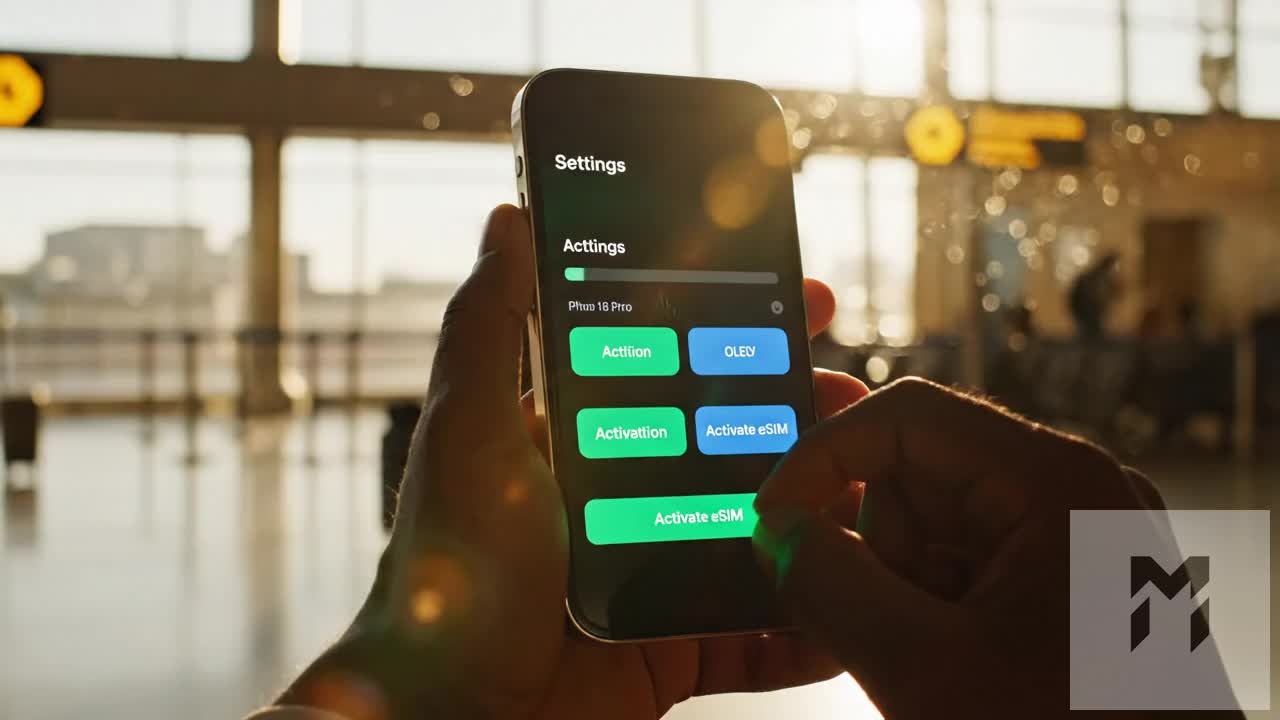
Landing at Cairo International (CAI): The Kiosk Gauntlet vs. Instant eSIM Activation
Stepping through the customs exit doors at Cairo International Airport (CAI)—whether arriving at the modern Terminal 2 or the sprawling Terminal 3—thrusts you directly into one of the most aggressive retail gauntlets in North Africa. For exhausted long-haul travelers landing on late-night red-eye flights from Europe, the Gulf, or North America, securing mobile data often turns into an unexpected, high-friction ordeal.
The Kiosk Gauntlet: Inflated Markups and Opaque Add-ons
Immediately past baggage claim, you are flanked by illuminated kiosks representing Egypt’s four primary mobile network operators: Vodafone Egypt, Orange Egypt, Etisalat Misr, and WE (Telecom Egypt). Representatives actively vie for attention, pitching "special tourist packages" that rarely align with domestic market rates.
CAI Arrival Hall (T2/T3) ──► Kiosk Lines (45–60 min) ──► Passport Scans / Paper KYC ──► Cash Markups & Delayed SIM Activation
VS.
Airplane Wheels Down ──► Toggle MollySIM Line ON ──► Immediate 4G/5G Handshake ──► Skip the Terminal Gauntlet
Navigating these kiosks presents several distinct challenges:
- Inflated "Tourist" Tiers: Rates charged at CAI kiosks carry arbitrary markups of 40% to 100% over domestic pricing, frequently demanding payment in foreign currencies (EUR or USD) at disadvantageous conversion rates.
- Hidden Regulatory Fees: Quoted gigabyte allocations often exclude the mandatory national "line development tax," SIM issuance fees, and local value-added taxes (VAT), resulting in a checkout price significantly higher than advertised on promotional placards.
- Split Quota Confusion: Many local packages divide data allowances into arbitrary buckets (e.g., 50% reserved solely for specific social media apps and 50% for general browsing), leaving travelers with far less usable high-speed navigation and hotspot data than anticipated.
The Bureaucratic Bottleneck: Mandatory KYC and Passport Registration
Under regulations enforced by Egypt’s National Telecommunications Regulatory Authority (NTRA), every physical prepaid SIM card sold to a foreign national must be tied to a verified identity. At airport counters, this process creates an unavoidable bottleneck:
- Physical Passport Handling: Agents must manually photograph and scan your physical passport data page and entry visa stamp.
- Manual Data Entry: Exhausted clerks manually key passport numbers, full names, and temporary hotel addresses into central operator portals, a process prone to typographic errors that can later invalidate the line.
- Delayed Network Provisioning: Even after completing paperwork, physical SIMs frequently do not activate immediately on the network. Travelers are often told to wait two to four hours for backend network validation—leaving them without connectivity while trying to navigate the chaotic airport exterior, coordinate with private transfer drivers, or hail an Uber.
During peak bank-arrival windows (typically 10:00 PM to 3:00 AM), queue times at airport telco counters routinely stretch between 45 and 60 minutes.
| Feature / Metric | CAI Airport Physical SIM (Vodafone / Orange / WE) | MollySIM Travel eSIM |
|---|---|---|
| Wait Time Upon Landing | 45–60 minutes in terminal queues | 0 minutes (Instant connection on touchdown) |
| Identity Verification | Invasive physical passport & visa scan | Frictionless digital purchase (No physical queuing) |
| Physical SIM Handling | Requires ejector tool; risk of losing primary SIM | 100% Digital; keeps primary SIM active for 2FA SMS |
| Hidden Taxes / Surcharges | Stamp taxes, line fees, and dynamic tourist markups | Transparent flat-rate pricing |
| Fallback Speed (FUP) | Hard disconnect or throttled to unworkable 64–128 kbps | 384 kbps safety floor (3x faster than industry standard) |
| Activation Window | Delayed (30 mins to 4 hours post-purchase) | Pre-installed prior to departure; live instantly |
The Frictionless Alternative: Tarmac Activation with MollySIM
Pre-installing a dedicated travel eSIM completely bypasses the terminal gauntlet. By configuring your digital profile prior to departure, your device executes an automatic network handshake the moment your flight touches down at CAI and the cabin crew clears mobile device usage.
Using an advanced digital solution like MollySIM ensures your device immediately latches onto premium local tier-1 infrastructure—delivering authenticated 4G LTE or 5G connectivity before you even step off the jet bridge.
Crucially, MollySIM includes an engineered 384 kbps Fair Use Policy (FUP) safety threshold. While standard competitor profiles drop your bandwidth to a virtually unusable 64 kbps or 128 kbps once your primary data allowance is exhausted, MollySIM's 384 kbps baseline is three times faster. This ensures critical operational protocols—such as real-time Google Maps navigation through Cairo's complex road networks, WhatsApp messaging, and tokenized Apple Pay/Google Wallet transactions—continue functioning reliably without leaving you stranded without data in the middle of the capital.
Egypt Cellular Landscape: Vodafone Egypt, Orange, and WE Network Analysis
🇫🇷 Orange France / Europe SIM High-Speed Travel eSIM & SIM Plans
Instant QR code activation, hotspot enabled, with guaranteed 384kbps fallback speed to keep Maps & Digital Wallets active.
Navigating Egypt’s digital landscape requires understanding the physical radio access networks (RAN) powering the country. Mobile connectivity across the Arab Republic of Egypt is dominated by three primary mobile network operators (MNOs)—Vodafone Egypt, Orange Egypt, and WE (Telecom Egypt)—alongside Etisalat Egypt.
Evaluating the underlying spectrum allocations and regional infrastructure profiles reveals stark differences in how these networks handle dense metropolitan interference versus remote river and desert topography.
| Operator | Primary Spectrum Deployments | Indoor Penetration (Low-Band) | Nile Corridor Footprint (Luxor–Aswan) | Coastal / Red Sea Performance |
|---|---|---|---|---|
| Vodafone Egypt | Band 1 (2100MHz), Band 3 (1800MHz), Band 8 (900MHz), Band 20 (800MHz) | Exceptional (Extensive Sub-1GHz deployment) | High (Dense tower clustering along riverbanks) | Excellent (Hurghada, Sharm El Sheikh, El Gouna) |
| Orange Egypt | Band 1 (2100MHz), Band 3 (1800MHz), Band 7 (2600MHz TD) | Moderate (Relies heavily on mid-band capacity) | Moderate-High (Reliable in main ports; patchy between locks) | Class-Leading (High-capacity coastal backhaul) |
| WE (Telecom Egypt) | Band 1 (2100MHz), Band 3 (1800MHz), Band 41 (2500MHz) | Moderate (Urban-focused microcells) | Moderate (Co-locates on third-party rural masts) | Good (Major resort corridors) |
Spectrum Allocation & Technical Band Deployment
Egyptian cellular networks rely on a targeted mix of sub-1GHz propagation bands and high-capacity mid-bands:
- LTE Band 20 (800MHz) & Band 8 (900MHz): These low-frequency bands are the backbone of wide-area coverage. Because lower frequencies travel farther and penetrate solid obstacles effectively, they are critical for maintaining reception through Cairo’s thick limestone and reinforced concrete structures, as well as spanning the vast distances between rural base stations along the Nile.
- LTE Band 3 (1800MHz DCS) & Band 1 (2100MHz): These core mid-band frequencies handle high-density concurrent connections in urban centers, balancing broad reach with the capacity needed for streaming and heavy data transfers.
Topographical Performance Breakdown
1. Dense Urban Corridors (Cairo, Giza, Alexandria)
Cairo’s urban environment—characterized by narrow alleyways in Islamic Cairo, dense apartment blocks in Zamalek, and multi-tier highway overpasses—presents severe radio frequency (RF) attenuation. Vodafone and Orange lead here by deploying Carrier Aggregation ($4G+$), bonding Band 1 and Band 3 to maintain high throughput even during peak evening traffic.
2. Desert Necropolises (Saqqara, Dahshur, Western Desert Fringe)
Moving away from the Nile valley into open desert terrain like Saqqara, cellular towers become sparse. Signal propagation shifts almost entirely to low-band frequencies. Base stations operating exclusively on Band 1 or Band 3 experience rapid signal degradation due to distance, dropping single-carrier physical SIM cards to 3G or searching status.
3. The Nile River Cruise Corridor (Luxor to Aswan)
Cruising the Nile between Luxor, Edfu, Kom Ombo, and Aswan presents unique coverage dynamics. Cellular base stations are primarily positioned on agricultural riverbanks to serve rural communities rather than the water channel itself. As your vessel navigates river bends and passes through the lock at Esna, your device frequently switches towers. Single-carrier connections often suffer from high packet loss during these mid-stream handovers.
4. Red Sea Resort Strips (Hurghada, El Gouna)
Coastal terrain benefits from unobstructed line-of-sight propagation over water and flat sand. Orange and Vodafone have deployed dense macro-cell configurations along the Red Sea highway, delivering fast data rates and low latency suitable for high-bandwidth activities.
Intelligent Network Handshakes via MollySIM
Relying on a single local physical SIM locks your device into a single operator's coverage map. If that carrier's signal drops along a remote bend of the Nile or behind the stone pylons of Karnak Temple, your connection drops entirely.
MollySIM solves this through dynamic multi-network profile attachment. By maintaining roaming agreements across tier-1 Egyptian host infrastructure, the eSIM automatically negotiates a core network handshake with the strongest available local carrier—switching between Vodafone, Orange, or partner cells based on real-time signal quality and packet priority.
Even if you exhaust your high-speed data allocation while exploring remote historical sites, MollySIM’s built-in 384 kbps Fair Use Policy (FUP) baseline remains active. Operating at three times the speed of the standard 128 kbps competitor throttle, this persistent connection ensures essential data services—such as rerouting via Google Maps, authenticating Apple Pay / Google Wallet transactions at local merchants, and sending instant messages—continue working smoothly without unexpected drops.
Connectivity Comparison: Local Tourist SIMs, Pocket Wi-Fi, Cruise Satellite, & MollySIM
Selecting the wrong connectivity method for an itinerary spanning Cairo’s dense urban sprawl and remote bends of Upper Egypt can leave you stranded without navigation, digital payment capabilities, or cruise schedule updates. Travelers typically choose between four distinct vectors: physical airport SIM cards, rental pocket Wi-Fi routers, on-board cruise networks, or digital travel eSIMs.
The matrix below benchmarks these solutions across critical operational, financial, and logistical criteria:
| Metric | Local Physical SIM (Vodafone/Orange) | Rental Pocket Wi-Fi (Skyroam/Local) | Nile Cruise On-Board Wi-Fi | MollySIM Travel eSIM |
|---|---|---|---|---|
| Initial Acquisition Cost | $10 – $25 (plus mandatory baseline line taxes) | $8 – $15 per day + $100–$200 refundable deposit | $15 – $35 per day (flat hotel surcharge) | Direct prepaid plans from $4.50 (no deposits) |
| Bureaucracy & ID Handover | High: Physical passport scans, NTRA line registration | Medium: Credit card hold, physical pickup/return | None: Charged to cruise cabin folio | Zero: Instant digital activation via QR/App |
| Nile River Penetration | Carrier-locked (Single network coverage) | Single-SIM router (Carrier-locked) | High drop rate (Shared low-orbit/Ku-band or single 3G modem) | Multi-Carrier: Dynamic switching to strongest cell tower |
| Tethering / Multi-Device | Native smartphone hotspot enabled | Native (Connects 5–10 devices simultaneously) | Device-locked per login voucher | Full native hotspot & DSDS tethering support |
| FUP Transparency | Opaque (Hard throttle or complete data cut-off) | Daily high-speed caps (Often throttles to 64–128 kbps) | Extreme congestion; no SLA or speed guarantee | Transparent: Uncapped baseline or 384 kbps FUP fallback |
| Out-of-Plan Penalty Risks | Micro-billing drains remaining cash balance | Over-usage fees / Hardware damage penalties | Zero risk, but zero performance reliability | Zero: Prepaid fixed rate; no accidental roaming surcharges |
The Reality of On-Board Cruise Wi-Fi
Nile cruisers frequently assume vessel Wi-Fi offers a dependable backhaul for remote work or media streaming. In practice, most 4-star and 5-star Nile cruise ships (such as those traversing the Luxor–Aswan corridor) rely on outdated hardware topologies:
- Bandwidth Contention: A single vessel often distributes a single marine cellular router (or high-latency satellite downlink) across 60 to 120 passenger cabins and crew. During peak evening hours—when ships dock in Edfu or Kom Ombo—network throughput collapses below 0.5 Mbps.
- Exorbitant Surcharges: Cruise operators regularly bill between $15 and $30 per day per device, restricting access via single-use captive portal login codes that cannot be transferred to secondary hardware.
The Friction of Rental Pocket Wi-Fi
While pocket Wi-Fi units permit multi-device tethering, they introduce operational friction that conflicts with active sightseeing:
- Thermal Throttling & Battery Drain: Operating a portable lithium-ion hotspot under Upper Egypt’s ambient 35°C–42°C (95°F–108°F) sun triggers rapid thermal throttling, severe battery degradation, and sudden hardware shutdowns inside daypacks.
- Logistical Drag: Renting requires physical pickup at Cairo International Airport (CAI), keeping track of proprietary charging cables, and coordinating drop-offs prior to departure—risking high forfeiture fees if flight terminals change unexpectedly.
Bureaucratic Delays of Local Physical SIM Counters
Purchasing a physical SIM card at Cairo (CAI) or Hurghada (HRG) arrivals requires navigating aggressive sales kiosks, long queues after international deplaning, and mandatory physical passport scans to satisfy Egyptian National Telecommunications Regulatory Authority (NTRA) compliance.
Lines purchased through third-party airport vendors are prone to delayed activation windows (sometimes taking 4 to 12 hours to provision on local towers) and unexpected balance depletion caused by undisclosed line-activation fees.
The Modern Dual-SIM Smartphone Architecture
Deploying MollySIM leverages your device's native Dual SIM Dual Standby (DSDS) capabilities. By keeping your primary home carrier active for two-factor authentication (2FA) banking SMS codes while routing all high-speed cellular packets through MollySIM's dynamic Egyptian data profile, you eliminate hardware bulk entirely.
Furthermore, if your primary data tier is consumed while navigating off-grid temple complexes along the Nile, MollySIM’s 384 kbps Fair Use Policy (FUP) baseline maintains continuous connectivity. Because this throughput is three times higher than the industry-standard 128 kbps throttle, mission-critical applications—including turn-by-turn routing on Google Maps, dynamic currency conversions, and point-of-sale Apple Pay / Google Wallet token handshakes—process smoothly without connection timeouts.
Sailing the Nile & Sleeper Trains: Overcoming Dead Zones Between Luxor and Aswan
The 220-kilometer river stretch between Luxor and Aswan—as well as the 13-hour Watania Sleeper Train route slicing south from Cairo through the Nile Valley—presents unique radio-frequency (RF) challenges.
While urban hubs like Luxor and Aswan boast robust multi-carrier LTE coverage, traversing the agrarian flatlands of Middle Egypt (Beni Suef, Minya, and Asyut) and navigating the river bends of Esna, Edfu, and Kom Ombo introduces severe signal degradation.
The Physics of Transit Connectivity: Ships & Rail Cabins
Modern Nile cruise ships and sleeper train carriages act as functional Faraday cages. The heavy-gauge steel hulls, reinforced aluminum frames, and heat-reflective metallized window coatings can attenuate cellular signals by 15 to 20 dB, turning an outdoor 4-bar 4G connection into an unusable 1-bar Edge connection inside your cabin.
To maximize throughput while in transit:
- Position Near Line-of-Sight Access: Work or browse on the open sun deck during river sailing. The ship’s elevation provides an unobstructed line-of-sight to cellular base stations mounted along the agricultural banks of the East and West Nile.
- Avoid Congested Onboard Satellite/Wi-Fi Relays: Most Nile cruise Wi-Fi systems route through an onboard 3G/4G cellular router shared by 100+ passengers. Bypassing this bottleneck via an independent connection through MollySIM ensures dedicated bandwidth direct to local towers.
Step-by-Step: Cellular Optimization for Rural Transit
When traveling between remote temples or through the agricultural gaps of the Nile Valley, automated carrier-switching algorithms can cause your device to constantly hunt for signals, draining your battery. Follow these steps to optimize your connection:
- Lock Your Network Manually: If your device repeatedly drops connections between Esna and Edfu, navigate to Settings > Cellular > Network Selection, disable Automatic, and manually select the strongest local roaming partner (Vodafone Egypt or Orange Egypt). This prevents "tower ping-ponging."
- Standardize Your APN: Verify that your Access Point Name (APN) is correctly set to the string provided in your MollySIM setup instructions. Leaving the APN field blank or set to your home carrier's default profile can cause data routing failures when moving between rural cellular handoffs.
- Toggle Airplane Mode at Locks: At the Esna Lock, where dozens of cruise ships moor in close proximity waiting for water-level transitions, local cellular cells become heavily congested. Toggling Airplane Mode forces your device to reconnect to an adjacent, less saturated sector antenna.
Nile Transit Corridor Connectivity Matrix
| Route Segment | Expected Network Quality | Primary Dead Zones / Latency Spikes | Tactical Workaround |
|---|---|---|---|
| Cairo to Luxor (Sleeper Train) | Variable (4G near stations; 3G/Edge in rural gaps) | Minya, Mallawi, and northern Qena agricultural corridors | Pre-cache train schedules and entertainment before departure at Ramses Station. |
| Luxor to Esna | Strong 4G/LTE along both banks | Esna Lock docking bottleneck (high user density) | Connect while on top deck; switch bands manually if routing stalls. |
| Esna to Edfu | Moderate 4G dropping to 3G | Silsila gorge cuttings & rural river bends | Keep essential messaging active via MollySIM's 384 kbps FUP tier. |
| Edfu to Kom Ombo | Intermittent 4G | Agricultural lowlands between dynamic tower handoffs | Set navigation apps to offline cache mode. |
| Kom Ombo to Aswan | Strong 4G / Emerging 5G | Remote western desert approaches | Direct line-of-sight to mainland infrastructure restores high-speed data. |
Offline Preservation: Temple Excursions & Digital Ticketing
The Egyptian Ministry of Tourism and Antiquities (MOTA) has transitioned almost entirely to digital ticketing via QR codes across major historical sites. However, sites like the Valley of the Kings (deep limestone valley blocking all RF penetration), Karnak's Hypostyle Hall (dense stone column attenuation), and the island complex of Philae are frequent cellular dead zones.
                  [ Pre-Excursion Caching Protocol ]
======================================================================
1. Download MOTA PDF entry tickets directly to Apple Wallet / Google Wallet.
2. Download offline map sectors on Google Maps (Luxor West Bank & Aswan).
3. Cache Egyptology audio guides (e.g., VoiceMap, Rick Steves) over Wi-Fi.
4. Verify MollySIM profile connectivity before boarding ferry/tender boats.
======================================================================
If you exhaust your high-speed quota while exploring remote sites, MollySIM's 384 kbps Fair Use Policy (FUP) ensures you are never stranded. Operating at triple the throughput of standard 128 kbps throttles, this baseline speed handles real-time Google Maps GPS routing, live messaging pings, and point-of-sale Apple Pay / Google Wallet dynamic token refreshes when purchasing water or entry passes at remote ticket kiosks.
Navigating Cairo and Giza: Seamless Uber, Careem, and Urban Survival Strategies
Greater Cairo—a sprawling metropolis of over 22 million residents—features one of the most dynamic, chaotic, and high-friction transit ecosystems in the world. Between unmetered white taxis, multi-lane roundabouts without lane markings, and persistent touts outside major historical landmarks, maintaining persistent low-latency cellular data is your single most effective line of defense.
Ride-Hailing Defense: Neutralizing Transit Scams at CAI, Tahrir, and Giza
Navigating traditional street taxis across Cairo often exposes international travelers to inflated "tourist flat rates," tampered meters, or unrequested diversions to commission-based papyrus and perfume bazaars. Utilizing app-based ride-hailing via Uber and Careem (the dominant MENA region mobility platform) completely bypasses these friction points through upfront algorithmic pricing and cashless transactions.
       [ CAI Terminal & Giza Plateau Ride-Hailing Protocol ]
======================================================================
1. CAI Pickups: Connect upon touchdown to bypass Terminal 2/3 touts.
   Meet drivers at designated parking deck pick-up zones.
2. Giza Plateau: Set pickup pins strictly at official gates (e.g.,
   Mena House entrance or Sphinx Gate) to avoid horse-cart detour traps.
3. Verification: Match Arabic license plate numerals (using in-app
   Western numeral transliteration) before opening vehicle doors.
======================================================================
Securing these rides requires reliable two-way data throughput. Cairo's congested cellular towers often drop slow-priority packets, causing ride-hailing apps to hang during driver matching or in-app translation chats. MollySIM's high-priority local routing ensures your connection negotiates vehicle tracking, driver PIN verifications, and digital payments instantly—even amidst the cellular congestion of downtown Tahrir Square at rush hour.
Real-Time OCR Translation and Labyrinthine Wayfinding
Independent exploration of Historic Cairo (Islamic Cairo) and the Grand Egyptian Museum (GEM) demands significant bandwidth for real-time translation and precision navigation:
| Use Case | Technical Requirement | Real-World Application |
|---|---|---|
| Google Lens OCR | 0.8–2.5 MB/scan (Upstream data) | Instant real-time translation of unvetted street menus, non-digitized museum placards, and local shop receipts. |
| Vector Map Streaming | 1.5–5 MB/min active streaming | Live street-level navigation through the 14th-century pedestrian corridors of Khan el-Khalili and Al-Mu'izz Street. |
| Audio VoIP Calls | 64–100 kbps constant stream | In-app Uber/Careem driver coordination calls when locating vehicles along multi-tier airport curbs. |
Navigating the narrow, high-walled limestone alleys of medieval Cairo introduces high RF multipath interference, degrading GPS accuracy. Continuous cellular triangulation supplements your device’s satellite fix, preventing disorienting dead-ends in dense market districts.
The 384 kbps Safety Net for Urban Transit
Runaway cloud backups or high-resolution video uploads can prematurely exhaust high-speed data allowances. On standard travel eSIMs throttled to an industry-standard 128 kbps, app handshakes fail: Uber maps refuse to render, payment gateways time out, and Google Lens encounters cloud-processing errors.
Because MollySIM implements a robust 384 kbps Fair Use Policy (FUP)—delivering triple the bandwidth of typical competitors—essential urban services remain fully functional. You retain the ability to summon rides, run Google Maps routing, verify foreign exchange rates, and execute contactless Apple Pay or Google Wallet transactions at checkout counters without missing a beat.
Transparent Data Accounting & The MollySIM 384kbps WhatsApp Safety Net
The Silent Data Drain: Heat, Cloud Backups, and Active Tracking
Navigating archaeological complexes like Karnak or Abu Simbel accelerates data depletion far faster than standard domestic usage. High ambient temperatures exceeding 40°C (104°F) cause thermal throttling in smartphones, leading to packet drops and repeated data retransmissions over cellular links.
Simultaneously, default operating system behaviors trigger aggressive background uploads:
- High-Bitrate Media Syncing: Capturing 48MP RAW photos or 4K 60fps HDR video clips inside the tombs of the Valley of the Kings prompts automatic background synchronization to iCloud or Google Photos the moment your device catches a cellular handshake.
- Continuous Real-Time Telemetry: Keeping live location sharing active on WhatsApp for tour groups or family check-ins maintains a continuous bidirectional data stream.
- Dynamic Route Recalculation: Navigation apps constantly pull high-density satellite basemaps and live traffic telemetry while rerouting around congested Nile crossings and desert detours.
Opaque Local SIM Quotas vs. Real-Time Tracking
Acquiring a physical prepaid SIM from local kiosks at Cairo International Airport often introduces frustrating billing ambiguity. Local carriers frequently market plans using proprietary "unit" systems (such as Flex or Mega units), where 1 MB of video streaming or social media consumption deducts 2 to 3 units from your headline balance. Tourists regularly find a "20 GB" package drained after just a few days of moderate browsing due to non-transparent classification rules and unmetered background carrier services.
In contrast, MollySIM provides byte-for-byte transparent data accounting via a streamlined real-time web portal. You monitor actual consumption metrics directly—without obscure unit conversions, promotional SMS spam in Arabic, or unexpected administrative service fees.
| Feature | Standard Egyptian Prepaid SIMs | MollySIM Travel eSIM |
|---|---|---|
| Accounting Transparency | Complex "unit-based" tiered deductions | Pure byte-for-byte transparent metering |
| Exhaustion Behavior | Hard cutoff; immediate loss of connectivity | Continuous 384 kbps unlimited fallback |
| Top-Up Mechanism | Manual scratch cards or localized recharge apps | Instant digital top-up via web dashboard |
| Essential App Access | Blocked entirely upon balance depletion | WhatsApp, VoIP, Banking, and Maps remain active |
The 384 kbps Lifeline: Zero Dropouts in Desert Corridors
The primary vulnerability of standard travel eSIMs is the catastrophic "hard cutoff"—a total loss of network connectivity when your high-speed tier runs dry. If your data allowance lapses while traversing the remote desert highway between Luxor and Aswan, you risk complete isolation from digital dispatch, translation engines, and banking portals.
While budget eSIM providers throttle exhausted connections to an unusable 128 kbps (or sever the connection outright), MollySIM activates an automatic 384 kbps Fair Use Policy (FUP) speed floor. This dedicated bandwidth profile is purpose-engineered to maintain mission-critical protocols:
- WhatsApp Messaging & VoIP Voice Notes: Audio notes compressed via the Opus codec stream without buffer stalls, and standard text exchanges dispatch instantly.
- Banking 2FA & Push Authentication: Mobile banking notifications, SMS shortcode delivery over cellular, and security token handshakes clear cryptographic timeouts effortlessly.
- Live Location Beacons: GPS coordinate packets continue updating in the background, allowing travel companions and cruise operators to track your transit in real time.
- Emergency Translation: Text-based translation in Google Translate executes immediately, preventing communication barriers during unexpected logistics challenges.
This persistent 384 kbps baseline completely eliminates emergency roaming surcharges from home carriers, ensuring you remain connected across every leg of your Egyptian itinerary.
🇫🇷 Orange France / Europe SIM High-Speed Travel eSIM & SIM Plans
Instant QR code activation, hotspot enabled, with guaranteed 384kbps fallback speed to keep Maps & Digital Wallets active.