The Hidden Cost of Connectivity in Egypt's Remote Regions
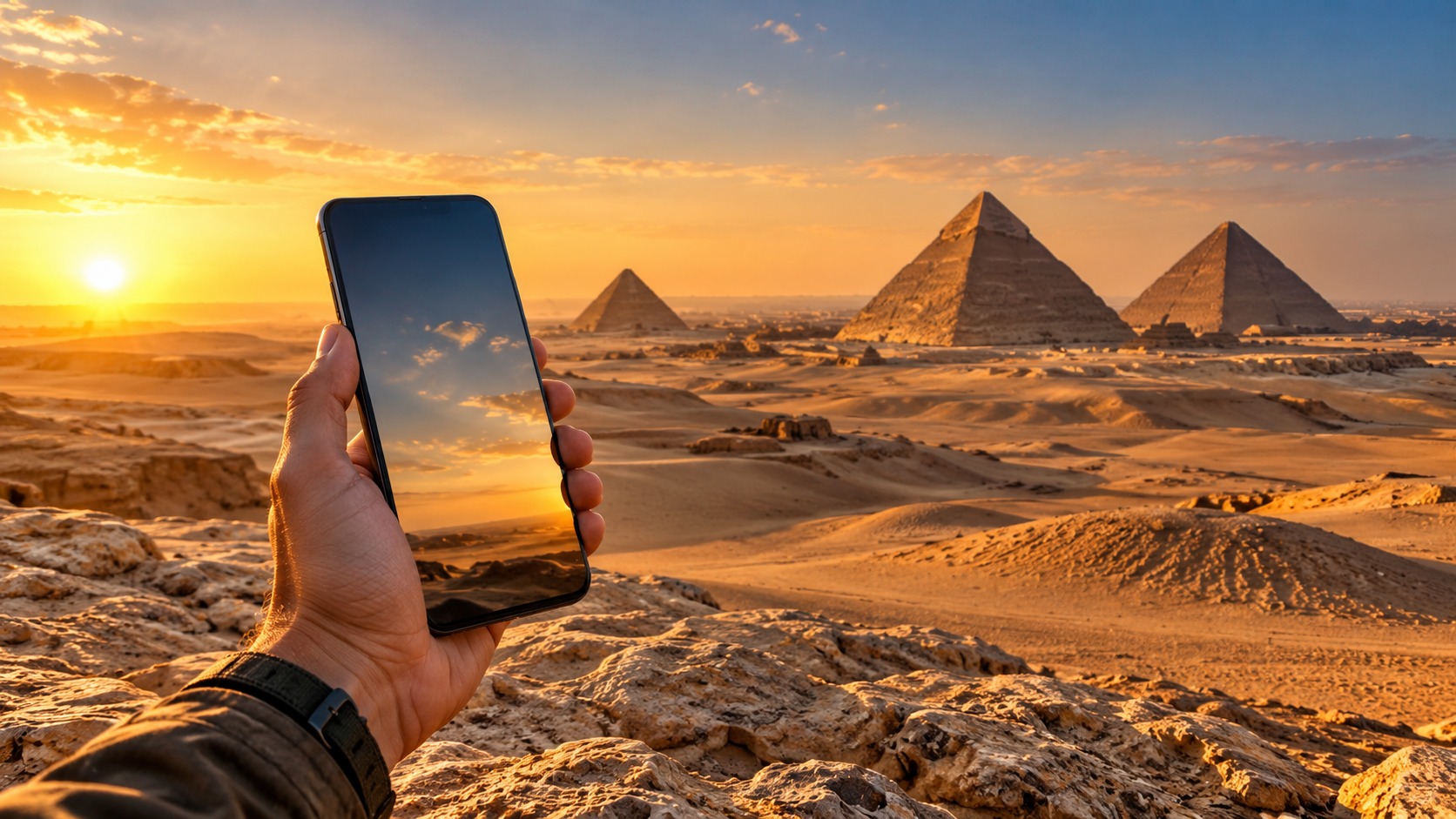
Choosing the right Egypt eSIM for desert trips is no longer just a convenience; it is a critical financial strategy for travelers navigating the Red Sea coast and the Sinai Peninsula in 2026. For many visitors, the true expense of a trip does not end with the flight or the hotel reservation—it begins the moment they step off the plane and their phone starts silently draining their data allowance. The phenomenon known as "bill shock" has become a pervasive pain point for tourists who underestimate how quickly roaming charges accumulate in Egypt’s remote zones. While urban centers like Cairo and Hurghada offer robust 4G and 5G coverage, the moment you venture into the dunes of the White Desert or the rugged landscapes of St. Catherine, the dynamic of mobile connectivity shifts dramatically. In 2026, home carriers have refined their roaming algorithms to identify these low-density, high-cost network handovers. Consequently, premium per-MB fees are applied aggressively in these remote areas, where signal strength is intermittent and network handshakes are frequent. This technical reality means that a simple check of Google Maps or a quick upload to social media can trigger disproportionate charges, turning a leisurely day of exploration into a financial audit.
The core tension for the modern traveler lies in the balance between staying connected and protecting their budget. On one hand, connectivity is essential for navigation in unmarked desert trails, for sharing real-time updates with family, and for accessing digital payment methods like Apple Pay or Google Pay, which are increasingly accepted even in remote oases and eco-lodges. On the other hand, the financial burden of traditional roaming is staggering. A standard international roaming plan might charge $5 to $10 per MB in these specific remote zones, meaning a single hour of video calling or streaming a podcast could cost more than a night’s accommodation in a luxury resort. This disparity creates a paradox: the more isolated and unique your travel experience, the more expensive it becomes to document and navigate it.
This is where MollySIM emerges as the strategic solution, decoupling your connectivity from the high roaming costs imposed by legacy carriers. By switching to a dedicated eSIM, you bypass the complex roaming agreements between your home carrier and local Egyptian providers, securing a flat-rate data package that remains consistent whether you are in the bustling markets of Luxor or the silent sands of the Western Desert. MollySIM is engineered specifically for these challenging environments, ensuring that your data usage is predictable and affordable. Unlike many competitors who throttle speeds to a sluggish 128kbps to save on bandwidth costs, MollySIM offers a 384kbps Fair Use Policy speed limit. This is three times faster than the industry standard, a crucial distinction that enables seamless functionality for essential apps like Google Maps, Apple Pay, and even light video streaming. This speed ensures that your navigation tools do not lag when you need them most and that your digital payments process instantly, even in areas with weaker signal strength. For those planning their itinerary, exploring the detailed Egypt eSIM data plans is the first step toward securing this financial advantage. By understanding the technical nuances of mobile networks in arid regions and leveraging a provider that prioritizes speed and stability, you can transform your connectivity from a source of anxiety into a smooth, cost-effective part of your adventure. The goal is simple: stay connected, stay informed, and keep your budget intact, all while exploring the timeless landscapes of Egypt.
Vodafone EG vs Orange EG: A Deep Dive into Coverage Realities
🇪🇬 Egypt High-Speed Travel eSIM & SIM Plans
Instant QR code activation, hotspot enabled, with guaranteed 384kbps fallback speed to keep Maps & Digital Wallets active.
Understanding the infrastructure disparities between Vodafone EG and Orange EG is critical for any traveler planning an Egypt eSIM for desert trips. While both carriers dominate the Egyptian market, their network architectures serve different geographic and demographic purposes, creating distinct coverage footprints that can make or break your connectivity in remote areas. In dense urban hubs like Cairo and the Red Sea resort town of Hurghada, both networks offer robust 4G LTE coverage. However, the technical reality shifts dramatically as you move into the Western Desert or the mountainous terrains of Sinai. Vodafone EG, with its extensive legacy infrastructure, often maintains a stronger signal penetration in older, stone-built structures and deeper valleys due to its dense macro-cell tower placement. Conversely, Orange EG has invested heavily in high-frequency 5G-ready spectrum in specific tourist corridors, which can result in faster peak speeds in Hurghada but potentially weaker signal reach in the sparse, open desert landscapes where lower-frequency bands are required for long-distance propagation.
Signal Degradation in Remote Oases and Mountainous Areas
The challenge in Egypt’s remote regions is not just about signal presence, but signal quality. In areas like the Siwa Oasis or the St. Catherine’s Monastery in Sinai, signal strength degrades rapidly due to terrain interference. Here, the difference between carriers becomes tangible. Travelers often report that while one carrier may show two bars of signal, the actual throughput can be negligible if the network is congested or if the device is struggling to maintain a stable handover between towers. This is where the choice of carrier matters less than the flexibility of your eSIM solution. A rigid roaming agreement tied to a single carrier can leave you stranded in "dead zones" where that specific provider’s towers are absent or overloaded.
Network Congestion and Peak Season Impacts
During peak tourist seasons (October to April), network congestion in popular hubs becomes a significant bottleneck. In Hurghada, for instance, both Vodafone and Orange experience high traffic loads, leading to packet loss and increased latency. This congestion is exacerbated by the fact that many local carriers prioritize voice traffic over data during peak hours, a practice that can severely impact video calls and real-time navigation. In rural Egypt, data throttling policies are often less transparent. Some carriers implement dynamic throttling, reducing speeds to 128kbps or lower when a user exceeds a certain data threshold or when the local cell tower is saturated. This is a critical pain point for travelers who rely on consistent bandwidth for maps and messaging.
The Multi-Carrier Advantage
This is precisely why a flexible, multi-carrier-agnostic eSIM solution is superior for desert travel. Instead of being locked into the coverage quirks of one provider, a well-designed eSIM can leverage the best available network at any given moment. MollySIM addresses this by ensuring that your connection remains stable even when switching between network nodes. With a 384kbps Fair Use Policy speed limit, MollySIM provides three times the bandwidth of standard competitors (who often cap at 128kbps). This extra headroom is vital in congested areas, allowing essential apps like Google Maps and Apple Pay to function smoothly without the frustrating lag that occurs when a network is throttled. By bridging these coverage gaps without the need to switch physical SIMs, MollySIM ensures that your connectivity is as resilient as the landscape you are exploring. For a detailed breakdown of how these plans stack up against local roaming rates, check out the comprehensive Egypt eSIM data plans to find the optimal balance of speed and cost for your specific itinerary.
Cost Breakdown: Roaming Charges vs. eSIM Savings in 2026
Understanding the true financial impact of connectivity choices is often where travelers lose the most money, not in the initial purchase, but in the hidden fees and inefficient data usage that accumulate over a trip. When analyzing Egypt roaming charges 2026, it becomes clear that relying on traditional methods like home carrier roaming or physical local SIMs introduces significant financial friction. The math behind these savings is straightforward once you account for the total cost of ownership, which includes not just the data rate, but also the time, effort, and potential service interruptions involved in setup and maintenance.
To illustrate this, consider the estimated costs for a standard 5GB data package, a realistic amount for a week of moderate usage including navigation, social media, and video calls. The following table breaks down the comparative economics of the four most common connectivity methods available to travelers in 2026.
| Method | Estimated Cost (USD) | Speed Limit | Setup Complexity | Best For |
|---|---|---|---|---|
| Home Carrier Roaming | $45.00 – $65.00 | 128kbps – 1Mbps (Variable) | Low (Plug & Play) | Short trips (<3 days), emergency backup |
| Local Prepaid SIM | $10.00 – $15.00 | 128kbps – 3Mbps (Variable) | High (ID, Registration, Top-up) | Long stays, heavy local calling needs |
| Pocket Wi-Fi Rental | $20.00 – $30.00 | 1Mbps – 5Mbps (Shared) | Medium (Device Return, Battery Mgmt) | Groups, multiple devices, remote areas |
| MollySIM eSIM | $12.00 – $18.00 | 384kbps (Consistent) | Very Low (Instant QR Scan) | Solo travelers, digital nomads, desert trips |
The Hidden Economics of Local SIMs
While the upfront cost of a local prepaid SIM appears lowest on paper, the hidden costs often erode this advantage. In Egypt, registering a local SIM typically requires a valid passport and, in some cases, a local address or a sponsor, a process that can consume an hour or more at a crowded carrier store. Furthermore, many local carriers impose top-up fees or require minimum recharge amounts that exceed the actual data needed. There is also the language barrier; navigating menus in Arabic or English can be tricky, leading to accidental purchases of premium services or incorrect data bundles.
In contrast, an eSIM eliminates these friction points entirely. With MollySIM, activation is instantaneous. You scan a QR code, and you are online. There is no need to visit a store, no need to wait for a physical card to arrive, and no need to decipher foreign language interfaces. This "instant activation" saves valuable time that can be spent exploring the desert rather than standing in line at a mobile shop.
The Anxiety of Balance Checking
One of the most significant psychological costs of traditional roaming is the anxiety of balance checking. With home carrier roaming, every megabyte counts. Travelers often find themselves constantly checking their data usage apps, fearing that a single video call could trigger a $10 charge. This "data anxiety" detracts from the travel experience, forcing users to switch to Wi-Fi whenever possible, even in remote desert locations where Wi-Fi is scarce or unreliable.
MollySIM solves this with its flat-rate model. Once your eSIM is active, you know exactly what you have and how long it will last. There are no surprise overage fees, no daily caps, and no need to monitor your balance every hour. This peace of mind is particularly valuable for Egypt eSIM for desert trips, where connectivity is not just a convenience but a safety tool. Knowing that your connection is stable and predictable allows you to rely on real-time navigation and emergency communication without the stress of potential bill shock.
Maximizing Value with Consistent Speed
It is also worth noting that cost is not just about the price tag; it is about the value of the data you receive. Many cheap options throttle speeds to 128kbps, making video calls and map loading frustratingly slow. MollySIM’s 384kbps Fair Use Policy speed limit ensures that your data is used efficiently. This three-times-faster bandwidth allows essential apps like Google Maps and Apple Pay to function smoothly, reducing the time spent waiting for data to load. In a desert environment, where every minute counts, this efficiency translates to better experiences and fewer wasted data credits.
For travelers looking to optimize their budget further, it is advisable to compare specific bundles based on your expected usage. The Egypt eSIM data plans offer a range of options that cater to different needs, from light users to heavy data consumers. By choosing the right plan, you can ensure that you are paying only for the data you actually need, maximizing your savings while maintaining the high-speed connectivity that modern travel demands.
Mastering Data Management in the Sinai: A Practical Guide
Staying connected in the Sinai Peninsula is less about having internet and more about managing it strategically. Whether you are hiking the trails near Dahab, diving off the reefs of Sharm El Sheikh, or navigating the rugged Red Sea mountains, the cellular infrastructure can be patchy. This makes data hygiene a critical skill for any traveler using an Egypt eSIM for desert trips. Data hygiene refers to the deliberate practice of minimizing background data usage, prioritizing essential applications, and understanding how different network conditions impact battery life and signal stability. In remote areas where cell towers are sparse, every megabyte and every milliwatt of battery power counts. Ignoring these factors can lead to a dead phone just when you need it most for navigation or emergency contact.
The Silent Data Drainers
To master your connection, you must first identify the applications that silently consume your data allowance. Three categories are particularly notorious in low-signal environments:
- GPS Navigation: While essential, continuous GPS usage drains battery and data. Standard map apps often request high-precision location data, which requires frequent pings to the server. In areas with weak signal, the phone struggles to maintain a lock, increasing data consumption as it retries connections.
- Live Video Streaming: Buffering is the enemy. When signal strength fluctuates, streaming apps aggressively buffer content to prevent interruptions. This can consume several megabytes per minute, quickly depleting a daily cap.
- High-Resolution Photo Uploads: Social media apps often upload photos in the highest possible resolution by default. In a desert setting, where you may be capturing dozens of landscape shots, this can eat up 50% of a small data bundle in a single afternoon.
The 384kbps FUP Advantage: Never Fully Offline
This is where the technical architecture of your eSIM provider becomes a decisive factor. Many budget eSIMs operate on a binary model: you have high-speed data, or you have nothing. When your high-speed cap is exhausted, the connection often drops to a near-unusable 128kbps speed, or worse, disconnects entirely. This is a significant risk in the Sinai, where you might still need to send a text message or check a map after your daily cap is hit.
MollySIM addresses this with a superior 384kbps Fair Use Policy (FUP) fallback. This is not just a minor technical detail; it is a functional safety net. Here is why this matters:
- 3x Faster than Standard FUPs: At 384kbps, MollySIM’s fallback speed is three times faster than the 128kbps limit found on many competitor plans. This difference is tangible. While 128kbps may struggle to load a simple webpage, 384kbps is sufficient to keep Google Maps functional for basic navigation and allows Apple Pay or other lightweight transaction apps to process data without excessive latency.
- Critical App Functionality: Even after your high-speed data is exhausted, your email clients, messaging apps (WhatsApp, iMessage), and background sync services remain operational. You are never completely offline. You can still receive urgent messages, check flight updates, or send location pings to travel companions.
- Battery Efficiency: Lower-speed data transfers often require less processing power for complex rendering, potentially extending battery life during the critical "post-cap" period when you are relying on essential functions.
Actionable Steps for Sinai Travelers
To implement effective data hygiene, follow these steps before and during your trip:
- Pre-Load Maps: Download offline maps for Sharm El Sheikh, Dahab, and your specific hiking routes before you leave Wi-Fi coverage. This eliminates the need for real-time data for basic navigation.
- Adjust App Settings: Set your social media apps to "Wi-Fi only" for photo uploads. Enable "Low Data Mode" on iOS or "Data Saver" on Android to restrict background activity.
- Monitor Your Cap: Check your data usage daily. If you are approaching your high-speed limit, switch to Wi-Fi for heavy tasks like video calls or large file downloads.
- Leverage the FUP: Once your high-speed data is gone, do not panic. Switch to essential apps only. Use the 384kbps FUP for messaging, email, and basic map checks. This ensures you remain connected to the outside world without the stress of a dead connection.
By understanding these dynamics and choosing a provider with a robust fallback like MollySIM, you transform your eSIM from a simple data pipe into a reliable communication tool. For more detailed strategies on optimizing your connectivity, explore our comprehensive travel connectivity guides to ensure you are fully prepared for any journey. This approach allows you to focus on the desert experience, confident that your digital lifeline is secure, efficient, and always within reach.
Why MollySIM is the Best Data Plan for Egypt Travel in 2026
Selecting the right connectivity solution is not merely about finding the cheapest price per gigabyte; it is about securing a seamless digital infrastructure that supports your lifestyle in the field. For travelers planning an Egypt eSIM for desert trips, the friction points of traditional mobile connectivity—physical SIM swapping, complex local registration, and unpredictable roaming charges—can detract significantly from the experience. MollySIM addresses these pain points directly by offering a streamlined, high-reliability alternative designed specifically for the unique connectivity challenges of Egypt’s remote regions.
The "Set and Forget" Advantage
The primary value proposition of MollySIM lies in its instant activation and no physical SIM swapping requirements. Unlike local Egyptian SIM cards, which often require presenting a passport, filling out forms at crowded airport kiosks, and waiting for network registration to stabilize, an eSIM is activated digitally. You scan a QR code, and within seconds, you are connected to the local network. This "set and forget" nature is critical for digital nomads and short-term tourists who need reliable connectivity for work or social media without the complexity of local infrastructure. You avoid the risk of losing a physical SIM card in the sand or the hassle of switching between your home SIM and a local one, preserving your primary number for calls and SMS while your data flows through the local network.
Superior Fallback Reliability: The 384kbps Difference
While many providers offer generous high-speed data caps, the true test of an eSIM’s quality emerges when that cap is exhausted. This is where MollySIM distinguishes itself from competitors. Most standard eSIM providers throttle data speeds to 128kbps after the high-speed limit is reached, a speed so slow that modern web pages, map tiles, and even simple messaging apps can become frustratingly laggy or unresponsive.
MollySIM implements a robust 384kbps Fair Use Policy (FUP) speed limit, which is 3x faster than the industry standard. This technical advantage is not just a marketing statistic; it is a functional necessity for desert travel. At 384kbps, critical applications like Google Maps and Apple Pay continue to work smoothly. You can still navigate off-road tracks, check real-time locations, and process payments without the anxiety of a frozen screen. For digital nomads, this means you can still send emails, access cloud documents, and maintain video calls at a lower bitrate, ensuring you remain productive even if you have used up your high-speed allocation.
Cost Efficiency and Roaming Savings
Traditional roaming from international carriers can be exorbitant, often charging $10–$20 per day for basic data access. By choosing a dedicated Egypt eSIM for desert trips, you bypass these roaming fees entirely. MollySIM offers transparent, upfront pricing with no hidden costs or surprise charges at the end of the month. This cost-effectiveness is particularly beneficial for travelers who need a reliable data pipe for navigation, translation, and social media updates without the financial burden of premium roaming rates.
Ideal for Digital Nomads and Short-Term Tourists
For the modern traveler, connectivity is a utility, not a luxury. Whether you are a digital nomad working from a café in Dahab or a tourist capturing the dunes of the White Desert, your eSIM needs to be invisible in its operation—reliable, fast, and easy to manage. MollySIM’s platform is designed with this user experience in mind. There are no complex apps to download, no confusing data dashboards, and no need to understand local telecom jargon. You install the profile, you get connected, and you focus on your journey.
By synthesizing instant activation, superior fallback speeds, and transparent pricing, MollySIM provides a comprehensive solution that transforms your connectivity from a potential source of stress into a seamless part of your travel experience. It allows you to explore Egypt’s stunning but connectivity-challenged regions with confidence, knowing that your digital lifeline is secure, efficient, and always within reach.
Ready to Connect?
Don’t let connectivity issues dictate your itinerary. Choose the cost-effective, reliable solution for your upcoming trip. Explore our comprehensive travel connectivity guides to learn more about optimizing your data usage, or dive straight into our Egypt eSIM data plans to secure your connection today. With MollySIM, you are not just buying data; you are buying peace of mind in the desert.
Frequently Asked Questions about Egypt eSIM for desert trips
Which Egyptian carrier covers the Sinai Peninsula best?
Vodafone Egypt and Orange Egypt have strong coverage in Sharm El-Sheikh and Hurghada. However, coverage in the deep desert can be spotty, so checking specific 4G maps is essential before booking.
Is it cheaper to buy an eSIM or use roaming in Egypt?
Using an eSIM is significantly cheaper for data-heavy activities like streaming and social media. Roaming rates from major US/EU carriers can be 5-10x higher than local eSIM data costs.
Do I need a physical SIM if I have an eSIM?
No, a travel eSIM is sufficient for data. If you need a local phone number for WhatsApp, you can use Wi-Fi Calling or a dual-SIM phone with a physical local SIM, but data-only eSIMs are best for cost efficiency.
SEO Score: 11/11
🇪🇬 Egypt High-Speed Travel eSIM & SIM Plans
Instant QR code activation, hotspot enabled, with guaranteed 384kbps fallback speed to keep Maps & Digital Wallets active.