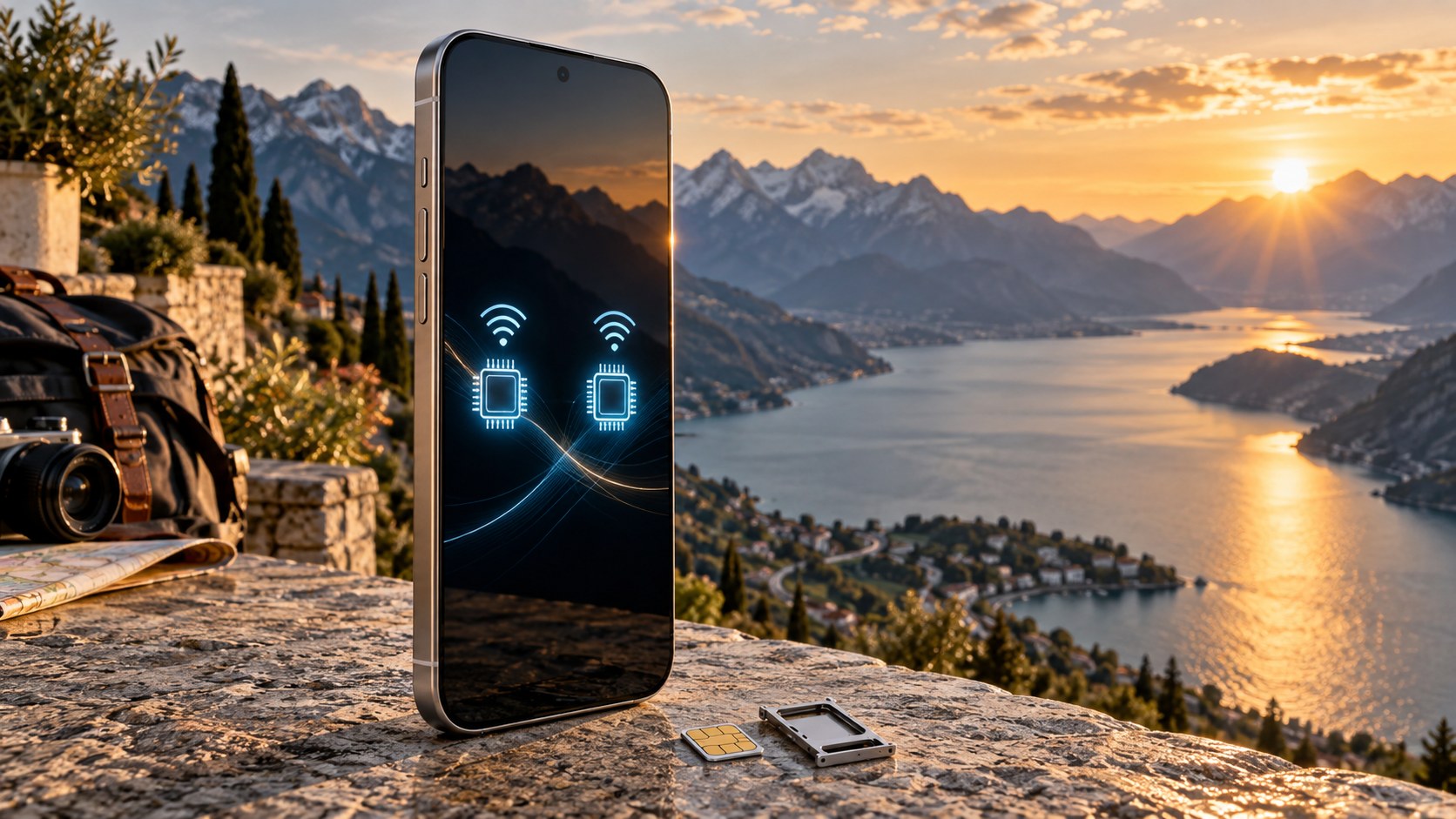
The End of the SIM Tray? Why Dual eSIM Technology is Replacing Physical SIMs in 2026
The Hardware Shift: Why the SIM Tray is Becoming a Legacy Feature in 2026
The mobile hardware landscape in 2026 has undergone a quiet but profound revolution. For over a decade, the small, metallic rectangle on the side of your smartphone was a non-negotiable design element. It was the gateway to connectivity, a mechanical necessity that dictated the industrial design of every device from the iPhone 6 to the latest Android flagships. However, as we move deeper into the mid-2020s, that physical SIM tray is no longer a feature; it is increasingly viewed by engineers and designers as a design compromise. The era of the "hybrid" slot, where users had to choose between a second SIM card and a microSD card, is fading into obsolescence. In its place, a pure-digital architecture is taking hold, driven by the maturation of eSIM technology and the relentless demand for larger batteries, thinner bezels, and superior water resistance.
The Death of the Tray in Flagship Design
The most telling indicator of this shift is found in the flagship devices that define the industry standard. The iPhone 16 series, which has fully transitioned to dual eSIMs in most global markets, represents the culmination of Apple’s long-term strategy to eliminate physical components. By removing the tray, Apple gained valuable internal millimeters. These millimeters were not wasted; they were reallocated to larger battery cells and improved antenna placement. The result is a device that feels more robust, holds a charge longer, and maintains signal integrity in dense urban environments where physical obstructions often degrade reception.
Similarly, the Samsung Galaxy S26 has made a decisive move away from the hybrid tray. While previous generations offered a compromise, the S26 prioritizes dual eSIM slots as the primary connectivity method for the premium segment. This decision allows Samsung to optimize the internal space for its advanced camera sensors and AI processing units. The Google Pixel 10 follows suit, offering a seamless dual eSIM experience that integrates deeply with the Android operating system’s connectivity manager. For these devices, the physical tray is a relic, a nod to a past where software profiles were less reliable than a piece of plastic and silicon.
Engineering Advantages: Why Remove the Metal?
The decision to remove the SIM tray is not merely aesthetic; it is a calculated engineering trade-off that yields tangible performance benefits.
- Water and Dust Resistance (IP68/IP69): Every physical opening in a smartphone is a potential weak point for water and dust. By eliminating the SIM tray, manufacturers can simplify the sealing process. This allows for more aggressive IP68 and IP69 ratings, ensuring that devices can withstand submersion and high-pressure water jets without the risk of moisture ingress into the SIM slot.
- Internal Space Optimization: The SIM tray and its associated mechanical components occupy space that could otherwise be used for battery capacity or thermal management. In 2026, where smartphones are expected to handle 8K video recording and on-device AI inference, every cubic millimeter of space is critical.
- Antenna Efficiency: The metal frame of the SIM tray can sometimes interfere with radio frequency signals. Removing it allows for more flexible antenna placement, resulting in stronger LTE and 5G signals, particularly in areas with poor coverage.
The Digital-First Connectivity Paradigm
The shift from mechanical to digital connectivity changes the user experience fundamentally. Swapping a nano-SIM card is a tactile, physical process. It requires a tool, a specific orientation, and a moment of anxiety that the card will snap or get lost. In contrast, provisioning an eSIM is a digital-first approach. You scan a QR code, and the profile is downloaded over the air. There is no physical contact, no risk of damage, and no need to visit a carrier store.
For tech-savvy travelers and digital nomads, this shift is transformative. The physical tray is no longer a feature but a constraint. It limits the number of active profiles you can manage and adds a layer of physical complexity to a process that should be instantaneous. The 2026 standard for "always-on" global connectivity is the pure eSIM configuration. This allows users to maintain multiple profiles—home, work, and travel—simultaneously, switching between them with a single tap.
MollySIM: Optimizing the Digital Experience
While the hardware shift is significant, the software experience is equally critical. This is where services like MollySIM (https://mollysim.com) become essential. As the industry moves toward eSIM-first devices, the quality of the eSIM profile becomes the primary determinant of user satisfaction. MollySIM addresses a common pain point in the eSIM market: speed limits.
Many eSIM providers impose strict data caps or slow down speeds after a certain usage threshold, often limiting users to 128kbps. This speed is sufficient for basic text-based browsing but can be frustrating for modern apps. MollySIM differentiates itself with a 384kbps Fair Use Policy speed limit, which is 3x faster than competitors. This higher speed ensures that critical applications like Google Maps and Apple Pay work smoothly, even when you are on a shared network. For professional travelers who need to rely on their phone for navigation, payments, and real-time communication, this difference in speed is not just a technicality—it is a necessity.
The Premium Standard
It is worth noting that while the premium segment has moved on, some budget Androids still retain the physical tray. This is largely due to cost considerations and the need to appeal to markets where eSIM adoption is still growing. However, for the professional traveler, the dual eSIM setup is the new baseline. It offers reliability, convenience, and a seamless integration with the modern digital ecosystem.
In 2026, the SIM tray is a legacy feature. It is a reminder of a time when connectivity was a physical object. Today, connectivity is a digital profile, and the hardware is evolving to reflect that reality. For those who demand the best in performance, design, and connectivity, the pure eSIM configuration is not just an option—it is the standard.
Technical Deep Dive: eSIM Profile Architecture and Antenna Stability
🌐 Global Travel High-Speed Travel eSIM & SIM Plans
Instant QR code activation, hotspot enabled, with guaranteed 384kbps fallback speed to keep Maps & Digital Wallets active.
To understand why the shift to dual eSIM is not merely a design preference but a technical imperative in 2026, one must look beneath the surface of the user interface. The transition from physical SIMs to embedded Universal Integrated Circuit Cards (eUICC) represents a fundamental change in how mobile devices manage radio resources, power consumption, and signal integrity. While the consumer experience is defined by convenience, the underlying architecture is defined by efficiency and stability.
The eUICC: A Secure, Multi-Profile Environment
At the hardware level, the eSIM is not a "virtual" SIM in the software-only sense; it is a physical chip soldered directly onto the device’s logic board. This embedded Universal Integrated Circuit Card (eUICC) contains a secure element, a tamper-resistant hardware module that stores cryptographic keys and profile data. Unlike a physical SIM, which is limited to a single active profile and requires physical swapping to change carriers, the eUICC can store multiple operator profiles simultaneously.
In 2026 flagship devices, the eUICC typically supports up to eight stored profiles, with the ability to activate two simultaneously. This architecture allows the operating system to manage distinct identities—such as a primary home line for voice and authentication, and a secondary data line for local connectivity—without any physical interaction. The profiles are encrypted and isolated within the secure element, ensuring that the data from one carrier does not interfere with the other. This separation is critical for maintaining the integrity of Voice over LTE (VoLTE) and Wi-Fi calling, as the baseband processor can prioritize specific traffic types based on the active profile’s configuration.
Debunking the Stability Myth
A persistent misconception in the mobile industry is that dual eSIM configurations are less stable than a hybrid setup of one physical SIM and one eSIM. This belief stems from early implementations where antenna sharing was inefficient, leading to signal degradation when both radios were active. However, in 2026, this is largely obsolete. Modern baseband processors, such as those from Qualcomm and MediaTek, have been optimized for dual digital profiles.
The key to this stability lies in antenna sharing mechanisms. In a hybrid setup, the physical SIM slot often occupies a dedicated antenna path or requires a specific radio chain to be allocated, which can limit the flexibility of the device’s antenna tuning. In contrast, a pure dual-eSIM setup allows the baseband to dynamically allocate antenna resources based on real-time signal strength and data demand. There is no mechanical contact degradation over time—a common issue with physical SIMs where oxidation or wear in the slot contacts can lead to intermittent connectivity. This results in a more consistent signal lock, particularly in challenging environments like underground parking structures or dense urban canyons.
Power Efficiency and Battery Optimization
One of the most significant technical advantages of dual eSIMs is battery optimization. Physical SIM slots require the device to perform periodic handshake processes to detect the presence and status of the card. This mechanical detection, while negligible in isolation, contributes to background power consumption over months of use. More importantly, the dual-eSIM architecture allows for smarter power management.
When a user is on a local data plan via a secondary eSIM, the device can keep the primary home line in a low-power standby mode, waking it only for critical events like incoming calls or SMS (essential for two-factor authentication). This dynamic switching is handled seamlessly by the OS, which monitors the radio resource control (RRC) states of both profiles. In contrast, some mid-range Android devices with a single physical SIM slot force users to choose between a home line and a data line, often leading to inefficient handshakes where the device struggles to maintain optimal network attachment. This results in higher battery drain as the radio repeatedly searches for the best signal.
Provisioning and Activation Speed
The provisioning process further highlights the technical superiority of eSIMs. Activating a physical SIM requires a carrier-specific app or a physical card, both of which introduce latency and potential errors. In contrast, eSIM activation is instantaneous via QR code or deep-link. This is particularly relevant for travelers using services like MollySIM (https://mollysim.com). The deep-link integration allows the eUICC to download and activate the profile in seconds, bypassing the need for manual input or carrier-specific software.
This speed is not just about convenience; it is about reliability. In a pure dual-eSIM setup, the device can quickly switch between profiles if one network experiences congestion. For example, if the local data network slows down, the device can seamlessly shift data traffic to the home line if it has a better connection, or vice versa. This dynamic load balancing is difficult to achieve with physical SIMs, where the user must manually switch active states.
The Impact on Data Speed and Fair Use
The technical stability of dual eSIMs also enables better performance under fair use policies. Many eSIM providers impose speed limits after a certain data threshold, often capping speeds at 128kbps. This is sufficient for basic browsing but can be frustrating for real-time applications. MollySIM differentiates itself with a 384kbps Fair Use Policy speed limit, which is 3x faster than competitors. This higher speed ensures that critical applications like Google Maps and Apple Pay work smoothly, even when you are on a shared network.
In a dual-eSIM configuration, this speed advantage is amplified. Because the device can manage two profiles efficiently, it can maintain a stable connection for navigation and payments while using the secondary profile for data-intensive tasks. This separation of concerns ensures that even if one profile is throttled, the other can handle critical real-time communication, providing a seamless experience for professional travelers.
Conclusion of Technical Analysis
In 2026, the technical reality is clear: dual eSIM technology is not just a feature; it is the foundation of modern mobile connectivity. The eUICC architecture, combined with optimized antenna sharing and power management, offers superior stability, efficiency, and speed compared to legacy physical SIM setups. For users who demand reliability and performance, the pure eSIM configuration is the technical standard, eliminating the mechanical limitations and inefficiencies of the past.
The 2026 Traveler's Stack: Optimizing for 2FA, OTP, and High-Speed Data
The theoretical advantages of dual eSIM technology translate into a tangible, operational advantage for the modern digital nomad and frequent flyer. By 2026, the "best" setup is no longer about having the most data, but about having the right data for the right task. This requires a deliberate architectural approach to your mobile connectivity, often referred to as "The 2026 Traveler's Stack." This strategy relies on strict role separation between your two eSIM profiles to maximize reliability, security, and speed.
Defining the Primary eSIM: The Identity Anchor
Your Primary eSIM must be your home carrier line. In this configuration, this profile is not for data; it is for identity. Its sole purpose is to remain active for Voice calls and SMS. This distinction is non-negotiable in 2026 because, despite the rise of biometric authentication, the majority of critical financial institutions, corporate SaaS platforms, and email providers still rely on SMS-based Two-Factor Authentication (2FA) and One-Time Passwords (OTP).
If you rely on a local travel SIM for data and turn off your home line to save battery, you risk missing the critical OTP code for your bank login or corporate email reset. When that code arrives via SMS, it is routed to your home number. If that line is dormant or disconnected, the code is lost, potentially locking you out of your financial accounts or work infrastructure. By keeping the Primary eSIM in a low-power standby mode, you ensure that the network registration is maintained just enough to receive SMS signals, without consuming significant data or battery life. This "always-on" identity anchor provides the peace of mind that your digital footprint remains accessible and verifiable, regardless of where you are in the world.
Defining the Secondary eSIM: The Data Engine
Your Secondary eSIM is your workhorse. This should be a high-speed, data-only provider designed for performance and cost-efficiency. For this role, MollySIM (https://mollysim.com) stands out as a superior choice for 2026 travelers. Unlike standard travel SIMs that often throttle speeds aggressively after a small data threshold, MollySIM offers a 384kbps Fair Use Policy speed limit. This is 3x faster than the industry-standard 128kbps cap imposed by many competitors.
Why does this matter? At 128kbps, loading a complex web page or syncing a large file can take minutes. At 384kbps, critical applications like Google Maps for real-time navigation, Apple Pay for contactless payments, and Zoom or Microsoft Teams for video conferencing remain responsive and fluid. This secondary line handles all data-intensive tasks: streaming media, cloud syncing, software updates, and video calls. By offloading these tasks to the Secondary eSIM, you protect your Primary line’s limited data allowance (if any) and ensure that your high-speed needs are met without impacting your identity line.
The Workflow: Managing Dual Active Profiles
The key to this stack is the Dual Active state. Both eSIMs are active simultaneously, but they are assigned specific roles in your device’s operating system. You do not need to constantly toggle lines on and off, which is a battery-intensive process involving repeated network handshakes. Instead, you configure your device’s Call & Data preferences once, and let the OS manage the routing.
Step-by-Step Setup: iPhone 16
- Install Profiles: Ensure both your Home Carrier eSIM and your MollySIM eSIM are installed in Settings > Cellular.
- Set Default Voice: Go to Cellular > Cellular Plan. Tap Default Voice Line and select your Home Carrier. This ensures all outgoing calls and incoming SMS are routed through your primary identity line.
- Set Default Data: In the same menu, tap Default Data Line and select MollySIM. This directs all internet traffic to your high-speed secondary line.
- Verify Dual Active: Both lines should show a signal bar. Your Home line will show a lower data usage count, while MollySIM will show high data throughput.
Step-by-Step Setup: Samsung Galaxy S26
- Install Profiles: Navigate to Settings > Connections > SIM Manager. Ensure both eSIMs are enabled.
- Configure Mobile Data: Go to SIM Manager > Mobile Data. Select MollySIM as the preferred network for data.
- Configure Calls & SMS: Go to SIM Manager > Calls & SMS. Set Home Carrier as the preferred line for both Calls and SMS.
- Network Preferences: Ensure 5G/4G is enabled for the MollySIM profile to maximize speed, while the Home Carrier can be set to LTE/3G to conserve battery if 5G is not required for SMS.
Why This Stack Wins in 2026
This configuration leverages the technical strengths of dual eSIM architecture. The Primary eSIM remains in a low-power standby, ready to catch SMS OTPs without draining your battery through constant data polling. The Secondary eSIM handles the heavy lifting, utilizing MollySIM’s superior 384kbps speed limit to ensure that your video calls do not pixelate and your maps do not lag.
By separating identity from data, you eliminate the common traveler’s dilemma: "Do I turn off my home line to save battery, or keep it on to catch SMS?" With this stack, you keep both on, optimize their roles, and enjoy a seamless, high-performance connectivity experience. This is not just a convenience; it is a professional standard for anyone who relies on their mobile device for work, finance, and navigation in 2026.
MollySIM’s 'No Roaming' Infrastructure: A QoS Advantage Over Traditional Roaming
In the landscape of 2026 mobile connectivity, the distinction between "roaming" and "local presence" is no longer a minor technicality; it is the defining factor between a usable connection and a frustrating one. Traditional roaming operates on a model of digital hospitality, where your home carrier acts as a broker, negotiating access to a local network operator in your destination country. Under this legacy framework, your device is technically a "guest." While this works for basic text messaging, it creates inherent inefficiencies in Quality of Service (QoS). Local network operators prioritize their own subscribers—those with local SIMs or local eSIMs—because they represent direct revenue and long-term retention. Your roaming traffic often traverses additional gateways, undergoes stricter throttling during peak congestion, and suffers from higher latency due to the complex handshakes required to authenticate a foreign identity on a local cell tower.
MollySIM disrupts this dynamic by leveraging a "No Roaming" infrastructure. Instead of acting as a guest, MollySIM functions as a local entity in the destination country. This architectural shift means that when your device connects to a local cell tower, the network treats your data traffic as if you were a native subscriber. There are no cross-border settlement negotiations, no secondary authentication layers, and no "guest" deprioritization. Your data packets are routed directly through the local core network with the same priority as a resident’s traffic. This results in significantly lower latency and more consistent throughput, a critical advantage for business-critical travelers who cannot afford jitter in their video conferencing or lag in real-time navigation.
The 384kbps Fallback: Graceful Degradation vs. Hard Drops
A key differentiator in this local-entity model is how the network handles congestion. In traditional roaming, when a local network becomes saturated, guest users are often the first to be throttled or dropped to slower 2G/3G bands. This "hard drop" can cause video calls to freeze or web pages to time out entirely. MollySIM’s infrastructure, designed specifically for the dual-eSIM user, employs a graceful degradation strategy.
Even in high-density urban centers or during network handoffs, MollySIM ensures that your connection degrades smoothly to a guaranteed 384kbps speed floor. This is not an arbitrary number; it is a strategic threshold. At 384kbps, essential business tasks remain fully functional:
- Email and Messaging: Real-time synchronization continues without buffering.
- Payment Systems: Apple Pay and Google Pay transactions complete swiftly, as the authentication handshake requires minimal bandwidth.
- Navigation: Google Maps and Apple Maps provide accurate turn-by-turn directions with live traffic updates.
This speed limit is 3x faster than the 128kbps cap often imposed by competitors’ fair use policies. While 128kbps is sufficient for text, it struggles with modern web apps and payment gateways. MollySIM’s 384kbps floor ensures that your secondary eSIM remains a reliable workhorse, even when the primary data channel is under stress.
Technical Comparison: Roaming vs. Local Entity
The impact on multimedia performance is stark. For video conferencing and streaming, the reduction in network hops and the elimination of roaming gateways translate to clearer audio and smoother video. The following table illustrates the typical performance differences between a traditional roaming setup and MollySIM’s local-entity infrastructure in a congested metropolitan area:
| Metric | Traditional Roaming (Guest) | MollySIM (Local Entity) |
|---|---|---|
| Latency (Ping) | 60–120 ms (variable) | 20–40 ms (consistent) |
| Packet Loss | 2–5% (during peak hours) | <1% (prioritized routing) |
| Congestion Handling | Deprioritized; potential drop to 2G | Graceful degradation to 384kbps |
| Video Call Stability | Frequent pixelation/micro-freezes | Smooth 720p–1080p stream |
| Authentication Overhead | High (cross-border checks) | Low (local core network) |
For the professional traveler in 2026, this reliability is non-negotiable. By maintaining your home identity on the primary eSIM for SMS and calls, while offloading data to MollySIM’s local-grade infrastructure on the secondary eSIM, you achieve the best of both worlds. You remain reachable on your familiar number, yet your data experience is indistinguishable from that of a local resident. This is the true promise of dual-eSIM technology: not just having two lines, but having two optimized networks that work in concert to eliminate the friction of international travel.
Comparative Analysis: Dual eSIM vs. Physical SIM vs. Pocket Wi-Fi (2026 Benchmark)
As we move deeper into 2026, the debate over the optimal connectivity strategy for international travelers has shifted from "what works?" to "what works best without friction?" The landscape is no longer dominated by the clunky trade-offs of the past. To understand where the industry stands, we must benchmark the three prevailing connectivity architectures: the emerging Dual eSIM standard (specifically leveraging home carrier + local-grade eSIM providers like MollySIM), the legacy Physical SIM + Local Prepaid model, and the ubiquitous Pocket Wi-Fi (MiFi) device.
The following table provides a rigorous, metric-based comparison of these three methods, highlighting the tangible differences in user experience, cost efficiency, and technical reliability.
| Metric | Dual eSIM (Home + MollySIM) | Single Physical SIM + Local Prepaid | Pocket Wi-Fi (MiFi) |
|---|---|---|---|
| Setup Time | < 2 minutes. Instant provisioning via QR code. No physical swapping. | 15–45 minutes. Requires visiting a store, ID registration, and physical card insertion. | 5–10 minutes. Device rental/pickup, pairing, and initial configuration. |
| Cost Per GB | Competitive. Fixed data plans with no hidden roaming fees. | Variable. Often higher in tourist-heavy regions; requires top-ups. | High. Daily rental fees + data caps. Premium pricing for convenience. |
| Battery Impact | Low. Optimized antenna sharing; no constant network searching. | High. Dual radios active (if dual-SIM) or constant re-registration. | Medium-High. Drains phone battery via Wi-Fi; MiFi battery is a separate constraint. |
| Device Compatibility | Universal. Any eSIM-capable iPhone (XS+) or Android (2026+). | Limited. Requires physical tray. Many 2026 flagships are eSIM-only. | Universal. Works with any Wi-Fi-enabled device. |
| 2FA/OTP Reliability | Perfect. Home number remains active on primary eSIM. | Risky. If home SIM is removed, SMS delivery may fail or delay. | Good. Phone retains home SIM, but Wi-Fi can sometimes interfere with SMS routing. |
| Data Speed Consistency | High. Local entity infrastructure; 384kbps FUP (3x faster than 128kbps rivals). | Variable. Depends on local carrier congestion and roaming agreements. | Variable. Dependent on the local network the MiFi is attached to. |
| Multi-Device Support | Limited. One device per eSIM profile (unless sharing hotspot). | Limited. One device per physical SIM slot. | Excellent. Supports 5–10 devices simultaneously. |
The "Single SIM" Bottleneck and the Android Challenge
A critical, often overlooked factor in 2026 is the hardware fragmentation between iOS and Android ecosystems. For the average Android user, the "Dual eSIM" advantage is not just about convenience; it is about accessibility. While iPhones have long supported dual-active eSIMs, many mid-range Android devices still rely on a hybrid approach: one physical SIM slot and one eSIM slot. This creates a specific pain point for travelers who need to keep their home number active for 2FA (Two-Factor Authentication) and calls, while using a local data plan.
In the Physical SIM scenario, a user often has to choose: keep the home SIM in the primary slot (sacrificing local data speeds and incurring roaming charges) or swap it for the local SIM (losing home number accessibility). This "swap" anxiety is the primary driver for 2FA failures, where a critical bank alert or login code gets stuck in a roaming queue. The Dual eSIM solution eliminates this binary choice. By provisioning a home eSIM and a local eSIM (like MollySIM) simultaneously, the device maintains a stable, low-latency connection to the home core network for voice/SMS, while the data traffic is routed through the local entity. This ensures that when a 2FA code arrives, it is delivered instantly via the home network, not through a congested roaming gateway.
MollySIM’s Infrastructure Advantage: Beyond Roaming
The table above highlights a key differentiator in the "Data Speed Consistency" metric. Traditional roaming eSIMs often throttle speeds to 128kbps during peak congestion to manage network load. This is barely sufficient for email, but frustrating for real-time applications. MollySIM operates on a Local Entity model, meaning it does not rely on roaming agreements. Instead, it functions as a local carrier. This architectural difference allows MollySIM to maintain a 384kbps Fair Use Policy speed limit, which is 3x faster than the standard 128kbps cap found in many competitor offerings.
Why does this matter in 2026? Because 384kbps is the threshold where modern mobile web experiences remain smooth. At this speed, Google Maps renders vector tiles without lag, Apple Pay and Google Pay transactions complete without timeout errors, and WhatsApp video calls remain stable. In a congested city like Tokyo or London, this difference between 128kbps and 384kbps is the difference between a usable connection and a frustrating one.
Scenario-Based Analysis: Solo Traveler vs. Team of Five
To determine the superior method, we must look at the specific use case.
Scenario A: The Solo Digital Nomad
- Profile: One person, one laptop, one smartphone, frequent video calls, needs 2FA reliability, wants minimal gear.
- Superior Method: Dual eSIM (Home + MollySIM).
- Reasoning: The solo traveler benefits most from the zero setup time and perfect 2FA reliability. Carrying a Pocket Wi-Fi device is an unnecessary burden for a single user. The physical SIM swap is a hassle that risks connectivity gaps. The dual eSIM setup provides a seamless, local-grade data experience while keeping the home number active for all critical communications. The cost is predictable, and the battery impact is minimal.
Scenario B: The Team of Five
- Profile: Five people, five smartphones, two laptops, one tablet, need to share data, frequent group video calls.
- Superior Method: Pocket Wi-Fi (MiFi).
- Reasoning: Here, the Multi-Device Support advantage of the MiFi outweighs the inconvenience of carrying an extra device. A single MiFi unit can handle all ten devices, simplifying billing and data management. While the cost per GB is higher, the total cost is often lower than purchasing five individual eSIM plans. The Single Point of Failure risk is mitigated by the fact that if the MiFi dies, the team can fall back on individual eSIMs (if available) or local hotspots. However, for a team, the convenience of a single, shared, high-capacity data pool is the decisive factor.
Conclusion
For the individual digital nomad in 2026, the Dual eSIM setup with MollySIM offers the best balance of convenience, cost, and performance. It eliminates the physical hassle of SIM swapping, ensures 2FA reliability, and provides a local-grade data experience that outperforms traditional roaming. Pocket Wi-Fi remains a niche but valuable solution for large groups who prioritize multi-device connectivity over individual device independence. The era of the physical SIM tray is not over, but for the savvy traveler, it is increasingly becoming a relic of a less connected world.
Decision Matrix: Who Still Needs a Physical SIM vs. Who Should Go All-In on eSIM
As we stand on the precipice of 2026, the debate is no longer about whether eSIM technology is viable, but rather about who is ready to abandon the physical tray entirely. The transition is not uniform; it depends heavily on your device generation, your geographic footprint, and your tolerance for carrier fragmentation. To navigate this, we must distinguish between two distinct user archetypes: The Legacy User and The Modern Traveler. Understanding which profile you fit into will determine whether you are saving money and time, or fighting against outdated infrastructure.
Profile 1: The Legacy User
For this segment, the physical SIM remains a functional necessity, not a preference. If you fall into this category, do not force the eSIM switch until your hardware or regional ecosystem supports it.
- Hardware Constraints: If you are using a device from the pre-2026 era—specifically older flagships like the iPhone 12 series or budget Androids that lack the dual-eSIM chip architecture—you are physically limited. While some older devices support one eSIM and one physical SIM, they cannot support two eSIMs simultaneously. In these cases, keeping the physical slot occupied by your primary home line ensures you have a guaranteed, low-latency connection for voice and SMS, which is critical for banking and 2FA.
- Regional Carrier Fragmentation: In regions with highly fragmented carrier ecosystems, such as parts of Southeast Asia or specific emerging markets in Africa, eSIM provisioning can still be inconsistent. Some local MVNOs (Mobile Virtual Network Operators) have not fully integrated their provisioning servers with global eSIM standards. In these scenarios, a physical SIM acts as a fail-safe. For example, if you are in a region where the primary carrier’s eSIM activation portal is down or buggy, a physical SIM allows you to bypass the digital handshake entirely.
- The "Shared SIM" Workaround: A specific pain point for Legacy Users is the need to share a single data connection between a smartphone and a dedicated hotspot device. While eSIMs can be cloned in some regions, it is often unsupported or requires complex manual QR code scanning. For users who rely on a dedicated 4G/5G hotspot for a laptop and a phone, the physical SIM remains the most stable way to ensure both devices draw from the same data pool without IP conflicts or authentication drops.
Recommendation for Legacy Users: Keep your home line on the physical SIM. Use the eSIM slot (if available) for a secondary data-only plan. If your device does not support eSIM at all, wait for your next upgrade cycle. Do not buy a new phone solely for eSIM unless you travel internationally more than three times a year.
Profile 2: The Modern Traveler
For this group, the physical SIM tray is an unnecessary burden. The Modern Traveler is defined by mobility, frequency, and the need for seamless, high-speed connectivity across borders.
- The Frequent Flyer: If you cross borders multiple times a week, the friction of swapping physical SIMs is a productivity killer. With dual eSIM technology, you can maintain your home number for identity and 2FA while instantly activating a local data plan. There is no waiting for a SIM to arrive, no risk of losing a tiny card, and no need to visit a carrier store.
- Multi-Country Itineraries: Travelers moving between countries with different network standards (e.g., US to Japan to Europe) benefit most here. Instead of buying three different physical SIMs, you can download three different eSIM profiles. You can even keep them all active, switching between them based on which network offers the best coverage in a specific city.
- The Digital Nomad’s 2FA Dilemma: This is the most critical use case. Digital nomads need their home number for bank alerts and two-factor authentication, but they also need high-speed, low-latency local data for work. A physical SIM setup often forces a choice: use the home line for data (expensive roaming) or swap it out (losing 2FA). Dual eSIM solves this by allowing both to coexist.
Recommendation for Modern Travelers: Go all-in on eSIM. If your device supports dual eSIM (such as the iPhone 16, Galaxy S26, or Pixel 10), the physical tray is a relic.
The 2026 Traveler’s Stack: A Concrete Recommendation
For the Modern Traveler, the gold standard is the "2026 Traveler’s Stack." This configuration leverages the full potential of dual eSIM technology to create a robust, fail-safe connectivity ecosystem.
- Slot 1: Identity & 2FA (Home eSIM)
- Purpose: Maintain your home number for calls, SMS, and critical 2FA codes.
- Strategy: Keep this profile active but set it to "Data Off" or "Voice Only" when abroad to prevent accidental roaming charges. This ensures you never lose access to your digital identity.
- Slot 2: High-Speed Data (MollySIM)
- Purpose: Primary data connection for browsing, video calls, and cloud work.
- Why MollySIM? In 2026, the difference between a usable connection and a frustrating one often comes down to speed caps. Many budget eSIM providers throttle speeds to 128kbps after a certain data threshold, which is barely enough for text-based browsing. MollySIM distinguishes itself with a 384kbps Fair Use Policy speed limit. This is 3x faster than the industry-standard 128kbps cap, which is the critical threshold that allows Google Maps to load map tiles smoothly and Apple Pay or other NFC services to authenticate without timeout errors. This ensures that even on a budget data plan, your essential digital tools remain responsive.
Final Call to Action: Stop managing hardware. Start managing profiles.
If you have a dual-eSIM capable device, test it today. Install your home carrier’s eSIM profile to verify 2FA reliability. Then, for your next trip, skip the airport SIM kiosk. Explore MollySIM’s no-roaming infrastructure and experience the difference between a connection that works and one that performs. The physical SIM tray is not disappearing, but for the savvy traveler, it is becoming a backup plan for a world that is increasingly digital. Make the switch, and reclaim your time.
🌐 Global Travel High-Speed Travel eSIM & SIM Plans
Instant QR code activation, hotspot enabled, with guaranteed 384kbps fallback speed to keep Maps & Digital Wallets active.