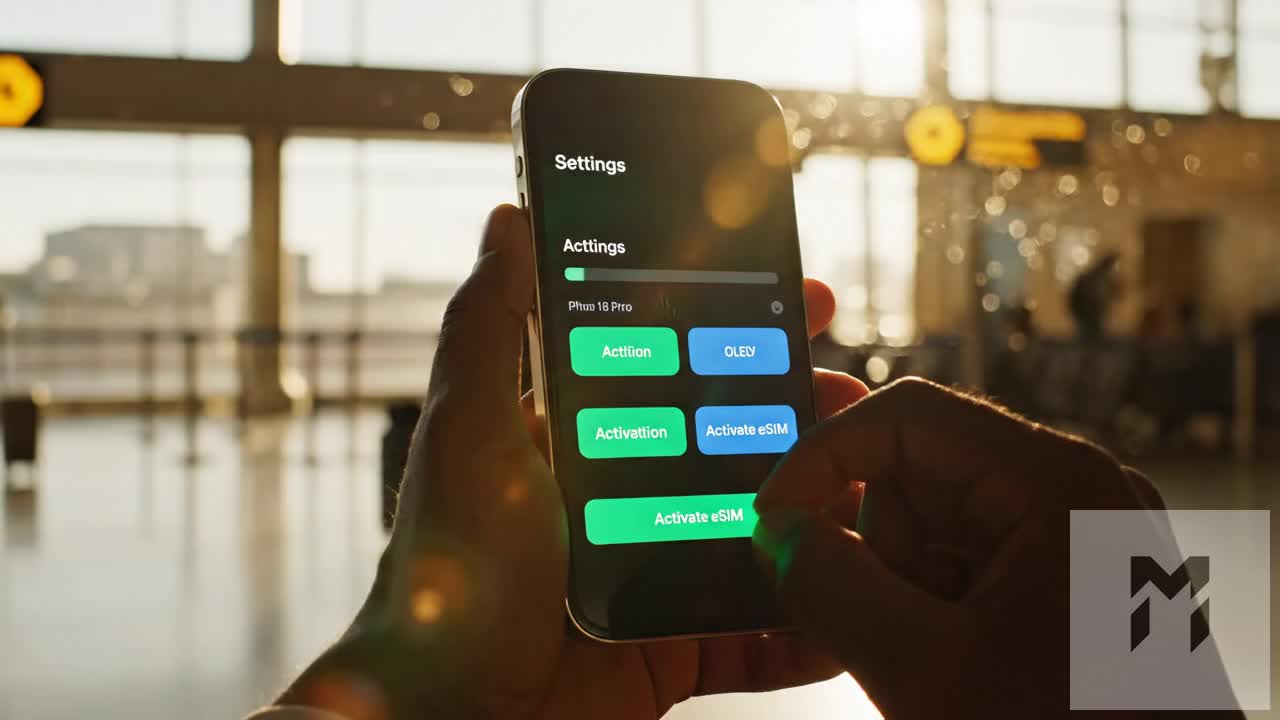
Beat Theme Park Congestion: The 2026 Disney World & Orlando Travel eSIM Guide
The 7:00 AM Orlando Battleground: Why Park Wi-Fi and Roaming Stumble at Disney World
At precisely 6:59:58 AM Eastern Time across Central Florida, hundreds of thousands of park-goers initiate a silent, high-stakes digital sprint. Inside hotel rooms at Disney’s Pop Century, along the monorail concourse at the Contemporary Resort, and in rental homes across Kissimmee, fingers hover over smartphones. The target: securing a coveted Boarding Group for Guardians of the Galaxy: Cosmic Rewind, snagging a virtual queue slot for Tiana’s Bayou Adventure, or locking in top-tier selections on Disney's Lightning Lane Multi Pass system.
By 7:00:02 AM—just four seconds later—allocations for the day’s most popular attractions are often completely exhausted. In this hyper-competitive micro-window, success does not depend on fast reflexes alone; it is dictated by network latency, round-trip time (RTT), and local packet priority.
The Wi-Fi Bottleneck: Radio Density and Access Point Saturation
Most visitors assume that connecting to official resort or park Wi-Fi (Disney-Guest) gives them an operational edge. In reality, resort Wi-Fi networks turn into digital gridlock during the 7:00 AM drop.
When thousands of devices in the same physical radius (such as a 3,000-room value resort) broadcast connection requests and API calls simultaneously, three technical failures occur:
- Channel Contention and RF Interference: Thousands of active radios broadcasting over saturated 2.4 GHz and 5 GHz bands create severe packet collisions, triggering exponential backoff algorithms on client devices.
- DNS Resolution Timeouts: Local resort gateways struggle under the sudden spike in concurrent Domain Name System (DNS) queries sent to Disney’s app servers, resulting in the infamous spinning wheel of death on the My Disney Experience (MDX) interface.
- Aggressive Client Throttling: Network controllers deploy aggressive quality-of-service (QoS) caps to prevent site-wide network collapse, which introduces artificial latency spikes right when sub-50-millisecond response times are essential.
The International Roaming Trap: The "Hairpin" Routing Delay
International travelers relying on standard carrier roaming packages from home face an even steeper disadvantage due to roaming data tromboning (or traffic hairpinning).
When you use an international roaming plan from an overseas telecom provider (such as an operator in Europe, Latin America, or the UK), your data does not travel directly from Orlando to Disney’s application servers hosted in AWS US-East. Instead, the local US cell tower encapsulates your data and routes it through an international IP Exchange (IPX) back to your home carrier’s packet gateway in your home country. Once authenticated and logged, the signal is routed across the ocean a second time to reach Disney’s servers in Virginia or Ohio.
| Connection Method | Typical Latency (RTT) | Routing Architecture | 7:00 AM Virtual Queue Outcome |
|---|---|---|---|
| Resort/Park Public Wi-Fi | 180ms – 1,200ms+ (High Jitter) | Local gateway saturation; high RF packet drop | ⚠️ High failure rate due to connection timeouts |
| International Roaming | 350ms – 650ms | Roaming Hairpin (US $\to$ Home Country $\to$ US) | ❌ Near-guaranteed lockout on tier-1 headliners |
| Direct US Core Travel eSIM | 18ms – 45ms | Direct local edge breakout to US-East data centers | ⚡ Sub-second response; maximum boarding group success |
This routing loop introduces an unavoidable 350ms to 650ms latency penalty. In a system where drop windows close in under 3,000 milliseconds, an extra half-second delay places your request behind thousands of local users on direct domestic routing.
Engineering an Edge with Local Data Interconnects
To reliably bypass morning network congestion, power users disable Wi-Fi at 6:58 AM and rely entirely on cellular connections backed by local US breakout nodes.
Utilizing advanced travel eSIM infrastructure like MollySIM connects your device directly to native US tier-1 partner networks (such as AT&T and T-Mobile) without routing traffic through offshore proxy servers. This keeps ping times in the sub-40ms bracket—delivering the instantaneous server handshakes needed to secure Group 1 placements.
Furthermore, theme park navigation consumes heavy background data for real-time GPS tracking, interactive wait-time maps, and mobile food ordering. Even if you hit fair-use thresholds during long park days, MollySIM's sustained 384kbps baseline safety net—nearly 3x the 128kbps industry standard—ensures critical applications like Apple Pay, Google Maps, and My Disney Experience push notifications continue running without dropouts.
Cellular Tower Saturation vs. Low-Latency Tier-1 Networks in Theme Parks
🇺🇸 United States High-Speed Travel eSIM & SIM Plans
Instant QR code activation, hotspot enabled, with guaranteed 384kbps fallback speed to keep Maps & Digital Wallets active.
Operating a smartphone inside Central Florida’s major theme parks presents one of the most demanding RF (Radio Frequency) environments in the world. Walt Disney World spans over 27,000 acres with four theme parks hosting over 150,000 daily visitors, while Universal Orlando Resort—amplified by the massive footprint of Epic Universe—packs dense crowds into tightly themed, radio-shielded immersive environments.
When tens of thousands of active devices congregate in localized bottlenecks like Magic Kingdom’s Central Plaza for the evening fireworks or EPCOT’s World Showcase promenade during festival seasons, conventional cellular networks experience catastrophic capacity collapse.
The RF Reality: Macro Cells, DAS, and QCI Degradation
Theme parks hide their telecommunication infrastructure inside themed set pieces, fiberglass trees, and false building facades. These Distributed Antenna Systems (DAS) and localized small cells have hard limits on concurrent radio frequency channels.
When user density spikes, cellular carriers manage load through QCI (Quality of Service Class Identifier) prioritization:
Budget roaming profiles and sub-tier MVNOs are relegated to QCI 8 or QCI 9. Under heavy load, local base stations actively discard low-priority data packets to keep voice channels and emergency services open. To the user, this does not show as "No Service"—your device still displays full signal bars, yet API requests to the My Disney Experience or Universal Play app endlessly spin and eventually time out.
Why Public Theme Park Wi-Fi Fails Under Pressure
Relying on complimentary Disney-Guest or Universal Guest WiFi introduces severe operational friction throughout your park day:
- Aggressive Captive Portal Drops: As you move between micro-cells (e.g., exiting an outdoor queue into an air-conditioned ride building), park Wi-Fi frequently disconnects. Devices stall while attempting to re-authenticate background security tokens.
- RF Interference & Packet Contention: With hundreds of thousands of active mobile transmitters operating on overlapping 2.4GHz and 5GHz channels, Wi-Fi networks suffer from crippling packet collision rates.
- Aggressive Upstream Throttling: During park opening (Rope Drop) and evening shows, guest Wi-Fi throughput routinely drops below 0.5 Mbps, accompanied by jitter spikes exceeding 800ms. This is fatal when trying to secure lightning-fast Virtual Queue entries or refreshing Disney Genie+ / Lightning Lane Multi Pass slots.
Network Architecture Comparison at Central Florida Theme Parks
| Metric / Parameter | Public Park Wi-Fi (Disney-Guest) | Generic Roaming Travel eSIM | MollySIM Tier-1 Interconnect |
|---|---|---|---|
| Carrier Priority | N/A (Best-effort RF) | Deprioritized (QCI 9) | High-Priority Domestic Peer (QCI 7/8) |
| Network Infrastructure | Overloaded Mesh APs | Single Carrier Partner | Dynamic Tier-1 Access (AT&T + T-Mobile) |
| Average Park Ping (RTT) | 120ms – 600ms+ (Unstable) | 350ms – 750ms (Offshore loop) | 18ms – 38ms (Direct Local Core) |
| Authentication Stability | Drops on transit between lands | Constant cellular handshake | Continuous, persistent IP session |
| FUP Baseline Speed | Throttled / Complete drop | 64kbps – 128kbps (App lockout) | 384kbps (Maintains Apple Pay/GPS/APIs) |
The MollySIM Architectural Advantage
To bypass physical cell-site congestion, MollySIM utilizes direct carrier-level interconnects with the two most robust networks in Florida: AT&T and T-Mobile. Instead of routing your connection through a foreign mobile operator's core network, MollySIM's infrastructure utilizes localized US-East edge servers.
This architecture delivers distinct operational advantages inside the parks:
- Instantaneous My Disney Experience API Polling: Low-latency routing ensures real-time synchronicity with Disney’s AWS cloud servers, enabling sub-second refreshes when booking coveted dining reservations or dynamic Lightning Lane return windows.
- Frictionless Disney MagicMobile & NFC Scans: Fast, local DNS resolution eliminates delays when loading digital park tickets, room keys, and payment credentials at touchpoints.
- Continuous 384kbps Safety Baseline: While competitor eSIMs throttle speeds down to an unusable 128kbps after high-volume data consumption, MollySIM’s fair-use threshold maintains a reliable 384kbps stream. This ensures high-payload navigation tasks—such as loading high-resolution GPS maps across Universal's Epic Universe or rendering dynamic ride wait-time overlays—remain fully functional from park open to park close.
Theme Park Connectivity Matrix: MollySIM eSIM vs. Park Wi-Fi vs. Pocket Wi-Fi vs. Standard Roaming
Navigating crowded theme parks requires a data connection that can withstand dense interference, high device density, and rapid location handoffs. Below is an engineering and usability breakdown comparing the four primary data solutions used by visitors across Central Florida attractions.
| Evaluation Metric | Free Park Wi-Fi (Disney / Universal) | Pocket Wi-Fi Rental Unit | Standard Carrier Roaming (Day Pass) | MollySIM Travel eSIM |
|---|---|---|---|---|
| Average Latency (Ping) | 85ms – 250ms+ (Severe jitter) | 45ms – 80ms | 120ms – 300ms+ (Home routing) | 18ms – 35ms (Local breakout) |
| 7:00 AM VQ / Lightning Lane Reliability | Poor (AP dropouts, high packet loss) | Moderate (Dependent on single SIM) | High risk (Ping latency causes timing loss) | Exceptional (Sub-second API response) |
| Carrier Redundancy | None (Static park APs only) | Single local network | Single roaming partner agreement | Dual Carrier: AT&T + T-Mobile |
| Hardware & Battery Load | High battery drain (Wi-Fi beacon scanning) | High (Requires carrying & charging 2nd device) | Standard on-device modem load | Optimized native on-device eSIM |
| Setup & Fulfillment | Open network sign-in page / Captive portal | Airport pickup, return lines, daily charging | Auto-activates (Risk of unintended daily triggers) | Instant QR scan / Direct OS installation |
| FUP Throttled Speed | Unregulated throttling / Disconnects | 128kbps or hard shutoff | 64kbps – 128kbps | 384kbps (Sustained interactive data) |
The Hidden Thermal and Operational Friction of Pocket Wi-Fi
While pocket Wi-Fi units once served as the standard for international connectivity, they introduce physical liabilities in Central Florida’s sub-tropical climate.
- Thermal Throttling Under Direct Sun: Orlando ambient temperatures routinely surpass 90°F (32°C) with extreme humidity from May through October. Pocket Wi-Fi devices continuously routing multiple data streams run hot; when kept inside backpacks or stroller organizers, their lithium batteries frequently hit thermal cutoffs, causing hard shutdowns or aggressive data throttling.
- Security Checkpoint Delays: Carrying a dedicated hotspot means an extra electronic device that must be screened at Disney and Universal security checkpoints, alongside required battery management to prevent midday failure.
- Dual-Radio Battery Drain: Your smartphone expends elevated power maintaining a continuous active Wi-Fi tether while simultaneously operating high-brightness displays and GPS location services.
The Carrier Day Pass Trap: High Costs and Roaming Latency
Domestic and international carrier roaming passes (often billed at $10 to $15 per day) appear convenient, but introduce systemic performance issues inside crowded parks:
- Home-Routed Latency Penalties: When you use international roaming, your data packets are frequently routed back through your home country's mobile switching center before reaching Disney’s AWS-hosted servers in the US East region. This "home routing" creates round-trip latency of 150ms to 300ms+, putting you at a significant disadvantage during drop-second 7:00 AM Virtual Queue allocations.
- Aggressive Hidden Fair Use Policies (FUP): Many standard daily roaming packages advertise "high-speed data," but throttle users to an unusable 64kbps to 128kbps after consuming as little as 500MB to 2GB in a 24-hour cycle. At 128kbps, the My Disney Experience app frequently times out during interactive map rendering and ticket authentication.
The Native eSIM Advantage: Streamlined 5G with Unbroken Continuity
Digital travel eSIMs eliminate hardware overhead by writing the carrier profile directly into your phone’s internal secure element. MollySIM optimizes this deployment specifically for the heavy demands of modern Orlando theme parks:
- Instant Digital Deployment: Bypass airport kiosk lines and physical SIM swaps. Install your profile over Wi-Fi prior to departure, allowing your phone to handshake with local towers the instant your flight lands at MCO or SFB.
- Intelligent Dual-Carrier Fallback: Rather than anchoring to a single operator, MollySIM supports automatic network switching between AT&T and T-Mobile. If a local microcell near Cinderella Castle experiences localized congestion, your device can pivot to an alternate carrier band with available capacity.
- The 384kbps Usability Floor: Unlike standard competitors that throttle speeds to 128kbps—effectively disabling modern web-app functionality—MollySIM’s 384kbps baseline provides three times the throughput of legacy travel SIMs. This elevated floor ensures that mission-critical tasks, such as processing Apple Pay or Google Wallet contactless transactions, tracking party members via real-time GPS, and loading dynamic wait-time overlays, execute reliably throughout your entire park day.
Park-by-Park Network Blueprint: Magic Kingdom, Epcot, Hollywood Studios, Animal Kingdom & Universal
Theme parks are hostile RF (radio frequency) environments. Reinforced shotcrete, steel superstructure ride envelopes, massive foliage canopies, and tens of thousands of active transceivers create dynamic dead zones. Understanding where cellular signals degrade—and how to pivot between networks using your MollySIM profile—is critical to maintaining continuous app connectivity.
Magic Kingdom: Subterranean Vaults & Peak Crowd Corridors
Magic Kingdom presents two distinct RF hurdles: physical structural shielding in older indoor queues and massive bandwidth exhaustion along parade routes.
- High-Interference Zones:
- Space Mountain & Pirates of the Caribbean: Deep interior concrete queue corridors severely attenuate high-band 5G.
- Fantasyland & Seven Dwarfs Mine Train: The artificial rockwork and dense crowds create significant packet loss during midday peaks.
- Main Street, U.S.A. (Parade & Fireworks Times): Upwards of 40,000 visitors connect to identical microcells simultaneously, leading to severe tower throttling.
- Carrier Tactical Play: T-Mobile’s Ultra Capacity 5G (n41) delivers exceptional speed along Main Street, but AT&T’s low-band spectrum (Band 12/n5) penetrates the thick concrete bunkers of Space Mountain far more effectively.
- Actionable Step: If your My Disney Experience app hangs while booking a Lightning Lane inside Tomorrowland, open Settings > Cellular > Network Selection, disable "Automatic," and manually lock your MollySIM profile to AT&T.
Epcot: World Showcase Architectural Shielding
Epcot’s sprawling layout distributes human traffic well, but its authentic architectural recreations create severe localized signal dampening.
- High-Interference Zones:
- Mexico Pavilion (Interior Pyramid): The mesoamerican pyramid acts as a Faraday cage, blocking external macro towers completely.
- France Pavilion (Remy’s Ratatouille Adventure Queue): Dense masonry and subterranean theming degrade signal to sub-1Mbps speeds.
- The American Adventure & Spaceship Earth Base: Heavy structural steel causes reflective multipath interference.
- Carrier Tactical Play: Epcot is blanketed with discrete microcells, with AT&T holding strong integration near Future World/World Celebration. When moving into the deep indoor environments of the World Showcase, toggle MollySIM to AT&T for superior sub-6GHz penetration.
Disney’s Hollywood Studios: Dense Rockwork & Soundstage Enclosures
Hollywood Studios features the highest concentration of steel-reinforced, faux-rock structural dampening in Orlando.
- High-Interference Zones:
- *Star Wars: Galaxy’s Edge (Rise of the Resistance & Smugglers Run):* The massive spires and subterranean bunker queues strip 5G signals down to EDGE or "No Service" on singular carrier networks.
- Toy Story Land: Complete lack of physical shade structures exposes devices to thermal throttling, compounding data latency.
- Carrier Tactical Play: T-Mobile dominates the open plazas of Hollywood Studios with rapid speeds, but AT&T holds the edge inside Galaxy's Edge queue tunnels.
Disney’s Animal Kingdom: Canopy Attenuation in Pandora
Animal Kingdom’s unique RF obstacle is biomass: dense, moisture-rich botanical canopies absorb high-frequency millimeter-wave and C-band 5G frequencies.
- High-Interference Zones:
- *Pandora – The World of Avatar (Avatar Flight of Passage):* The bio-luminescent forest queue traverses dense artificial caves and heavy bio-matter that block standard carrier signals.
- Gorilla Falls & Maharajah Jungle Treks: Heavy tree cover consistently degrades signal down to single-digit megabit thresholds.
- Carrier Tactical Play: Switch your device to utilize AT&T’s low-band infrastructure when navigating deep trail queues to maintain continuous GPS location tracking and mobile order notifications.
Universal Orlando Resort & Epic Universe
With the operational expansion of Universal’s Epic Universe alongside Universal Studios Florida and Islands of Adventure, network demand across Universal property reaches unprecedented density.
- High-Interference Zones:
- The Wizarding World of Harry Potter (Diagon Alley & Hogsmeade): High, windowless exterior walls designed for visual immersion reflect cellular signals away from pedestrian corridors.
- Epic Universe (Super Nintendo World & Ministry of Magic): Multi-level indoor/outdoor interactive queue structures with high metallic density.
- Network Strategy: Keep network selection on Automatic via MollySIM. If excessive queue congestion throttles peak speeds, MollySIM’s built-in 384kbps baseline floor guarantees that Universal Pay, contactless ticketing, and the Universal Orlando app remain fully operational without dropping sessions.
Quick-Switch Carrier Reference Matrix
| Theme Park Location | Primary Interference Factor | Recommended Carrier Override | Expected Performance Gain |
|---|---|---|---|
| Magic Kingdom (Fantasyland/Tomorrowland) | Dense structural concrete & queues | AT&T | Reliable low-band penetration inside ride bunkers |
| Magic Kingdom (Main Street Parades) | Extreme macro-tower congestion | T-Mobile | Access to wide-channel mid-band (n41) throughput |
| Epcot (World Showcase Pavilions) | Thick masonry & underground rides | AT&T | Reduced packet loss inside show buildings |
| Hollywood Studios (Galaxy's Edge) | Steel-reinforced faux rockwork | AT&T | Unbroken connection through ride pre-shows |
| Animal Kingdom (Pandora & Safari) | High moisture/dense tree foliage | AT&T | Stable connection across remote park perimeters |
| Universal Studios & Epic Universe | Dynamic micro-crowds & immersive sets | T-Mobile / Automatic | Rapid speeds for virtual line reservations |
Optimizing Your Device for Lightning Lane Multi Pass & Virtual Queue Drops
Securing a boarding group for Guardians of the Galaxy: Cosmic Rewind, Tiana’s Bayou Adventure, or high-demand attractions at Universal’s Epic Universe is a game of milliseconds. At 7:00:00 AM and 1:00:00 PM, tens of thousands of park visitors send simultaneous API requests to park servers. If your device is bogged down by background network tasks, misconfigured roaming profiles, or a sluggish Wi-Fi handoff, you will miss the drop.
Follow this technical checklist to optimize your iOS or Android hardware for maximum throughput and minimum latency before the booking window opens.
Step 1: Configure Dual-SIM Architecture for 2FA and Data Isolation
To receive crucial Two-Factor Authentication (2FA) SMS codes from your bank or work without paying exorbitant daily roaming rates (such as AT&T’s $12/day International Day Pass or Verizon’s $10/day TravelPass), isolate your cellular pathways correctly.
[ Primary Home SIM ]  ---> Calls & SMS Enabled | Data Roaming: OFF (No carrier fees)
[ MollySIM Travel eSIM ] ---> Cellular Data: ON   | Data Roaming: ON  (High-speed pipe)
On iOS (iPhone 11 through iPhone 16 Pro):
- Navigate to Settings > Cellular (or Mobile Data).
- Tap Cellular Data and select your MollySIM profile. Ensure Allow Cellular Data Switching is toggled OFF to prevent phantom data leaks onto your domestic carrier.
- Tap your Primary (Home) SIM, keep Turn On This Line enabled, but switch Data Roaming to OFF.
- Confirm Default Voice Line is set to your Primary SIM so incoming bank verification texts and iMessage remain fully routed to your personal number.
On Android (Samsung Galaxy, Google Pixel):
- Go to Settings > Connections > SIM manager.
- Set Preferred SIM > Mobile data to MollySIM.
- Set Calls and Messages to your primary home carrier.
- Under Mobile networks, verify Data roaming is enabled exclusively for the MollySIM profile.
Step 2: Eliminate Network Interference and Background Latency
Even on a 5G connection, hidden background processes can saturate your local upload bandwidth right when you tap "Join Queue."
- Disable Park Public Wi-Fi Auto-Join: Theme park Wi-Fi networks (
Disney-GuestandUniversal Guest Wi-Fi) suffer from severe packet collisions at park entrances and hub zones. Go to Settings > Wi-Fi, tap the (i) or gear icon next to the network, and disable Auto-Join / Auto-Reconnect. Force your phone to remain solely on your cellular data connection. - Kill Background App Refresh: Prevent cloud backups and social media updates from pulling bandwidth during drop windows:
- iOS: Settings > General > Background App Refresh > Off.
- Android: Settings > Apps > Special app access > Background data usage > Restrict non-essential apps.
- Sync to NIST Atomic Time: Cellular clocks can drift by 500 to 1,500 milliseconds depending on your base station. Open a browser tab to time.gov at 6:58 AM. Watch the live National Institute of Standards and Technology (NIST) counter to time your refresh pull precisely at 6:59:59.85 rather than relying on your lock screen digits.
Step 3: Park App Pre-Flight and Biometric Caching
Session timeouts are the primary reason guests get booted back to the login screen during high-traffic 7:00 AM booking windows.
| Optimization Task | Target App Setting | Practical Purpose |
|---|---|---|
| Biometric Authentication | Enable Face ID / Fingerprint Login | Bypasses manual password prompts during high-load authentication challenges. |
| Payment Pre-Caching | Link Apple Pay / Google Wallet | Prevents credit card verification gateway timeouts on paid Lightning Lane purchases. |
| Party Entitlements Check | MDX > "My Day" / "Tickets & Passes" | Confirms all linked family members are verified before queue entry to prevent split-second exclusion. |
| App Cache Refresh | Hard-close & reopen app at 6:58 AM | Flushes stale API tokens and establishes a clean, low-latency socket connection to park servers. |
6:58:00 AM - Force-quit and relaunch My Disney Experience / Universal App
6:58:30 AM - Confirm MollySIM LTE/5G active signal (Wi-Fi OFF)
6:59:00 AM - Navigate to Virtual Queue screen & select party
6:59:59 AM - Watch NIST atomic seconds -> Refresh exactly on the second
By offloading your high-priority data connection to MollySIM, your device avoids the deprioritized public Wi-Fi clusters inside the gates. Even if overall park density hits extreme peaks later in the afternoon, MollySIM’s 384kbps baseline fair-use floor ensures that transactional payloads—such as pulling up your Lightning Lane MagicMobile pass, validating Universal Pay barcodes, or rerouting on dynamic park maps—execute instantly without session timeouts.
Instant QR Installation & The 384kbps Zero-Disconnection Safety Net
Securing reliable theme park connectivity begins before stepping foot inside an aircraft. Traditional international roaming and physical local SIM cards introduce friction: physical SIMs require airport kiosk queues, SIM ejector pins, and risking the loss of your primary home carrier card, while standard carrier roaming packages often charge exorbitant daily fees ($10–$15/day per line) with heavily deprioritized latency.
With MollySIM, provisioning high-speed US cellular data is completely touchless, eliminating arrival-day setup delays at Orlando International Airport (MCO) or Orlando Sanford International Airport (SFB).
[Purchase Plan Online] ➡️ [Scan QR Code in Device Settings] ➡️ [Label eSIM "Travel"] ➡️ [Land at MCO/SFB: Toggle Data Roaming ON]3-Minute Pre-Departure Installation Protocol
To avoid airport Wi-Fi congestion upon landing, install the eSIM profile while connected to your home Wi-Fi network before departure:
- Scan the Activation QR: Open your device camera or navigate to Settings > Cellular / Mobile Service > Add eSIM (iOS) or Settings > Network & Internet > SIMs > Add SIM (Android), then scan the QR code received in your confirmation email.
- Manual Input Fallback: If scanning from the same device, copy the provided
SM-DP+ AddressandActivation Codeinto the manual entry fields. - Configure Default Lines:
- Default Voice Line: Keep your Primary SIM active for inbound carrier SMS (banking 2FA / OTP codes).
- Mobile Data: Select MollySIM. Turn off Cellular Data Switching to prevent your home carrier from charging accidental background roaming fees.
- Touchdown Activation: Once your flight touches down at MCO or SFB, disable Airplane Mode and verify that Data Roaming is toggled ON for the MollySIM profile. The eSIM instantly handshakes with local US 5G/LTE carrier towers, ensuring you have live data before leaving the tarmac.
The 384kbps Fair Use Safety Net: Why Baseline Speeds Matter
A common vulnerability during a multi-day Orlando trip is high-speed data exhaustion. Vacation usage patterns—such as uploading 4K video clips from TRON Lightcycle / Run, backing up high-resolution photos to iCloud/Google Photos, and streaming 1080p park walk-throughs—can quickly consume high-speed data allotments.
When standard travel eSIMs exhaust their high-speed tier, they throttle connections down to 64kbps or 128kbps. At these speeds, high-overhead modern applications suffer severe packet loss and SSL handshake timeouts. Apps like My Disney Experience and Universal FL fail to load entirely, locking visitors out of digital park passes, virtual queues, and mobile order pickups.
MollySIM implements an industry-leading 384kbps Fair Use Policy (FUP) floor. Operating at three times the speed of conventional travel eSIM throttles, this persistent data stream ensures that critical transactional payloads execute reliably without dropouts.
| Park & Travel Operation | Typical Payload Size | Performance on MollySIM 384kbps Fallback | Performance on Competitor 128kbps Throttle |
|---|---|---|---|
| Lightning Lane / MagicMobile Barcodes | 15 KB – 40 KB (JSON/Cert) | Instant (< 1.5s); zero gate delays | High Risk of Timeout; SSL failure |
| Mobile Dine Order & Payment Execution | 120 KB – 350 KB | Smooth (3–5s); cart checkouts complete | Fails; gateway drops before receipt |
| Uber / Lyft Ride Dispatch at Park Close | 500 KB – 1.2 MB (API + Geolocation) | Functional (8–12s); driver tracking live | Critical Failure; map tiles fail to render |
| WhatsApp / iMessage Text Coordination | < 5 KB per text | Real-time (< 1s); instant party sync | Delayed (5–30s); message queuing |
| Google Maps / Apple Maps Rerouting | 200 KB – 400 KB (Vector data) | Operational; dynamic rerouting active | Stalls; blank map tiles and route loss |
Even if your high-speed quota runs out mid-afternoon in the World Showcase, the 384kbps zero-disconnection safety net guarantees you can still redeem evening Lightning Lanes, pick up dinner at a Mobile Order bay, message separated group members, and summon a rideshare at the Transportation and Ticket Center (TTC) after midnight without being left stranded.
🇺🇸 United States High-Speed Travel eSIM & SIM Plans
Instant QR code activation, hotspot enabled, with guaranteed 384kbps fallback speed to keep Maps & Digital Wallets active.