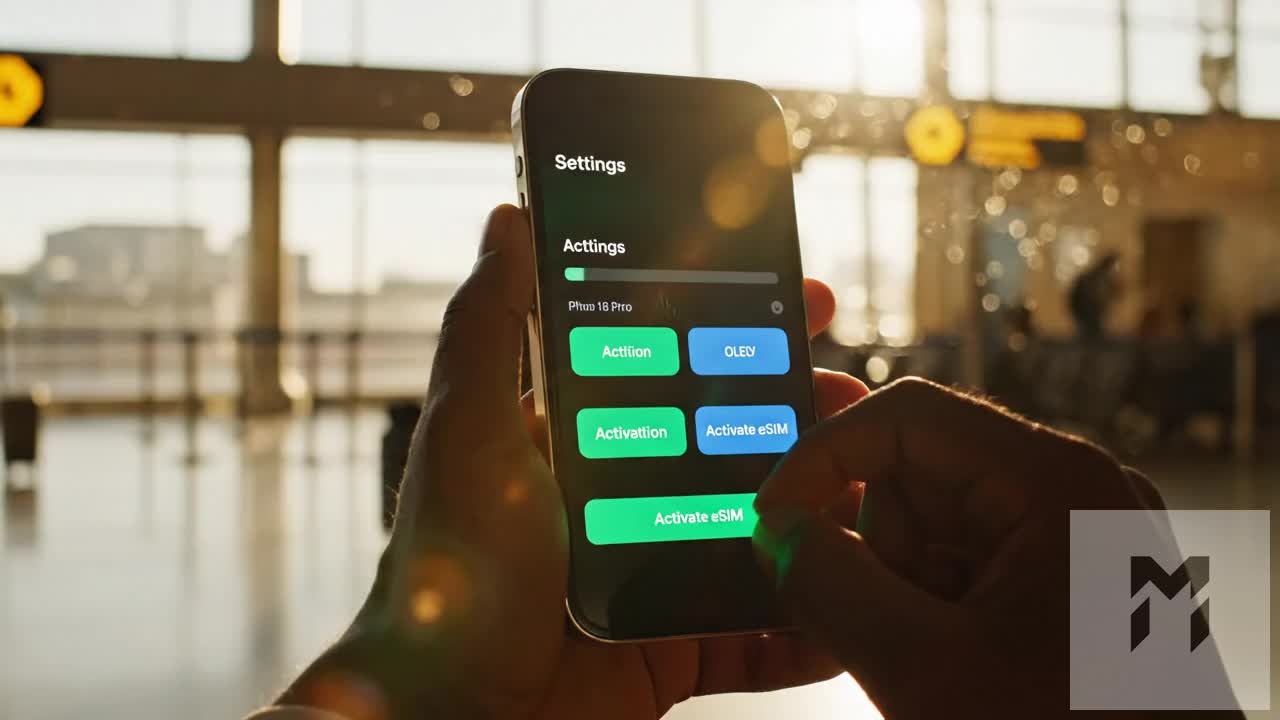
Deep in the Cloud Forest: 2026 Costa Rica Jungle & Eco-Lodge Travel eSIM Guide
The Jungle Connectivity Paradox: Why Rainforest Canopies Challenge Mobile Signals
Navigating Costa Rica’s untamed wilderness reveals a stark technical contradiction: while the country boasts one of Central America’s most progressive telecommunications infrastructures, the biological reality of its primary rainforests and rugged mountain ranges creates an unforgiving environment for cellular radio frequency (RF) propagation.
Understanding why your mobile signal drops between a cloud-forest canopy and a river valley requires examining the intersection of RF physics and tropical ecology.
The Physics of Green Attenuation and Wet Canopy Loss
Mobile networks transmit via electromagnetic waves, which suffer heavy degradation when encountering dense organic matter and water molecules. In tropical biomes, this manifests across three distinct ecological barriers:
- High-Density Moisture & Rayleigh Scattering in Monteverde: At 1,400 meters above sea level, Monteverde's cloud forests maintain perpetual 100% relative humidity. Suspended microscopic water droplets scatter higher-frequency cellular frequencies, noticeably degrading signal integrity before it reaches ground level.
- Dielectric Canopy Absorption in the Osa Peninsula and Manuel Antonio: Primary rainforests feature vertical vegetation layers reaching up to 60 meters. Biomass-dense trees—laden with moisture-retaining bromeliads, mosses, and lianas—act as natural dielectric attenuators. High-capacity mid-to-high LTE bands, such as Band 4 (AWS 1700/2100 MHz) and Band 7 (2600 MHz), suffer immediate path loss and cannot penetrate the dense canopy.
- Topographic Shadowing in Arenal and La Fortuna: The jagged volcanic ridges surrounding Volcán Arenal create pronounced RF shadows. Base transceiver stations (BTS) positioned on mountain ridges often overshoot low-lying valley eco-lodges, leaving deep physical canyons cut off from direct Line-of-Sight (LoS) propagation.
| Frequency Band | Common Usage | Canopy Penetration | Costa Rica Field Performance |
|---|---|---|---|
| Band 28 (700 MHz) | Low-Band LTE / Sub-1GHz | High | Essential for deep jungle paths, river corridors, and fringe trailheads. |
| Band 20 (800 MHz) | Low-Band LTE | High | Strong penetration through wet foliage and valley micro-climates. |
| Band 4 (AWS 1.7/2.1 GHz) | Standard Urban LTE | Low-Medium | Fails quickly under multi-tier primary rainforest canopies. |
| Band 7 (2600 MHz) | High-Capacity LTE | Very Low | Effective only in clear urban centers (San José, Liberia); useless in deep jungle. |
The Single-Carrier Vulnerability on the Trail
The most common travel pitfall in Costa Rica is relying on a single domestic carrier. While state-owned Kölbi historically anchored rural mountain towers, private operators like Claro and Liberty dominate specific coastal corridors and volcanic lowlands.
When you travel between a valley eco-lodge and a high-altitude trailhead, carrier dominance shifts rapidly. A single-network physical SIM will lock you into localized dead zones, stranding you without access to trail GPS or transportation apps.
To bypass localized blackouts, flexible multi-network eSIM profiles are critical. Modern travel eSIMs like MollySIM leverage multi-network agreements, allowing your device to dynamically switch to the strongest available local tower—whether latching onto a low-band Band 28 signal from Claro or a rural Kölbi mast.
Furthermore, when moving through fringe zones with low signal strength, data throttling policies become vital. Unlike standard travel eSIMs that drop down to an unusable 128 kbps upon exceeding data tiers, MollySIM maintains a 384 kbps Fair Use Policy (FUP) baseline speed. This speed tier is three times faster than typical competitor limits, providing enough sustained bandwidth to stream live vector data on Google Maps, send critical WhatsApp coordinates, or process mobile check-ins without timing out on deep jungle trails.
Carrier Breakdown: Kölbi (ICE) vs. Claro vs. Liberty Costa Rica
🇺🇸 United States High-Speed Travel eSIM & SIM Plans
Instant QR code activation, hotspot enabled, with guaranteed 384kbps fallback speed to keep Maps & Digital Wallets active.
To choose the right connectivity strategy for Costa Rica’s rugged terrain, you must understand how the country’s three primary Mobile Network Operators (MNOs)—Kölbi, Claro, and Liberty—deploy their spectrum and physical tower infrastructure across volatile microclimates.
       COSTA RICA CELLULAR TOPOGRAPHY & CARRIER DOMINANCE
  ┌─────────────────────────────────────────────────────────────┐
  │  HIGH ELEVATIONS & CLOUD FORESTS (Monteverde, Talamanca)     │
  │  ► Kölbi Dominance (State utility towers / High-altitude)   │
  ├─────────────────────────────────────────────────────────────┤
  │  COASTAL LOWLANDS & SURF CORRIDORS (Guanacaste, Manuel Ant.) │
  │  ► Claro Dominance (Sub-GHz Band 28 700MHz deployment)      │
  ├─────────────────────────────────────────────────────────────┤
  │  URBAN HUBS & TRANSIT CORRIDORS (GAM, San José, Route 27)    │
  │  ► Liberty Dominance (High-density AWS / Band 2 1900MHz)     │
  └─────────────────────────────────────────────────────────────┘
Kölbi (ICE): The Legacy High-Altitude Anchor
As the state-owned telecommunications arm of the Instituto Costarricense de Electricidad (ICE), Kölbi holds a structural advantage in physical infrastructure. Because ICE manages the national electric grid, Kölbi installed base transceiver stations (BTS) along mountain ridges, national reserve borders, and remote utility rights-of-way decades before private competition entered the market.
- Spectrum Allocations: Primary LTE operations run on Band 3 (1800 MHz) and Band 7 (2600 MHz) in populated zones, backed by legacy Band 5 (850 MHz) for voice and foundational 3G fallback.
- Terrain Strengths: High-altitude mountain passes (Cerro de la Muerte, Inter-American Highway South), agricultural valley pockets, and remote villages in the Talamanca mountain range.
- Trail Weakness: Higher-frequency LTE deployments (1800/2600 MHz) suffer rapid signal attenuation in wet primary rainforests when not reinforced by modern low-band sub-GHz upgrades.
Claro Costa Rica: High-Speed Coastal & Lowland Reach
Claro (a subsidiary of América Móvil) has invested heavily in modernizing its rural transport network, specifically targeting Costa Rica’s tourism corridors and coastal zones.
- Spectrum Allocations: Claro relies heavily on Band 28 (700 MHz APT) for rural expansion, complemented by Band 4 (AWS 1700/2100 MHz) and Band 2 (1900 MHz) in regional towns.
- Terrain Strengths: The sub-GHz Band 28 (700 MHz) deployment allows Claro to achieve superior signal propagation through wet canopy foliage and long physical distances across coastal plains like Guanacaste, the Nicoya Peninsula, and the southern Caribbean coast (Puerto Viejo, Manzanillo).
- Trail Weakness: In deep mountain shadows or narrow canyon gaps (such as the interior valleys between San Ramón and La Fortuna), Claro can drop off abruptly where Kölbi maintains legacy high-mast towers.
Liberty Costa Rica: Urban Density & Transit Corridors
Liberty (formerly operating as Movistar and Cabletica) delivers high data throughput and robust capacity in major population hubs, central transit corridors, and tourist centers.
- Spectrum Allocations: Primarily operating on Band 2 (1900 MHz) and Band 4 (AWS), with targeted Band 28 (700 MHz) rural overlays.
- Terrain Strengths: Dense performance throughout the Greater Metropolitan Area (GAM: San José, Alajuela, Heredia, Cartago), the Pacific toll corridor (Route 27), and established Pacific hubs like Jacó, Quepos, and Tamarindo.
- Trail Weakness: Once you leave main paved corridors for unpaved secondary trails leading to cloud forest eco-lodges (e.g., deep Monteverde, Bajos del Toro, or San Gerardo de Dota), Liberty’s cell density decreases faster than Kölbi’s or Claro’s.
Telecom Carrier Comparison Matrix
| Provider / Solution | Rural Eco-Lodge Coverage | Forest Penetration (Sub-GHz) | Mountain Pass Reliability | Setup & KYC Complexity | Backup Data Protection (FUP) |
|---|---|---|---|---|---|
| Kölbi (ICE) | Excellent (Deep valley & mountain anchors) | Moderate (Higher reliance on 1800/2600 MHz) | Excellent (Dominates high elevations) | High (Mandatory passport scan, branch visits) | Hard stop or 64–128 kbps throttled tier |
| Claro Costa Rica | Very Good (Superior coastal performance) | High (Extensive Band 28 700 MHz coverage) | Moderate (Dropouts behind volcanic ridges) | High (Prepaid registration required) | Hard stop or standard 128 kbps |
| Liberty Costa Rica | Moderate (Strong in towns, drops in wilderness) | Moderate (Limited rural sub-GHz density) | Low to Moderate (Gaps on non-primary roads) | High (In-store passport verification) | Hard stop or standard 128 kbps |
| Local Physical Prepaid SIM | Carrier-Locked (Zero redundancy if tower drops) | Dependent on selected single carrier | Dependent on selected single carrier | High (Airport queues, kiosk markup, passport KYC) | Strict data cut-offs per reload voucher |
| MollySIM Multi-Network eSIM | Maximum (Dynamically bridges Claro + Kölbi infrastructure) | Maximum (LTransits to optimal sub-GHz bands) | Maximum (Switches networks across mountain ridges) | Instant / Zero KYC (Digital install via QR in seconds) | Superior 384 kbps FUP (3x faster; runs live GPS & Apple Pay) |
The Multi-Carrier Solution
Because Costa Rica’s steep topography makes single-carrier coverage inconsistent across different regions, dynamic multi-network routing offers clear operational advantages.
Using MollySIM allows your device to bypass single-carrier dead zones entirely. If a Kölbi signal fades on a remote coastal road in Guanacaste, the eSIM automatically switches to Claro’s Band 28 700MHz frequency without requiring physical SIM swaps or local store visits.
Additionally, if heavy navigation or cloud backups push your usage past your primary data allotment, MollySIM’s 384 kbps Fair Use Policy (FUP) provides a reliable safety net. While standard travel SIMs drop to an unusable 128 kbps—rendering mapping applications non-functional—384 kbps supplies 3x the baseline throughput. This ensures Apple Pay authentication, WhatsApp messaging, and Google Maps vector rendering run without interruption deep in the jungle.
Power & Signal Optimization: Battery Preservation in Low-Reception Canopies
Traversing cloud forests like Monteverde or the deep river valleys of Bajos del Toro exposes your phone to severe RF (radio frequency) attenuation. Thick, moisture-saturated canopy vegetation scatters cellular wavelengths, forcing your device into an aggressive power amplification loop.
When your smartphone fluctuates between 0 and 1 bar of service, its internal power amplifier cranks its transmission output to maximum wattage (often scaling up to 23 dBm / 200 mW) while executing non-stop handshakes with distant Base Transceiver Stations (BTS). Left unchecked, this cellular paging cycle can drain 25–35% of your battery per hour without the screen even turning on.
Follow this technical protocol to preserve your battery life and maintain navigation integrity in fringe reception zones.
1. Lock Network Mode to 4G/LTE (Disable 5G Search Loops)
Costa Rica’s rural 5G rollouts rely heavily on Non-Standalone (NSA) architectures that require a simultaneous anchor connection to LTE. In canopy cover, devices constantly poll high-frequency 5G bands that cannot penetrate the tree line, wasting substantial battery reserves.
- iOS: Navigate to Settings > Cellular > Cellular Data Options > Voice & Data and select LTE (avoid 5G On or 5G Auto).
- Android (Samsung/Pixel): Navigate to Settings > Connections > Mobile Networks > Network Mode and switch from 5G/LTE/3G/2G (auto connect) to LTE/3G/2G (auto connect) or LTE Only.
2. Configure Dual-SIM Dual Standby (DSDS) Efficiently
Running both your home physical SIM and a travel eSIM simultaneously doubles your device’s baseband search load. If your domestic carrier has no roaming agreement in the jungle, its modem chip will endlessly ping non-existent towers.
┌────────────────────────────────────────────────────────┐
│              RECOMMENDED DUAL-SIM PROFILE              │
├──────────────────────────┬─────────────────────────────┤
│ Home Physical SIM        │ Turned OFF (or Voice Only   │
│                          │ with Data Roaming DISABLED) │
├──────────────────────────┼─────────────────────────────┤
│ MollySIM eSIM Line       │ Active Data Line Assigned   │
├──────────────────────────┼─────────────────────────────┤
│ Cellular Data Switching  │ DISABLED (Prevents modem    │
│                          │ search loops)               │
└──────────────────────────┴─────────────────────────────┘
By assigning your data channel directly to MollySIM and turning off "Allow Cellular Data Switching," you prevent your baseband processor from running dual-frequency tracking cycles across carrier bands that yield zero utility.
3. Pre-Cache Critical Vector & Topographic Data
Do not rely on live cellular streaming to render terrain maps while deep inside biological reserves. Pre-download all assets while connected to your eco-lodge Wi-Fi:
- Google Maps: Tap your profile icon > Offline maps > Select your own map. Frame the entire Cordillera Central or Osa Peninsula (a 250 MB download covers hundreds of square kilometers).
- AllTrails / Gaia GPS: Download topographic layers locally at 1:24k resolution. Ensure waypoint vector files are saved to onboard flash memory rather than cloud streams.
Because MollySIM provides a baseline 384 kbps Fair Use Policy (FUP)—three times faster than the 128 kbps throttles common among traditional roaming providers—your device avoids long timeout-and-retry cycles. Even if you exhaust your high-speed pool, 384 kbps supplies sufficient continuous bandwidth to pull incremental GPS route corrections, send urgent WhatsApp text pings, and authorize Apple Pay transactions without triggering processing timeouts.
4. Tropical Power Bank Maintenance & Condensation Mitigation
High ambient humidity (often reaching 95–100% in cloud forest canopies) introduces hardware hazards that software configurations cannot fix:
- Bypass Moisture-Detection Locks: Modern iPhones and Android devices will shut off the USB-C charging port if condensation bridges the pins. Keep your phone inside an IP68-rated dry pouch along with a 5g silica gel pack. Never charge a damp phone from a power bank; allow the port to air-dry in a breezy area first.
- Cold/Damp Thermal Throttling: Cloud forests frequently sit at elevations above 1,500 meters, where ambient temperatures drop to 12°C–15°C alongside extreme humidity. Lithium-ion chemistry suffers increased internal resistance in the cold. Carry your power pack in an internal jacket pocket close to your core body heat to preserve its rated milliamp-hour (mAh) discharge efficiency.
Single-Carrier SIMs vs. Dynamic Multi-Network eSIM Roaming
Navigating the telecom landscape of Costa Rica requires understanding a fundamental topographical reality: no single local carrier maintains total dominance across the country’s fractured microclimates and volcanic mountain ranges. Choosing how you connect—whether through a local physical SIM or a dynamic multi-network digital profile—dictates whether your navigation stays live or goes dark the moment your 4x4 leaves the highway.
The Airport Gauntlet: Friction Points at SJO and LIR
Arriving at Juan Santamaría International Airport (SJO) in San José or Daniel Oduber Quirós International Airport (LIR) in Liberia presents immediate logistical hurdles for travelers seeking physical SIM cards:
- SUTEL Passport Verification Queues: Under regulations set by Costa Rica's Telecommunications Superintendency (SUTEL), every prepaid SIM sold to a foreign national requires in-person passport documentation, manual data entry by an agent, and a photographic record. During peak arrival banks, waiting lines at airport kiosks routinely exceed 45 to 60 minutes.
- Airport Retail Markups & Forex Spread: Physical counter packages at SJO and LIR routinely charge $30–$50 USD for basic 5 GB starter bundles—a steep premium over local domestic rates—frequently compounded by unfavorable on-the-spot currency conversions if paying in Colones (CRC).
- Manual APN Provisioning: Local prepaid SIMs frequently require manual Access Point Name (APN) adjustments, cellular data toggling, and device reboots to initiate the data bearer, risking configuration conflicts with existing home carrier profiles.
The Architecture of Dynamic Multi-Network eSIM Roaming
A local physical SIM locks your hardware to a single carrier’s radio access network (RAN). If you purchase a physical Claro SIM at the airport, your connectivity drops entirely when entering an eco-reserve where only state-backed Kölbi has erected rural transmission masts.
Modern travel eSIM platforms solve this single-operator vulnerability using Multi-IMSI (International Mobile Subscriber Identity) technology and Dynamic Network Steering:
- Autonomous PLMN Selection: Instead of being tied to one Public Land Mobile Network (PLMN) ID, a multi-network profile evaluates local cellular beacons against an prioritized Over-The-Air (OTA) steering table.
- Terrain-Adaptive Switching: When your vehicle ascends to the high-elevation canopies of Monteverde (1,400–1,700m), your device negotiates a direct handshake with Kölbi's long-range 700 MHz (Band 28) infrastructure. As you descend toward the geothermal resorts of Arenal and La Fortuna, the profile automatically shifts registration to Claro or Liberty's dense urban cells for higher throughput—without requiring physical SIM swaps, settings adjustments, or device reboots.
| Feature / Metric | Airport Physical Prepaid SIM (Claro / Kölbi) | Dynamic Multi-Network Travel eSIM (MollySIM) |
|---|---|---|
| Setup Process | Airport line, passport scan, physical tray swap | Instant QR code installation via Wi-Fi prior to departure |
| Network Redundancy | Single Carrier (Zero failover if signal drops) | Multi-Carrier Auto-Switching (Kölbi + Claro + Liberty) |
| Remote Area Support | Poor if outside the specific carrier's footprint | Dynamically hooks to strongest available rural tower |
| Exhaustion Fallback | Hard disconnection (0 kbps) until balance reload | 384 kbps baseline FUP (Maintains GPS/VoIP functionality) |
| Local Support Friction | Spanish SMS menus / retail top-up scratch cards | Digital app-based management & automated data top-ups |
By leveraging dynamic roaming through MollySIM, you bypass carrier-monopoly dead zones. Furthermore, if high-bandwidth video transfers exhaust your primary high-speed data tier midway through an excursion, MollySIM’s 384 kbps Fair Use Policy (FUP) maintains continuous connectivity—operating at three times the speed of traditional 128 kbps roaming throttles to keep live mapping queries, emergency messaging, and remote hotel check-in services fully responsive.
The Life-Saving Safety Net: MollySIM’s 384kbps Unlimited Fallback & Remote Safety
Costa Rica’s rugged topography is as unforgiving as it is beautiful. Navigating the unpaved, rutted corridors of Route 142 around Lake Arenal, negotiating gravel switchbacks in Monteverde, or traversing tidal river crossings on the Osa Peninsula exposes travelers to legitimate operational hazards. In remote cloud forest reserves, tropical weather fronts trigger sudden flash floods, washed-out bridge crossings, and landslides within minutes. When a rental 4x4 blows a tire miles away from town or a hiking party misses a trail marker before dusk, mobile connectivity transitions from a vacation convenience into vital safety infrastructure.
+-----------------------------------------------------------------------------+
|                     EMERGENCY BANDWIDTH PERFORMANCE SPECTRUM                |
+-----------------------------------------------------------------------------+
|  0 kbps (Hard Cutoff)    ❌ Complete failure; zero emergency reach          |
|  64 - 128 kbps (Standard)⚠️ High TLS handshake timeouts; map rendering stall|
|  384 kbps (MollySIM FUP) ✅ Crisp VoIP audio, vector GPS rerouting, SOS data|
+-----------------------------------------------------------------------------+
The Failure of Traditional eSIM Throttling
Most travel eSIM providers handle high-speed data exhaustion through two punitive models:
- Hard Disconnection (0 kbps): Your data simply terminates, cutting off communication mid-journey unless you locate a terrestrial Wi-Fi network to buy an add-on.
- Nominal Throttling (64 kbps to 128 kbps): While marketed as "unlimited basic data," modern encrypted web protocols (TLS 1.3) and dynamic app architectures fail under these speeds. DNS queries time out, SSL certificates fail to negotiate, and critical apps like Google Maps or WhatsApp enter infinite loading loops.
In a jungle emergency, an unusable 128 kbps connection is practically equivalent to zero connectivity.
Why MollySIM’s 384kbps Fair Usage Policy (FUP) is the Field Standard
Rather than throttling connections into complete digital paralysis, MollySIM implements an engineered baseline throttle of 384 kbps once high-speed priority buckets are fully consumed. By providing three times the throughput of standard market throttles, this 384 kbps safety net sits comfortably above the operational thresholds required for critical data payloads.
| App / Protocol | Bandwidth Requirement | Performance on Standard 128 kbps | Performance on MollySIM 384 kbps |
|---|---|---|---|
| WhatsApp / Signal VoIP Call | 24–64 kbps (Opus codec) | High jitter, frequent packet loss, dropped calls | Crystal-clear audio, stable continuous voice stream |
| WhatsApp Live Location | 5–15 kbps constant | Fails to refresh; satellite pings drop | Real-time 15-second tracking interval maintained |
| Google Maps / Waze Navigation | 80–160 kbps burst | Vector tiles fail to render; re-routing freezes | Dynamic route recalculation & offline tile caching |
| Apple Pay / Digital Wallets | 20–50 kbps dynamic | Tokenization handshake fails; payment declines | Instant token verification & local POS approval |
| Emergency SMS / Transmissions | < 5 kbps | Intermittent; delayed by packet queueing | Instant transmission with delivery verification |
Continuous Field Security Without Surprise Cut-Offs
When driving through cloud-covered mountain passes with heavy rain, your navigation cannot freeze simply because a background photo backup silently depleted your primary high-speed balance.
At 384 kbps on MollySIM, your device retains the ability to:
- Recalculate Waze or Google Maps vectors around road closures or fallen trees along the Inter-American Highway.
- Maintain active two-way VoIP audio with local emergency services (Sistema de Emergencias 9-1-1), tour operators, or lodge hosts.
- Broadcast persistent GPS tracking coordinates via messaging apps so support teams can pinpoint your exact location.
- Process mobile payment verifications and bank OTPs at remote rural gas stations and medical clinics.
This uncapped, high-throughput fallback removes the anxiety of sudden data blackouts, ensuring you remain linked to essential logistics and emergency lifelines no matter how far off the paved grid your Costa Rican journey takes you.
Step-by-Step Field Guide: Installing & Configuring Your Costa Rica eSIM Before Arrival
Deploying your eSIM before boarding ensures instant, autonomous data access the moment your flight touches down at Juan Santamaría International Airport (SJO) in San José or Daniel Oduber Quirós International Airport (LIR) in Liberia. Bypassing airport Wi-Fi captive portals and high-commission physical kiosk queues allows you to confirm ground transfers and access digital navigation immediately.
Follow this technical setup checklist 24 to 48 hours prior to international departure.
Step 1: Pre-Flight Profile Provisioning (Home Wi-Fi)
Install the eSIM profile while connected to a stable, high-speed residential or office Wi-Fi network.
Option A: Direct QR Code Scan
- Open your device settings:
- iOS: Navigate to Settings > Cellular (or Mobile Data) > Add eSIM.
- Android (Samsung/Pixel): Navigate to Settings > Connections (or Network & Internet) > SIM Manager > Add eSIM / Mobile Plan.
- Select Use QR Code and point your device camera at the activation QR code provided in your MollySIM confirmation email.
- Allow 60–90 seconds for your device to authenticate with the Remote SIM Provisioning (RSP) server and download the digital profile.
Option B: Manual SM-DP+ Code Injection
If you are viewing your confirmation email on the same smartphone:
- Tap Enter Details Manually at the bottom of the QR scanner screen.
- Input the exact server address and token:
- SM-DP+ Address: (e.g.,
rsp.global-lpa.net) - Activation Code: (Unique alpha-numeric string from your dashboard)
- Confirmation Code: Leave blank unless explicitly specified.
Step 2: Dual-SIM Architecture & 2FA Retention
To ensure you receive banking one-time passcodes (OTPs) and verification SMS messages without triggering expensive home-carrier international roaming day passes ($10–$15/day), configure your Dual-SIM slots explicitly.
| Configuration Parameter | Home / Primary SIM | MollySIM Profile | Strategic Purpose |
|---|---|---|---|
| Label / Tag | Primary / Home | Costa Rica / Travel | Eliminates menu confusion |
| Cellular Data | DISABLED | ACTIVE (Primary) | Routes 100% of data through the low-cost eSIM pipeline |
| Data Roaming | OFF | ON | Blocks home roaming charges; enables local carrier handshakes |
| Default Voice Line | ON | OFF | Preserves incoming carrier SMS for 2FA tokens |
| Allow Cellular Data Switching | DISABLED | DISABLED | Prevents the OS from falling back to home data if eSIM dips |
Critical Device Setting (iOS & Android): Under your device's Cellular settings, ensure "Allow Cellular Data Switching" is toggled OFF. If left active, your phone may silently route background data through your domestic carrier line when traversing deep jungle valleys, resulting in massive roaming fees.
Step 3: APN Verification & Roaming Activation
While MollySIM profiles configure your Access Point Name (APN) automatically across supported Costa Rican partner networks (including ICE/Kölbi and Claro), manual verification guarantees immediate handshake execution:
- Select your newly added Travel eSIM profile.
- Ensure Data Roaming is toggled ON under the eSIM profile sub-menu.
- Access Cellular Data Network / Access Point Names:
- APN: Verify it matches the automated profile parameter (leave Username and Password blank).
- Network Selection: Set to Automatic. This enables seamless roaming between regional towers throughout Guanacaste, the Central Valley, and Puntarenas.
Step 4: Low-Bandwidth Field Optimization Presets
Before boarding your flight, optimize background consumption to conserve your high-speed allowance for critical navigation and voice communication:
- Disable Automated Cloud Backups over Cellular: Navigate to Apple Photos, Google Photos, iCloud Drive, and Dropbox settings, ensuring uploads occur Only on Wi-Fi.
- Pre-Download Regional Vector Maps: Open Google Maps or Maps.me and download offline map rectangles covering the Central Valley (SJO), Monteverde Cloud Forest, La Fortuna/Arenal, and the Nicoya/Osa Peninsulas.
- Activate Low Data Mode:
- iOS: Settings > Cellular > [Travel eSIM] > Toggle Low Data Mode to ON.
- Android: Settings > Network & Internet > Data Saver > Toggle Use Data Saver to ON.
Step 5: The Pre-Landing Touchdown Protocol
As your aircraft descends over the Costa Rican mountain ranges into SJO or LIR:
- Disable Airplane Mode once the aircraft taxis off the active runway.
- Confirm your signal status bar displays your secondary data connection searching and registering with a local carrier (ICE / Kölbi or Claro).
- If data does not route within 60 seconds of taxiing:
- Toggle Airplane Mode ON for 5 seconds, then OFF to force a fresh Base Transceiver Station (BTS) handshake.
- Verify your primary domestic SIM has Data Roaming set to OFF and your travel eSIM has Data Roaming set to ON.
With your MollySIM profile operational, you have high-speed regional LTE/5G routing activated alongside the security of an uncapped 384 kbps Fair Use Policy fallback—giving you triple the throughput of legacy 128 kbps travel SIMs to ensure uninterrupted navigation and instant payment processing across Costa Rica.
🇺🇸 United States High-Speed Travel eSIM & SIM Plans
Instant QR code activation, hotspot enabled, with guaranteed 384kbps fallback speed to keep Maps & Digital Wallets active.