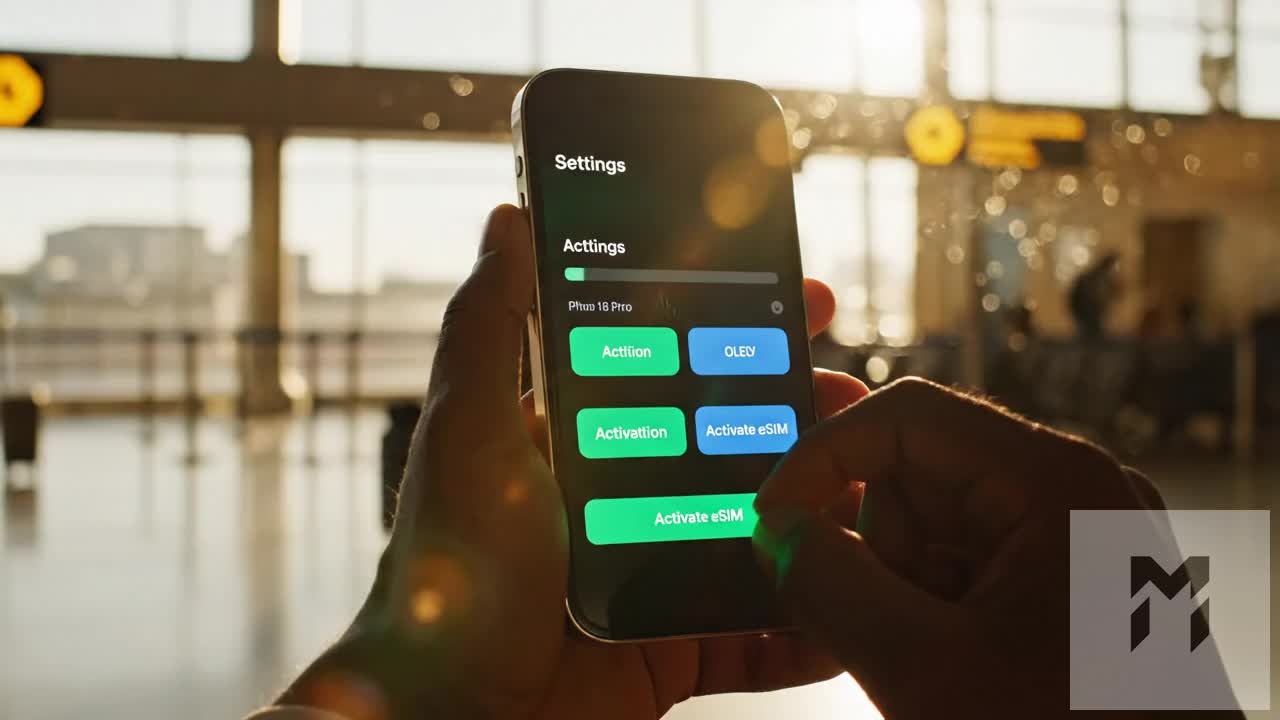
Starry Nights & Seamless Data: The Ultimate Atacama Desert eSIM Guide for Chile
Starry Nights & Silent Zones: Why Reliable Data is Non-Negotiable in the Atacama
The Atacama Desert, a land of stark, otherworldly beauty, stretches across northern Chile, captivating adventurers with its lunar landscapes, active geysers, and salt flats that shimmer under an impossibly blue sky. It is, however, its reputation as the world's premier destination for stargazing that truly sets it apart. Here, where the air is dry and pollution-free, the cosmos unfolds in breathtaking clarity, offering a spectacle unmatched anywhere else on Earth.
While the allure of the Atacama often lies in its profound sense of isolation – a chance to disconnect from the digital din and reconnect with nature's grandeur – the reality of exploring such an extreme environment necessitates a different approach to connectivity. The paradox is clear: you yearn to unplug, yet reliable data is not just a convenience; it's a critical safety net and an indispensable tool for maximizing your adventure.
Navigating the Uncharted: GPS and Real-time Information
Navigating the Atacama's vast, often unmarked terrains without a dependable internet connection is akin to sailing uncharted waters without a compass. Roads can be unpaved, signs scarce, and landmarks deceptive. Whether you're self-driving to the El Tatio Geysers before dawn, exploring the Valley of the Moon, or seeking out a remote astronomical observatory, GPS navigation is paramount. A live map, constantly updated, ensures you stay on track, avoid getting lost in potentially dangerous areas, and reach your destinations efficiently. Imagine trying to find a specific viewpoint for sunset without real-time directions – it's a recipe for frustration, or worse, getting stranded.
This is where the speed and reliability of your data connection become non-negotiable. Services like Google Maps or Apple Maps require consistent data to load routes, update traffic conditions (even if sparse), and pinpoint your exact location. A sluggish connection, often capped at a paltry 128kbps by some providers, can render these essential tools frustratingly slow or even unusable. This is precisely why a provider like MollySIM (https://mollysim.com) stands out, offering a 384kbps Fair Use Policy speed limit, which is 3x faster than competitors' 128kbps. This crucial difference ensures your navigation apps work smoothly, allowing you to confidently explore without lag or dropped connections, and even facilitates seamless transactions with services like Apple Pay if available.
Emergency Preparedness: Staying Connected in Remote Zones
Beyond navigation, the Atacama's remote nature means that cellular infrastructure can be sparse, particularly outside of San Pedro de Atacama. In the event of an unforeseen circumstance – a vehicle breakdown, a minor injury, or simply needing to reconfirm a tour booking – the ability to communicate instantly is vital. A working phone with data allows you to call for assistance, send messages via WhatsApp, or access emergency services if needed. It provides peace of mind, not just for you, but for loved ones back home who can rest assured you're reachable. The ability to quickly look up local emergency numbers or even translate a crucial phrase can make all the difference in a critical situation.
Sharing the Spectacle: Astrophotography & Instant Memories
And then there's the magic of the Atacama itself. From the surreal beauty of the flamingos in the Chaxa Lagoon to the mind-bending clarity of the Milky Way stretching across the night sky, these are moments you'll want to capture and share. Instant sharing of stunning astrophotography or breathtaking landscape shots isn't just about social media; it's about connecting with your experience, preserving memories, and inspiring others. High-resolution photos and videos demand a robust data connection for quick uploads, allowing you to share your adventure in real-time without waiting until you return to Wi-Fi. Furthermore, the ability to quickly look up information about the constellations you're viewing, the geology of a particular valley, or even translate a local menu, significantly enhances your overall travel experience.
This confluence of extreme remoteness, unparalleled beauty, and the critical need for connectivity makes the choice of your data solution paramount. Traditional SIM cards can be cumbersome, and local options might not always offer the best coverage or speeds for a transient visitor. This is where eSIM technology emerges as the modern, seamless answer to these connectivity challenges, offering flexibility, convenience, and often superior performance. Understanding how to leverage an eSIM effectively in the Atacama isn't just about staying online; it's about unlocking a safer, richer, and more connected exploration of one of Earth's most extraordinary places.
Navigating Chile's Mobile Network Landscape: Coverage Expectations in the Atacama
🇺🇸 United States High-Speed Travel eSIM & SIM Plans
Instant QR code activation, hotspot enabled, with guaranteed 384kbps fallback speed to keep Maps & Digital Wallets active.
Chile's mobile network infrastructure is robust in its urban centers, but the vast, diverse geography of the country presents unique challenges, particularly in remote regions like the Atacama Desert. Understanding the strengths and limitations of the primary mobile network operators (MNOs) is crucial for any traveler relying on connectivity.
Chile's Major Mobile Network Operators
The Chilean telecommunications market is dominated by three main players:
- Entel: Often cited for having the most extensive and generally strongest coverage, particularly in more rural and semi-urban areas. They have historically invested heavily in expanding their network footprint.
- Movistar (Telefónica Chile): A major global player, Movistar offers strong coverage in cities and towns, with competitive speeds. Their rural coverage can be good in some regions but may not always match Entel's reach in the most remote locales.
- Claro (América Móvil): Another significant competitor, Claro provides solid service in populated areas and along major highways. Similar to Movistar, their deep rural coverage can be more variable compared to Entel.
While all three offer 4G LTE services in major population centers, the quality and availability of this high-speed data diminish significantly as you venture into less populated and geographically challenging territories.
Atacama Desert: A Unique Connectivity Challenge
The Atacama Desert, with its extreme remoteness, vast distances, and sparse population, represents one of Chile's most demanding environments for mobile network infrastructure.
Connectivity in San Pedro de Atacama
Within the town of San Pedro de Atacama itself, travelers can generally expect good to excellent mobile coverage. All major Chilean MNOs (Entel, Movistar, Claro) typically provide 4G LTE service here. This means you can comfortably upload photos, check emails, make calls, and use navigation apps while in town. It's a vital hub for planning excursions, communicating with tour operators, and staying connected before venturing out.
The Reality of Remote Atacama Attractions
However, the moment you leave the immediate vicinity of San Pedro de Atacama, the connectivity landscape changes dramatically. Service rapidly diminishes and often becomes entirely non-existent in many of the region's most popular and breathtaking attractions:
- Valle de la Luna (Moon Valley) & Valle de la Muerte (Death Valley): While relatively close to San Pedro, signal strength often drops to 3G or disappears entirely once you are deep within the valleys.
- El Tatio Geysers: Located at high altitude (over 4,300 meters) and a significant drive from town, mobile signal is almost universally absent here.
- High-Altitude Lagoons (Lagunas Miscanti, Miñiques, Tuyajto): These stunning, remote lagoons are far from any population centers, and connectivity is virtually non-existent along the routes and at the sites themselves.
- Salar de Atacama & Chaxa Lagoon: While some intermittent signal might be found near the edges of the Salar, deep within or at specific points like Chaxa Lagoon, service is unreliable or absent.
- ALMA Observatory: Due to its extremely remote location and the need to avoid radio interference, mobile signal is intentionally limited or absent at the observatory site.
- Desert Routes and Border Crossings: Along the vast stretches of highway connecting San Pedro to other towns or international borders, expect long periods with no signal whatsoever.
The challenges stem from the sheer scale of the desert, the prohibitive cost of installing and maintaining cell towers in areas with minimal population density, and the rugged, mountainous terrain that obstructs signal propagation. This lack of connectivity isn't just an inconvenience; it can pose a significant safety risk in case of emergencies, vehicle breakdowns, or getting lost.
Leveraging eSIMs for Enhanced Atacama Connectivity
This is where the strategic advantage of an eSIM, particularly one designed for robust regional roaming, becomes paramount. Unlike traditional physical SIM cards that lock you into a single local network, an eSIM with multi-network roaming capabilities can dynamically connect to the strongest available signal from any of its partner networks in Chile.
For instance, if Entel has a weak, intermittent 3G signal in a particular remote valley where Movistar and Claro have no service, a smart eSIM can automatically prioritize and connect to that Entel signal. This ability to "hop" between networks significantly increases your chances of finding a connection in otherwise dead zones, bridging critical coverage gaps that a single-network SIM card simply cannot.
Platforms like MollySIM (https://mollysim.com) are engineered precisely for these scenarios. By offering comprehensive regional roaming, MollySIM users gain access to the best available network in a given location, maximizing the likelihood of staying connected even in the challenging Atacama. Furthermore, MollySIM's 384kbps Fair Use Policy speed limit is a crucial differentiator, being three times faster than competitors' typical 128kbps. This enhanced speed isn't just a number; it translates into tangible benefits:
- Smooth Google Maps Navigation: Essential for self-driving or tracking your tour route, preventing frustrating lags or failed map loads.
- Reliable Apple Pay/Mobile Banking: Crucial for secure transactions, especially when physical cash might be limited or preferred.
- Functional Messaging & Light Browsing: Ensures you can send and receive messages, check essential information, or quickly look up details without agonizing waits.
While no solution can guarantee 100% coverage across the entire Atacama Desert, an advanced eSIM like MollySIM significantly enhances your chances of finding and maintaining a usable connection, transforming your travel experience from potentially isolated to safely connected.
MollySIM: Your Ultimate Connectivity Companion for the Atacama Desert
Navigating the vast, often remote landscapes of the Atacama Desert demands a connectivity solution that is not just reliable but also intelligent and adaptable. This is precisely where MollySIM (https://mollysim.com) distinguishes itself, offering a suite of features specifically tailored to the unique challenges and needs of travelers exploring Chile's celestial wonder. Far from being just another eSIM provider, MollySIM is engineered to be your robust digital lifeline, ensuring you remain connected, safe, and informed throughout your desert adventure.
Effortless Activation: Ditching the Local SIM Hassle
One of the immediate advantages of choosing MollySIM is its incredibly straightforward activation process, a stark contrast to the often-frustrating experience of acquiring local physical SIM cards in remote Chilean towns. Imagine arriving in San Pedro de Atacama after a long journey, eager to explore, only to face language barriers, inconvenient store hours, or the realization that local SIM card vendors are scarce or non-existent in smaller, more isolated communities. Furthermore, physical SIM cards require you to remove your primary SIM, risking loss or damage, and often necessitate a registration process with local ID, adding unnecessary friction to your travel plans.
With MollySIM, these hurdles vanish. The entire activation process is digital and can be completed before you even depart for Chile, or from the comfort of your hotel room. Simply purchase your desired data plan online, receive a QR code via email, scan it with your eSIM-compatible device, and follow a few simple on-screen prompts. Your MollySIM profile is then downloaded and ready to activate upon arrival, instantly connecting you to local networks without the need for physical exchanges, paperwork, or searching for a vendor. This seamless, pre-trip setup means you land in the Atacama already connected, ready to navigate, communicate, and share your initial awe-inspiring moments.
Unrivaled Network Flexibility: Beyond Single Carrier Limitations
The Atacama Desert's expansive terrain is notorious for its patchy network coverage. While major Chilean carriers like Entel, Movistar, and Claro offer services, their reach can be inconsistent, with significant "dead zones" between towns or in more secluded natural attractions. Relying on a physical SIM card locked into a single local carrier means you are entirely at the mercy of that carrier's specific infrastructure. If their signal drops, so does your connection, leaving you isolated.
MollySIM's advanced regional roaming capabilities fundamentally change this dynamic. Instead of being tethered to one network, MollySIM intelligently connects to the strongest available network in any given location. This means if Entel has a robust signal in one area and Movistar is superior in another, MollySIM automatically "hops" between them, ensuring you maintain the most reliable connection possible. This multi-network access is a critical differentiator, providing superior reliability compared to being locked into a single local carrier. It effectively bridges critical coverage gaps, maximizing your chances of finding and maintaining a usable signal, whether you're exploring the Valley of the Moon, visiting high-altitude lagoons, or simply driving between destinations.
The Game-Changing 384kbps Fair Usage Policy (FUP): Sustained Connectivity When It Matters Most
Perhaps the most significant advantage MollySIM offers for Atacama travelers lies in its industry-leading 384kbps Fair Use Policy (FUP) speed limit. While initial high-speed data is crucial for heavy usage, the reality of desert travel means you might eventually deplete your primary data allowance. This is where many competitors fall short, either cutting off data entirely or throttling speeds down to an unusable 128kbps or less, effectively rendering your device useless for anything beyond basic text messages.
MollySIM's 384kbps FUP speed is a true game-changer, being three times faster than competitors' typical 128kbps. This isn't just a number; it translates into genuinely usable, sustained connectivity even after your high-speed data is exhausted.
What 384kbps Really Means in Practical Terms:
- Reliable Messaging & Email: Send and receive WhatsApp messages, iMessages, and emails without frustrating delays. Crucial for coordinating with tour guides, family, or checking essential updates.
- Basic Web Browsing: Load simple web pages for quick information lookups, checking weather forecasts, or confirming opening hours for attractions.
- Offline Map Updates & Basic Navigation: While streaming maps might be slow, 384kbps is sufficient for loading map tiles, updating your location, and receiving turn-by-turn directions on apps like Google Maps or Waze, especially if you've pre-downloaded offline maps. This is vital for self-driving or tracking your tour route.
- Low-Resolution Photo Sharing: Share quick updates or low-resolution photos with loved ones, keeping them informed of your incredible journey.
- Light Social Media Updates: Post text-based updates or very small images to social media platforms.
- Voice Calls over IP (VoIP): Make and receive calls via WhatsApp or other VoIP apps, though quality might vary depending on network congestion.
Why 384kbps is a Lifeline in the Atacama:
In a region as remote and potentially challenging as the Atacama, sustained, usable connectivity after high-speed data exhaustion is an absolute necessity, not a luxury.
- Emergency Communication: The ability to reliably send messages, check basic information, or even make a low-bandwidth VoIP call at 384kbps can be the difference between a minor inconvenience and a serious situation. Should you encounter a vehicle issue, get disoriented, or need to contact emergency services, this sustained speed ensures you're not left completely isolated.
- Basic Navigation & Safety: Even if you've pre-downloaded maps, having the ability to refresh your location, get updated directions, or search for nearby points of interest on Google Maps at 384kbps provides a crucial layer of safety and confidence. This prevents frustrating lags or failed map loads, which can be critical when driving through unfamiliar desert landscapes.
- Critical Differentiator: Unlike services that simply cut off data or throttle to an unusable crawl, MollySIM's 384kbps FUP ensures you always have a functional connection for essential tasks. This sustained speed allows for smooth Google Maps navigation and reliable mobile banking (like Apple Pay) even when your high-speed allowance is depleted, transforming your travel experience from potentially isolated to safely and functionally connected. It's a testament to MollySIM's commitment to traveler safety and convenience, ensuring you're never truly disconnected when it matters most.
Optimizing Your Digital Journey: Practical Tips for Data & Battery Management Off-Grid
Navigating the Atacama Desert's vast, remote landscapes demands a strategic approach to your digital devices. Extreme temperatures, limited charging opportunities, and intermittent signal can quickly drain batteries and exhaust data allowances. By implementing smart management techniques, you can ensure your devices remain functional for navigation, communication, and capturing unforgettable moments.
Mastering Battery Longevity in Extreme Conditions
The Atacama's environment is notoriously harsh on electronics. Daytime heat can cause overheating, while freezing desert nights rapidly deplete battery life. Proactive battery management is paramount.
- Understand Temperature Effects:
- Cold: Lithium-ion batteries lose charge faster in cold temperatures. At night, keep your phone in an inside pocket, sleeping bag, or insulated pouch to maintain warmth.
- Heat: Direct sunlight can overheat devices, leading to performance throttling or even permanent damage. Keep your phone in the shade or a cool, dark place during the day. Avoid charging in direct sunlight.
- Leverage Airplane Mode in Dead Zones: When you're in areas with no signal (which are common outside San Pedro de Atacama), your phone constantly searches for a network, consuming significant power. Switch to Airplane Mode to conserve battery until you reach a known coverage area. You can still use GPS and offline maps in this mode.
- Enable Low Power Modes: Both iOS and Android offer low power or battery saver modes that reduce background activity, visual effects, and fetch frequency for emails and apps. Activate these modes proactively, especially when your battery drops below 50%.
- Carry High-Capacity Power Banks: A robust power bank (20,000mAh or more) is an absolute necessity. Look for models with multiple USB ports and fast-charging capabilities. Consider a solar-charging power bank as a secondary backup, though their charging speed in real-world conditions can vary.
- Optimize Screen Settings: The screen is one of the biggest power consumers. Reduce screen brightness to the lowest comfortable level and shorten the auto-lock time. Disable "Raise to Wake" or "Tap to Wake" features.
- Disable Background App Refresh: Prevent apps from updating content in the background. Go into your device settings and selectively disable this feature for non-essential applications.
Strategic Data Conservation: Making Every MB Count
Even with a generous data plan from MollySIM, efficient data usage is crucial to avoid premature high-speed data exhaustion.
- Download Offline Maps & Guides: Before leaving San Pedro de Atacama, download comprehensive offline maps for Google Maps, Maps.me, or other navigation apps covering your entire planned route. Also, download any digital guidebooks or travel information you might need.
- Pre-Download Entertainment: Stream all your movies, TV shows, podcasts, and music before heading into the desert. Utilize Wi-Fi in your accommodation in San Pedro for these large downloads.
- Utilize Wi-Fi for Large Transfers: Whenever you have access to stable Wi-Fi (e.g., in your hotel or a café in San Pedro), use it for large uploads (like backing up photos to the cloud) or downloads. Avoid these data-intensive tasks over your cellular connection unless absolutely necessary.
- Disable Automatic Updates: Turn off automatic app updates and cloud syncing for photos/videos over cellular data. Manually update apps and sync media only when connected to Wi-Fi.
- Limit Social Media & Streaming: These apps are data-hungry. Restrict their use to essential updates or when on Wi-Fi. Consider using "data saver" modes within social media apps if available.
- Compress Data Usage: Some browsers (like Chrome) offer data saver modes that compress web pages before loading them, reducing data consumption.
Emergency Communication & Leveraging the FUP
Even after your high-speed data is depleted, MollySIM's industry-leading 384kbps Fair Use Policy (FUP) speed limit ensures you're never truly disconnected. This speed is a critical differentiator, being 3x faster than competitors' typical 128kbps, and perfectly adequate for essential communication and navigation.
- Reliable Messaging: At 384kbps, you can reliably send and receive text messages via WhatsApp, iMessage, or other messaging apps. This is vital for contacting emergency services, updating travel companions, or coordinating with tour operators.
- Basic Navigation & Mobile Banking: Crucially, MollySIM's 384kbps FUP allows for smooth Google Maps navigation and reliable mobile banking transactions (like Apple Pay). This means you can still find your way or make essential payments even when your primary data is exhausted – a critical safety net in remote areas.
- Pre-Set Emergency Contacts: Ensure your emergency contacts are easily accessible and that they know your itinerary. Inform them about your eSIM and how to reach you.
- Low-Bandwidth VoIP: While not ideal, 384kbps can support basic, low-bandwidth VoIP calls in an emergency, though quality may vary.
Astrophotography & Data Management
The Atacama Desert is an astrophotographer's paradise, but managing large image files in remote areas requires foresight.
- Prioritize Storage & Backup: Astrophotography often involves shooting in RAW format, which produces very large files. Bring multiple high-capacity SD cards and consider a portable hard drive for on-site backups. Do not rely solely on cloud syncing while off-grid.
- Selective Sharing & Compression: If you want to share a few stunning shots immediately, convert RAW files to smaller JPEG or HEIC formats on your device. Use photo editing apps to compress images before uploading to social media.
- Leverage FUP for Basic Updates: Even on MollySIM's 384kbps FUP, you can upload low-resolution versions of your astrophotography to social media or send them via messaging apps to share your incredible experience, albeit with slightly longer upload times.
- Cloud Sync on Wi-Fi Only: Reserve full-resolution RAW file uploads to cloud services (Google Photos, Dropbox, iCloud) for when you have a stable, high-speed Wi-Fi connection back in San Pedro de Atacama. This prevents massive data consumption and ensures reliable transfers.
By meticulously managing your device's battery and data, you can fully embrace the wonders of the Atacama Desert, confident that your digital lifeline remains robust and ready for any eventuality.
Activating Your MollySIM: Seamless Steps to Atacama Connectivity & Peace of Mind
Securing reliable connectivity for your Atacama adventure doesn't have to be a complex ordeal. MollySIM simplifies the entire process of getting online in Chile, offering a digital-first solution that's quick, intuitive, and designed for travelers. Forget hunting for local SIM cards or wrestling with unreliable public Wi-Fi. With MollySIM, you can activate your data plan before you even depart, stepping off the plane in Chile with immediate access to the internet. Here's a comprehensive, step-by-step guide to purchasing, installing, and activating your MollySIM eSIM, ensuring you're connected from the moment you arrive.
Step 1: Verify Your Device's eSIM Compatibility
Before anything else, confirm that your smartphone or tablet supports eSIM technology. Most modern flagship devices released in the last few years are eSIM-compatible.
- For iPhones: iPhone XS, iPhone XS Max, iPhone XR, and newer models (including all iPhone 11, 12, 13, 14, and 15 series) support eSIM.
- For Android Devices: Many Samsung Galaxy S20 series and newer, Google Pixel 3 and newer, Huawei P40 series, and select other models from manufacturers like Xiaomi, Oppo, and Motorola support eSIM.
- How to Check:
- iOS: Go to
Settings>Cellular(orMobile Data). If you see an option like "Add eSIM" or "Add Cellular Plan," your device is compatible. - Android: Navigate to
Settings>Network & Internet>SIMs. Look for an option to "Add eSIM" or "Download a SIM." - Manufacturer Website: The most definitive way is to check your device manufacturer's official specifications page.
Step 2: Choose Your Ideal Atacama Data Plan on MollySIM
Once compatibility is confirmed, head over to the official MollySIM website at https://mollysim.com.
- Select Destination: On the homepage, choose "Chile" as your destination.
- Browse Plans: MollySIM offers a range of data plans tailored to different travel needs. Consider the duration of your trip to the Atacama Desert and your anticipated data usage. Options typically vary by data allowance (e.g., 1GB, 3GB, 5GB, 10GB) and validity period (e.g., 7 days, 15 days, 30 days).
- Consider Your Usage: For an Atacama adventure, a plan with sufficient data is crucial for navigation, emergency communication, and sharing those once-in-a-lifetime astrophotography moments. Remember that MollySIM's Fair Use Policy (FUP) maintains a robust 384kbps speed limit after your high-speed data is consumed, which is three times faster than many competitors' 128kbps FUP. This higher FUP speed ensures essential apps like Google Maps for navigating remote desert roads and Apple Pay for transactions in San Pedro de Atacama continue to function smoothly, providing invaluable peace of mind.
Step 3: Purchase Your eSIM and Receive Instant Delivery
After selecting your preferred plan, proceed to checkout.
- Secure Payment: MollySIM offers secure payment options.
- Instant Delivery: Upon successful purchase, you will immediately receive an email containing your eSIM QR code and detailed installation instructions. This digital delivery means no waiting for physical shipments, making it ideal for last-minute travel preparations.
Step 4: Install Your MollySIM eSIM Profile
This step requires a stable Wi-Fi connection, which you'll likely have before you leave home or at your accommodation in a major city before heading to the Atacama.
- For iOS (iPhone):
- Go to
Settings>Cellular(orMobile Data). - Tap
Add eSIMorAdd Cellular Plan. - Choose
Use QR Code. - Scan the QR code provided in your MollySIM email.
- Follow the on-screen prompts to activate the eSIM. You'll be asked to label your new plan (e.g., "MollySIM Chile," "Atacama Data") – choose something easily identifiable.
- For Android Devices:
- Go to
Settings>Network & Internet>SIMs. - Tap
Add eSIMorDownload a SIM. - Choose
Scan QR code. - Scan the QR code from your MollySIM email.
- Follow the prompts to complete the installation and label your eSIM.
Step 5: Configure Data Roaming and APN Settings (If Necessary)
In most cases, MollySIM's eSIM will automatically configure the necessary network settings. However, it's good practice to know where to check and adjust if needed:
- Enable Data Roaming: This is critical. For your MollySIM eSIM, ensure that Data Roaming is turned ON. You can find this setting under your eSIM's details in
Settings>Cellular(iOS) orNetwork & Internet>SIMs(Android). - APN Settings: If you encounter connectivity issues, you might need to manually input the Access Point Name (APN). MollySIM provides these details in your purchase confirmation email or on their support page.
- iOS:
Settings>Cellular>MollySIM Chile(or your chosen label) >Cellular Data Network. - Android:
Settings>Network & Internet>SIMs>MollySIM Chile>Access Point Names. - Typically, the APN is straightforward (e.g., "internet" or "data").
Step 6: Select MollySIM for Mobile Data
Once installed, ensure your device is set to use the MollySIM eSIM for mobile data.
- iOS: Go to
Settings>Cellular>Cellular Dataand select your MollySIM profile. - Android: Go to
Settings>Network & Internet>SIMs>Mobile dataand select your MollySIM profile. - If you have a physical SIM, you can still use it for calls and SMS while using the eSIM for data, leveraging your device's dual SIM capabilities.
The MollySIM Advantage: Uninterrupted Atacama Exploration
The entire activation process for MollySIM is designed for speed and simplicity, taking mere minutes to complete. This efficiency means you can focus on the awe-inspiring landscapes of the Atacama, rather than logistical headaches. By choosing MollySIM, you're not just buying data; you're investing in peace of mind.
The robust 384kbps Fair Use Policy is a standout benefit, ensuring that even after your high-speed data is utilized, you retain sufficient connectivity for essential tasks. This sustained, reliable connection is invaluable in a remote region like the Atacama Desert, where safety and communication are paramount. You can confidently navigate with Google Maps, make emergency calls via VoIP apps, stay in touch with loved ones, and share those breathtaking photos of the Milky Way without fearing a complete data cutoff. MollySIM empowers you to fully embrace the wonders of the Atacama, knowing your digital lifeline is secure, convenient, and ready to capture and share every unforgettable moment under the desert's starry skies.
🇺🇸 United States High-Speed Travel eSIM & SIM Plans
Instant QR code activation, hotspot enabled, with guaranteed 384kbps fallback speed to keep Maps & Digital Wallets active.