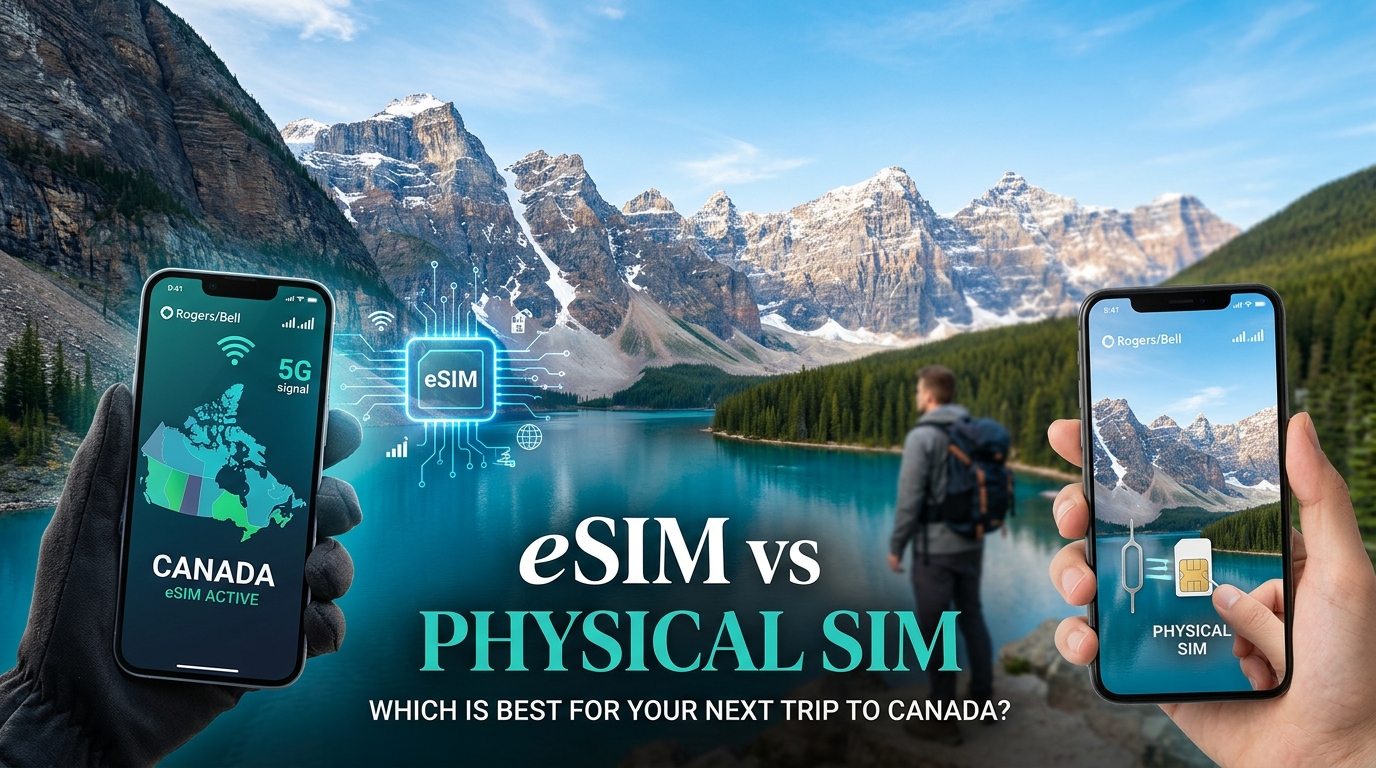
加拿大的 eSIM 與實體 SIM:哪一種更適合您的旅行需求?
前往加拿大旅行?您面臨的最重要決策之一就是如何在探索廣袤的自然景觀和繁忙的城市時保持連接。隨著 eSIM 技術的出現,旅行者現在擁有比以往更多的選擇。本文將深入比較加拿大的 eSIM 和實體 SIM 卡,重點關注使用便利性、價格、來自本地運營商如 Rogers 和 Bell 的數據計劃,以及像 MollySIM 的 eSIM 如何為國際旅行者提供更高的靈活性和價格優勢。
理解 SIM 技術:簡要概述
在深入具體細節之前,了解 eSIM 和實體 SIM 卡的基本概念是至關重要的。
- 實體 SIM 卡:一種小型可拆卸卡片,將您的移動設備連接到蜂窩網絡。這是多年來移動連接的傳統方法。
- eSIM(嵌入式 SIM):一種內置於設備中的數字 SIM。它允許您在不需要實體卡的情況下激活蜂窩計劃。由於其便利性和靈活性,這項技術越來越受歡迎。
加拿大 eSIM 與實體 SIM 的優缺點
即时发货 • 5G 极速 • 包含 384kbps 无限保底流量
🌐 全球旅行 高速 eSIM & 电话卡套餐
无需插卡开箱即用,支持热点共享,即使高速流量用尽也可维持 Google 地图/移动支付顺畅运行。
eSIM 的優點
- 便利性:無需實體更換 SIM 卡。您可以直接從設備設置中切換運營商或計劃。
- 多個配置檔:eSIM 可以存儲多個配置檔,讓您輕鬆在不同計劃之間切換,而無需新的 SIM 卡。
- 節省空間:由於 eSIM 是嵌入式的,因此為您的設備釋放了其他硬件功能的空間。
- 即時激活:您可以通過 QR 碼或應用程序幾乎立即激活計劃,非常適合臨時旅行。
eSIM 的缺點
- 設備兼容性:並非所有設備都支持 eSIM 技術。在考慮此選項之前,請確保您的設備兼容。
- 可用性有限:雖然 eSIM 越來越受歡迎,但並非所有運營商都提供 eSIM 計劃,特別是在偏遠地區。
- 對某些用戶的複雜性:對於不熟悉技術的用戶來說,激活 eSIM 的過程可能看起來令人生畏。
實體 SIM 的優點
- 廣泛兼容性:幾乎所有移動設備都支持實體 SIM 卡,使其普遍可用。
- 簡單性:插入 SIM 卡的過程簡單明瞭,大多數用戶都很熟悉。
- 即時連接:您可以在抵達時購買實體 SIM 並立即開始使用。
實體 SIM 的缺點
- 不便性:更換 SIM 卡可能會很麻煩,特別是如果您需要頻繁切換的話。
- 配置檔有限:實體 SIM 一次只能容納一個計劃,限制了您的靈活性。
- 丟失的潛在風險:實體 SIM 卡容易丟失或損壞,導致連接問題。
加拿大運營商的價格和數據計劃
在考慮 eSIM 與實體 SIM 時,價格和數據計劃是至關重要的因素。以下是主要加拿大運營商的比較:Rogers、Bell,以及 MollySIM 的產品。
主要加拿大運營商
| 運營商 | 計劃類型 | 價格 (CAD) | 數據配額 | eSIM 可用性 | 備註 |
|---|---|---|---|---|---|
| Rogers | 預付費 | $50 | 10 GB | 是 | 彈性計劃,適合短期停留。 |
| Bell | 後付費 | $70 | 20 GB | 是 | 覆蓋範圍廣泛,適合長期停留。 |
| Telus | 預付費 | $45 | 5 GB | 是 | 價格實惠,但數據有限。 |
| MollySIM | eSIM(國際) | $29.99 | 10 GB | 是 | 384kbps FUP 速度,比競爭對手快 3 倍。 |
MollySIM:旅行者的最佳選擇
MollySIM 提供專為國際旅行者設計的獨特 eSIM 解決方案。以下是其突出的原因:
- 具成本效益:僅需 $29.99 即可獲得 10 GB,顯著低於許多本地運營商的選擇。
- 高速:MollySIM 提供的 384kbps FUP 速度,比許多本地競爭對手更快。
- 簡易激活:只需掃描 QR 碼即可激活您的 eSIM,讓您在抵達加拿大後立即連接。
- 靈活計劃:您可以輕鬆在計劃之間切換或根據需要添加數據,而無需更換實體 SIM 卡的麻煩。
如何在加拿大激活 eSIM 和實體 SIM
激活 eSIM
- 檢查兼容性:確保您的設備支持 eSIM 技術(大多數新型智能手機均支持)。
- 購買您的 eSIM:前往 MollySIM 並選擇您想要的計劃。
- 接收 QR 碼:購買後,您將通過電子郵件收到 QR 碼。
- 掃描 QR 碼:
- 對於 iPhone:前往 設定 > 行動網路 > 添加行動計劃。使用相機掃描 QR 碼。
- 對於 Android:前往 設定 > 網路與網際網路 > 行動網路 > 添加運營商。掃描 QR 碼。
- 按照螢幕上的指示操作:根據提示完成激活過程。
激活實體 SIM
- 購買 SIM 卡:您可以在機場、便利商店或運營商商店購買 SIM 卡。
- 插入 SIM 卡:
- 對於 iPhone:使用 SIM 彈出工具打開 SIM 卡托,將 SIM 卡放入托架中,然後將其插回手機。
- 對於 Android:與 iPhone 相似;使用 SIM 彈出工具並插入卡片。
- 配置設置:您可能需要調整 APN 設置以訪問行動數據。請查看運營商的網站以獲取具體說明。
- 重啟設備:這樣可以確保新 SIM 被手機識別。
數據速度和覆蓋範圍
在比較加拿大的 eSIM 與實體 SIM 時,數據速度和覆蓋範圍至關重要。以下是詳細說明:
數據速度
| 運營商 | 平均下載速度 | 平均上傳速度 | eSIM 速度(MollySIM) |
|---|---|---|---|
| Rogers | 50 Mbps | 15 Mbps | 384kbps |
| Bell | 45 Mbps | 10 Mbps | 384kbps |
| Telus | 40 Mbps | 12 Mbps | 384kbps |
覆蓋範圍
- Rogers:在城市地區和主要公路上覆蓋範圍廣泛。
- Bell:在加拿大各地,特別是在偏遠地區,覆蓋範圍強勁。
- MollySIM:利用本地網絡在城市和郊區提供可靠服務。
使用案例:何時選擇 eSIM 與實體 SIM
何時選擇 eSIM
- 頻繁旅行者:如果您經常旅行並需要頻繁切換運營商或數據計劃,eSIM 提供無與倫比的靈活性。
- 技術精通的用戶:如果您對技術感到舒適並希望獲得無縫的激活過程,eSIM 是一個不錯的選擇。
- 短途旅行:對於需要立即連接的短途旅行,無需購買實體 SIM 的麻煩。
何時選擇實體 SIM
- 有限的技術經驗:如果您更喜歡簡單、傳統的連接方式,實體 SIM 可能會更舒適。
- 長期停留:如果您計劃在加拿大長期停留並希望建立本地號碼,實體 SIM 可能更合適。
- 設備限制:如果您的設備不支持 eSIM 技術,您將需要依賴實體 SIM。
結論:為您的旅行需求做出正確選擇
最終,在加拿大選擇 eSIM 和實體 SIM 取決於您的獨特旅行習慣和偏好。對於尋求靈活性和成本效益的技術精通旅行者來說,MollySIM 的 eSIM 是一個出色的選擇,提供具有競爭力的價格和高速連接。相反,如果您更喜歡傳統的方法或擁有不支持 eSIM 的設備,來自主要運營商如 Rogers 或 Bell 的實體 SIM 可能是更好的選擇。
無論您選擇哪種方式,在探索加拿大時保持連接從未如此簡單。擁有合適的計劃,您可以專注於享受加拿大壯麗的自然景觀和充滿活力的城市。
即时发货 • 5G 极速 • 包含 384kbps 无限保底流量
🌐 全球旅行 高速 eSIM & 电话卡套餐
无需插卡开箱即用,支持热点共享,即使高速流量用尽也可维持 Google 地图/移动支付顺畅运行。