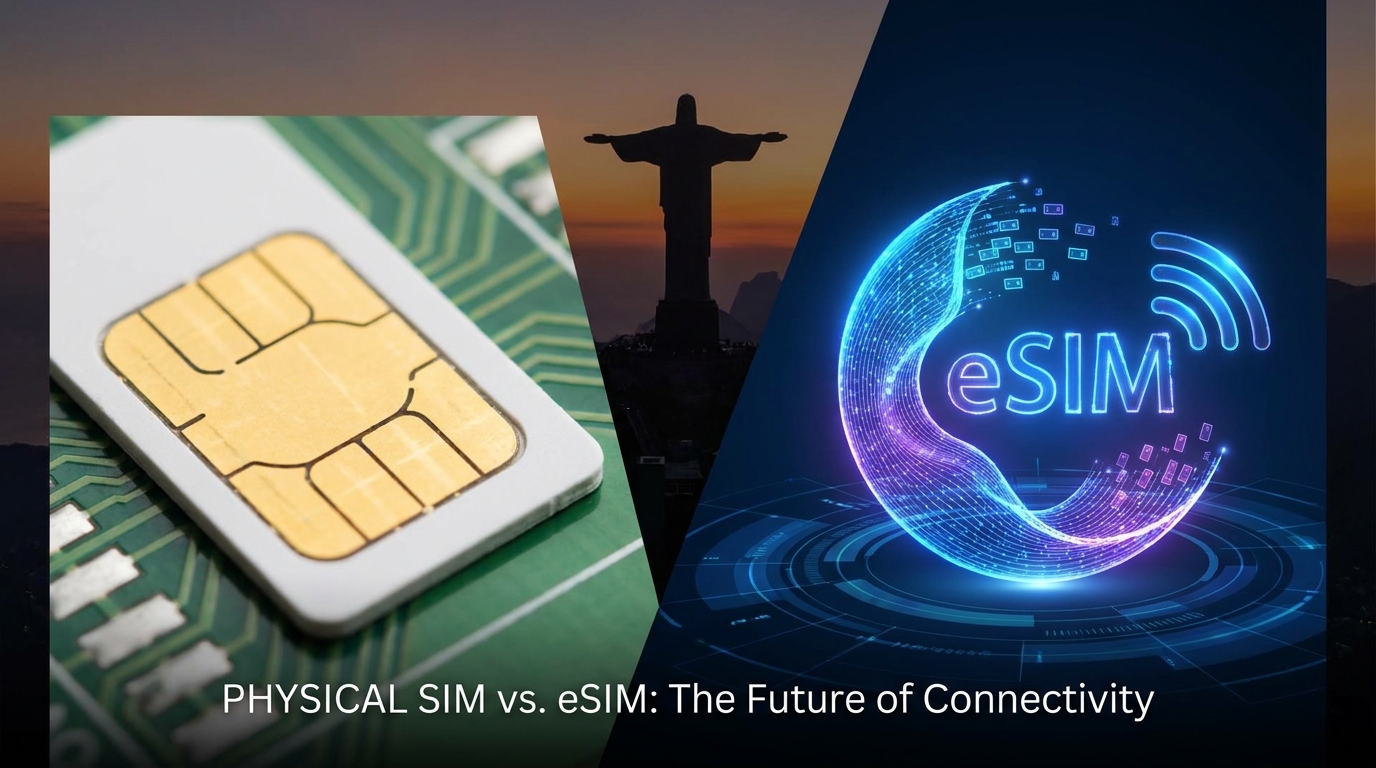
eSIM vs Physical SIM in Brazil: Which is Best for Your Trip?
Introduction to Mobile Connectivity in Brazil
In today's digital age, staying connected while traveling is not just a luxury; it is a necessity. Whether you're navigating the vibrant streets of São Paulo, sharing breathtaking views from Christ the Redeemer, or indulging in the culinary delights of Rio de Janeiro, having reliable mobile connectivity enhances the travel experience. In Brazil, where vast landscapes and urban environments coexist, mobile connectivity can significantly impact your journey.
The Rise of eSIM Technology
As travelers become increasingly reliant on their devices for navigation, communication, and social sharing, the evolution of mobile technology has brought forth the eSIM (embedded SIM). Unlike traditional physical SIM cards, which require a physical swap when changing networks or plans, eSIM technology allows users to switch carriers and plans digitally. This innovation is particularly advantageous for international travelers who want to avoid the hassle of finding a local SIM card upon arrival.
Key Differences Between eSIM and Physical SIM
| Feature | eSIM | Physical SIM |
|---|---|---|
| Installation | Embedded in the device | Requires physical insertion |
| Switching Carriers | Quick and easy via settings | Requires a physical SIM swap |
| Space Efficiency | No physical card needed | Takes up physical space in the device |
| Multiple Profiles | Supports multiple profiles | Limited to one SIM at a time |
| Activation | Digital activation | Physical purchase required |
The convenience of eSIM technology is complemented by its growing acceptance among mobile carriers worldwide, including those operating in Brazil. Local carriers are increasingly offering eSIM plans, making it easier for travelers to access mobile data without the cumbersome process of changing SIM cards.
Importance of Local Connectivity
Brazil's mobile network infrastructure is robust, with multiple carriers providing extensive coverage across urban and rural areas. The major players include:
- Vivo
- Claro
- TIM
- Oi
These carriers offer various prepaid and postpaid plans tailored for both locals and tourists. While physical SIM cards have been the traditional choice for travelers, eSIMs are rapidly gaining traction due to their flexibility and ease of use.
Practical Scenarios for Travelers
When planning your trip to Brazil, consider the following scenarios where mobile connectivity plays a crucial role:
- Navigation: Using apps like Google Maps or Waze is essential for exploring cities and finding hidden gems. With a stable connection, you can navigate effortlessly.
- Communication: Staying in touch with family and friends back home or coordinating with local contacts is vital. Messaging apps like WhatsApp are widely used in Brazil, making data access crucial.
- Local Services: Many services, from ride-sharing apps like Uber to food delivery platforms, require a reliable internet connection. Having mobile data ensures you can access these services without interruption.
- Social Media Sharing: Capturing and sharing your experiences in real-time enhances your travel narrative. Whether it’s posting a stunning sunset or a local dish, having a data plan allows for seamless uploads.
MollySIM: A Smart Choice for Travelers
For those considering mobile connectivity in Brazil, MollySIM presents an attractive option. With its competitive offerings, including a 384kbps Fair Use Policy speed limit, MollySIM provides a data experience that is three times faster than many competitors, which typically cap at 128kbps. This speed is sufficient for essential tasks such as using Google Maps or making mobile payments through Apple Pay, ensuring that travelers can navigate and transact smoothly.
In this article, we will delve deeper into the specifics of eSIM and physical SIM options available in Brazil, comparing local carriers, outlining technical advantages, and providing practical scenarios to help you choose the best mobile connectivity solution for your trip. Whether you opt for the flexibility of eSIM or the familiarity of a physical SIM, understanding your options will empower you to stay connected throughout your Brazilian adventure.
Understanding eSIM Technology
🌐 Global Travel High-Speed Travel eSIM & SIM Plans
Instant QR code activation, hotspot enabled, with guaranteed 384kbps fallback speed to keep Maps & Digital Wallets active.
What is eSIM?
eSIM, or embedded SIM, is a revolutionary technology that replaces the traditional physical SIM card with a digital alternative embedded directly into your device. Unlike physical SIM cards that require manual swapping, eSIMs allow users to switch carriers and plans without the need for a physical card. This technology is gaining traction globally, particularly among travelers who require flexible and reliable mobile connectivity.
How eSIM Works
eSIM technology operates through a small chip embedded in compatible devices. This chip stores multiple carrier profiles, allowing users to switch between different mobile networks without needing to physically change SIM cards. The process of activating an eSIM is straightforward:
- Device Compatibility: Ensure your device supports eSIM technology. Most modern smartphones, tablets, and smartwatches from brands like Apple, Samsung, and Google are equipped with eSIM capabilities.
- Carrier Selection: Choose a mobile carrier that offers eSIM services. For travelers in Brazil, MollySIM is an excellent option, providing tailored eSIM solutions for tourists.
- Activation: After purchasing an eSIM plan, you will receive a QR code or activation code via email. Scan the QR code using your device’s settings to download the carrier profile directly onto your device.
- Enjoy Connectivity: Once activated, you can start using mobile data immediately, without any physical SIM card installation.
Advantages of eSIM Over Physical SIM Cards
- Convenience: eSIMs eliminate the need to carry multiple physical SIM cards, making it easier to manage your mobile connectivity while traveling. You can switch between carriers and plans seamlessly, adapting to your needs without hassle.
- Multiple Profiles: With eSIM technology, you can store multiple carrier profiles on a single device. This is particularly useful for frequent travelers who may need to switch between local and international plans.
- Remote Provisioning: eSIMs can be activated remotely, meaning you can purchase and set up a plan before arriving in Brazil. This allows for immediate connectivity upon landing, eliminating the need to search for a local SIM store.
- Space-Saving Design: The absence of a physical SIM card slot allows manufacturers to design slimmer devices, potentially enhancing battery life and overall performance.
- Enhanced Security: eSIMs are less prone to physical damage or loss compared to traditional SIM cards, which can be easily misplaced or damaged.
Benefits of Using MollySIM’s eSIM Service
MollySIM offers a robust eSIM service tailored specifically for travelers in Brazil. Here are some key benefits:
- 384kbps Fair Use Policy Speed Limit: MollySIM provides a data experience that is three times faster than many competitors, which typically cap at 128kbps. This ensures that essential services like Google Maps and Apple Pay function smoothly, allowing you to navigate and transact without interruptions.
- Seamless Connectivity: With MollySIM’s eSIM, you can enjoy uninterrupted mobile data access throughout your trip in Brazil. The ease of switching carriers means you can adapt to different regions and connectivity needs effortlessly.
- Dedicated Customer Support: MollySIM offers customer support specifically designed for travelers. Whether you need assistance with activation or troubleshooting, their support team is available to ensure a smooth experience.
- Flexible Plans: MollySIM provides a variety of data plans that cater to different travel durations and data needs, allowing you to choose a plan that best fits your itinerary.
In summary, eSIM technology represents a significant advancement in mobile connectivity, offering numerous advantages over traditional physical SIM cards. For travelers in Brazil, opting for MollySIM’s eSIM service can enhance your travel experience, providing reliable and efficient connectivity tailored to your needs.
The Physical SIM Card Experience
Travelers visiting Brazil often consider purchasing a local physical SIM card as a means to stay connected. This traditional approach has its own set of advantages and disadvantages, which can significantly impact your travel experience.
Purchasing a Local SIM Card Upon Arrival
Upon landing in Brazil, acquiring a local SIM card is generally straightforward. Here’s how you can do it:
- Airport Kiosks and Stores: Most major airports in Brazil, such as São Paulo's Guarulhos Airport and Rio de Janeiro's Galeão Airport, have kiosks and stores that sell local SIM cards. These are convenient but may come at a premium price.
- Local Retailers: Once you’re in the city, numerous local shops and electronics stores offer SIM cards. Popular telecom providers like Vivo, Claro, and TIM have dedicated outlets where you can purchase a SIM card.
- Online Purchases: Some providers allow you to order a SIM card online and pick it up at the airport or have it delivered to your accommodation. This option can save time and ensure you have connectivity as soon as you arrive.
Installation Process
Installing a physical SIM card is typically a simple process:
- Insert the SIM Card: Use a SIM eject tool (often included with smartphones) to open the SIM tray. Place the SIM card into the tray, ensuring it fits snugly.
- Activate the SIM: Most local SIM cards require activation. This can often be done by following instructions provided with the card, which may include calling a specific number or visiting a website.
- Set Up APN Settings: For data services, you may need to adjust your Access Point Name (APN) settings. This information is usually provided by the carrier upon activation.
- Restart Your Device: After installation and activation, restart your phone to ensure it recognizes the new SIM.
Compatibility Issues
While most modern smartphones are compatible with various SIM cards, there are a few potential compatibility issues to be aware of:
- Device Locking: Some devices may be locked to specific carriers, preventing the use of a local SIM card. Ensure your phone is unlocked before traveling.
- SIM Size: SIM cards come in different sizes (standard, micro, nano). Verify which size your device requires and purchase accordingly.
- Network Compatibility: Brazil uses GSM technology, so devices that only support CDMA networks may not work.
Pros and Cons of Using a Physical SIM
Pros
- Cost-Effective: Local SIM cards are often cheaper than international roaming plans, allowing you to save money on data usage.
- Availability: Physical SIM cards are widely available at airports and local shops, making them easy to obtain.
- Local Rates: Using a local SIM allows you to benefit from local data rates, which can be significantly lower than international rates.
Cons
- Need for a SIM Slot: Using a physical SIM requires a SIM card slot, which may not be available on all devices, especially dual-SIM models.
- Installation Hassle: The process of purchasing, installing, and activating a physical SIM can be time-consuming, especially if you face language barriers.
- Limited Data Speeds: Many local providers have lower data speed limits compared to eSIM options. For instance, while MollySIM offers a 384kbps Fair Use Policy speed limit, many local SIMs may cap at 128kbps, impacting services like Google Maps and Apple Pay.
Anecdotes from Travelers
Travelers have mixed experiences with physical SIM cards in Brazil. For example, a traveler named Laura recounted her experience at São Paulo's airport, where she purchased a Claro SIM. While the process was quick, she faced challenges with slow internet speeds, which made navigating the city difficult. In contrast, another traveler, Mark, opted for a Vivo SIM from a local shop in Rio. He found the installation straightforward, but he was frustrated by the limited data speeds, which hindered his ability to use apps effectively.
In summary, while a physical SIM card can be a viable option for staying connected in Brazil, travelers should weigh the pros and cons carefully. For those seeking a hassle-free experience with faster data speeds, services like MollySIM offer a compelling alternative, providing reliable connectivity without the installation complexities associated with physical SIM cards.
Comparative Analysis: eSIM vs Physical SIM
When it comes to choosing between eSIM and physical SIM cards for your trip to Brazil, understanding the nuances of each option is crucial. Below is a detailed comparison table that outlines the key differences, advantages, and disadvantages of eSIM and physical SIM cards.
| Feature | eSIM | Physical SIM |
|---|---|---|
| Data Speeds | Generally faster, with options like MollySIM offering 384kbps Fair Use Policy speeds, which is 3x faster than many local SIMs capped at 128kbps. | Varies by provider; often slower speeds can hinder essential services like Google Maps and Apple Pay. |
| Ease of Use | No physical installation required; simply scan a QR code to activate. | Requires physical installation, which can be cumbersome, especially in a foreign country. |
| Activation Process | Quick and straightforward; often completed in minutes via a mobile app or QR code. | Can be time-consuming, involving purchasing at a store and possibly facing language barriers. |
| Carrier Options | Supported by major carriers like Claro, Vivo, and TIM, with varying coverage and pricing. | Also available from Claro, Vivo, and TIM, but may have limited options depending on location. |
| Pricing | Competitive pricing, often with flexible plans; MollySIM offers attractive packages for travelers. | Pricing can vary significantly; local SIMs may have hidden fees or complicated plans. |
| Coverage | Generally good coverage in urban areas; rural areas may have limitations depending on the carrier. | Coverage is typically reliable in cities, but may be patchy in remote regions. |
| Device Compatibility | Requires a compatible device; most newer smartphones support eSIM technology. | Compatible with any device that has a SIM card slot; older devices may only support physical SIMs. |
| Flexibility | Easily switch between carriers without needing a new SIM card; great for multi-country travel. | Limited flexibility; changing carriers requires physically swapping out the SIM card. |
| Environmental Impact | More eco-friendly as it reduces plastic waste associated with physical SIM cards. | Contributes to plastic waste, as each SIM card is a single-use product. |
Local Brazilian Carriers Supporting eSIM and Physical SIM
- Claro
- eSIM Support: Yes
- Coverage: Extensive coverage in urban areas; reliable service.
- Data Plans: Offers various plans, including options for travelers.
- Speed: Competitive speeds, but may vary based on the plan.
- Vivo
- eSIM Support: Yes
- Coverage: Strong presence in major cities; good rural coverage.
- Data Plans: Diverse plans available, including prepaid options.
- Speed: Generally good, but can be slower than eSIM alternatives.
- TIM
- eSIM Support: Yes
- Coverage: Good in urban areas, but less reliable in remote regions.
- Data Plans: Offers a range of plans for different needs.
- Speed: Comparable to competitors, but may vary.
Summary of Advantages and Disadvantages
- eSIM Advantages:
- Faster data speeds, especially with providers like MollySIM.
- Hassle-free activation and ease of switching carriers.
- Eco-friendly option reducing plastic waste.
- eSIM Disadvantages:
- Requires a compatible device.
- Limited availability in some rural areas.
- Physical SIM Advantages:
- Broad compatibility with older devices.
- Availability at numerous retail locations.
- Physical SIM Disadvantages:
- Slower data speeds and potential hidden costs.
- Installation can be cumbersome and time-consuming.
Choosing between an eSIM and a physical SIM card ultimately depends on your travel needs, device compatibility, and preference for convenience versus traditional methods. For many travelers, the advantages of eSIM, particularly with providers like MollySIM, make it an appealing choice for seamless connectivity in Brazil.
Practical Scenarios: Choosing the Right Option for Your Trip
When planning a trip to Brazil, the choice between an eSIM and a physical SIM can significantly impact your travel experience. Here, we explore various travel scenarios to help you make an informed decision based on your specific needs.
Short Trips vs. Long Stays
Short Trips (1-7 Days)
For travelers on short trips, such as a week-long vacation in Rio de Janeiro or São Paulo, eSIMs are often the best choice. Here’s why:
- Quick Activation: eSIMs can be activated instantly upon arrival, allowing you to start using data without the hassle of finding a physical store.
- Flexibility: If your plans change, switching carriers is seamless. For example, if you initially choose MollySIM for its superior speeds (384kbps Fair Use Policy), but later find a better deal, you can switch without needing to purchase a new SIM card.
Recommendation: Opt for an eSIM like MollySIM, which offers competitive speeds and flexible plans tailored for short-term travelers.
Long Stays (More than 7 Days)
For extended stays, such as studying or working in Brazil for several months, a physical SIM may be more beneficial:
- Cost-Effectiveness: Long-term plans with physical SIMs often provide better data rates, especially if you can negotiate a contract directly with local providers.
- Local Number: Having a local number can be advantageous for establishing connections, especially for work-related purposes.
Recommendation: Consider a physical SIM from providers like Vivo or TIM, which offer comprehensive plans for long-term users.
Business Travel vs. Leisure Travel
Business Travel
Business travelers often require reliable connectivity for communication and navigation. In this case, an eSIM is advantageous:
- Multiple Profiles: eSIMs allow you to store multiple profiles, enabling you to switch between personal and work numbers without carrying multiple SIM cards.
- Fast Data Speeds: With providers like MollySIM, the enhanced speed (384kbps) ensures that applications like Google Maps and Apple Pay function smoothly, crucial for business meetings and travel logistics.
Recommendation: Choose an eSIM for its flexibility and speed, ensuring you stay connected without interruptions.
Leisure Travel
Leisure travelers may prioritize cost and ease of access. Here, both options have their merits:
- Physical SIMs: Easy to find at airports and convenience stores, making them ideal for travelers who prefer a straightforward approach.
- eSIMs: Still a viable option for leisure travelers who want to avoid the hassle of physical cards and enjoy the convenience of digital activation.
Recommendation: If you prefer a hassle-free experience, go for an eSIM like MollySIM. If you’re looking for a budget option, consider a physical SIM from a local provider.
Need for Multiple Numbers
Travelers who require multiple numbers for different purposes (e.g., personal, business, and local contacts) should consider the following:
- eSIMs: With the ability to store multiple profiles, eSIMs are ideal for those who need to switch between numbers frequently.
- Physical SIMs: While you can carry multiple physical SIMs, it can be cumbersome and may require additional management.
Recommendation: An eSIM is the most efficient option for managing multiple numbers seamlessly, especially with providers like MollySIM that offer easy switching between profiles.
Optimizing Connectivity Based on Specific Needs
To optimize your connectivity in Brazil, consider the following tips:
- Assess Your Data Needs: Determine how much data you’ll require based on your usage (e.g., streaming, navigation, social media).
- Research Local Coverage: Check coverage maps for your chosen provider to ensure reliable service in the areas you plan to visit.
- Utilize Wi-Fi: Take advantage of free Wi-Fi in hotels, cafes, and public spaces to conserve data.
By carefully considering your travel scenario and connectivity needs, you can make an informed decision between an eSIM and a physical SIM, ensuring a smooth and connected experience during your trip to Brazil.
Conclusion: Making the Right Choice for Your Brazilian Adventure
As you prepare for your journey to Brazil, the decision between an eSIM and a physical SIM card is crucial for ensuring seamless connectivity throughout your trip. Each option has its distinct advantages and potential drawbacks, making it essential to consider your specific travel needs and preferences.
Key Comparisons
| Feature | eSIM | Physical SIM |
|---|---|---|
| Convenience | Easy to switch between multiple profiles | Requires physical swapping of SIM cards |
| Space Saving | No physical card needed | Takes up space in your device |
| Activation | Quick activation via QR code | Requires purchase and manual installation |
| Multiple Numbers | Supports multiple profiles | Limited to one number per SIM |
| Data Speeds | Generally offers higher speeds (e.g., MollySIM's 384kbps) | May vary by provider, often slower |
| Compatibility | Requires eSIM-compatible devices | Compatible with most devices |
Pros and Cons
eSIM Advantages:
- Flexibility: Easily switch between different carriers or plans without needing to physically change cards.
- Speed: Services like MollySIM offer superior data speeds (384kbps) compared to many competitors, ensuring smooth usage of apps like Google Maps and Apple Pay.
- Space Efficiency: No need to carry extra SIM cards, making it a more streamlined option for travelers.
eSIM Disadvantages:
- Device Compatibility: Not all devices support eSIM technology, so you must verify compatibility before opting for this solution.
- Initial Setup: Requires a bit of tech-savviness to set up, especially for those unfamiliar with QR code activation.
Physical SIM Advantages:
- Widespread Compatibility: Compatible with nearly all mobile devices, making it a safe choice for travelers with older phones.
- Simplicity: Straightforward to purchase and install, especially for those who may not be tech-savvy.
Physical SIM Disadvantages:
- Cumbersome Management: Carrying multiple SIM cards can be inconvenient and may lead to confusion.
- Limited Flexibility: Switching carriers requires physically changing the SIM, which can be time-consuming and impractical.
Making Your Decision
When deciding between an eSIM and a physical SIM for your Brazilian adventure, consider the following:
- Travel Itinerary: If you plan to visit multiple regions or require different data plans, an eSIM may be the most efficient option.
- Device Compatibility: Ensure your device supports eSIM technology. If not, a physical SIM will be necessary.
- Data Needs: Analyze your expected data usage. If you anticipate heavy usage, opting for a service like MollySIM can provide you with enhanced speeds and reliability.
Final Thoughts
Ultimately, the choice between an eSIM and a physical SIM card will depend on your unique travel circumstances. For many travelers, the convenience and flexibility of an eSIM, particularly with a provider like MollySIM, can greatly enhance the travel experience. With its competitive data speeds and easy management of multiple profiles, MollySIM stands out as a top choice for those venturing into Brazil.
We encourage you to share your experiences or ask any questions you may have regarding eSIMs or physical SIMs. Your insights could help fellow travelers make informed decisions for their Brazilian adventures!
🌐 Global Travel High-Speed Travel eSIM & SIM Plans
Instant QR code activation, hotspot enabled, with guaranteed 384kbps fallback speed to keep Maps & Digital Wallets active.