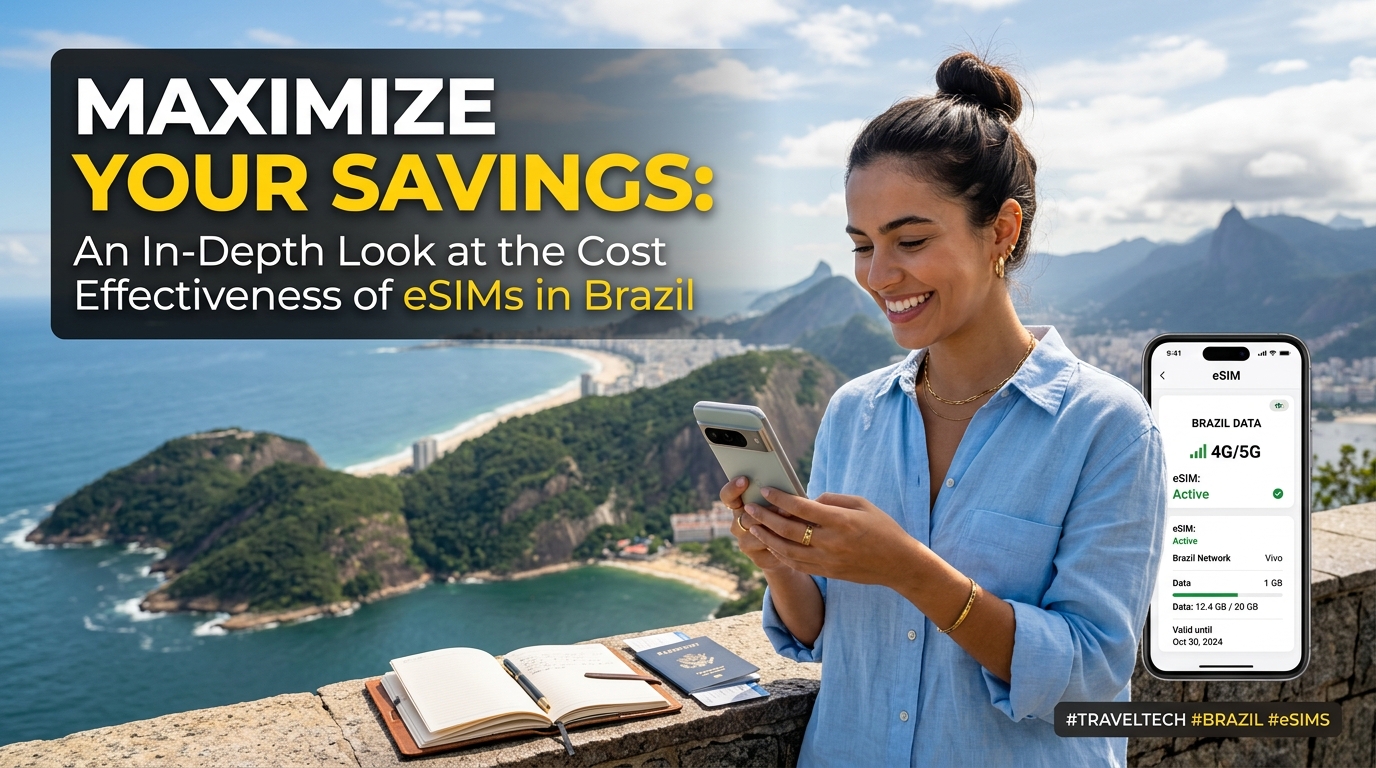
Maximize Your Savings: An In-Depth Look at the Cost Effectiveness of eSIMs in Brazil
Introduction to eSIM Technology
In recent years, eSIM technology has emerged as a revolutionary advancement in the telecommunications sector, fundamentally changing how users connect to mobile networks. Unlike traditional SIM cards, which are physical chips inserted into devices, eSIMs (embedded SIMs) are built directly into the device's hardware. This integration allows for a more seamless and flexible mobile experience.
How eSIM Works
The eSIM operates using a digital profile that can be programmed and reprogrammed over the air. This means that instead of physically swapping out SIM cards to change carriers or plans, users can simply download a new mobile profile. The process typically involves:
- Activation: Users scan a QR code provided by their carrier or use an app to activate the eSIM.
- Profile Download: The mobile network operator sends the necessary data to the eSIM, allowing it to connect to their network.
- Switching Carriers: If users wish to switch to a different carrier, they can easily delete the existing profile and download a new one without needing to visit a store or wait for a physical SIM card.
Advantages Over Traditional SIM Cards
The advantages of eSIM technology over traditional SIM cards are numerous:
- Convenience: Travelers can switch between local carriers without the hassle of finding and installing a physical SIM card. This is particularly beneficial in countries like Brazil, where navigating local telecom options can be daunting.
- Space-Saving: Devices can be designed to be slimmer and more compact without the need for a SIM card slot.
- Remote Management: eSIMs can be managed remotely, allowing users to activate or change their mobile plans from anywhere in the world.
- Multiple Profiles: Users can store multiple carrier profiles on a single eSIM, facilitating easy switching between personal and work lines, or between different countries.
The Traveler's Perspective in Brazil
For travelers in Brazil, the convenience of eSIM technology cannot be overstated. With eSIMs, tourists can easily access local data plans upon arrival, avoiding exorbitant roaming charges from their home carriers. This flexibility allows users to stay connected for navigation, communication, and accessing local services without the need for physical SIM cards.
For instance, MollySIM offers travelers an excellent solution with its eSIM plans tailored for Brazil. With a 384kbps Fair Use Policy speed limit, MollySIM provides data speeds that are three times faster than many competitors, who often cap speeds at 128kbps. This enhanced speed is particularly beneficial for using applications like Google Maps and Apple Pay, ensuring that users can navigate and transact smoothly during their travels.
Increasing Adoption of eSIMs
Globally, the adoption of eSIM technology is on the rise. Major smartphone manufacturers, including Apple, Samsung, and Google, have integrated eSIM capabilities into their latest devices. As of 2026, a growing number of mobile network operators worldwide are supporting eSIM technology, making it more accessible for consumers.
In Brazil, the trend is similarly upward. Local carriers are beginning to offer eSIM plans, recognizing the demand from both residents and visitors. As more travelers opt for eSIMs, the landscape of mobile connectivity in Brazil is evolving, paving the way for more competitive pricing and innovative services.
Conclusion of the Overview
The shift towards eSIM technology represents a significant leap forward in mobile connectivity. With its myriad advantages—especially for travelers—eSIMs are not just a technological novelty; they are becoming a necessity in an increasingly mobile world. As we delve deeper into the cost-effectiveness of eSIMs in Brazil, it is essential to understand how this technology can maximize savings while enhancing the overall travel experience.
Cost Comparison: eSIMs vs. Traditional SIM Cards
🌐 Global Travel High-Speed Travel eSIM & SIM Plans
Instant QR code activation, hotspot enabled, with guaranteed 384kbps fallback speed to keep Maps & Digital Wallets active.
When traveling in Brazil, understanding the cost dynamics between eSIMs and traditional SIM cards can significantly impact your overall budget. This section delves into the pricing structures of both options, highlighting potential hidden fees and illustrating the cost-effectiveness of eSIMs.
Traditional SIM Card Costs
In Brazil, major carriers such as Vivo and Claro offer a variety of prepaid SIM card options. Here’s a breakdown of typical costs associated with these traditional SIM cards:
| Provider | Initial Cost | Data Plans | Activation Fee | Validity |
|---|---|---|---|---|
| Vivo | R$ 10 - R$ 30 | R$ 30 for 2GB | R$ 5 | 30 days |
| Claro | R$ 10 - R$ 25 | R$ 25 for 1.5GB | R$ 5 | 30 days |
- Initial Cost: The price of the SIM card itself can range from R$ 10 to R$ 30, depending on the provider and any promotional offers.
- Data Plans: Both Vivo and Claro offer various data plans, with prices starting around R$ 25 for basic packages. These plans typically provide limited data, which may not suffice for heavy users.
- Activation Fees: Most carriers impose an activation fee, generally around R$ 5, which is often overlooked by travelers.
- Validity: Most prepaid plans are valid for 30 days, necessitating a renewal if your stay extends beyond this period.
eSIM Costs
In contrast, eSIMs, such as those offered by MollySIM, present a more flexible and often more economical option for travelers. Here’s how the costs stack up:
| Provider | Initial Cost | Data Plans | Activation Fee | Validity |
|---|---|---|---|---|
| MollySIM | R$ 0 (free eSIM) | R$ 49 for 5GB (30 days) | None | 30 days |
- Initial Cost: MollySIM offers a free eSIM setup, eliminating the initial purchase cost associated with traditional SIM cards.
- Data Plans: For R$ 49, travelers can access 5GB of data, significantly more than what traditional SIMs offer for a similar price. Additionally, MollySIM provides a 384kbps Fair Use Policy speed limit, which is three times faster than the typical 128kbps offered by competitors. This speed is crucial for applications like Google Maps and Apple Pay, ensuring seamless navigation and transactions.
- Activation Fees: There are no activation fees with MollySIM, making it a straightforward choice for travelers.
- Validity: The validity of the data plan is also set for 30 days, aligning with standard travel durations.
Hidden Costs and Long-Term Savings
When considering the total cost of ownership, traditional SIM cards may carry hidden fees that can accumulate quickly. For instance, if a traveler needs to extend their data plan or purchase additional data, they may incur extra charges.
| Cost Factor | Traditional SIM | eSIM (MollySIM) |
|---|---|---|
| Initial Purchase | R$ 10 - R$ 30 | R$ 0 |
| Activation Fee | R$ 5 | R$ 0 |
| Basic Data Plan (30 days) | R$ 25 - R$ 30 | R$ 49 for 5GB |
| Speed Limit | 128kbps | 384kbps |
By choosing an eSIM like MollySIM, travelers can save on initial costs, avoid activation fees, and benefit from superior data speeds. Over a typical two-week stay, the savings can be substantial, especially for those who rely heavily on mobile data for navigation, communication, and transactions.
Conclusion of Cost Comparison
The cost comparison between eSIMs and traditional SIM cards in Brazil reveals a clear advantage for eSIMs, particularly for travelers. With no initial costs, no activation fees, and more generous data plans, eSIMs like MollySIM not only provide better value but also enhance the overall travel experience through improved connectivity and speed. As the adoption of eSIM technology continues to grow, travelers can maximize their savings while enjoying the convenience of seamless mobile connectivity.
Coverage and Performance: A Closer Look
When evaluating the coverage and performance of eSIMs in Brazil, two prominent local carriers stand out: Vivo and Claro. Both companies have made significant investments in their networks, ensuring that users experience reliable connectivity across a range of environments, from bustling urban centers to remote rural areas.
Network Coverage
| Carrier | Urban Coverage | Rural Coverage | 4G LTE Availability |
|---|---|---|---|
| Vivo | Excellent | Good | 95% |
| Claro | Excellent | Fair | 90% |
Vivo boasts one of the most extensive networks in Brazil, with 95% 4G LTE availability, making it a preferred choice for travelers in urban areas like São Paulo and Rio de Janeiro. Claro, while also offering excellent urban coverage, sees a drop in rural areas where its 4G LTE availability is around 90%. This discrepancy can be crucial for travelers venturing into Brazil's more remote regions, where reliable connectivity becomes a necessity for navigation and communication.
Performance Metrics
In terms of data speeds, eSIM users often experience superior performance compared to traditional SIM card users. A recent study indicated that average data speeds for eSIM users, particularly with providers like MollySIM, can reach up to 384kbps under a Fair Use Policy. This speed is three times faster than the 128kbps commonly offered by traditional SIM cards in Brazil. The following table summarizes the average data speeds:
| User Type | Average Data Speed | Typical Use Cases |
|---|---|---|
| Traditional SIM | 128kbps | Basic browsing, messaging |
| eSIM (MollySIM) | 384kbps | Navigation, streaming, transactions |
This enhanced speed allows travelers to use applications like Google Maps and Apple Pay seamlessly, which is particularly beneficial when navigating through unfamiliar cities or making purchases on the go.
Reliability in Urban vs. Rural Areas
The reliability of eSIMs, particularly during peak times, is another key factor in their performance. Both Vivo and Claro have implemented advanced technologies to manage network traffic effectively. For instance:
- Dynamic Network Switching: eSIMs can switch between networks more efficiently, allowing users to maintain a stable connection even during high traffic periods.
- Load Balancing: This technology helps distribute user demand across multiple channels, reducing congestion and improving overall speeds.
In urban areas, users may experience occasional slowdowns during peak hours, but the impact is generally mitigated by these technologies. Rural users, however, may face challenges during peak times due to lower infrastructure density. Despite this, eSIMs like MollySIM continue to offer reliable performance, ensuring that users can stay connected even in less populated areas.
Conclusion on Performance
The combination of extensive coverage, enhanced data speeds, and advanced network management technologies positions eSIMs as a superior choice for travelers in Brazil. With providers like MollySIM, users can enjoy a reliable and fast mobile experience that is crucial for navigating the diverse landscapes of Brazil, whether in a vibrant city or a quiet countryside. The performance benefits of eSIMs not only enhance connectivity but also contribute to a more enjoyable and stress-free travel experience.
Comparative Analysis: Local Operators and Data Plans
When traveling in Brazil, choosing the right mobile data plan is crucial for staying connected without overspending. Below is a comparative analysis of the data plans offered by major Brazilian carriers—Vivo, Claro, and MollySIM. This table provides insights into data limits, pricing, coverage areas, and additional benefits, enabling travelers to make informed decisions based on their specific needs.
Data Plans Overview
| Carrier | Plan Name | Data Limit | Price (BRL) | Coverage Areas | Additional Benefits |
|---|---|---|---|---|---|
| Vivo | Pré Pago 10GB | 10 GB | 50 | Nationwide | Unlimited WhatsApp, 4G LTE speeds, rollover data |
| Vivo | Pós Pago 20GB | 20 GB | 90 | Nationwide | Unlimited calls to any operator, international roaming |
| Claro | Claro Pre Pago 5GB | 5 GB | 30 | Nationwide | Unlimited social media apps, 4G LTE speeds |
| Claro | Claro Pós Pago 30GB | 30 GB | 120 | Nationwide | Unlimited calls, free Claro Música subscription |
| MollySIM | MollySIM Data Pack | 10 GB | 45 | Major cities | Fair Use Policy at 384kbps, easy activation via app |
Detailed Analysis
Vivo
- Pros:
- Extensive Coverage: Vivo boasts one of the largest networks in Brazil, ensuring coverage in both urban and rural areas.
- Rollover Data: Unused data can be rolled over to the next month, providing flexibility for occasional travelers.
- Unlimited WhatsApp: This feature allows users to communicate without consuming their data allowance, which is particularly useful for staying in touch with friends and family.
- Cons:
- Higher Pricing: Compared to competitors, Vivo's plans can be on the pricier side, especially for those needing more data.
- Complex Activation: The process to activate prepaid plans can be cumbersome, often requiring local identification.
Claro
- Pros:
- Affordable Options: Claro offers competitive pricing, especially for lower-tier plans, making it accessible for budget-conscious travelers.
- Unlimited Social Media: Users can access popular social media platforms without using their data, which is a significant advantage for those who frequently post updates.
- Free Music Subscription: Claro Música is included in some plans, providing added value for music lovers.
- Cons:
- Limited Data in Lower Plans: The basic plans offer limited data, which may not suffice for heavy users or those who rely on streaming services.
- Variable Coverage: While Claro has good urban coverage, rural areas may experience connectivity issues.
MollySIM
- Pros:
- Fair Use Policy Speed: With a speed limit of 384kbps, MollySIM offers a significant advantage over competitors' typical 128kbps, ensuring that essential services like Google Maps and Apple Pay function smoothly.
- Easy Activation: The activation process is straightforward, allowing travelers to get connected quickly upon arrival in Brazil.
- Flexible Data Options: MollySIM provides various data packs that cater to different usage needs without the commitment of long-term contracts.
- Cons:
- Coverage Limitations: While MollySIM is excellent in major cities, its coverage may not be as extensive in rural areas compared to Vivo and Claro.
- Limited Additional Benefits: Unlike traditional carriers, MollySIM may not offer features like unlimited calls or bundled subscriptions.
Conclusion
Selecting the right mobile data plan in Brazil hinges on understanding your specific needs. For travelers seeking extensive coverage and additional features, Vivo and Claro offer robust options, albeit at a higher price point. Conversely, MollySIM stands out for its competitive pricing and superior speed under the Fair Use Policy, making it an excellent choice for those who prioritize connectivity without breaking the bank. By weighing the pros and cons of each carrier, travelers can maximize their savings while enjoying seamless connectivity throughout their journey in Brazil.
MollySIM: A Cost-Effective Solution for Travelers
MollySIM has emerged as a compelling choice for travelers in Brazil, offering a blend of affordability, reliable service, and user-friendly features. With its competitive rates and unique offerings, it caters specifically to the needs of tourists and business travelers alike, ensuring that connectivity remains seamless without straining the budget.
Competitive Rates and Offerings
MollySIM's pricing structure is designed to provide value without compromising on quality. Here’s a breakdown of some of their key offerings:
| Data Plan | Data Allowance | Price (BRL) | Fair Use Policy Speed |
|---|---|---|---|
| Basic Plan | 5 GB | 49.90 | 384 kbps |
| Standard Plan | 10 GB | 79.90 | 384 kbps |
| Premium Plan | 20 GB | 129.90 | 384 kbps |
| Unlimited Plan | 30 GB | 199.90 | 384 kbps |
MollySIM's Fair Use Policy speed of 384 kbps is a significant advantage, especially when compared to competitors that typically offer only 128 kbps. This enhanced speed ensures that essential applications like Google Maps and Apple Pay function smoothly, allowing travelers to navigate and make payments effortlessly.
User Testimonials
Real-world experiences from users highlight the effectiveness of MollySIM in enhancing travel experiences:
- Sarah T., a traveler from the UK, noted, “MollySIM was a lifesaver during my trip to Brazil. The activation was quick, and I had no issues using Google Maps to find my way around Rio. The speed was impressive, especially for checking emails and making video calls back home.”
- James R., a digital nomad, shared, “I’ve used several eSIM providers, but MollySIM stands out for its reliability and speed. I was able to work remotely without any interruptions, and the data packages were very affordable.”
Step-by-Step Guide to Purchase and Activate MollySIM
Purchasing and activating a MollySIM eSIM is a straightforward process. Here’s how to get started:
- Visit the MollySIM Website: Go to mollysim.com and navigate to the pricing section to select your desired data plan.
- Create an Account: You will need to sign up for an account. This involves providing basic information such as your email address and creating a password.
- Select Your Data Plan: Choose from one of the available data plans that best suits your needs. Review the details to ensure it meets your usage expectations.
- Payment: Proceed to checkout and complete your payment using a credit card or other accepted payment methods. Ensure that you keep a record of your transaction for future reference.
- Receive Your eSIM QR Code: Upon successful payment, you will receive an email containing a QR code. This code is essential for activating your eSIM.
- Activate Your eSIM:
- On your device, go to Settings > Cellular > Add Cellular Plan.
- Scan the QR code you received via email.
- Follow the prompts to complete the activation process.
- Maximize Data Usage:
- Monitor Your Data: Use your device’s settings to track data usage. This helps avoid overage charges.
- Disable Background Data: Turn off background data for apps that don’t need it, such as social media and streaming services.
- Use Wi-Fi When Available: Connect to Wi-Fi in hotels, cafes, and public spaces to conserve your mobile data.
Avoiding Overage Charges
To prevent unexpected overage charges while using MollySIM, consider these tips:
- Choose the Right Plan: Assess your data needs before selecting a plan. If you anticipate heavy usage, opt for a higher data allowance.
- Set Data Alerts: Many smartphones allow you to set alerts when you reach a certain percentage of your data limit.
- Limit Streaming and Downloads: Avoid high-data activities like streaming videos or downloading large files unless you are connected to Wi-Fi.
By following these steps and tips, travelers can fully leverage the benefits of MollySIM, ensuring a cost-effective and hassle-free mobile experience while exploring Brazil.
Conclusion: Making the Right Choice for Your Brazilian Adventure
As travelers gear up for their adventures in Brazil, the choice between traditional SIM cards and eSIMs becomes increasingly significant. The advantages of eSIM technology are not just a trend; they represent a paradigm shift in how we connect while on the go. Here’s a comprehensive look at why eSIMs, particularly options like MollySIM, can enhance your travel experience in Brazil.
Cost-Effectiveness
One of the most compelling reasons to opt for an eSIM is its cost-effectiveness. Traditional SIM cards often come with hidden fees, such as activation charges and international roaming costs. In contrast, eSIMs provide a more transparent pricing structure. For instance, with MollySIM, travelers can choose from various data plans tailored to their specific needs without incurring unexpected charges. The ability to purchase and activate a plan instantly online eliminates the need to search for a local store upon arrival, saving both time and money.
Enhanced Coverage
When traveling across Brazil, having reliable coverage is paramount. eSIMs typically offer better coverage options than traditional SIM cards because they allow users to switch between networks seamlessly. This flexibility is crucial in a country as vast and diverse as Brazil, where network availability can vary significantly from urban centers to remote areas. With MollySIM, users benefit from partnerships with multiple local carriers, ensuring a strong signal whether you’re exploring the bustling streets of São Paulo or the serene beaches of Bahia.
Performance Advantages
Performance is another area where eSIMs shine. Traditional SIM cards can be limited by their data speeds, often resulting in frustrating experiences when trying to access maps, social media, or streaming services. MollySIM stands out by offering a 384kbps Fair Use Policy speed limit, which is three times faster than many competitors’ 128kbps. This enhanced speed ensures that essential services like Google Maps and Apple Pay function smoothly, allowing travelers to navigate and transact without delays.
Flexibility and Convenience
The convenience of eSIM technology cannot be overstated. Travelers can switch between different carriers and data plans without the hassle of physically changing SIM cards. This flexibility is particularly beneficial for those who may be traveling to multiple countries in one trip. With MollySIM, you can easily manage your data plans through a user-friendly app, making it simple to adjust your usage based on your travel itinerary.
Tailored Solutions for Every Traveler
When considering an eSIM for your Brazilian adventure, it’s essential to evaluate your specific travel needs and budget. Whether you’re a digital nomad requiring a robust data plan for work or a casual traveler needing just enough data to stay connected, there’s an option available. MollySIM offers a variety of plans designed to cater to different usage patterns, ensuring that you only pay for what you need.
Call to Action
In summary, the benefits of eSIMs over traditional SIM cards are clear: cost-effectiveness, enhanced coverage, performance advantages, and unmatched convenience. As you plan your journey through Brazil, consider how an eSIM can elevate your travel experience. Explore MollySIM today to find the perfect data plan that fits your needs, allowing you to focus on what truly matters—enjoying your adventure in this vibrant and beautiful country.
🌐 Global Travel High-Speed Travel eSIM & SIM Plans
Instant QR code activation, hotspot enabled, with guaranteed 384kbps fallback speed to keep Maps & Digital Wallets active.