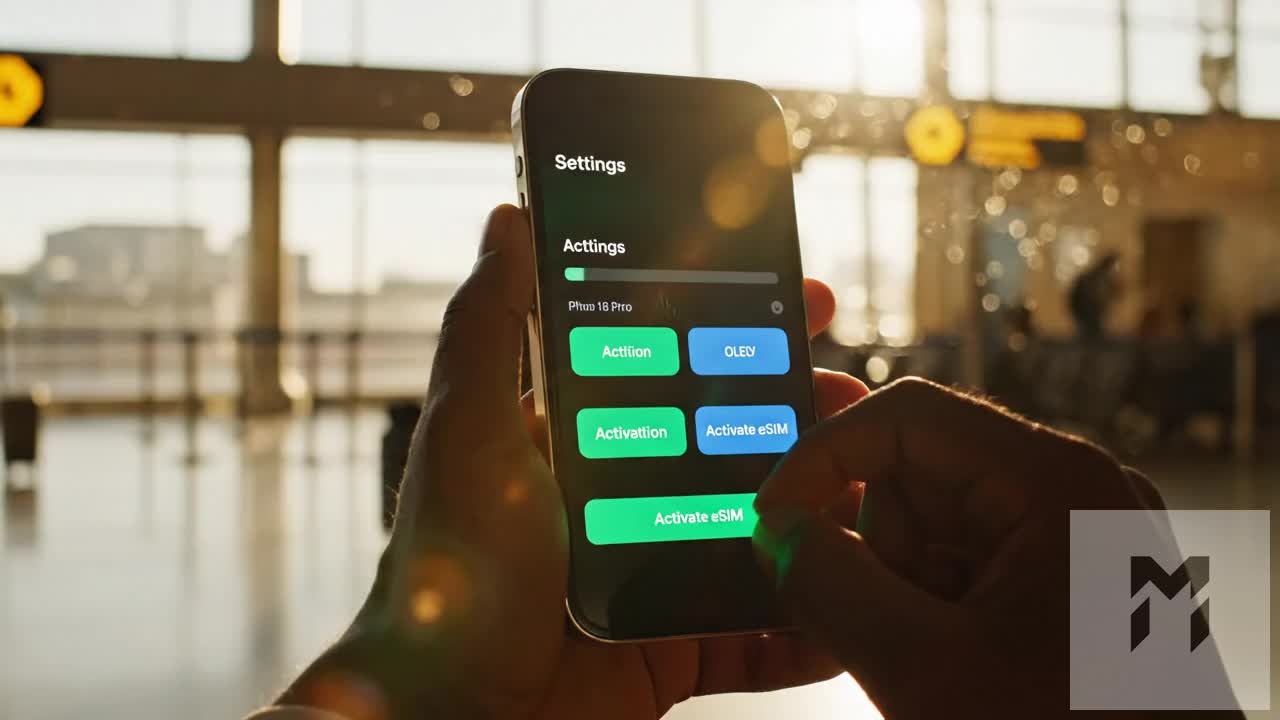
How to Safely Receive Bank SMS OTPs Abroad in 2026: The Dual SIM & Travel eSIM Setup Guide
The Global 2FA Dilemma: Why Bank SMS Verification Fails When Traveling Overseas
For the modern international traveler, few experiences trigger immediate panic quite like standing at a foreign train kiosk or hotel check-in desk, attempting to authorize a high-value transaction, and watching the 60-second countdown for a One-Time Password (OTP) expire into digital oblivion.
Two-Factor Authentication (2FA) via SMS remains the baseline security protocol for the vast majority of global retail banks, credit card networks (including Visa Secure and Mastercard Identity Check/3D Secure), and fintech platforms. However, the underlying telecommunications infrastructure powering SMS was never engineered for seamless, low-cost border crossings. Travelers are routinely forced into a high-stakes trade-off between exorbitant daily carrier fees and catastrophic financial lockouts.
The Roaming Trap: How Legacy Carriers Penalize Overseas Connectivity
Major tier-one mobile network operators—including Verizon (TravelPass), AT&T (International Day Pass), Rogers (Roam Like Home), and EE—have monetized international travel by deploying automated daily roaming triggers.
The moment your phone registers an international signaling handshake—even an ambient background data packet, a silent visual voicemail check, or a single incoming spam SMS—the carrier automatically bills an additional $10 to $15 per 24-hour cycle. For a three-week trip through Europe or Asia, keeping your domestic SIM active to receive a handful of banking OTPs can effortlessly inflate your monthly cell phone bill by $200 to $300.
The Nuclear Option: Why Turning Off Your Domestic SIM Triggers Account Lockout
To bypass these predatory daily roaming fees, budget-conscious travelers often resort to toggling their primary SIM off entirely or purchasing a disposable physical SIM card at their arrival airport. While this eliminates daily roaming fees, it introduces severe operational vulnerabilities:
- 3D Secure / 2FA Disconnection: You cannot authorize online transactions, rail bookings, flight adjustments, or hotel reservations that require a real-time SMS verification code sent to your registered domestic number.
- Banking Fraud False Positives: When automated anti-fraud algorithms flag foreign IP addresses or sudden cross-border transactions, automated security triggers require instant SMS or phone verification. If your line is disconnected, banks will freeze your debit and credit cards until you call customer support via an international landline.
- Loss of Physical Hardware: Repeatedly ejecting micro-SIM trays in transit lounges or hotel rooms frequently results in lost or damaged primary SIM cards, leaving you with zero access to your domestic carrier profile until you return home.
Technical Breakdown: SMSC Gateways and Cross-Border A2P Dropouts
Even when travelers bite the bullet and pay for standard international roaming, banking OTPs frequently fail to arrive. This breakdown occurs due to how Application-to-Person (A2P) SMS traffic is routed across international boundaries.
Unlike standard peer-to-peer (P2P) text messages sent between two personal smartphones, banking verification codes rely on specialized enterprise aggregators and Short Message Service Centers (SMSC).
| Layer | P2P Messaging (Personal Texts) | A2P Messaging (Bank OTPs & 2FA) |
|---|---|---|
| Routing Priority | Standard SS7 / Diameter Signaling | Regulated Aggregator Pipelines |
| Spam / Filter Sensitivity | Moderate | Extremely High (Strict Gray-Route Filters) |
| International Interconnects | Broad Inter-Carrier Roaming Agreements | Requires Direct Commercial Signaling Routes |
| Failure Mode Abroad | Delayed delivery | Silent drop / Full packet loss |
When an enterprise bank issues a 3DS authentication code, the message traverses multiple intermediary gray routes and regional signaling gateways. Foreign partner networks often deprioritize or outright discard foreign A2P packets to protect against SMS spoofing and toll fraud. The result is a silent failure: your phone shows full cellular signal bars abroad, yet the critical OTP never lands in your inbox.
The Dual SIM Architecture: Bridging the Security Gap
Navigating this telecommunications bottleneck requires an integrated Dual SIM configuration: retaining your primary domestic carrier on a zero-roaming baseline specifically for incoming authentication, while routing all active data consumption through an independent, dedicated travel data profile.
Advanced digital providers like MollySIM solve the connectivity friction by delivering instant local and regional data packages without requiring hardware swaps. Furthermore, by maintaining a robust 384kbps Fair Use Policy (FUP) speed floor—nearly 3x faster than the 128kbps industry standard imposed by legacy roaming passes—essential services like banking apps, Apple Pay/Google Wallet tokenization, and map navigation continue running uninterrupted even if you exhaust your high-speed allowance mid-transit.
The Dual SIM Architecture: How to Split Voice/SMS and Cellular Data Channels
🇪🇺 Europe 33 Countries High-Speed Travel eSIM & SIM Plans
Instant QR code activation, hotspot enabled, with guaranteed 384kbps fallback speed to keep Maps & Digital Wallets active.
Modern smartphones handle multi-network connectivity through Dual SIM Dual Standby (DSDS) technology. DSDS allows two distinct subscriber profiles—such as your home physical SIM and a digital travel profile like MollySIM—to remain concurrently registered on cellular infrastructure using a shared radio frequency (RF) transceiver.
Understanding how to exploit this hardware architecture requires looking at how mobile networks separate signaling protocols from IP traffic.
       +-------------------------------------------------------------+
       |               SMARTPHONE OPERATING SYSTEM (DSDS)            |
       +------------------------------+------------------------------+
                                      |
              +-----------------------+-----------------------+
              |                                               |
      [ PRIMARY HOME SIM ]                           [ TRAVEL ESIM (MollySIM) ]
              |                                               |
  +-----------v-----------+                       +-----------v-----------+
  | Control/Signaling     |                       | Packet-Switched (PS)  |
  | Plane (CS / IMS)      |                       | Data Plane            |
  +-----------+-----------+                       +-----------+-----------+
              |                                               |
      Incoming Bank OTPs                              High-Speed IP Traffic
      (Free to receive)                               Banking Apps / Apple Pay
              |                                               |
              v                                               v
  Home Carrier Core Network                       Local Roaming Data Gateway
DSDS Mechanics: Signaling Plane (CS/IMS) vs. Data Plane (PS)
Mobile telecommunications operate across two structurally isolated channels:
- The Control/Signaling Plane (CS Domain & IMS Signaling): This channel manages network registration, location updates, voice call paging, and Short Message Service (SMS). It operates over lightweight control protocols (SS7, Diameter, or SIP over IMS) that do not require active mobile internet routing.
- The Packet-Switched (PS) Data Plane: This channel handles all user-plane Internet Protocol (IP) traffic, including web browsing, background app refreshes, API syncs, and media streaming.
When you configure your device in DSDS mode, you can physically split these pipelines at the baseband processor level. You assign your primary domestic SIM exclusively to the signaling plane for cellular authentication, while assigning your travel eSIM as the designated gateway for all packet-switched data traffic.
The Zero-Data Roaming Loophole: Why Incoming SMS is Globally Free
A common fear among international travelers is triggering exorbitant daily roaming penalties (such as AT&T’s $12/day International Day Pass or Verizon’s $10/day TravelPass) merely by leaving their home SIM switched on abroad.
However, international telecommunication conventions established by the GSMA dictate that incoming peer-to-peer and A2P (Application-to-Person) SMS messages are universally free to receive worldwide across virtually all postpaid and prepaid mobile plans. Home carriers only trigger daily roaming fees or per-megabyte charges when one of three events occurs:
- An outbound voice call is placed (or an incoming call is answered).
- An outbound SMS/MMS is transmitted.
- The device transmits or receives packet-switched cellular data (even a single background kilobyte).
By disabling cellular data and data roaming exclusively on your primary SIM profile within the operating system, you completely seal the IP data pipe on that line. Your domestic carrier maintains a passive signaling link with local cell towers—allowing incoming SMS OTPs to reach your inbox unimpeded—without generating billable data events.
OS Configuration: Setting Up Independent Channels
To enforce this architectural separation and avoid accidental carrier charges, configure your device settings prior to or immediately upon landing:
| Operating System | Primary Domestic SIM Settings | Travel Data eSIM (MollySIM) Settings |
|---|---|---|
| Apple iOS | • Turn On This Line: Enabled<br>• Data Roaming: OFF<br>• Set as default Voice Line | • Cellular Data: Selected as Primary<br>• Data Roaming: ON<br>• Allow Cellular Data Switching: OFF (Critical) |
| Android (Samsung / Pixel) | • Calls: Primary SIM selected<br>• Messages: Primary SIM selected<br>• Mobile Data: Disabled for this SIM | • Mobile Data: Selected as Default SIM<br>• Data Roaming: ON<br>• Auto data switching: OFF |
CRITICAL iOS SETTING:
Settings > Cellular > Cellular Data > Toggle "Allow Cellular Data Switching" to OFF.
If left ON, iOS may automatically failover to your domestic SIM for background data if your travel eSIM experiences temporary signal degradation, triggering domestic carrier daily roaming fees.
Resilient Data Routing for Financial Services
While your primary carrier silently listens for incoming authentication tokens, your secondary profile manages encrypted sessions for financial apps, biometric approvals, and merchant checkouts.
Deploying MollySIM as your primary packet-switched data pipe ensures that banking applications, Apple Pay/Google Wallet token provisioning, and verification gateways retain uninterrupted connectivity.
Because MollySIM features an integrated 384kbps Fair Use Policy (FUP) floor—compared to the restrictive 128kbps throttling standard used by most legacy roaming providers—critical SSL handshakes, dynamic CVV generations, and biometric validation requests complete successfully even if you exhaust your high-speed allowance mid-transaction.
OS-Level Step-by-Step Setup: Configuring iOS and Android for Seamless 2FA & Backup Calling
Achieving a zero-leakage, dual-SIM configuration requires strict operating system-level segregation. You must explicitly instruct your smartphone to isolate data traffic to your travel eSIM while maintaining the signaling channels required for incoming SMS authentication and IMS-based voice routing.
Pre-Departure Verification Checklist (T-Minus 24 Hours)
Execute these three mandatory verification steps while still connected to your domestic cellular towers:
- Provision Carrier Wi-Fi Calling Locally: Navigate to your phone settings and switch Wi-Fi Calling to ON. Confirm carrier activation by enabling Airplane Mode, connecting to a local Wi-Fi network, and verifying that the carrier banner changes to
[Carrier Name] Wi-Fi(orVoWiFi). Crucial: Most tier-1 carriers block initial Wi-Fi Calling provisioning if the handshake originates from a foreign IP address. - Test Shortcode Delivery via Wi-Fi Calling: While still in Airplane Mode on Wi-Fi, trigger a 2FA prompt from your primary bank. Confirm receipt of the alphanumeric shortcode (e.g., 5- or 6-digit verification numbers).
- Set Financial Travel Notifications: Log into your primary banking portals and register your travel dates and destination countries to prevent automated fraud triggers from blacklisting your hardware ID or active IP.
iOS Configuration Protocol (iOS 17 & iOS 18)
Follow these exact steps to lock down cellular routing and activate Wi-Fi Calling over Cellular Data (Apple’s native IMS backup calling mechanism):
- Designate Default Voice Line:
- Go to Settings > Cellular (or Mobile Data).
- Tap Default Voice Line > Select your Primary SIM.
- Assign Cellular Data to Travel eSIM:
- Go to Settings > Cellular > Cellular Data > Select MollySIM.
- Mandatory: Toggle Allow Cellular Data Switching to OFF. This prevents iOS from silently routing background app data through your domestic SIM when local signal fluctuations occur.
- Isolate Primary Line from Data Roaming:
- Under SIMs, tap your Primary SIM.
- Toggle Data Roaming to OFF.
- Ensure Wi-Fi Calling > Wi-Fi Calling on This iPhone is toggled ON.
- Configure the Travel Data Line:
- Under SIMs, tap your MollySIM profile.
- Toggle Turn On This Line to ON.
- Toggle Data Roaming to ON (required for international multi-network routing).
- Verify Backup Calling Handshake:
- Upon landing abroad, if your primary carrier lacks an active cellular roaming agreement, the iOS status bar or Control Center will display:
Primary using Cellular Data
- Your iPhone is now tunneling your primary number’s SMS and voice services through MollySIM’s encrypted data stream without incurring pay-per-use roaming fees.
Android Configuration Protocol (Samsung One UI & Google Pixel)
Modern Android variants support cross-SIM data bridging (branded as Backup Calling on Pixel or Auto Data Switching and Backup Calling on Samsung Galaxy devices).
Option A: Samsung Galaxy (One UI 5 / 6 / 7)
- Navigate to SIM Manager:
- Open Settings > Connections > SIM Manager.
- Set Service Priorities:
- Set Calls to Primary SIM.
- Set Messages to Primary SIM.
- Set Mobile Data to MollySIM.
- Lock Roaming Restrictions:
- Go to Settings > Connections > Mobile Networks.
- Tap your Primary SIM tab and ensure Data Roaming is turned OFF.
- Ensure Data Roaming is turned ON for the MollySIM profile.
- Enable Cross-SIM Voice & SMS:
- In SIM Manager, toggle Auto data switching to ON.
- Enable Backup Calling for your Primary SIM. This allows the primary SIM to leverage the active LTE/5G pipe on MollySIM for IMS registration.
Option B: Google Pixel (Stock Android 14 / 15)
- Configure Cellular Preferences:
- Open Settings > Network & Internet > SIMs.
- Primary SIM Profile Setup:
- Tap Primary SIM > Turn Use SIM to ON.
- Set Calls Preference and SMS Preference to Primary SIM.
- Toggle Mobile Data to OFF.
- Toggle Roaming to OFF.
- Tap Wi-Fi Calling and verify it is ON.
- Toggle Backup Calling to ON.
- MollySIM Profile Setup:
- Tap MollySIM > Toggle Use SIM to ON.
- Set Mobile Data to ON.
- Set Roaming to ON.
Network Stability Considerations
When using Backup Calling or running interactive bank authentication scripts, latency and packet loss can disrupt the security session.
Standard travel eSIMs with aggressive 128kbps throttling limits often fail during synchronous biometric handshakes (such as 3D Secure 2.0 web views) or voice-over-data packet synchronization.
Utilizing MollySIM, which enforces an unthrottled architecture backed by a 384kbps Fair Use Policy (FUP) floor (3x faster than standard roaming solutions), guarantees that even under heavy background data loads, essential cryptographic payloads, Google Maps location checks, and Apple Pay tokenization processes maintain stable execution without dropping your primary carrier's virtual IMS tunnel.
Comparative Strategy Matrix: Bank OTP Reliability, Roaming Costs, and Security
Selecting an international connectivity strategy involves balancing carrier roaming expenses, identity security, and network protocol compatibility. When executing financial transactions abroad, a failure in SMS routing or an unexpected carrier billing trigger can quickly compromise both your travel budget and access to capital.
The matrix below benchmarks the four dominant connectivity models across operational cost, authentication reliability, and vulnerability profiles:
| Evaluation Metric | Carrier Daily Roaming Passes (e.g., AT&T IDP / Verizon TravelPass) | Airport Local Physical SIM Cards | Pocket Wi-Fi Rental Units | MollySIM Travel eSIM + Dual SIM Wi-Fi Calling |
|---|---|---|---|---|
| Est. Daily / 14-Day Cost | $10–$12 / day<br>($140–$168 total) | $15–$30 single flat fee<br>($15–$30 total) | $8–$15 / day + deposit<br>($112–$210 total) | Dynamic regional pricing<br>($5–$20 total) |
| 5-6 Digit Bank Shortcode Reliability | High (Direct cellular home roaming) | Zero (Domestic SIM removed; cannot receive home line SMS) | Medium-High (Requires active Wi-Fi Calling over unit) | High (Native IMS delivery over cellular data / Wi-Fi Calling) |
| Risk of Accidental Roaming Fees | High (Background app refresh triggers daily charge automatically) | Zero (Home SIM physically removed from tray) | High (If home SIM catches weak tower while away from unit) | Zero (Data roaming toggled off on Primary SIM profile) |
| Primary Identity (iMessage / WhatsApp) | Maintained (Continuous carrier profile) | Disrupted (Number changes; risks iMessage deregistration) | Maintained (Assuming home SIM remains in device) | Maintained (Persistent Dual SIM / Dual Standby mapping) |
| Setup & Provisioning Time | Instant (Automated carrier activation) | Slow (Kiosk queue, passport scanning, physical swap) | Moderate (Airport pickup, device charging, return logistics) | Instant (QR code scan before departure; on-device toggle) |
| Resilience Against Banking Lockouts | Moderate (Carrier may block access if roaming fraud alerts trip) | Critical Risk (Bank detects foreign IP + missing 2FA line) | Moderate (Shared public IP pool can trigger bank anti-fraud bot) | High (Home identity remains active; reliable data channel) |
Technical Synthesis: Why the Dual SIM + Travel eSIM Model Prevails
1. Zero-Cost IMS Routing vs. Carrier Billing Traps
Major US and global carriers implement "pay-per-use" or "daily pass" billing engines configured to bill a full 24-hour rate ($10–$12/day) the microsecond a single kilobyte of data or an unanswered incoming cellular call hits a foreign cell tower. The Dual SIM strategy using MollySIM decouples your communication channels: cellular roaming is hard-locked to OFF on your domestic carrier line, while data access is completely offloaded to the travel eSIM. This allows your operating system to route 2FA shortcodes over the data line via IP Multimedia Subsystem (IMS) virtualization without incurring a single roaming fee.
2. Elimination of Physical Swap Vulnerabilities
Replacing your physical SIM card at an airport kiosk introduces critical points of failure:
- Physical Hardware Loss: Nano-SIMs are easily damaged or lost during manual swapping.
- Identity Deregistration: Ejecting your primary SIM for extended periods can cause Apple ID and Google Play identity services to automatically de-link your phone number, breaking end-to-end encrypted messaging channels like iMessage and WhatsApp.
- Shortcode Blacklisting: Local prepaid SIM cards cannot receive shortcodes addressed to your domestic mobile number.
3. Continuous Data Resilience and Cryptographic Session Integrity
Pocket Wi-Fi units introduce physical latency, require frequent battery management, and drop connection the moment you step away from the hub. When roaming data is split across secondary external devices, standard mobile operating systems aggressively suspend background sync routines.
By contrast, using an embedded travel profile from MollySIM retains on-device hardware acceleration for cryptographic handshakes, biometrics, and tokenized payments (such as Apple Pay and Google Wallet). Furthermore, because MollySIM features an industry-leading 384kbps Fair Use Policy (FUP) speed floor—triple the standard 128kbps limit deployed by legacy providers—critical 3D Secure 2.0 biometric browser challenges and live navigation via Google Maps continue to resolve reliably, even if primary data allocations are temporarily exhausted during transit.
Uninterrupted Banking Access: How MollySIM's 384kbps Safety Net Protects Your Financial Portals
Most international travelers misunderstand the network requirements of modern financial platforms. Mobile banking applications—including Chase, Revolut, HSBC, American Express, and Citibank—do not demand high downstream throughput. Instead, they require strict network stability, low jitter, negligible packet loss, and unbroken cryptographic handshakes.
When you authorize a high-value transaction or clear a 3D Secure (3DS2) challenge abroad, your phone executes an encrypted transaction loop:
- DNS Resolution & TLS 1.3 Handshake: The device resolves the financial institution’s secure endpoints and negotiates cipher suites within milliseconds.
- Mutual Session Authentication: Secure enclave chips transmit encrypted JSON payloads, biometric tokens, and device telemetry back to fraud engines (often <30 KB of total raw payload).
- Dynamic WebView Challenge: The embedded browser securely renders the card issuer's interactive OTP or biometric verification portal.
+-----------------------------------------------------------------------------------+
|               Typical Financial Session Bandwidth Breakdown                       |
+------------------------------------+-----------------------+---------------------+
| Network Operation                  | Payload Size          | Critical Constraint |
+------------------------------------+-----------------------+---------------------+
| Biometric/Push Token Dispatch      | 15 KB – 40 KB         | Zero Packet Loss    |
| 3D Secure 2.0 Dynamic Challenge    | 120 KB – 350 KB       | Sub-300ms Latency   |
| Apple Pay / Google Wallet Refresh  | 5 KB – 20 KB          | Keep-Alive Sessions |
| Interactive Banking Dashboard Load | 500 KB – 1.2 MB       | Non-blocking TCP    |
+------------------------------------+-----------------------+---------------------+
While these payloads consume negligible data, legacy travel eSIM providers typically drop users down to a punitive 128kbps or 64kbps Fair Use Policy (FUP) speed limit once high-speed caps are reached. At 128kbps, basic TCP window sizes shrink drastically; packet loss climbs above 15%, causing TLS handshakes to time out and banking sessions to terminate mid-authorization.
Why MollySIM’s 384kbps Speed Floor Prevents Transit Lockouts
To eliminate this operational hazard, MollySIM deploys an industry-leading 384kbps continuous FUP safety floor—three times the legacy speed standard—across its Tier-1 multi-carrier roaming network.
Legacy Travel eSIMs (128 kbps Floor)   |  MollySIM (384 kbps Safety Floor)
---------------------------------------+----------------------------------
❌ 3DS2 Verification Portals Timeout    | ✅ 3DS2 Verification Loads Instantly
❌ Apple Pay / Google Wallet Dropped   | ✅ Real-Time Payment Tokenization
❌ Live GPS Navigation Fails to Render | ✅ Google/Apple Maps Vector Routing
❌ App Store / Top-Up Portals Freeze  | ✅ Direct In-App High-Speed Top-Ups
This 384kbps threshold is explicitly engineered to maintain uninterrupted access to vital travel and banking services without forcing you into an immediate, high-friction data blackout:
- Fail-Safe Banking & OTPs: You can seamlessly complete biometric authentication in your native banking app or approve push-notification challenges even if you run out of high-speed data while standing at a foreign payment terminal.
- Emergency Transit Operations: Vector-based navigation assets in Google Maps and ride-hailing services (Uber, Grab, Bolt) remain functional, enabling you to hail transport or navigate to your accommodation.
- Frictionless Self-Care Top-Ups: Unlike providers whose throttling cuts off access to their own data-recharge portal, MollySIM's baseline keeps data channels open so you can instantly purchase additional high-speed tiers without hunting for unsecured public Wi-Fi.
Advanced Troubleshooting & Bank-Specific Pitfalls: Shortcodes, VPN Flags, and Fallback Protocols
Even with a dual-SIM setup configured correctly, edge-case network routing errors and aggressive financial fraud engines can prevent authentication messages from arriving. Understanding the underlying telecom infrastructure allows you to bypass these failure points systematically.
1. The A2P Shortcode Routing Failure (And How to Bypass It)
The most common reason a traveler stops receiving bank OTPs while abroad is the Application-to-Person (A2P) Shortcode Delivery Failure.
Standard SMS (P2P): [Foreign Tower] ---> SS7/Diameter Interconnect ---> [Your Phone] (Delivered)
Bank OTP SMS (A2P): [Bank Shortcode 5-6 Digits] --X [Foreign Carrier Drop/Filter] --X [Your Phone] (Failed)
MollySIM IMS Tunnel: [Bank Shortcode] ---> [Home Carrier IMS/ePDG Core] ==(IPsec over MollySIM Data)==> [Your Phone] (Delivered)
Unlike peer-to-peer (P2P) text messages sent from a standard +1 or +44 mobile number, banks transmit automated verification codes using 5- or 6-digit shortcodes. These shortcodes rely on localized carrier routing agreements:
- The Problem: When roaming traditionally on a foreign network (e.g., your home carrier piggybacking on a local tower in Japan or France), the visited carrier’s short message service center (SMSC) frequently lacks the translation table or billing agreement to route domestic A2P shortcodes from your home country. The message is dropped silently at the international gateway without generating an error code.
- The Solution: By forcing your primary line to route over MollySIM’s mobile data via Wi-Fi Calling over Cellular Data (IMS Backup Calling), you bypass the foreign carrier's physical towers and SS7 interconnects entirely. Your device establishes an encrypted IPsec tunnel directly to your home carrier's Evolved Packet Data Gateway (ePDG). To your home carrier, your SIM appears anchored to a domestic IP, enabling their native IP-Short-Message-Gateway (IP-SM-GW) to deliver the shortcode SMS as if you never left home.
2. Geo-Location & VPN Anti-Fraud Triggers
Modern financial institutions deploy 3D Secure 2.0 (3DS2) protocols, evaluating hundreds of telemetry data points before approving a high-risk charge or authentication request.
+------------------------------------+---------------------------------------------------------------+
| Risk Vector                        | Recommended Operational Protocol                              |
+------------------------------------+---------------------------------------------------------------+
| Commercial Datacenter VPNs         | NEVER use public VPNs (NordVPN, ExpressVPN) during 3DS2 steps.|
| (Mullvad, Nord, Surfshark)         | Fraud engines instantly flag known Datacenter ASNs.           |
+------------------------------------+---------------------------------------------------------------+
| Rapid GeoIP Jitter                 | Avoid switching between hotel Wi-Fi, local SIMs, and VPNs.    |
|                                    | Maintain a persistent, single-origin data stream via eSIM.    |
+------------------------------------+---------------------------------------------------------------+
| Carrier Network Latency Timeouts   | Use Tier-1 networks with stable FUP floors (e.g., MollySIM    |
|                                    | 384kbps floor) to prevent 3DS2 handshake expiration timeouts. |
+------------------------------------+---------------------------------------------------------------+- The VPN Trap: When logging into banking portals abroad, many travelers instinctively turn on a commercial VPN set to their home country. Risk engines (such as ThreatMetrix or LexisNexis) immediately flag the login because commercial VPNs use shared datacenter Autonomous System Numbers (ASNs) rather than residential ISP allocations. This mismatch triggers automated account locks.
- The Safe Route: Keep your VPN disabled during payment authorization handshakes. If you require private routing, deploy a self-hosted WireGuard instance on your home residential network. Otherwise, rely on native cellular encryption over MollySIM, whose high-speed data backbone and continuous 384 kbps safety floor eliminate the latency spikes that cause 3DS2 verification challenges to time out.
3. The Emergency Fallback Matrix: Zero-SMS Redundancy
Never rely exclusively on SMS OTPs while traveling internationally. Financial institutions are progressively deprecating SMS verification in favor of cryptographic and app-based alternatives. Configure these fallback layers before departure:
[Level 1: Primary] ----> In-App Push / Passkey Biometrics (Chase, HSBC, Revolut)
        |
        v (Fallback)
[Level 2: Secondary] --> Hardware FIDO2 Security Key (YubiKey 5C NFC)
        |
        v (Fallback)
[Level 3: Tertiary] ---> RFC 6238 TOTP Authenticator (1Password, Bitwarden)
        |
        v (Last Resort)
[Level 4: Legacy] -----> Dual-SIM SMS over MollySIM IMS Cellular Data- Hardware Security Keys (FIDO2 / WebAuthn): Register two physical security keys (such as a YubiKey 5C NFC) with your critical accounts (Google, Apple ID, primary brokerage). Hardware tokens generate cryptographic assertions locally via NFC or USB-C, operating completely independent of cellular networks, SMS gateways, or internet connectivity.
- Time-Based One-Time Passwords (TOTP): Migrate banking and secondary services from SMS verification to an offline authenticator app (1Password, Bitwarden, or Google Authenticator). TOTP algorithms generate dynamic 6-digit codes based on the Unix epoch clock and a shared secret key, requiring zero data or cellular signal to function.
- App-Based Biometric Push Tokens: Open your banking apps (e.g., Chase, Amex, Barclays, Citi) within your home country before departing. Enable "Trusted Device" status and biometric logins (Face ID / Fingerprint). This ensures transactional challenges trigger native in-app cryptographic push notifications rather than falling back to legacy SMS shortcodes.
🇪🇺 Europe 33 Countries High-Speed Travel eSIM & SIM Plans
Instant QR code activation, hotspot enabled, with guaranteed 384kbps fallback speed to keep Maps & Digital Wallets active.