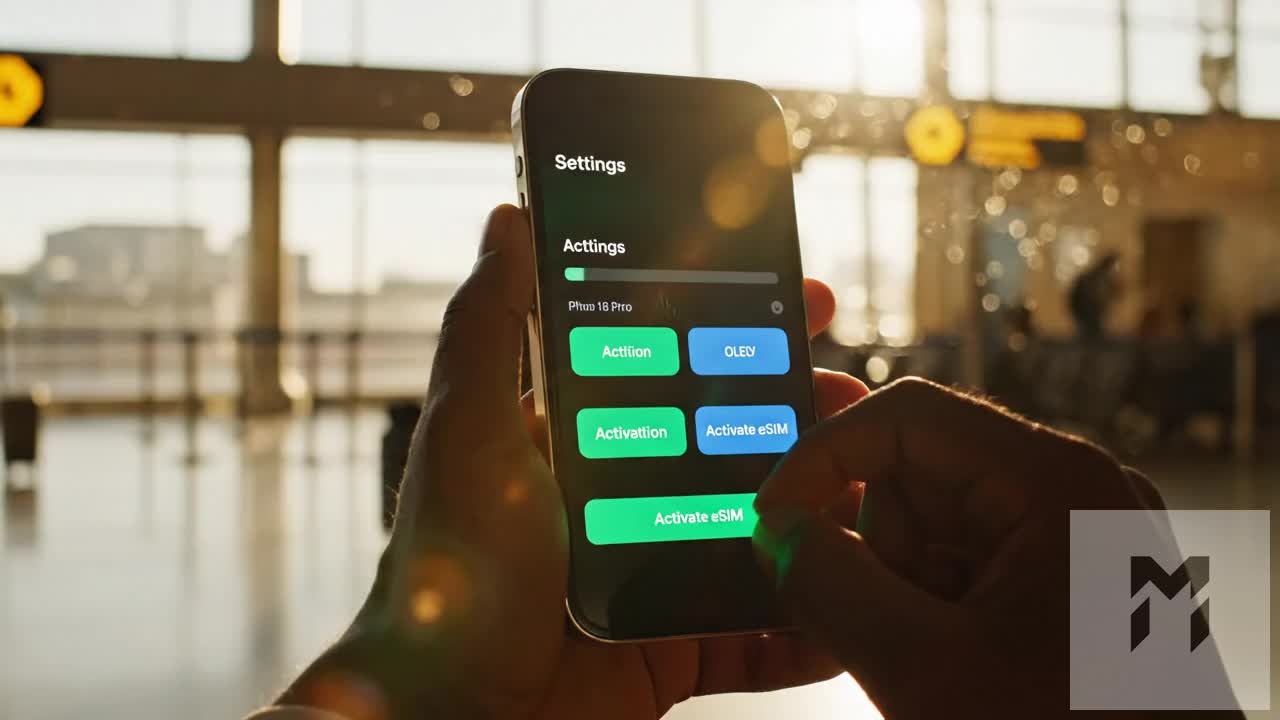
The Flight Crew eSIM Playbook 2026: Multi-Country Layover Connectivity for Pilots and Cabin Crews
The Modern Aviation Connectivity Dilemma: High-Speed Rotations vs. Fragmented Telecoms
For international flight deck officers and cabin personnel, a standard monthly roster in 2026 rarely adheres to neat geographical boundaries. A typical multi-sector rotation might see an operating crew transiting from London Heathrow (LHR) to Doha (DOH), positioning to Singapore (SIN), and finishing with a 36-hour layover in Tokyo Haneda (HND)—spanning three distinct telecommunications jurisdictions within a single week.
While passengers experience international transit as an occasional logistical event, flight crews navigate it as their daily workplace. The operational cadence demands immediate, fail-safe data the microsecond the aircraft blocks into the gate: verifying revised deadhead ticketing, checking company operational manuals, accessing crew scheduling notifications (such as AIMS or NetLine), ordering layover ground transport, and contacting family across divergent time zones.
Despite this hyper-mobile reality, legacy telecommunication systems remain structurally disconnected from aviation workflows.
+-----------------------------------------------------------------------------------+
| Typical 7-Day Long-Haul Pairing Connectivity Breakdown                            |
+-----------------------------------------------------------------------------------+
| Leg 1: Home Base (FRA) -> Outstation (JFK)       | 24hr Layover | Region: NA      |
| Leg 2: Outstation (JFK) -> Transit Hub (NRT)     | 30hr Layover | Region: APAC    |
| Leg 3: Transit Hub (NRT) -> Standby Base (SIN)   | 48hr Layover | Region: APAC    |
| Leg 4: Return Leg (SIN) -> Home Base (FRA)       | Post-Flight  | Region: EU      |
+-----------------------------------------------------------------------------------+
The Breakdown of Legacy Connectivity on the Line
Operating short 24- to 48-hour turnarounds exposes the glaring friction points of traditional mobile connectivity:
- Prohibitive Carrier Roaming Costs: Traditional tier-1 domestic mobile network operators (MNOs) still rely on punitive daily roaming passes (often $10–$15 per 24-hour cycle per country). For a crew member touching four countries across a 10-day tour, carrier roaming fees can easily exceed $150 per bid period—penalizing personnel simply for fulfilling their published pairings.
- The "Jet Bridge Nano-SIM Swap" Hazard: Manually swapping physical plastic nano-SIM cards while balancing an electronic flight bag (EFB), passport wallet, and crew luggage in a jet bridge or dim jumpseat is an operational hazard. Dropping a primary domestic SIM card into an aircraft seat track or drainage grate results in an instant security vulnerability, severing access to two-factor authentication (2FA) codes and primary banking lines while abroad.
- Captive-Portal Hotel Wi-Fi Bottlenecks: Relying on designated layover hotel networks introduces crippling latency, aggressive firewall restrictions, and security vulnerabilities. Captive portals frequently disconnect background push notifications, disrupt crew-to-crew messaging apps, and cut off data access entirely the moment a crew member steps outside the hotel perimeter for rest or layover dining.
- Irregular Operations (IROPS) and Standby Volatility: Weather diversions, mechanical groundings, and rolling duty-period extensions regularly disrupt planned schedules. When an aircraft diverts to an unplanned alternate airport, a crew member cannot spend their limited rest window hunting for local airport SIM kiosks or negotiating telecom counters in an unfamiliar language.
Friction Comparison: Legacy Solutions vs. Multi-Country Layover Demands
| Factor | Legacy Physical SIMs | Domestic Carrier Roaming | Next-Gen Multi-Country eSIM |
|---|---|---|---|
| Setup Time | 15–30 mins (Kiosk/Airport queues) | Instant, but requires daily activation | Pre-installed profile; connects on touchdown |
| Multi-Leg Cost Profile | $15–$30 per country (Multiple cards) | $10–$15 per 24-hour day pass | Single regional/global bucket ($1–$3/day effective) |
| Physical Hardware Risk | High (Lost primary SIM, broken SIM trays) | None | Zero (100% digital architecture) |
| IROPS Adaptability | Poor (Requires new physical SIM purchase) | Moderate (Automatic, but costs skyrocket) | Instant switching across 100+ partner networks |
| FUP Throttling Floor | Cut off or throttled to 64–128 kbps | Cut off or severely throttled | Retains usable baseline (e.g., MollySIM at 384 kbps) |
The core flaw of legacy roaming agreements lies in their all-or-nothing design. When flight crews burn through standard high-speed data allotments on conventional roaming plans, carriers aggressively throttle connection speeds to an obsolete 64 kbps or 128 kbps. At these degraded speeds, basic location routing and payment engines time out.
Modern international flight crews require infrastructure engineered for volatility. Digital-first data providers like MollySIM address this reality by implementing an industry-leading 384 kbps Fair Use Policy (FUP) baseline—three times faster than traditional carrier fallbacks. This ensures that even after intensive data utilization on a prolonged layover, mission-critical utilities such as Google Maps, Apple Pay, and encrypted crew dispatch systems remain completely functional without forced top-up delays.
Mission-Critical Crew Workflows: From Wheels-Down Roster Sync to Transport Dispatch
🇯🇵 Japan High-Speed Travel eSIM & SIM Plans
Instant QR code activation, hotspot enabled, with guaranteed 384kbps fallback speed to keep Maps & Digital Wallets active.
The moment an aircraft vacates the active runway and begins its taxi to the gate, the operational clock starts ticking. For operating flight deck and cabin crew, the 10 to 15 minutes between "wheels-down" and engine shutdown represent an intense burst of digital data transactions. Relying on spotty terminal connectivity or sluggish captive Wi-Fi portals during this critical phase introduces friction that directly degrades operational safety and crew efficiency.
+-----------------------------------------------------------------------------------+
|                        WHEELS-DOWN DIGITAL TOUCHPOINTS                            |
+--------------------+----------------------------+---------------------------------+
| Phase              | System / Application       | Operational Objective          |
+--------------------+----------------------------+---------------------------------+
| 0–5 Min (Taxi)     | AIMS / Sabre / NetLine     | Next-leg roster & IROPS sync    |
|                    | Jeppesen FliteDeck Pro     | Terminal charts & NOTAM refresh |
+--------------------+----------------------------+---------------------------------+
| 5–15 Min (Arrival) | Customs e-Gates (e.g. VJW) | Digital arrival clearance       |
|                    | Hotel Shuttle / Uber / Grab| Ground transport dispatch       |
+--------------------+----------------------------+---------------------------------+
| Post-Debrief       | Encrypted VoIP (Signal/WA) | Family check-in & rest log      |
+--------------------+----------------------------+---------------------------------+
1. Flight Operations & EFB Synchronization
Modern airline operations rely on real-time crew management engines like AIMS, Sabre CrewTrack, NetLine/Crew, and CAE CrewLink. Immediately upon turning off Airplane Mode, crew devices must ingest:
- Flight Duty Period (FDP) Recalculations: Live updates to legal rest requirements and duty limits, especially crucial after flight delays.
- Deadhead & Pairing Updates: Immediate changes to onward layover assignments or repositioning legs.
- Electronic Flight Bag (EFB) Chart Updates: Pilots running Jeppesen FliteDeck Pro or Navblue Flysmart need prompt network handshakes to sync the latest digital NOTAMs, weather radar packs, and company tailored approach plates prior to the next sector debrief.
2. Paperless Immigration and e-Declarations
International border security has largely abandoned paper landing cards in favor of mandatory digital portals. Navigating border control in hubs like Singapore (SG Arrival Card), Tokyo (Visit Japan Web), or London Heathrow requires fast data access to generate dynamic QR codes. Attempting to load high-overhead government web applications inside high-interference immigration halls without reliable cellular access creates unnecessary chokepoints for flight crews attempting to clear customs alongside hundreds of deplaning passengers.
3. Transport Dispatch and Coordinated Logistics
Whether an airline utilizes dedicated crew transport or provides a corporate ground transportation allowance, logistics tracking is mandatory:
- Hotel Crew Shuttles: Real-time GPS telematics via dedicated transport apps to verify pickup bay assignments and avoid waiting curbside in extreme weather.
- On-Demand Ridehail (Uber, Grab, Bolt, Careem): In outstations lacking contracted transport, crew members must immediately order and track local transport options without the latency and transaction failures common on throttled roaming profiles.
4. The Airport Wi-Fi Vulnerability vs. Cellular Security
Many crew members default to public airport Wi-Fi networks to avoid roaming charges, introducing critical cybersecurity vulnerabilities. Public Wi-Fi access points in international transit terminals are high-value targets for:
- Man-in-the-Middle (MITM) Attacks: Interception of unencrypted traffic between the crew device and airline scheduling servers.
- Rogue Captive Portals & DNS Spoofing: Malicious actors harvesting airline Single Sign-On (SSO) credentials, corporate email logins, or personal banking data.
- Session Hijacking: Exploitation of legacy tokens used in proprietary crew scheduling web views.
Using a hardware-level encrypted cellular connection via a dedicated eSIM architecture like MollySIM bypasses these risks entirely. Data routes over 3GPP-standardized, authenticated mobile networks directly to global internet backbones, keeping company EFB data and personal communications shielded.
5. Encrypted Rest and Family Check-Ins
After clearing customs and boarding the crew transport, connectivity shifts to personal well-being. Encrypted VoIP applications (FaceTime Audio, Signal, WhatsApp) allow crew members to connect with families across shifting global time zones.
Because providers like MollySIM maintain an uncapped high-speed experience backed by a 384 kbps Fair Use Policy baseline—triple the standard 128 kbps industry throttle—crews avoid the dreaded dropped-call audio stutter and failed map rendering, ensuring zero downtime from touchdown to the hotel room.
Layover Connectivity Matrix: Evaluating Crew Roaming, Airport SIMs, Pocket Wi-Fi, and Global eSIMs
Managing international data across non-standard flight pairings requires balancing financial overhead, operational reliability, and physical convenience. Aviation professionals cannot afford connection dropouts during mid-sequence deadheads or tight minimum rest periods (MRPs).
Below is an engineering and cost analysis evaluating the four primary connectivity solutions used across international rosters:
| Connectivity Solution | Initial Setup Friction | Cost per 48-Hour Layover | Country-Hopping Speed | Security & Encryption | Primary Number Retention | Fallback Connectivity |
|---|---|---|---|---|---|---|
| Home Carrier Day Passes (e.g., AT&T IDP, Verizon TravelPass) | Zero: Automatic activation upon cellular trigger. | High: $20.00 – $30.00 ($10–$15/24-hour cycle). | Instant: Auto-latches to roaming partner MNCs. | High: Standard cellular 3GPP encryption. | Full: Retains native voice, SMS, and 2FA functionality. | Carrier-Dependent: Drops to 2G/3G or hard cuts off past daily caps. |
| Local Airport Physical SIMs | Severe: Requires passport validation, queuing at landside kiosks, physical tray swapping. | Moderate: $15.00 – $40.00 (bundles include unused domestic allowances). | Very Low: Manual replacement and APN configuration per country. | Moderate: Local network authentication; risk of lost native SIM card. | None: Native SIM ejected; secondary 2FA lines disabled unless using dual-SIM tray. | None: Hard stop when preloaded gigabytes expire. |
| Shared Pocket Wi-Fi (MiFi Units) | Moderate: Unit reservations, battery maintenance, manual device pairing. | High: $8.00 – $15.00/day + hardware rental deposits. | Low to Moderate: Must power cycle and re-acquire towers at each border. | Low to Moderate: Vulnerable WPA2/WPA3 local Wi-Fi link; unencrypted local broadcast. | Full: Cellular radios stay off; utilizes Wi-Fi calling channels. | Variable: Aggressive throttling to unworkable 64–128 kbps upon cap breach. |
| MollySIM Multi-Region eSIM | Minimal: One-time QR installation; remote Over-The-Air (OTA) profile switching. | Ultra-Low: ~$1.50 – $4.00 (billed against shared multi-country pools). | Instantaneous: Autonomous profile handover upon gear-down / landing phase. | Enterprise-Grade: Isolated eSIM profile, zero physical vector, encrypted routing. | Full Dual-SIM Active: Native SIM handles 2FA/SMS; eSIM handles data path. | Optimized FUP Baseline: Continuous 384 kbps baseline ensures persistent app uptime. |
Technical ROI Analysis: Why Multi-Region eSIMs Outperform Legacy Vectors
1. Total Cost of Ownership (TCO) Over a Monthly Roster
A long-haul crew member working four multi-day international rotations typically spends between 10 to 14 days abroad per monthly bid period.
- Carrier Day Passes: Running domestic roaming passes for 12 duty layover days averages $120.00 to $180.00/month. Over a standard operational year, this leaks upwards of $1,800 to carrier roaming fees.
- Regional eSIM Pools: A centralized regional data package (e.g., Europe, Asia-Pacific, or Global bundles from MollySIM) pools consumption across consecutive destinations (e.g., London–Singapore–Sydney). This slashes operational costs to under $20.00–$30.00/month, yielding an 80%+ reduction in personal out-of-pocket communication expenses.
2. Dual-SIM Standby Architecture and 2FA Continuity
Physical airport SIM swaps represent an unacceptable operational vulnerability: removing your home SIM breaks access to your native carrier's SMS channel. This prevents receiving time-sensitive Two-Factor Authentication (2FA) verification codes required by:
- Airline crew portal sign-ins (Single Sign-On / SSO rotations)
- Banking and credit card security verifications while abroad
- Encrypted credential refreshes for internal scheduling systems
Utilizing an eSIM layer allows the device's secondary transceiver to handle high-bandwidth data routing while maintaining the primary physical or digital native SIM in low-power standby mode for incoming 2FA tokens.
+-------------------------------------------------------------------+
|                     Dual-SIM Device Architecture                  |
+---------------------------------+---------------------------------+
|      PRIMARY SIM (Native)       |     SECONDARY eSIM (MollySIM)   |
|   - Voice & SMS Enabled         |   - High-Speed Cellular Data    |
|   - Real-time 2FA Passcodes     |   - EFB / Company Portal Traffic|
|   - Zero Data Roaming Costs     |   - VoIP / Maps / Ride-Hailing  |
+---------------------------------+---------------------------------+
3. Resolving the "Throttled Deadzone" with Elevated FUP Floors
Most travel SIMs and airport Wi-Fi rentals throttle data down to 64 kbps or 128 kbps once a daily high-speed allotment is exhausted. At 128 kbps:
- Modern Transport Layer Security (TLS) handshakes frequently time out.
- Dynamic navigation tools (Google Maps, Waze) fail to render vector map tiles.
- Contactless payments (Apple Pay, Google Wallet) and rideshare applications (Uber, Grab, Bolt) drop API handshakes, stranding crews in unfamiliar urban centers.
By contrast, MollySIM implements a 384 kbps Fair Use Policy (FUP) baseline—three times the industry average. This ensures that even under severe network loads or cap exhaustions, essential operational payloads—including real-time GPS telemetry, mobile payment gateways, and push notifications—remain fully operational without degradation.
Dual-eSIM Architecture & Carrier Profile Management on Modern Crew Devices
Modern flagship hardware—including the iPhone 14/15/16 Pro series, Samsung Galaxy S24/S25 lineup, and Google Pixel 8/9 Pro—utilizes Dual SIM Dual Standby (DSDS) architecture powered by modern baseband processors (such as Qualcomm Snapdragon X75/X80 modems). This architecture allows two independent subscriber profiles to remain actively registered to cellular networks simultaneously.
For flight crews, configuring this stack correctly is the difference between seamless layover operations and an unexpected four-figure domestic roaming invoice.
+-------------------------------------------------------------------------+
|                  Cellular Baseband Modem Routing Layer                  |
+------------------------------------+------------------------------------+
|       Transceiver Path A           |        Transceiver Path B          |
|    [Domestic Carrier eSIM]         |       [MollySIM Layover eSIM]      |
|    - IMS Registration: Active      |    - Data Packet Session: Active   |
|    - Signaling: SMS / Voice 2FA    |    - APN: Dedicated Gateway        |
|    - Data Channel: HARD DISABLED   |    - 5G/4G High-Throughput Routing |
+------------------------------------+------------------------------------+
Step-by-Step Profile Allocation Matrix
To insulate domestic numbers from expensive international data tariffs while preserving real-time shortcode SMS delivery for crew scheduling, roster updates, and banking 2FA, configure your operating system parameters as follows:
| Setting Parameter | Apple iOS (iPhone 14/15/16 Pro) | Android (Samsung One UI / Pixel OS) | Operational Objective |
|---|---|---|---|
| Default Voice Line | Primary (Home Carrier) | Primary (Home SIM/eSIM) | Keeps local number reachable for direct crew dispatch calls. |
| Cellular Data | MollySIM Regional / Global | MollySIM Regional / Global | Routes all mobile browsing, EFB downloads, and app traffic via MollySIM. |
| Allow Cellular Data Switching | OFF (Mandatory) | OFF / Switch data automatically: OFF | Prevents the OS from switching data traffic to the domestic carrier during momentary signal drops. |
| Primary Line Data Roaming | OFF | OFF | Hard-blocks domestic data leakages at the baseband radio level. |
| MollySIM Data Roaming | ON | ON | Grants the profile permission to handshake with local partner carriers abroad. |
Overcoming APN Failures and Roaming Lockouts
While MollySIM profiles are provisioned over-the-air (OTA) with automated Access Point Name (APN) routing, edge-case handshakes in transit-heavy jurisdictions can occasionally stall. If data connectivity stalls upon touchdown:
- Verify Manual APN Provisioning: In rare instances where the local network overrides default APN parameters, manually inspect Cellular Data Network settings. Ensure the APN matches the connection string provided in your MollySIM setup instructions (typically left blank for username/password, with standard IPV4/IPV6 dual-stack addressing enabled).
- Force Manual Network Selection: In dense airspaces and transit hubs like Dubai International (DXB), London Heathrow (LHR), Singapore Changi (SIN), or Tokyo Haneda (HND), automated carrier sweeps can get caught in endless registration loops between competing tier-1 towers. Navigate to Mobile Networks > Network Operators, disable "Automatic", and manually select the top local partner network listed in your MollySIM destination guide (e.g., Singtel in Singapore, EE in the UK, or Docomo in Japan).
- Toggle the Baseband Radio: Perform a 15-second Airplane Mode cycle to reset the hardware Baseband Processor (BBP) and initiate a clean attach request to the nearest cell site.
Baseband Modem Power Optimization in High-Density Hubs
Repeated PLMN (Public Land Mobile Network) hunting across border crossings and multi-sector layovers rapidly depletes device battery reserves. When an aircraft transitions from cruise to arrival, dual modems aggressively poll all available frequency bands.
- Disable 5G Standalone (SA) Hunting on Secondary Lines: When operating in foreign hubs where 5G penetration is fragmented, lock your MollySIM data profile to 5G Auto (iOS) or LTE/5G Auto (Android) rather than "5G On". This stops transceiver amplifiers from continuously broadcasting higher-power pilot tones to distant 5G mid-band towers.
- Sustain Essential Connectivity under Low-Power States: If your high-speed quota runs out during extended delays, MollySIM's persistent 384 kbps Fair Use Policy (FUP) floor ensures that low-power background tasks—including push notifications, Apple Pay/Google Wallet tokenization, and live vector mapping—continue functioning without stalling your baseband processor with repeated timeout/retransmission cycles.
The MollySIM Safety Net Advantage: Multi-Region Coverage and the 384kbps Zero-Downtime Guarantee
Operating long-haul multi-sector rotations—such as a London (LHR) to Singapore (SIN) to Sydney (SYD) rotation—creates severe operational friction for flight crews using single-country prepaid eSIMs. Manually purchasing, installing, and configuring distinct profiles for each sector introduces unnecessary points of failure during critical turnarounds, immigration queues, and crew bus transits.
MollySIM resolves this friction by deploying unified multi-region and global eSIM architectures. A single installed profile automatically switches across tier-one mobile networks spanning Europe, APAC, the Americas, and the Middle East without requiring profile re-installations, APN reconfigurations, or manual billing top-ups between flights.
The Operational Architecture of the 384kbps Safety Net
Traditional travel eSIMs enforce a binary operational model: once your purchased high-speed 5G/4G data allotment is fully consumed, the connection either drops completely or throttles down to an unusable 64kbps or 128kbps. At 64–128kbps, modern mobile operating systems encounter continuous TCP connection timeouts, broken SSL/TLS handshakes, and application crashes due to aggressive background network polling.
┌────────────────────────────────────────────────────────────────────────┐
│               THROTTLED BANDWIDTH PERFORMANCE BENCHMARK                 │
├────────────────────────┬─────────────────────┬─────────────────────────┤
│ Application / Protocol │ Standard (128 kbps) │ MollySIM (384 kbps FUP) │
├────────────────────────┼─────────────────────┼─────────────────────────┤
│ WhatsApp / Signal Text │ Functional          │ Real-Time (Instant)     │
│ Voice Notes (AAC/Opus) │ High Latency / Fails│ Smooth Playback         │
│ Crew App Sync (AIMS)   │ Connection Timeout  │ Functional (< 4s sync)  │
│ Google Maps (Vectors)  │ Tiles Fail to Load  │ Fast Cached Rendering   │
│ Ride-Hailing (Uber)    │ API Handshake Drops │ Reliable Booking        │
│ Apple / Google Pay NFC │ Intermittent Token  │ Uninterrupted Auth      │
└────────────────────────┴─────────────────────┴─────────────────────────┘
MollySIM addresses this critical failure point by engineering a 384kbps Fair Use Policy (FUP) floor. Operating at three times the speed of legacy throttled lines, this dedicated baseline bandwidth ensures that crew members are never left digitally stranded on the ramp, during layover transfers, or inside foreign transit hubs.
Mission-Critical Functionality Retained at 384kbps
Even after your high-speed quota reaches zero, the 384kbps data pipe supports essential crew workflows without requiring emergency top-ups over unencrypted airport Wi-Fi:
- Crew Scheduling & Roster Synchronization: Web services powering crew management platforms (e.g., AIMS e-Crew, Sabre CrewQual, NetLine/Crew, FLICA) transmit lightweight JSON/REST payloads. At 384kbps, schedule changes, deadhead bookings, and revised sign-in times populate in under five seconds.
- Ground Transportation & Navigation: Ride-hailing platforms (Uber, Grab, Bolt, Careem) and vector-based mapping engines (Google Maps, Apple Maps) require persistent API telemetry rather than massive throughput. Vector tiles and driver locations update fluidly without stalling the route engine.
- Encrypted Messaging & Voice Notes: WhatsApp, iMessage, and Signal text transmission remains instantaneous. Voice notes encoded in standard Opus/AAC codecs stream without buffering delays.
- Fintech Tokenization & Digital IDs: Contactless mobile wallets (Apple Pay, Google Wallet) and airline mobile security authenticators validate cryptographic tokens instantly, ensuring access to ground transport and airport concessions.
By combining broad multi-country roaming agreements with an uninterrupted 384kbps data floor, MollySIM provides active aircrews with continuous, zero-maintenance operational uptime across entire roster rotations.
The Flight Crew Step-by-Step Playbook: Pre-Flight Configuration to Hotel Check-In
To eliminate connectivity failures across rapid multi-sector pairings, flight crews need a standardized operating procedure. Executing the following protocol ensures uninterrupted data access from the briefing room to the hotel layover.
+-------------------------------------------------------------------------------+
|                      CREW PRE-FLIGHT TO ARRIVAL LIFECYCLE                     |
+-------------------------------------------------------------------------------+
|  1. BASE OPS       -->  2. CRUISE PHASE  -->  3. ROLLOUT     -->  4. LAYOVER  |
|  Provision eSIM         Assign Data Line      De-isolate RF       Tether EFB  |
|  Label Profile          Enable Roaming        Auto-Handshake      384kbps FUP |
+-------------------------------------------------------------------------------+
Step 1: Pre-Departure Provisioning at Home Base
Configure all profiles on base ground Wi-Fi at least two hours prior to report time.
- Profile Installation: Scan your eSIM digital provisioning code (or install directly via provider app). For MollySIM users, installation requires a single profile push without regional swapping.
- Label the Cellular Plan: Rename the plan in your device settings (e.g.,
Settings > Cellular > Cellular Plans) from "Secondary" toCrew RoamingorMollySIM Global. - Prevent Accidental Domestic Handshakes: Keep the profile turned ON, but set your physical/primary carrier SIM as the active data line while operating within your home base territory.
Step 2: In-Flight Protocol and Line Assignment
Prior to pushback or entering the sterile cockpit environment:
| Setting | Configuration | Operational Purpose |
|---|---|---|
| Cellular Data Switch | Set to Crew Roaming | Directs all mobile payloads through the layover profile. |
| Cellular Data Switching | Toggle OFF | Prevents carrier failover that triggers accidental home-carrier roaming fees. |
| Data Roaming (eSIM) | Toggle ON | Authorizes outbound handshakes with foreign tier-1 network partners. |
| Data Roaming (Primary) | Toggle OFF | Hard-locks your primary domestic carrier against foreign carrier registration. |
Switch the handset to Airplane Mode per standard operating procedures before taxi-out.
Step 3: Runway Rollout & Gate Arrival Activation
Once the aircraft clears the active runway and ground operations permit PED use, execute instant activation:
- Disable Airplane Mode: The baseband modem immediately begins scanning local spectrum bands.
- Bypass Captive Portals: Skip the airport's public Wi-Fi registration entirely. Within 15 to 45 seconds, the eSIM registers on the strongest local partner network (e.g., Singtel in Singapore, Vodafone in the UK, or Docomo in Japan).
- Crew Bus Telemetry: Because MollySIM maintains a 384kbps baseline throttle (triple the industry standard 128kbps throttle), ride-hailing locators, ground transport dispatches, and hotel check-in notifications resolve seamlessly on the taxiway without waiting for the jet bridge.
Step 4: Rapid APN & Localized DNS Troubleshooting
If the handset displays "No Service" or fails to pull an IP address after reaching the gate:
[No Data Connection at Gate]
        |
        v
[Toggle Airplane Mode for 10 Seconds] --> Resolved? --> [Done]
        | (No)
        v
[Check APN Configuration]
  - iOS: Settings > Cellular > Crew Roaming > Cellular Data Network
  - Android: Settings > Network > Access Point Names
  - Set APN field to the provider standard (e.g., "globaldata" or auto-configured profile)
        |
        v
[Switch Network Selection from 'Automatic' to 'Manual']
  - Select the preferred tier-1 roaming partner from your crew portal
Step 5: Low-Power EFB & Crew Tablet Tethering
During multi-day layovers, non-cellular Electronic Flight Bags (EFBs) and personal tablets require secure data for roster downloads and flight planning:
- Enable Personal Hotspot: On your smartphone, select
Settings > Personal Hotspot > Allow Others to Join. - Activate Low Data Mode on the EFB: Navigate to
Settings > Wi-Fi > [Hotspot Name] (i)and toggle Low Data Mode ON. This blocks automatic iPadOS/iOS cloud photo backups and app updates while permitting critical operational updates via Sabre, Jeppesen FliteDeck Pro, and AIMS. - Preserve Battery Capacity: USB-tethering the handset directly into a laptop or power bank prevents overheating during prolonged chart synchronization sessions.
Reserve & Standby Maintenance: Long-Term Profile Strategy
For flight crew members assigned to reserve lines, airport standby (ASB), or short-call rotations:
- Maintain a Persistent Global Core: Avoid single-country eSIMs that expire after 7 days. Use global profiles that support long-term validity windows or balance rollovers.
- Cold-Start Readiness: Ensure the roaming profile is permanently stored in device hardware (eUICC memory). If assigned an unscheduled long-haul pairing at 03:00, you can activate regional coverage in mid-air via the crew portal without swapping physical SIM cards.
🇯🇵 Japan High-Speed Travel eSIM & SIM Plans
Instant QR code activation, hotspot enabled, with guaranteed 384kbps fallback speed to keep Maps & Digital Wallets active.