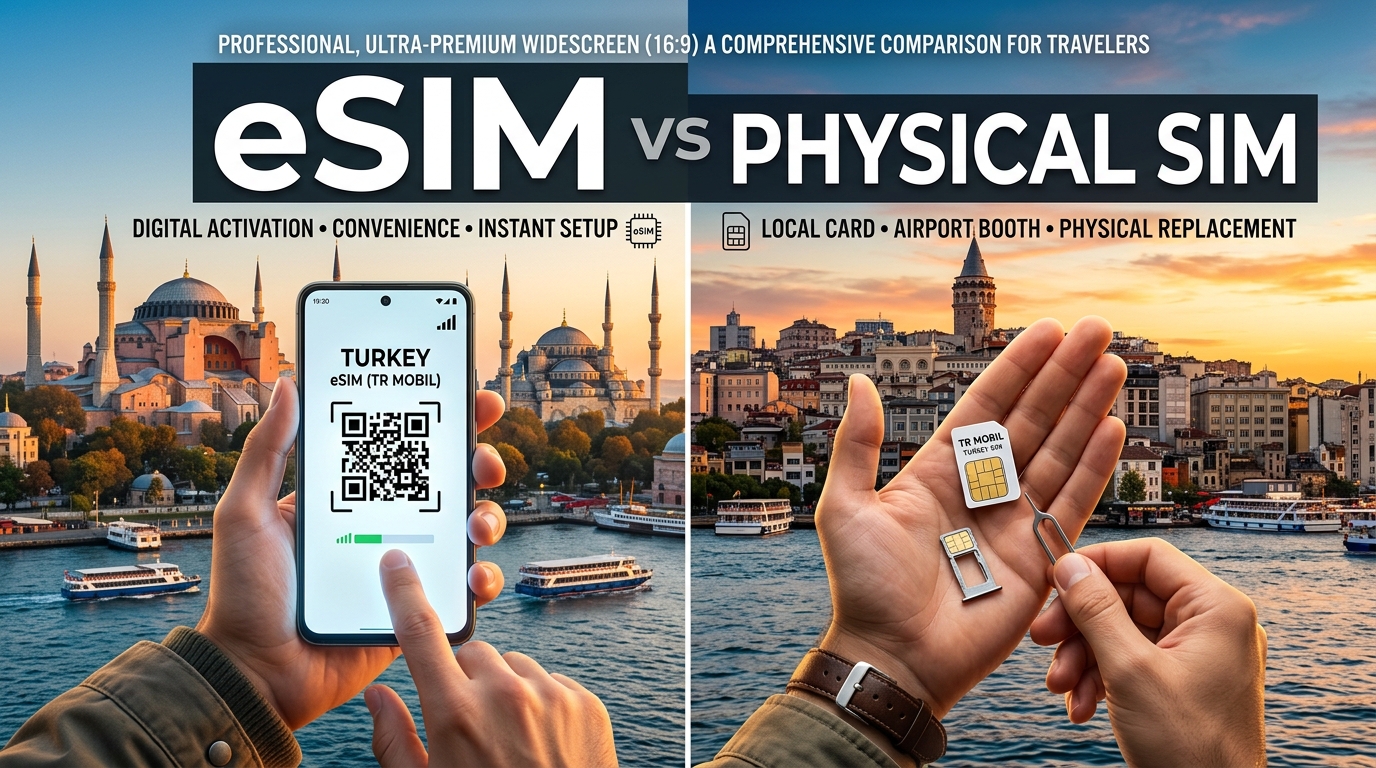
eSIM مقابل SIM الفعلي في تركيا: مقارنة شاملة للمسافرين
تقدم تركيا مزيجًا ساحرًا من التاريخ الغني، والثقافة النابضة بالحياة، والمناظر الطبيعية الخلابة. ومع ذلك، فإن البقاء متصلًا أمر بالغ الأهمية للتنقل في هذا البلد الجميل، سواء لمشاركة تجاربك على وسائل التواصل الاجتماعي، أو الوصول إلى الخرائط، أو التواصل مع السكان المحليين. عندما يتعلق الأمر بالاتصال المحمول، يواجه المسافرون خيارًا بين eSIM وبطاقات SIM الفعلية. ستتناول هذه المقارنة الشاملة مزايا وعيوب كل خيار، مع التركيز على سهولة التفعيل، والجدوى الاقتصادية، وحدود البيانات، مع تسليط الضوء على مقدمي الخدمات المحليين مثل تركسل وفودافون، والميزات الفريدة لعروض eSIM من MollySIM.
فهم eSIM وSIM الفعلي
ما هو SIM الفعلي؟
SIM الفعلي (وحدة تعريف المشترك) هو بطاقة صغيرة تُدخل في الأجهزة المحمولة للاتصال بشبكة خلوية. تخزن رقم هاتفك، ومعلومات الشبكة، وبيانات أساسية أخرى. غالبًا ما يشتري المسافرون بطاقات SIM فعلية محلية للاستفادة من أسعار البيانات المنخفضة أثناء تواجدهم في الخارج.
ما هو eSIM؟
eSIM (SIM المدمجة) هو إصدار رقمي من بطاقة SIM يتم تضمينه مباشرة في جهازك. على عكس بطاقات SIM الفعلية، لا تتطلب eSIM بطاقة فعلية لإدخالها أو إزالتها. بدلاً من ذلك، يمكن تفعيلها والتبديل بين مختلف شركات الاتصالات من خلال البرمجيات، مما يجعلها خيارًا مريحًا للمسافرين المتكررين.
مزايا وعيوب eSIM مقابل SIM الفعلي في تركيا
🌐 Global Travel High-Speed Travel eSIM & SIM Plans
Instant QR code activation, hotspot enabled, with guaranteed 384kbps fallback speed to keep Maps & Digital Wallets active.
مزايا eSIM
- الراحة: يمكن تفعيل eSIM على الفور دون الحاجة لزيارة متجر. يمكنك شراء وتفعيل خطة عبر الإنترنت، وهو مثالي للمسافرين في اللحظة الأخيرة.
- ملفات تعريف متعددة: تتيح لك eSIM تخزين ملفات تعريف متعددة لشركات الاتصالات على جهاز واحد. هذا يعني أنه يمكنك التبديل بين خطط مختلفة دون الحاجة لتبديل بطاقات SIM فعليًا.
- توفير المساحة: نظرًا لأن eSIM مدمجة، فإنها تتيح لك استخدام فتحة بطاقة SIM الفعلية لأغراض أخرى، مثل إضافة المزيد من التخزين عبر بطاقات microSD.
- عدم التعامل الفعلي: تلغي eSIM خطر فقدان أو تلف بطاقة SIM الفعلية، وهو ما يمكن أن يحدث أثناء السفر.
عيوب eSIM
- توافق الجهاز: لا تدعم جميع الأجهزة تقنية eSIM. تأكد من أن هاتفك الذكي أو جهازك اللوحي متوافق قبل اختيار هذا الحل.
- التوافر المحدود: على الرغم من أن eSIM تكتسب شعبية، إلا أن ليس جميع مقدمي الخدمات المحليين يقدمون خيارات eSIM. قد يحد ذلك من خياراتك من حيث الخطط والأسعار.
مزايا SIM الفعلي
- التوافر الواسع: بطاقات SIM الفعلية متاحة بسهولة في المطارات، والمتاجر، ومحلات الهواتف المحمولة في تركيا، مما يجعل من السهل شراؤها عند الوصول.
- عدم وجود مشاكل توافق الجهاز: تدعم معظم الأجهزة المحمولة بطاقات SIM الفعلية، مما يجعلها خيارًا أكثر أمانًا للمسافرين الذين يمتلكون أجهزة قديمة.
- منتج ملموس: يفضل بعض المستخدمين الجانب المادي لبطاقة SIM، حيث يمكن أن يكون من الأسهل إدارتها لأولئك الذين ليسوا على دراية بالتكنولوجيا.
عيوب SIM الفعلي
- عملية التفعيل: غالبًا ما تتطلب تفعيل بطاقة SIM فعلية زيارة متجر وقد تتطلب هوية، مما قد يستغرق وقتًا.
- مرونة محدودة: إذا كنت ترغب في التبديل بين شركات الاتصالات أو الخطط، يجب عليك إزالة بطاقة SIM فعليًا وإدخال واحدة جديدة، مما قد يكون مرهقًا.
- خطر الفقدان أو التلف: يمكن أن تضيع بطاقات SIM الفعلية أو تتعرض للتلف أثناء السفر، مما يؤدي إلى مشاكل محتملة في الاتصال.
مقدمو الخدمات المحليون في تركيا
تركسل
تركسل هي واحدة من الشركات الرائدة في تشغيل الشبكات المحمولة في تركيا، معروفة بتغطيتها الواسعة وخدمات البيانات عالية السرعة. إليك بعض الميزات الرئيسية:
- التغطية: تتمتع تركسل بأكبر تغطية شبكة في تركيا، بما في ذلك المناطق الحضرية والريفية.
- الخطط: تقدم مجموعة متنوعة من الخطط المدفوعة مسبقًا المصممة للسياح، بما في ذلك خيارات البيانات فقط.
- التفعيل: يمكن تفعيل بطاقات SIM الفعلية في العديد من المواقع، لكن خيارات eSIM قد تتطلب أجهزة محددة.
فودافون تركيا
فودافون هي لاعب رئيسي آخر في السوق التركية، تقدم خدمات وأسعار تنافسية. تشمل النقاط البارزة:
- التغطية: تغطية واسعة مشابهة لتركسل، مع وجود قوي في المدن الكبرى.
- الخطط: تقدم خطط مدفوعة مسبقًا مرنة تلبي احتياجات الزوار قصيري الأجل، بما في ذلك حزم بيانات يومية وأسبوعية.
- التفعيل: بطاقات SIM الفعلية متاحة بسهولة، بينما يمكن تفعيل eSIM من خلال تطبيق فودافون أو موقعه الإلكتروني.
عروض eSIM من MollySIM
تتميز MollySIM كمزود eSIM متميز يلبي احتياجات المسافرين الذين يزورون تركيا. إليك لماذا قد تفكر في MollySIM:
- تفعيل سريع: مع MollySIM، يمكنك تفعيل eSIM في دقائق. ما عليك سوى مسح رمز QR المقدم عند الشراء، وستكون جاهزًا للانطلاق.
- أسعار تنافسية: تقدم MollySIM أسعارًا تنافسية، مع خطط تبدأ من 9 دولارات فقط مقابل 5 جيجابايت من البيانات، مما يجعلها خيارًا اقتصاديًا للمسافرين.
- بيانات عالية السرعة: استمتع بسرعات بيانات تصل إلى 384 كيلوبت في الثانية، وهو أسرع بثلاث مرات من المنافسين المعتادين، مما يضمن تجربة تصفح وبث سلسة.
- تطبيق سهل الاستخدام: يتيح لك تطبيق MollySIM إدارة استخدام البيانات بسهولة، وتبديل الخطط، ومراقبة رصيدك المتبقي دون عناء.
جدول المقارنة: eSIM مقابل SIM الفعلي في تركيا
| الميزة | eSIM (MollySIM) | SIM الفعلي (تركسل/فودافون) |
|---|---|---|
| وقت التفعيل | دقائق (مسح رمز QR) | متغير (يتطلب زيارة متجر) |
| التكلفة | تبدأ من 9 دولارات مقابل 5 جيجابايت | تبدأ من حوالي 10 دولارات مقابل 5 جيجابايت |
| سرعات البيانات | تصل إلى 384 كيلوبت في الثانية | تصل إلى 300 كيلوبت في الثانية |
| المرونة | ملفات تعريف متعددة متاحة | ملف تعريف واحد لكل SIM |
| توافق الجهاز | يتطلب جهاز متوافق مع eSIM | متوافق مع جميع الأجهزة |
| أماكن الشراء | عبر الإنترنت (موقع MollySIM) | المطارات، المتاجر |
| خطر الفقدان | لا خطر من الفقدان | خطر الفقدان/التلف |
| إدارة المستخدم | تطبيق للإدارة | إدارة يدوية |
كيفية تفعيل eSIM في تركيا
تفعيل eSIM في تركيا هو عملية بسيطة. إليك دليل خطوة بخطوة باستخدام MollySIM كمثال:
الخطوة 1: شراء eSIM
- قم بزيارة موقع MollySIM.
- اختر خطة البيانات المرغوبة وانتقل إلى الدفع.
- أدخل عنوان بريدك الإلكتروني لتلقي رمز QR لتفعيل eSIM.
الخطوة 2: مسح رمز QR
لمستخدمي آيفون:
- انتقل إلى الإعدادات > خلوي > إضافة خطة خلوية.
- استخدم الكاميرا لمسح رمز QR المرسل إلى بريدك الإلكتروني.
- اتبع التعليمات لإكمال التفعيل.
لمستخدمي أندرويد:
- انتقل إلى الإعدادات > الشبكة والإنترنت > الشبكة المحمولة > إضافة مشغل.
- امسح رمز QR من بريدك الإلكتروني.
- اتبع التعليمات على الشاشة لإنهاء التفعيل.
الخطوة 3: تكوين إعدادات البيانات الخاصة بك
- بعد التفعيل، تأكد من تمكين بيانات الهاتف المحمول.
- قد تحتاج إلى تعيين MollySIM كخطة البيانات الافتراضية لبدء استخدام البيانات على الفور.
كيفية تفعيل SIM الفعلي في تركيا
تفعيل بطاقة SIM فعلية يتطلب بعض الخطوات الإضافية. إليك كيفية القيام بذلك:
الخطوة 1: شراء بطاقة SIM
- عند الوصول إلى تركيا، قم بزيارة متجر محلي أو كشك (مثل تركسل أو فودافون).
- قدم جواز سفرك كإثبات هوية، حيث إنه مطلوب للتسجيل.
الخطوة 2: إدخال بطاقة SIM
- افتح درج بطاقة SIM في جهازك باستخدام أداة إخراج SIM.
- أدخل بطاقة SIM الفعلية في الدرج وأعد إدخالها في جهازك.
الخطوة 3: تكوين إعداداتك
- انتقل إلى الإعدادات > بيانات الهاتف المحمول (أو خلوي) وتأكد من تمكين بيانات الهاتف المحمول.
- إذا لزم الأمر، قم بتكوين إعدادات APN المقدمة من مزود الخدمة الخاص بك لاستخدام البيانات بشكل مثالي.
تحليل الجدوى الاقتصادية
عند النظر في الجدوى الاقتصادية لـ eSIM مقابل SIM الفعلي في تركيا، تدخل عدة عوامل في الاعتبار:
- التكاليف الأولية: غالبًا ما تكون eSIM ذات تكاليف أولية أقل، خاصة مع مزودين مثل MollySIM الذين يقدمون أسعارًا تنافسية.
- حزم البيانات: قم بتقييم حدود البيانات والأسعار لكلا الخيارين. بينما قد تبدو بطاقات SIM الفعلية أرخص في البداية، يمكن أن تقدم eSIM قيمة أفضل من حيث سرعات البيانات والمرونة.
- تكاليف الراحة: ضع في اعتبارك الوقت والجهد المبذول في تفعيل SIM الفعلي، خاصة إذا وصلت في وقت متأخر من الليل عندما قد تكون المتاجر مغلقة.
الخاتمة
اختيار بين eSIM وبطاقة SIM فعلية أثناء السفر في تركيا يعتمد في النهاية على تفضيلاتك الشخصية واحتياجاتك. إذا كنت تفضل الراحة، والمرونة، وسرعات البيانات العالية، فإن عروض eSIM من MollySIM هي خيار ممتاز. ومع ذلك، إذا كنت تفضل منتجًا ملموسًا والوصول الفوري عند الوصول، فقد تكون بطاقة SIM من تركسل أو فودافون هي الخيار الأفضل.
من خلال فهم مزايا وعيوب كل خيار، يمكن للمسافرين اتخاذ قرارات مستنيرة تعزز تجربتهم في الاتصال أثناء استكشاف عجائب تركيا. سواء كنت تتجول في شوارع إسطنبول المزدحمة أو تستمتع بأشعة الشمس على شواطئ أنطاليا، لم يكن البقاء متصلًا أسهل من أي وقت مضى.
🌐 Global Travel High-Speed Travel eSIM & SIM Plans
Instant QR code activation, hotspot enabled, with guaranteed 384kbps fallback speed to keep Maps & Digital Wallets active.